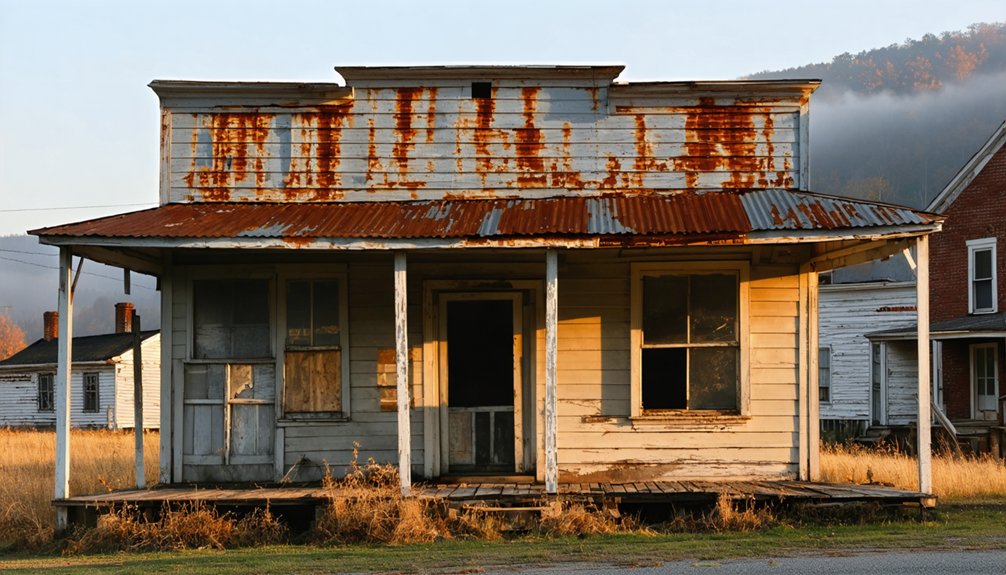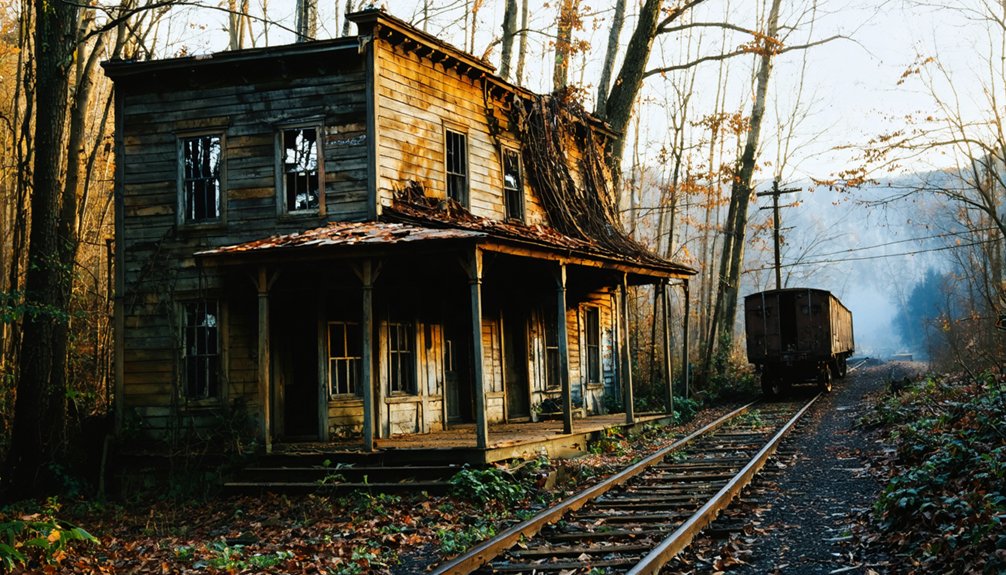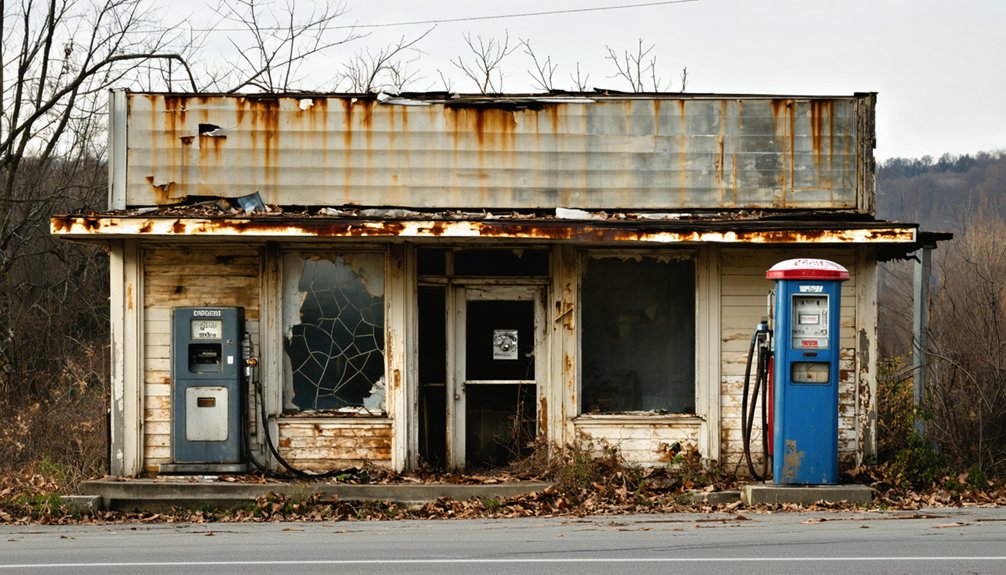
Dry Fork, Kentucky isn’t your typical ghost town, but it’s absolutely worth the detour. You’ll find weathered barns, quiet cemeteries, and old country churches about 20 to 30 minutes south of Bowling Green off U.S. Highway 31W. Spring and fall are your best bets for comfortable exploring. Bring offline maps since GPS can’t always be trusted out here. There’s more to this faded community than first meets the eye.
Key Takeaways
- Dry Fork is a quiet rural community near Bowling Green, accessible via U.S. Highway 31W south into Barren County within 20–30 minutes.
- Spring and fall are the best seasons to visit, offering comfortable temperatures, scenic beauty, and easier exploration of aging structures.
- Notable stops include country churches, rural cemeteries with hand-carved headstones, and weathered barns ideal for photography.
- Always confirm you are on public right-of-way, watch for no-trespassing signs, and ask landowners permission before exploring.
- Photograph but never remove artifacts, pack out all trash, and stay on accessible paths to preserve Dry Fork for future visitors.
Is Dry Fork, Kentucky Actually a Ghost Town?
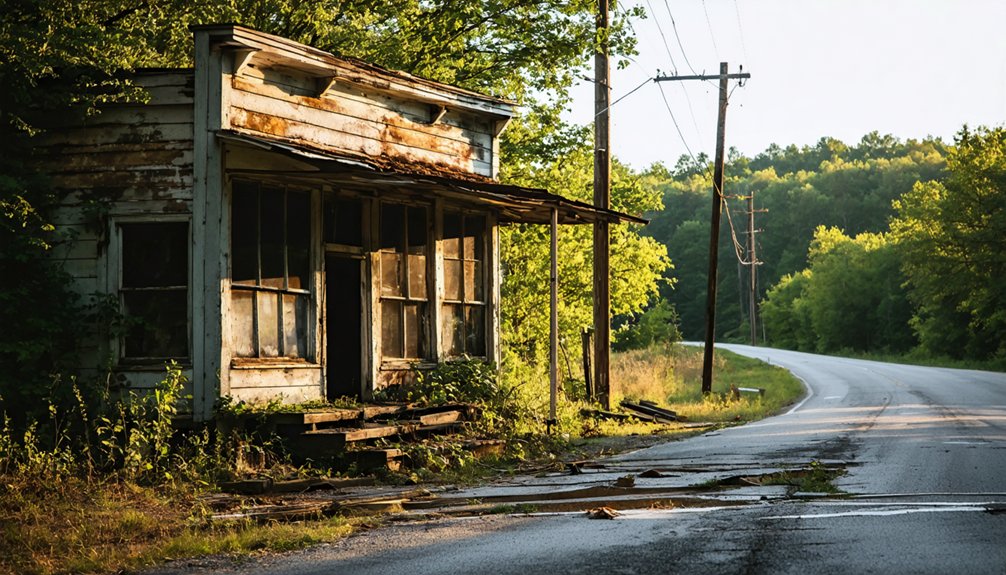
Whether Dry Fork truly earns the “ghost town” label depends on what you expect to find. If you’re chasing ghost town myths of completely abandoned streets and crumbling storefronts, you might feel underwhelmed.
Dry Fork isn’t uniformly deserted — it’s a diminished rural community, not a cinematic ruin.
That said, rural exploration here rewards the curious. You’ll encounter scattered older structures, quiet cemeteries, and traces of a 19th-century farming settlement that slowly faded as populations shifted and transport routes changed.
Scattered structures and quiet cemeteries whisper of a 19th-century farming life slowly swallowed by time.
The post office is gone, small businesses have closed, and the silence feels earned.
Think of Dry Fork less as a frozen moment in time and more as a living landscape slowly exhaling its past — still worth visiting, just on its own honest terms.
How to Get to Dry Fork From Bowling Green
Getting to Dry Fork takes about 20 to 30 minutes from downtown Bowling Green, and the route is straightforward once you’re on U.S. Highway 31W heading south into Barren County.
From there, you’ll turn onto local county roads to reach the community. Your directions options are simple, but don’t rely solely on GPS tips from default navigation apps—rural signage out here is sparse, and some apps lag behind road changes.
Download an offline map before you leave and consider printing a backup. Cell service gets spotty as you move deeper into the county, so having that redundancy matters.
The drive itself rewards you with rolling farmland and classic Kentucky scenery, making the journey feel less like transit and more like the road trip experience you came for.
The Best Time of Year to Visit Dry Fork
Spring and fall stand out as the best seasons to visit Dry Fork, and each offers something the other doesn’t.
In spring, wildflowers soften the old cemeteries, and mild temperatures make walking the back roads genuinely enjoyable. It’s easier to spot aging structures before summer foliage swallows them whole. Weather considerations matter here—spring rains can soften unpaved county roads, so check conditions before heading out.
Fall flips the script with cooler air, brilliant color, and thinner insect populations. The seasonal attractions shift toward harvest scenery, barn quilts, and roadside farm stands still running before winter sets in.
Both seasons give you comfortable exploration windows without summer’s heat and humidity. Avoid winter if you can—short daylight hours and muddy roads limit your freedom to roam freely.
Old Churches, Cemeteries, and Structures Worth Stopping For
Once you’ve settled on your season and mapped out your route, the real reward of any Dry Fork visit lies in its quieter, slower stops—old churches, overgrown cemeteries, and weathered structures that speak louder than any roadside marker.
These remnants of rural life offer rich opportunities for rural photography and a genuine feel for historic architecture that no museum replicates.
Rural remnants speak honestly—offering photography and architectural history no museum can replicate.
Watch for these standout stops:
- Country churches — modest, aging buildings whose peeling paint and hand-lettered signs reward patient photographers
- Rural cemeteries — iron-fenced plots with hand-carved headstones tucked along overgrown fence lines
- Weathered barns and foundations — structural remnants that frame compelling shots against open Kentucky sky
Always confirm you’re on public land before stepping closer. Respect these spaces, and they’ll tell their stories freely.
Day Trips From Dry Fork: Caves, Corvettes, and Civil War Sites
Once you’ve soaked in Dry Fork’s quiet, faded atmosphere, south-central Kentucky rewards you with bigger adventures just a short drive away.
Head north to Bowling Green and you’ll find the National Corvette Museum, a surprisingly engaging stop even if you’re not a car enthusiast. Then push further into the region to explore Civil War–era sites that shaped this contested border state.
If underground wonders appeal to you, nearby cave systems carve through the karst landscape and offer a striking contrast to the open farmland you’ve been driving through all day.
Nearby Cave Systems
Because south-central Kentucky sits atop one of the world’s most extensive cave systems, you’re never far from a remarkable underground adventure when you’re exploring the Dry Fork area.
Cave exploration here means wandering through passages sculpted by millennia of water and stone, revealing geological formations that genuinely stop you in your tracks.
- Mammoth Cave National Park — roughly an hour northwest, it’s the world’s longest known cave system and offers guided and self-guided tours for every experience level.
- Diamond Caverns — a shorter drive away near Park City, featuring dramatic geological formations including stalactites, stalagmites, and flowstone.
- Hidden River Cave — located in Horse Cave, it blends cave exploration with conservation history and an underground river experience.
Pack layers — caves stay cool year-round regardless of surface temperatures.
National Corvette Museum
Just 30 minutes north of Dry Fork in Bowling Green, the National Corvette Museum makes for one of the easiest and most rewarding day-trip detours you’ll find in south-central Kentucky.
You’ll explore decades of Corvette history through immersive displays, rare prototypes, and race-driven machines that define American automotive culture at its boldest. The museum doesn’t just showcase cars—it captures a spirit of speed, independence, and open-road freedom that resonates deeply with road-trippers.
Don’t miss the famous Sinkhole exhibit, where a real cave-in swallowed eight Corvettes in 2014, blending Kentucky’s karst geology with motorsport drama. Admission is affordable, the facility is well-maintained, and you can easily spend two to three hours here before heading back south toward Barren County.
Civil War Historic Sites
South-central Kentucky sits on ground soaked in Civil War history, and a day trip from Dry Fork puts you within reach of some of the conflict’s most quietly powerful landmarks.
Historic Battlefields and preserved sites scatter across the region, letting you move through history at your own pace.
- Mill Springs Battlefield – One of the Union’s first major western victories, where rolling terrain still tells the story of fierce 1862 fighting.
- Perryville Battlefield State Historic Site – Kentucky’s largest Civil War engagement, offering walking trails through remarkably preserved ground.
- Munfordville’s Green River Bridge Site – A strategic crossing point that changed hands during the war, now marked with interpretive signage.
Walk these grounds on your own terms—no crowds, no rush, just open history.
How to Explore Dry Fork Without Getting Fined or Hurt
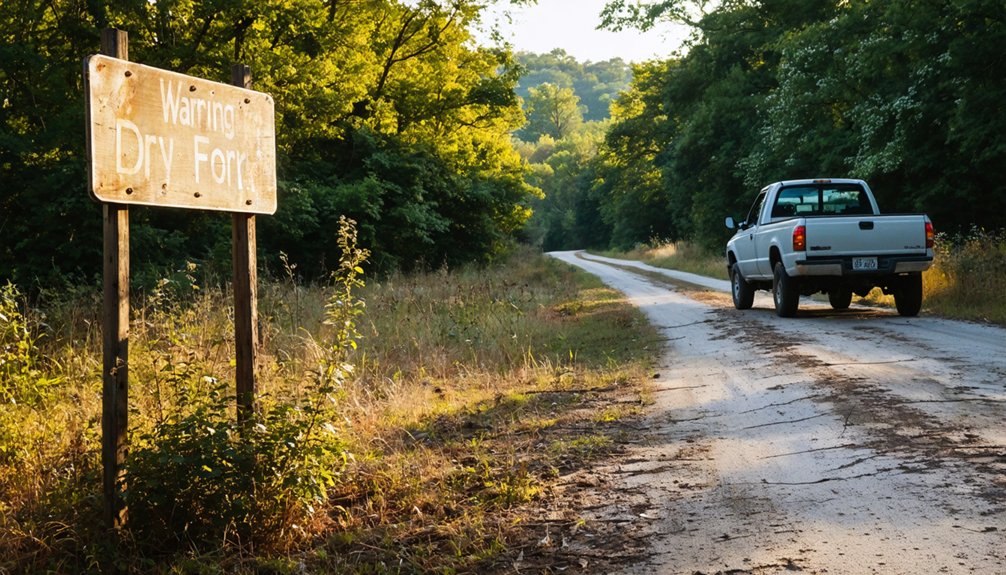
Before you step foot on any property in Dry Fork, confirm it’s publicly accessible—trespassing on private land can earn you a fine or worse, an unwelcome confrontation with a landowner.
Once you’re in a legal spot, watch your step around collapsed barns, broken foundations, and overgrown debris, since these structures can give way without warning.
Snap your photos, soak in the atmosphere, and leave everything exactly as you found it, because removing artifacts is illegal and strips the site of the history that made it worth visiting in the first place.
Respect Private Property Boundaries
Wandering through Dry Fork’s scattered remnants feels adventurous, but most of what catches your eye—those weathered barns, crumbling foundations, and overgrown homesteads—sits on private land.
Respecting property boundaries isn’t just legal obligation; it’s rural etiquette that keeps future explorers welcome. Landowners notice trespassers, and Kentucky law backs them firmly.
Before stepping off the roadside, confirm you’re on public right-of-way. When in doubt, don’t cross the fence.
- Watch for posted “No Trespassing” signs, even when structures appear abandoned
- Knock and ask permission if a landowner is present—most appreciate the respect
- Stick to roadsides and publicly accessible cemeteries for photography
Freedom to explore depends on earning trust. Honor these boundaries, and the road stays open.
Watch For Physical Hazards
Many of Dry Fork’s most photogenic structures are also its most dangerous. Collapsed barn floors, crumbling foundations, and rotting roof beams can give way without warning, so hazard awareness isn’t optional — it’s essential.
Before you step inside any structure, assess its structural integrity from the outside first. Look for sagging rooflines, leaning walls, and broken support beams. If something looks unstable, trust that instinct and stay back.
Beyond buildings, overgrown lots hide old well shafts, rusted metal, and broken glass. Snakes favor exactly the kind of debris-filled corners that make great photographs.
Wear sturdy boots, watch every step, and never explore alone. Carry a basic first-aid kit and let someone know your planned route. Freedom to explore means nothing if you’re too injured to enjoy it.
Leave No Trace Behind
Ghost towns carry a quiet dignity that’s easy to disturb and impossible to restore once it’s gone.
Sustainable tourism means you experience Dry Fork without consuming it. Environmental responsibility isn’t bureaucratic language—it’s the difference between preserving history and erasing it.
Follow these non-negotiable principles:
- Photograph, don’t pocket. Removing artifacts, bottles, or structural fragments is illegal and strips future visitors of authentic discovery.
- Pack out everything you bring in. Trash left behind accelerates decay and signals disrespect to landowners and remaining residents.
- Stay on accessible paths. Trampling overgrown areas damages fragile ecosystems and destabilizes already compromised foundations beneath the soil.
You’re a guest here. Treat Dry Fork accordingly, and it’ll remain worth visiting for everyone who follows your tracks.
Frequently Asked Questions
Is There a Fee to Visit or Park Near Dry Fork?
There’s no official fee for visiting Dry Fork, but always respect private property for the best visitor experiences. Stay mindful of local parking regulations along rural roads to keep your freedom-filled adventure trouble-free!
Are There Any Guided Tours Available in Dry Fork?
You won’t find formal guided tours in Dry Fork, but you can discover guided explorations through nearby Bowling Green’s heritage groups, where passionate locals share rich local history, giving you the freedom to roam authentically.
Can I Camp Overnight Near the Dry Fork Area?
Why not sleep under Kentucky’s stars? You can explore nearby campgrounds for overnight stays, but always check local camping regulations first — Dry Fork itself lacks designated sites, so plan your freedom-filled adventure just outside the area!
Is Dry Fork Accessible for Visitors With Mobility Limitations?
Dry Fork’s rural terrain limits mobility options, as it lacks formal accessibility features like paved paths. You’ll navigate uneven ground and gravel roads, so plan accordingly and bring any assistive gear you need for comfortable exploration.
Are Pets Allowed When Exploring Rural Areas Around Dry Fork?
You can bring your pet through Dry Fork’s sun-dappled country roads, but always check local pet regulations and leash rules. Seek pet friendly accommodations nearby, and watch for wildlife lurking in overgrown fields.
References
- https://www.youtube.com/watch?v=c2MRd030OAE
- https://www.explore.com/1480108/explore-ghost-towns-scary-road-trip-america-kentucky/
- https://en.wikipedia.org/wiki/List_of_ghost_towns_in_Kentucky
- https://wikipedia.nucleos.com/viewer/wikipedia_en_all/A/List_of_ghost_towns_in_Kentucky
- https://www.youtube.com/watch?v=D9gOmfCuKLs
- http://freepages.rootsweb.com/~gtusa/history/usa/ky.htm
- https://www.onlyinyourstate.com/experiences/kentucky/ghost-town-ky
- https://www.ghosttowns.com/states/ky/ky.html
- https://ghost-towns.close-to-me.com/states/kentucky/
- https://www.reddit.com/r/Kentucky/comments/rt33t2/any_creepy_small_towns_in_eastern_ky/