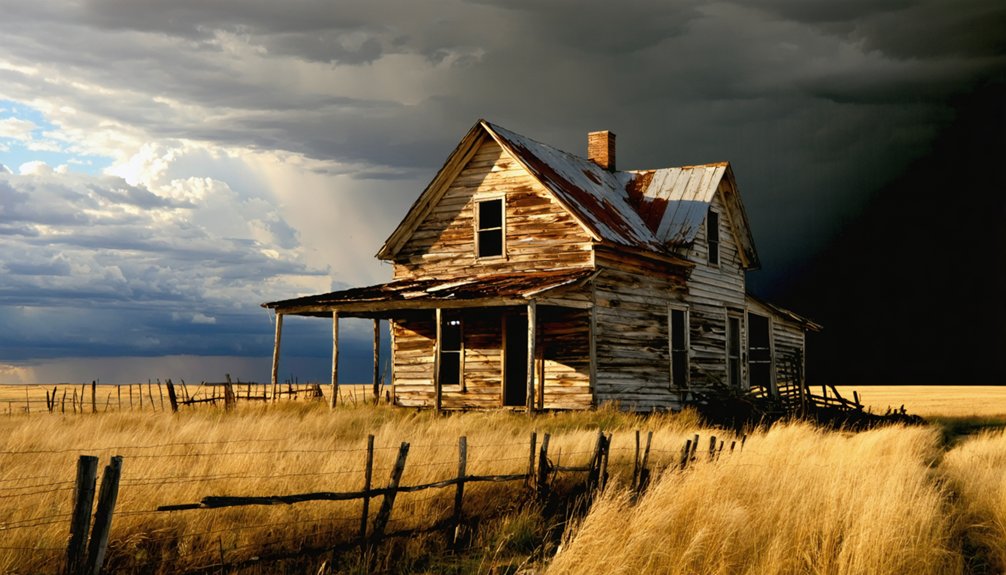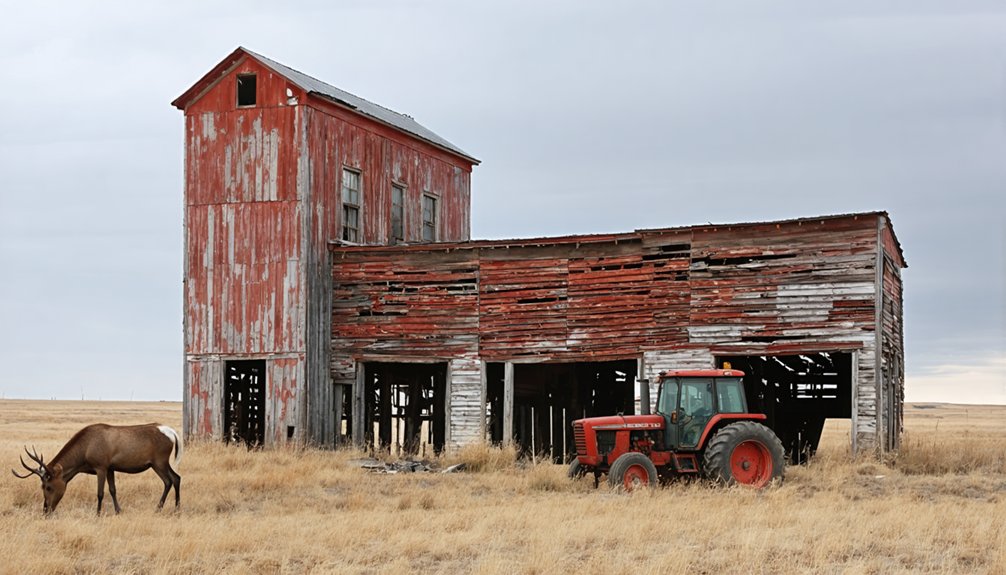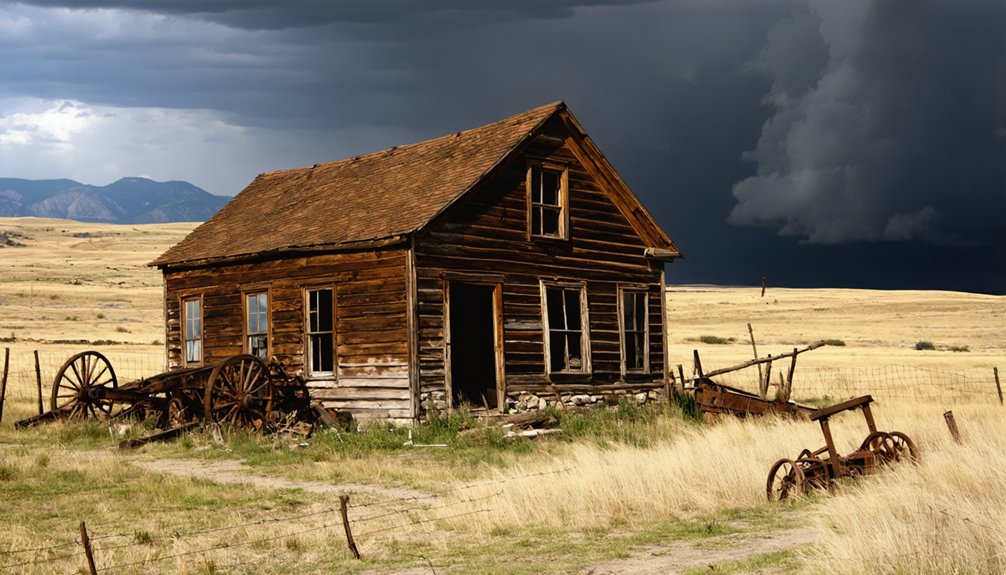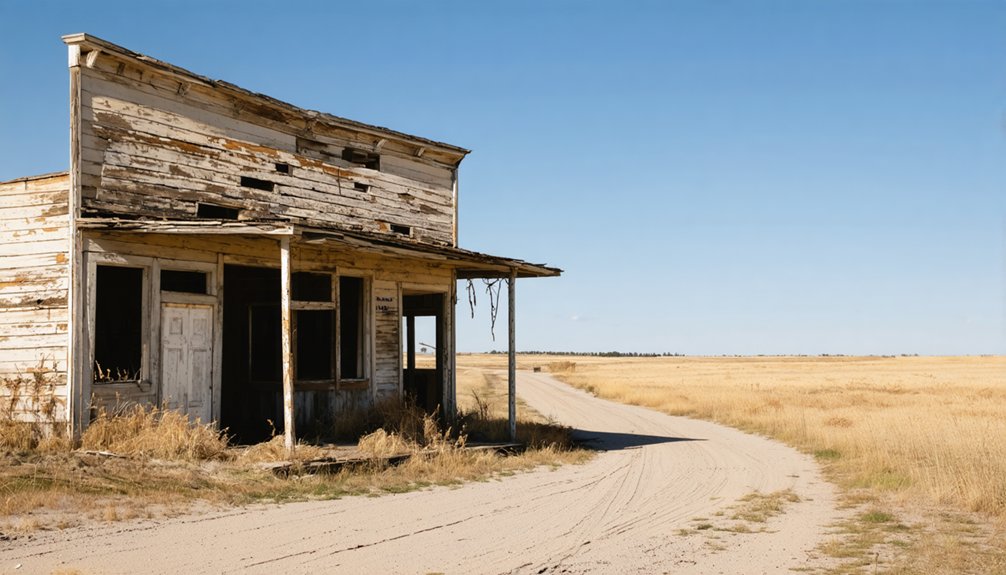
To plan your ghost town road trip to Dyce, South Dakota, start in Rapid City and head southwest on Highway 16 into the Black Hills. You’ll trade pavement for gravel as civilization fades behind you. Dyce barely exists on modern maps, but its weathered foundations, rusted remnants, and collapsed timber structures tell stories the history books skipped. Pack water, sturdy boots, and a paper map—then keep going to uncover everything this forgotten frontier still holds.
Key Takeaways
- Dyce is a remote Black Hills ghost town; contact county offices or local historical societies to confirm land access before visiting.
- Travel from Rapid City via Highway 16, transitioning from paved to gravel roads; a high-clearance vehicle is strongly recommended.
- Pack water, a paper map, sturdy boots, weather layers, and extra batteries, as cell service is extremely limited in the area.
- Explore remnants like weathered foundations, rusted artifacts, and collapsed timber structures that reflect Dyce’s gold rush and railroad era history.
- Nearby ghost towns including Mystic, Rockerville, and Cascade offer additional historical stops worth combining into a single road trip itinerary.
What Is Dyce, South Dakota?
Dyce, South Dakota is one of those blink-and-you’ll-miss-it chapters in the American West’s story — a frontier settlement that rose during the region’s gold rush and railroad era, then quietly faded when the economic tides shifted and left its buildings to the wind and the prairie grass.
Today, it exists more as a whisper than a destination — a name that surfaces in local legends passed between historians and road-trippers chasing something real beyond the tourist corridors.
Ghost stories cling to places like Dyce the way rust clings to old iron: naturally, stubbornly, honestly.
If you’re drawn to landscapes where freedom feels tangible and history isn’t sanitized for convenience, Dyce represents exactly the kind of forgotten corner worth seeking out on your own terms.
Where Is Dyce Located in the Black Hills?
Tucked within the rugged folds of the Black Hills, Dyce sits in a region where abandoned mine shafts and ghost-quiet valleys still whisper of South Dakota’s gold rush past.
You’ll find your bearings by tracking nearby landmarks — the Black Hills’ familiar peaks and historic corridors like Highway 16 serve as your navigational anchors through this sparsely documented terrain.
Pinning down Dyce’s exact county and coordinates demands some detective work, but that hunt itself becomes part of the road trip’s appeal.
Dyce’s Black Hills Position
Deep in the Black Hills of South Dakota, Dyce sits as one of the region’s forgotten frontier settlements, its exact coordinates lost to time much like the community itself.
Black Hills geography shaped every ghost town’s fate — rugged terrain, dense ponderosa pine forests, and gold-rich gulches determined where communities rose and where they quietly disappeared.
Dyce history mirrors this pattern. Like neighboring forgotten settlements scattered between Rapid City and the Wyoming border, Dyce emerged during an era when ambition outpaced permanence.
You’ll find yourself traversing two-lane highways and gravel roads through terrain that hasn’t changed much since those early settlers arrived.
The Black Hills don’t surrender their secrets easily, but that challenge is precisely what makes chasing them so rewarding for the freedom-seeking traveler.
Nearby Landmark Reference Points
Three major landmarks anchor your search for Dyce within the Black Hills: Hill City, Rapid City, and the pine-draped corridor of Highway 16 running between them.
These reference points ground you in ghost town history shaped by the mining boom that carved civilization into these granite ridges.
Use these emotional touchstones as you navigate:
- Hill City — the last familiar town before wilderness swallows the road
- Rapid City — your gateway, where modern comforts fade into frontier memory
- Highway 16 — the asphalt thread connecting abandoned dreams to living ones
- The Black Hills pine corridor — where shadows fall across forgotten foundations and silence speaks loudest
You’re not just finding a location.
You’re tracing the ghost of ambition itself.
County And Regional Context
Moving outward from those landmark anchors, you’ll want to place Dyce within the broader county framework that defines travel and access across the Black Hills.
This rugged region carries enormous historical significance, shaped by gold fever, railroad ambition, and communities that rose and vanished within a generation. County roads here don’t just connect destinations — they thread through layered histories where local legends still echo across abandoned foundations and weathered timber.
Understanding which county claims Dyce helps you navigate access roads, identify land ownership boundaries, and respect private property lines that govern many remote sites.
The Black Hills region rewards travelers who study its administrative geography before departing, turning what might seem like bureaucratic detail into genuine freedom — the freedom to explore confidently, responsibly, and without unexpected dead ends blocking your path.
How to Get to Dyce From Rapid City
From Rapid City, you’ll head south on Highway 16 through the heart of the Black Hills, tracing the same corridor that once carried miners, merchants, and dreamers toward boom towns that no longer appear on modern maps.
Expect the pavement to give way to gravel as you push deeper into the hills, where washboard roads and seasonal conditions can slow your progress considerably.
Check road conditions before you leave, since remote stretches near abandoned settlements often go ungraded and can turn treacherous after rain.
Driving Routes From Rapid City
Heading out of Rapid City, you’ll follow the same rugged corridors that once carried miners, railroad crews, and frontier settlers deeper into the Black Hills.
These roads still breathe with ghost town legends if you know where to look.
Your route unfolds like chapters of forgotten history:
- Take Highway 16 west, threading through canyon walls scarred by decades of ambition.
- Watch for gravel turnoffs where abandoned architecture emerges unexpectedly from treelines.
- Pass through Hill City, once a boomtown crossroads connecting dreamers to distant strikes.
- Follow county roads south, where pavement surrenders to dirt and silence replaces traffic.
Each mile strips away modern noise.
You’re not just driving — you’re reclaiming a landscape that civilization briefly touched, then released back into wild, unguarded freedom.
Road Conditions And Accessibility
The road to Dyce doesn’t announce itself — you’ll earn it through a patchwork of two-lane highways and gravel stretches that unspool from Rapid City’s western edge into increasingly unforgiving terrain.
Road conditions shift without warning; pavement surrenders to washboard gravel, and seasonal rains can render those final miles genuinely impassable. Accessibility challenges multiply the deeper you push into the Black Hills backcountry.
Check conditions before departing — locals at fuel stops along Highway 16 often know what no app will tell you.
High-clearance vehicles handle the unpredictability far better than standard sedans. Spring thaw and late-autumn frost create their own obstacles.
But that resistance is precisely the point — Dyce doesn’t belong to the casual tourist. It belongs to the determined traveler willing to meet the landscape on its own terms.
What Remains of Dyce Today?
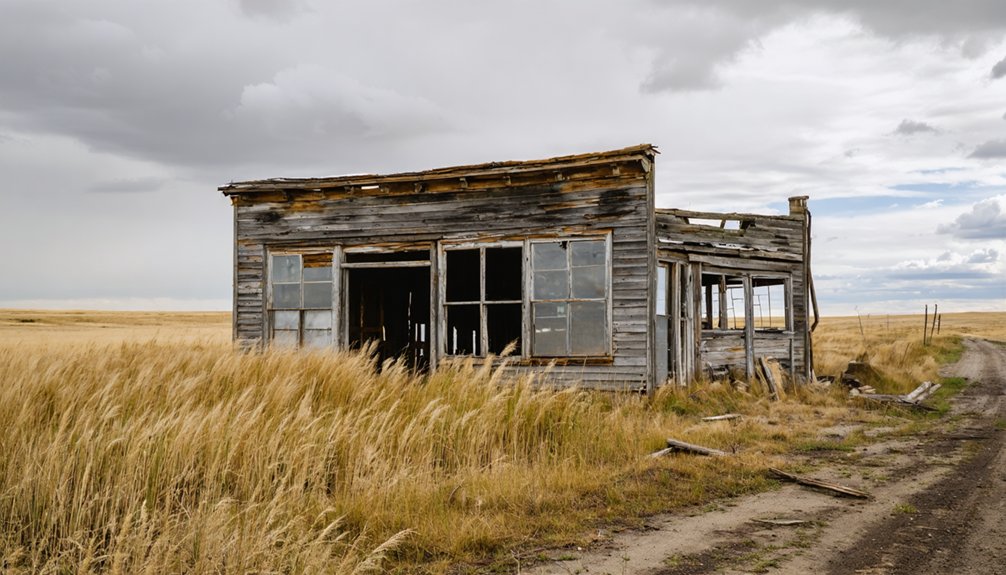
Like most South Dakota ghost towns that flourished briefly during the mining and railroad eras, Dyce today offers little more than scattered remnants hinting at its former life.
These Dyce remnants carry profound historical significance for those willing to seek them out.
When you arrive, expect to find:
- Weathered foundations — crumbling stone outlines where families once built their dreams
- Overgrown pathways — former streets reclaimed by prairie grasses and wildflowers
- Rusted artifacts — fragments of tools and hardware left behind by departing settlers
- Collapsed timber structures — skeletal remains of buildings that once housed commerce and community
Each element whispers stories of ambition and abandonment.
You’re not just visiting a location — you’re standing inside a moment history forgot to erase.
Who Can Access Black Hills Ghost Towns on Private Land?
Accessing Black Hills ghost towns on private land isn’t as simple as pulling off the highway and wandering through weathered doorways — you’ll need explicit permission from the landowner before setting foot on restricted property.
Private property boundaries often cut straight through historically rich terrain, meaning those crumbling saloons and abandoned schoolhouses you’re eyeing may belong to someone actively protecting their land.
Respecting access rights isn’t just legally smart — it preserves your freedom to explore responsibly and keeps these sites open for future wanderers.
Contact county offices or local historical societies beforehand to identify ownership. Some landowners welcome respectful visitors; others offer guided access.
Either way, honoring boundaries keeps the spirit of authentic exploration alive without legal consequences shadowing your journey through South Dakota’s forgotten frontier.
Black Hills Ghost Towns Worth Pairing With Dyce
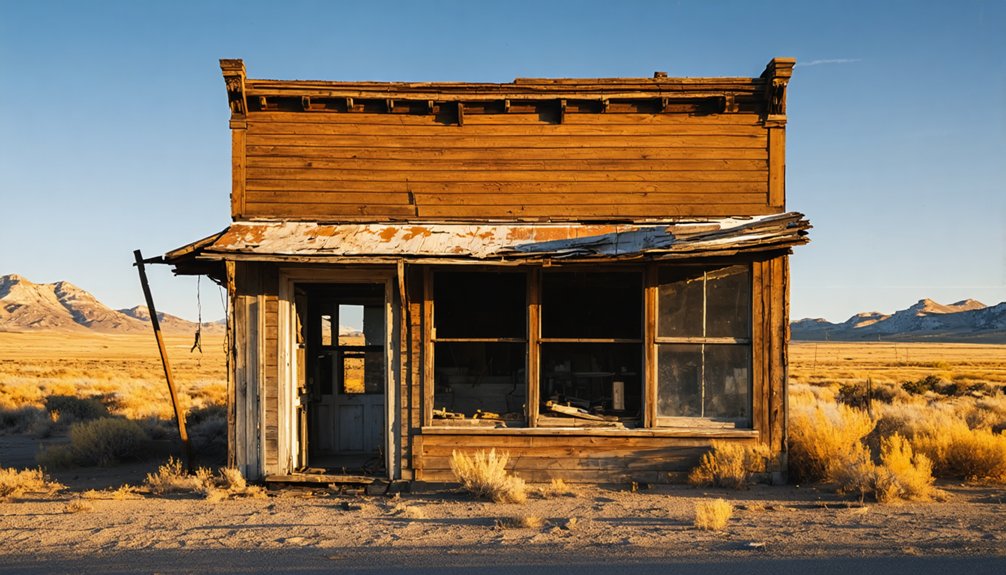
Once you’ve sorted out land access and you’re ready to broaden your ghost town itinerary, the Black Hills reward explorers willing to string together several forgotten settlements in a single road trip.
Each stop deepens your ghost town history and sharpens your photography tips instincts.
Every ghost town adds another layer to your history and hones your eye behind the lens.
- Mystic – Walk the Mickelson Trail where trains once hauled ore; golden-hour light transforms ruins into poetry.
- Scenic – The preserved Longhorn Saloon begs your camera lens and your imagination equally.
- Rockerville – An early gold rush camp that reminds you freedom once meant staking your claim in raw wilderness.
- Cascade – Founded in 1888, abandoned by 1900; its silence speaks louder than any museum placard ever could.
What to Bring for a Black Hills Ghost Town Trip
Packing for a Black Hills ghost town excursion demands the same practical instincts those frontier settlers once relied on—because out here, the nearest convenience store is often an hour behind you. Your packing essentials should include water, trail snacks, a paper map, and sturdy boots for uneven terrain and weathered floorboards.
Don’t underestimate South Dakota’s weather swings; layers earn their keep fast.
For photography tips, bring a wide-angle lens to capture collapsed storefronts and a polarizing filter to cut glare off aged wood under harsh midday sun. Golden hour rewards early arrivals.
Pack extra batteries—cell service disappears long before the scenery does. Respect private property boundaries, carry a charged GPS device, and leave nothing behind except footprints among the silence these forgotten towns have kept for generations.
How to Photograph Black Hills Ghost Towns Without Losing the Mood
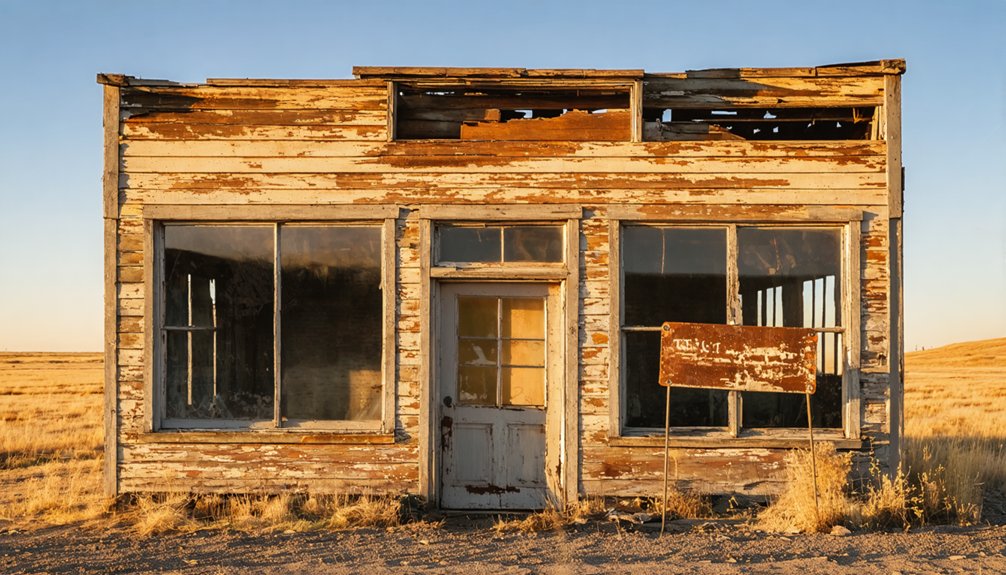
Light behaves differently around abandonment—it pools in broken windows, drags long shadows across sagging porch boards, and turns rust into something closer to grief than decay.
Ghost town photography isn’t about documentation; it’s about capturing atmosphere that whispers what words can’t hold.
Shoot during golden hour when warm light softens harsh edges and deepens shadows.
To evoke genuine emotion in your Black Hills frames:
- Shoot through doorframes to layer depth and suggest someone’s absence
- Include sky — vast, indifferent South Dakota sky humbles every broken structure beneath it
- Focus on details — a rusted hinge, peeling paint, cracked glass holds more story than wide establishing shots
- Resist over-editing — let natural desaturation honor the town’s actual fading
The mood already exists. Don’t manufacture it — find it.
Frequently Asked Questions
What Is the Best Time of Year to Visit South Dakota Ghost Towns?
You’ll uncover ghost town history best in late spring or early fall—mild temps, fewer crowds, and seasonal events breathe life into forgotten streets, igniting your wanderlust and freeing your spirit to roam untamed South Dakota landscapes.
Are There Guided Ghost Town Tours Available in the Black Hills Region?
You’ll find guided tours exploring ghost town history throughout the Black Hills region. These immersive experiences reveal forgotten frontier stories, leading you through abandoned saloons and crumbling schoolhouses, igniting your wanderlust for South Dakota’s hauntingly beautiful, freedom-filled past.
Can Children Safely Explore Abandoned Ghost Town Structures in South Dakota?
Proceed with precaution — prioritize safety precautions and constant child supervision while exploring these weathered, wonderfully wild remnants of South Dakota’s storied past. You’ll reveal history’s hidden chapters, but crumbling structures demand your vigilant, watchful eye every adventurous step.
What Wildlife Might Visitors Encounter Near Abandoned Black Hills Ghost Towns?
You’ll encounter deer, eagles, and rattlesnakes roaming lands rich with historical significance. These wildlife sightings connect you to the same untamed Black Hills wilderness that once surrounded miners chasing gold and freedom centuries ago.
Are There Camping Facilities Near Ghost Towns in the Black Hills Area?
You’ll find campgrounds near Black Hills ghost towns, though don’t expect ghost town amenities! Pack your camping essentials and embrace rugged freedom — Custer State Park and Black Hills National Forest offer sites where history’s whispers surround every crackling campfire.
References
- https://en.wikipedia.org/wiki/List_of_ghost_towns_in_South_Dakota
- https://takemytrip.com/2016/08/ardmore-south-dakota-ghost-town-and-route-71/
- https://www.tripadvisor.com/Attraction_Review-g54799-d22999414-Reviews-Scenic_Ghost_Town-Scenic_South_Dakota.html
- https://www.youtube.com/watch?v=caok4lXv4y0
- https://www.powderhouselodge.com/black-hills-attractions/fun-attractions/ghost-towns-of-western-south-dakota/?2021_TAG
- https://www.travelsouthdakota.com/trip-ideas/abandoned-beauty-ghost-towns-structures-south-dakota
- https://www.youtube.com/watch?v=_0WNYsFLSLA
- https://www.1880town.com
- https://www.facebook.com/groups/1375914112551966/posts/4012795668863784/
- https://www.youtube.com/watch?v=kpkBy_2SxlA