Planning a ghost town road trip to Frederick, Kansas means visiting one of the heartland’s most extreme examples of rural decline. You’ll find a rusting jail cell in a wheat field, an abandoned schoolhouse, and streets so empty they echo. Frederick sits in Rice County, so download offline maps before you go. Pack water, snacks, and a camera. Nearby ghost towns like Cedar Point and Diamond Springs make the trip even richer — and there’s much more to uncover ahead.
Key Takeaways
- Frederick, Kansas, located in Rice County, is accessible via winding rural roads, so downloading offline maps is essential due to limited cell service.
- Key attractions include an abandoned schoolhouse, rusting jail cell, overgrown playground, old cars, and a vanished business district reflecting the town’s quiet decline.
- Plan a 30 to 45-minute visit, focusing on the empty schoolhouse, rusting jail cell, and overgrown playground during golden hour for best photos.
- Respect private property by staying on public roads, photographing landmarks from a distance, and avoiding entry into abandoned structures like the schoolhouse.
- Pack snacks, water, sunscreen, sturdy footwear, a charged camera, and extra batteries, as no stores or services are available nearby.
Why Frederick, Kansas Is One of America’s Most Extreme Ghost Towns
Frederick, Kansas doesn’t just qualify as a ghost town — it redefines the term entirely. Incorporated in 1887, this official Kansas city once bustled with grocery stores, lumberyards, blacksmiths, and restaurants.
Today, it holds nine or ten residents on a good day.
What makes Frederick extraordinary among ghost town legends isn’t just its emptiness — it’s its legal limbo. In April, nobody ran for mayor or city council. No write-ins. Possibly no votes at all.
For the first time since 1887, Frederick exists without elected leadership, with a budget deadline looming in August.
For those drawn to rural exploration, this isn’t just a faded town — it’s a living question mark. You’re witnessing a place actively deciding whether it continues to exist.
How Frederick Fell From 150 Residents to a Population of Nine
At its peak, Frederick, Kansas hummed with the kind of everyday commerce that defined small-town America — grocery stores, lumberyards, blacksmiths, and restaurants lining a main thoroughfare that actually meant something.
At its peak, Frederick buzzed with grocers, blacksmiths, and lumberyards — the ordinary heartbeat of small-town America.
Incorporated in 1887, the town carried genuine historical significance as an official Kansas third-class city.
Then the population decline began — quietly, steadily, relentlessly.
Today, you’ll find nine or ten residents on a good day. The businesses vanished so completely that not even foundations remain.
That main thoroughfare you’d walk today? Empty. The schoolhouse sits stripped of its desks, a rusting jail cell corrodes in a wheat field, and paint-worn cars hide among overgrown trees.
Frederick didn’t collapse overnight. It simply exhaled, slowly, until almost nothing remained.
What’s Left to See in Frederick, Kansas
When you pull into Frederick, you’ll find an abandoned schoolhouse stripped bare of its desks, a rusting jail cell sitting in a wheat field, and old playground equipment slowly surrendering to weeds.
Drive a little further, and you’ll spot paint-worn cars half-hidden by overgrown trees, relics of lives once lived here.
Where businesses once lined the main thoroughfare, you’ll find nothing — no foundations, no walls, just empty air where a thriving town used to stand.
Abandoned Schoolhouse And Jail
Two crumbling landmarks anchor Frederick’s quiet desolation: an abandoned schoolhouse and a rusting jail cell sitting in a wheat field.
Step inside the schoolhouse, and you’ll find hollow silence — desks long stripped away, leaving nothing but bare floors and echoing memories of children who once filled the room. It’s a raw, unfiltered snapshot of a community that simply faded.
Outside town, the rusting jail cell stands alone amid wheat stubble, slowly surrendering to the elements.
Nobody locked it up when Frederick’s last chapter closed — nature claimed it instead. Photograph it against the open Kansas sky, and you’ve captured something honest: a symbol of order outlasting the civilization it once served.
These two relics make Frederick worth every mile of the detour.
Overgrown Playground And Cars
Beyond the jail cell and schoolhouse, Frederick hides a few more relics worth hunting down. Push past the overgrown nostalgia of rusted playground equipment, where children once laughed and swung freely before the town quietly surrendered.
The paint-worn metal stands as a stark reminder of forgotten memories, frozen in time beneath creeping weeds and silence.
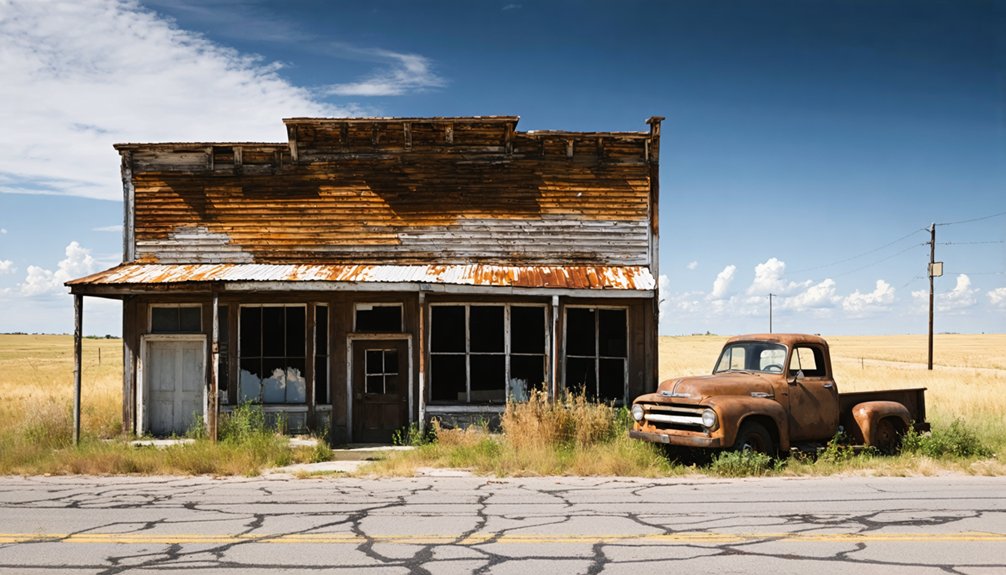
Wander a little further and you’ll spot old cars tucked among the trees, their faded bodies slowly merging with the landscape. Nobody hauled them off; they just stayed, like the town itself, stubbornly refusing a clean disappearance.
These scattered remnants aren’t marked or maintained — you’ll need a sharp eye to catch them. That’s exactly what makes Frederick worth the detour for anyone craving authentic, unfiltered American abandonment.
Vanished Business District
Once Frederick’s main thoroughfare buzzed with grocery stores, a lumberyard, blacksmiths, and restaurants — now you’ll find nothing but empty air where those buildings stood.
Unlike other ghost towns, Frederick’s vanished storefronts left zero ghostly remnants behind — no crumbling foundations, no broken walls, nothing.
Walk the empty street and feel the weight of what’s disappeared:
- Stand where a bustling grocery store once fed 150 residents — today, only wheat stubble surrounds you.
- Trace invisible walls of blacksmith shops that once rang with iron striking iron.
- Picture restaurant tables where neighbors gathered — now replaced by silence and open Kansas sky.
This erasure hits differently than ruins.
Ruins suggest survival. Here, everything simply vanished, leaving you alone with the wind.
How to Get to Frederick, Kansas
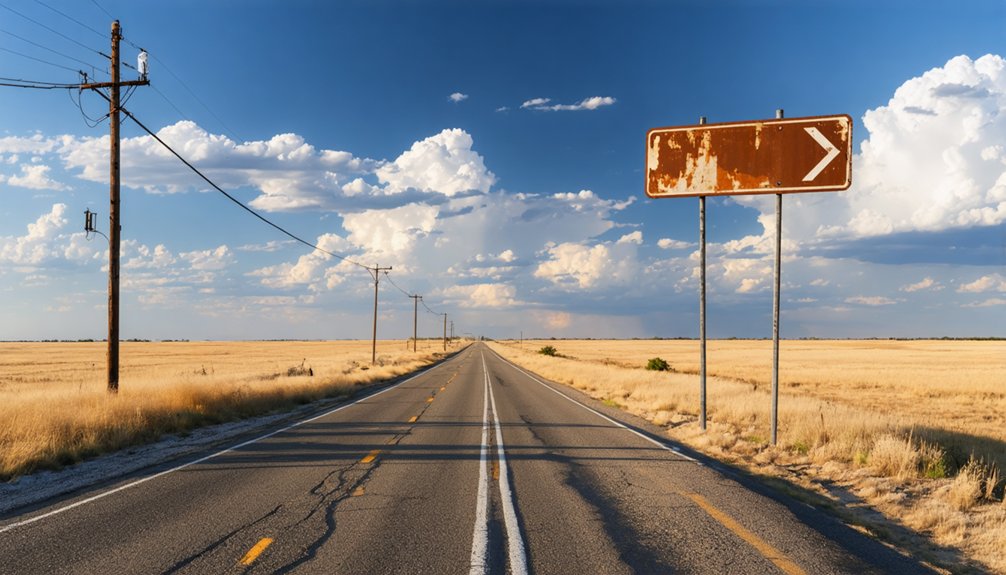
Frederick, Kansas sits tucked away in Rice County, reachable only by winding rural roads that cut through endless wheat stubble fields. You won’t find it on any major highway, so download offline maps before you leave civilization behind.
Head into Rice County’s rural grid, follow the county roads, and let the landscape shift from busy to beautifully forgotten.
Once you arrive, you’ll immediately absorb the ghost town culture — empty streets, stripped schoolhouses, and a rusting jail cell swallowed by farmland. It’s rural decay made visible, raw and unfiltered.
Park anywhere you like; nobody’s directing traffic here. Combine your visit with nearby Chase County stops like Cedar Point or Elmdale to stretch your road trip into a full day of exploring Kansas’s quietly fading past.
Can You Walk Around Frederick Without Trespassing?
Walking through Frederick raises a fair question: what’s public, what’s private, and where’s the line?
Ghost town etiquette matters here, especially in a town where nine people still live. For respectful rural exploration, follow these guidelines:
- Stay on public roads and rights-of-way — the empty main thoroughfare and surrounding streets are yours to walk freely without worry.
- Photograph from a distance — the rusting jail cell sits in a wheat field, likely private farmland; admire it without crossing the fence.
- Respect the schoolhouse boundaries — it’s abandoned but potentially privately owned; peering through windows differs from stepping inside uninvited.
Frederick’s remaining residents chose to stay.
Honor their quiet lives by treating their shrinking hometown with the dignity it deserves.
The Best Photo Spots in Frederick, Kansas
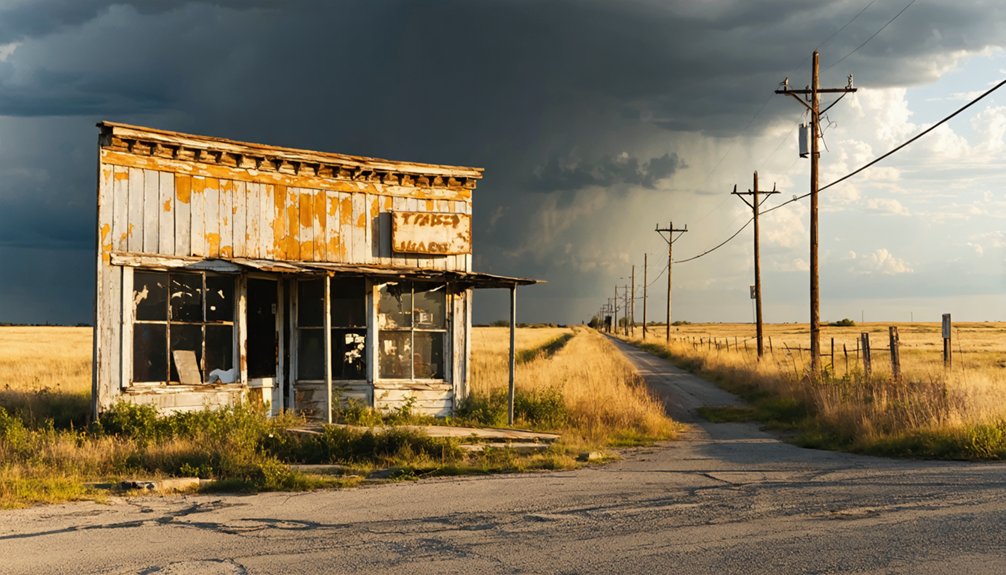
Few ghost towns offer Frederick’s particular brand of decay — intimate, quiet, and photogenic in unexpected ways.
You’ll find your strongest shots at the rusting jail cell rising from wheat stubble, where photo composition practically arranges itself against open Kansas sky.
Shoot the empty schoolhouse during golden hour; morning and late afternoon lighting techniques transform weathered wood into something almost warm.
The empty schoolhouse earns its best portraits during golden hour, when fading light softens decades of weathered wood.
The overgrown playground equipment hides among trees, giving you layered depth between rusted metal and tangled branches.
Old paint-worn cars tucked beneath tree cover reward patient explorers willing to push past obvious angles.
Since the streets sit completely empty, you won’t rush your shots.
Work slowly, change your position often, and let Frederick’s silence become part of what your camera captures.
Frederick Has No Mayor: Here’s What That Actually Means
When April’s municipal election came and went in Frederick, Kansas, not a single candidate stepped forward for mayor or city council — and not a single write-in appeared on the ballot.
For the first time since 1887, this official Kansas city has no leaders. Municipal responsibilities like approving the August 25 budget now hang unanswered. Community engagement has fundamentally flatlined.
Here’s what that actually means for a town of nine or ten people:
- No elected voice exists to represent residents in county or state matters.
- Critical decisions about Frederick’s legal future go unmade.
- The town itself must consciously choose between survival and an official, documented death.
You’re witnessing something rare — a living community deciding whether it still wants to exist.
How Long Should You Spend in Frederick?
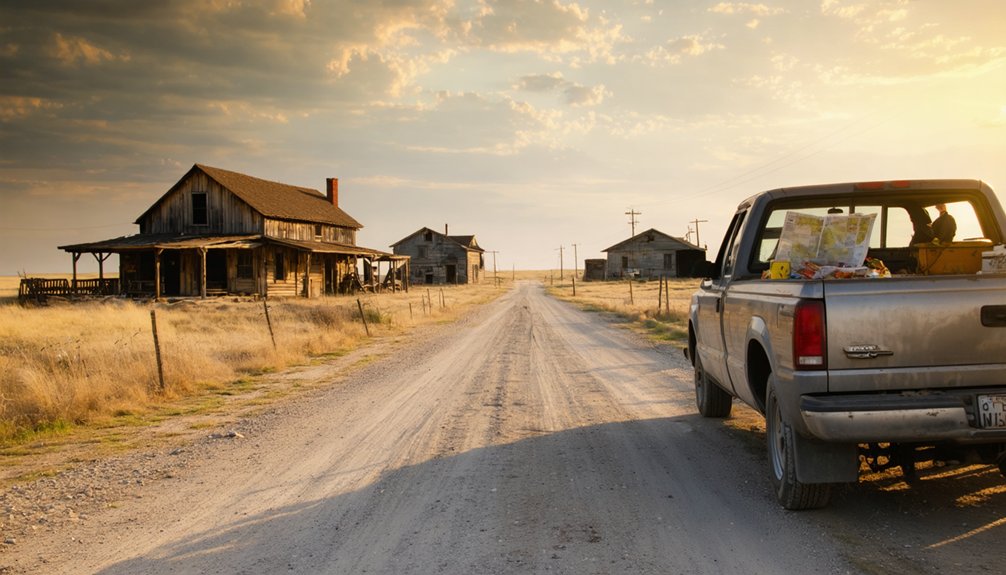
You’ll cover Frederick’s highlights—the empty schoolhouse, rusting jail cell, overgrown playground, and ghost business lots—in under an hour, so plan accordingly.
Since you’re already out in Rice County, it’s worth combining the stop with nearby Chase County towns like Cedar Point and Elmdale to make the drive worthwhile.
Together, these sites give you a fuller picture of small-town Kansas decline without stretching your day too thin.
Quick Visit Time Frame
Since Frederick is barely a blip on the map, plan to spend no more than 30 to 45 minutes exploring what little remains.
Yet those minutes carry enormous historical significance, delivering raw ghost town experiences you won’t forget.
Make every minute count by focusing on these three stops:
- The empty schoolhouse — walk through stripped halls where children once learned, now eerily silent.
- The rusting jail cell — standing alone in a wheat field, it whispers stories of a community that once governed itself.
- The overgrown playground — faded paint, forgotten equipment, and abandoned cars hidden among trees tell Frederick’s quiet collapse.
You’re free to linger longer, but Frederick reveals its soul quickly.
Sometimes the most powerful places demand the least amount of time.
Combining Nearby Ghost Towns
Frederick works best as one stop on a broader ghost town circuit through central Kansas, where nearby towns like Cedar Point, Elmdale, and Diamond Springs reward the curious traveler with entirely different flavors of abandonment.
Cedar Point in Chase County still holds around 28 residents and carries ghost town history stretching back to a 1920 peak of 190 people.
Elmdale offers a post office lineage dating to 1873.
Diamond Springs carries darker weight — Confederate raiders struck there in 1863.
Each site deepens your rural exploration by layering distinct stories of rise and collapse.
Plan your route to connect these stops efficiently, moving through Rice and Chase counties in a single day.
Together, they paint a fuller picture of Kansas’s quietly vanishing small-town landscape.
Ghost Towns Near Frederick Worth Adding to Your Route
While you’re in the area, four ghost towns within reasonable driving distance make worthy additions to your Frederick itinerary.
Each offers unique ghost town photography opportunities and rewards your rural exploration instincts.
- Cedar Point (Chase County) — Once home to 190 souls in 1920, today only 28 remain, leaving behind a haunting silence you’ll feel in your chest.
- Elmdale (Chase County) — Incorporated in 1904, this fading community still stands, giving you tangible remnants to photograph and explore freely.
- Diamond Springs — Confederate raiders attacked here in 1863, and though the post office closed decades ago, the cemetery remains, whispering stories of survival and loss.
Combine these stops with Frederick for a single unforgettable drive through Kansas’s forgotten landscape.
What to Bring Before You Drive to Frederick
Before you leave for Frederick, pack a few essentials that’ll make your ghost town experience smoother and more rewarding.
Ghost town photography demands good lighting and a charged camera, so bring extra batteries and memory cards. The rusting jail cell and stripped schoolhouse deserve sharp, detailed shots.
For rural exploration across Rice County’s wheat stubble roads, sturdy walking shoes and water are non-negotiable. Cell service runs thin out here, so download offline maps beforehand.
Sunscreen and a hat shield you during open-field wandering.
Carry a notebook to jot observations about Frederick’s eerily quiet streets and vanished businesses. Since no stores operate nearby, pack snacks and fuel up before heading out.
Arriving prepared means you’ll spend less time scrambling and more time absorbing this haunting, forgotten place.
Before You Go: Safety at Abandoned Sites
Ghost town structures have stood without maintenance for decades. Floors, stairs and roof timbers fail without warning, and a building that looks solid from outside may not hold your weight. Stay out of standing structures unless the site is actively maintained and open to visitors.
Mine workings are the more serious hazard. Vertical shafts can be hundreds of feet deep, are often unfenced, and may be hidden by brush or capped with rotted boards. Never enter an adit, tunnel or shaft: abandoned workings can hold oxygen-poor or toxic air that gives no warning before you lose consciousness.
Enclosed spaces with rodent droppings carry a risk of hantavirus, which is contracted by breathing contaminated dust. Do not sweep or stir up dust inside old cabins and outbuildings.
Cell coverage at these sites is usually poor or absent. Tell someone your route and expected return time, and carry more water than you think you need.
Frequently Asked Questions
Is Frederick, Kansas Safe to Visit at Night?
You can visit Frederick at night, but you’ll want to stay alert. The isolated, unlit streets pose navigation challenges, and local wildlife roams freely. Embrace the eerie freedom, but prioritize your nighttime safety by bringing flashlights and a companion.
Are There Any Festivals or Events Held in Frederick?
Like a ghost itself, Frederick holds no festivals or events. You won’t find local traditions or seasonal celebrations here — its nine residents keep quiet lives, leaving you free to explore its haunting emptiness undisturbed.
Can You Camp Overnight Near Frederick, Kansas?
You won’t find camping options directly in Frederick, but you can explore nearby parks in Rice County for overnight stays, letting you freely discover this hauntingly quiet ghost town under the vast Kansas stars.
Is Frederick, Kansas Accessible for Visitors With Disabilities?
Frederick’s rural roads and uneven terrain make wheelchair access challenging. You’ll find no local accommodations or paved pathways, so plan accordingly. Bring your adventurous spirit, but prepare for rugged, unpredictable conditions that’ll test your freedom-seeking resolve!
Has Frederick, Kansas Ever Appeared in Films or Documentaries?
With just 9–10 residents, Frederick hasn’t appeared in known film locations or documentary features. But you’d agree its rusting jail, empty schoolhouse, and vanished businesses create a hauntingly cinematic landscape begging for discovery.
References
- http://kansasghosttowns.blogspot.com/2015/07/frederick-population-nine-lingers-as.html
- https://www.hhhistory.com/2019/05/ghost-towns-of-kansas.html
- https://www.youtube.com/watch?v=dy7nLwjHkbY
- https://thewanderingpigeon.com/2015/10/03/day-of-kansas-ghost-towns/
- https://legendsofkansas.com/coffey-county-kansas-extinct-towns/