Planning a ghost town road trip to North Orwell, Vermont means stepping into a place that’s never quite alive and never fully abandoned. You’ll approach via Route 22A from either Whitehall or Vergennes, passing landscapes untouched by franchise development. Detour through Mount Independence’s Revolutionary War ruins, explore genuinely abandoned ghost towns nearby, and uncover bizarre 1870s laws still on Orwell’s books. There’s far more hiding along this route than most travelers expect to find.
Key Takeaways
- North Orwell sits along Route 22A, reachable from Whitehall, NY (30 minutes northeast) or Vergennes, VT (20 minutes south).
- Though never fully abandoned, North Orwell offers a quiet, forgotten atmosphere that appeals to ghost town enthusiasts.
- Mount Independence, a 300-acre Revolutionary War fortress, serves as a must-visit historical detour near North Orwell.
- Nearby Glastenbury ghost town and the mysterious Bennington Triangle add eerie, adventurous stops to the road trip.
- Pack layered clothing, waterproof boots, a compass, and a physical map due to limited cell service in the area.
Is North Orwell, Vermont Actually a Ghost Town?
Whether North Orwell qualifies as a true ghost town depends on how strictly you define the term. Unlike classic ghost town origins tied to abandoned mining camps or failed railroad stops, North Orwell never fully emptied out. Orwell proper still claims around 1,239 residents, keeping it technically alive.
However, North Orwell carries the quiet, forgotten energy that draws ghost town enthusiasts in the first place. Urban legends surrounding nearby Mount Independence add a layer of mystery, including whispers of undocumented military secrets and unexplained activity dating back to the Revolutionary War.
You won’t find a completely deserted settlement here, but you’ll discover something arguably more intriguing — a place suspended between history and obscurity, where the past feels uncomfortably close and the silence speaks louder than any population count.
How To Reach North Orwell From Whitehall or Vergennes
Whether you’re coming from Whitehall, New York to the west or Vergennes, Vermont to the north, North Orwell sits conveniently between both entry points along Route 22A.
From Whitehall, you’ll head northeast across the Lake Champlain region until Route 22A carries you straight into town near the Main Street intersection.
From Vergennes, you’ll drive south along the same corridor, dropping through rural western Vermont’s preserved countryside until North Orwell appears on your right.
Routes From Whitehall
North Orwell sits conveniently between two anchor points: Whitehall, New York, to the south and Vergennes, Vermont, to the north.
From Whitehall, head north on Route 22A, crossing into Vermont through open farmland and rolling terrain packed with scenic viewpoints that reward patient travelers. The drive takes roughly 30 minutes, delivering you straight into Orwell’s quiet rural core.
Route 22A runs directly through town, intersecting Main Street near the historic site of a notorious thresher accident from the 1870s — one of many local legends that give North Orwell its layered character.
You’ll pass preserved countryside untouched by fast-food franchises or industrial sprawl, exactly the kind of unfiltered landscape that makes this road trip worth taking. Keep your eyes open; this route rewards curiosity.
Vergennes Entry Points
Vergennes offers an equally compelling entry point if you’re approaching from the north. As America’s smallest city, Vergennes carries deep Vergennes history — Revolutionary War ties, Lake Champlain commerce, and 19th-century industry shaped this compact community.
You’ll find Vergennes attractions worth a brief stop, including Kennedy Brothers Marketplace and the scenic Otter Creek Falls right downtown.
From Vergennes, head south along Route 22A through rolling farmland and preserved countryside. The drive takes roughly 20 minutes, cutting through quintessential western Vermont landscape that remains gloriously free of franchise development.
Watch for the Route 22A and Main Street intersection as you enter Orwell — your gateway to Mount Independence and the region’s fascinating Revolutionary War legacy. The open road here rewards drivers who appreciate unfiltered American history.
What Makes Mount Independence Worth the Detour
Few historic sites in Vermont pack as much Revolutionary War drama into a single visit as Mount Independence does.
Sitting along Lake Champlain’s shores in Orwell, this 300-acre fortress represents the largest fortification ever built by American colonial forces. You’ll walk among cannons, ramparts, and stone foundations that once defended a fledgling nation’s right to self-determination.
The Revolutionary History embedded in every trail here feels immediate, not distant. Winding paths reveal undocumented military evidence that researchers have investigated since 1986.
You’re not shuffling through a sanitized museum — you’re standing where ordinary people made extraordinary decisions for freedom.
History doesn’t hide behind glass here — it rises beneath your feet, demanding to be felt.
Mount Independence earned Vermont its “premier state-operated historic site” designation for good reason.
If you value liberty’s origins, this detour isn’t optional — it’s essential.
What Are the Bizarre Laws Orwell Never Repealed?
If you think Orwell’s ghost town history is strange, wait until you hear about the laws still sitting on its books.
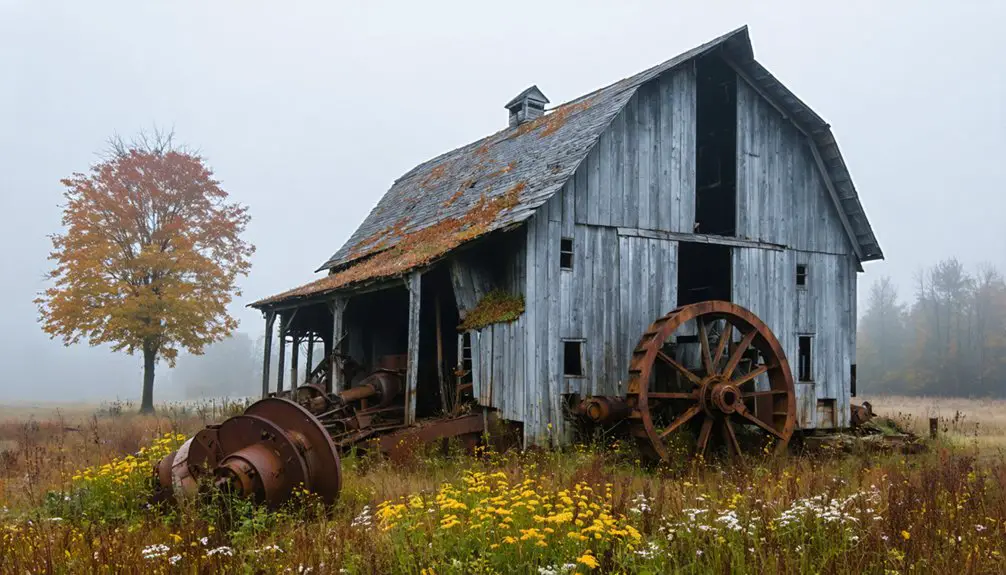
Back in the 1870s, a deadly thresher accident near the Main Street and Route 22A intersection prompted the town to ban modern farm machinery of all kinds — a restriction they never bothered to remove.
More recently, Orwell made headlines again when surrounding townships banded together to block a fast-food franchise from moving in, proving this town takes its quirky identity seriously.
The Thresher Accident Origins
What began as a tragic accident in the 1870s near Main Street and Route 22A shaped Orwell’s legal landscape in ways you’d never expect. Thresher machinery claimed the lives of young men working the fields, leaving the community devastated and demanding immediate action.
Townspeople gathered in a special meeting and voted to ban all industrial farming equipment outright.
The historical significance of that decision still echoes today. That sweeping prohibition never left the books, making Orwell one of Vermont’s most unusually governed towns.
You’re fundamentally walking through a place where grief hardened into law. Early 1900s economic hardship reinforced those restrictions even further, proving the community’s resolve.
When you visit, you’re not just seeing history — you’re standing inside it.
Modern Farm Machinery Ban
Buried in Orwell’s town records, the Law against Modern Farm Machinery of All Kinds still sits exactly where grieving townspeople left it after that 1870s tragedy.
Nobody repealed it. The historical significance of this forgotten ban reveals how deeply one accident reshaped an entire community’s relationship with farm machinery forever.
When you visit, consider what this untouched law actually represents:
- A town that chose grief over progress, freezing its rules in a single devastating moment
- Living proof that small communities can resist outside industrial pressure on their own terms
- A reminder that rural Vermont’s preserved countryside didn’t happen accidentally
Early 1900s economic collapse pushed Orwell to reintroduce equipment restrictions again.
That stubbornness shaped the quiet, franchise-free landscape you’ll drive through today.
Fast-Food Franchise Blocked
That stubbornness toward outside influence didn’t stop at farm equipment. In the late 1990s, a fast-food franchise attempted to plant its roots in Orwell, but surrounding townships shut it down cold.
You’ll find no golden arches or neon signs disrupting the skyline here. Locals understood the fast food impact on small-town character — eroded identity, displaced local businesses, and a homogenized landscape that strips places of their soul.
Town preservation wasn’t just a slogan; it was a battle fought and won. When you drive through Orwell today, you’ll notice what’s missing is exactly what makes it worth visiting.
The countryside remains raw, authentic, and unapologetically rural — a living proof of a community that consistently chose its own identity over outside convenience.
Why the Bennington Triangle Is Part of This Vermont Route
Although North Orwell sits at the heart of this road trip, the Bennington Triangle earns its place on the route by pulling you deeper into Vermont’s most haunted wilderness.
Triangle legends and Bennington myths stretch across 36 square miles northeast of Bennington, offering an untamed extension to your journey.
You’ll encounter:
- Unexplained disappearances tied to indigenous stories of a man-eating stone swallowing wanderers whole
- Strange lights and eerie sounds drifting from dense woods along wilderness paths
- Reports of monstrous animals, prehistoric or preternatural, lurking near Glastenbury Mountain
This wilderness demands respect and rewards curiosity.
The route connecting Orwell to Bennington Triangle territory lets you experience Vermont’s raw, unfiltered edge, far from anything corporate or comfortable.
Which Vermont Ghost Towns Near Orwell Are Worth a Detour?
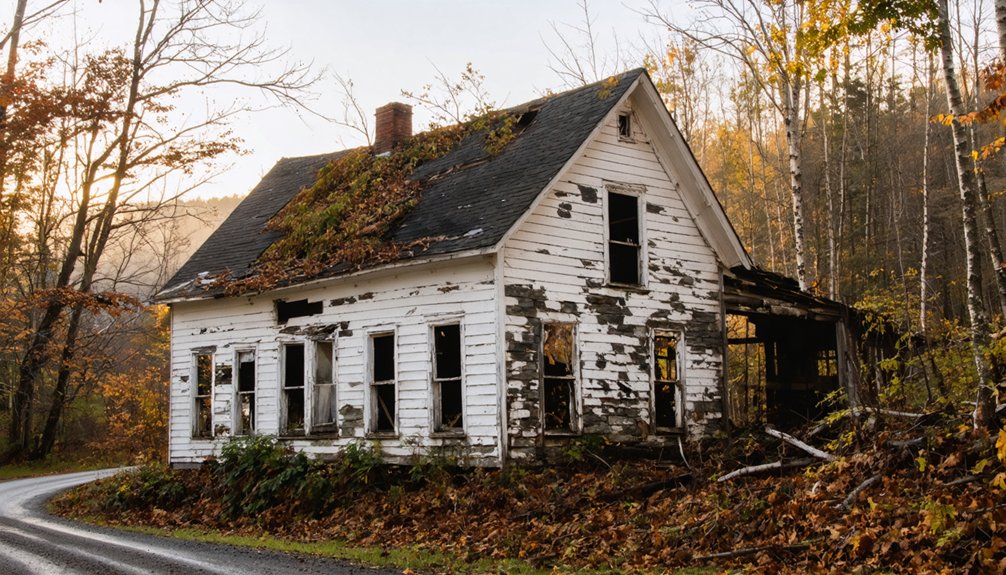
Pulling away from Bennington Triangle territory, you’ll find the ghost town detours closer to Orwell reward the drive just as powerfully.
Glastenbury history tells a sharp story: a village that survived 103 years before flooding destroyed its railroad, erasing the lumber and charcoal economy overnight. By 1937, residents had gone, leaving wilderness to reclaim everything. Today it sits unincorporated, answering to no authority — a genuine ghost town earned through collapse rather than mythology.
Glastenbury didn’t fade — it collapsed. A railroad destroyed, an economy erased, a village surrendered to wilderness by 1937.
Fayville ruins offer another stop worth your time, tucked near Glastenbury Mountain alongside Somerset, a near-ghost town holding barely six residents.
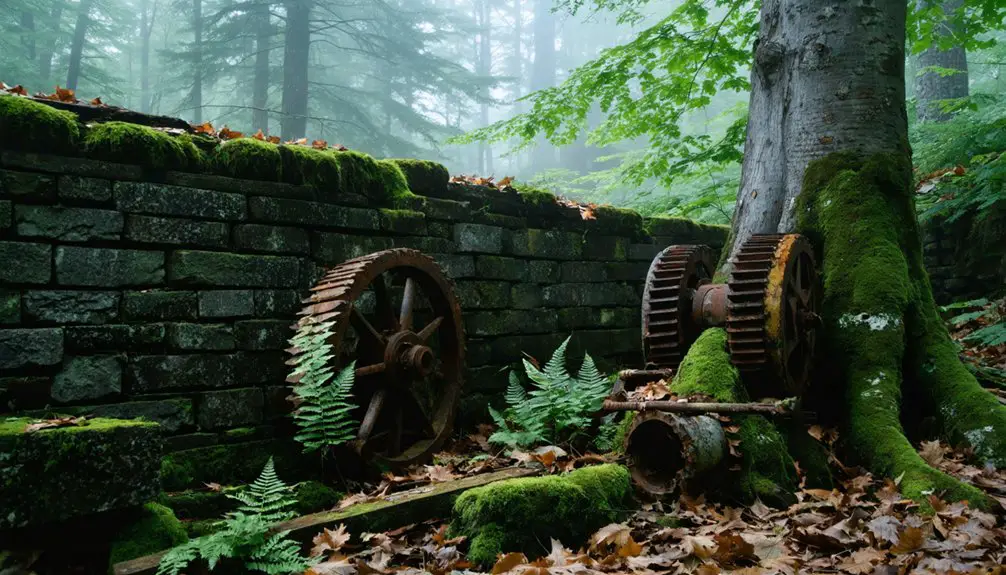
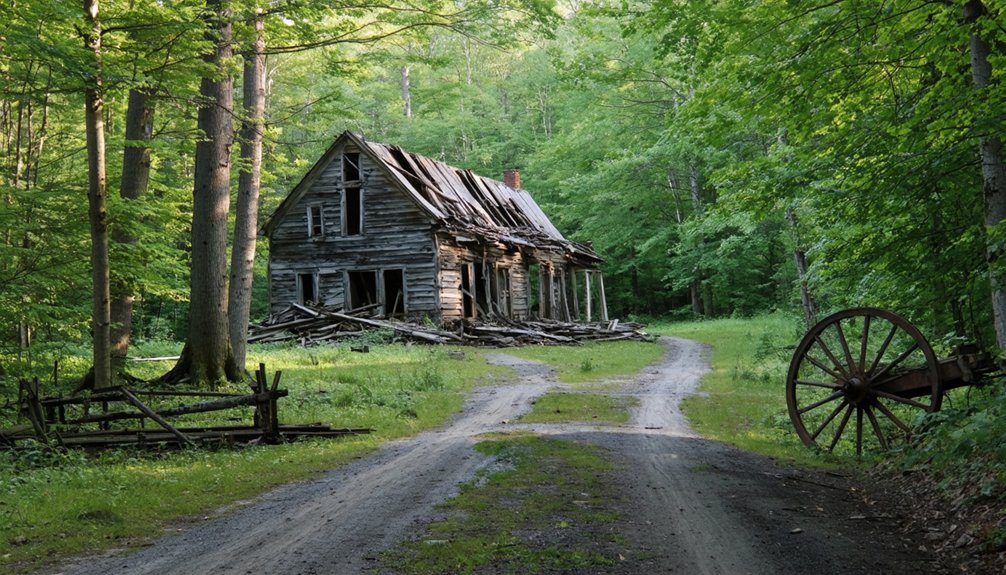
These aren’t tourist reconstructions. They’re actual abandoned spaces where trees push through foundations. You’re moving through real American abandonment here, and that authenticity makes every detour before reaching Orwell feel completely justified.
Where To Stay Near Orwell Vermont
Few overnight options sit directly in Orwell, so you’ll need to plan your lodging around the surrounding area.
Vergennes and Middlebury offer local accommodations ranging from cozy bed-and-breakfasts to historical inns steeped in Vermont character. Whitehall, New York, sits just across the border as another viable base.
Here’s what to contemplate when choosing your stay:
- Historical inns in Middlebury put you within 20 miles of Mount Independence while surrounding you with authentic Vermont architecture.
- Vergennes local accommodations offer proximity to Lake Champlain and easy Route 22A access toward Orwell.
- Whitehall, New York lodging works well if you’re arriving from the south and want flexibility crossing state lines.
Book early, especially during fall foliage season when demand spikes across western Vermont.
What To Pack for the Orwell and Bennington Triangle Route
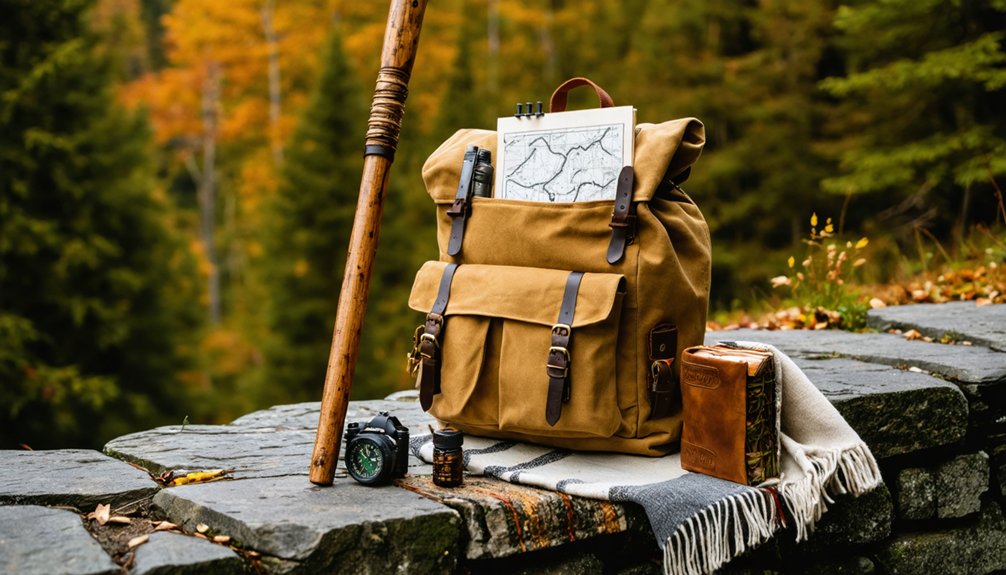
Packing for this route means preparing for two very different experiences in one trip: the open historic grounds of Mount Independence and the dense, unpredictable wilderness around Glastenbury Mountain and the Bennington Triangle.
Your packing essentials should reflect that contrast. Bring layered clothing, waterproof boots, and a reliable map since cell service gets spotty fast out here. Trail snacks, a refillable water bottle, and a basic first aid kit aren’t optional — they’re smart travel tips for anyone pushing into remote Vermont backcountry.
A camera captures the cannons and stone foundations at Mount Independence beautifully.
For the Bennington Triangle stretch, pack a headlamp, compass, and your nerve. You’re moving through wilderness that doesn’t forgive the underprepared, so pack light but pack right.
Frequently Asked Questions
Are There Guided Tours Available Specifically for Mount Independence’s Revolutionary War Sites?
Mount Independence’s historical significance runs deep, yet the knowledge base doesn’t confirm specific guided experiences. You’ll find trails, cannons, and ramparts to explore freely — so venture out and uncover Vermont’s revolutionary secrets on your own terms!
Can Visitors Legally Metal Detect or Artifact Hunt at Mount Independence?
You can’t metal detect or artifact hunt at Mount Independence. Vermont’s metal detecting regulations strictly prohibit it, protecting artifact hunting ethics and preserving undocumented Revolutionary War evidence for future generations to discover, study, and cherish responsibly.
What Is the Best Time of Year to Visit Orwell for Fall Foliage?
Mid-October peaks Orwell’s fall colors. Imagine cruising scenic routes like Route 22A as maples blaze crimson — you’ll witness Vermont’s countryside transform into a vivid tapestry, making your ghost town road trip unforgettable.
Are Pets Allowed on the Hiking Trails at Mount Independence?
The knowledge base doesn’t confirm pet-friendly policies for Mount Independence’s trails. You’ll want to contact Vermont State Parks directly to guarantee hiking safety for you and your furry companion before hitting those historic, cannon-lined paths!
Is There Cell Phone Coverage Along the Bennington Triangle Wilderness Routes?
Don’t count on cell service saving you in the Bennington Triangle’s vast, swallowing wilderness! You’ll need reliable offline maps for wilderness navigation, as coverage vanishes completely among those ancient, whispering woods and mountain shadows.
References
- https://en.wikipedia.org/wiki/Orwell
- https://vermontcountry.com/2023/10/26/the-haunting-of-glastenbury-mountain/
- https://www.youtube.com/watch?v=ScW-H7A8yL8
- https://www.youtube.com/watch?v=MhD8Nt4QbB8
- https://sharonahill.com/triangle-trope-of-vermont-bennington/
- https://www.vtarchaeology.org/wp-content/uploads/v4_ch2_reduced.pdf