Volinia, Michigan sits at a quiet crossroads in Cass County, where two aging buildings and centuries of forgotten history wait for curious travelers. You’ll find no welcome signs or tourist traps here—just the Victorian-era George Newton House, a designated Michigan Historic Site, and the ancient oaks of nearby Newton Woods. Before you go, fuel up and download your directions because cell service is unreliable. Keep exploring to uncover everything this ghost town still has to offer.
Key Takeaways
- Volinia, Michigan, is located in Cass County at the intersection of Marcellus Highway and Gard’s Prairie Road in southwestern Michigan’s Lower Peninsula.
- Fill your gas tank and eat beforehand, as no restaurants or gas stations are available near this remote ghost town crossroads.
- Two historic structures remain: the Victorian-era George Newton House, a Michigan Historic Site since 1974, and one additional aging building.
- Download directions in advance and expect unreliable cell service throughout the rural farmland and second-growth timber surrounding Volinia.
- Visit during daylight hours for the best photography experience, as no welcome signs, interpretive plaques, or tourist amenities exist on-site.
What Is Volinia, Michigan: and Does It Still Exist?
Tucked into the southwestern corner of Michigan’s Lower Peninsula, Volinia sits at the intersection of Marcellus Highway and Gard’s Prairie Road in Cass County’s Volinia Township — and yes, it still exists, though barely.
You’ll find a handful of residents, two weathered buildings, and surrounding forest where a bustling settlement once stood.
Volinia history stretches back to 1833, when the township first organized. A post office opened in 1834, closed, reopened, relocated, and finally shut permanently in 1902 — a timeline that mirrors the town’s slow fade from active community to quiet crossroads.
Volinia’s story began in 1833 — and ended quietly, one closed post office at a time.
Understanding its ghost town significance means recognizing what Volinia represents: one of Michigan’s earliest Cass County settlements, now preserved more by memory and forest than by brick and mortar.
You’re visiting history itself.
How Volinia Went From Cass County’s Earliest Township to a Ghost Town
Volinia’s story begins in 1833, when settlers organized one of Cass County’s earliest townships, sparking enough growth to support a post office by 1834.
That post office became a revolving door of openings and closings — shutting in 1836, reviving in 1840, relocating to Pickett’s Corners in 1851, and finally going dark for good in 1902.
You can trace Volinia’s slow fade from active settlement to ghost town through that postal history alone, as each closure marked another step away from the community it once was.
Township’s Founding and Growth
Although it’s one of Cass County’s earliest townships, Volinia has faded into ghost town status over the decades. Organized in 1833, the township attracted early settlers who built a functioning community around a crossroads that once hummed with activity.
Community life took shape quickly, with a post office opening as early as 1834, even before formal platting occurred.
The township’s name itself evolved over time, shifting from “Volhynia” to “Volenia” before settling into its final form, “Volinia,” by 1901. That kind of organic change reflects a settlement finding its identity.
Stores, residents, and postal services once defined this crossroads, but decades of decline stripped away those layers.
Today, you’ll find only echoes of that early energy scattered across a quiet rural landscape.
Post Office’s Rise and Fall
Few markers of a town’s liveliness matter more than its post office, and Volinia’s tells a story of repeated hope and repeated loss.
Its historical significance starts early — the post office opened in 1834, before the town was even platted. It closed in 1836, revived in 1840, then relocated to Pickett’s Corners in 1851. You’d think that relocation sealed Volinia’s fate, but the story wasn’t over.
The post office closed again in 1862, reopened in 1863, and finally shut down permanently in 1902. Each closure chipped away at daily community life.
When you visit today, you’re standing where residents once collected letters, news, and connection. That rhythm ended long ago, leaving only crossroads, two old buildings, and silence.
Decline Into Ghost Town
Cass County’s earliest townships don’t fade quietly, but Volinia came close. After the post office shut permanently in 1902, the commercial energy that once anchored this crossroads simply evaporated.
Stores disappeared, residents relocated, and the downtown you might’ve imagined browsing through vanished entirely. Understanding Volinia’s ghost town origins means recognizing how dependent early Michigan settlements were on postal infrastructure — lose that lifeline, and community identity erodes fast.
Yet Volinia’s historical significance remains undeniable. Organized in 1833, it ranks among Cass County’s founding townships, carrying weight that outlasts its physical footprint.
Today, two aging buildings stand at the intersection of Marcellus Highway and Gard’s Prairie Road, quietly marking where a functioning village once operated. You’re not visiting ruins — you’re standing inside a genuine piece of Michigan’s earliest settlement story.
What Historic Structures Still Stand in Volinia Today?
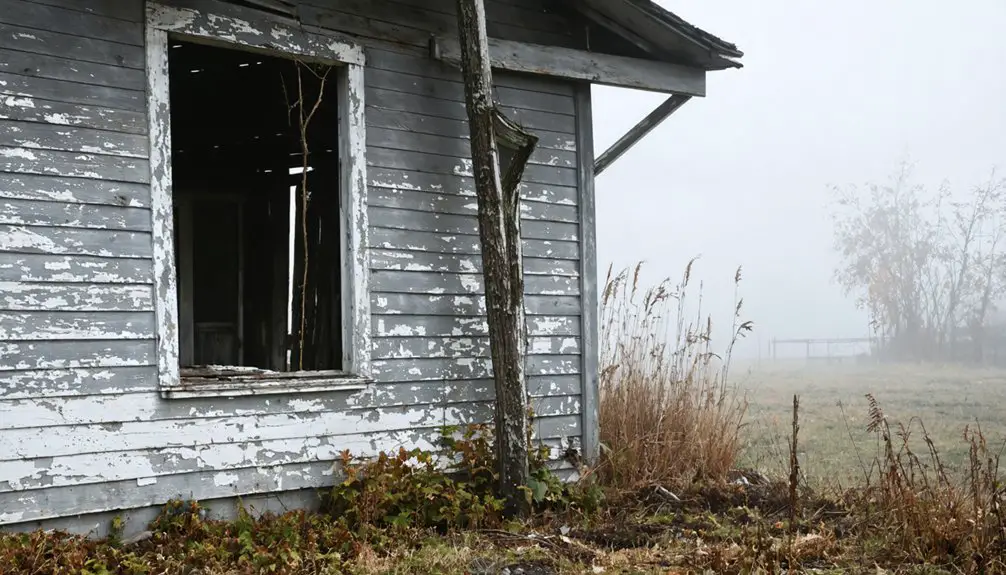
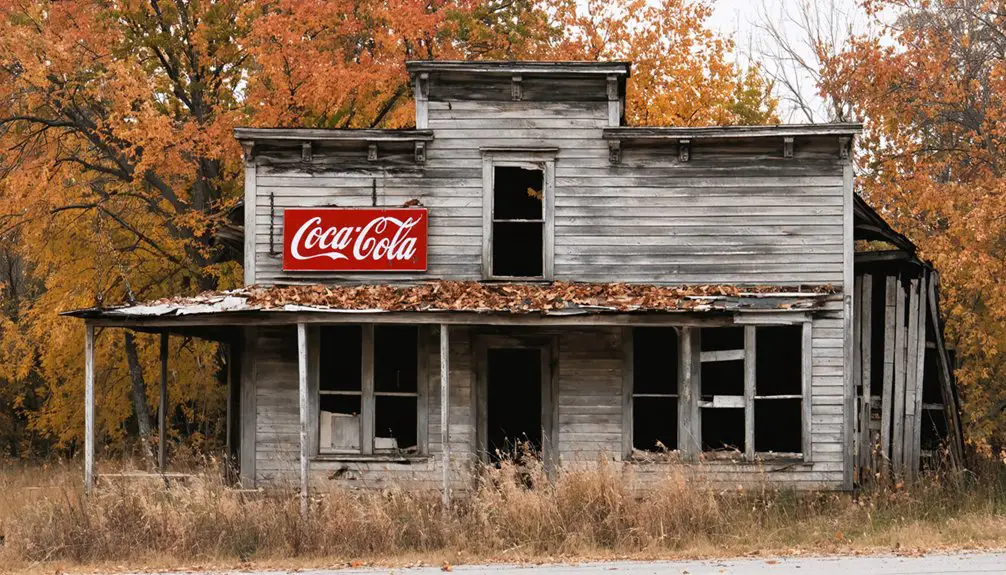
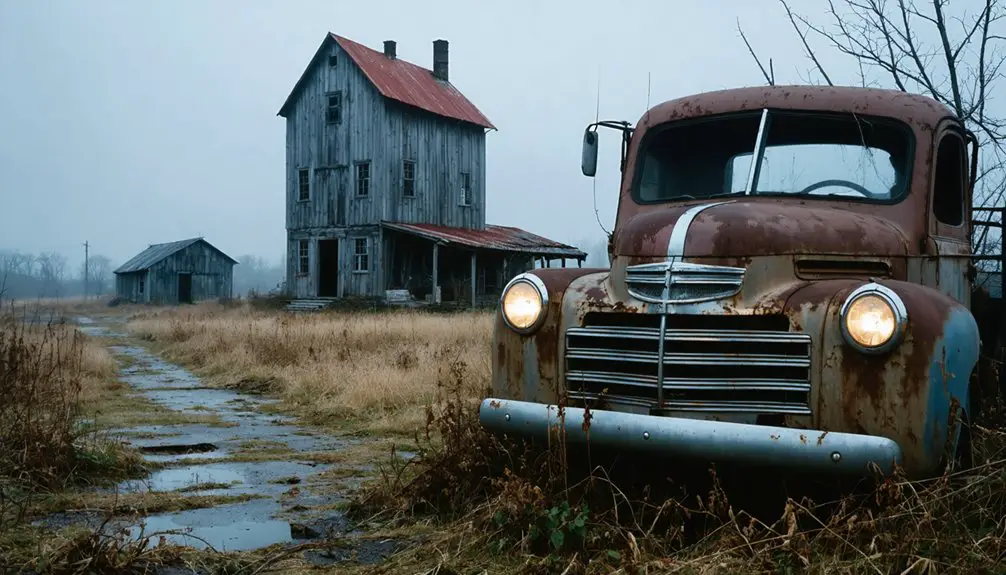
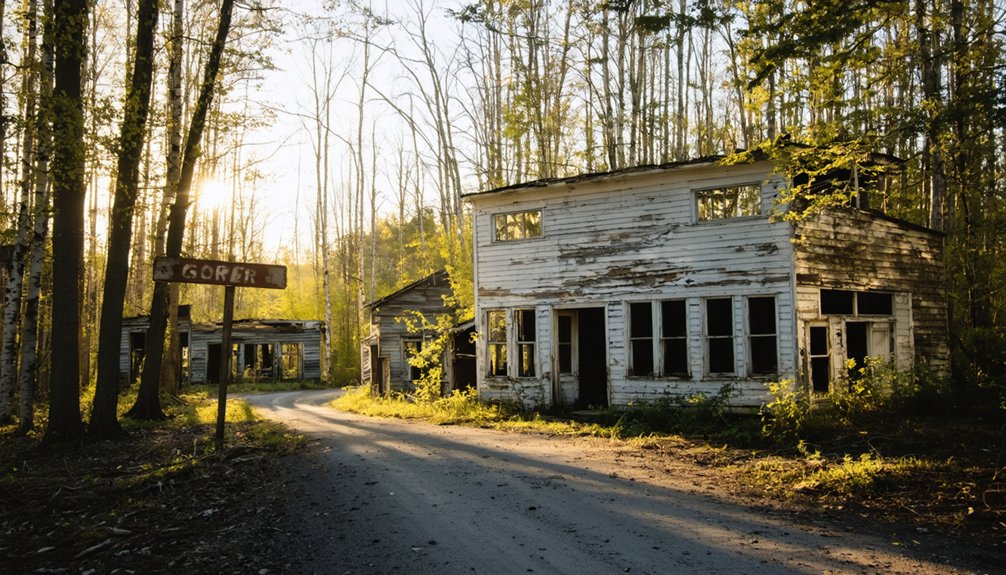
When you pull up to the crossroads of Marcellus Highway and Gard’s Prairie Road, you won’t find a bustling historic downtown — but two old buildings still stand as quiet reminders of what Volinia once was.
The most striking is the George Newton House, a Victorian mansion recognized as a Michigan Historic Site in 1974. Its historic architecture speaks to an era when this crossroads hummed with daily life.
Local legends surrounding Newton himself add another layer to the visit — he was a state legislator whose name also marks the nearby old-growth forest.
You’ll need to use your imagination to picture the vanished stores and neighbors, but these surviving structures give you something real and tangible to anchor that vision.
What Volinia Looks Like Now: The Crossroads, the Buildings, and the Quiet
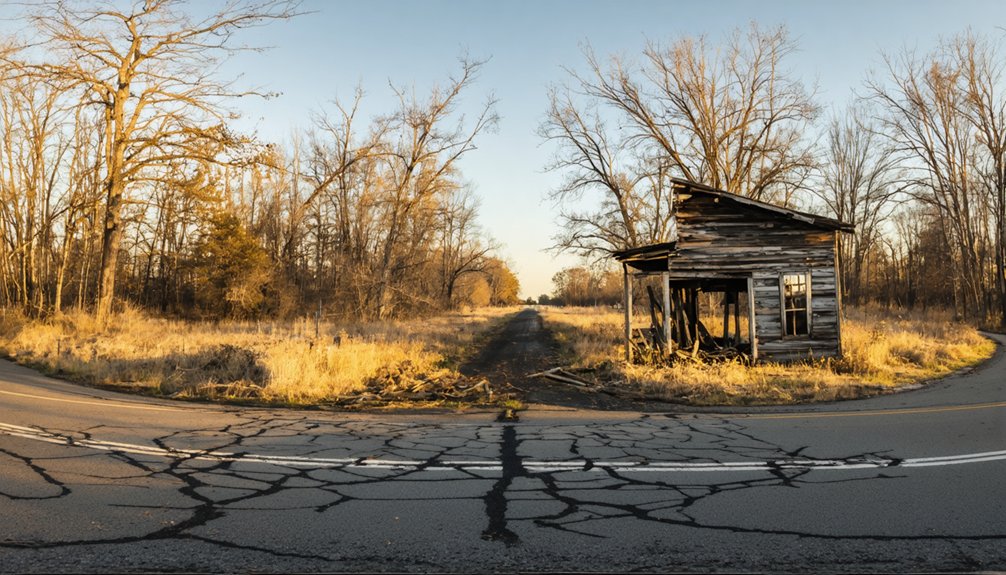
Arriving at the intersection of Marcellus Highway and Gard’s Prairie Road, you’ll immediately sense that Volinia isn’t trying to impress anyone. The crossroads exploration begins simply — open sky, quiet roads, and two aging buildings anchoring what was once a functioning downtown.
No resort signs, no tourist traps, just honest remnants of an early Michigan settlement.
Your building histories start with the George Newton House, a Victorian mansion designated a Michigan Historic Site in 1974. It stands as the most articulate reminder that real people built real lives here.
A Victorian mansion speaks plainly — real people built real lives here, and the walls remember.
The second structure adds context without explanation, letting you fill in the gaps. Volinia rewards those who appreciate stillness and space — visitors who’d rather read a landscape than follow a tour guide. That freedom makes the stop worthwhile.
Newton Woods: The Old-Growth Forest That Makes the Volinia Trip Worth It
Just a short drive from the Volinia crossroads, Newton Woods pulls you into one of the Lower Peninsula’s last undisturbed old-growth oak-hickory forests. Spanning 40 to 80 acres, this living example of old growth ecology earned designation as a U.S. National Natural Landmark in 1976, recognizing its remarkable integrity and rarity.
Named after state legislator George Newton, the forest operates today as both an MSU research forest and a Cass County park, making it freely accessible to you.
Forest conservation efforts here have kept the canopy intact for centuries, preserving what most of Michigan lost long ago to development and logging.
You won’t find trails crowded with tourists. Instead, you’ll walk beneath ancient oaks and hickories, connecting with a landscape that genuinely rewards the effort of showing up.
What to Know Before You Visit: Directions, Timing, and Expectations

You’ll find Volinia at the intersection of Marcellus Highway and Gard’s Prairie Road in Cass County, making it a straightforward destination once you’ve pulled up a map.
Don’t arrive expecting a charming main street, a lakeside resort, or a bustling historic district — two old buildings and a crossroads are fundamentally what’s left.
Plan your visit around Newton Woods, and you’ll leave with something genuinely worth the drive.
Getting There Easily
Reaching Volinia takes almost no guesswork — the ghost town sits at the intersection of Marcellus Highway and Gard’s Prairie Road in Volinia Township, Cass County, tucked near Fred Russ Forest and Newton Woods.
Plug either road name into your GPS, and you’ll arrive without confusion. Southwest Michigan’s scenic routes make the drive itself worthwhile, winding through farmland and second-growth timber before depositing you at this quiet crossroads.
Pack your road trip essentials — water, a camera, and comfortable shoes — since amenities don’t exist at the site. No gas stations or restaurants wait nearby, so fuel up and eat before heading out.
The reward is a straightforward, unhurried drive that lands you directly at one of Cass County’s earliest and most atmospheric historical remnants.
Setting Realistic Expectations
Volinia won’t dazzle you with roadside attractions or welcome signs, and knowing that before you arrive makes the visit far more satisfying.
You’re heading to a genuine ghost town, not a curated tourist experience. No interpretive plaques retell ghost stories or local legends. No gift shop sells postcards of the George Newton House.
What you’ll find are two aging buildings, a quiet crossroads, and the surrounding beauty of Newton Woods nearby.
Come prepared with comfortable walking shoes, a full gas tank, and your own curiosity. Cell service may be unreliable, so download your directions beforehand.
Visit during daylight when the forest and structures photograph best. Expect solitude, subtle history, and the rare satisfaction of discovering somewhere most travelers completely overlook.
Why Volinia Is One of Michigan’s Most Quietly Rewarding Ghost Towns
Unlike the ghost towns that lean on roadside signage and manufactured nostalgia to draw visitors, Volinia earns its place on any Michigan explorer’s list through sheer historical depth and natural integrity.
Its ghost town allure isn’t manufactured — it’s embedded in two surviving buildings, a crossroads that once hummed with commerce, and a post office history stretching back to 1834.
That historical significance runs deep, rooting Volinia among Cass County’s earliest organized townships.
Volinia doesn’t just appear on old maps — it helped define them, standing among Cass County’s earliest organized townships.
You’ll also find Newton Woods next door, a designated National Natural Landmark protecting one of the Lower Peninsula’s last undisturbed oak-hickory forests.
No resort lake pulls you in, no curated attraction competes for your attention.
What you get instead is honest, unfiltered history paired with remarkable nature — exactly the kind of freedom-driven discovery worth chasing.
Frequently Asked Questions
Is There Any Parking Available Near Newton Woods or the Historic Buildings?
You’ll find parking options near Newton Woods and the historic buildings, letting you explore their historical significance freely. Pull over at the crossroads, wander the old-growth forest, and soak in Volinia’s fascinating, undisturbed ghost town atmosphere.
Are There Any Guided Tours Available for Volinia or Newton Woods?
Designated a National Natural Landmark in 1976, Newton Woods doesn’t offer formal guided tours. You’ll explore ghost town history and local legends independently, discovering Volinia’s mysteries at your own pace—perfect for freedom-seeking adventurers craving self-guided discovery.
What Is the Best Time of Year to Visit Volinia?
Fall’s your best season to visit Volinia! You’ll experience Newton Woods’ stunning foliage during seasonal activities like hiking through ancient oak-hickory trees. Spring’s wildflowers also offer breathtaking exploration of this hauntingly beautiful ghost town’s preserved remnants.
Is Newton Woods Open to the Public Year-Round?
You’ll find Newton Woods open for year-round seasonal accessibility, inviting you to explore its ancient oak-hickory canopy whenever wanderlust strikes. This untamed, old-growth sanctuary welcomes free spirits through every season, offering raw, unfiltered nature on your own terms.
Are Pets Allowed When Visiting Newton Woods or Volinia’s Historic Sites?
The knowledge doesn’t specify pet-friendly policies for Newton Woods or Volinia’s historic sites. You’ll want to contact local authorities directly to guarantee your visit respects local wildlife and any existing regulations before bringing pets along.
References
- https://99wfmk.com/volneymichigan/
- https://99wfmk.com/voliniamichigan/
- https://livinginmichigan.com/is-volinia-township-michigan-a-good-place-to-live-the-honest-local-breakdown/
- https://www.youtube.com/watch?v=oQUHhkJGzC4
- https://www.nailhed.com/2017/10/the-ghost-town-that-moved.html
- https://en.wikipedia.org/wiki/List_of_ghost_towns_in_Michigan
- https://www.lowellmuseum.org/ghost-towns.html