To plan your Gibbs City ghost town road trip, head about 8 miles north of the Paint River bridge into Ottawa National Forest. You’ll navigate an old railroad grade and east-west roads through second-growth timber to reach what’s left of R.F. Gibbs’ 1915 sawmill community — wood scraps, historic artifacts, and haunting river pilings. Visit late May through October for the best conditions. Everything you need to explore this forgotten Michigan ghost town is just ahead.
Key Takeaways
- Gibbs City, located 8 miles north of the Paint River bridge in Ottawa National Forest, is accessible via an intact east-west road.
- Visit late May through June or September to mid-October for optimal foliage conditions and accessible forest roads.
- Bring sturdy boots, insect repellent, offline maps, and a camera, as cell service is unreliable and artifact removal is prohibited.
- Respect private property boundaries carefully, as 1970s residential homes exist alongside publicly accessible forest land throughout the area.
- Extend your road trip by exploring nearby ghost towns, including Pentoga, Stambaugh, Crystal Falls, and Watersmeet, all within Iron County.
What Makes Gibbs City a True Ghost Town?
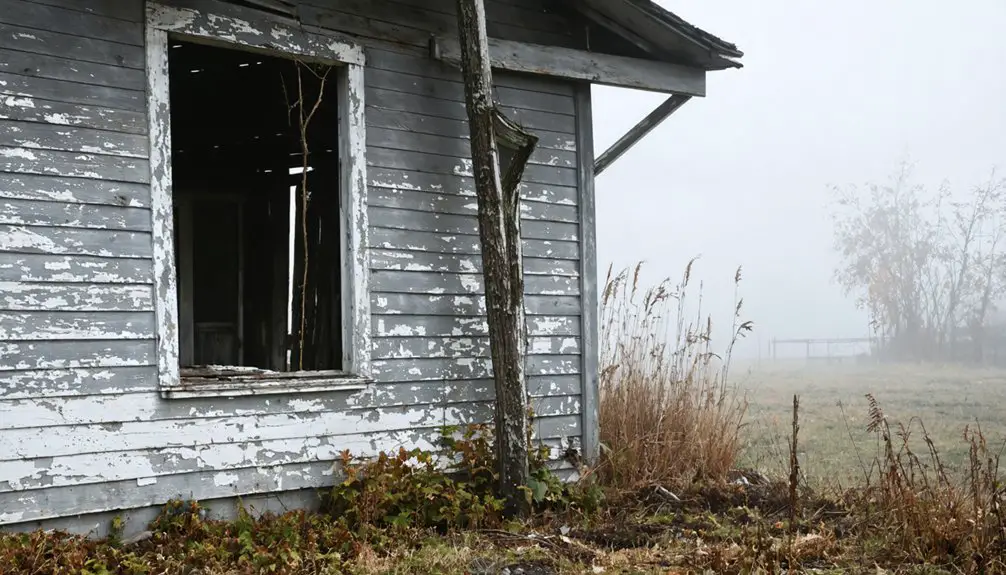
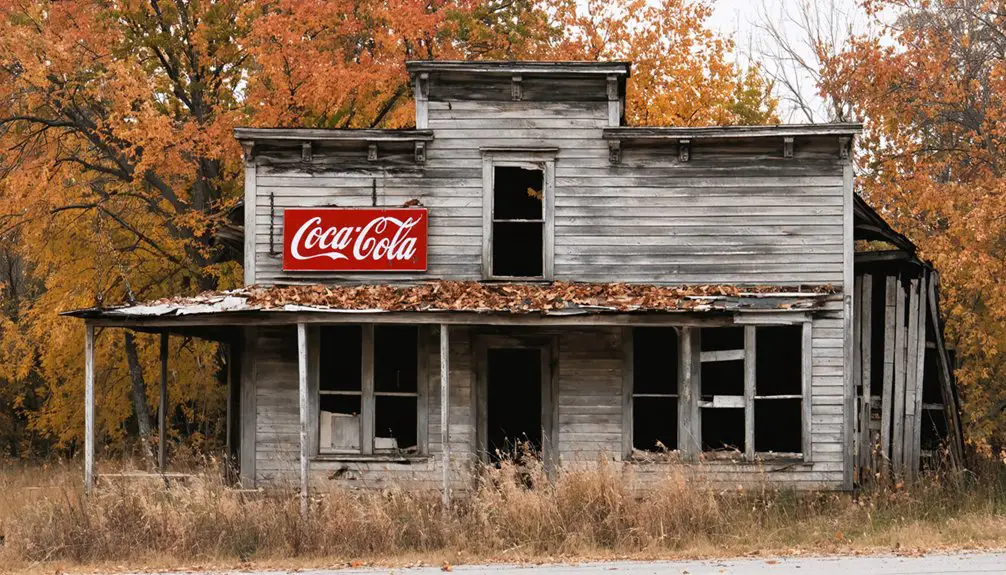
When you wander into Gibbs City today, you won’t find a single original commercial structure standing — and that’s precisely what earns it the ghost town designation. A 1966 property owner demolished every deteriorating building, using controlled burns to eliminate wildfire hazards. What survived the flames, time erased.
Yet ghost towns aren’t defined solely by absence. Gibbs City rewards the curious explorer with scattered wood scraps, historical artifacts hiding beneath decades of forest growth, and old sawmill pilings still anchoring themselves in the Paint River’s current.
Ghost towns reward the curious — fragments of lives lived, still anchoring themselves in rivers and roots.
These fragments represent something meaningful — raw evidence of lives genuinely lived here.
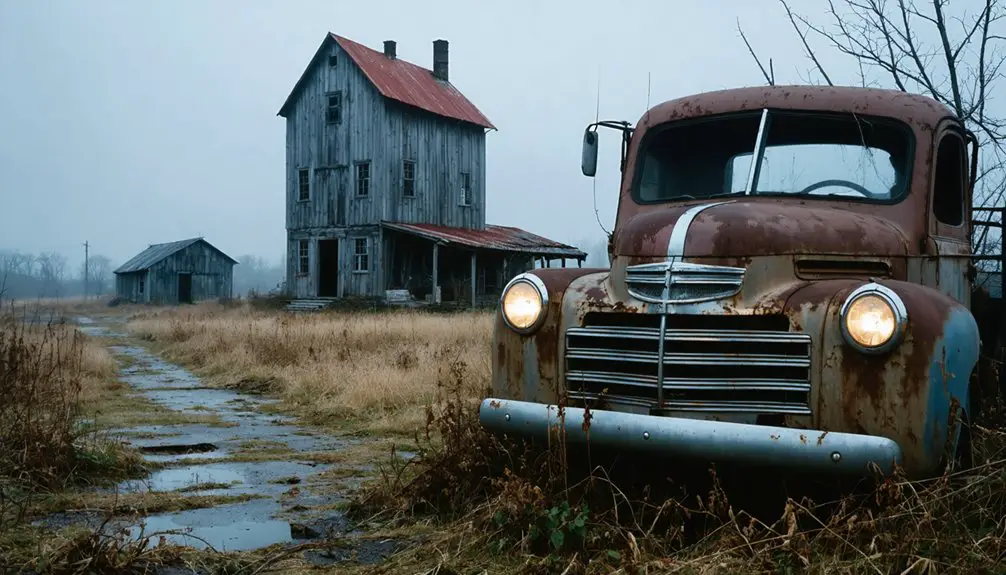
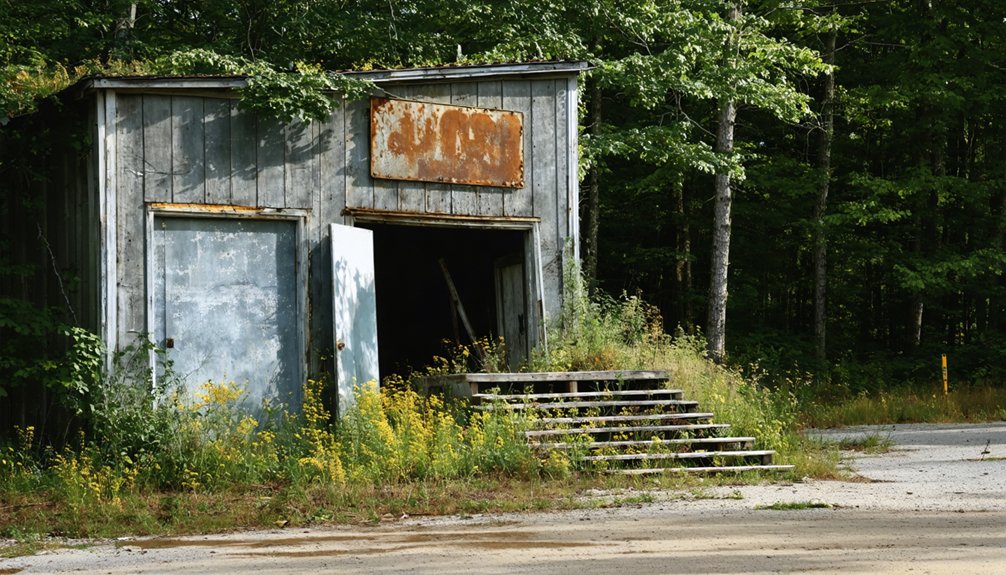
Historical preservation exists differently in places like this. You’re not touring a curated museum. You’re reading a landscape that refuses to apologize for what it’s become.
The Rise and Fall of Iron County’s Forgotten Mill Town
When R.F. Gibbs built his sawmill in 1915, he transformed a failed settlement into a thriving community of over 200 residents almost overnight.
You can almost feel the boom-town energy that once pulsed through these Ottawa National Forest woods, where commerce, ambition, and timber wealth briefly collided.
Then, in 1921, a single sawmill fire erased it all, sending most residents scattering and leaving behind only the slow, quiet unraveling that defines Gibbs City today.
Timber’s Fleeting Prosperity
Though the timber industry promised quick fortunes across Michigan’s Upper Peninsula, few settlements captured that volatile boom-and-bust cycle quite like Gibbs City.
When R.F. Gibbs constructed his sawmill in 1915, the economic impact was immediate and transformative — over 200 residents flooded into Iron River Township, businesses took root, and a thriving community emerged from the forest’s edge.
You can almost feel that restless energy standing there today, imagining the Paint River churning alongside active industry.
But prosperity here ran on borrowed time. Six years after the mill brought Gibbs City to life, fire consumed it entirely in 1921.
Residents dispersed almost overnight, leaving behind a community that never recovered. The timber industry gave Gibbs City everything, then quietly took it all back.
Fire’s Devastating Aftermath
The 1921 sawmill fire didn’t just destroy a building — it erased Gibbs City’s reason for existing. Within months, most of the 200-plus residents packed up and moved on, leaving behind streets that once buzzed with commerce and community life.
The fire aftermath was swift and unforgiving, stripping away everything that had drawn people here in the first place.
Yet community resilience flickered stubbornly. A handful of residents refused to abandon their homes, keeping enough life in the town that the post office stayed open for an extraordinary 31 more years — finally closing in 1952.
When you walk these grounds today, that quiet defiance feels almost tangible. Some people simply wouldn’t let go, even as the forest slowly began reclaiming everything around them.
How to Get to Gibbs City in Ottawa National Forest
Reaching Gibbs City means venturing about 8 miles north of the wooden nickel landmark near the Paint River bridge, deep into the Ottawa National Forest within Iron County’s Iron River Township.
Your access routes include a still-intact east-west road that’ll carry your vehicle directly into the area without much difficulty. You’ll also notice the old railroad grade cutting through the landscape — it reads unmistakably as a former road formation, a ghostly corridor through the trees.
An east-west road still carries you in, while the old railroad grade lingers like a scar through the trees.
The forest swallows everything here, so navigation demands attention. Respect private property and residential driveways scattered throughout, as modern homes built since the 1970s now neighbor this abandoned townsite.
You’re entering land that remembers its past quietly, and approaching it thoughtfully makes the experience worth every mile.
What You’ll Actually Find When You Arrive?
Silence greets you first — then the slow realization that downtown Gibbs City simply isn’t there anymore. A 1966 demolition erased what the 1921 sawmill fire started, leaving scattered wood scraps and building fragments tucked among the trees.
You’re fundamentally walking through ghost town legends made tangible — absence itself becomes the story.
What survives rewards patient exploration. The Paint River still holds old sawmill pilings, stubborn reminders of R.F. Gibbs’ once-thriving operation. The railroad grade cuts a recognizable line through the landscape. Bits of artifacts surface if you look carefully.
Historical preservation here means accepting that nature reclaimed most of it. A few post-1970s houses occupy the surrounding area, so respect private property.
The freedom you’ll feel wandering these woods comes precisely from what’s missing.
The Sawmill Pilings and Artifacts Worth Searching For
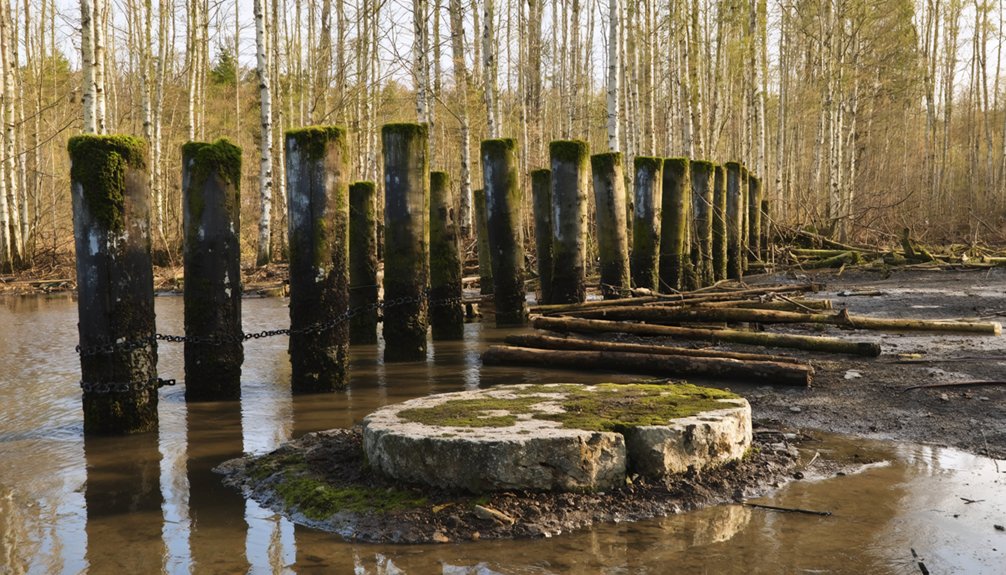
Scattered across the Paint River’s shallow bed, old sawmill pilings jut from the water like crooked teeth — wooden remnants that R.F. Gibbs’ operation left behind after the 1921 fire consumed everything else.
These sawmill relics anchor you to what once drove 200 people to build lives here.
Beyond the riverbank, you’ll uncover historical treasures hiding in plain sight:
- Wood scraps and building fragments scattered through the downtown clearing and surrounding woods
- The old railroad grade, still readable as a distinct formation cutting through the landscape
- Artifact bits tucked beneath decades of forest floor debris, rewarding patient explorers
Move slowly, look carefully, and respect the private property boundaries woven throughout.
Freedom here means wandering deliberately — not recklessly.
What to Bring and Watch Out for on Private Property
Before you set out for Gibbs City, pack sturdy boots, insect repellent, a camera, and a printed map, since cell service in Ottawa National Forest runs unreliable at best.
You’ll need to stay alert for posted signs, fencing, and residential driveways, because private property cuts through the area and the line between public forest land and someone’s backyard isn’t always obvious.
Treat every structure and artifact you encounter with restraint—don’t remove anything, don’t trespass, and remember that a few families actually live among these woods and ghost-town remnants today.
Essential Exploration Gear List
Exploring Gibbs City rewards the prepared visitor, so pack accordingly before heading into Ottawa National Forest. The site’s ghost town preservation depends partly on respectful, equipped explorers who understand its historical significance.
- Navigation tools — Download offline maps before you lose cell service on that 8-mile stretch north of the Paint River bridge. Paper backups don’t fail.
- Sturdy footwear — Scattered wood scraps, hidden pilings near the riverbank, and uneven railroad grade terrain will punish unprepared feet quickly.
- Camera with extra batteries — The old sawmill pilings still visible in the Paint River deserve documentation. You won’t want dead batteries at that moment.
Dress in layers since Ottawa National Forest weather shifts fast.
Bring water, and respect every residential driveway you encounter.
Identifying Private Property Boundaries
Gibbs City’s ghost town status doesn’t erase its patchwork of private ownership — residential houses built since the 1970s sit alongside publicly accessible forest land, and the boundaries between them aren’t always marked clearly.
Watch for property markers and boundary signs posted on trees or fence lines before you wander deeper into what looks like open wilderness. A driveway cutting through the woods often signals private land ahead. Respect those invisible lines the way you’d want yours respected.
Ottawa National Forest land gives you genuine freedom to roam, but assuming everything is public because it feels abandoned invites conflict with current residents.
Move deliberately, read your surroundings carefully, and you’ll navigate Gibbs City’s layered ownership without stepping on anyone’s territory — literally or otherwise.
Respectful Visitor Conduct Tips
What you carry into Gibbs City matters as much as how you carry yourself. Urban exploration demands both preparation and conscience, especially where private property borders forgotten history.
Pack these essentials before you go:
- Water and sturdy boots — uneven terrain and scattered wood scraps make ankle support non-negotiable.
- A camera, not a souvenir bag — historical preservation means leaving artifacts exactly where you find them.
- A property map — residential driveways interspersed throughout the area aren’t invitations.
You’re walking through someone’s boundary as much as through history.
Stay on accessible routes, read posted signage carefully, and treat every structure remnant as irreplaceable evidence of a community that once breathed.
Freedom to explore carries responsibility you can’t leave behind at the trailhead.
Is CCC Camp Gibbs City Worth a Stop Too?
While you’re already in the area, CCC Camp Gibbs City makes for a natural companion stop just a few miles southwest of the ghost town. This CCC Camp carries real historical significance — it’s a tangible remnant of the Great Depression era, when young men were dispatched into forests like this one to work, build, and survive.
An interpretive sign marks the site, giving you enough context to picture the daily rhythms of camp life against this same Ottawa National Forest backdrop. It won’t consume your afternoon, but it deepens the story you’ve already been piecing together at Gibbs City itself.
Two abandoned chapters of American history, separated by just a short drive — that’s exactly the kind of layered freedom a road trip through Michigan’s Upper Peninsula delivers.
When Should You Actually Make the Trip?
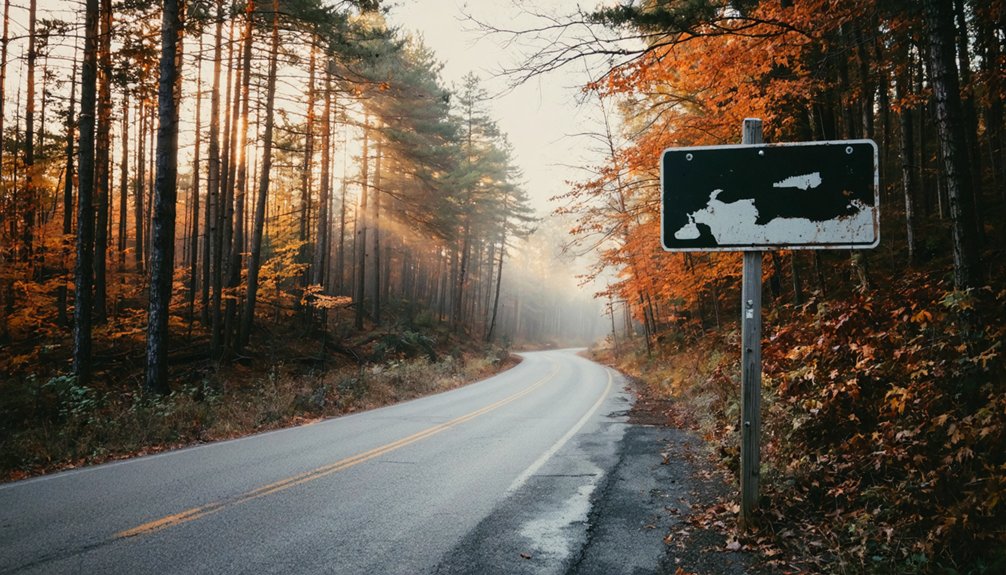
Timing your visit shapes everything about what you’ll actually experience at Gibbs City. The Upper Peninsula’s brutal winters lock down access roads and bury any remnants of the timber industry beneath feet of snow. Choose your window deliberately:
- Late May through June — Foliage remains manageable, revealing structural remnants and old sawmill pilings before summer growth conceals them.
- September through mid-October — Crisp air, stunning color, and firm ground make urban exploration easier while historical significance feels tangible against the dying landscape.
- Avoid peak summer — Dense undergrowth swallows everything worth examining.
Ottawa National Forest roads stay accessible during dry seasons, so you’ll move freely.
Weekday visits minimize encounters with residential traffic near private driveways, giving you uninterrupted time to absorb what remains.
Ghost Towns Near Gibbs City to Visit on the Same Trip
Iron County and its neighbors hold enough ghost town material to fill an entire long weekend if you plan your route efficiently.
The Upper Peninsula rewards those exploring history with layered stories at every turn. Nearby Pentoga and Stambaugh carry their own ghost town legends rooted in iron mining‘s brutal boom-bust cycles.
Head south toward Crystal Falls for additional abandoned settlement markers, or push west toward Watersmeet where Ottawa National Forest conceals more forgotten foundations beneath second-growth timber.
Each site adds context to Gibbs City’s story, connecting timber collapse, mining exhaustion, and fire into a regional pattern rather than isolated tragedy.
Carry paper maps alongside digital navigation — cell coverage disappears unpredictably throughout Iron County, and you don’t want technology failures interrupting your momentum deep in the forest.
Frequently Asked Questions
Was Gibbs City Ever Officially Incorporated as a Michigan Municipality?
The knowledge doesn’t confirm Gibbs City history included formal Michigan municipalities status. You’d find it operated as an unincorporated settlement, thriving briefly after 1915, then fading into wilderness silence after 1921’s devastating fire erased its soul.
How Long Did R.F. Gibbs Personally Remain Involved With the Community?
Here’s the truth — the knowledge base doesn’t spell out how long R.F. Gibbs’s personal involvement lasted. You’d need deeper research to fully trace his community legacy and Gibbs involvement beyond 1915.
Did the Original Atkinson Settlement Have a Post Office Before Gibbs City?
The knowledge doesn’t confirm Atkinson history included postal services. You’ll want to dig deeper into historical records yourself — that atmospheric mystery of early settlement life remains an open trail worth exploring on your freedom-driven research journey.
Are There Any Historical Photographs of Gibbs City During Its Peak Years?
Like a campfire’s fading embers, those peak-year memories remain elusive. The knowledge base doesn’t confirm surviving historical photographs, vintage postcards, or historical landmarks imagery from Gibbs City’s prosperity era — you’ll want to explore local Iron County archives independently.
What Caused the 1921 Sawmill Fire That Destroyed Gibbs City’s Economy?
The records don’t reveal what sparked the 1921 blaze, but you can feel sawmill safety was tragically overlooked. That fire’s economic impact erased Gibbs City’s soul overnight, sending 200 residents scattering into history’s shadows forever.
References
- https://99wfmk.com/gibbs-city-michigan/
- https://beaumier.nmu.edu/ghosttowns/towns/Atkinson
- https://www.facebook.com/groups/1588341628689798/posts/1991881025002521/
- https://www.reddit.com/r/upperpeninsula/comments/1jqsz7w/1934_map_with_gibbs_city_and_camp_gibbs_city/
- https://en.wikipedia.org/wiki/Gibbs_City
- https://wkmi.com/gibbs-city-michigan/
- https://kids.kiddle.co/Gibbs_City
- https://www.oocities.org/lukefisk.geo/ghost_towns.html