Planning a ghost town road trip to Coltonville, Illinois means heading to DeKalb County’s east bank of the Kishwaukee River, where a county-seat fraud scandal erased an entire farming hamlet in less than a decade. You’ll reach the site via North First Street from DeKalb, turning onto Coltonville Road. Pack water, wear sturdy footwear, and visit spring through fall. No structures remain — only overgrown fields and a story worth uncovering before you arrive.
Key Takeaways
- Coltonville sits on the east bank of the Kishwaukee River in DeKalb County, accessible via North First Street, then Coltonville Road.
- No standing structures remain at the site, only overgrown fields, making sturdy footwear and packed water essential for exploration.
- Visit between spring and fall for the best driving conditions, comfortable temperatures, and optimal on-site exploration experience.
- No permits or guided tours are required, but researching the county-seat fraud scandal beforehand enriches your visit significantly.
- Nearby ghost towns like Afton and Somonauk, plus the DeKalb County History Center, complement the Coltonville road trip experience.
What Happened to Coltonville, Illinois?
Coltonville once thrived as a small farming hamlet in DeKalb County, Illinois, but two powerful forces conspired to erase it from the map. Like many rural settlements of the early-to-mid 1800s, Coltonville history follows a familiar yet sobering pattern.
First, a county-seat fraud scandal rocked the community’s foundation, triggering rapid business closures and a population exodus within less than a decade.
A county-seat fraud scandal shattered Coltonville’s foundation, sending businesses and residents fleeing within a single decade.
Second, the neighboring cities of DeKalb and Sycamore expanded aggressively, absorbing the regional economic activity that once sustained smaller communities like Coltonville. Residents simply packed up and moved toward better opportunities, leaving empty fields where a functioning community once stood.
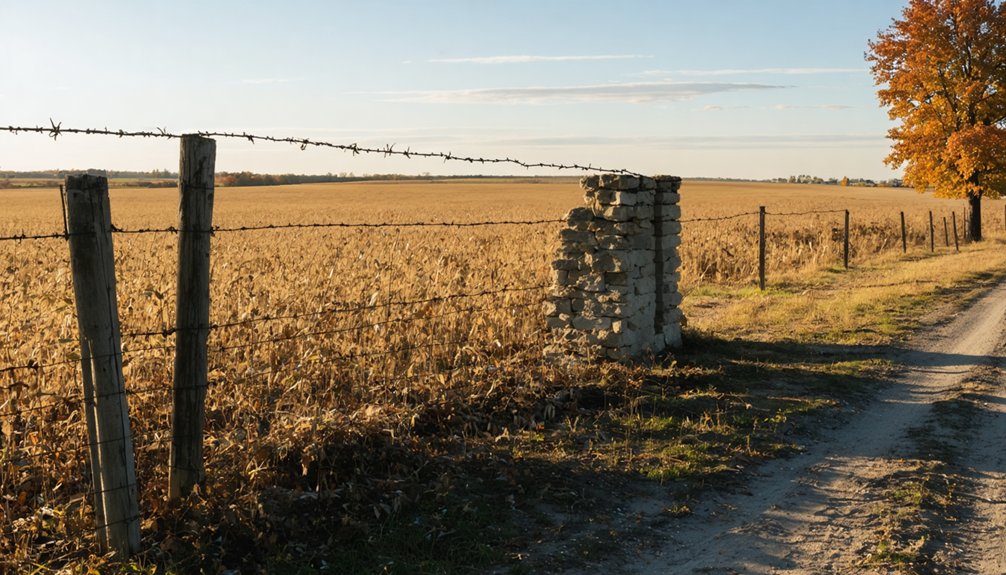
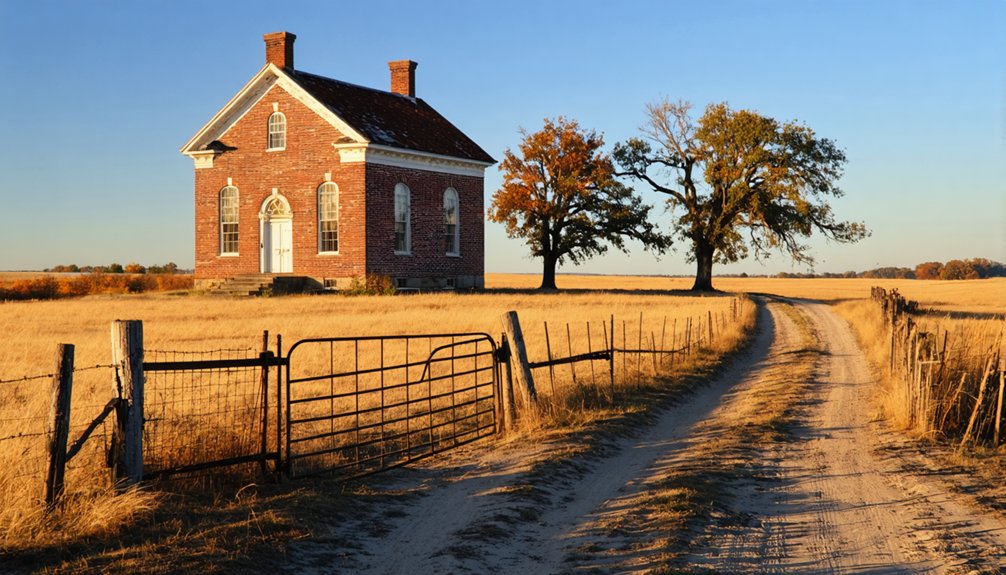
Today, you won’t find a single standing structure — only overgrown farmland and a road bearing the town’s forgotten name.
Why Did Coltonville Collapse in Less Than a Decade?
When you dig into Coltonville’s rapid disappearance, three forces stand out as the primary culprits: a county-seat fraud scandal, relentless urban expansion from DeKalb and Sycamore, and a population exodus that drained the hamlet dry.
The scandal struck early and hard, shattering community trust and triggering a chain reaction of business closures that Coltonville couldn’t survive.
As neighbors fled to towns offering greater stability and opportunity, the settlement lost the critical mass it needed to function, vanishing from the landscape in less than a decade.
County-Seat Fraud Scandal
Few ghost towns collapse as swiftly or as scandalously as Coltonville did. At the heart of its downfall lies a county seat scandal that stripped the town of its credibility and future.
Early settlers believed Coltonville would secure county seat status, drawing commerce, courts, and lasting infrastructure. Instead, fraudulent maneuvering redirected that designation elsewhere, leaving residents and business owners with broken promises and dead-end investments.
Once that deception unraveled, people didn’t hesitate. They packed up and moved toward DeKalb and Sycamore, towns offering real opportunity.
Coltonville’s historical significance today rests partly in this cautionary tale — a reminder that political corruption can erase an entire community within years.
You’re now visiting a place where ambition, betrayal, and abandonment converged, leaving nothing but overgrown fields and a road bearing its name.
Urban Expansion Pressure
Urban expansion doesn’t just compete with small towns — it consumes them. Coltonville learned this the hard way. As DeKalb and Sycamore grew in prominence, they pulled commerce, opportunity, and people away from smaller surrounding communities. Coltonville couldn’t compete.
Urban development reshaped the entire regional landscape, making Coltonville’s agricultural identity feel obsolete. Residents didn’t stick around to watch their hamlet fade — they moved toward cities offering jobs, services, and stability.
Rural decline followed swiftly, accelerating an already fragile situation worsened by the county-seat scandal.
You’re looking at a community that fundamentally evaporated under pressure. No dramatic catastrophe destroyed Coltonville. Neighboring cities simply outgrew it, absorbed its population, and erased its relevance.
That’s how most ghost towns are made — quietly, efficiently, and completely.
Population Exodus Effects
Once a community loses its people, recovery becomes nearly impossible. Coltonville’s population dynamics shifted fast—residents left seeking better opportunities in DeKalb and Sycamore, triggering rural decline that spiraled beyond recovery.
When people abandon a town, everything collapses in sequence:
- Businesses close without customers to sustain them
- Schools empty without children to fill them
- Infrastructure deteriorates without taxpayers funding repairs
- Remaining residents accelerate their own departure
You’re witnessing what happens when a settlement loses its foundational reason to exist. Coltonville’s collapse unfolded within a decade—an extraordinarily rapid disappearance driven by the county-seat fraud scandal combined with aggressive neighboring growth.
The town couldn’t compete, couldn’t retain residents, and couldn’t reinvent itself. Freedom sometimes means choosing somewhere better, and Coltonville’s people exercised exactly that choice.
Where Exactly Is the Coltonville Ghost Town Site?
Tucked into the southwestern edge of Sycamore and just north of DeKalb, Coltonville once occupied the east bank of the Kishwaukee River in DeKalb County, Illinois. Understanding the Coltonville geography helps you appreciate its historical significance as a once-thriving farming hamlet that simply vanished under the pressure of neighboring cities.
To reach the site today, take North First Street from DeKalb and turn right onto Coltonville Road. The road curves northward right where the town once stood, roughly 29 miles from Rockford.
You won’t find any standing structures, just open, overgrown fields quietly reclaiming what was once a bustling rural community. The road’s name remains your clearest clue that something important once existed here, making it your most reliable landmark when you’re traversing the area.
How to Get to the Coltonville Ghost Town Site

Finding the Coltonville ghost town site is straightforward once you know where to look. Head north from DeKalb along North First Street, then turn right onto Coltonville Road. The road curves northward right where the former hamlet once stood along the Kishwaukee River’s east bank.
Coltonville’s ghost town site sits along the Kishwaukee River’s east bank, just where Coltonville Road bends northward.
Follow these directions for successful ghost town exploration:
- Start your route from DeKalb heading north on North First Street.
- Turn right onto Coltonville Road and watch for the northward curve.
- Park safely along the roadside near the curve to explore on foot.
- Look for occasional field remnants, especially after heavy rainfall.
Coltonville history lives primarily in the road’s name today. Two-wheel-drive vehicles handle the roads fine, and spring through fall offers the best conditions for exploring this forgotten piece of northern Illinois.
When Is the Best Time to Visit Coltonville?
Now that you know how to reach Coltonville, timing your visit can make the difference between an enjoyable outing and a frustrating one.
The best season to explore this ghost town site runs from spring through fall, when mild temperatures and clear conditions make wandering overgrown fields far more comfortable. Among essential visitor tips: heavy rainfall occasionally flushes the landscape, briefly revealing remnants of the former hamlet, so visiting after a good rain could reward you with unexpected discoveries.
Avoid winter trips, as cold temperatures and snow make the already sparse site feel particularly unforgiving. Since Coltonville offers zero infrastructure, pack water, wear sturdy footwear, and plan your visit during daylight hours for the safest, most rewarding experience.
What You’ll Actually See at the Coltonville Site
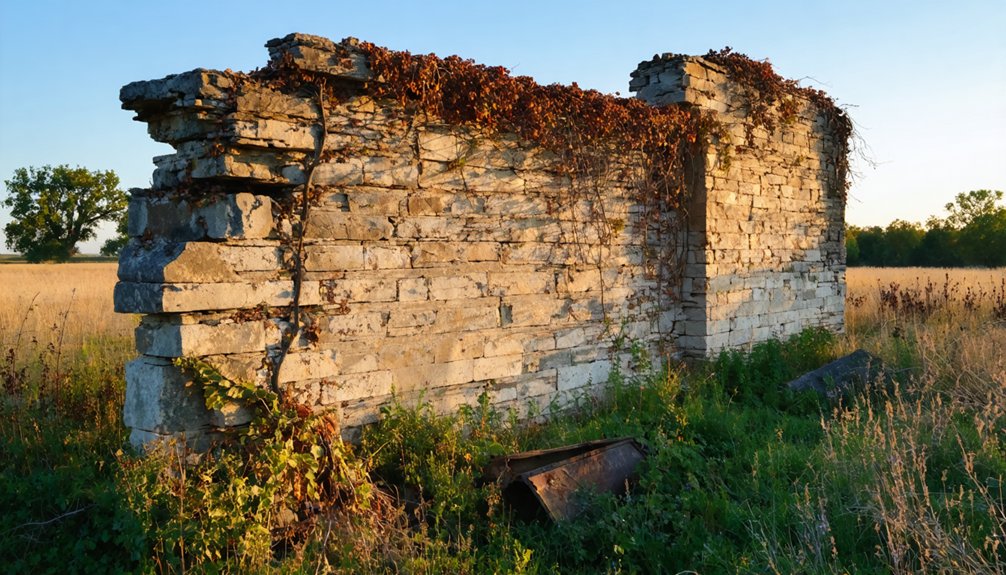
Arriving at the Coltonville site, you’ll find yourself standing in what feels like an ordinary stretch of northern Illinois farmland — because that’s fundamentally what it’s now. The agricultural heritage of this vanished hamlet lives entirely beneath your feet and in the landscape surrounding you.
Despite its historical significance, nothing stands above ground to mark what once existed here.
Look carefully, though. Here’s what you might actually notice:
- Overgrown fields replacing former homesteads and businesses
- The Kishwaukee River’s east bank, once a community lifeline
- Coltonville Road curving northward at the original town site
- Occasional soil disturbances revealed after heavy rainfall
No buildings. No markers. No crowds. Just open land, honest silence, and the quiet freedom of standing somewhere history quietly swallowed whole.
Other Ghost Town Sites Near Coltonville Worth Visiting
While you’re already exploring DeKalb County’s forgotten past, you’d be missing out if you didn’t extend your road trip to nearby ghost town sites scattered across northern Illinois.
The region around Coltonville sits within a broader landscape of vanished 19th-century farming communities that share similar stories of rural decline and urban absorption.
Pack your maps, load up your research, and you’ll find that several historically significant sites within driving distance reward the curious traveler with a richer picture of Illinois’s lost settlements.
Nearby Illinois Ghost Towns
After exploring Coltonville’s quiet fields and overgrown remnants, you’ll find that northern Illinois holds several other forgotten communities worth tracking down.
Nearby towns scattered across DeKalb and surrounding counties carry their own ghost stories, abandoned histories, and eerie silences that reward curious travelers.
Consider adding these sites to your road trip itinerary:
- Afton – A vanished DeKalb County settlement swallowed by agricultural expansion
- Squaw Grove – Once a thriving community, now reduced to historical footnotes
- Somonauk – Carries fascinating remnants of early Illinois frontier settlement
- Steward – A faded rail community with lingering structural traces
Each location offers a distinct glimpse into Illinois’s lost heritage, letting you piece together the region’s forgotten past on your own terms.
Regional Historical Sites
Beyond the ghost towns themselves, the Coltonville area sits within reach of several regional historical sites that round out any serious road trip through northern Illinois.
The DeKalb County History Center in Sycamore houses historical artifacts that document the region’s agricultural roots and vanished communities, giving you concrete context for what you’re seeing in the field.
Nearby, the Ellwood House Museum in DeKalb tells the story of barbed wire’s invention and its transformative impact on the American frontier.
You’ll also find opportunities to dig into local folklore through county historical societies that maintain oral histories and archival records.
These stops connect the dots between isolated ghost town visits, transforming scattered ruins and overgrown fields into a coherent narrative about northern Illinois’s rise and disappearance of rural communities.
What Road Conditions Should You Expect Getting There?

Getting to Coltonville is pleasantly straightforward — you won’t need a four-wheel-drive vehicle or any special off-road equipment to reach the site.
Standard road maintenance keeps the route accessible, making driving safety simple to manage year-round.
Follow North First Street from DeKalb, then turn right onto Coltonville Road.
Here’s what to expect along the way:
- Paved roads lead you directly to the former town site
- Coltonville Road curves northward exactly where the hamlet once stood
- Spring through fall offers the most comfortable driving conditions
- Winter visits remain possible but bring snow and cold temperatures
You’re free to explore on your own timeline without permits or guided tours — just pack water, wear sturdy shoes, and embrace the open road ahead.
What Should You Know Before Driving Out to Coltonville?
Before you make the drive out to Coltonville, there are a few practical things worth knowing so you don’t arrive unprepared. The site holds genuine historical significance as a vanished farming hamlet swallowed by DeKalb and Sycamore’s growth, yet nothing standing marks its existence today. No buildings, no signs, no infrastructure greet you — just open fields and the curve of Coltonville Road itself.
Essential visitor tips: plan your trip between spring and fall to avoid harsh winter conditions, bring your own supplies since amenities are nonexistent on-site, and research the county-seat fraud scandal that accelerated the town’s collapse before visiting.
DeKalb and Sycamore offer nearby lodging and food. Most locals don’t even know Coltonville existed, so don’t count on anyone pointing the way.
Frequently Asked Questions
Are There Any Local Guided Tours Available for Visiting Coltonville’s Ghost Town?
No formal guided explorations exist for Coltonville’s ghost town, but you’ll uncover rich local history independently. Explore overgrown fields, follow Coltonville Road, and visit nearby DeKalb or Sycamore for historical resources to enhance your adventure.
Can You Camp Overnight Near the Coltonville Ghost Town Site?
Within 29 miles of Rockford, you won’t find designated camping at Coltonville’s site. Check local camping regulations for nearby options, and embrace the freedom of exploring local wildlife in DeKalb County’s surrounding areas instead!
Is the Coltonville Site on Private Property Requiring Permission to Visit?
The knowledge doesn’t confirm private access restrictions or ghost town regulations for Coltonville’s site. You’ll want to research local land ownership before visiting, as rural Illinois ghost town sites frequently sit on private farmland requiring permission.
Are There Any Historical Markers or Signs Identifying the Coltonville Location?
What’s left to mark a town that time forgot? You won’t find any historical markers or signs acknowledging Coltonville’s historical significance — only the road name quietly preserves its local folklore for curious, freedom-seeking explorers like you.
What Nearby Restaurants or Hotels Are Closest to the Coltonville Ghost Town?
You’ll find local cuisine and lodging options in nearby DeKalb and Sycamore, both just minutes away. These vibrant cities offer diverse restaurants and comfortable hotels, giving you the perfect freedom to explore Coltonville’s haunting history at your own pace.
References
- https://q985online.com/coltonville-il-a-ghost-town-just-29-miles-from-rockford/
- https://www.youtube.com/watch?v=BXYgW_veeVo
- https://www.youtube.com/watch?v=X-k9IxjPWqc
- https://www.ghosttowns.com/states/il/coltonville.html
- https://drloihjournal.blogspot.com/2022/08/lost-towns-of-illinois-coltonville-illinois.html
- https://en.wikipedia.org/wiki/List_of_ghost_towns_in_Illinois
- https://en.wikipedia.org/wiki/Coltonville
- https://www.facebook.com/groups/SycamoreMemories/posts/1397899683571993/
- https://sites.rootsweb.com/~iltttp/ghosttowns.htm
- https://drloihjournal.blogspot.com/p/lost-towns-of-illinois-series.html