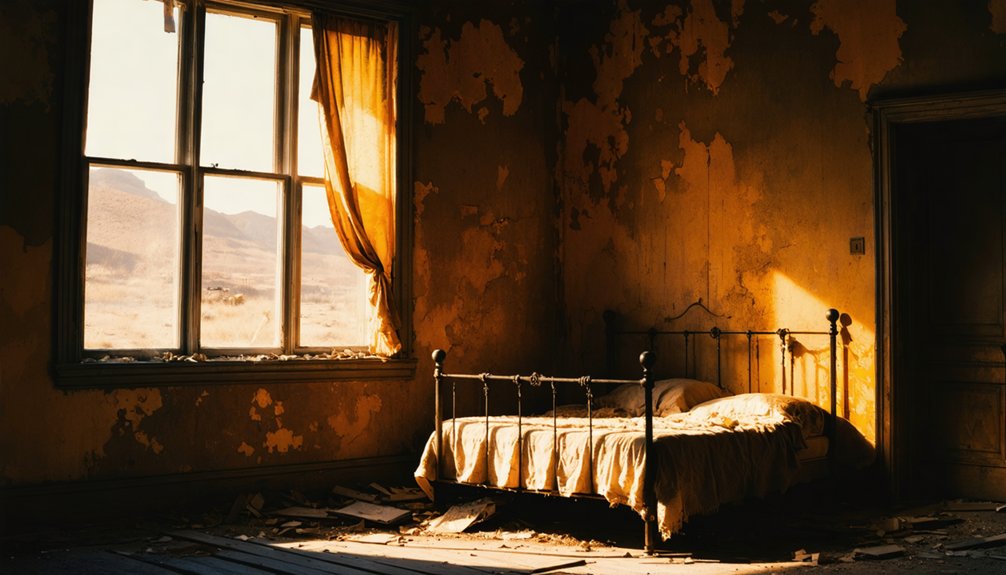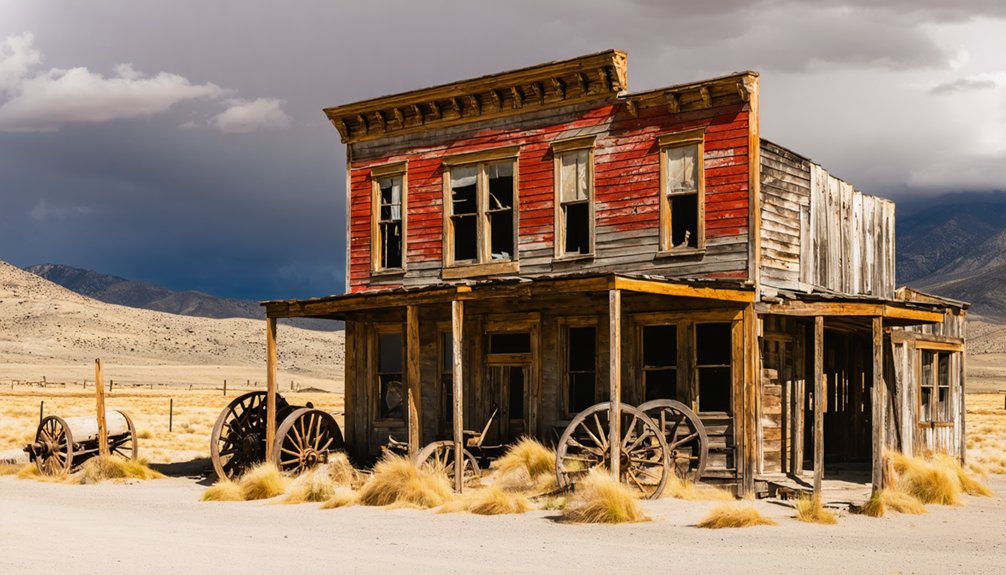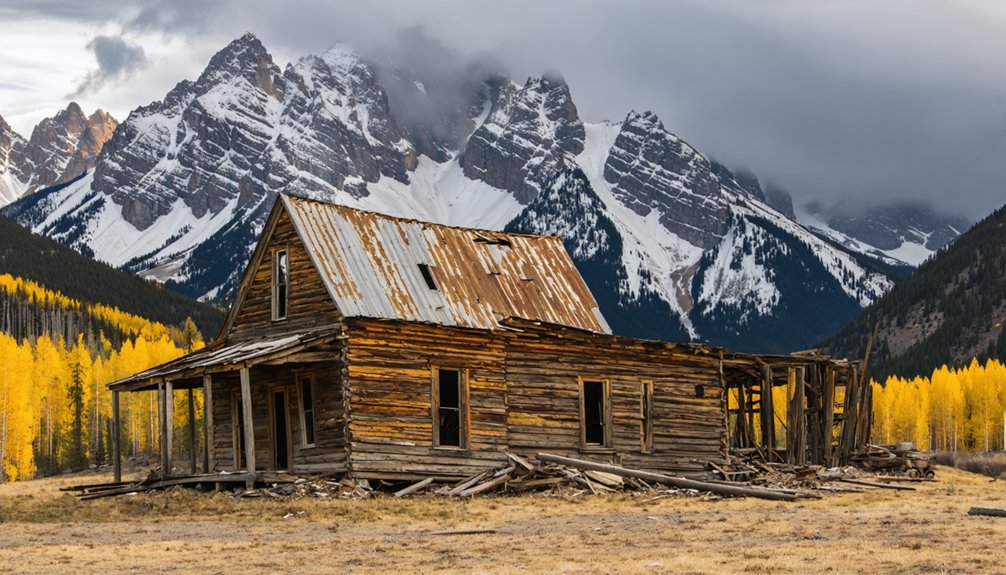
The San Juan Mountains contain some of the American West’s most concentrated clusters of ghost towns, including Animas Forks, Ironton, Red Mountain, and Carson. You’ll find well-preserved structures, mine remnants, and domestic artifacts that reflect the boom-and-bust silver and gold economy of the late 1800s. Harsh winters, resource depletion, and market volatility drove rapid abandonment at elevations exceeding 11,200 feet. Each site rewards careful analysis of both human ambition and environmental resilience, and there’s far more to uncover about these remarkable ruins.
Key Takeaways
- The San Juan Mountains contain notable ghost towns including Animas Forks, Ironton, Red Mountain, and Carson, rooted in late 1800s mining history.
- Animas Forks sits at 11,200 feet elevation and features well-preserved structures, including the William Duncan House and Animas Forks Town Hall.
- Towns were rapidly built and abandoned due to boom-and-bust cycles, resource depletion, market volatility, and harsh high-elevation winters.
- Visiting requires high-clearance 4WD vehicles, with roads reliably passable only from July to early September along County Road 2.
- BLM prohibits artifact removal to preserve site integrity; visitors should carry emergency supplies and monitor road conditions before departure.
The San Juan Ghost Towns Worth the Drive
While the San Juan Mountains harbor dozens of abandoned mining settlements, a handful stand out as genuinely worth the demanding drive. You’ll find hidden gems like Animas Forks, sitting at 11,200 feet, offering well-preserved structures accessible via scenic routes along the legendary Alpine Loop.
This 65-mile unpaved corridor connects Lake City, Ouray, and Silverton, threading through landscapes that reward those willing to navigate high-clearance 4WD terrain.
Beyond Animas Forks, towns like Ironton, Red Mountain, and the aptly named Carson—perched above the clouds—deliver distinct historical narratives rooted in the late 1800s silver and gold rush.
Ironton, Red Mountain, and Carson each tell a distinct story of silver and gold rush ambition from the late 1800s.
Each site reflects a boom-and-bust cycle that shaped the entire region. Your freedom to explore these spaces remains largely unrestricted, though BLM-provided interpretive materials sharpen your understanding considerably.
Why So Many Towns Were Built: and Abandoned: in the Same Mountains
The same forces that made these towns worth building made them worth abandoning. Silver and gold drove the economic motivations behind every settlement you’ll find scattered across these peaks. Miners flooded in fast, erected towns practically overnight, and extracted what they could. When the ore ran out, or prices collapsed, they left just as quickly.
You can’t separate that cycle from the environmental challenges these elevations imposed. Winters at 11,000-plus feet weren’t merely inconvenient — they were existential. Supply lines failed, equipment froze, and families couldn’t sustain year-round operations.
The mountains that concealed enormous mineral wealth also made that wealth brutally expensive to recover. Understanding both pressures together explains why the San Juans contain so many ghost towns clustered within such a concentrated, unforgiving landscape.
How to Reach the Most Remote San Juan Ghost Towns
Reaching the most remote San Juan ghost towns demands preparation that most visitors underestimate.
You’ll navigate rugged terrain that punishes unprepared vehicles and inexperienced drivers. Remote access to sites like Animas Forks requires a high-clearance 4WD vehicle — passenger cars simply won’t survive County Road 2’s unforgiving surface.
Animas Forks doesn’t forgive passenger cars — bring high-clearance 4WD or stay home.
The Alpine Loop’s 65-mile unpaved corridor connects Lake City, Ouray, and Silverton, placing you within striking distance of multiple abandoned settlements.
Before departing, secure BLM interpretive maps from San Juan County. Summer remains your only reliable window; winter renders these elevations impassable.
You’re operating at 11,200 feet or higher, where weather shifts rapidly and mechanical failures carry serious consequences.
Respect that freedom here isn’t handed to you — it’s earned through deliberate planning and capable equipment.
What You’ll Actually Find Inside These Ghost Towns
When you step into Animas Forks, you’ll encounter several original structures still standing from the 1880s, ranging from modest cabins to more substantial civic buildings—all unrestricted for entry but requiring careful handling given their fragile condition.
You’ll also find preserved artifacts and remnants that speak directly to the town’s silver and gold mining era, offering tangible evidence of its peak population of 450 summer residents.
Before you explore, pick up the interpretive brochures and maps provided by the BLM and San Juan County, which supply critical historical context and guide you through the site’s most significant features.
Original Structures Still Standing
Although time and harsh alpine winters have claimed many structures throughout the San Juan Mountains, Animas Forks stands apart as one of the region’s best-preserved ghost towns, retaining several original buildings that offer a tangible connection to its 1880s peak.
You’ll find preserved buildings that carry genuine historical significance, standing unrestricted for independent exploration.
Key structures you can examine firsthand:
- William Duncan House – A two-story residence reflecting 1880s residential construction techniques
- Animas Forks Town Hall – Demonstrating civic infrastructure at 11,200 feet elevation
- Mine and mill remnants – Revealing the silver and gold extraction operations that drove settlement
BLM and San Juan County provide interpretive brochures on-site, giving you analytical context while you explore freely on your own terms.
Preserved Artifacts And Remnants
Step inside these ghost towns and you’ll encounter a layered archaeological record that extends well beyond weathered facades. You’ll find mining relics embedded throughout structures and surrounding terrain — rusted ore carts, fractured timber supports, and assay equipment frozen mid-use.
Artifacts preservation here operates on an honor system; BLM guidelines prohibit removal, allowing subsequent visitors unfiltered access to authentic material culture.
At Animas Forks specifically, domestic remnants coexist with industrial hardware — broken ceramic dishware, collapsed stove systems, and window glass fragments still occupying their original positions.
Each object communicates specific economic realities of 1880s mining society. You’re fundamentally walking through an open-air archive, where spatial relationships between artifacts retain interpretive value that removal would permanently destroy.
Engage analytically, document thoroughly, and leave everything precisely where you find it.
Interpretive Brochures And Maps
Two primary resources will ground your interpretive experience at these ghost towns: BLM-published brochures and San Juan County maps, both available before you arrive.
These visitor resources eliminate guesswork, letting you move independently through sites like Animas Forks without guided dependency.
Interpretive signage complements these materials on-site, contextualizing structures within their mining-era significance.
Before heading out, secure:
- BLM interpretive brochures — detail structural histories and preservation guidelines
- San Juan County maps — identify precise routes along County Road 2 and Alpine Loop segments
- Site-specific historical summaries — connect individual buildings to broader boom-and-bust economic cycles
Together, these tools transform passive sightseeing into informed, self-directed exploration.
You’ll navigate confidently, understand what you’re examining, and preserve the integrity of fragile remaining structures through knowledge rather than restriction.
The Best Time of Year to Visit San Juan Ghost Towns
If you’re planning a trip to the San Juan ghost towns, you’ll want to target the narrow summer window between late June and early September, when snowmelt has cleared the high-altitude roads and temperatures remain manageable.
During peak season, you can access the Alpine Loop’s unpaved terrain by Jeep or 4WD, reaching sites like Animas Forks at 11,200 feet without the risk of sudden winter closures.
Outside this window, harsh mountain weather rapidly renders most routes impassable, so timing your visit precisely determines whether you’ll reach these remote sites at all.
Peak Summer Visiting Season
Summer stands as the only reliable window for exploring the San Juan Mountains’ ghost towns, as deep snowpack and brutal winters render most sites inaccessible for much of the year.
You’ll find the roads passable, the 4WD trails navigable, and the ruins fully explorable during these months. However, peak crowds concentrate here in July and August, so plan accordingly.
Maximize your summer activities by prioritizing:
- Early morning arrivals at Animas Forks to avoid congestion on County Road 2
- Weekday visits to high-traffic sites like Ironton and Red Mountain Town
- Extended Alpine Loop runs connecting Silverton, Ouray, and Lake City for thorough site coverage
June and September offer genuine freedom—lighter traffic, cooler temperatures, and unrestricted access to these historically significant landscapes.
Weather and Road Conditions
Weather and road conditions dictate the entire San Juan ghost town experience, so you’ll want to plan your visit around a narrow seasonal window.
Weather impacts at 11,200 feet are severe—snowpack typically blocks access roads through late spring, and early autumn storms can close routes without warning.
Road safety demands a high-clearance 4WD vehicle, particularly on County Road 2’s unpaved sections leading to Animas Forks.
July through early September represents your most reliable window, offering stable temperatures and passable terrain.
Even then, afternoon thunderstorms develop rapidly at elevation, turning loose gravel roads treacherous.
You should monitor BLM road condition reports before departure and carry emergency supplies.
Flexibility in your itinerary isn’t optional—it’s essential when traversing the San Juan’s unforgiving mountain environment.
The History That Shaped Every San Juan Ghost Town
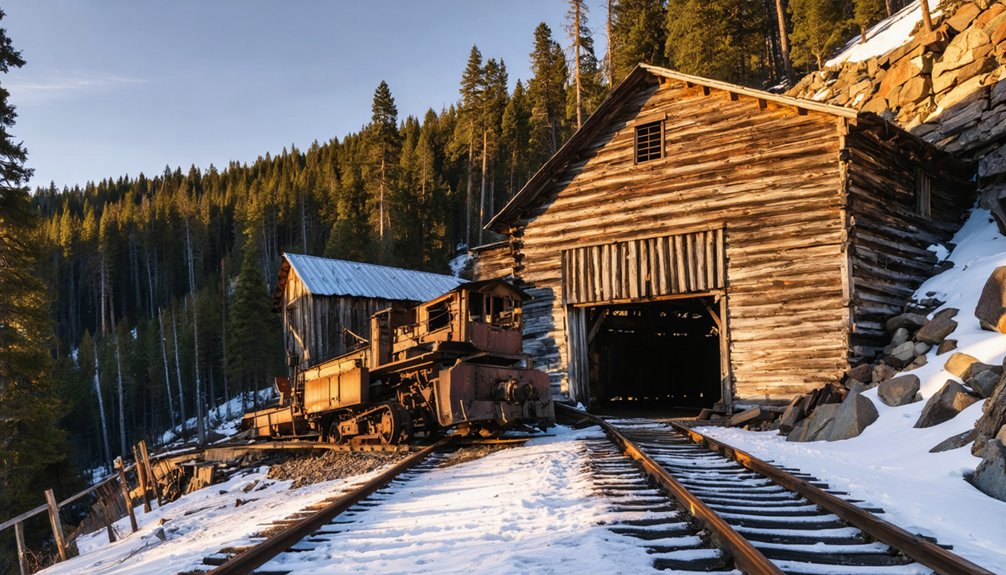
The late 1800s silver and gold rush fundamentally transformed the San Juan Mountains, driving waves of prospectors into elevations exceeding 11,000 feet and spawning towns that rose and collapsed within decades.
Understanding this mining boom and subsequent town decline gives you critical context before exploring these ruins.
Three forces consistently shaped every settlement:
- Silver and gold discoveries triggered rapid population surges, sometimes reaching hundreds of residents within single seasons.
- Market volatility decimated economies when precious metal prices collapsed, forcing mass abandonment.
- Brutal winters accelerated structural deterioration, stripping most sites to skeletal remains.
You’re essentially walking through capitalism’s unfiltered consequences—ambitious communities built fast, exploited hard, then surrendered entirely to the mountain landscape that outlasted them.
Frequently Asked Questions
Are Guided Tours Available for Exploring San Juan Ghost Towns Safely?
Yes, you can access guided exploration options for San Juan ghost towns. Tours incorporate essential safety measures, letting you freely investigate historic ruins, navigate rugged terrain, and uncover the region’s fascinating mining heritage with expert assistance.
Can Children Safely Explore the Fragile Structures at Animas Forks?
With 450 peak residents once thriving here, you’ll want to take safety precautions when planning children’s activities at Animas Forks. Don’t let kids enter fragile structures—they’re well-preserved but unstable, demanding cautious, respectful exploration.
Is Camping Permitted Near Ghost Towns on Bureau of Land Management Land?
You can typically camp on BLM land near ghost towns, but you’ll need to follow camping regulations and BLM policies, which often permit dispersed camping while restricting stays to 14 consecutive days.
What Photography Rules Apply When Visiting Protected Historic Ghost Town Sites?
Photograph freely, focusing on fine composition techniques and lighting considerations. You can capture countless compelling shots without restrictions, but you’re responsible for respecting fragile structures—don’t disturb, damage, or remove any historically significant materials during your documentation.
Are There Entrance Fees Required to Visit Any San Juan Ghost Towns?
You’ll find no entrance fees for ghost town access at San Juan sites like Animas Forks. Entrance policies remain unrestricted, as the BLM manages these lands openly, preserving your freedom to explore historic mining heritage.
References
- https://www.durango.com/animas-forks/
- https://www.visitouray.com/ghost-towns
- https://www.youtube.com/watch?v=ZdAzgHlqJXo
- https://www.uncovercolorado.com/ghost-towns/animas-forks/
- https://www.coloradolifemagazine.com/printpage/post/index/id/172
- https://www.touristsecrets.com/destinations/united-states/colorado/secrets-of-colorados-abandoned-mining-towns-san-juan-mountains/
- https://www.youtube.com/watch?v=_yr852bAlrY
- https://www.youtube.com/watch?v=wpWoIJmbUy4
- https://www.islands.com/1968351/best-preserved-ghost-town-colorado-san-juan-mountains-animas-forks/
- https://www.touristsecrets.com/destinations/united-states/colorado/secrets-of-colorados-san-juan-mountains-mining-ruins/