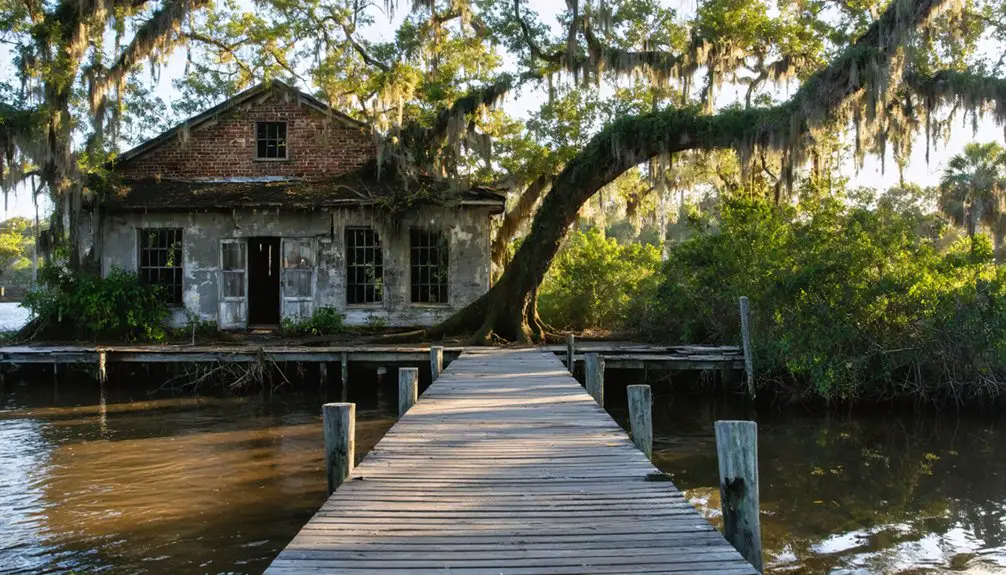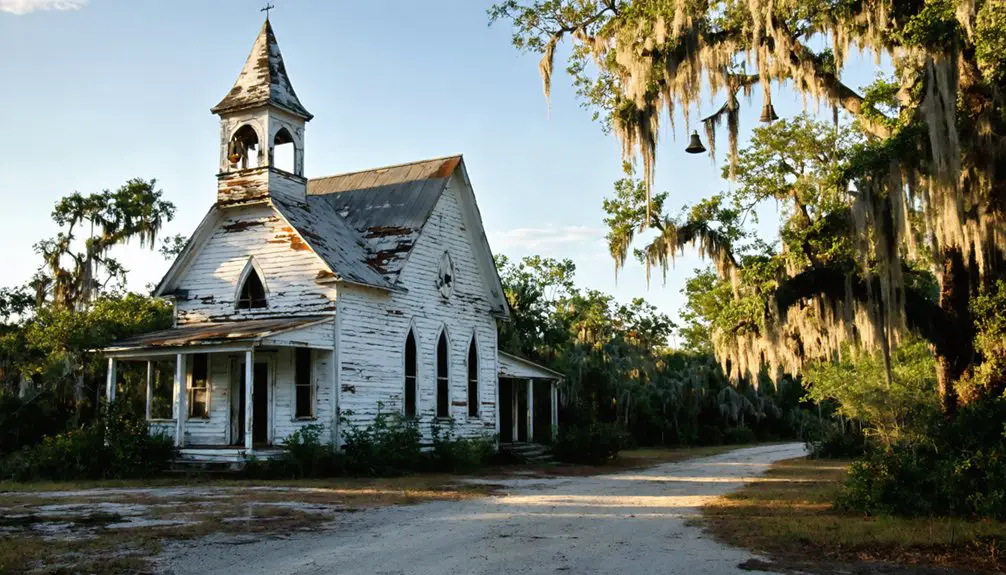
Planning a ghost town road trip to Hawkinsville, Florida means following U.S. 90 to Old Town, where a sunken steamboat waits beneath the dark, tannic waters of the Suwannee River. You can dive the wreck, fish for bass and catfish, hike the Nature Coast State Trail, or explore Fort Fanning Historic Park. It’s an easy weekend trip that blends history and nature without the crowds. Stick around — there’s far more to this forgotten corner of Florida than you’d expect.
Key Takeaways
- The Hawkinsville steamboat, the Suwannee River’s largest, rests near Old Town and offers diving experiences at depths ranging from 3 to 20 feet.
- Advanced open water certification is required for diving the wreck, with flashlights essential due to dark, tannic river waters.
- U.S. 90 provides easy access to key sites, making Hawkinsville ideal for weekend getaways or day trips.
- Fort Fanning Historic Park and the Nature Coast State Trail offer hiking, history, and scenic river views nearby.
- The Suwannee River attracts anglers with bass, crappie, bowfin, and catfish, complementing the area’s ghost town adventure experience.
What Is the Hawkinsville Steamboat Wreck?
You’re looking at the largest steamboat ever to navigate the Suwannee River — a giant that hauled lumber, cargo, and supplies until railroads rendered it obsolete in 1922.
Hawkinsville history lives on through this ghostly, moss-covered hull resting just 100 yards south of the Old Town railroad trestle. The port side sits at 3 feet deep, while the starboard drops to 20 feet, making it accessible and visually dramatic.
Why the Hawkinsville Was the Last Great Suwannee Steamboat
When the railroad arrived, it didn’t just compete with the Hawkinsville — it made her obsolete overnight. For decades, she’d been the lifeline of the Suwannee River, hauling lumber, cargo, and supplies across 141 feet of pure steamboat muscle.
She even helped build the very railroad trestle that would seal her fate.
By 1922, the Steamboat Era on the Suwannee River was finished. Rails moved freight faster, cheaper, and more reliably than any paddle wheel ever could.
The Hawkinsville, once the largest and most powerful steamer on the river, was simply abandoned where she floated.
The Hawkinsville — once the mightiest steamer on the Suwannee — wasn’t sunk. She was simply left behind.
She didn’t go down fighting — she just stopped. And that quiet ending makes her story feel more honest than any dramatic shipwreck ever could.
Dive the Hawkinsville: What to Expect Underwater
When you slip beneath the Suwannee’s dark, tannic surface, expect low visibility that turns the 141-foot wreck into a slow, shadowy reveal — bring a flashlight.
The Hawkinsville rests on a limestone ledge, its port side just 3 feet down and its starboard dropping to 20 feet, giving you a dramatic range of depth to explore.
You’ll find a remarkably intact wooden hull, moss-draped and ghostly, with the paddlewheel structure still recognizable against the murky current.
Visibility And Diving Conditions
Diving the Hawkinsville isn’t your typical clear-water dive — the Suwannee River’s dark, tannic waters give the wreck an eerie, otherworldly atmosphere that actually enhances its ghostly appeal.
Visibility factors here differ dramatically from coastal dive sites. Tannins from decaying vegetation stain the water a deep amber-brown, often limiting your sightlines to just a few feet. That’s why you’ll want a reliable flashlight — it’s essential, not optional.
Diving safety demands respect for these conditions. The wreck sits on a limestone ledge, with depths ranging from 3 feet on the port side to 20 feet on the starboard side.
Advanced open water certification is required, and entering the wreck interior isn’t permitted. Come prepared, stay alert, and you’ll experience one of Florida’s most hauntingly beautiful dive sites.
What Divers Will See
Once you slip beneath the Suwannee’s amber surface, the Hawkinsville emerges from the darkness like something frozen in time.
This wreck exploration rewards patient divers with haunting beauty and genuine underwater artifacts throughout the site.
Expect to encounter:
- Moss-covered wooden hull stretching 141 feet, remarkably preserved after a century underwater
- Paddlewheel remnants still visible along the vessel’s ghostly silhouette
- Structural framework revealing authentic late 19th-century steamboat construction techniques
- Depth variations ranging from 3 feet portside to 20 feet starboard, offering multiple perspectives
- Bronze preserve plaque marking this nationally recognized historic site
How to Get to the Hawkinsville Wreck Site
Located along U.S. 90 near Old Town in Dixie County, Florida, the Hawkinsville wreck site sits just 100 yards south of the Old Town railroad trestle on the Suwannee River.
You’ll find wreck access straightforward — launch your boat from a nearby ramp or swim out from shore. The Nature Coast State Trail runs alongside the old railroad trestle, making it easy to orient yourself once you arrive.
You can actually spot the wreck from the river’s surface, so you don’t need to dive to enjoy it. If you do plan to dive, prioritize river safety by bringing a flashlight, since the tannic waters limit visibility markedly.
Advanced open water certification is required, and entering the wreck’s interior isn’t permitted.
What to Do in Old Town Before or After Your Dive
After your time in the water, head over to Fort Fanning Historic Park for sweeping views of the Suwannee River and a dose of local history.
If you’re feeling restless, cast a line into the river, where bass, crappie, bowfin, and catfish keep anglers busy for hours.
You can also saddle up or lace up your trail shoes for the Nature Coast State Trail, which follows the old railroad trestle that once helped doom the very steamboat you just visited.
Explore Fort Fanning Park
Here’s what you can explore at Fort Fanning:
- Walk the grounds where a Second Seminole War outpost once stood
- Take in sweeping views of the Suwannee River from the bluff
- Read interpretive signage covering frontier-era Florida history
- Photograph the natural landscape along the riverbank
- Enjoy a quiet, uncrowded stop that feels genuinely off the beaten path
It’s a low-key but rewarding detour that connects the area’s layered past to the underwater history waiting just downstream.
Fish The Suwannee River
Whether you’re planning your dive or winding down after one, the Suwannee River gives you plenty of reasons to linger.
Suwannee fishing draws anglers who appreciate the river’s dark, tannic waters teeming with bass, crappie, bowfin, and catfish. You don’t need complicated river techniques here — a simple bottom rig or soft plastic lure along submerged limestone ledges gets results fast.
Launch from a nearby bank, drift with the current, and let the river work for you. The same ecosystem that preserved the *City of Hawkinsville* wreck supports a rich aquatic food chain year-round.
Whether you’re casting at dawn before suiting up or fishing at dusk after your dive, the Suwannee rewards patience and keeps your adventure going long after you’ve left the water.
Ride Nature Coast Trail
Few trails around Old Town blend history and scenery as naturally as the Nature Coast State Trail, a converted rail corridor that runs straight through the heart of Suwannee River country.
These nature trails follow the same trestle railroad that once outcompeted the steamboats you’ll dive beneath, giving you scenic views with real historical weight.
Pack your bike or lace up your shoes and explore:
- Trail runs along the old railroad trestle above the Suwannee River
- Connects directly to the City of Hawkinsville dive preserve access points
- Offers unobstructed scenic views of tannic river waters below
- Nature trails pass through old-growth riverside vegetation
- Free and open to hikers, cyclists, and equestrians year-round
It’s history you can ride through, not just read about.
What to See Near the Hawkinsville Wreck Site?
Beyond the wreck itself, the surrounding area offers plenty to keep you exploring. Fort Fanning Historic Park delivers sweeping river views and a deeper connection to Hawkinsville history, reminding you how this waterway once powered an entire region.
Fanning Springs State Park sits nearby, where crystal-clear springs feed into the Suwannee’s tannic waters, creating a stunning contrast worth seeing firsthand.
Crystal-clear springs meet the Suwannee’s dark tannic waters at Fanning Springs State Park — a contrast worth seeing firsthand.
If river ecology fascinates you, the Suwannee’s ecosystem doesn’t disappoint. Bass, crappie, bowfin, and catfish thrive in these waters, making it a favorite among anglers.
The Nature Coast State Trail, following the old railroad trestle that ultimately doomed the Hawkinsville steamboat, connects you to the landscape’s layered past. U.S. 90 keeps everything accessible, so you can move freely between sites without backtracking.
Frequently Asked Questions
Is the Hawkinsville Wreck Safe for Beginner Divers to Explore?
Like a maze with hidden depths, the Hawkinsville wreck isn’t suited for beginner diving. You’ll need advanced open water certification for safe wreck exploration, as its low visibility and 20-foot depths demand experienced divers.
Can You Fish Near the Hawkinsville Steamboat Wreck Site?
Yes, you can fish near the Hawkinsville wreck! The Suwannee River’s rich ecosystem offers bass, crappie, and catfish. Always check local fishing regulations and grab local bait to maximize your freedom-filled angling adventure near this historic site!
Are There Guided Tours Available for the Hawkinsville Wreck Dive?
No guided tours are listed, but you’ll need advanced open water certification and proper scuba equipment to explore this hauntingly beautiful wreck. Prioritize dive safety in the low-visibility, tannic waters before diving solo.
What Is the Best Time of Year to Visit Old Town?
Spring and fall offer you the best visits to Old Town, where you’ll enjoy cooler temps for diving the Hawkinsville wreck, exploring ghost town history, and embracing seasonal activities like fishing and hiking the Nature Coast Trail.
Is There an Entrance Fee to Access the Hawkinsville Preserve?
Free as the Suwannee’s current, you’ll pay no entrance fee to explore Hawkinsville history! You simply navigate your boat or swim to enjoy preserve activities, though you’ll need advanced open-water diving certification to dive.
References
- https://en.wikipedia.org/wiki/City_of_Hawkinsville_(shipwreck)
- https://www.museumsinthesea.com/hawkinsville/index.htm
- https://scubadiverlife.com/floridas-underwater-archaeological-preserves-city-hawkinsville/
- https://www.visitflorida.com/travel-ideas/articles/arts-history-city-of-hawkinsville-steamboat-suwanee/
- https://www.exploresouthernhistory.com/cityofhawkinsville.html
- https://www.hmdb.org/m.asp?m=245245
- https://www.florida-backroads-travel.com/city-of-hawkinsville-sunken-steamboat.html
- https://www.nps.gov/articles/cityofhawk.htm
- https://museumsinthesea.com/hawkinsville/history.htm