Planning a ghost town road trip to Hillsboro, Massachusetts means exploring Franklin County’s haunting remnants of cellar holes, crumbling foundations, and ancient stone walls where a once-thriving mill community slowly disappeared. You’ll need solid hiking boots, offline maps, and local land ownership verification before you go, since some areas are private property. GPS won’t always guide you reliably, so cross-reference topographic maps and historical records. Stick around to uncover everything this forgotten town still has to tell you.
Key Takeaways
- Hillsboro, located in Franklin County, Massachusetts, features scattered cellar holes, stone walls, and foundations from its economic decline following mill closures.
- Verify land ownership before visiting, as some areas are private property requiring permission, while public land may also have access restrictions.
- GPS may not locate the site reliably; use specific coordinates, topographic maps, historical records, and download offline maps before arriving.
- Pack ankle-supporting boots, layered clothing, water, a first-aid kit, and gloves while staying cautious of hidden cellar holes and shifting terrain.
- Nearby ghost towns like Prescott, Dana, Dogtown Common, and Montague offer additional exploration opportunities, each with unique history and folklore.
What’s Left of Hillsboro, Massachusetts Today
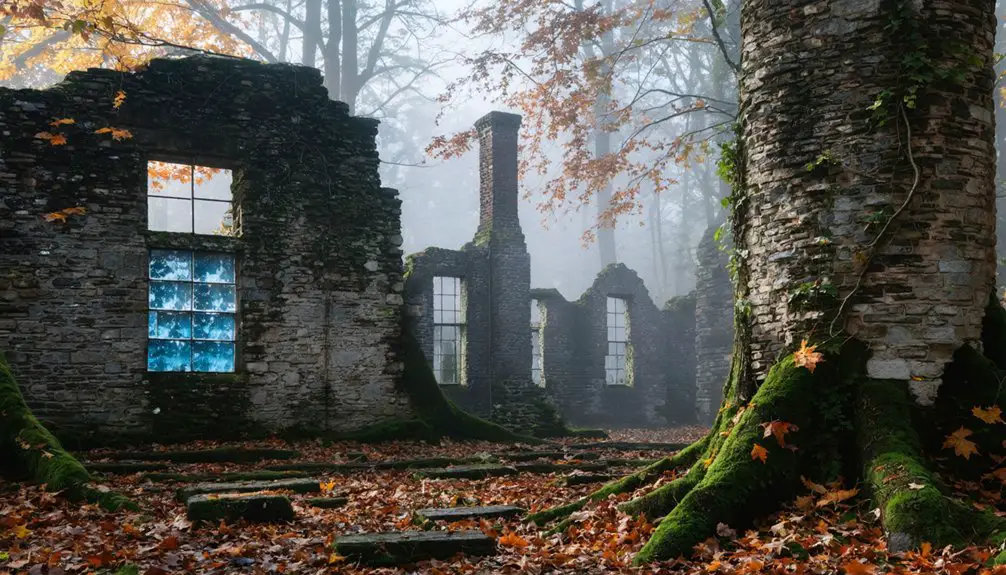
Nothing prepares you for the quiet of Hillsboro. Once a living settlement, this Franklin County ghost town now offers scattered foundations, cellar holes, and weathered stone walls swallowed by forest. You won’t find welcome signs or guided tours here. Urban exploration is your primary tool, and you’ll want sturdy boots for uneven ground and hidden drop-offs.
Hillsborough legends add texture to what the landscape leaves unsaid. Former mill activity, rural depopulation, and shifting transportation routes emptied this place over generations. What remains tells that story through moss-covered granite and tree-lined clearings where structures once stood.
Before you visit, confirm land access and ownership. Some areas sit on private property.
Come during daylight, bring a map, and let the ruins speak for themselves.
The History Behind Hillsboro’s Ghost Town Status
To understand why Hillsboro became a ghost town, you have to trace its roots back to the slow unraveling of the industries that once kept it alive.
Like many Massachusetts settlements, it fell victim to mill closures and economic shifts that drained the population and left the land largely empty.
What you’ll find today are the quiet remnants of that collapse — cellar holes, stone walls, and scattered foundations slowly being reclaimed by the forest.
Origins Of Hillsboro’s Decline
Like many Massachusetts ghost towns, Hillsboro’s decline wasn’t the result of a single dramatic event but rather a slow unraveling tied to broader regional shifts.
Economic shifts in manufacturing and agriculture pulled the Hillsborough population toward more connected, industrialized centers. As mills closed and transportation routes bypassed smaller settlements, residents followed opportunity elsewhere.
The land that once supported thriving rural life gradually fell quiet. Stone walls and cellar holes replaced active homesteads.
What you’ll find today are the physical remnants of a community that simply couldn’t adapt fast enough to a changing economy. Understanding these patterns helps you appreciate the site beyond its eerie atmosphere.
You’re not just visiting an abandoned place—you’re reading the landscape like a document of real human choices and consequences.
Industrial And Mill Collapse
Mill collapse sits at the center of Hillsboro’s story, and it’s worth understanding exactly how that process worked. When the mills closed, they didn’t just eliminate jobs — they severed the economic lifeline holding the community together.
Industrial decline moved fast once it started. Families left, businesses shuttered, and the infrastructure that supported daily life became impossible to maintain.
You’ll notice this pattern repeated across Massachusetts ghost towns. Mills had dictated where people settled, how roads developed, and which services survived. When production stopped, the logic of living there stopped with it.
Hillsboro couldn’t reinvent itself quickly enough. Without industrial activity anchoring the population, residents scattered toward larger towns offering steadier work. What remained behind were foundations, silence, and a landscape slowly reclaimed by forest.
Surviving Ruins And Remnants
What’s left of Hillsboro doesn’t announce itself — you have to look for it. Stone foundations emerge from the forest floor, half-buried under decades of leaf litter and encroaching roots.
Cellar holes mark where homes once stood, now silent pockets in the earth. Old stone walls trace property lines that no one disputes anymore.
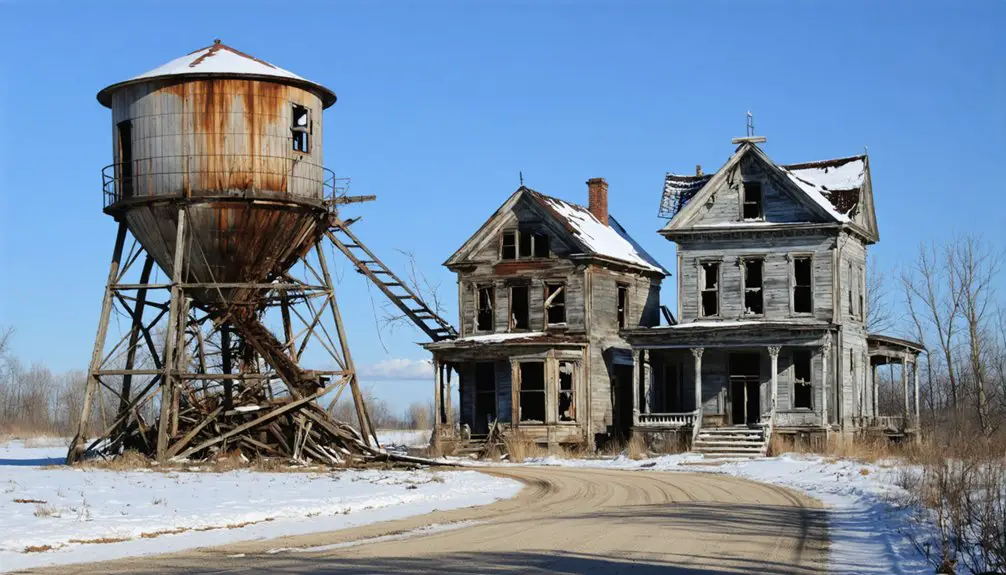
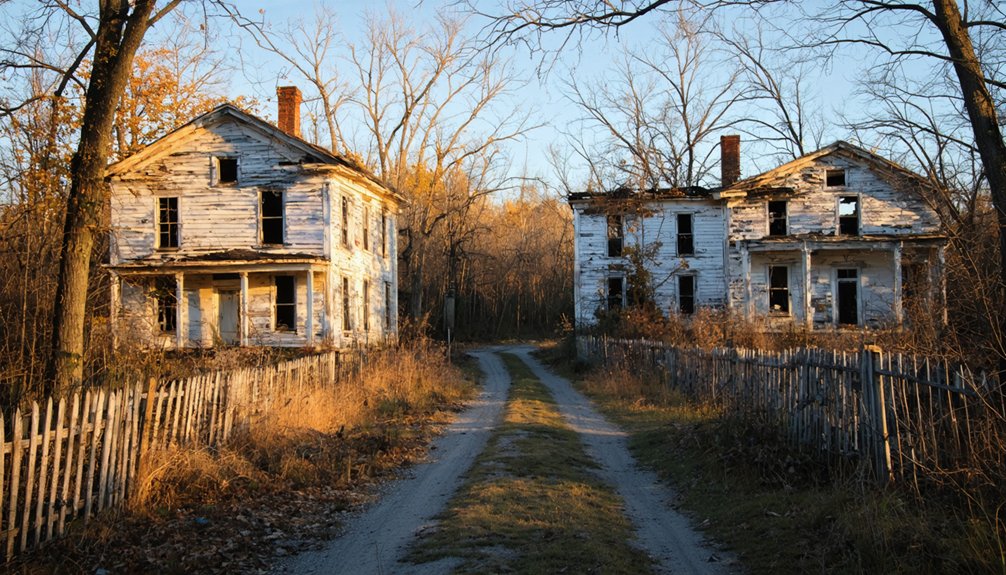
You won’t find preserved abandoned buildings staged for visitors. What survives is raw and unfiltered — crumbling masonry, scattered historical artifacts, and weathered clearings where whole communities once operated.
The landscape holds its history quietly, revealing details only to those willing to slow down and read the terrain.
Wear sturdy boots, bring a map, and expect uneven ground. Hillsboro rewards curiosity, but it demands that you meet it on its own terms.
Who Owns the Land and Whether You’re Allowed In
Before you pack your bag and head out, you need to find out who actually owns the land around Hillsboro’s ghost town remnants.
Some sites sit on private property, meaning you’ll need permission before setting foot on them, while others may fall under conservation or state jurisdiction with their own posted rules.
Check current land records, contact local town offices, and confirm access before you go so you don’t end up trespassing on what looks like open wilderness.
Current Land Ownership
One of the first things you’ll want to nail down before heading to Hillsboro is who actually owns the land you’re planning to walk on.
Property rights vary widely across former Massachusetts settlements, and Hillsboro is no exception. Some parcels fall under state or conservation authority, where land use is regulated but public access is sometimes permitted.
Others remain privately held, meaning you’re trespassing without explicit permission.
Before you load up the car, check with Franklin County records, Massachusetts state land databases, or local conservation commissions.
A quick records search protects your freedom to explore without legal risk. Don’t assume a site is open simply because it looks abandoned.
Knowing who controls the land keeps your road trip moving forward instead of ending at a property line.
Access Rules Apply
Knowing who owns the land is only half the battle—what actually determines whether you can set foot on it are the access rules attached to that ownership.
Public land doesn’t always mean open land. Conservation areas carry access restrictions that limit hours, prohibit vehicles, or require permits. State forests follow property regulations that vary by zone and season.
Even roads that look passable on a map may be gated or posted with no-trespassing notices. Private parcels are off-limits without explicit permission, period.
Before you load up the car, check with the town clerk, the local conservation commission, or the Massachusetts DCR for current rules. Calling ahead takes twenty minutes.
Getting cited for trespassing or damaging a protected site costs far more than that.
How to Find the Hillsboro Site and Get There

Finding Hillsboro requires a bit of research upfront, since GPS alone won’t always lead you to a former Massachusetts settlement that’s long since faded from modern maps.
Cross-reference Franklin County historical records, old USGS topographic maps, and ghost-town databases before you leave home. These Hillsboro navigation tips will save you significant time once you’re on the road.
Before heading out, cross-reference historical records, USGS topo maps, and ghost-town databases to save time on the road.
Pull specific coordinates rather than relying on a place name search. When exploring ghost towns, old town roads and stone walls often serve as better landmarks than signage.
Download offline maps, since cell service in rural Massachusetts can drop unexpectedly. Arrive during daylight hours to navigate wooded terrain safely.
Wear sturdy footwear and park where you won’t block access roads or trespass on private land bordering the site.
Foundations, Stone Walls, and What the Site Actually Contains
Scattered across the Hillsboro site, you’ll find the quiet evidence of lives once lived: cellar holes sunken into the earth, dry-laid stone walls threading through second-growth forest, and occasional foundation outlines barely distinguishable from the surrounding terrain.
These foundation features and stone wall remnants reward patient, observant exploration. Look for:
- Cellar depressions — shallow rectangular voids where homes once stood
- Stone wall remnants — boundary lines marking former fields and property edges
- Foundation features — cut or stacked stones outlining building perimeters
Nothing here announces itself dramatically. The landscape reclaims everything slowly, and the forest has made serious progress.
You’re reading a place more than visiting one. Bring good eyes, steady footing, and enough curiosity to let the ruins speak on their own terms.
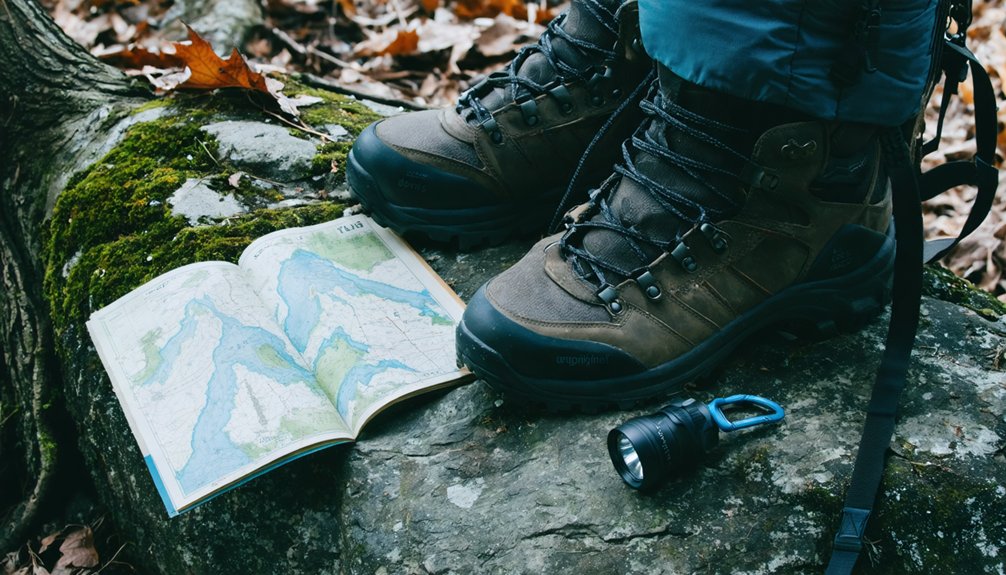
Cellar holes don’t announce themselves before you step into them. At a Massachusetts ghost town site like Hillsborough, the terrain shifts fast — soft ground, hidden depressions, tangled roots, and mud patches show up without warning.
Your ghost town gear matters here. Wear ankle-supporting hiking boots, not sneakers, and treat them as non-negotiable footwear recommendations for any abandoned-settlement visit. Layer your clothing for unpredictable New England weather, and toss a small daypack with water, a first-aid kit, and a charged phone inside.
Gloves help when you’re pushing through overgrowth near old foundations. A trekking pole or sturdy walking stick gives you a probe and a balance tool in one. Dress like you’re exploring, not strolling — because out here, you genuinely are.
Franklin County and Western Massachusetts Ghost Towns Nearby
Western Massachusetts holds at least a dozen former settlements worth tracking down if Hillsborough sparks your curiosity about the region’s ghost-town circuit.
Franklin County alone offers layered history through abandoned structures, crumbling cellar holes, and roads that once connected thriving communities. You’ll find local folklore woven into nearly every stop.
Consider adding these nearby destinations to your route:
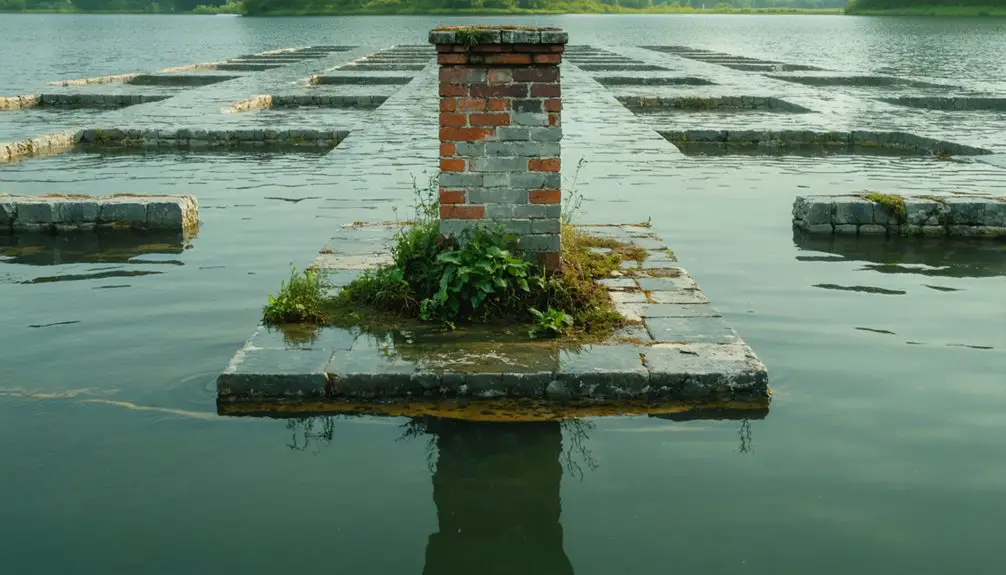
- Prescott and Dana – two towns flooded to create the Quabbin Reservoir, leaving foundations and ghostly road remnants
- Dogtown Common – a Gloucester-area settlement dense with witch legends and stone ruins
- Montague – a mill-era town with documented industrial decline and surviving historic architecture
Each site rewards preparation.
Cross-check land ownership before you go, and bring a detailed map rather than relying solely on GPS.
Frequently Asked Questions
Are Guided Ghost Town Tours Available for Hillsboro, Massachusetts?
No guided tours are confirmed for Hillsboro’s ghost town history. You’ll want to explore local legends independently, researching access points, verifying land ownership, and connecting with regional historical societies who might arrange informal, knowledgeable walking excursions yourself.
What Time of Year Is Best for Visiting Massachusetts Ghost Towns?
Spring’s mild temps, fall’s crisp air — you’ll find the best seasons for Massachusetts ghost towns are April–May and September–October. You’ll dodge harsh weather, catch local events, and explore ruins with ideal visibility and comfortable conditions.
Can Children Safely Join a Hillsboro Ghost Town Road Trip?
Yes, kids can join you! Stick to daylight visits, wear sturdy shoes, and watch for cellar holes. Share age-appropriate ghost stories while following basic safety tips, and you’ll create unforgettable family adventure memories together.
Are There Nearby Restaurants or Rest Stops Along the Route?
Like oases in a forgotten desert, local dining spots dot the route. You’ll find road trip essentials — fuel, food, and rest stops — scattered through nearby Franklin County towns, keeping your adventure fueled and your spirits high.
Is Photography Permitted at Abandoned Massachusetts Ghost Town Sites?
You’ll generally find photography permitted at abandoned Massachusetts ghost town sites, but always respect private property boundaries. Embrace urban exploration responsibly, honoring historical preservation by avoiding damage, and you’ll capture stunning, evocative images that celebrate these forgotten landscapes.
References
- https://www.tiktok.com/@new.england.uncov/video/7551255802087083319
- https://en.wikipedia.org/wiki/List_of_ghost_towns_in_Massachusetts
- https://www.facebook.com/groups/mesillatourist/posts/1266599654273576/
- https://kids.kiddle.co/List_of_ghost_towns_in_Massachusetts
- https://www.arcadiapublishing.com/products/haunted-hillsborough-county-9781626193246
- https://www.geotab.com/ghost-towns/
- https://www.youtube.com/watch?v=cQrtZnfl0Yw
- https://www.bostonhiddengems.com/blog/dogtown-ma
- https://www.reddit.com/r/newengland/comments/1jl83h7/what_are_some_interesting_and_cool_backstories_or/
- https://www.reddit.com/r/massachusetts/comments/lunoy7/abandoned_town_massachusetts_does_anyone_know/