If you’re planning a ghost town road trip, Jim Town, Texas won’t disappoint. Tucked between Tyler and Overton in Smith County, this forgotten settlement dates back to 1854. Once a thriving community along the Dallas-Shreveport Road, it collapsed after the railroad bypassed it in favor of Overton. Today, only a weathered cemetery remains hidden in the woods. Pack your boots, bring insect repellent, and keep exploring — there’s much more to uncover about this fascinating slice of Texas history.
Key Takeaways
- Jim Town, located between Tyler and Overton, Texas, is a ghost town founded in 1854 that declined after the railroad bypassed it.
- The Jim Town Cemetery, north of Smith County Road 244, is the only surviving remnant and requires coordinates to locate.
- Spring and fall are the best seasons to visit, offering mild temperatures and scenic conditions for exploration.
- Pack sturdy boots, insect repellent, water, photography gear, and a printed map, as facilities and cell signals are limited.
- Nearby ghost towns like Starrville, Harmony Hill, and Reklaw can be combined into a fuller East Texas road trip.
What Is Jim Town, Texas?
Nestled between Tyler and Overton in Smith County, Texas, Jim Town is a ghost town that once thrived as a bustling settlement along the Dallas-Shreveport Road before the railroad erased it from the map.
Founded in 1854, Jimtown history traces back to a self-sufficient community with two churches, a Masonic Lodge, a Male Academy, general stores, blacksmiths, and wagon makers. It even held its own post office from 1856 until 1903.
When the International-Great Northern Railroad bypassed the town in favor of Overton, six miles east, commerce dried up fast.
Today, community heritage survives only through a single cemetery tucked in a wooded patch north of Smith County Road 244. You won’t find buildings or markers — just trees, silence, and history waiting beneath your feet.
Where Jim Town Sits Between Tyler and Overton
Finding Jim Town on a map takes a little patience, but once you orient yourself between Tyler and Overton, it clicks into place.
Head west from Overton about six miles along Smith County Road 244, and you’ll land right where this forgotten settlement once hummed with daily life.
Jim Town earned its historical significance as a stop along the old Dallas-Shreveport Road, a route that shaped commerce and movement across East Texas in the 1800s.
That road is why the town existed at all.
Local legends tied to this stretch of Smith County connect travelers to a rougher, more self-reliant era.
The woods north of the county road still hold the cemetery, quietly marking the spot where a real community once stood.
How Jim Town Was Founded Along the Dallas-Shreveport Road
When settlers pushed into East Texas in 1854, they planted Jim Town directly along the Dallas-Shreveport Road, a decision that would define the community’s entire reason for existing. That road was everything — a lifeline connecting commerce, people, and opportunity across the region.
The historical significance of this placement can’t be overstated. Travelers moving between major Texas destinations passed right through, fueling demand for goods and skilled labor.
Pioneer life here wasn’t romantic; it was practical and deliberate. Residents built two general stores, brought in blacksmiths, and established churches and a Masonic Lodge.
Why the Railroad Killed Jim Town
When the International-Great Northern Railroad laid its tracks through Overton, six miles east of Jim Town, it sealed the community’s fate.
You can imagine how quickly the town’s two general stores, blacksmiths, and wagon makers lost their edge once commerce shifted to the new rail corridor.
Within just a couple of years, the population drained away, leaving behind nothing but silence and a cemetery tucked in the woods.
Railroad Bypassed The Town
The arrival of the International-Great Northern Railroad sealed Jim Town’s fate, though the tracks never came anywhere near it. The railroad routed its line through Overton, six miles east, and that single decision rewrote the region’s economic shift almost overnight.
Suddenly, merchants, travelers, and freight all moved toward Overton instead of passing through Jim Town. You can almost picture it — shops emptying, blacksmiths losing contracts, wagon makers watching orders dry up.
The Dallas-Shreveport Road that once kept this community alive became irrelevant against railroad history’s relentless momentum. Within a couple of years, the population collapsed.
Commerce Shifted Away Permanently
Once a railroad claimed Overton as its hub, Jim Town’s commercial lifeblood didn’t just slow — it vanished. Merchants, travelers, and trade all migrated east toward the iron rails, leaving Jim Town’s two general stores, blacksmiths, and wagon makers without customers. Economic decline hit fast and hard.
You have to understand what roads meant to 19th-century commerce. The Dallas-Shreveport Road had given Jim Town its purpose. Once that traffic rerouted toward Overton, community displacement followed naturally — families packed up, businesses shuttered, and the post office closed in 1903.
Nobody stayed where opportunity had already left.
What you’ll find today reflects that brutal economic reality: just a quiet cemetery tucked in the woods, standing as the only honest proof that a thriving settlement once existed here.
Population Declined Rapidly
Railroad towns didn’t just grow — they cannibalized their neighbors. When the International-Great Northern Railroad chose Overton, Jim Town’s population trends shifted fast and fatally. People followed the rails, not the road.
Here’s what the historical significance of Jim Town’s collapse looks like in human terms:
- Families packed up and relocated toward Overton within just a couple of years.
- Blacksmiths closed their shops, leaving wagons unrepaired and fields underserved.
- Merchants abandoned storefronts, cutting off neighbors from essential daily goods.
- Children lost their academy, erasing the educational foundation parents had built.
You’re not just visiting a forgotten road — you’re standing where an entire community chose survival over sentiment, and lost both. The railroad didn’t just redirect commerce; it erased belonging.
The Jim Town Cemetery: The Only Structure That Survived
Nestled in a wooded patch north of Smith County Road 244, Jim Town’s cemetery stands as the sole surviving remnant of what was once a thriving 19th-century settlement.
When you visit this quiet piece of cemetery history, you’ll find no buildings, no storefronts, and no Masonic Lodge — just trees, silence, and weathered graves marking lives once rooted here.
Like many ghost towns, Jim Town left behind more questions than answers, but the cemetery speaks volumes about the people who built this community from scratch in 1854.
You won’t find historical markers guiding your way, so come prepared with coordinates and curiosity.
It’s a raw, unpolished stop — exactly the kind of place that reminds you history doesn’t always survive in museums.
How to Find the Jim Town Cemetery on Smith County Road 244
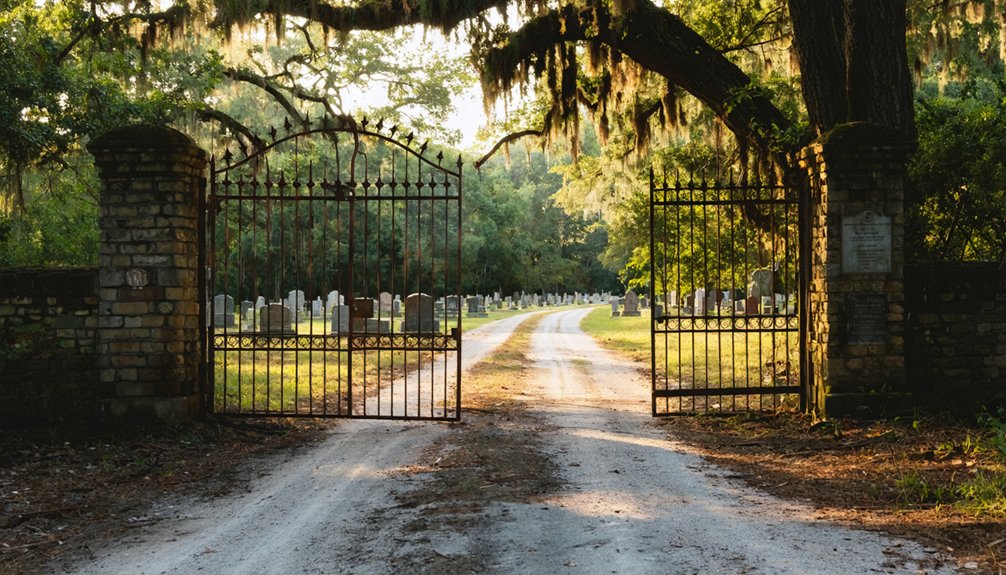
Finding the Jim Town Cemetery takes a little preparation, but the route is straightforward once you know what you’re looking for. Head to Smith County Road 244, positioned between Tyler and Overton, approximately six miles west of Overton. Your ghost town exploration ends where the tree line begins.
- Watch for the wooded patch north of the county road — the cemetery hides inside those trees.
- Drive slowly — there are no signs announcing this forgotten place.
- Bring your own research — cemetery history here exists only in archives, not roadside markers.
- Feel the weight of 1854 — you’re standing where a thriving community once built churches, lodges, and lives before the railroad erased everything.
Trust your preparation, and you’ll find it.
Best Time of Year to Visit Jim Town
Spring and fall offer you the best conditions for exploring Jim Town’s wooded cemetery, with mild temperatures making the walk through overgrown terrain far more comfortable.
You’ll want to avoid summer visits, when East Texas heat and humidity turn a simple roadside stop into an endurance test.
If you time your trip for late March through April, you’ll catch the peak wildflower bloom along Smith County Road 244, adding unexpected color to an otherwise quiet, forgotten landscape.
Ideal Visiting Seasons
Though Jim Town’s cemetery stands year-round as the site’s only surviving remnant, timing your visit wisely makes a real difference in what you’ll experience.
The seasons shape how deeply you’ll connect with this ghost town’s historical significance and its quiet, wooded atmosphere.
- Spring (March–May) – Mild temperatures and wildflowers frame the cemetery beautifully, making exploration feel alive.
- Fall (September–November) – Cooler air and turning leaves create a hauntingly perfect mood for uncovering ghost town attractions.
- Winter (December–February) – Bare trees open sight lines through the woods, revealing the cemetery’s full, stark solitude.
- Summer (June–August) – East Texas heat and humidity make this your least comfortable option; go early morning if you must.
Weather Considerations For Visitors
East Texas weather can make or break your visit to Jim Town’s cemetery, so knowing what to expect before you go saves you from an uncomfortable—or outright miserable—outing.
Weather patterns here shift dramatically across seasonal changes, demanding real attention before you pack the car.
Summers run brutal—high humidity, temperatures pushing 100°F, and mosquitoes thick enough to ruin any outdoor exploration.
Spring and fall offer your best windows, with mild temperatures and manageable conditions for walking wooded terrain. March through May brings occasional severe storms, so watch forecasts closely.
Fall, particularly October and November, delivers cooler, drier air perfect for cemetery walking.
Winter visits stay possible but unpredictable—ice storms occasionally strike East Texas without much warning.
Always check local forecasts the day before you leave.
Peak Wildflower Bloom Timing
Beyond simply avoiding heat and storms, timing your visit around East Texas wildflower season turns a quiet cemetery walk into something genuinely beautiful.
Spring delivers the most vivid rewards for ghost town explorers willing to plan ahead:
- March through April brings bluebonnets and Indian paintbrush carpeting roadsides along Smith County Road 244.
- Check bloom predictions through the Texas Wildflower Hotline before departing — conditions shift weekly.
- Nearby wildflower festivals in East Texas communities signal peak bloom windows worth aligning your trip around.
- Early morning visits during peak bloom catch soft golden light filtering through the cemetery’s wooded patch, making history feel alive again.
You’re not just visiting a forgotten town — you’re standing inside a living landscape that briefly reclaims its beauty every spring.
What to Bring When Visiting a Texas Ghost Town
Visiting a ghost town like Jimtown means stepping into a place where modern conveniences don’t follow you, so packing smart makes all the difference.
Bring sturdy boots for uneven terrain, insect repellent for the wooded cemetery area, and plenty of water since no facilities exist on-site.
For ghost town photography, a wide-angle lens captures the dense tree canopy beautifully, while a macro lens documents weathered headstones and aging inscriptions with precision.
Wear long sleeves to protect against brush and thorns along the county road path. Supporting historical preservation means leaving everything exactly as you find it, so skip the souvenir rocks or displaced markers.
A printed map helps since cell signals weaken in rural Smith County’s back roads.
Ghost Towns Near Jim Town Worth Adding to Your Route
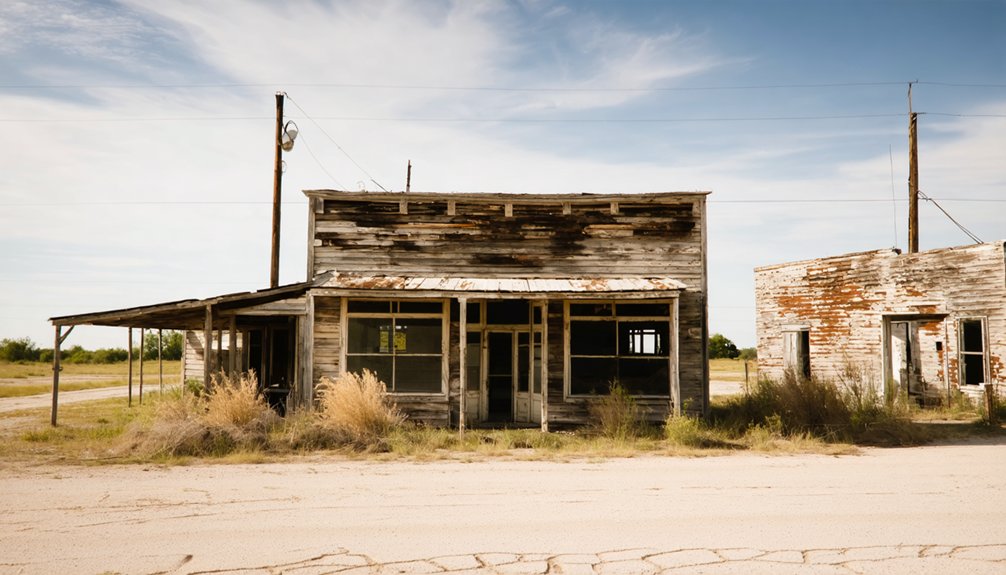
Since Jimtown sits conveniently along a Smith County back-road corridor, you can stretch your trip into a fuller East Texas ghost town circuit by adding a few nearby stops.
Each location carries its own ghost town legends and abandoned structures that reward curious travelers willing to wander off the main highway.
Each ghost town hides its own legends and crumbling secrets, waiting for travelers bold enough to leave the highway behind.
- Starrville, TX – A forgotten crossroads community with deep Civil War-era roots and eerie stillness.
- Harmony Hill, TX – Once a thriving antebellum town, now reduced to a cemetery and silence.
- Reklaw, TX – A quirky named town with faded storefronts that whisper of better days.
- New Salem, TX – A vanished settlement where old cemetery stones tell stories nobody living remembers.
How to Research Your Jim Town Family History
Tracing your roots back to Jimtown takes some digging, but the records exist if you know where to look.
Start with RootsWeb forums, where genealogists have documented family connections under the town’s alternative names — Jamestown and Berrien — so search all three.
The Portal to Texas History holds digitized documents from the 1856 post office grant, giving you a concrete starting point for ancestors who settled here before the railroad killed the town.
The Ghost Towns of Texas archive provides solid historical records confirming names, dates, and locations.
Cross-reference the Dallas County Pioneer Association archives for details stretching back to 1854.
Smith County Road 244 still leads to the cemetery, where headstones may fill gaps that no digital database ever will.
Frequently Asked Questions
Was Jim Town Ever Called by a Different Name Historically?
Yes, you’ll find Jim Town’s historical significance runs deep — it’s been called both Jamestown and Berrien! These name origins reflect the town’s evolving identity since its 1854 founding along the Dallas-Shreveport Road.
How Many Businesses Once Operated Inside Jim Town?
You’d think a “dying” town couldn’t hustle, but Jim Town’s historic economy thrived with eight businesses! Local legends recall two stores, three blacksmiths, two wagon makers, and a cabinet maker keeping this spirited community’s freedom alive.
Did Jim Town Have Any Schools or Educational Institutions?
You’ll find Jim Town’s school history fascinating! It once had a Male Academy tied to Smith County School District #28, highlighting the town’s educational significance and proving it wasn’t just a commercial hub but a true community.
What Religious Organizations Existed Within Jim Town’s Original Community?
You’ll discover that two churches shaped Jim Town’s church history, reflecting the community beliefs of its 19th-century residents. These religious organizations actively united settlers, giving them spiritual freedom and strong communal bonds throughout the town’s existence.
Did Jim Town Have a Masonic Lodge Serving Its Residents?
Yes, Jim Town had a Masonic Lodge serving its residents! You’ll find its Masonic history fascinating — the Lodge significance stretched beyond local members, welcoming visitors and strengthening community bonds throughout this once-thriving Texas settlement.
References
- https://www.ghosttowns.com/states/tx/jimtown.html
- https://en.wikipedia.org/wiki/List_of_ghost_towns_in_Texas
- http://texasghosttowns.blogspot.com/2011/09/
- https://freepages.rootsweb.com/~jwheat/history/jimtown.html
- https://www.texasalmanac.com/places/jim-town-0
- https://www.ghosttowns.com/states/tx/tx.html
- https://www.ghosttowns.com/states/tx/tx_ghst_twns_sect1345.doc
- https://dallaspioneer.org/jimtown/
- https://texashistory.unt.edu/ark:/67531/metapth61101/m1/167/
- https://www.texasescapes.com/TOWNS/Texas-Ghost-Towns-8-South-Texas.htm