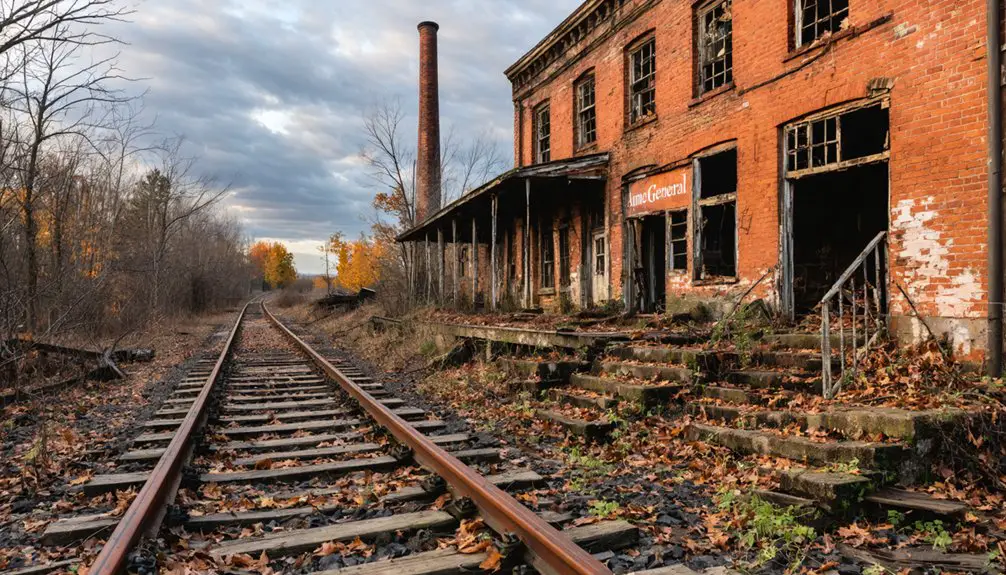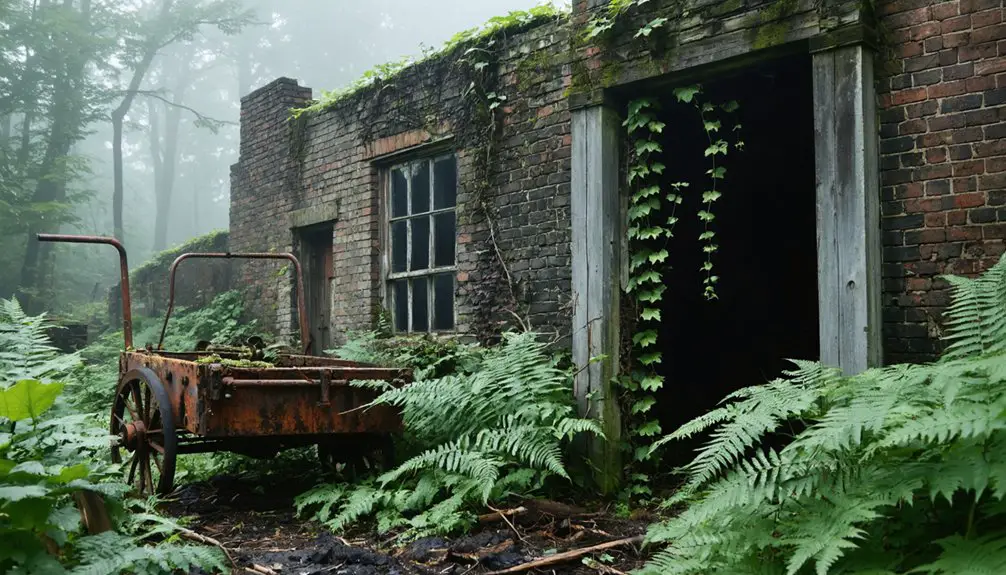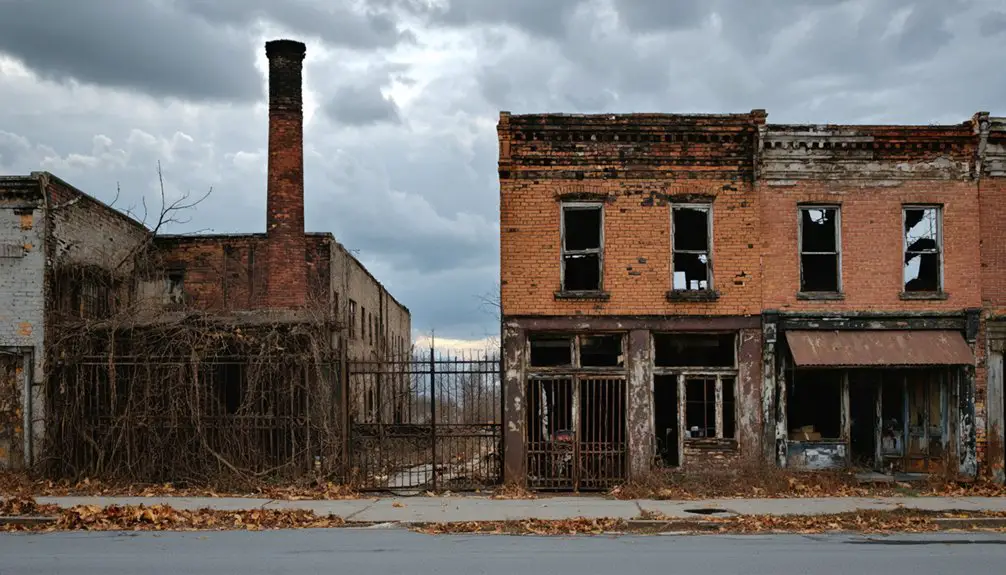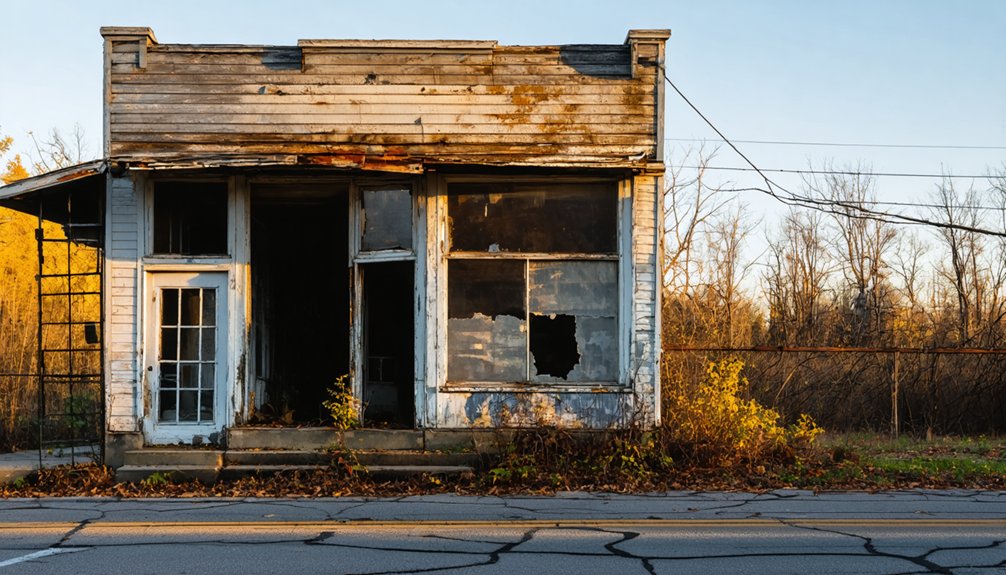
Yellow Springs, Pennsylvania is a 300-year-old ghost town tucked into Chester County’s rolling farmland, just 45 minutes from Philadelphia. You’ll find Revolutionary War hospital ruins, colonial stone buildings, and winding hiking trails leading to the Yellow Springs Tower. Drive Route 30 west to Chester Springs, park at the Washington Building on Art School Road, and explore at your own pace. There’s far more to this hauntingly beautiful village than first meets the eye.
Key Takeaways
- Yellow Springs in Chester County, Pennsylvania, is a 300-year-old ghost town featuring Revolutionary War hospital ruins and colonial stone buildings.
- The village is approximately 45 minutes from Philadelphia; take Route 30 west to Chester Springs and park at 1701 Art School Road.
- Hiking trails, marked with red and blue blazes, lead to Yellow Springs Tower, with best visibility in late fall or winter.
- Colonial stone buildings house working artist studios and rotating galleries, with free guided tours available June through August.
- Pack sturdy waterproof footwear and layered clothing; dining options are available nearby in Phoenixville at Iron Hill Brewery and other restaurants.
Why Yellow Springs Is Pennsylvania’s Most Overlooked Ghost Town
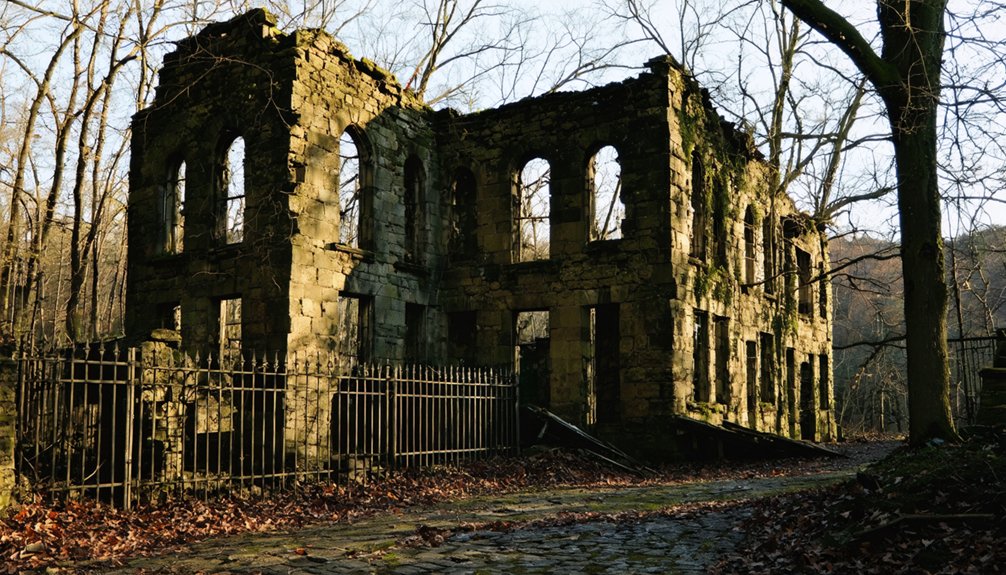
When most people think of Pennsylvania ghost towns, their minds drift to the coal-scarred landscapes of the northeast or the crumbling industrial corridors around Pittsburgh — but Yellow Springs quietly defies that narrow expectation.
Tucked into Chester County’s rolling terrain, this village carries 300 years of layered history that most travelers never discover. It’s one of those hidden gems that rewards the curious and the unhurried.
Revolutionary War hospital ruins, colonial stone buildings, and an abandoned tower half a mile uphill from the village whisper local legends to anyone willing to listen.
Revolutionary War ruins and a forgotten tower still hold their secrets — if you’re willing to climb for them.
You won’t find crowds here. You’ll find atmosphere — the kind that settles into your bones and makes you feel like you’ve stumbled onto something the rest of the world forgot to notice.
How to Get to Yellow Springs From Philadelphia
You’re only about 45 minutes from Yellow Springs when you leave Philadelphia, making this forgotten corner of Chester County an easy escape from the city’s noise.
Head toward Chester Springs and aim for 1701 Art School Road, where you’ll find parking at the Washington Building without fighting for a spot.
From there, you’re on foot and stepping into something that feels far older and stranger than the drive suggests.
Distance From Philadelphia
Just 45 minutes from Philadelphia, Yellow Springs feels worlds away from the city’s concrete rhythm. That distance comparison alone makes it one of the most rewarding escapes within reach — close enough for a spontaneous afternoon, far enough to genuinely breathe.
You’ll head west through Chester County’s rolling farmland, watching the skyline dissolve into open sky and tree lines. The drive itself signals the shift.
A few travel tips worth noting: leave mid-morning to avoid weekend congestion near Phoenixville, and plug 1685 Art School Road, Chester Springs into your navigation for a direct route.
You won’t need a full tank or a packed itinerary. You just need the impulse to go — and the willingness to let a 300-year-old village surprise you.
Parking And Access
Once you’ve committed to the drive, getting there and parking couldn’t be simpler. Take Route 30 west from Philadelphia, winding through Chester County’s rolling farmland until you reach Chester Springs. Your access routes include I-76 west to Exit 312, then south toward Phoenixville before cutting east on Art School Road.
For parking tips, pull directly into the Washington Building lot at 1701 Art School Road — it’s free, spacious, and positions you perfectly for exploring the village on foot.
Your car stays secure while you wander colonial stone paths, ducking into gallery spaces and tracing Revolutionary War ruins. The lot opens year-round, so whether you’re arriving in crisp autumn light or summer heat, you’ll find an uncomplicated, liberating entry point into this atmospheric ghost town.
The Revolutionary War Hospital That Built This Ghost Town
When you walk through Yellow Springs, you’re treading ground that once absorbed the suffering of Revolutionary War soldiers — this quiet village served as North America’s first military hospital, operating from December 1777 to June 1778.
This Revolutionary Heritage site administered care to Valley Forge’s encampment, and its Historic Preservation efforts keep that gravity alive today.
Explore what remains:
- Colonial stone buildings still standing after 300+ years
- Visible hospital ruins along the hiking paths
- Cellar holes marking former wartime structures
- Architectural remnants from multiple historical periods
- Guided evening walks revealing layered wartime narratives
The village later transformed into a mineral springs resort, then an art school — each chapter leaving physical evidence.
You’re not just visiting history here; you’re moving freely through it.
Ghost Town Ruins and Landmarks Still Standing Today
Beyond the hospital ruins and colonial stonework, Yellow Springs holds something even more enigmatic — a mysterious abandoned tower that rises roughly half a mile uphill from the village center.
You’ll want to time your visit during late fall or winter, when sparse foliage reveals the structure’s full presence against the open sky.
Back in the village, cellar holes and crumbling foundations dot the landscape, each marking where forgotten lives once unfolded.
Scattered cellar holes and broken foundations mark where entire lives were lived — and quietly forgotten.
These abandoned structures aren’t cordoned off curiosities — they’re accessible touchpoints connecting you directly to centuries of layered history.
Historical preservation efforts here strike a rare balance, maintaining authenticity without sanitizing the rawness that makes Yellow Springs genuinely compelling.
Every stone, every hollow foundation speaks honestly about time’s passage.
Hiking Trails to the Yellow Springs Tower
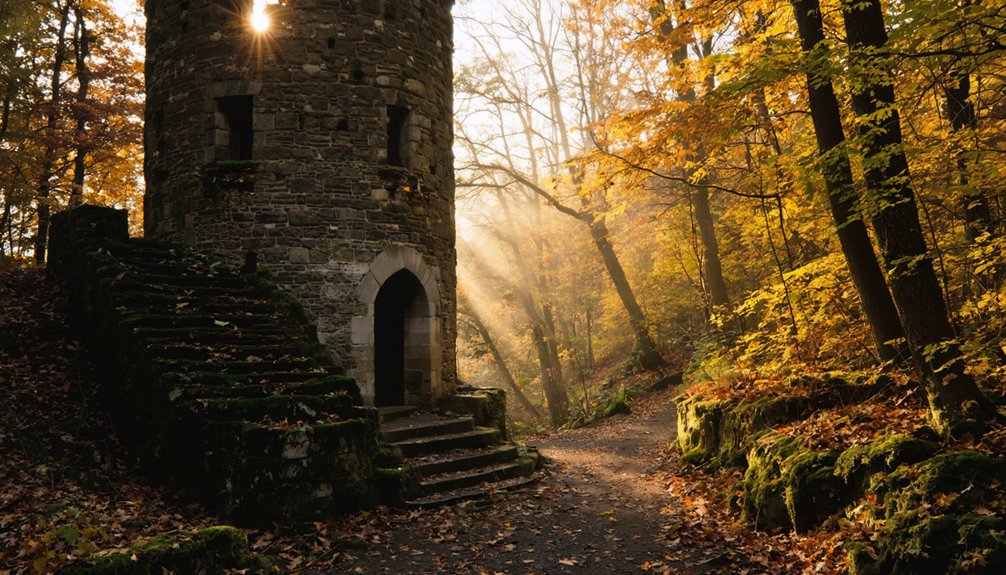
Reaching the Yellow Springs Tower means committing to a genuine hike — not a casual stroll. The hiking routes weave through rugged terrain, rewarding those willing to push through rocky, uneven slopes.
Yellow Springs opens its trails to free exploration year-round, letting you move at your own pace through layers of history and wild landscape.
Key trail details to know before you go:
- Stone Tower Trail — marked with red blazes at the trailhead
- Blue-blazed trail — runs southeast from Stony Mountain ridge toward the tower
- Sand Springs Trail — offers alternative access with blue and yellow markings
- Appalachian Trail connections — extend your adventure further
- Best visibility — visit when foliage is minimal for clearer sightlines
Wear sturdy shoes. The upper slopes don’t forgive soft footwear.
Art Studios, Architecture, and History Inside the Village
Once you’ve caught your breath from the trail, Yellow Springs village pulls you into an entirely different kind of discovery. Colonial stone buildings anchor the landscape, each structure a hallmark of architectural preservation spanning three centuries.
You’re walking through layers — military hospital, mineral springs resort, art school — all compressed into one remarkably intact place.
Working studios dot the grounds, where artists create and exhibit throughout the year. Rotating gallery shows let you engage directly with the village’s living artistic heritage rather than simply observing frozen history.
During summer months, free guided tours animate the streets with stories that walls alone can’t tell.
Wander freely, examine the stonework, and linger where history shifted directions. Yellow Springs rewards the curious traveler who moves slowly and pays attention.
Free Tours and Summer Events You Shouldn’t Miss
The art and architecture hold their own, but Yellow Springs opens up further when the guides come out. From June through August, free town tours let you absorb the village’s historical significance without spending a dime.
Evening strolls through the historic neighborhoods feel especially atmospheric, with knowledgeable guides unpacking centuries of stories beneath fading light.
Evening light fades slowly here, and the stories that surface beneath it tend to linger long after you leave.
Summer activities here run deeper than casual sightseeing — they connect you directly to living history.
- Free guided village walks run June through August
- Evening tours reveal Revolutionary War-era narratives
- Rotating gallery shows coincide with summer programming
- Nature trail walks offer self-guided exploration anytime
- Optional paid events add deeper cultural experiences
You don’t need a packed itinerary. Just show up, walk the grounds, and let the village tell you everything.
What to Pack for a Day at Yellow Springs
Before you set foot on Yellow Springs’ rocky, uneven terrain, lace up a sturdy pair of walking shoes that can handle both the paved village paths and the jagged upper slopes of the Stone Tower Trail.
You’ll also want to layer up, since the open ridgelines and shaded colonial ruins create dramatic temperature swings throughout the day.
Pack a light jacket even in summer — the atmosphere shifts fast once you move from sun-warmed courtyards into the cool shadows of 300-year-old stone walls.
Comfortable Walking Shoes
Sturdy, comfortable shoes are non-negotiable when exploring Yellow Springs. The terrain shifts dramatically — from smooth village pathways to extremely rocky upper slopes. Your trail footwear directly determines your comfort levels and how far you’ll actually venture.
Choose footwear that handles both cobblestones and rugged mountain trails:
- Hiking boots with ankle support for rocky Stony Mountain sections
- Trail runners offering flexibility across varied terrain gradients
- Waterproof soles for creek crossings and damp forest floors
- Grippy tread essential for maneuvering loose stone near the abandoned tower ruins
- Broken-in shoes only — new footwear means blisters before you reach the Revolutionary War ruins
Leave the sandals behind. The Stone Tower Trail demands real traction, and the freedom to roam here belongs entirely to those who come prepared.
Seasonal Layering Essentials
Weather at Yellow Springs shifts on a dime — morning mist clings to the colonial stone buildings while afternoon sun bakes the exposed ridgeline near the abandoned tower.
Smart layering techniques keep you comfortable across both extremes. Start with a moisture-wicking base layer, add an insulating mid-layer you can tie around your waist once you’re climbing, and pack a wind-resistant shell for the rocky upper slopes.
Seasonal trends matter here. Spring and fall deliver dramatic temperature swings of 20 degrees or more between dawn and midday.
Summer afternoons turn humid fast, so breathable fabrics are non-negotiable. Winter visits reward the bold with clear sightlines through bare trees, but demand serious warmth.
Whatever season brings you here, dress in adaptable layers — the terrain demands flexibility.
Where to Eat Near Phoenixville Before or After Your Visit

After a morning wandering Yellow Springs’ stone ruins and sun-dappled trails, you’ll want a solid meal before heading home—and Phoenixville delivers.
This walkable borough packs serious dining options into a compact downtown, giving you the freedom to eat well without a reservation or a detour.
Local favorites worth your time include:
- Iron Hill Brewery – craft beers and hearty pub fare in a relaxed setting
- Bistro on Bridge – elevated American dishes with a neighborhood feel
- Molly Maguire’s Irish Pub – traditional Irish comfort food and cold pints
- Pepe’s Pizza – no-frills, legendary slices locals swear by
- Steel City Coffee Roasters – strong coffee and fresh pastries for a lighter stop
Choose your spot, refuel, and carry the day’s history home with you.
Frequently Asked Questions
Is Yellow Springs Accessible for Visitors With Mobility Limitations or Disabilities?
Peaceful pathways provide accessible facilities throughout Yellow Springs, though rocky trails challenge mobility. You’ll find visitor resources at the Washington Building parking area, but uneven colonial grounds may limit your full freedom to explore certain historic sections.
Are Dogs Allowed on the Hiking Trails at Yellow Springs?
The knowledge base doesn’t confirm dog-friendly activities at Yellow Springs. Before hitting those blazed trails with your pup, check directly with the village. Practice proper hiking etiquette and always verify pet policies before you explore.
Can Visitors Camp Overnight Anywhere Near Yellow Springs Village?
Yellow Springs doesn’t permit overnight camping, but you’ll find nearby campgrounds within Chester County’s 230,000+ acres of open space. Check local camping regulations, pack your gear, and embrace the freedom of sleeping under Pennsylvania’s vast, star-filled skies.
Is There Cell Phone Reception Available Throughout the Yellow Springs Trails?
The knowledge base doesn’t confirm cell coverage details for Yellow Springs’ trails. Download offline maps before you venture out, ensuring trail navigation remains seamless even if signals fade among the atmospheric, ancient stone ruins and forested wilderness.
Are There Any Entrance Fees Specifically for the Revolutionary War Hospital Ruins?
You won’t pay any entrance fees to explore the Revolutionary War hospital ruins—they’re yours to roam freely. Simply follow visitor guidelines and let the site’s historical significance wash over you as you wander.
References
- https://hemlockstateexplorer.com/yellow-springs/
- https://www.youtube.com/watch?v=xOryzwOzRnQ
- https://secretphiladelphia.co/visit-yellow-springs-pennsylvania/
- https://yellowsprings.org/events/town-tours/
- https://uncoveringpa.com/ghost-towns-in-pa
- https://www.youtube.com/watch?v=KcMe_q8-m3M
- https://en.wikipedia.org/wiki/Yellow_Springs
- https://www.youtube.com/watch?v=tT3pq-XO4Gc