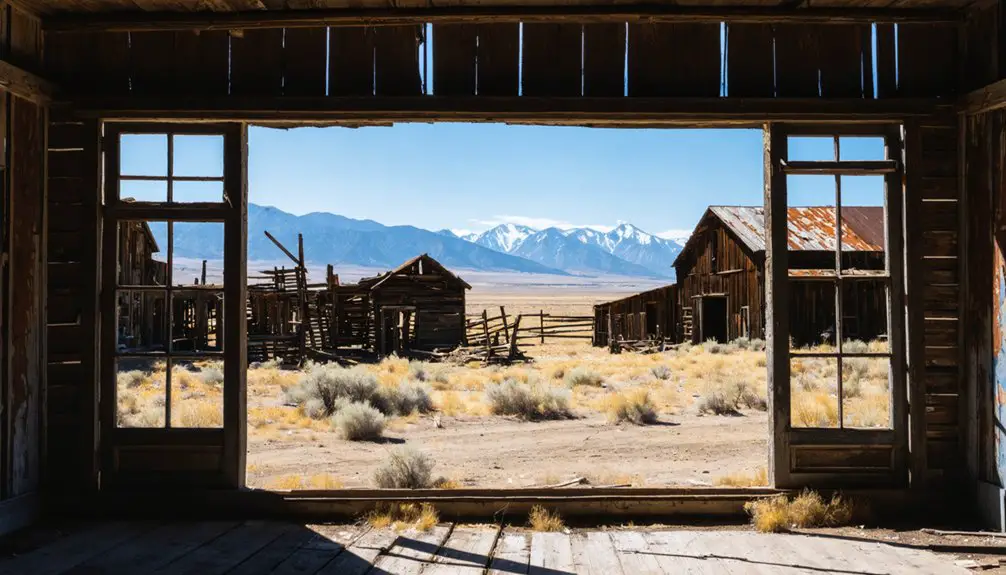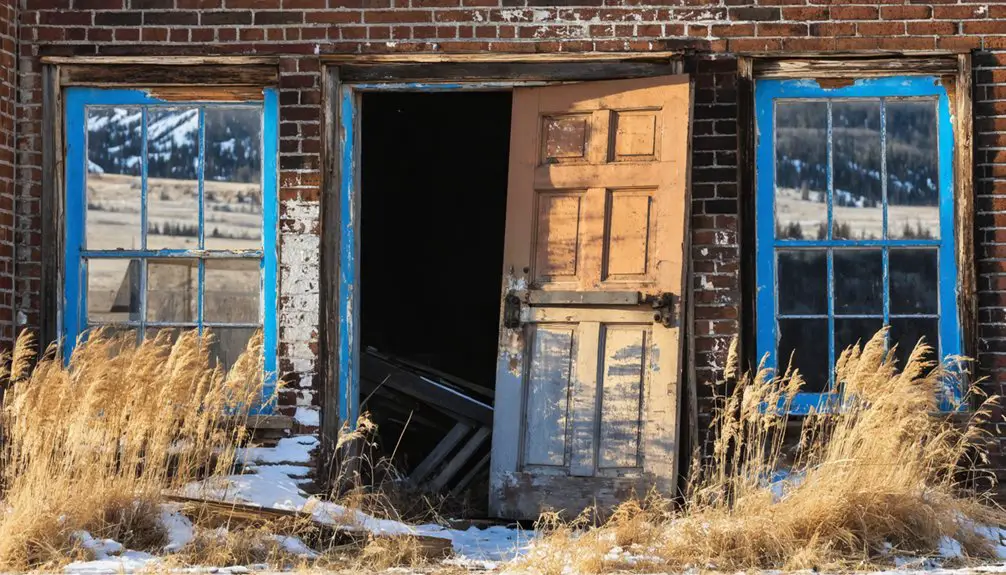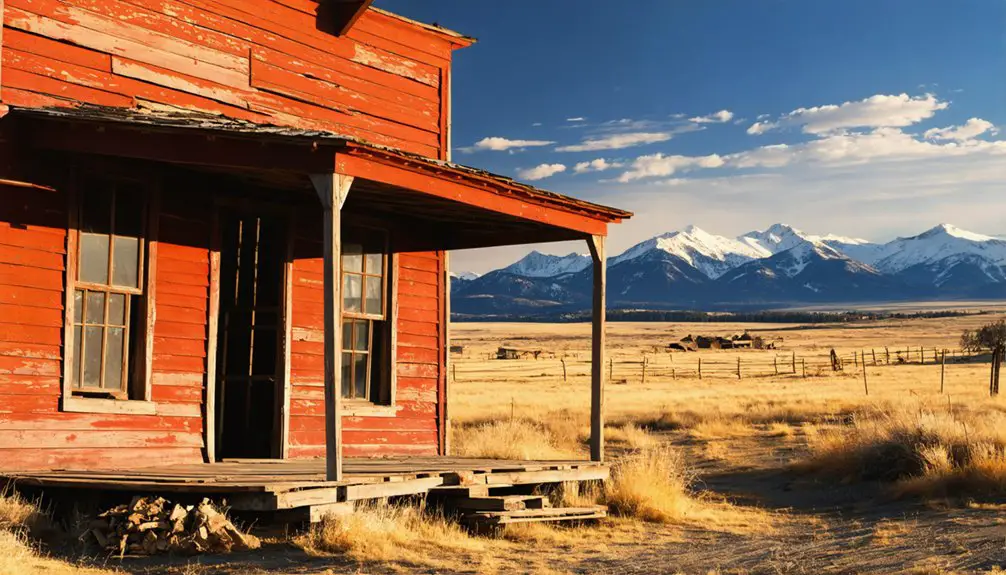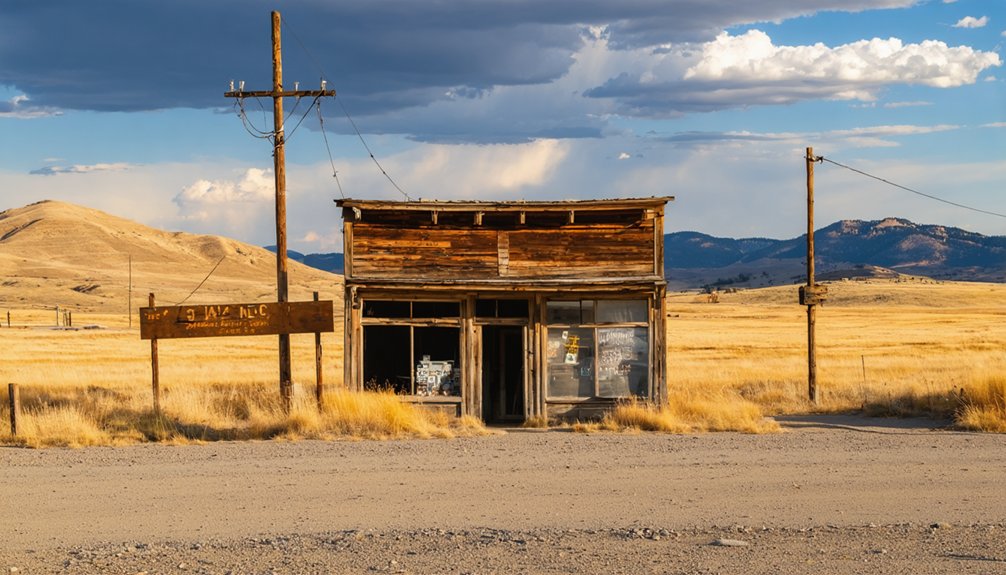
Planning a ghost town road trip to Lennep, Montana starts in Bozeman, about two hours away through remote ranchland and open skies. You’ll navigate dirt and gravel roads near the Castle Mountains, so bring a high-clearance 4WD or AWD vehicle. Once there, you can explore weathered structures — including Montana’s oldest Lutheran church — without permits or entry fees. Pair it with nearby stops like Bannack or Virginia City, and there’s far more to uncover along the way.
Key Takeaways
- Lennep, Montana, located near the Castle Mountains northeast of Bozeman, is a ghost town featuring the oldest Lutheran church in Montana.
- The drive takes roughly two hours from Bozeman via Highway 294 and Route NF-581, with dirt and gravel roads requiring high-clearance vehicles.
- Key historic structures include a weathered schoolhouse, a leaning mercantile building, and the intact Lutheran church, all open for self-guided exploration.
- Lennep pairs well with nearby ghost towns like Bannack, Garnet, Nevada City, and Virginia City for a rewarding four-day Southwest Montana road trip.
- No permits or entry fees are required, but visitors must respect private property restrictions at sites like Cumberlin Mine and Castle Ghost Town.
What Makes Lennep, Montana Worth the Drive?
Tucked at the foot of the Castle Mountains a couple hours northeast of Bozeman, Lennep isn’t your typical ghost town pit stop — it’s a layered slice of Montana’s mining history that rewards the drive with something most ghost towns can’t offer: a still-standing Lutheran church, the oldest of its kind in the state, rising defiantly above the crumbling ruins of a general store and schoolhouse that time has nearly swallowed whole.
That contrast is exactly where Lennep’s ghost town allure lives. You’re not just wandering through decay — you’re reading a timeline.
Its historical significance stretches from railroad origins to gold rush peaks, giving you context that turns abandoned walls into actual stories. For travelers who crave wide-open exploration without roped-off exhibits, Lennep delivers on its own raw terms.
How to Get to Lennep From Bozeman
Getting to Lennep takes a couple of hours from Bozeman, and the route itself sets the tone for everything you’ll find there — remote, unhurried, and quietly spectacular.
Head northeast through open ranchland where scenic views stretch endlessly across Montana’s big sky. You’ll pass through small communities before the Castle Mountains rise into view, signaling you’re getting close.
Watch for local wildlife along the way — deer and antelope frequently cross these roads, especially in early morning or late afternoon.
From the Twin Bridges area, pick up Highway 294, then follow Route NF-581 west into the mountains for roughly seven miles. The roads turn to dirt and gravel, so drive accordingly.
There’s no rush out here, and that’s exactly the point.
Road Conditions and Vehicle Requirements for the Castle Mountains
Once the pavement ends and the dirt roads begin, you’ll want to make sure your vehicle is up to the task. The access routes climbing into the Castle Mountains involve dirt and gravel roads that can challenge low-clearance vehicles, especially after rainfall.
For road safety, a high-clearance 4WD or AWD vehicle is the smart choice here. Passenger cars risk bottoming out or losing traction on the loose, uneven terrain.
Vehicle recommendations from experienced travelers consistently point toward trucks or SUVs equipped with all-terrain tires.
The good news is that water sources are plentiful along the route, so you won’t need to haul extra supplies for your radiator.
Come prepared, drive at a measured pace, and the Castle Mountains will reward your effort.
The Historic Structures Still Standing in Lennep
When you arrive in Lennep, the oldest Lutheran church in Montana commands your attention, standing defiantly intact against the decay surrounding it.
You’ll also spot the skeletal remains of the old schoolhouse, its weathered frame still hinting at the community that once gathered there.
The mercantile, by contrast, has nearly vanished, leaving little more than scattered remnants to mark where commerce once thrived.
The Old Lutheran Church
Among Lennep’s crumbling remains, one structure defies the decay surrounding it — the oldest Lutheran church in Montana. While the general store and schoolhouse surrender to time, this church stands firm, commanding your attention the moment you arrive.
Its historic significance reaches back to Lennep’s peak during the late 19th-century gold rush, when miners and travelers needed more than just supplies — they needed community.
The architectural features reflect that era’s frontier craftsmanship, simple yet deliberate, built to endure.
Walking up to it, you’ll feel the contrast immediately. Everything around it crumbles, yet the church holds its ground with quiet authority.
It’s a rare, tangible connection to Montana’s past that no museum replica can replicate — and it’s yours to explore freely.
Ruins Of The Schoolhouse
Just steps from the church, the schoolhouse tells a different story — one of surrender. Unlike its resilient neighbor, this structure has yielded to time, its walls warped and weathered beyond recovery.
You’ll feel the weight of schoolhouse history standing here — generations of children who once filled these rooms now long scattered, the town itself forgotten.
The abandoned architecture speaks without words. Rotting timber, collapsed sections, and crumbling foundations reveal how quickly nature reclaims what people leave behind.
There’s no rope guiding your path, no interpretive sign softening the reality. You’re standing inside genuine decay, and that rawness is exactly the point.
Lennep doesn’t dress itself up for visitors. The schoolhouse, broken as it is, delivers something polished tourist stops never can — unfiltered honesty about what’s lost.
Remnants Of The Mercantile
The mercantile barely stands — what’s left leans at angles nature didn’t intend, its timber bones stripped of purpose and slowly dissolving into the landscape.
This structure once anchored Lennep’s mercantile history, supplying miners and travelers with everything they needed to survive the Castle Mountains’ harsh demands.
You’ll sense the weight of those transactions standing here — goods exchanged, fortunes spent, lives sustained.
Now the building surrenders itself quietly to wind and weather, joining the category of abandoned treasures that ghost town explorers live for.
Walk carefully around its perimeter. The integrity isn’t guaranteed, but the atmosphere absolutely delivers.
Lennep doesn’t rope things off or sanitize the experience — you get raw, unfiltered history exactly as time has left it.
Can You Go Inside the Buildings at Lennep?
You can freely explore Lennep’s open structures on a self-guided basis without needing permits.
The historic Lutheran church and the ruins of the general store and schoolhouse are accessible, letting you step back into the town’s 19th-century past up close.
Keep in mind, though, that private property restrictions apply to the Cumberlin Mine and Castle Ghost Town sites, so you’ll want to respect posted boundaries during your visit.
Exploring Lennep’s Open Structures
When you arrive at Lennep, one of your first instincts will likely be to step inside those weathered, time-ravaged structures — and in most cases, you can. The ghost town exploration here feels invigoratingly unrestricted, with no permits required and no gates blocking your curiosity.
You’re free to wander through the skeletal remains of the general store and schoolhouse, where peeling walls and broken floorboards quietly speak to their historical significance.
The oldest Lutheran church in Montana still stands with remarkable dignity compared to its surroundings, offering a striking contrast worth experiencing up close.
Just move carefully — these structures are fragile and unpredictable.
Respect any private property boundaries posted around the Cumberlin Mine and Castle sites, and you’ll have an unforgettable, self-directed experience through Montana’s layered past.
Private Property Restrictions Apply
While most of Lennep’s crumbling structures welcome self-guided exploration, a few key sites come with firm private property restrictions you’ll want to respect. Pushing past property boundaries at restricted locations isn’t just risky — it’s illegal.
Stick to legal access points to keep your adventure hassle-free.
Watch for these off-limits locations:
- The Cumberlin Mine – Private ownership means no trespassing, regardless of how tempting those tunnels look.
- Castle Ghost Town – Nearby Castle sits behind property boundaries requiring you to observe from designated access areas only.
- Unmarked private parcels – Some surrounding land lacks clear signage, so when in doubt, stay on the established road.
Respecting these boundaries protects both you and these fragile historical remnants for future explorers chasing the same open road freedom.
Ghost Towns Near Lennep Worth Adding to Your Route
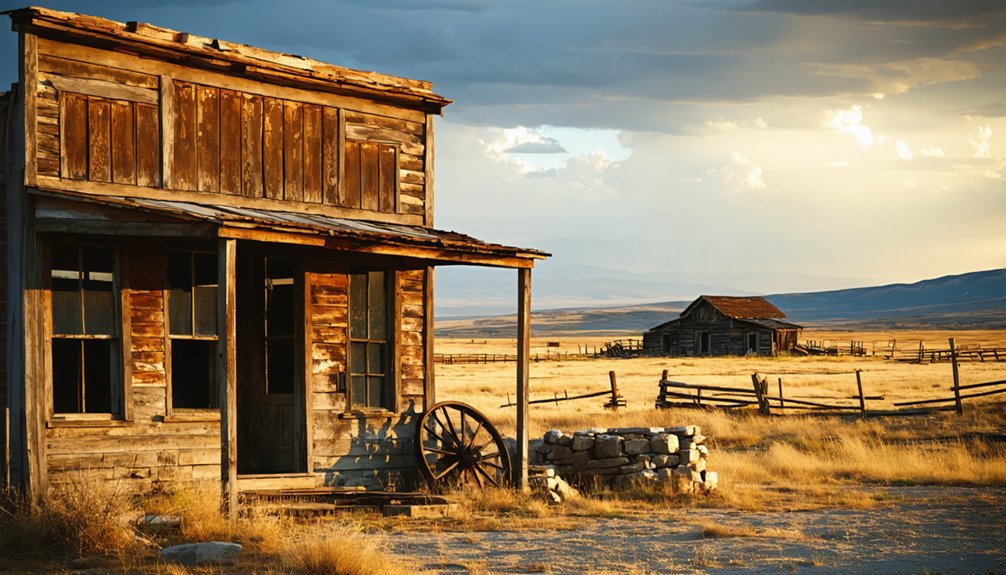
Why stop at Lennep when the surrounding region is packed with ghost towns worth adding to your route?
Bannack Ghost Town, sitting 25 miles west of Dillon, delivers one of Montana’s best-preserved frontier experiences as a designated state park. You’ll walk streets that once buzzed with gold rush energy.
Garnet Ghost Town, tucked near MT-83 close to West Glacier, offers a rugged, remote feel that rewards adventurous travelers willing to navigate rough roads.
Nevada City and Virginia City round out your options beautifully. Nevada City operated as a stagecoach hub during the 1860s, while Virginia City still breathes with around 190 residents today.
String these stops together, and you’ve got a compelling multi-day route through Montana’s wildest, most storied backcountry.
Where Lennep Fits in a Southwest Montana Loop
Mapping out a ghost town road trip through southwestern Montana, you’ll find Lennep slots naturally into a broader loop that connects these scattered historic sites.
Rooted in Lennep history as a railroad stop near the Castle Mountains, it pairs well with destinations that share the same frontier spirit.
Build your loop around these anchor stops:
- Virginia City – a living ghost town with around 190 residents, roughly a day’s drive southwest
- Bannack State Park – 25 miles west of Dillon, offering well-preserved frontier structures
- Nevada City – a former stagecoach hub sitting just a mile from Virginia City
Stringing these sites together gives you a four-day route that rewards curiosity and independence without demanding rigid itineraries or guided tours.
Permits, Private Property, and Access Restrictions
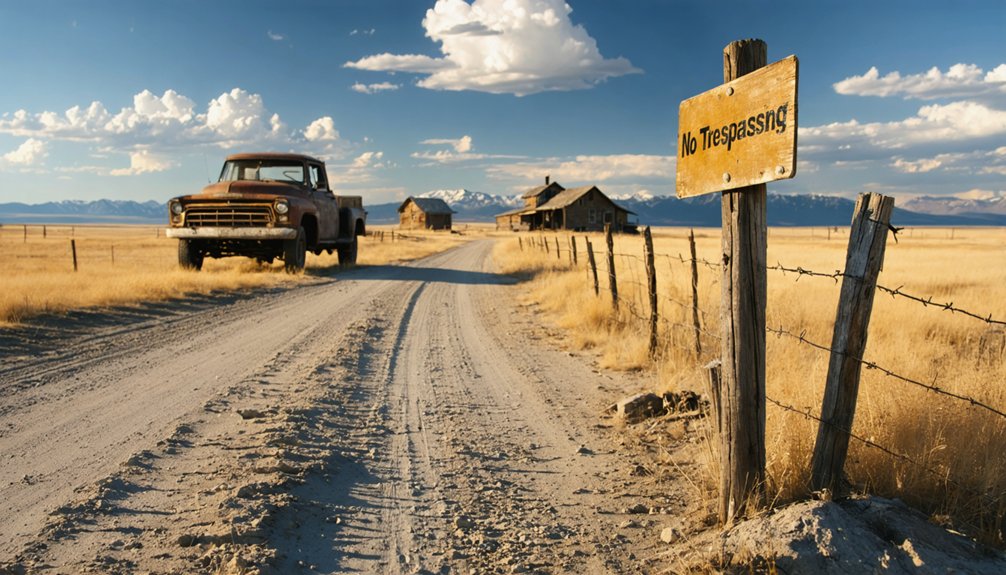
Before you wander too far down the dirt roads leading into Lennep, know that not everything here is open to the public. The Cumberlin Mine and Castle sites carry private property restrictions, so respect those boundaries even when curiosity pulls hard. Trespassing doesn’t honor ghost town history — it threatens it.
The good news? Lennep itself welcomes self-guided exploration without required permits. You’re free to walk the grounds, photograph the Lutheran church, and absorb the raw mining heritage written into every weathered board and rusted hinge.
No ranger station, no entry fee, no bureaucratic hoops. Just bring common sense. Stay on accessible routes, read posted signage carefully, and leave everything exactly as you found it. That freedom you’re after depends on every visitor acting responsibly.
Frequently Asked Questions
Was Lennep Ever Considered for Official Ghost Town Preservation Status?
The records don’t confirm Lennep’s official ghost town preservation status. You’ll find its historic significance largely unprotected, with minimal preservation efforts underway. It’s a raw, untouched slice of Montana’s past, free for your exploration.
Are There Any Guided Tours Available Specifically for Lennep Visitors?
Coincidentally, Lennep’s wild, untamed spirit matches your own — no guided tours exist! You’ll embrace self-guided exploration, crafting your own visitor experiences as you roam freely through crumbling ruins and the town’s enduring historic Lutheran church.
What Railroad Company Originally Operated the Old Milwaukee Railroad Stop?
You’ll find that the Chicago, Milwaukee, St. Paul and Pacific Railroad, known as the Milwaukee Road, originally operated this historic stop, giving Lennep’s railroad history its roots and connecting freedom-seeking miners and travelers to the Castle Mountains.
Is Camping Allowed Overnight Near the Lennep Ghost Town Site?
Surprisingly, the knowledge base doesn’t confirm camping regulations near Lennep. You’ll want to research nearby campsites before heading out — but the freedom of exploring this raw, untamed ghost town absolutely makes the effort worthwhile.
How Did Lennep Get Its Name Historically?
The knowledge doesn’t reveal how Lennep got its name, but you’ll find the town’s historical significance runs deep. Explore its town folklore yourself — you’re free to wander this hauntingly beautiful ghost town and uncover its mysteries firsthand.
References
- https://montanahistoriclandscape.com/tag/lennep-montana/
- https://eu.greatfallstribune.com/story/travel/destinations/2018/06/30/ghost-towns-montana/747816002/
- https://montanatrail.org/section-17-lennep/
- https://www.mtoutlaw.com/finding-the-soul-of-montana-with-the-toss-of-a-dart-lennep/
- https://visitmt.com/trip-ideas/ghost-town-route
- https://www.youtube.com/watch?v=cEdfgquJ8MQ
- https://www.nationalgeographic.com/travel/article/small-towns-ghost-towns-road-trip
- https://www.youtube.com/watch?v=BQH5LghhkVs
- https://tranquiltrekker.com/ghost-towns-in-southwestern-montana/
- https://visitmt.com/trip-ideas/small-towns-ghost-towns