To plan your ghost town road trip to Lonetree, North Dakota, base yourself in Minot — it’s just 15-20 minutes away. Stock up on fuel, water, and snacks before heading south toward Des Lacs, your navigation landmark. Lonetree’s star attraction is its hauntingly beautiful abandoned church, nicknamed the “ghost cathedral,” best photographed during golden hour. You can also chain together nearby ghost towns like Tagus and Donnybrook for a full day of prairie exploration. There’s much more to discover ahead.
Key Takeaways
- Lonetree is located 15-20 minutes south of Minot, Ward County, making Minot the ideal base camp for your ghost town road trip.
- The highlight of Lonetree is the “ghost cathedral,” a striking abandoned church popular among photographers, especially during golden hour.
- Check road conditions before visiting, particularly after rain or snow, and stock up on fuel and supplies in Minot beforehand.
- Combine Lonetree with nearby ghost towns like Des Lacs, Tagus, and Donnybrook for a comprehensive, multi-stop Ward County experience.
- Pack essentials including water, snacks, a charged phone, and sun protection, as the area offers limited resources once you depart Minot.
What Is Lonetree, North Dakota?
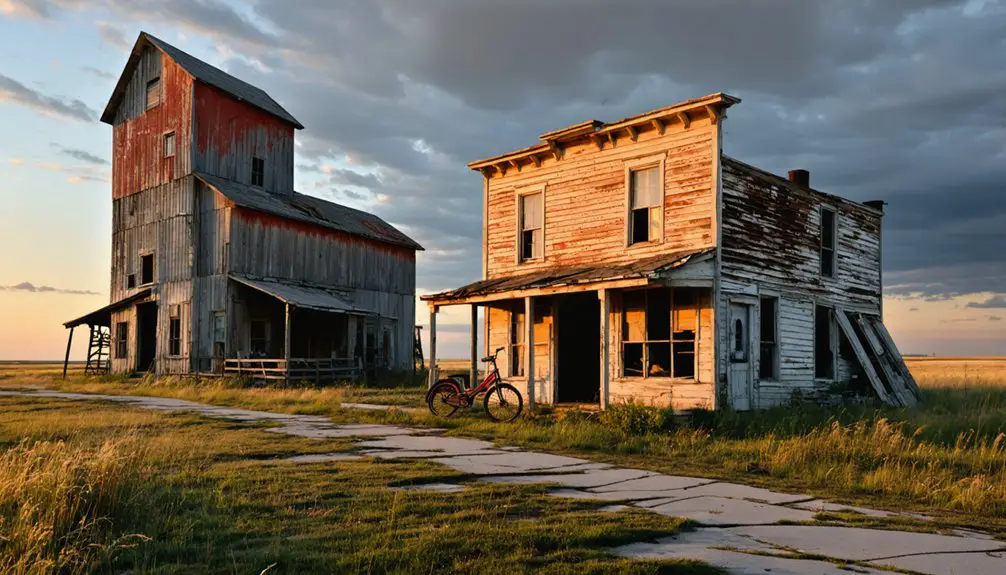
Dust, silence, and a crumbling church rising against a wide North Dakota sky — that’s Lonetree, a near-ghost settlement tucked into Ward County about 15 to 20 minutes from Minot.
Lonetree history stretches back to 1888, when early settlers staked claims on the northern plains during the railroad era. The town never grew large, peaking at just 75 residents in 1920, but its ghost town significance runs deep.
It represents an entire era of prairie ambition — towns that rose fast, served a purpose, and quietly faded when the momentum shifted.
Today, a handful of structures still stand, including the striking church that photographers and wanderers seek out.
A few weathered structures still hold their ground, the old church drawing in photographers and curious souls alike.
If you crave open roads and raw history, Lonetree delivers both without any crowds getting in the way.
From Railroad Boomlet to Near-Ghost Town
When the railroad pushed across the northern plains in the late 1800s, small settlements like Lonetree sprang up almost overnight, fueled by the promise of commerce, land, and connection.
Railroad expansion brought hopeful settlers, and by 1920, Lonetree had reached its peak of roughly 75 residents.
That momentum didn’t last. The post office opened and closed multiple times, a telling sign that the settlement struggled to hold its footing.
Mail service eventually shifted to nearby Des Lacs, pulling economic gravity away from Lonetree. Population decline followed steadily, and by the mid-twentieth century, the town had faded into near obscurity.
What you’ll find today is a quiet reminder that the same railroads that built these communities often bypassed them on the way to somewhere bigger.
How to Reach Lonetree From Minot
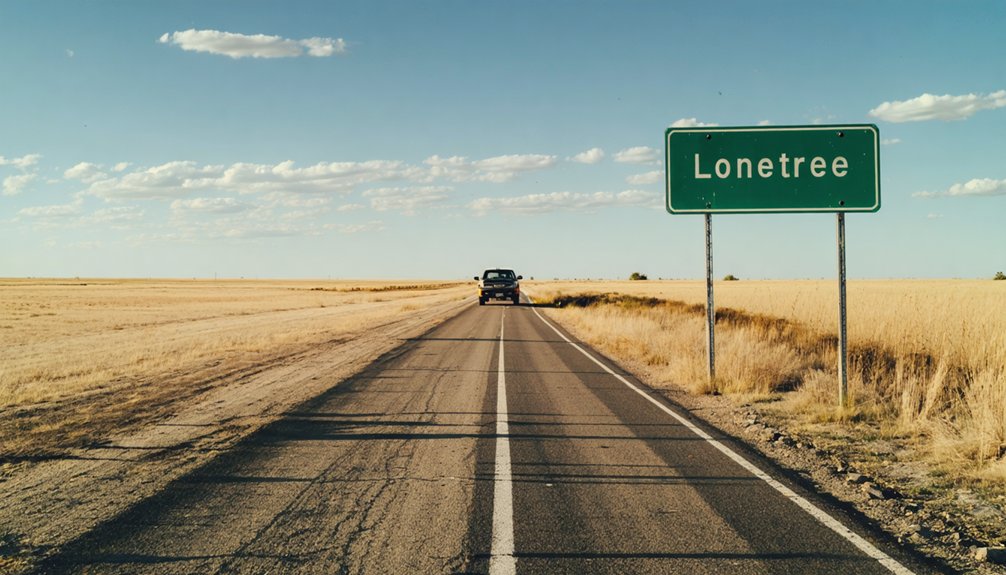
Lonetree sits roughly 15 to 20 minutes south of Minot, making it an easy half-day detour if you’re already passing through Ward County.
Use Des Lacs as your reference point, since it’s only about 4 miles from Lonetree. Before heading out, check road conditions, especially after rain or snow, since rural Ward County roads can get rough fast.
Here’s what to keep in mind before you go:
- Navigation: Des Lacs anchors your route south toward Lonetree
- Road conditions: Unpaved stretches can become muddy or icy seasonally
- Local attractions: The “ghost cathedral” church rewards the short drive
- Supplies: Fuel up and grab water in Minot before leaving
You’re fundamentally trading city traffic for open prairie and forgotten history.
Lonetree’s Ghost Cathedral: What It Looks Like Today
The old church standing at Lonetree doesn’t look like much from a distance, but pull closer and you’ll understand why ghost-town hunters call it a cathedral. The Lonetree architecture holds its ground against the open prairie, a weathered shell that refuses to disappear. Tall windows frame empty sky. Worn wood and faded paint tell the story better than any historical marker could.
The historical significance here isn’t abstract. This structure outlasted the post office, the residents, and the railroad economy that built them all.
You’re looking at what survives when everything else surrenders to time. Photographers drive out just to capture it at golden hour. Whether you view it from the road or get a closer look, the church commands attention and earns its nickname.
Can You Enter the Church or Only View It From the Road?
How close you can actually get to Lonetree’s ghost cathedral depends on who owns the land that day and how clearly they’ve posted it. Some visitors report no barriers; others find “no trespassing” signs blocking church access entirely.
Always read the land before you step off the road.
Always read the land before you step off the road — not every horizon is an open invitation.
Smart photography tips for roadside shooting:
- Use a zoom or telephoto lens to capture detail without crossing property lines
- Shoot during golden hour when flat prairie light adds dramatic contrast
- Frame the church against open sky to emphasize its isolation
- Keep your vehicle off soft shoulders to avoid getting stuck
Respect private property, stay flexible, and you’ll still walk away with compelling images. The cathedral commands attention even from a distance.
Other Ghost Towns Near Lonetree Worth a Stop
If Lonetree leaves you wanting more, you’re in luck because Ward County and the surrounding region hold several other ghost towns worth tracking down.
You can map out a multi-stop route that pairs Lonetree with other abandoned railroad-era settlements, turning a quick side trip into a full afternoon of prairie exploration.
Keep Des Lacs on your radar as a navigation anchor, and use it as a launching point for discovering what else the northern plains left behind.
Nearby North Dakota Ghost Towns
While you’re already making the drive out to Lonetree, it makes sense to turn the trip into a broader ghost town crawl across Ward County and the surrounding region. Several nearby settlements share the same railroad-era origins and abandoned structures that give Lonetree its historical significance.
Consider adding these stops to your route:
- Des Lacs – Just 4 miles away, this small community once served as Lonetree’s mail hub.
- Tagus – A quiet Ward County remnant worth a slow drive-through.
- Donnybrook – Retains some visible history along the northern plains corridor.
- Kenmare area settlements – Scattered ghost sites dot the landscape heading northwest.
Each stop layers another piece of North Dakota’s prairie story onto your road trip without requiring major detours.
Planning A Multi-Stop Route
Once you’ve mapped out Lonetree as your anchor stop, building a multi-ghost-town route around it takes almost no extra effort.
Ward County and the surrounding region hold several forgotten settlements worth folding into your road trip logistics. Des Lacs sits just four miles away and makes a natural first addition.
From there, you can push outward toward other scattered prairie remnants, threading together scenic stops along rural highways that cut through open farmland and railroad corridors.
Keep your route flexible since road conditions vary by season, and many sites require roadside viewing only.
Pack water, download offline maps, and give yourself a full day.
The payoff is a connected journey through North Dakota’s railroad-era past, not just a single snapshot of one quiet, windswept crossroads.
What to Pack for a Rural Ward County Day Trip
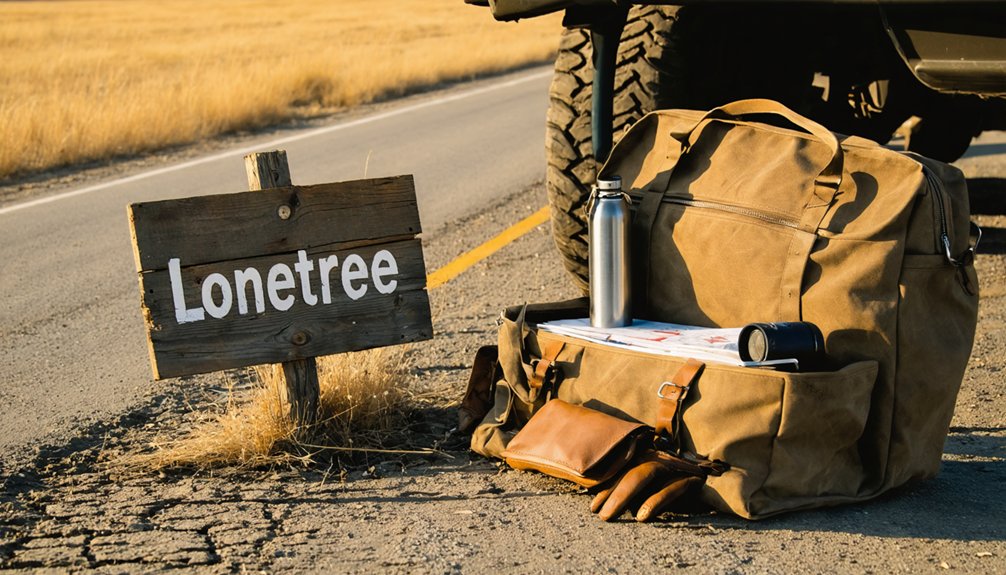
Packing smart makes the difference between a smooth rural adventure and an uncomfortable scramble. Lonetree offers no services, no shade structures, and spotty cell coverage, so your packing essentials directly shape your trip safety.
Before you roll out of Minot, toss these into your vehicle:
- Water — bring more than you think you’ll need for the heat or cold
- Snacks and a small cooler — the nearest stop is miles away
- Charged phone and a paper map — don’t trust signal alone out here
- Sun protection and sturdy footwear — gravel roads and open fields demand both
You’re chasing history across open prairie, and that freedom feels best when you’re fully prepared to handle whatever the rural landscape throws your way.
Why Lonetree Belongs on Any North Dakota Ghost Town Route
When you pull up to Lonetree, the towering church known as the “ghost cathedral” makes an immediate case for stopping here over countless other forgotten settlements.
The old railroad corridor still cuts through the landscape, grounding the town’s rise and fall in a story that played out across the entire northern plains.
String Lonetree together with nearby ghost towns, and you’ve got a North Dakota road trip route that actually tells a complete history.
The Ghost Cathedral Draws Visitors
Though most of Lonetree has faded into the North Dakota prairie, one structure refuses to disappear quietly. The old church, nicknamed the “ghost cathedral,” still stands as a striking example of cathedral architecture rising from an otherwise empty landscape.
It’s become a magnet for ghost town photography enthusiasts chasing that perfect, haunting shot.
Here’s what makes it worth the detour:
- The church’s silhouette against open sky creates dramatic, memorable images
- Its weathered exterior tells decades of prairie survival
- Few ghost towns offer such a visually commanding single structure
- It rewards early morning or golden-hour visits with extraordinary light
You don’t need a full day to experience it. A focused side trip from Minot puts this unforgettable landmark well within your reach.
Railroad History Still Visible
Lonetree didn’t fade in isolation — it rose and fell alongside the railroad era that shaped nearly every small town across the northern plains. Its railroad significance isn’t abstract history; you can still feel it standing along the former BNSF corridor that once gave this settlement its reason to exist.
Tracks and rail infrastructure defined where towns grew, where mail arrived, and where commerce moved. When those rhythms slowed, prairie decline followed swiftly and quietly.
Lonetree reflects that pattern honestly. You’re not just visiting a forgotten church — you’re reading a landscape that tells the larger story of how the plains filled up fast and emptied just as fast.
That context makes Lonetree worth your time on any North Dakota ghost town route.
Nearby Ghost Towns Connect
Visiting Lonetree makes the most sense when you treat it as one stop on a broader North Dakota ghost town circuit rather than a standalone destination.
The ghost town connections across Ward County run deep, and nearby settlements share similar railroad-era stories worth chasing.
Build your route around these stops:
- Des Lacs – just 4 miles away, it absorbed Lonetree’s mail service
- 서Ward County backroads – lined with forgotten prairie homesteads
- Rural cemeteries – quiet markers of communities that didn’t survive
- Minot – your practical base camp, only 15–20 minutes out
String these locations together, and you’ll feel the full weight of what the northern plains once promised—and eventually reclaimed.
Frequently Asked Questions
What Was Lonetree Originally Called Before the Name Was Combined?
Like a seed becoming a tree, the original name “Lone Tree” carried historical significance — you’ll find early records spelled it as two words before time and tradition merged it into the single bold identity it wears today.
How Long Did Lonetree’s Second Post Office Actually Stay Open?
You’ll find Lonetree’s second post office lasted only about 18 months, a brief post office duration that carries real historical significance — proof that this restless prairie settlement struggled to establish its footing before mail shifted to nearby Des Lacs.
Did Lonetree Ever Have More Than One Church at the Same Time?
The knowledge doesn’t confirm Lonetree ever had multiple churches simultaneously. You’ll find the town’s church history centers on one surviving structure, whose religious significance still draws adventurous ghost-town explorers craving freedom on North Dakota’s wide-open plains.
Is There a Fee or Permit Required to Visit the Lonetree Area?
You’re approaching the unknown — but here’s the relief: no fee requirements or permit details stand in your way. Lonetree’s open road awaits, though you’ll want to respect posted private property boundaries carefully.
Are There Any Guided Ghost Town Tours That Include Lonetree?
No formal guided tours currently include Lonetree, but you’ll uncover rich ghost town history and local folklore by exploring independently. Grab a map, hit the open road, and let curiosity guide your adventure through North Dakota’s forgotten past.
References
- https://ghostsofnorthdakota892857007.wordpress.com/2016/11/29/lonetrees-ghost-cathedral/
- https://www.youtube.com/watch?v=8GO57Im_dss
- https://en.wikipedia.org/wiki/List_of_ghost_towns_in_North_Dakota
- https://us1033.com/a-haunting-look-at-some-real-life-north-dakota-ghost-towns/
- https://northernsentry.com/2025/06/26/north-dakota-ghost-towns/
- https://www.facebook.com/sosmithphotography/posts/the-ghost-cathedral-of-lonetree-in-my-non-ending-personal-quest-to-document-ghos/1315121243956074/
- https://ghostsofnorthdakota892857007.wordpress.com/category/lonetree-nd/
- https://writinforthebrand.com/booming-settlement-to-ghost-town-whispers-of-the-living-history-of-charbonneau/
- https://www.youtube.com/watch?v=MZ_xZ0d_TBY
- https://ghostsofnorthdakota892857007.wordpress.com/tag/ghost-town/page/3/?ak_action=reject_mobile