Planning a ghost town road trip to Sears, Florida means tracing a twelve-mile stretch of rural Hendry County road to where a thriving lumber empire rose and collapsed within a single decade. You’ll find no markers or monuments — just citrus groves and sugarcane fields swallowing what 500 residents once called home. Bring offline maps, extra water, and a spare tire before leaving pavement behind. Everything you need to make this journey count is just ahead.
Key Takeaways
- Sears, Florida, founded in 1926, was a lumber town abandoned by 1937, now covered by citrus groves and sugarcane fields with no visible markers.
- Access the townsite via State Road 29, approximately twelve miles from LaBelle, using standard 2WD vehicles on quiet rural roads.
- Download offline maps before departing, as cell service is limited; printed directions provide a reliable backup for navigation.
- Pack essentials including extra water, fuel, snacks, a first-aid kit, and a portable charger for a safe journey.
- Check tire pressure, carry a spare tire, and ensure your vehicle is properly maintained before venturing onto rough dirt roads.
Sears, Florida: The Lumber Town That Vanished in Eleven Years
Deep in Hendry County’s remote flatlands, twelve miles south of LaBelle, a lumber town once rose and fell within a single decade.
Standard Lumber Company founded Sears in 1926, naming it after Richard Sears, the iconic Sears & Roebuck founder who owned the operation. Workers built a thriving early settlement along the Atlantic Coastline Railroad, manufacturing premanufactured housing lumber that fed a booming industry.
Standard Lumber Company founded Sears in 1926, building a thriving railroad settlement that manufactured premanufactured housing lumber.
Then the 1926 hurricane struck, damaging nearly everything. They rebuilt, pushing the population to 500, but the mill closed by 1928.
Schools shuttered in 1937, buildings moved to LaBelle, and the townsite was completely abandoned.
Today, Sears stands as one of Florida’s most compelling ghost towns, its historical significance swallowed by citrus groves and sugarcane fields.
You won’t find much, but that’s exactly the adventure.
Why a Catalog Empire’s Lumber Company Built a Town in South Florida
Few corporate empires feel more distant from a South Florida swamp than a mail-order catalog company, yet Richard Sears built exactly that connection. Sears, Roebuck & Co. owned Standard Lumber Company, and that lumber industry operation needed timber territory. South Florida’s remote landscape offered exactly that opportunity.
Standard Lumber chose Hendry County deliberately, recognizing the railroad impact the Atlantic Coastline line provided for shipping premanufactured housing materials northward. That early settlement emerged from pure economic factors — accessible rail, abundant resources, and postwar housing demand.
You’re exploring ghost towns shaped by corporate decisions made in distant boardrooms. Sears, Florida carries historical significance because community development here depended entirely on one company’s ambition.
When that ambition collapsed, the legacy effects remained only as sugarcane fields swallowing what twelve years of human effort built.
The Rise and Fall of Sears, Florida’s Lumber Town
Standard Lumber Company broke ground in 1926, and Sears, Florida rose fast from South Florida’s flatlands — twelve miles south of LaBelle, anchored to the Atlantic Coastline Railroad like a town that believed it would last forever.
The lumber industry drove rapid town development, pushing population growth toward 500 residents. You’d have found two schools, a hotel, a voting precinct, and Florida Power & Light humming with purpose. The railroad influence kept timber moving and ambitions alive.
Then the 1926 hurricane struck, battering the sawmill and community spirit equally. They rebuilt, but economic decline won. The mill shuttered in 1928, schools closed in 1937, and buildings rolled away to LaBelle.
Sears, Florida’s cultural heritage and historical significance now sleep beneath sugarcane fields, waiting for curious travelers like you.
How to Get to Sears, Florida From LaBelle or Immokalee
Knowing where Sears, Florida once stood is one thing — actually getting there sharpens the adventure.
You’ll reach this ghost town history site via State Road 29, positioned between LaBelle to the north and Immokalee to the south, roughly twelve miles from LaBelle.
Both entry points drop you onto the same rural corridor that once carried Atlantic Coast Line Railroad trains loaded with premanufactured lumber.
Your standard 2WD vehicle handles the roads fine, so no special rig is required.
Rural exploration here means traversing an agricultural landscape where citrus groves and sugarcane fields have swallowed what was once a bustling mill town.
Come from either direction, keep your eyes open, and you’ll feel history pressing through the flatlands around every quiet turn.
What’s Actually Left at the Sears, Florida Townsite
When you arrive at the Sears townsite, you won’t find much standing from the bustling mill town that once housed 500 residents.
Agricultural operations have swallowed the old townsite, converting what were once streets, schools, and a hotel into citrus groves and sugarcane fields.
You can search for foundations, but explorers before you haven’t turned any up — the land has reclaimed nearly every trace of Richard Sears’s short-lived Florida outpost.
Agricultural Land Dominates
Once a bustling mill town of 500 residents, Sears, Florida has surrendered almost entirely to citrus groves and sugarcane fields. That agricultural diversity tells its own story of rural heritage quietly replacing a forgotten community.
When you arrive, here’s what you’ll actually encounter:
- Citrus groves stretching across former residential lots
- Sugarcane fields blanketing what was once a thriving commercial district
- Scattered farmsteads where only a handful of farmers still work the land
- Bare earth where foundations once stood, now reclaimed by vegetation
You won’t find markers or monuments here. This land demands your imagination.
Picture 500 souls building lives before the mill closed and silence swallowed everything. That raw, unpreserved reality makes Sears genuinely worth exploring.
Foundations Rarely Found
Beyond the citrus groves and sugarcane, you might expect at least a crumbling wall or a moss-covered slab to anchor your imagination — something tangible to confirm that 500 people once called this place home.
But Sears, Florida doesn’t offer easy proof. The abandoned structures that once held a hotel, two schools, and a Florida Power & Light plant disappeared when builders hauled them to LaBelle in 1937.
Foundations rarely surface here, swallowed by decades of agricultural transformation. You’re standing on ground of genuine historical significance — a mill town born, battered by a 1926 hurricane, rebuilt, and erased within eleven years.
Look closely at the soil. Sometimes history hides just beneath the surface, waiting for someone bold enough to search for it.
Is Sears, Florida Worth the Drive?
So what exactly do you get when you drive out to Sears, Florida? Mostly open land, but the historical significance runs deep.
Add this ghost town to your travel itinerary if you crave raw, unfiltered history. Here’s what you’ll discover:
- A vanished mill town born from Richard Sears’ lumber empire
- Agricultural transformation where citrus and sugarcane replaced entire neighborhoods
- Local legends tied to the 1926 hurricane that crippled the settlement
- Railroad echoes from the old Atlantic Coastline stop
You won’t find museums or markers, but you’ll feel the weight of lives once lived here.
If freedom means chasing forgotten places down remote Hendry County roads, Sears, Florida delivers exactly that kind of untamed, honest adventure.
Pair Your Visit With LaBelle and Immokalee
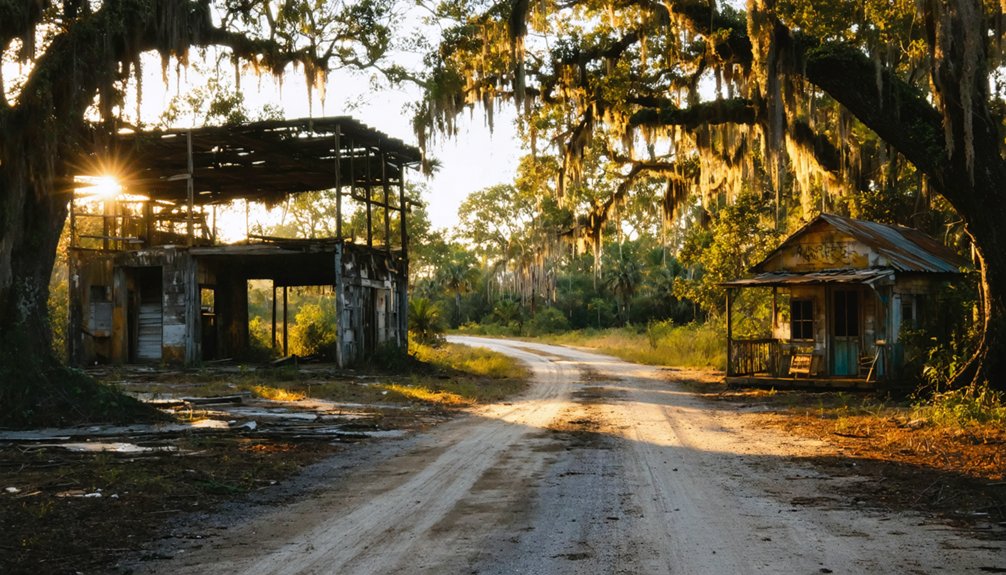
Since Sears, Florida sits between LaBelle and Immokalee along State Road 29, you’d be shortchanging yourself by not exploring both towns on the same run.
LaBelle attractions include a charming historic downtown where Old Florida architecture and the Caloosahatchee River create a worthy stop before you hunt ghost town remnants.
Head south after Sears and let Immokalee cuisine reward your adventure — the town’s Latin-influenced food scene delivers bold, authentic flavors you won’t find at chain restaurants.
This corridor tells a layered story: Richard Sears’s abandoned lumber experiment, a river town that survived, and a farming community that thrives on cultural diversity.
Connect all three stops, and you’ve built a road trip that’s historically rich and genuinely satisfying.
Dirt Roads, No Signal: How to Prepare for Remote Hendry County
Hendry County doesn’t coddle visitors, and the stretch of back roads around former Sears, Florida will test your preparation before you ever spot a foundation stone.
Your 2WD vehicle handles the terrain, but signal preparation and dirt road navigation demand deliberate planning before you leave pavement behind.
Pack these essentials:
- Download offline maps covering State Road 29 between LaBelle and Immokalee
- Carry printed directions since cell towers disappear fast in remote Hendry County
- Check tire pressure before tackling unpaved agricultural roads cutting through sugarcane fields
- Bring extra water and fuel because services vanish once you leave town
The railroad that once connected Sears to the wider world is long gone.
Today, you’re on your own out here — exactly how freedom feels.
Frequently Asked Questions
Did Sears, Florida Ever Have Its Own Post Office?
Like a frontier outpost awaiting its flag, Sears history doesn’t confirm postal services ever planted roots there. You won’t find records of its own post office—this fleeting mill town vanished too swiftly for that freedom.
Are There Any Historical Markers Officially Recognizing the Sears Townsite?
You won’t find any official historical markers recognizing Sears’ ghost town historical significance. But don’t let that stop you—explore the remote Hendry County landscape yourself, uncovering its forgotten story through overgrown fields and silent, agricultural terrain.
Was the 1926 Hurricane the Same Storm That Devastated Miami?
Over 400 lives lost—yes, it’s the same storm! The 1926 hurricane’s devastating impact reshaped Florida’s frontier. When you draw that Miami comparison, you’ll find Sears, Florida suffered equally under that same relentless, freedom-crushing tempest.
Did Any Sears, Florida Residents Write About Their Experiences Living There?
No documented accounts exist, but you’ll feel the Sears memories lingering in the abandoned foundations and overgrown fields. Chase those ghost stories yourself — explore the remote Hendry County land where 500 souls once built their fleeting lives.
Is the Former Atlantic Coastline Railroad Route Still Visible Near the Townsite?
You’ll hunt endlessly for railroad history here! The Atlantic Coastline Railroad’s former route near Sears’ townsite remnants has largely vanished beneath sprawling citrus and sugarcane fields, but your adventurous spirit might uncover subtle traces if you explore freely.
References
- https://www.ghosttowns.com/states/fl/sears.html
- https://www.miamiherald.com/news/business/article306214556.html
- https://en.wikipedia.org/wiki/Sears
- http://wikimapia.org/7222098/Sears-ghost-town