Planning a ghost town road trip to Oil City, Oklahoma means chasing the echo of a lawless 1920s boomtown that once packed over 300 businesses onto the open prairie. You’ll start in Ponca City, head toward Burbank, and follow gravel roads past rusting pump jacks to reach what little remains. Spring and fall offer the best conditions for exploring crumbling foundations. Stick around — there’s a wilder story buried in these Oklahoma plains than you’d expect.
Key Takeaways
- Oil City, located in Osage County, Oklahoma, was a lawless 1920s oil boom town once featuring over 300 businesses before being abandoned.
- From Ponca City, head east toward Burbank using US-412 West, then State Highway 11 north, watching for abandoned pump jacks along unpaved roads.
- Visit in spring or fall for ideal conditions; bring sturdy boots, water, a first-aid kit, and a phone with offline maps.
- Crumbling foundations, rusted oilfield equipment, and weathered structures remain, so document them before further deterioration occurs.
- Pair Oil City with nearby Ponca City, Burbank, and Three Sands, traveling Highway 60 or 64 to explore additional historical remnants.
What Is Oil City, Oklahoma’s Ghost Town Story?
Deep in Osage County, Oklahoma, a ghost town sits where thousands once chased black gold.
Oil City sprang to life during the roaring 1920s oil boom near Burbank, transforming empty prairie into a wild, pulsing boomtown culture almost overnight.
In the 1920s, Oil City erupted from bare Oklahoma prairie into a roaring boomtown almost overnight.
You’d have found over 300 businesses lining its streets — saloons, gambling halls, hotels, and supply houses feeding the hunger of roughnecks and dreamers alike.
Locals called it Whizbang, Denoya, and Oil City, each name carrying its own layer of history.
Then the oil dried up. Workers packed their lives and chased the next strike, leaving foundations and memories behind.
Ghost Towns like Oil City remind you that freedom and fortune are fragile — here one season, gone the next.
How to Get to Oil City Near Burbank, Oklahoma
To reach Oil City, you’ll want to start your journey in Ponca City and head east toward the small community of Burbank, which sits at the heart of the old Osage County oil fields.
Once you’re near Burbank, use the grain elevator and water tower as your navigational anchors, since road signs out here are scarce and the landscape hasn’t changed much since the boom days faded.
Expect rough, unpaved county roads for the final stretch, so park your vehicle where the gravel widens and walk in to avoid getting stuck in the red Oklahoma clay.
Starting Point And Route
Chasing ghosts takes you about 100 miles northwest of Tulsa, where the flat Oklahoma prairie stretches wide and the oil derricks of a wilder era once crowded the horizon.
Your route planning starts on US-412 West toward Pawhuska, then cuts north on State Highway 11 toward Burbank. You’ll pass through Osage County’s rolling grasslands, where scenic stops reward curious travelers — pull over near Pawhuska to glimpse the Pioneer Woman Museum or the tallgrass prairie stretching endlessly beyond the road.
From Burbank, Oil City sits just a short drive east, tucked into forgotten countryside. The roads narrow, the towns thin out, and the landscape quietly reminds you that freedom once meant striking it rich on raw, untamed Oklahoma ground.
Nearby Landmark Navigation
Once you’ve left Burbank behind, the real navigation begins — and out here, landmarks matter more than street signs. The surrounding Osage County oil fields still carry echoes of the 1920s boom, making every crossroads a potential historical landmark worth photographing.
Watch for these navigational anchors:
- Abandoned pump jacks rising against the horizon signal you’re entering former oil territory
- Gravel road intersections near old pipeline routes often mark original boomtown access points
- ThreeSands area signage helps orient you within Osage County’s ghost town corridor
- Burbank’s water tower remains visible for several miles, giving you a reliable reference point heading east
Trust your instincts, keep your camera ready for ghost town photography opportunities, and embrace the open road’s quiet freedom.
Road Conditions And Parking
Road conditions out here haven’t changed much since the boom days — and that’s both the charm and the challenge. Expect unpaved, rutted dirt roads that turn treacherous after rain.
Road safety demands a high-clearance vehicle; a sedan will leave you stranded where oil workers once hustled. Check weather forecasts before you roll out — Oklahoma storms transform these plains roads fast.
Parking options are delightfully simple: pull off wherever the land opens up. No meters, no attendants, no crowds. You’re operating on ghost town rules now.
Just avoid blocking field access gates — farmers and oil maintenance crews still work this land. Leave your rig stable on solid ground, grab your camera, and walk the crumbling foundations where Whizbang once roared with life.
What’s Left to See at Oil City Today?
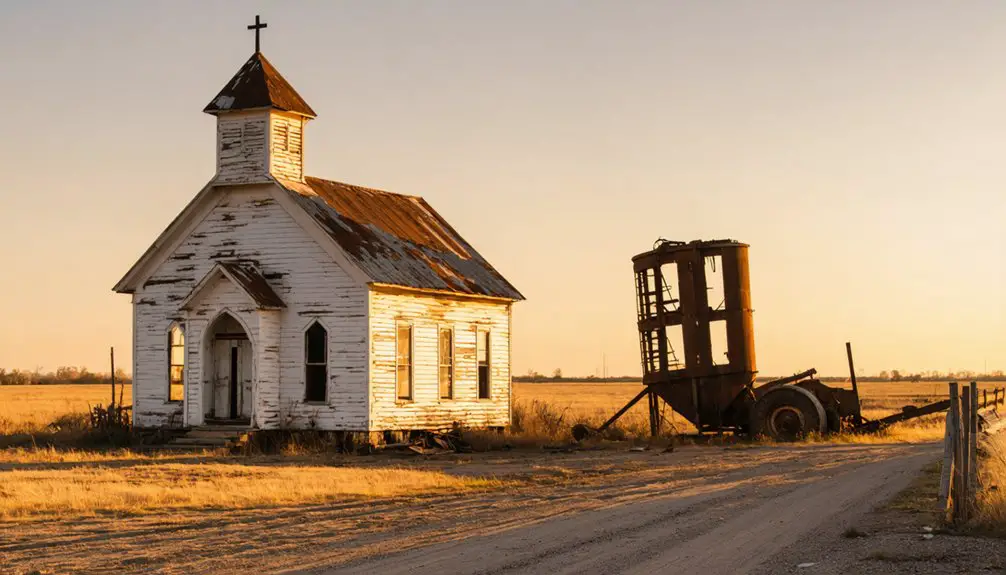
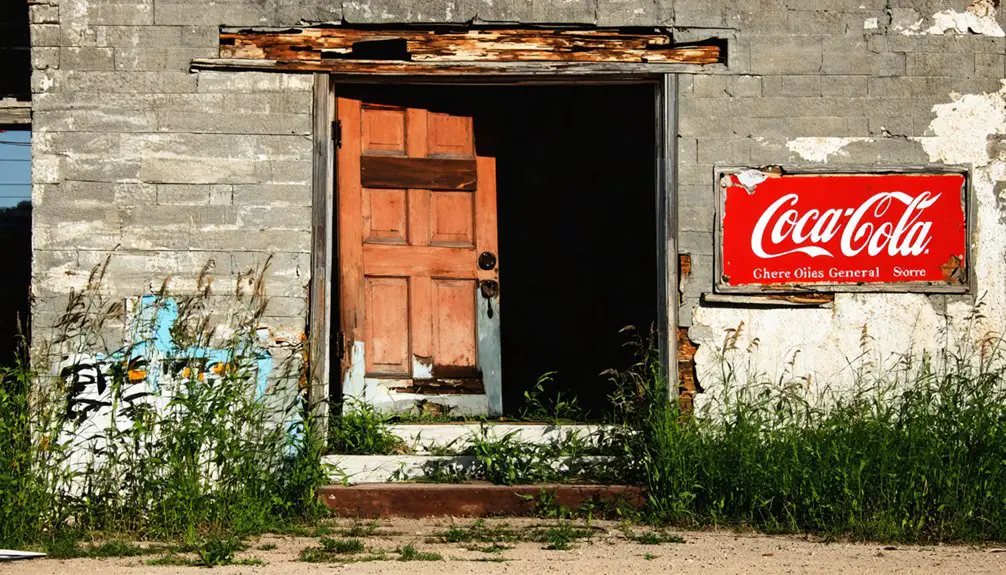
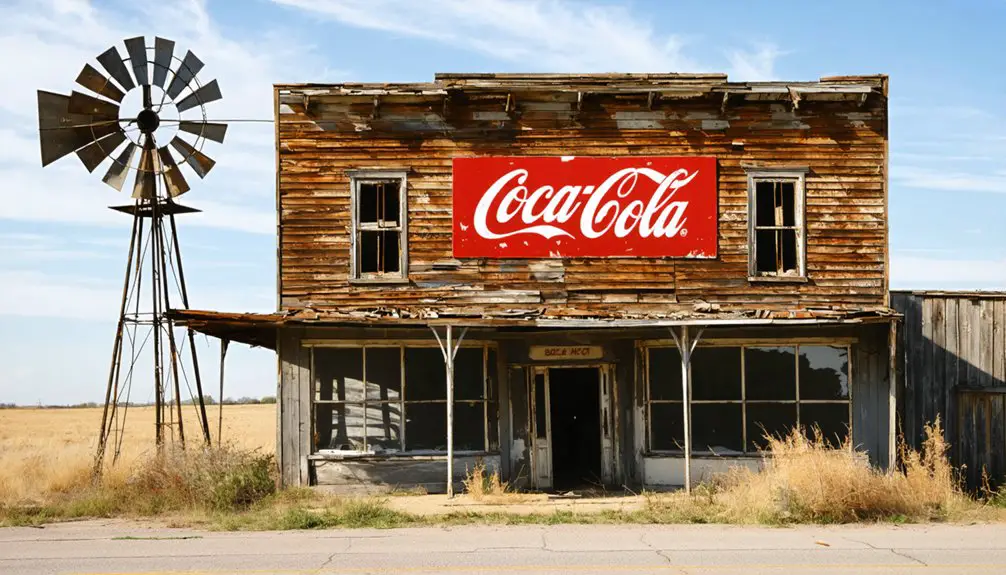
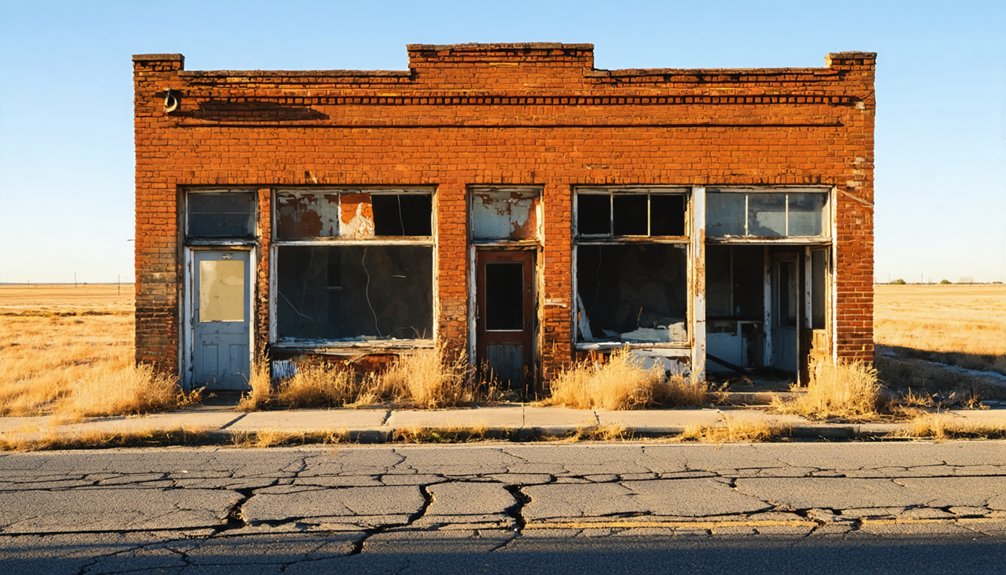
When you walk through what’s left of Oil City today, you’ll find a haunting scatter of abandoned structures still clinging to the Oklahoma landscape.
Crumbling foundations mark where over 300 businesses and homes once buzzed with roughnecks, gamblers, and entertainers during the roaring 1920s oil boom.
You’re fundamentally reading the bones of a town that lived fast, died young, and never looked back.
Abandoned Structures Still Standing
Ghosts of Oil City’s wild past linger in the crumbling foundations and weathered structures scattered across the Osage County landscape.
These abandoned buildings carry tremendous historical significance, whispering stories of boom-era chaos, fortune-seekers, and overnight communities that vanished as quickly as they appeared.
When you visit, you’ll find raw, unfiltered history frozen in decay:
- Crumbling foundations marking where saloons and gambling halls once roared
- Weathered wooden structures that survived Oklahoma’s harsh prairie seasons
- Remnant oilfield equipment rusting quietly near forgotten work sites
- Scattered building clusters at old crossroads where stores and hotels operated
You’re walking ground where Ruby Darby performed and roughnecks risked everything.
Bring your camera — these structures won’t stand forever, and their stories deserve documenting before they disappear completely.
Crumbling Foundations Remain
Beyond the weathered structures and rusting relics, the land itself tells Oil City’s story — and what remains is both humbling and haunting. Scattered across the Oklahoma earth, crumbling foundations mark where over 300 businesses and homes once stood during the roaring 1920s boom.
You’ll walk across concrete slabs and broken stone outlines that once anchored grocery stores, saloons, and oil supply houses. These remnants carry real historical significance — they’re the skeletal fingerprints of a community that lived fast and vanished faster.
Unlike Oil City’s abandoned buildings, which still hold their shape, these foundations have surrendered entirely to time and weather. Crouch down, run your hand along the cracked edges, and you’ll feel the raw, unfiltered energy of a boomtown that refused to slow down until it simply disappeared.
What Notorious History Made Oil City Oklahoma’s Wildest Boomtown?
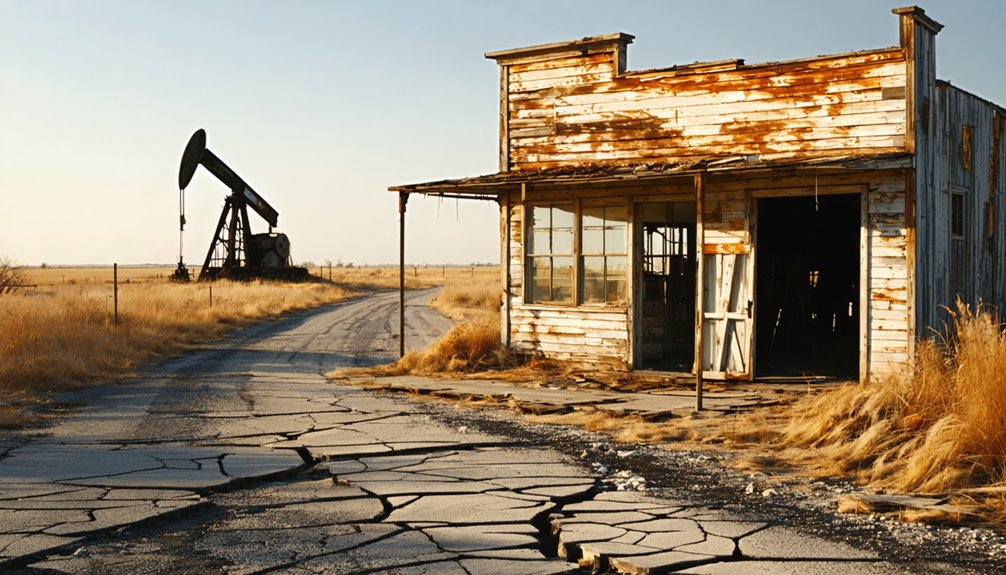
Everything about Oil City, Oklahoma — or Whizbang, as locals called it — screamed danger, excess, and lawlessness during its roaring 1920s peak.
Its notorious events and lawless culture made it Oklahoma’s wildest boomtown, where reckless oilfield men lived entirely on their own terms.
You’d have encountered:
- Murder and robbery happening with alarming regularity on dusty streets
- Gambling halls, saloons, and brothels operating openly without apology
- Nitroglycerin explosions killing and injuring workers handling volatile materials carelessly
- Entertainers like Ruby Darby performing in establishments where pool tables doubled as dance floors
No authority effectively tamed Whizbang.
Freedom here meant genuine danger — unfiltered, unpolished, and unapologetic.
That raw, untamed spirit still echoes through its crumbling remains today.
Which Other Osage County Ghost Towns Are Worth the Detour?
While Whizbang holds the wildest reputation, Osage County’s ghost town landscape runs deeper than one notorious boomtown.
ThreeSands offers another compelling stop, its abandoned bones telling a quieter but equally poignant story of oil-boom ambition gone silent.
You’ll feel the weight of history differently at each site. These Osage County ghost towns share a common thread — they rose fast, burned bright, then emptied almost overnight when the oil money moved on.
Workers pulled up stakes, buildings followed, and the prairie reclaimed what ambition had briefly interrupted.
Pack your camera and give yourself extra driving time. The detours reward curiosity with crumbling foundations, forgotten crossroads, and landscapes where you can almost hear the machinery that once defined an entire era of reckless Oklahoma freedom.
Best Time of Year to Visit Oil City and Oklahoma Ghost Towns
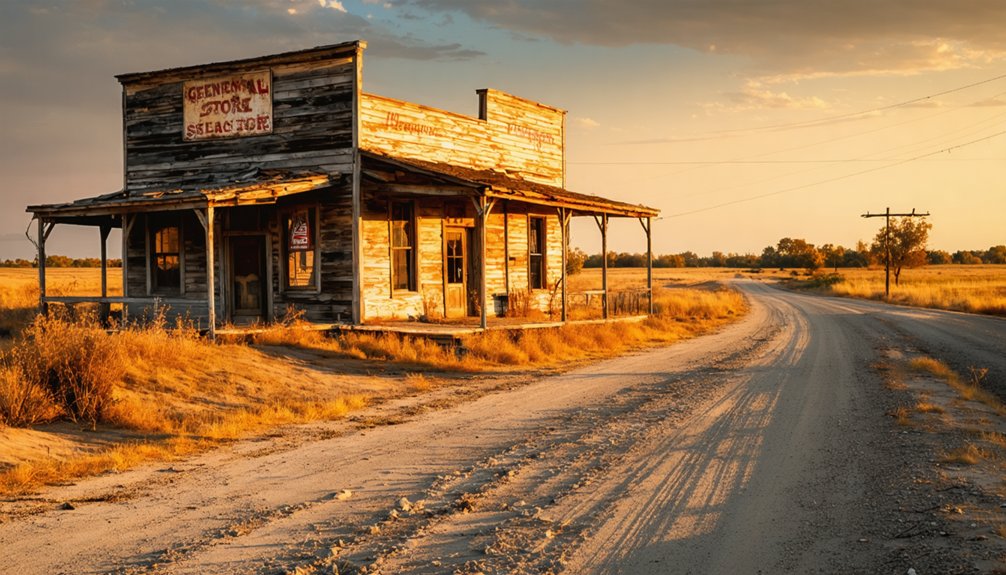
Timing shapes your entire ghost town experience. For best visiting, spring and fall offer ideal conditions across Oklahoma’s abandoned oil fields. Summer heat bakes the plains mercilessly, while winter storms make rural roads treacherous. Seasonal attractions shift dramatically depending on when you arrive.
- Spring (March–May): Wildflowers frame crumbling foundations beautifully; mild temperatures suit long explorations.
- Fall (September–November): Golden light hits weathered structures perfectly for photography; comfortable hiking weather.
- Summer (June–August): Arrive early morning before brutal heat peaks; carry extra water.
- Winter (December–February): Stark, haunting atmosphere rewards the hardy visitor; check road conditions carefully.
You’ll feel Oil City’s ghost most powerfully when the wind cuts across empty Osage County land during those quiet shoulder seasons.
What to Bring When Exploring Oil City and Oklahoma’s Abandoned Oil Towns
Preparation separates a memorable ghost town adventure from a miserable one. Pack your exploration gear thoughtfully — sturdy boots protect against rusty debris and crumbling foundations that Oklahoma’s abandoned oil towns hide beneath overgrown brush.
Bring water, sunscreen, and a first-aid kit because you’re venturing somewhere civilization forgot.
Carry a camera to document Oil City’s weathered structures before they disappear completely. A charged phone with offline maps keeps you oriented across Osage County’s winding back roads.
Do your historical research beforehand — understanding Whizbang’s rowdy past transforms crumbling concrete into storytelling.
Respect the land by leaving everything undisturbed. These ruins belong to Oklahoma’s oil legacy, not your collection.
You’re a witness here, not a souvenir hunter. Travel light, stay curious, and let the silence speak.
How to Photograph Oil City’s Ruins and Oklahoma Ghost Town Structures
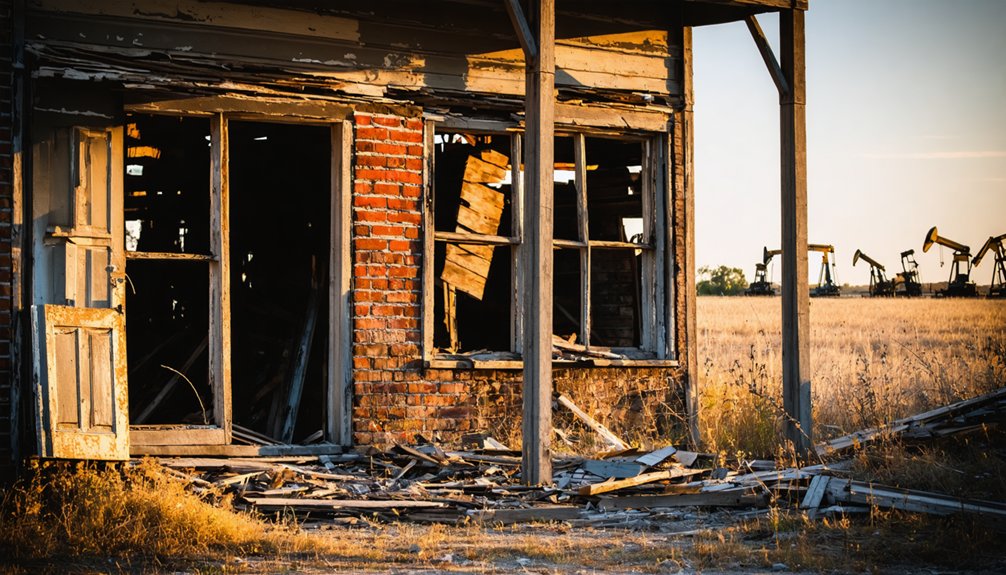
Photographing Oil City’s ruins rewards patience — you’ll want to arrive at golden hour, when early morning or late afternoon light rakes across crumbling foundations and transforms weathered wood into something almost alive again.
These photography tips help you capture Oklahoma’s vanished world authentically while respecting ghost town safety.
- Shoot low angles to emphasize collapsed structures against open Oklahoma skies
- Frame rusted machinery alongside wildgrass for natural depth and contrast
- Use overcast light to reveal texture in deteriorating storefronts without harsh shadows
- Never enter unstable buildings — photograph doorways and windows from safe distances
Every crumbling wall tells Whizbang’s reckless, roaring story. Your camera becomes the tool that keeps these forgotten lives visible just a little longer.
How to Add Oil City to an Oklahoma Road Trip
Adding Oil City to an Oklahoma road trip takes only a little planning, and the rewards stretch far beyond a single stop.
Pair it with nearby Ponca City, where the oil legacy lives in museums and architecture that echo the boom years.
Drive through Osage County’s rolling hills, letting boomtown memories guide you toward forgotten crossroads and crumbling foundations.
Keep your tank full and your schedule loose — ghost towns rarely follow convenient routes.
Burbank sits close, and Three Sands deserves a detour.
Travel Highway 60 or 64 to connect these scattered remnants into one powerful story.
You’re not just sightseeing; you’re tracing the rise and collapse of an era.
Pack light, bring a map, and let Oklahoma’s open roads lead you somewhere worth remembering.
Frequently Asked Questions
Are There Guided Tours Available for Oil City’s Ghost Town Ruins?
No official guided tours exist, but you’ll find Oil City’s ghost town ruins ripe for your own guided exploration. Wander freely through crumbling foundations and feel the historical significance of Oklahoma’s wildest oil boom era.
Is It Legal to Enter and Explore Oil City’s Abandoned Structures?
Before you step inside… urban exploration of Oil City’s crumbling structures carries serious legal ramifications. You’re likely trespassing on private property. Respect the nostalgic ruins from a distance, honoring the freedom those bold oil pioneers once lived.
Can Visitors Camp Overnight Near Oil City or Surrounding Ghost Towns?
You can camp near Oil City, but check camping regulations first! Osage County’s wild lands evoke that boomtown freedom. Explore nearby attractions like ThreeSands, and you’ll feel those roaring 1920s spirits whispering through Oklahoma’s haunting ghost town landscapes.
Are There Restroom Facilities or Services Near Oil City Today?
Once booming saloons stood where silence now rules — you won’t find restroom locations or nearby amenities at Oil City today. Plan ahead, bring your own supplies, and embrace the raw, untamed freedom this forgotten ghost town offers.
Do Locals Share Oral Histories or Stories About Oil City’s Past?
You’ll find locals enthusiastically sharing local legends and historical anecdotes about Oil City’s wild past. Their stories of murder, gambling, and booming oil days breathe life into these forgotten, crumbling ruins, evoking a time of raw, untamed freedom.
References
- https://nondoc.com/2022/01/04/whizbang-oklahoma-ghost-town/
- https://www.youtube.com/watch?v=OpikOA1Ih94
- https://www.okhistory.org/publications/enc/entry?entry=GH002
- https://okmag.com/blog/a-ghostly-site/
- https://en.wikipedia.org/wiki/List_of_ghost_towns_in_Oklahoma
- https://www.legendsofamerica.com/ok-shamrock/
- https://loc.getarchive.net/media/abandoned-building-in-the-oil-ghost-town-of-slick-oklahoma