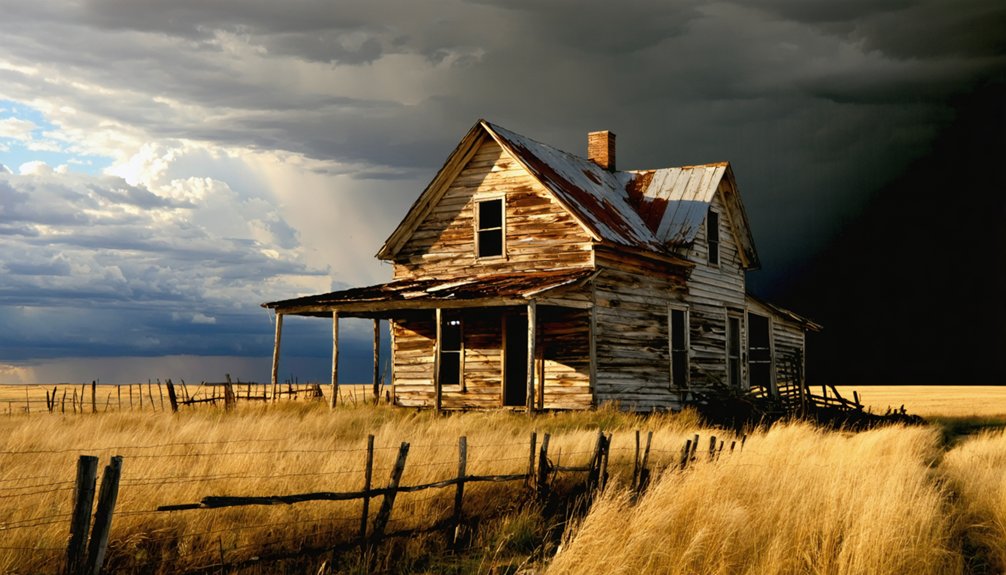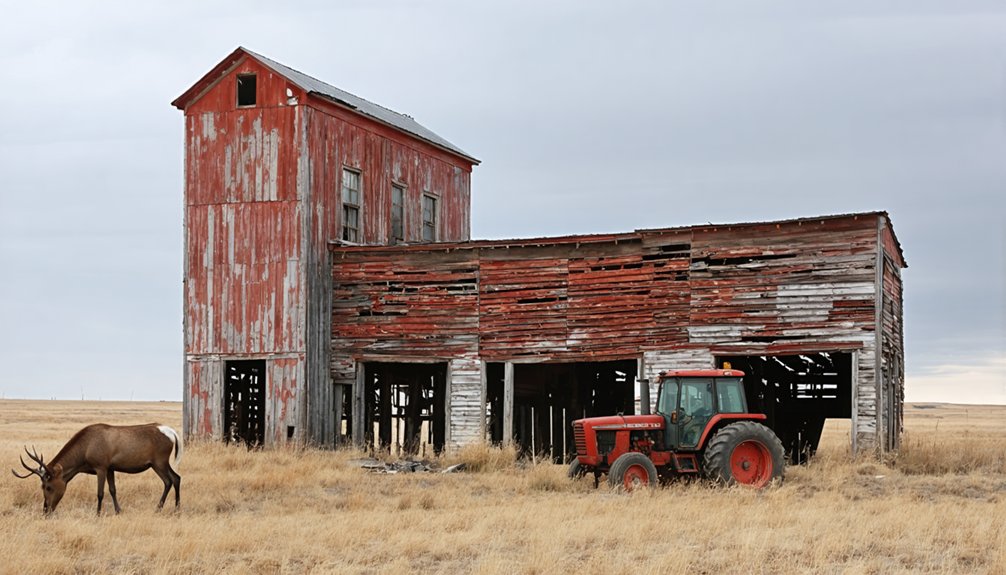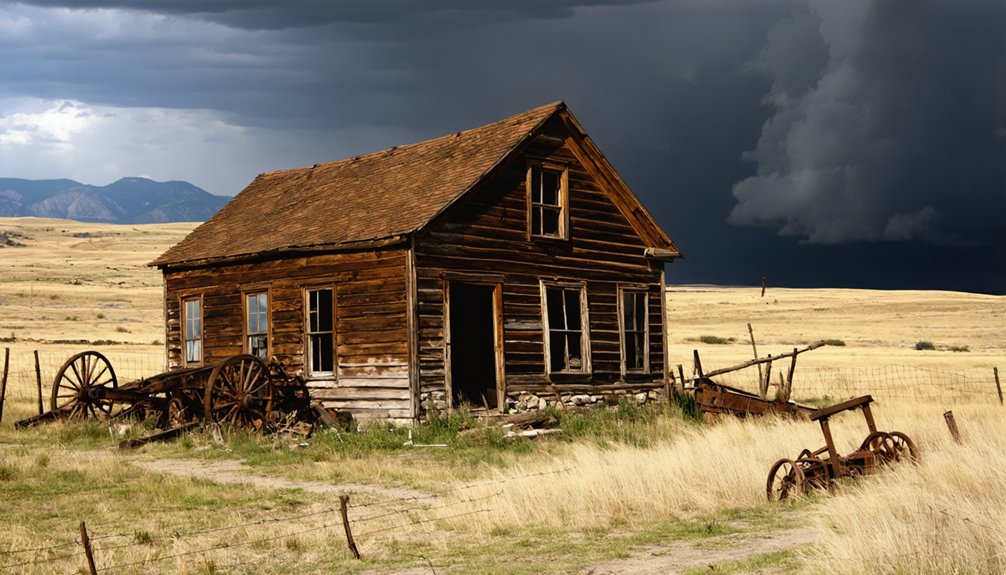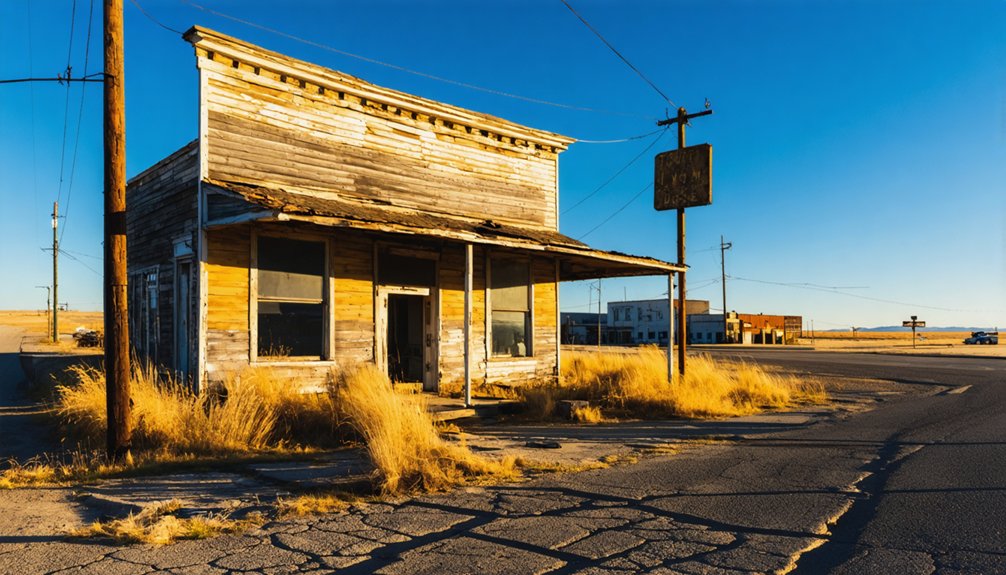
Planning a ghost town road trip to Ordway, South Dakota means heading out on Highway 281 into Brown County’s open prairie, where a once-thriving railroad town nearly became Dakota Territory’s capital. Almost nothing physical remains — the land has reclaimed it — so you’ll need to contact private landowners before visiting. Bring water, a paper map, and patience. There’s more to this vanished town’s story than an empty field suggests, and it’s worth uncovering.
Key Takeaways
- Ordway, established in 1881 along Highway 281 in Brown County, South Dakota, was named after Dakota Territory’s territorial governor Nehemiah G. Ordway.
- The site is private property, so research Brown County property records and contact landowners directly for access permission before visiting.
- Minimal structures remain, with no interpretive signs or parking areas, as the prairie has largely reclaimed the land.
- Pack sufficient water, carry a physical map, and inform someone of your route, as cell service may be unreliable.
- Nearby ghost towns Columbia, Hecla, and Westport offer additional historical exploration opportunities while respecting private property boundaries throughout.
What Was Ordway, South Dakota?
Once a promising frontier settlement on the South Dakota prairie, Ordway sprang to life in the summer of 1881 when the Chicago and Northwestern Railroad pushed its tracks through Brown County.
Ordway history begins with that railroad significance — without those iron rails, the town simply wouldn’t have existed.
Developers platted the town that same summer, naming it after Nehemiah G. Ordway, Dakota Territory’s territorial governor. Its central location even made it a candidate for the territorial capital, signaling real ambitions for this small prairie outpost.
Hamlin Garland’s father ran a general store here, anchoring a community of merchants and settlers chasing opportunity.
But like many railroad towns, Ordway’s fate was tied to the tracks. When that lifeline faded, so did the town itself.
What’s Left of Ordway’s Original Settlement Today?
When you arrive at the site of what was once Ordway, you’ll find little evidence that a thriving railroad town ever stood here — the prairie has largely reclaimed what settlers built.
The land is private property, so you’ll need to respect those boundaries and resist the urge to wander freely across the grounds.
If you want a richer sense of what once existed here, the SDPB documentary on South Dakota ghost towns offers compelling visual and historical evidence of Ordway’s forgotten story.
Minimal Remaining Physical Structures
Though the Chicago and Northwestern Railroad once drove settlers and merchants to Ordway’s doorstep, today you’ll find little trace of the town that briefly captured the imagination of Dakota Territory’s earliest boosters.
The ghost town architecture that once defined this ambitious settlement has surrendered entirely to the relentless South Dakota prairie. Historical preservation efforts haven’t saved much here — the landscape offers almost no visible evidence that a general store, farming operations, or territorial ambitions ever existed on this ground.
What remains is fundamentally open land, reclaimed by nature and time.
Before you make the drive out, understand that this site sits on private property, so you’ll need to respect landowner boundaries rather than freely wander what little remains of Ordway’s forgotten footprint.
Private Property Access Challenges
Because Ordway sits on private property, you’ll face an immediate and fundamental constraint the moment you consider exploring what’s left of this vanished settlement. Respecting landowner permissions isn’t optional — it’s essential ghost town etiquette that protects both you and the land.
Before visiting, follow these practical steps:
- Research current ownership through Brown County property records to identify who controls the land.
- Contact landowners directly, explaining your historical interest and requesting explicit access permission.
- Accept refusals graciously and never trespass, regardless of how compelling the exploration feels.
This freedom-loving pursuit of history carries responsibility. The same independent spirit that drew settlers to Ordway in 1881 demands you honor boundaries today.
Preparation and respect keep ghost town exploration alive for future wanderers.
Documentary Evidence Of Settlement
While Ordway’s physical footprint has nearly vanished from the Brown County prairie, documentary evidence keeps the settlement’s memory alive and gives you a richer understanding of what once stood there.
Aberdeen Magazine’s historical narratives capture the town’s rise and quiet disappearance, while SDPB’s ghost town documentary brings Ordway’s story to your screen before you ever hit the road.
This settlement documentation paints a vivid picture of merchants, farmers, and railroad workers who built something real on that open prairie.
Hamlin Garland’s family connections add a literary dimension you won’t find at most forgotten townsite stops.
Researching these resources before your visit transforms an empty field into something you can actually feel — a community that briefly thrived, then slipped away on the prairie wind.
Ordway’s Hamlin Garland Connection Worth Knowing
Before you write Ordway off as just another forgotten railroad stop, you’ll want to know that Hamlin Garland‘s father ran a general store here, tying this vanished prairie town to one of America’s most celebrated frontier writers.
That family connection gives Ordway a literary dimension most ghost towns can’t claim, linking the dusty settlement directly to the vivid, often brutal homesteading world Garland later captured in works like *Main-Travelled Roads*.
If you’re a reader as well as a road tripper, that backstory transforms what might feel like an empty field into something far more resonant.
Garland’s Father’s Store
One connection that makes Ordway more than just another forgotten prairie town is its tie to Hamlin Garland, the celebrated American author whose gritty, autobiographical fiction captured the hardships of Midwest frontier life.
His father ran a general store in Ordway, contributing to the town’s early store history and economic impact. That mercantile presence meant real commerce, real neighbors, real lives unfolding on the Dakota prairie.
When you’re researching Ordway before your visit, keep these facts in mind:
- Garland’s father operated both a store and a farm near Ordway
- The family’s presence reflected typical settler ambition during the railroad boom
- Hamlin Garland later fictionalized these frontier experiences in his writing
That literary legacy gives your ghost town road trip an unexpected cultural dimension worth appreciating.
Literary Legacy Connection
Hamlin Garland grew up absorbing the raw struggle of Dakota frontier life, and that experience shaped some of the most honest American literature of the late 19th century. His family’s roots in Ordway fed directly into works like “Main-Travelled Roads,” where prairie hardship becomes something universal and deeply human.
That literary significance extends beyond academic circles — Garland’s writing challenged romanticized frontier myths and gave voice to ordinary settlers who built and abandoned towns exactly like this one.
When you stand near what remains of Ordway, you’re touching the cultural impact of lived experience transformed into enduring storytelling. Knowing that connection changes how you see the landscape. It’s not just a forgotten settlement — it’s a setting that helped define American realism.
How to Get to Ordway on Highway 281?
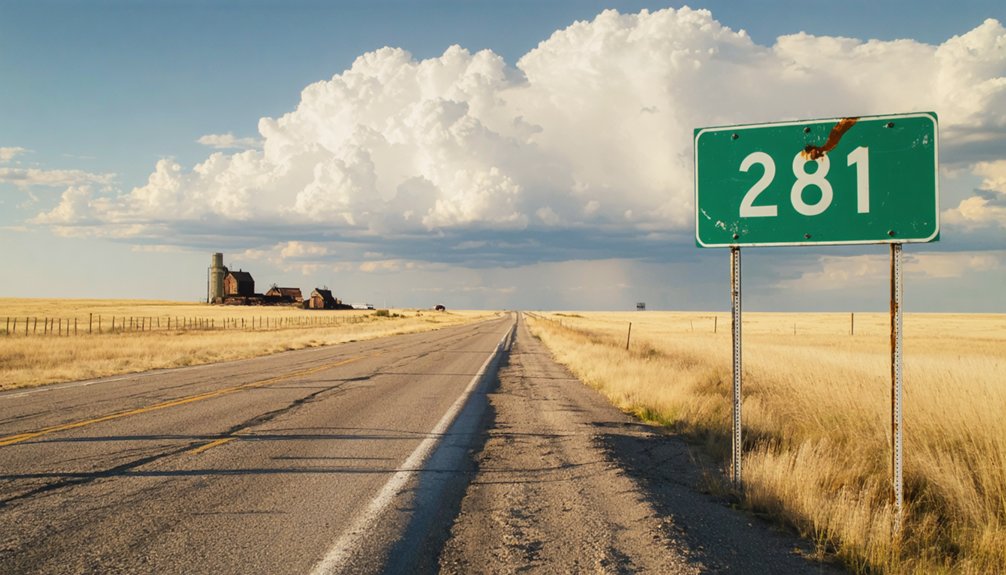
Highway 281 is your main artery for reaching the ghost town of Ordway in Brown County, South Dakota. This northeast prairie route cuts through open landscapes that haven’t changed dramatically since settlers first arrived following the railroad in 1881.
Before you hit the road, keep these navigation essentials in mind:
Before you hit the road, tuck these prairie navigation essentials into your back pocket — South Dakota rewards the prepared traveler.
- Monitor road conditions seasonally, as South Dakota’s prairie weather can shift unexpectedly.
- Practice driving safety on rural stretches where wildlife crossings are common.
- Watch for the road named after Hamlin Garland’s father connecting Highway 281 to nearby Columbia.
You’re exploring private property territory here, so respect landowner boundaries once you arrive.
The drive itself rewards you with expansive prairie views that echo the freedom early settlers chased when Ordway was still alive.
What to Know Before You Drive Out There
Before you turn the key and head out on that prairie highway, there’s more to prepare for than just fueling up and programming your GPS.
Ordway sits on private property, so ghost town exploration here demands respect for landowner boundaries. Don’t assume open land means open access.
The town’s historical significance draws curious travelers, but minimal structures remain standing. You won’t find interpretive signs or parking areas welcoming you.
Research beforehand using SDPB’s documentary coverage and Aberdeen Magazine’s historical features, so you arrive informed rather than disappointed.
Brown County’s northeastern prairie can feel remote and unforgiving, especially in unpredictable weather.
Pack water, tell someone your route, and carry a physical map. Cell service isn’t guaranteed.
Ordway rewards prepared visitors who approach its silence with intentionality and genuine reverence for the past.
Nearby Brown County Ghost Towns Worth the Detour
Once you’ve paid your respects at Ordway, Brown County‘s surrounding prairie holds more ghost towns worth folding into your route. This region saw explosive railroad-driven settlement in the 1880s, meaning abandoned communities dot the landscape with genuine historical significance.
Pack extra water and keep your tank full before heading off Highway 281. These detours reward curious explorers willing to embrace unpaved roads and open skies.
- Columbia — Follow the road named after Hamlin Garland’s father, connecting history to landscape in a tangible way.
- Hecla — Another railroad-era settlement carrying the faded ambitions of Dakota Territory expansion.
- Westport — A quiet remnant worth the short drive for dedicated ghost town exploration enthusiasts.
Respect private property boundaries at every stop.
Frequently Asked Questions
Was Ordway Ever Officially Named the Dakota Territory Capital?
No, Ordway’s history shows it was only a *candidate* for the Dakota capital, never officially named one. You’ll find its central location made it a contender, but it never claimed that historic title.
Which SDPB Documentary Specifically Features Ordway Ghost Town History?
The knowledge doesn’t specify which SDPB documentary features Ordway’s ghost town legends, but you can explore its historical significance by contacting SDPB directly — they’ve documented South Dakota’s forgotten settlements, and you’ll uncover fascinating stories of freedom and frontier life.
Did Hamlin Garland Write About His Father’s Ordway Store Experiences?
The available knowledge doesn’t confirm whether Hamlin Garland wrote about his father’s Ordway store experiences. You’d want to explore his frontier memoirs, where family memories and literary influences often shaped his vivid, freedom-seeking prairie narratives.
Are There Guided Tours Available for South Dakota Ghost Town Exploration?
Like whispers from the past, ghost town tours aren’t formally organized for South Dakota’s abandoned settlements. You’ll carve your own path through historical exploration, respecting private property boundaries while SDPB documentaries and local resources guide your independent adventure.
What Year Did Chicago and Northwestern Railroad Leave the Ordway Area?
The exact year Chicago and Northwestern Railroad left isn’t documented in available records. What you *do* know is its railroad history shaped Ordway’s significance—arriving in 1881, sparking life, then fading into South Dakota’s vast, free-spirited prairie silence.
References
- https://aberdeenmag.com/2019/01/the-ghost-towns-of-brown-county/
- https://www.youtube.com/watch?v=caok4lXv4y0
- https://www.powderhouselodge.com/black-hills-attractions/fun-attractions/ghost-towns-of-western-south-dakota/
- https://www.aol.com/articles/south-dakotas-once-thriving-prairie-100000284.html
- https://en.wikipedia.org/wiki/List_of_ghost_towns_in_South_Dakota
- https://www.tripadvisor.com/Attraction_Review-g54799-d22999414-Reviews-Scenic_Ghost_Town-Scenic_South_Dakota.html
- https://www.youtube.com/watch?v=_0WNYsFLSLA
- https://www.travelsouthdakota.com/trip-ideas/abandoned-beauty-ghost-towns-structures-south-dakota
- https://www.facebook.com/groups/241369405894173/posts/2645399842157772/
- https://myxoadventures.com/the-ghost-town-of-spokane-south-dakota/