Planning a ghost town road trip to White Hills, Arizona means driving deep into the Mojave Desert to explore what’s left of a silver boomtown that thrived in the 1890s before collapsing in 1899. You’ll find scattered foundations, rusting mining equipment, and a haunting cemetery. From Kingman, it’s roughly 51 miles north. Visit in fall or winter to beat the brutal summer heat, pack plenty of water, and keep reading to uncover everything you’ll need for a safe, unforgettable trip.
Key Takeaways
- White Hills is located 43 miles north of Kingman on Highway 93, followed by 8 miles on White Hills Road.
- Visit during fall, winter, or early spring to avoid extreme summer heat and lack of shade among ruins.
- Pack at least one gallon of water per person, sun protection, and a first aid kit for safety.
- Plan two to four hours on-site to explore mining artifacts, foundations, and the historic cemetery.
- Nearby ghost towns Chloride, Oatman, and Goldroad can be combined into a fuller road trip itinerary.
The Short, Wild History of White Hills, Arizona
White Hills blazed to life in the early 1890s when a Hualapai Indian named Jeff stumbled upon silver in the rugged desert of Mohave County, Arizona. Within weeks, the camp exploded into a bustling community of nearly 200 residents, twelve saloons, and two cemeteries.
Miners pulled an estimated twelve million dollars in horn silver from the earth between 1892 and 1898.
Then it all collapsed. The rich veins played out, and a devastating flash flood on August 5, 1899, delivered the final blow.
Buildings disappeared as settlers scavenged the timber for new projects elsewhere. What remains today carries a powerful mining legacy — scattered foundations, faded cemetery markers, and silence.
That ghost town allure is exactly what pulls free-spirited travelers off the beaten path to explore it.
What’s Actually Left to See at White Hills Today
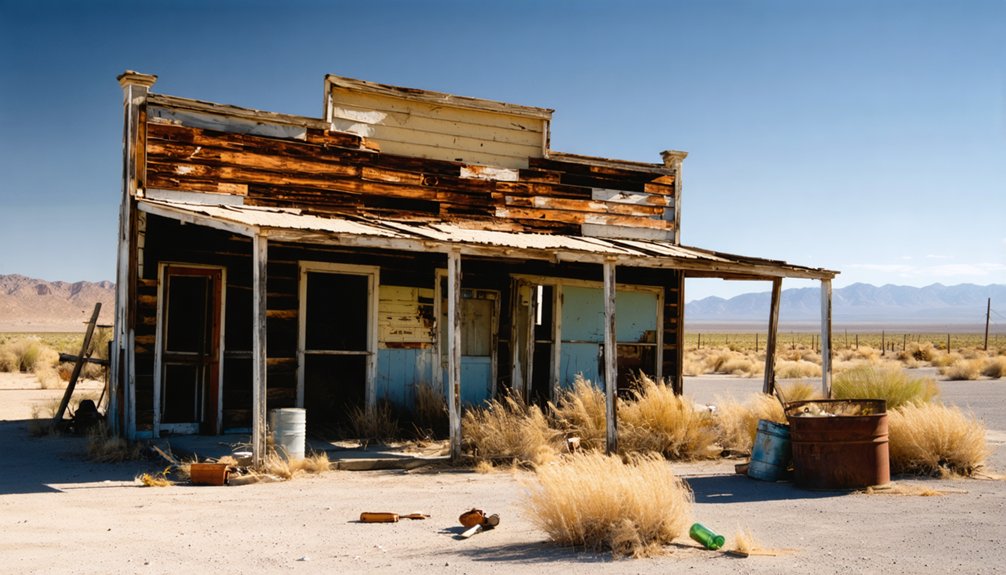
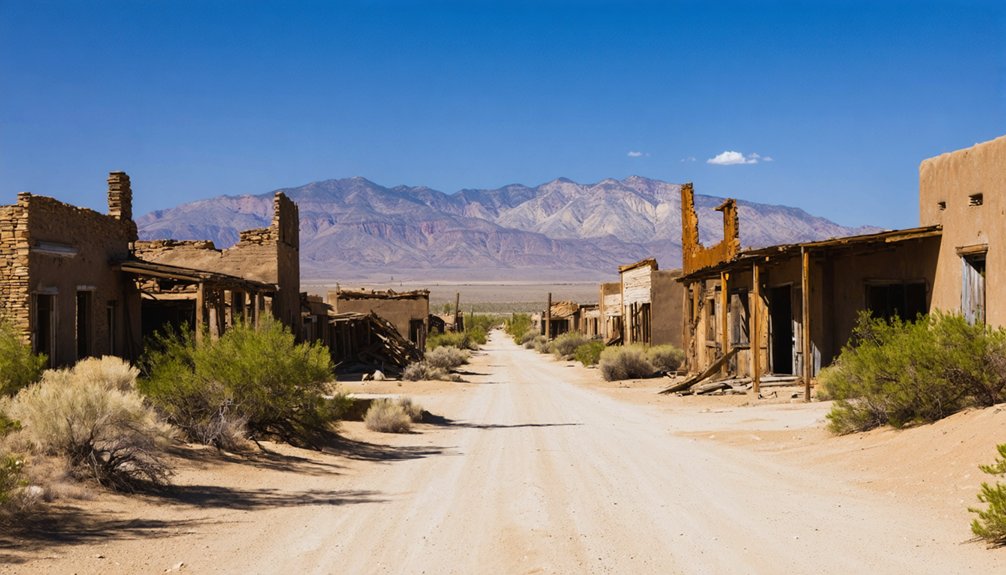
When you pull up to White Hills today, you won’t find much standing above ground — the town’s wood-framed buildings were long ago scavenged for lumber, leaving behind scattered foundations and rusting mining equipment.
You can still walk the site and piece together the camp’s rough layout from what remains. The historic cemetery survives as the most tangible reminder of the community that once thrived here, though erosion has taken its toll on the gravesites over the decades.
Ruins And Foundations Remaining
Although little remains standing at White Hills today, what you’ll find scattered across the desert floor still tells a compelling story. The site rewards curious travelers who appreciate ruin exploration and foundation photography.
Look for these surviving remnants:
- Stone and adobe foundations marking where homes, saloons, and commercial buildings once stood
- Scattered mining equipment left behind when operations permanently ceased after the 1890s collapse
- The historic cemetery, partially eroded but still visible and deeply atmospheric
- Earthworks and excavation sites revealing where miners chased silver veins across the landscape
Wood construction has largely vanished since locals scavenged timber for other projects after abandonment.
What remains speaks through silence. Bring a camera, wear sturdy shoes, and move carefully across uneven ground as you piece together White Hills’ remarkable, brief existence.
The Historic Cemetery Today
The historic cemetery at White Hills stands as the most evocative survivor of the town’s brief, turbulent life.
Partially eroded by decades of desert weather, it still offers remarkable cemetery exploration for anyone willing to look closely. Weathered markers and shifting ground tell a quiet story about the hundreds of people who chased silver dreams here in the 1890s.
You’ll sense the historical significance immediately — these graves represent miners, merchants, and families who built something real in this remote stretch of Mohave County, only to watch it unravel within a decade.
Unlike the vanished saloons and scavenged timber buildings, the cemetery resisted erasure. Walk it carefully, respect what remains, and you’ll leave with a far deeper understanding of what White Hills actually meant to the people who lived and died here.
How to Get to White Hills From Kingman or Las Vegas
Whether you’re coming from Kingman or Las Vegas, reaching White Hills is a straightforward drive on Highway 93.
From Kingman, you’ll head north on Highway 93 for 43 miles, then turn right onto White Hills Road in Willow Beach and continue 8 more miles.
If you’re coming from Las Vegas, take Highway 515 South for 36 miles, merge onto Highway 93 South for another 35 miles, then turn left at White Hills Road and follow it 8 miles to the site.
From Kingman To White Hills
Getting to White Hills is straightforward whether you’re coming from Kingman, Arizona, or Las Vegas, Nevada.
From Kingman, you’ll follow a simple route through open desert toward this legendary ghost town steeped in mining history.
Here’s how to make the drive from Kingman:
- Head north on Highway 93 for 43 miles
- Turn right onto White Hills Road at Willow Beach
- Drive 8 miles along the access road
- A standard passenger vehicle handles the route in fair conditions
The drive gives you wide-open desert scenery that sets the mood perfectly before you arrive.
Before you head out, confirm current road conditions since weather can change access quickly.
Bring extra water and supplies because facilities at the site are practically nonexistent.
From Las Vegas To White Hills
Travelers coming from Las Vegas have an equally manageable route into White Hills, and the drive covers some genuinely striking Mojave Desert landscape along the way.
Leave the Las Vegas attractions behind and head south on Highway 515 South/US 11 South for 36 miles, then continue on Highway 93 South for another 35 miles. Turn left onto White Hills Road in Willow Beach and drive the final 8 miles to reach the site.
The corridor between Vegas and White Hills rewards desert photography enthusiasts with sweeping vistas, dramatic rock formations, and open sky that few tourists ever witness.
Bring extra water, confirm road conditions beforehand, and travel during fall, winter, or early spring to avoid punishing summer heat. A standard passenger vehicle handles the main access road comfortably under fair conditions.
Can a Regular Car Handle the White Hills Road?
How well your everyday sedan handles the White Hills Road depends largely on current conditions, but in fair weather, a standard passenger vehicle can manage the main access route without much trouble.
Car suitability improves considerably when road conditions are dry, making the 8-mile stretch from the highway far more manageable.
Before you head out, keep these essentials in mind:
- Check road conditions ahead of time, since desert weather shifts quickly
- Avoid the route after rain, as unpaved sections can turn soft or slick
- Drive slowly over rough patches to protect your undercarriage
- Watch for washouts, especially near low-lying areas prone to flash flooding
Staying informed gives you the freedom to explore confidently and return safely.
Best Time of Year to Visit White Hills Ghost Town
Once you’ve confirmed your car can handle the road, timing your visit right makes the whole trip far more rewarding.
Seasonal weather plays a huge role in shaping visitor experiences at White Hills, so plan accordingly.
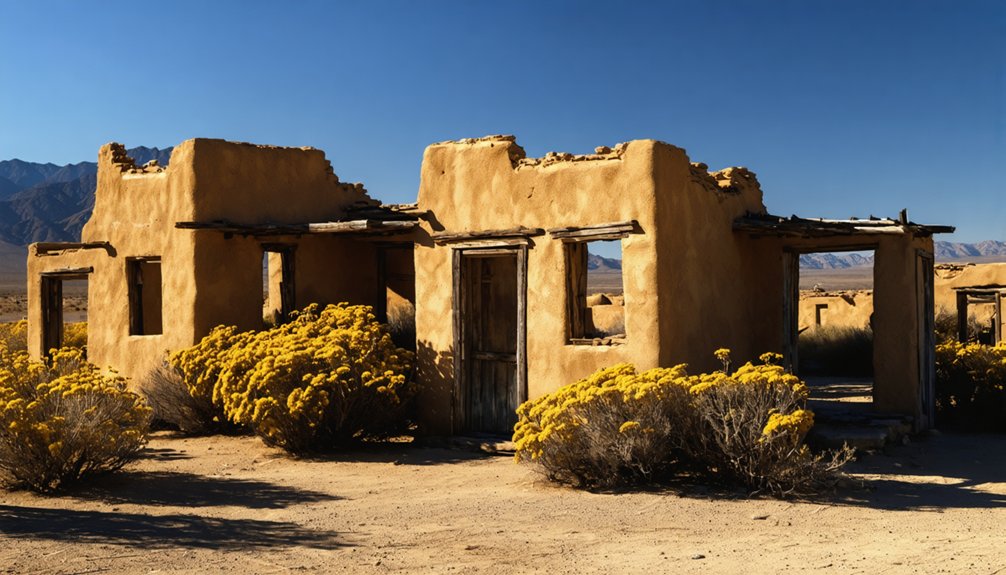
Fall, winter, and early spring deliver the most comfortable conditions for exploring the desert ruins. Temperatures stay mild, the light is golden, and you’re free to wander foundations and mining remnants without brutal heat cutting your exploration short.
Summer is a different story. Mohave County desert heat turns punishing fast, and there’s zero shade relief among scattered ruins.
Flash floods, like the devastating 1899 flood that helped doom White Hills, remain a real desert threat.
Always check weather forecasts before heading out, pack plenty of water, and tell someone your plans.
What to Bring for Your White Hills Day Trip
Since White Hills offers no facilities, vendors, or shade structures whatsoever, what you pack determines how long and how safely you can explore.
The desert doesn’t negotiate, so prepare before you leave the pavement.
Pack these essentials before exploring ghost towns like White Hills:
- Water – Bring at least one gallon per person; desert heat depletes you faster than you’d expect.
- Sun protection – Sunscreen, a wide-brim hat, and UV-blocking sunglasses are non-negotiable.
- First aid kit – Useful for encounters with local wildlife, including venomous snakes and scorpions common to Mohave County.
- Navigation tools – A downloaded offline map and a fully charged phone keep you oriented on unmarked roads.
Tell someone your plan and expected return time before heading out.
How Long Should You Budget for a White Hills Visit?
Most visitors find that White Hills fits comfortably into a half-day excursion, though how you spend that time depends on your pace and interests.
Plan roughly two to three hours on-site, giving yourself room to examine mining artifacts scattered across the grounds, walk the eroded cemetery, and soak in the solitude that ghost towns offer.
If you’re drawn to local legends surrounding the silver discovery or want to photograph foundations at different angles, budget closer to four hours.
Factor in drive time from Kingman, approximately 51 miles total, or longer from Las Vegas.
Bring lunch and extra water since there are no facilities nearby.
A flexible schedule lets you explore freely without rushing, which is exactly the spirit a place like White Hills deserves.
Flash Floods Destroyed White Hills Once : Here’s How to Visit Safely
On the morning of August 5, 1899, a flash flood tore through White Hills and shattered a community that silver had built almost overnight.
The flood impact proved too great for town resilience to overcome, and White Hills never recovered.
You’re visiting terrain that nature can reclaim just as fast today.
Stay safe by following these precautions:
- Check weather forecasts for Mohave County before you leave home
- Avoid washes and low-lying roads if storm clouds appear on the horizon
- Bring extra water and supplies since no facilities exist on-site
- Tell someone your plans and expected return time before heading out
Respect the desert’s power, travel prepared, and you’ll experience White Hills on your own terms.
Using White Hills as a Base for Nearby Ghost Town Stops

White Hills puts you within striking distance of several other Mohave County ghost towns, making it an ideal anchor point for a broader desert exploration.
You’re already deep in territory rich with ghost town history, so extending your route costs little extra time. Chloride, one of Arizona’s oldest mining communities, sits roughly 20 miles south and still shows visible remnants of its silver-rush past.
Oatman, famous for its Route 66 character and roaming burros, adds a lively contrast to quieter ruins. Goldroad offers additional nearby attractions for those craving more abandoned mine scenery.
Plan your stops strategically, moving between sites during cooler morning hours. Carry enough water for the full day, and you’ll cover serious ground across one of Arizona’s most historically layered desert corridors.
Frequently Asked Questions
What Were White Hills’ Previous Names Before It Became Officially Recognized?
Before hitting 200 residents, White Hills carried two names reflecting its historical significance: Indian Secret Mining District and Silverado. You’ll appreciate how these names captured the town’s mining impact during its thrilling silver rush transformation.
Who Originally Discovered the Silver That Sparked the White Hills Mining Boom?
You’ll love knowing that a Hualapai Indian named Jeff sparked White Hills’ incredible silver discovery in the early 1890s, forever shaping the region’s mining history and igniting a boom that transformed the Arizona desert overnight.
When Did the White Hills Post Office Open and Permanently Close?
Over 21 years of post office history shaped this Arizona settlement’s story. You’ll find the White Hills post office opened October 20, 1892, and permanently closed August 15, 1914, marking the town’s slow fade into ghostly silence.
How Much Total Value Did the White Hills Mines Produce During Operation?
You’ll be amazed that White Hills’ mines produced an estimated twelve million dollars in gold and silver from 1892 to 1898! The mining techniques and economic impact left a legacy you can still explore today.
How Many Saloons Operated in White Hills During Its Peak Population Period?
With a population of just 200 residents, you’d find roughly twelve saloons fueling White Hills’ vibrant saloon culture — that’s one per seventeen people! It’s a fascinating snapshot of rugged mining history where freedom and frontier spirit thrived.
References
- https://www.tombstonetraveltips.com/white-hills-az.html
- https://jacobbarlow.com/2017/07/20/white-hills-arizona/
- https://www.ghosttowns.com/states/az/whitehills.html
- https://www.youtube.com/watch?v=UDS7gCGshEM
- http://www.apcrp.org/WHITE_HILLS/1_White_Hills_Cem_Mast_Text_012909.htm
- https://www.arizonahighways.com/ghost-town-trail
- https://www.westernoutdoortimes.com/story/2020/03/01/rving/arizona-ghost-town-loop/4152.html
- https://www.roadtripsforfamilies.com/6-arizona-ghost-town-road-trip-destinations/
- https://www.arizonahighways.com/archive/issues/chapter/Doc.273.Chapter.5
- https://www.youtube.com/watch?v=0DoxWdD7CD0