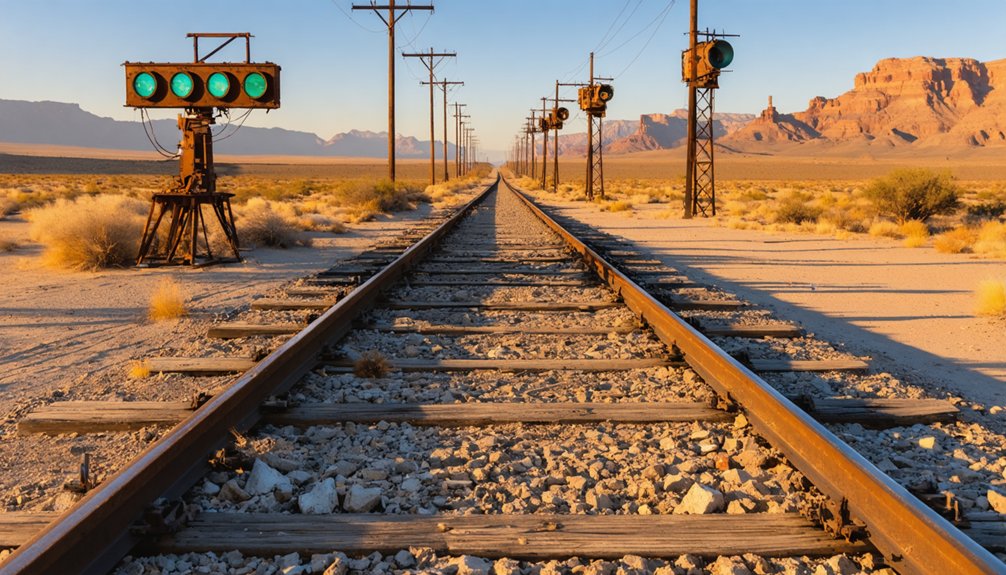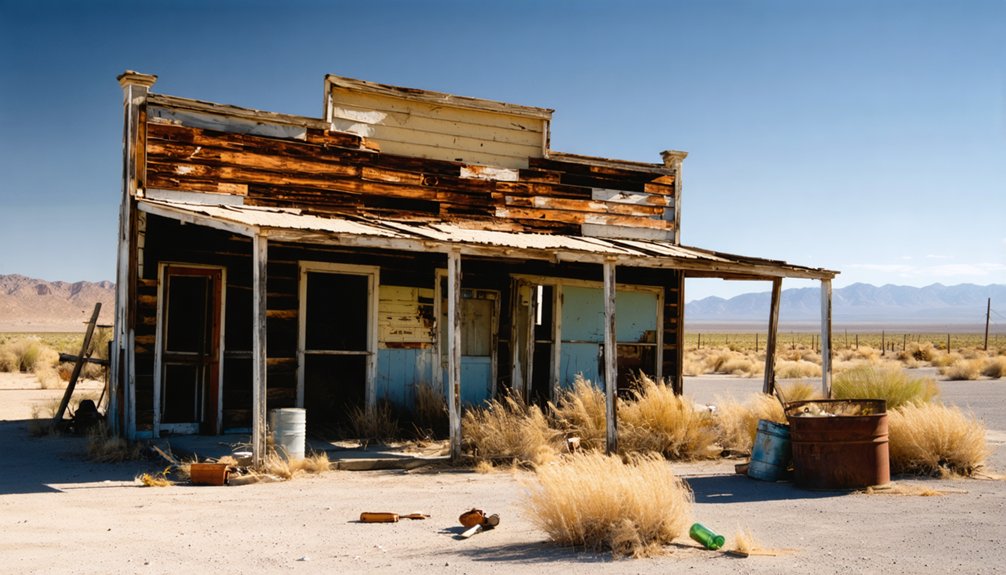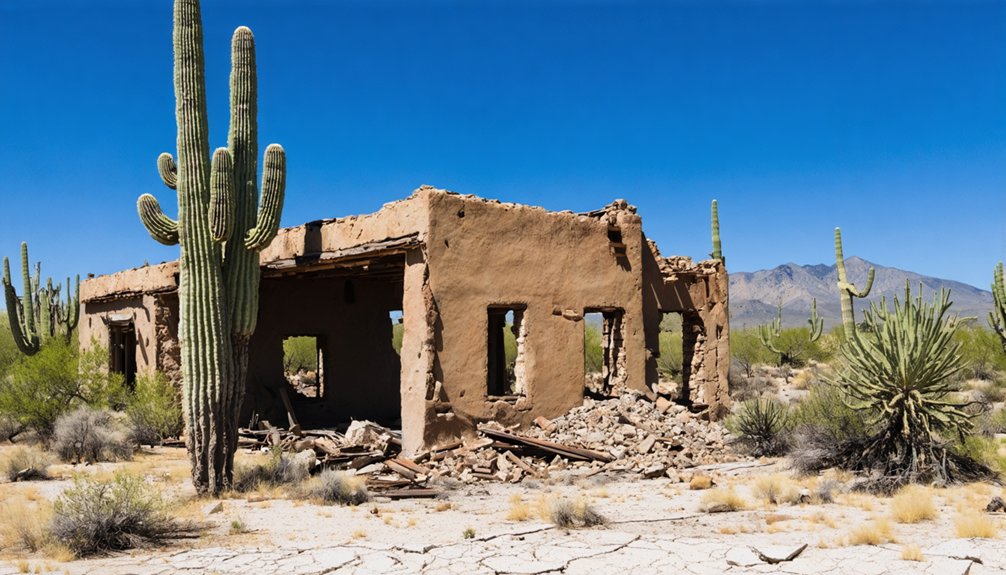
Redington, Arizona is a remote ghost town in Pima County where frontier history still clings to the desert air. You’ll travel unpaved roads through Redington Pass, passing landscapes that once sheltered outlaws and drew Wyatt Earp on pursuit. The town dates to 1875, and weathered ruins are all that remain. Bring water, high-clearance vehicle, and a spare tire. There’s far more to this forgotten corner of the Old West than first appears.
Key Takeaways
- Redington is a ghost town in Pima County, Arizona, accessible via unpaved Redington Pass roads northeast of Tucson requiring high-clearance vehicles.
- Visit between October and April to avoid extreme summer heat and ensure safer travel conditions through the remote desert terrain.
- Pack essential supplies including water, food, fuel, a spare tire, and navigation tools, as services are extremely limited nearby.
- Respect privately owned surrounding land by staying on established roads, as trespassing can result in serious legal consequences.
- Leave all historical artifacts untouched, pack out all waste, and follow Leave No Trace principles to preserve the site for future visitors.
What Is Redington, Arizona: and Is It Worth the Drive?
Tucked between the Rincon Mountains and the Santa Catalinas in Pima County, Redington is a ghost town sitting on the banks of the San Pedro River, roughly 54 kilometers north-northwest of Benson.
Redington history stretches back to 1875, when brothers Henry and Lem Redfield first settled the area, originally known as Tres Alamos. The post office opened in 1879, cementing the community’s identity on Arizona’s frontier map.
Redington’s Outlaw History and Its Connection to Wyatt Earp
When you stand in Redington’s quiet, sun-baked landscape, it’s easy to forget that this isolated corridor once sheltered some of Arizona’s most notorious outlaws during the territorial period.
The area’s rugged remoteness made it a natural refuge for those fleeing the law, and the consequences turned deadly when a Kinnear & Company stagecoach was robbed just outside Tucson, leaving two men dead.
Wyatt Earp himself pursued the perpetrators, and his investigation trail led him straight to the Redfield Ranch — the very founding family whose name this ghost town still carries.
Outlaws And Frontier Lawlessness
Redington’s remote mountain passes didn’t just attract settlers and stagecoach travelers—they drew outlaws, too. The isolated terrain made it a natural refuge for those evading frontier justice, and the area’s outlaw legends run deep.
When a Kinnear & Company stagecoach was robbed just outside Tucson—leaving two men dead—the investigation pointed directly toward the Redfield Ranch. That connection brought none other than Wyatt Earp into the picture, pursuing the perpetrators through this rugged landscape.
You’re standing in territory where lawmen and criminals alike navigated the same dusty passes you’re traveling today. The freedom this land offered cut both ways—it beckoned homesteaders building something new while simultaneously sheltering those running from something old.
The Kinnear Stagecoach Robbery
The robbery that brought Wyatt Earp into Redington’s orbit unfolded in March 1881, when a Kinnear & Company stagecoach was ambushed just outside Tucson, leaving two men dead in the dust.
This Kinnear Heist shook the territory, triggering one of frontier Arizona’s most consequential pursuits. Earp’s investigation cut through the desert landscape, following a trail of evidence that led directly to the Redfield Ranch.
Stagecoach history in this region wasn’t merely romantic — it carried real danger across every isolated mile. The Redfield connection placed this remote community squarely inside one of the Old West’s defining chapters.
When you stand in Redington today, you’re standing where lawmen once arrived with hard questions, and where the answers shaped Arizona’s turbulent territorial legacy.
Wyatt Earp’s Investigation Trail
Few frontier investigations carried higher stakes than Wyatt Earp’s pursuit following the Kinnear stagecoach ambush, and that trail wound directly into Redington’s backyard. Earp tracked the perpetrators relentlessly, following evidence that led straight to the Redfield Ranch — the same family whose name christened this settlement.
That connection transforms Redington from a simple agricultural outpost into a crossroads of outlaw legends and frontier justice.
When you stand on this remote stretch of San Pedro riverbank today, you’re occupying ground where Earp himself once sought answers.
The isolation that made Redington attractive to the Redfield brothers also made it attractive to those evading the law. That dual identity — honest settlement and outlaw refuge — defines Redington’s character and makes your visit feel genuinely significant rather than merely scenic.
How to Reach Redington via Redington Pass
Reaching Redington means driving through Redington Pass, a rugged mountain corridor cutting between the Rincon Mountains and the Santa Catalinas northeast of Tucson.
You’ll navigate unpaved dirt roads that once carried stagecoaches and military patrols, so bring a capable vehicle.
The pass itself delivers stunning scenic viewpoints across open desert terrain, rewarding drivers willing to embrace the isolation.
Redington Pass rewards those bold enough to seek it — sweeping desert vistas stretching endlessly beneath an unforgiving southwestern sky.
As you descend toward the San Pedro River, the landscape opens dramatically, framing the ghost town against a backdrop of raw Sonoran wilderness.
Among Redington attractions, the journey through the pass ranks as memorable as the destination itself.
You’re fundamentally retracing a historic frontier corridor where outlaws, soldiers, and settlers once traveled.
The remoteness isn’t a drawback — it’s precisely what makes this road trip worth taking.
The Remains: What’s Actually Left of Redington Today
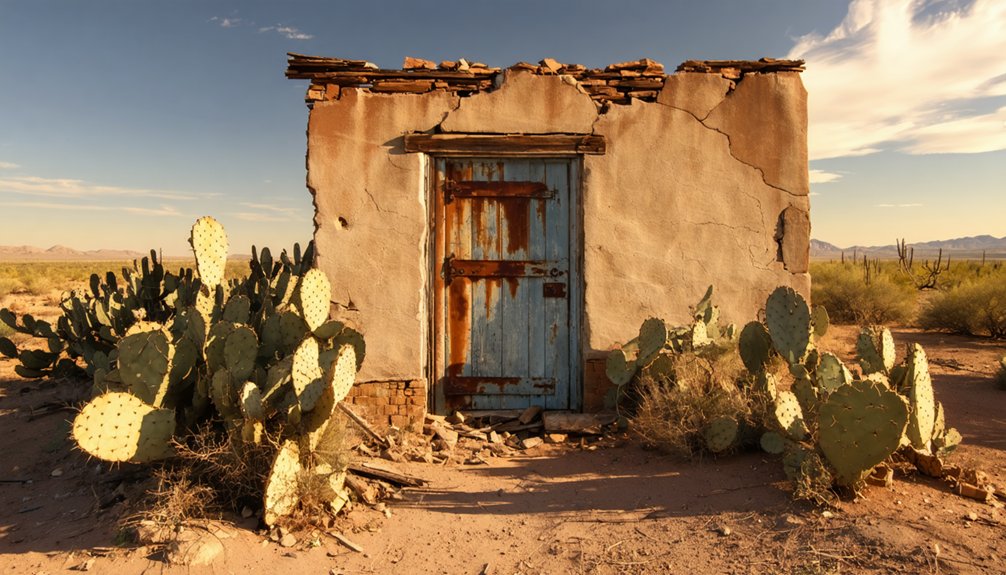
Once you arrive after traversing Redington Pass, the ghost town itself greets you with humbling silence and scattered remnants that demand you piece together what once stood here.
The abandoned structures that remain tell an incomplete but fascinating story — weathered walls and crumbling foundations mark where settlers, postmasters, and ranch hands once built their lives along the San Pedro River.
You won’t find a polished museum or guided tour; instead, you’re reading the landscape itself. Historical artifacts and architectural fragments reward those willing to look carefully.
Preservation challenges have claimed much of what the Redfield brothers’ community once held. What survives feels raw and authentic — untouched by commercial restoration — making Redington less a destination and more a direct conversation with Arizona’s frontier past.
Best Time of Year to Visit Redington
Timing your visit to Redington matters more than you might expect, because the Sonoran Desert surrounding this San Pedro River ghost town swings between punishing extremes. Among the best travel tips any seasoned explorer offers: avoid summer entirely.
July and August bring monsoon rains that turn dirt roads into impassable muddy channels, trapping vehicles miles from help.
The ideal visiting seasons fall between October and April, when temperatures hover in comfortable ranges and the San Pedro corridor transforms into a surprisingly lush riparian landscape.
Spring wildflowers reward early risers, while autumn light casts long golden shadows across the remnants still standing.
Winter mornings bite cold but clear beautifully by midday. Whatever month you choose, check road conditions beforehand — Redington’s remote terrain doesn’t forgive poor preparation.
What to Pack for the Drive to Redington
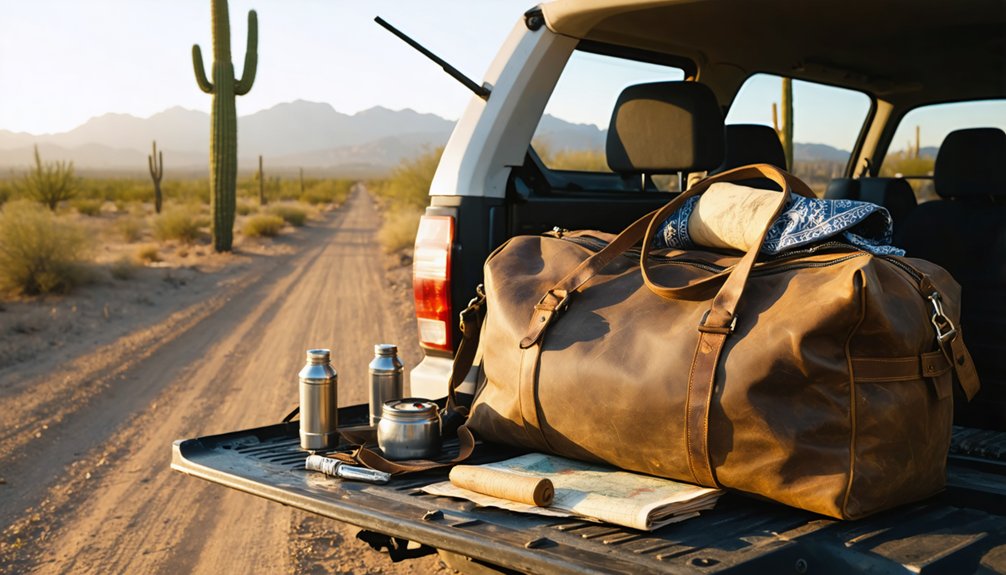
Knowing when to go sets the foundation, but what you throw in the truck before leaving Tucson determines whether this trip stays an adventure or becomes an ordeal.
Redington’s dirt road access and remote desert terrain demand serious road trip packing essentials before you roll out.
- Water and food supplies — carry more than you think you’ll need; the San Pedro River basin offers no conveniences
- Spare tire and recovery gear — rough mountain passage between the Rincons and Santa Catalinas punishes unprepared vehicles
- Navigation tools — cell service disappears fast on isolated frontier roads where outlaws once outran Wyatt Earp
Pack light but pack smart. Freedom on roads like Redington Pass belongs to those who’ve prepared for self-sufficiency, not those counting on rescue.
Other Ghost Towns Near Redington Worth the Detour
Ruby demands a permit and admission fee since it sits on private land, but its ghost town experiences justify the paperwork.
Ruby charges for entry, but the ghost town waiting on the other side earns every dollar.
Swansea opens freely, though its dangerous mine shafts demand your full attention—watch every step.
Courtland and Charleston rose and collapsed alongside regional mining booms, their historical significance etched into crumbling foundations and scattered debris fields.
Each site offers something distinct.
You’re not collecting postcards here—you’re reading landscapes shaped by ambition, violence, and abandonment.
String these towns together across a long weekend and Southern Arizona’s frontier era stops feeling like history and starts feeling immediate.
Road Conditions, Private Land, and Leave No Trace Rules
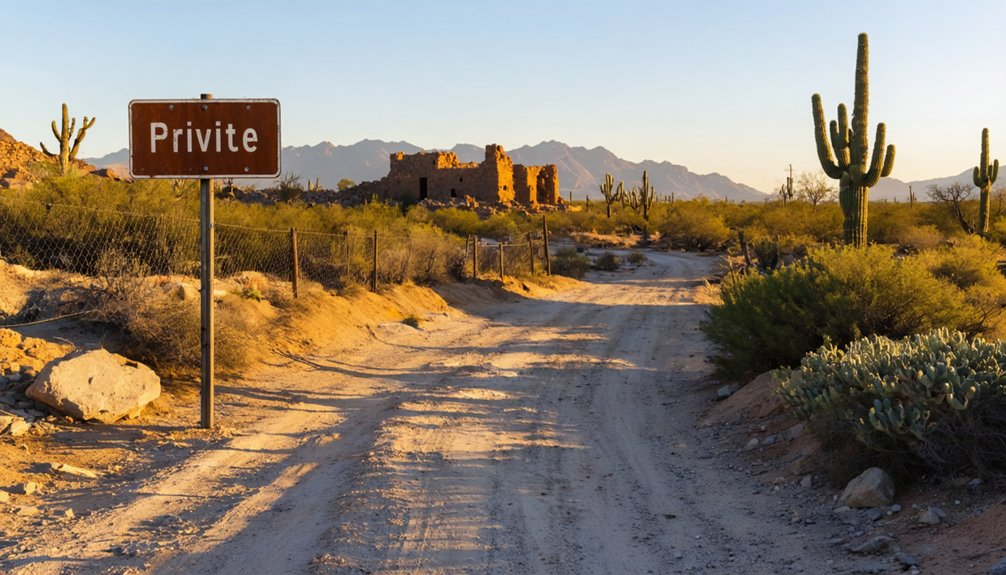
Before you roll out toward Redington, know that you’ll be traversing unpaved, washboard dirt roads through remote desert terrain where a high-clearance vehicle isn’t optional—it’s essential.
Much of the land surrounding the townsite is privately owned, so you’ll need to stay on established roads and respect any posted boundaries rather than wandering freely across the landscape.
When you do explore, pack out everything you bring in, leave structures and artifacts untouched, and treat this fragile historic site with the same care you’d want future visitors to find it in.
Navigating Rugged Dirt Roads
Dirt roads out here don’t forgive the unprepared. Redington’s remote access demands a high-clearance vehicle and checked tire pressure before you roll out. The landscape rewards those who respect it.
Pack these essentials before heading out:
- Water and fuel: Services vanish miles before you reach the San Pedro River corridor.
- Ghost town photography gear protected from dust, which infiltrates everything on washboard terrain.
- Desert wildlife awareness, since rattlesnakes and javelinas claim these roads as freely as you do.
You’re traveling corridors once used by stagecoaches, outlaws, and military units crossing between the Rincon Mountains and Santa Catalinas.
That history deserves measured, careful movement. Slow down, read the road, and you’ll arrive with your vehicle — and the ghost town’s integrity — intact.
Respecting Private Property Boundaries
Ghost towns like Redington don’t exist in a vacuum — private landowners hold active claims across much of the surrounding terrain, and you’ll cross their boundaries before you realize it.
Ghost town etiquette demands you treat every fence line, gate, and posted sign as a hard boundary. Private land awareness isn’t optional out here; it’s the difference between a legal adventure and a trespassing charge in the middle of nowhere.
Don’t assume abandonment means open access — active ranching operations still work land surrounding the old settlement.
Pack out everything you bring in, disturb nothing, and leave structures exactly as you find them. That rusted gate you’re tempted to push open? It belongs to someone. Respect it completely.
Leave No Trace Principles
Respecting boundaries extends beyond fence lines — it carries into how lightly you move through the landscape itself.
Redington’s fragile desert terrain and crumbling adobe remnants deserve your environmental stewardship — not just admiration. Leave No Trace principles aren’t bureaucratic suggestions; they’re your commitment to keeping this frontier corridor alive for the next traveler.
Follow these fundamentals:
- Pack out everything — trash, food scraps, and gear left behind accelerates deterioration of already-stressed desert ecosystems.
- Stay on established dirt tracks — cutting new paths damages native vegetation and destabilizes historic ground.
- Leave artifacts untouched — pottery shards, rusted hardware, and structural fragments belong to Redington’s story, not your shelf.
You’re passing through living history. Tread accordingly.
Frequently Asked Questions
What Was Redington Called Before European Settlers Arrived in the Area?
Before European settlers arrived, you’ll find Redington carried the name Tres Alamos, reflecting its rich Native American heritage. This historical significance dates back centuries, connecting you to a land that’s witnessed remarkable transformations across its storied, freedom-filled past.
Why Couldn’t the Redfield Brothers Name the Post Office After Themselves?
The U.S. Postal Service wouldn’t let you name offices after living persons, blocking the Redfield legacy from direct Post office naming honors. So they cleverly chose “Redington” instead, forever embedding their identity into Arizona’s frontier history.
When Did the Redington Post Office Officially Open for Mail Service?
“Good things take time!” You’ll find that Redington’s post office history gained significance when it officially opened in 1879, with Henry Redfield serving as postmaster, cementing this free-spirited frontier settlement’s identity on your own terms.
Which River Runs Alongside the Historic Settlement of Redington?
You’ll find the San Pedro River running alongside Redington, weaving through its river history like a timeless guide. It carves scenic routes through open desert freedom, connecting you to the raw, untamed spirit of Arizona’s frontier past.
Does Visiting Ruby Ghost Town Require Permits or Admission Fees?
Yes, you’ll need permits and pay admission fees to explore Ruby’s ghost town history, as it’s privately owned. Keep these travel tips in mind before you chase freedom through Arizona’s untamed, historically-rich desert landscapes.
References
- https://en.wikipedia.org/wiki/Redington
- http://kissackadventures.blogspot.com/2021/08/the-ghost-town-of-redington.html
- https://www.arizonahighways.com/article/arizona-ghost-towns
- https://www.visittucson.org/blog/post/8-ghost-towns-of-southern-arizona/
- https://www.youtube.com/watch?v=uJvtntuFH_k
- https://www.blm.gov/visit/swansea-historic-ghost-town