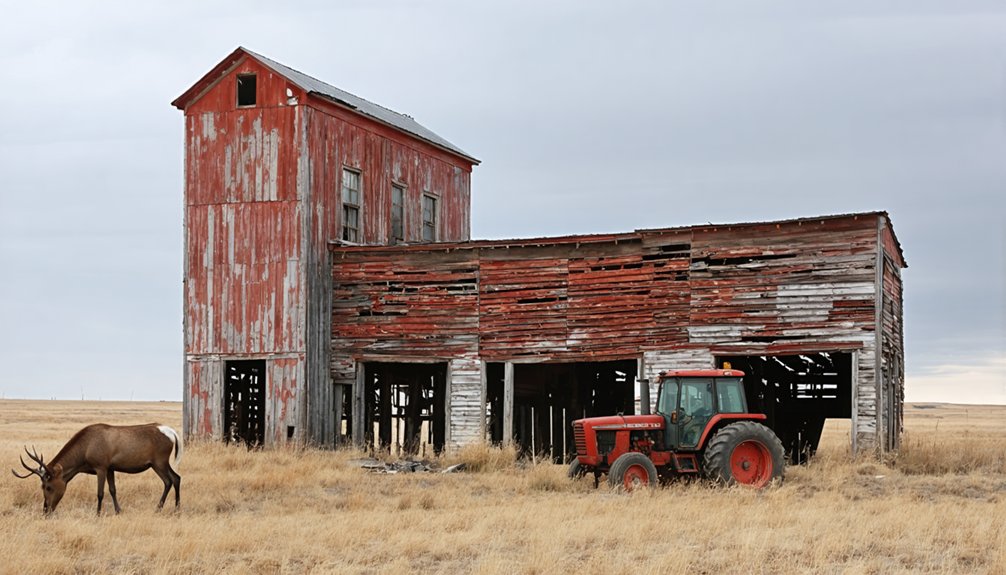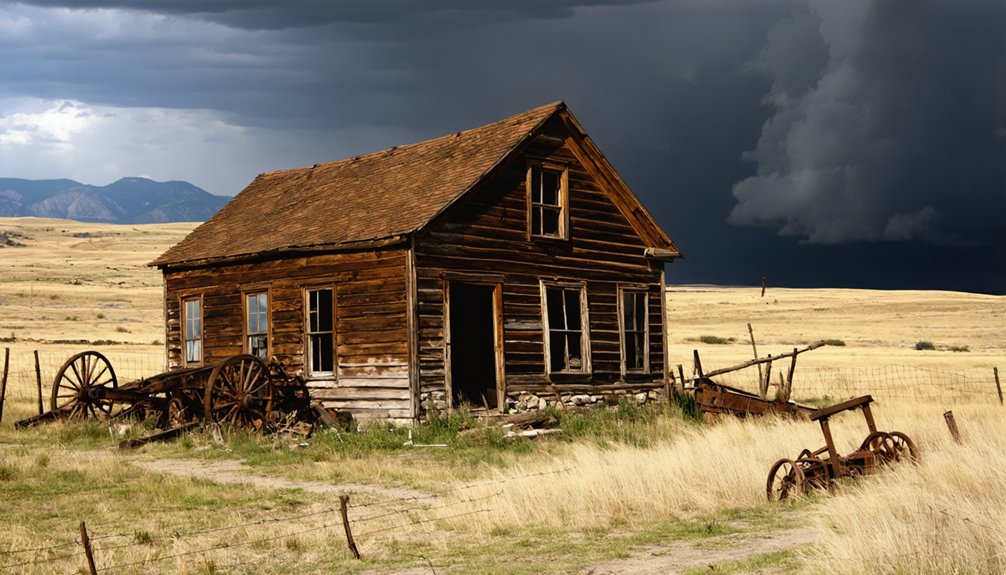
Richmond, South Dakota won’t meet you halfway. You’re heading into Lawrence County’s Black Hills, tracing the ghost of the Deadwood Central rail line toward a mining town that peaked around 1945 and never looked back. Bring sturdy boots, detailed maps, and expect overgrown traces where 600 people once lived. It’s raw, unpolished history with no gift shops in sight. Stick around, and you’ll uncover everything you need to plan the trip right.
Key Takeaways
- Richmond, South Dakota, in Lawrence County, is a neglected ghost town tied to 1880s mining history and the Deadwood Central rail line.
- The town once housed 600 residents but now features only overgrown traces, forgotten road remnants, and silent ruins across open country.
- Navigate using detailed maps and look for abandoned rail grades, as modern GPS may be unreliable in this rural Lawrence County corridor.
- Visit during summer or early fall for the best access, bringing sturdy footwear and a printed map due to minimal on-site signage.
- Respect private land boundaries, as some structures sit on private property, and expect zero modern amenities during your exploration.
What’s Left of Richmond, South Dakota Today
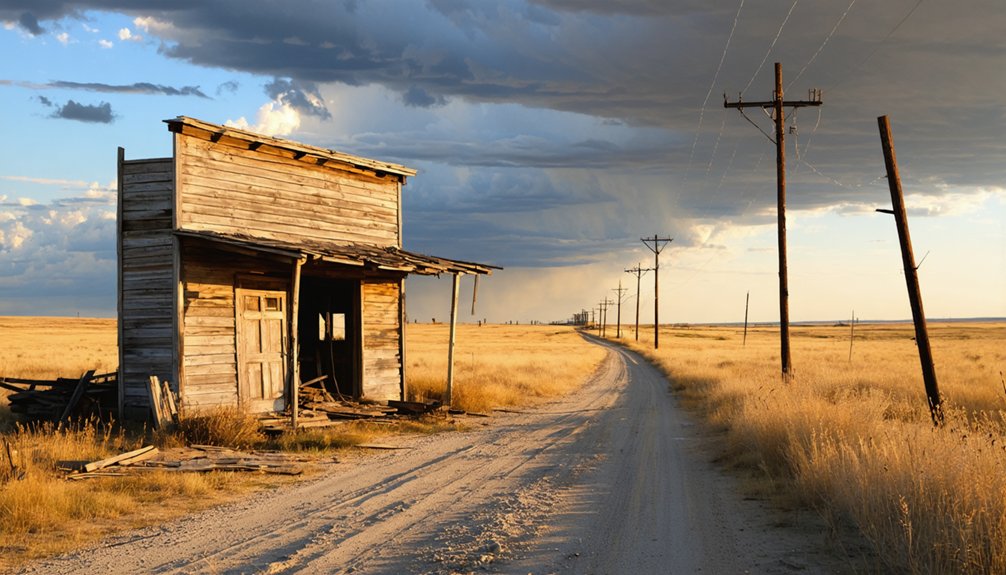
Although Richmond’s busiest days ended around 1945, the remnants of this Lawrence County ghost town still whisper stories of the Deadwood Central line and the Richmond Mine that gave it its name — and if you know where to look, you can still find them.
The Richmond Ruins reward curious explorers willing to wander off the beaten path. Classified as a neglected ghost town, Richmond doesn’t advertise itself — it waits.
Abandonment Artifacts surface where the Deadwood Central once terminated near Galena, hinting at the commerce and grit that once defined this remote outpost. Structural remnants quietly mark where industry once hummed.
Scattered remnants linger where the Deadwood Central once stopped — silent proof that commerce and grit defined this forgotten outpost.
You’ll need sharp eyes and a taste for raw, unpolished history. Richmond won’t hand you anything — but what you discover yourself always means more.
Which Richmond Are You Visiting: Lawrence County or Brown County?
Before you pack your bags and hit the road, you’ll need to know that South Dakota has two towns named Richmond, and they couldn’t be more different.
Lawrence County’s Richmond, tucked into the Black Hills near Galena, is a true ghost town — a neglected remnant of 1880s mining ambition that thrived until around 1945.
Brown County’s Richmond, platted in 1907 along a rail line northwest of Aberdeen, had its own brief, bustling moment before the post office closed and the depot moved on, leaving little behind.
Two Richmonds, One State
When planning a ghost town road trip in South Dakota, you’ll quickly discover that “Richmond” pulls you in two very different directions.
Two towns claimed the name, each carving its own distinct chapter into the state’s Richmond history.
One Richmond rose in Lawrence County’s rugged Black Hills, a hardscrabble mining settlement tied to the Deadwood Central rail line and the silver-rich Galena corridor.
The other emerged on Brown County’s northern plains, platted in 1907 along a Minneapolis and St. Louis Rail Line, briefly breathing with grain elevators and frontier commerce.
Both are ghost towns now — abandoned, weathered, and waiting.
Before you hit the road, you’ll need to decide which Richmond calls to you, because these two destinations demand completely different journeys.
Lawrence County’s Ghost Town
If the Black Hills call your name, Lawrence County’s Richmond is your ghost town. Tucked at the end of the Deadwood Central rail line near Galena, this neglected ghost town earned its name from the Richmond mine — later renamed Double Rainbow. Active from around 1880 to 1945, it rewards serious ghost town exploration.
Its historical significance runs deep:
- Named directly after an active mining operation
- Served as a terminal point along the Deadwood Central line
- Thrived during the Black Hills’ most intense mining era
- Now stands as a raw, unpolished remnant of that world
You won’t find tourist traps here — just honest ruins and open country.
Lawrence County’s Richmond is for those who want their history unfiltered and their freedom real.
Brown County’s Brief History
There’s another Richmond worth knowing about — and it couldn’t be more different. Brown County’s Richmond sprang up March 19, 1907, built entirely around Richmond Railroads — specifically the Minneapolis and St. Louis Rail Line running northwest of Aberdeen.
Unlike Lawrence County’s rugged mining ghost towns, this Richmond was agricultural. A depot, grain elevator, stockyard, lumberyard, and store defined its modest skyline.
By 1909, 144 residents called it home. But the Dirty Thirties crushed its momentum. The post office relocated to Wetonka in 1913, the depot moved to Long Lake in 1926, and the grain elevator finally went dark in 1967.
Two ghost towns, one name, completely different stories. Knowing which Richmond you’re chasing shapes your entire road trip experience before you even leave the driveway.
The History Behind Richmond’s Rise and Abandonment
Tucked into Lawrence County at the end of the Deadwood Central rail line, Richmond sprang to life around 1880, taking its name from the Richmond mine — later rechristened the Double Rainbow — that drew fortune-seekers into the rugged terrain near Galena.
Richmond Memories linger here, etched into the landscape of neglected Ghost Towns where ambition once ran deep.
Richmond’s story follows a familiar arc:
- Mining activity fueled rapid settlement around 1880
- The Deadwood Central line connected Richmond to regional commerce
- Operations gradually faded, leaving structures to weather quietly
- By roughly 1945, Richmond earned its ghost town classification
You’ll find no crowds here — just silence, scattered remnants, and the raw freedom of standing where history stopped moving.
How to Get to Richmond Along the Old Deadwood Central Route
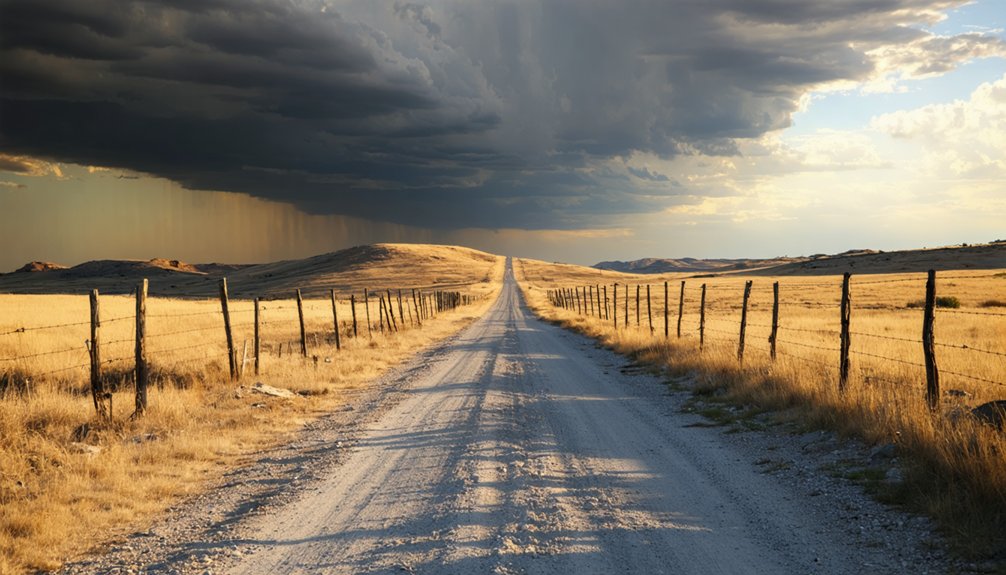
To trace Richmond’s ghost town path, you’ll want to follow the old Deadwood Central rail line that once pushed through Lawrence County toward the Galena mining area.
Keep your eyes on the county roads threading through the rugged Black Hills terrain, where weathered landmarks and mine remnants quietly mark the route’s forgotten history.
Watch for signs of the Richmond mine itself — later renamed Double Rainbow — since it’s the geographic anchor that’ll orient you as you navigate the area’s winding back roads.
Finding the Deadwood Central Route
Few roads in the Black Hills carry as much forgotten history as the old Deadwood Central route, and tracing it today feels like following a ghost. This historic route once pushed iron rails toward Galena, carrying ore, ambition, and rough-edged dreamers through rugged terrain.
You won’t find gleaming signage marking the Deadwood Central’s path — you’ll need instinct, old maps, and a willingness to wander.
Watch for these navigational clues:
- Abandoned rail grades cutting through hillsides
- Overgrown rights-of-way paralleling modern roads
- Old trestle remnants near creek crossings
- Local historical markers referencing the Galena corridor
Follow the terrain’s logic — rails always sought the path of least resistance. That same path leads you toward Richmond, where the line quietly ended and history stopped moving forward.
Lawrence County’s back roads demand respect — these aren’t weekend scenic drives but working rural corridors that haven’t changed much since ore wagons cut their first ruts.
Road conditions shift fast here, especially after rain or snowmelt, turning packed gravel into something resembling the original muddy nightmare miners cursed daily.
You’ll want a detailed Lawrence County map, not just a phone signal you can’t count on.
Follow the old Deadwood Central corridor toward Galena, watching for unmarked turnoffs that swallow distracted drivers whole.
High-clearance vehicles aren’t mandatory, but they’re welcome insurance.
Go slow, read the land, and stop when something catches your eye — Richmond’s ghost bones won’t announce themselves.
The freedom out here is real, and so are the consequences of rushing.
Key Landmarks Along the Way
Once you’ve committed to finding Richmond, Deadwood becomes your natural starting point — the same raw, ambitious city that bankrolled the Central line pushing south toward Galena’s silver promises in the 1880s.
Follow the old corridor and you’ll encounter landmark highlights that carry real historical significance:
- Deadwood’s original rail depot area — where the Central line began its southern push
- Galena remnants — once home to 600 souls, now a compelling ghost town skeleton
- The Richmond (Double Rainbow) mine site — your destination’s namesake and anchor
- Lawrence County’s forgotten road traces — ghost infrastructure you can still read across the landscape
Each stop rewards the freedom-seeker willing to trade comfort for discovery.
Richmond doesn’t announce itself — you earn it.
Nearby Ghost Towns to Combine With Your Richmond Visit
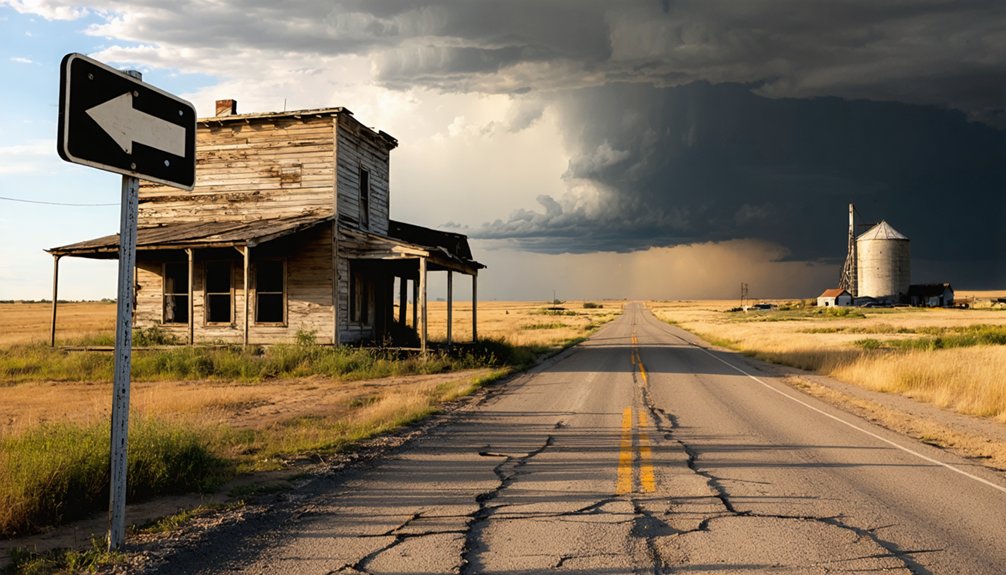
Richmond doesn’t have to be your only stop—the Black Hills hold over 600 ghost towns waiting to reward curious travelers.
Once you’ve walked among Richmond’s ghosts and photographed its abandoned structures, push deeper into the hills.
Rochford sits nearby in Pennington County, where M.D. Rochford established his first cabin in February 1877. At its peak, 1,000 residents crowded its gulches—today, remnants whisper that story.
Galena once sheltered 600 souls and still stands as a shadow of its former self.
Big Bottom, founded in 1878 in Meade County, operated a saloon, dance hall, and school before fading by 1887.
String these stops together and you’ll drive through layers of forgotten ambition that few travelers ever discover.
When to Visit Richmond and What to Expect On-Site
Timing your visit to Richmond in Lawrence County shapes everything you’ll experience there. Summer and early fall offer the clearest access along the old Deadwood Central corridor. Ghost town exploration rewards those who arrive prepared.
Richmond’s significance lives in its silence — a neglected remnant of 1880s mining ambition tied to the Double Rainbow mine. Expect overgrown traces, not restored facades.
Richmond doesn’t perform its past. It simply holds it — quietly, beneath weeds and weather.
Pack accordingly:
- Sturdy footwear for uneven, reclaimed terrain
- A detailed map since signage is minimal to nonexistent
- Daylight hours only — fading light erases landmarks fast
- Respect boundaries — some structures remain on private land
You won’t find gift shops or guided tours here. You’ll find raw history, open sky, and the particular freedom that only forgotten places deliver.
Frequently Asked Questions
Can I Legally Access Private Land Near Richmond’s Old Mine Sites?
You can’t freely roam private land near Richmond’s old mine sites without permission. Respect property rights, seek landowner consent, and honor land access boundaries — true freedom means exploring history responsibly, not trespassing on forgotten ground.
Are There Guided Tours Specifically Focused on Richmond Ghost Town?
Like a treasure map with missing pieces, Richmond’s ghost town myths remain largely uncharted — no dedicated guided tours exist yet. You’ll uncover its historical significance by exploring independently, weaving your own story through Lawrence County’s forgotten corridors.
What Photography Equipment Works Best for Capturing Ghost Town Remnants?
Bring a wide-angle lens to capture abandoned structures and a telephoto for scenic landscapes’ depth. You’ll want a sturdy tripod, too — golden hour light transforms Richmond’s weathered remnants into hauntingly beautiful, freedom-evoking historical masterpieces worth every shot.
Is Richmond, South Dakota Accessible for Visitors With Mobility Limitations?
Richmond’s rugged terrain predates modern wheelchair access, so you’ll want sturdy mobility gear. These travel tips empower your freedom: scout unpaved paths, bring all-terrain wheels, and embrace the raw, untamed spirit of this hauntingly beautiful ghost town.
Are There Local Historians or Groups Preserving Richmond’s Remaining Structures?
The knowledge doesn’t confirm specific groups, but you’ll find local preservation efforts honoring Richmond’s historical significance across Lawrence County. Reach out to Black Hills area historical societies — they’re your gateway to uncovering this hauntingly beautiful ghost town’s secrets.
References
- https://www.legendsofamerica.com/rochford-south-dakota/
- https://aberdeenmag.com/2019/01/the-ghost-towns-of-brown-county/
- https://crookcountyhistorycenter.org/2022/07/richmond-thriving-community-that-became-a-ghost-town/
- https://www.powderhouselodge.com/black-hills-attractions/fun-attractions/ghost-towns-of-western-south-dakota/
- https://en.wikipedia.org/wiki/List_of_ghost_towns_in_South_Dakota
- https://www.youtube.com/watch?v=M4GkE71ox0g
- https://www.southdakotamagazine.com/south-dakota-ghost-towns
- https://www.sdhspress.com/journal/south-dakota-history-2-2/some-black-hills-ghost-towns-and-their-origins/vol-02-no-2-some-black-hills-ghost-towns-and-their-origins.pdf