Signal Hill sits four miles east of Stinnett, Texas, where a wild oil boomtown once swallowed 12,000 souls before vanishing into the Panhandle dust by 1938. You’ll find no dramatic ruins here — just a concrete bank floor, endless sky, and the ghost of a lawless camp that blazed and burned within a single decade. Spring and fall offer the best conditions for the drive out. There’s far more to this forgotten story than the landscape reveals.
Key Takeaways
- Signal Hill, Texas, is located four miles east of Stinnett and is accessible by standard 2WD vehicles year-round.
- Founded in 1926, Signal Hill once housed over 12,000 residents during the Texas Panhandle oil boom before becoming a ghost town.
- The only remaining structure is the concrete floor of the old bank, offering a glimpse into the town’s fleeting history.
- Spring and fall provide the best visiting conditions, with mild temperatures and favorable lighting for exploration.
- Visitors should expect minimal ruins but can engage with the raw, unfiltered history of this once-lawless oil boomtown.
What Was Signal Hill, Texas?
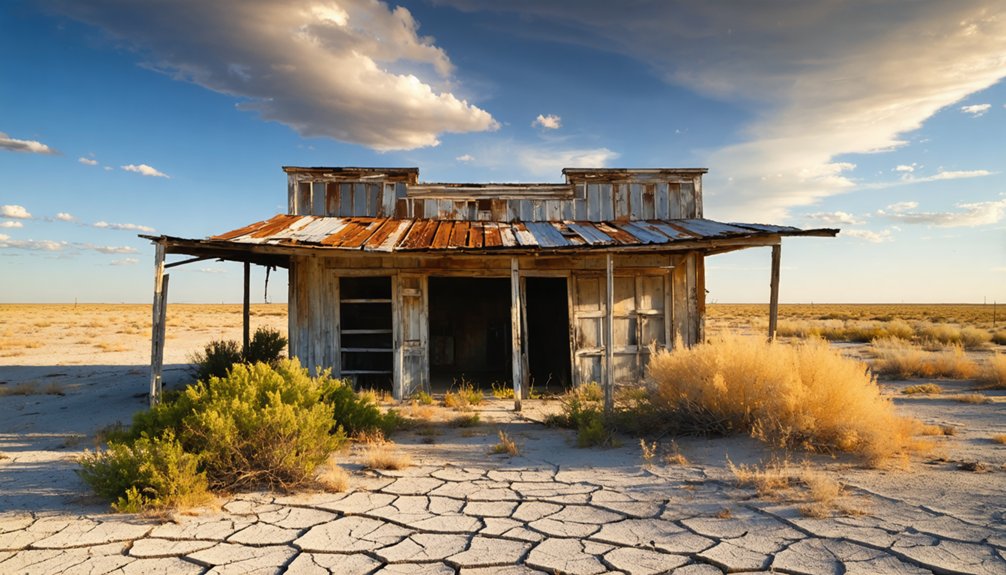
Once a roaring oil boom camp, Signal Hill, Texas, burst onto the Panhandle landscape in 1926, founded by Earl Thompson of Amarillo on a tentative Hutchinson County survey for the Panhandle and Santa Fe Railway.
Thompson, alongside P. Sullivan and C. D. Armstrong, platted the town and named it after California’s Signal Hill. You’d have found it four miles east of Stinnett, alive with roughnecks, oil rigs, and the wild energy of a boom.
Signal Hill’s origins promised prosperity, yet its community dynamics told a different story. Lots ran just 25 feet wide, no church or school was planned, and criminal elements moved freely through its hotels.
It swelled past 12,000 residents before collapsing almost as fast as it rose.
How Signal Hill Rose and Fell in One Year
When Earl Thompson founded Signal Hill in 1926, you’d have found it buzzing with over 12,000 roughnecks and oil workers practically overnight.
The developers, however, never delivered on their promises — no water, no sewers, no schools, no churches — just 25-foot-wide lots, hotels crawling with painted ladies, and every business slinging beer and whiskey.
Oil Boom Town Founded
During the Texas Panhandle’s roaring oil boom of 1926, Earl Thompson of Amarillo staked his ambitions on a patch of windswept prairie four miles east of Stinnett, platting a town he’d name after Signal Hill, California.
Working alongside P. Sullivan and C. D. Armstrong, Thompson laid out streets following a tentative Panhandle and Santa Fe Railway survey, capitalizing on the region’s explosive oil discovery.
Their town planning vision attracted thousands almost overnight, transforming empty rangeland into a settlement humming with roughnecks, merchants, and opportunity-seekers.
You can almost picture those early settlers pouring in, believing they’d found their freedom on the Texas frontier.
The post office opened, businesses followed, and Signal Hill briefly pulsed with the raw, untamed energy that only a genuine boomtown can generate.
Infrastructure And Crime
Signal Hill’s infrastructure was never more than a promise dressed up in surveyor’s stakes and salesman’s optimism. The infrastructure challenges hit hard and fast, and crime impact followed right behind. Developers never delivered:
- Water and sewer systems were promised but never installed.
- No school or church was ever planned.
- The bank never opened, functioning only as a company office.
Every business except the post office sold beer and whiskey. Hotels filled with painted ladies, criminals roamed armed, and lawlessness became the town’s real currency.
You can almost feel the wildness still hanging over that empty hill. Freedom looked different here — raw, dangerous, and ultimately unsustainable. Signal Hill burned bright and collapsed within a single year.
Rapid Population Decline
Few towns in Texas history burned as fast or faded as hard as Signal Hill. At its peak, over 12,000 residents crowded into lots barely 25 feet wide, chasing oil money and rough freedom across the Panhandle.
The population dynamics shifted violently fast. By 1927, barely 300 people remained. Economic shifts drained the camp almost overnight once the boom cooled and the promises collapsed — no water, no sewer, no school, no church.
Houses started moving west, families quietly pulling stakes. By 1930, the exodus was nearly complete, and by 1938, Stinnett had absorbed what little Signal Hill had left.
A birth recorded in 1928 stands as a quiet, stubborn footnote to a town already disappearing beneath the Texas wind.
The Outlaws and Painted Ladies Who Built Signal Hill
When the oil boom hit Signal Hill in the 1920s, it didn’t just bring roughnecks and rigs — it brought every stripe of outlaw, con man, and painted lady willing to chase a dollar in the Texas Panhandle. You could feel the lawlessness in the air.
Three realities defined daily life here:
- Every business except the post office openly sold beer and whiskey.
- Painted ladies worked the hotels and rooming houses without apology.
- Outlaw activities flourished — guns weren’t just carried, they were expected.
Nobody planned churches or schools because nobody planned to stay righteous. Signal Hill wasn’t built for families — it was built for fast money and faster exits.
That wild freedom had a price, and eventually, everyone paid it.
What’s Left of Signal Hill Today
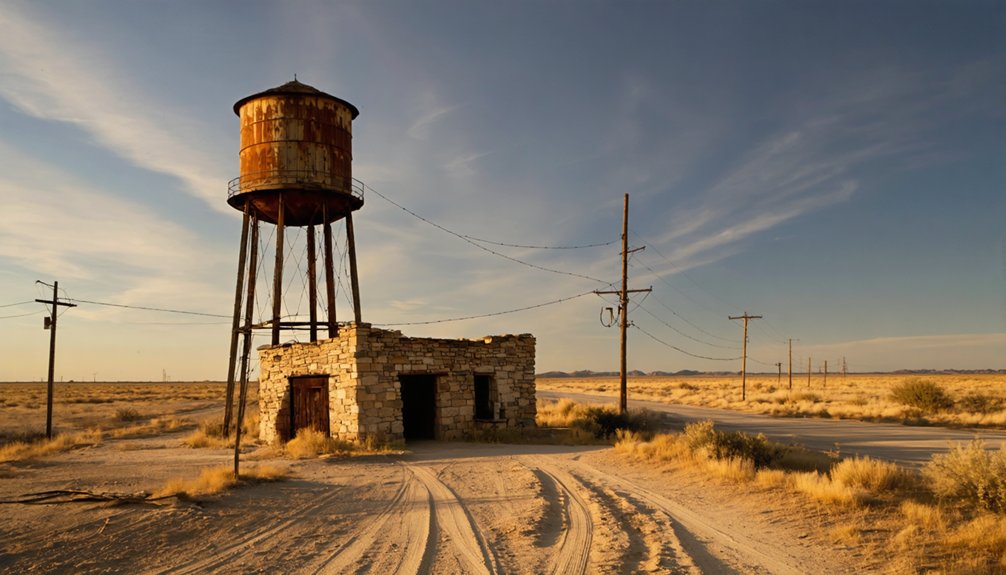
When you arrive at the Signal Hill site today, you’ll find almost nothing left of the town that once housed over 12,000 souls — just the concrete floor of the old bank that never opened, sitting quietly on a small hill east of Stinnett.
You can stand on that slab and imagine the roughnecks, outlaws, and painted ladies who once crowded these 25-foot-wide lots, the smell of beer and whiskey drifting from every storefront.
The hill itself remains, unchanged and indifferent, the last honest witness to a boom-and-bust story the Texas Panhandle wind has nearly erased.
The Old Bank Ruins
Standing on the small hill east of Stinnett, you’ll find almost nothing left of Signal Hill — almost. The old bank’s concrete floor still anchors the earth, a stubborn reminder of broken promises and wild ambitions. Its historical significance runs deeper than you’d expect:
- The bank never opened — developers used it strictly as a company office
- It outlasted every hotel, saloon, and rooming house, surviving until 1934
- Today, only its concrete foundation remains, quietly defying time
Run your hand across that weathered slab and imagine 12,000 souls crowding streets just 25 feet wide. Roughnecks, outlaws, and dreamers once called this windswept patch of Texas home.
Now the prairie reclaims it, leaving only concrete and memory beneath an open Panhandle sky.
Concrete Floor Remains
Though the last building fell in 1934, Signal Hill left one defiant relic behind — the old bank’s concrete floor, still embedded in the earth nearly a century later.
You’ll find these concrete remnants quietly anchoring a windswept hill east of Stinnett, indifferent to the decades that erased everything else. No walls, no roof, no echo of the 12,000 souls who once crowded these lots — just a slab that outlasted them all.
Its historical significance isn’t in grandeur; it’s in stubborn survival. Stand on it, and you’re standing where ambitious men built a bank that never opened a single account.
That floor absorbed the boom, the collapse, and the silence that followed. It’s still there, waiting for you to find it.
A Hill’s Silent Legacy
Signal Hill exists today as little more than a memory pressed into Texas soil — the concrete floor of a bank that never opened, anchored stubbornly to a small hill four miles east of Stinnett. This ghost town doesn’t offer dramatic ruins or preserved storefronts. What remains is honest and sparse.
When you visit, you’ll find:
- A concrete slab where ambition once masqueraded as permanence
- Open Panhandle sky stretching where 12,000 souls once crowded
- Windswept silence replacing the reckless noise of oil-boom Texas
That silent history speaks loudly if you’re listening. The developers promised water, sewer systems, and prosperity. They delivered none of it.
How to Find the Signal Hill Site
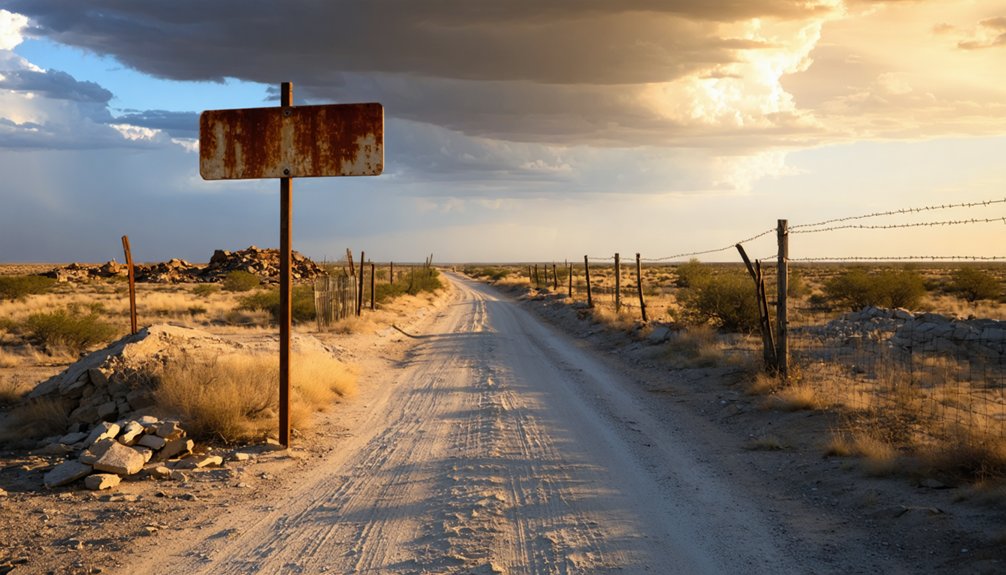
Finding Signal Hill takes you four miles east of Stinnett along Broadway, past the school, where the flat Panhandle stretches wide and the wind rarely lets up.
Drive three miles east, cross a dry creek, then push half a mile further until the road bends left toward the site. Your 2WD handles it fine.
You’re chasing ghost town exploration here, following the same dusty path roughnecks once traveled during the 1920s oil boom.
The historical significance hits quietly — no buildings greet you, just open sky and the concrete floor of an old bank that never opened for business.
Winters run cold and windy, summers blaze hot, but you can visit anytime.
Whatever season you choose, Signal Hill rewards the curious and the free.
When Is the Best Time to Visit Signal Hill?
Visiting Signal Hill anytime works — the knowledge base confirms no seasonal restrictions — but the Panhandle’s character shifts dramatically with the calendar.
Weather considerations matter when you’re wandering exposed, windswept ground where 12,000 souls once crowded rough-cut lots. Choose your best season wisely:
- Spring and Fall offer mild temps, manageable winds, and golden light that makes that concrete bank slab look almost haunted.
- Summer delivers blazing heat — you’ll feel every degree the roughnecks endured chasing oil money across treeless prairie.
- Winter brings biting cold and relentless wind, stripping the landscape raw and honest.
No crowds. No gates. Just you, the hill, and whatever ghosts linger above Hutchinson County’s forgotten boom.
Why Signal Hill Matters in Panhandle Oil History
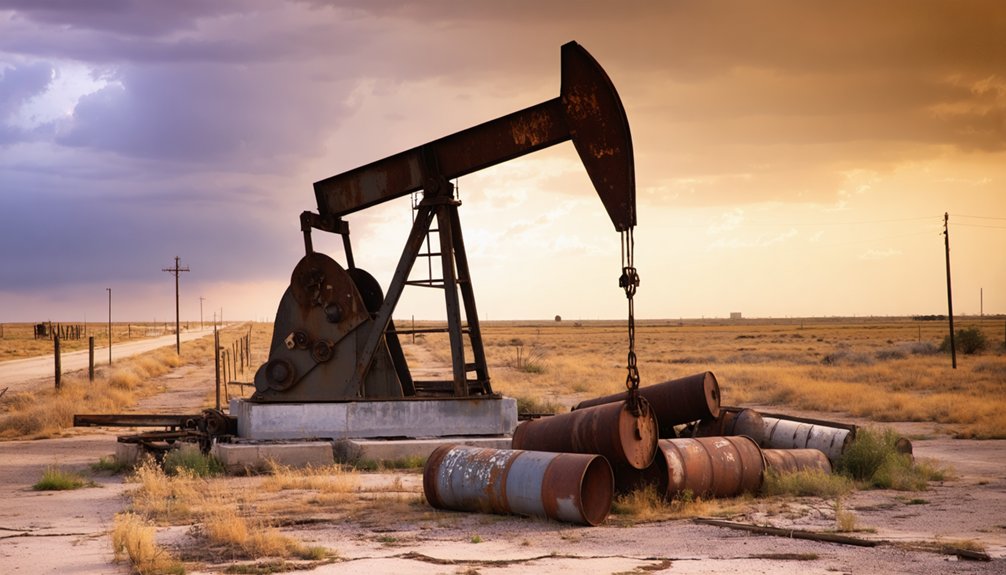
Few ghost towns compress the full arc of the 1920s Panhandle oil boom into a single patch of windswept ground the way Signal Hill does.
You’re standing where over 12,000 people once crowded into lots barely 25 feet wide, chasing fortunes rising straight out of the earth. That oil legacy wasn’t built on permanence — it was built on velocity.
Roughnecks, wildcatters, and painted ladies all descended here, turning a tentative railway survey into a roaring camp almost overnight. By 1927, the crowd had vanished just as fast.
Signal Hill’s story mirrors every boomtown that burned bright and collapsed before roots could form. Walking that small hill east of Stinnett, you feel the Panhandle’s raw, unfiltered history beneath your boots.
Frequently Asked Questions
Are There Any Guided Tours Available for Visiting Signal Hill’s Ghost Town Site?
No guided tour options exist for Signal Hill, but you’ll uncover its historical significance solo. Drive four miles east of Stinnett, where echoes of 12,000 oil boom souls whisper freely across that windswept, hauntingly empty Texas hill.
Can Visitors Camp Overnight Near the Signal Hill Ghost Town Location?
Like a lone tumbleweed drifting freely, you’ll find no official camping regulations here. The knowledge base doesn’t confirm overnight safety options, so explore Hutchinson County’s nearby campgrounds before chasing Signal Hill’s ghost-town whispers under Texas stars.
Are There Nearby Restaurants or Gas Stations Along the Route to Signal Hill?
You’ll find local eateries and fuel options in Stinnett, just four miles west. Stock up before heading east on Broadway — once you’re rolling toward Signal Hill’s windswept, forgotten past, there’s nothing but open road ahead.
Is the Signal Hill Site on Public or Private Property Requiring Permission?
The knowledge doesn’t confirm property access details or legal considerations for visiting Signal Hill. You’ll want to research ownership, respect boundaries, and contact Hutchinson County authorities before you explore this hauntingly forgotten, wind-swept remnant of Texas’s wild oil boom past.
Are There Other Hutchinson County Ghost Towns Worth Combining Into One Trip?
You’ll find Hutchinson County’s ghost town history runs deep beyond Signal Hill. Combine your trip with nearby abandoned oil boom sites, where you’re free to chase fading echoes of roughneck dreams across the windswept Panhandle.
References
- https://www.legendsofamerica.com/tx-hutchinsonghosttowns/
- https://www.ghosttowns.com/states/tx/signalhill.html
- https://www.ghostsandgetaways.com/blog-1/27-fascinating-ghost-towns-in-texas
- https://texashighways.com/travel/the-most-haunted-roads-in-texas/
- https://www.tshaonline.org/handbook/entries/signal-hill-tx
- https://authentictexas.com/texas-ghost-towns/
- https://www.youtube.com/watch?v=Zd8-gKw-5Hc