Silver Reef sits quietly in Utah’s red-rock desert, about 18 miles northeast of St. George, where silver and uranium were once pulled from the same sandstone layers. You’ll wander past crumbling walls, scattered foundations, and two weathered cemeteries that whisper stories of a town that once held nearly 2,000 souls. Stop inside the 1877 Wells Fargo building, now a museum open select days for just $4. There’s far more to this geological oddity than first meets the eye.
Key Takeaways
- Silver Reef is located 18 miles northeast of St. George, Utah, accessible via a scenic red-rock route near Leeds, Utah.
- The 1877 Wells Fargo building serves as a museum and art gallery, open select days with admission starting at $4.
- Visitors can explore scattered foundations, crumbling walls, collapsed mine structures, and two historic cemeteries throughout the ghost town.
- Silver Reef is geologically unique as the only U.S. site with both silver and uranium mining history in sandstone layers.
- Bring comfortable walking shoes, water, and a camera, as the terrain is uneven and the landscape is visually striking.
Why Silver Reef Is the Most Unusual Ghost Town in Utah
When most people picture a silver mining town, they imagine veins of ore threading through granite or quartz—not sandstone. Silver Reef defied that expectation entirely.
Geologists had long insisted silver couldn’t exist in sandstone formations, yet here it was—hiding in Utah’s red rock country, waiting for one prospector’s pickaxe to prove them wrong.
Silver couldn’t exist in sandstone—until it did, buried in Utah’s red rock country, waiting to be found.
That geological rebellion is only part of this ghost town’s unique history. Nearly a century after silver built and abandoned this place, uranium miners arrived, pulling wealth from those same ancient strata.
No other site in the United States carries that double distinction.
You’re not just visiting ruins when you walk Silver Reef—you’re stepping into one of America’s most improbable stories.
The Mining Boom That Turned Silver Reef Into a Frontier City
When you walk through Silver Reef today, it’s hard to imagine that it all started with one prospector—John Kemple—striking a silver vein in sandstone back in 1866.
By the late 1870s, that single discovery had exploded into a frontier city of nearly 2,000 residents, complete with nine grocery stores, six saloons, five restaurants, a newspaper, and a Wells Fargo office.
But the boom burned fast, and by 1881, crashing silver prices had already begun strangling the life out of what had become one of Utah’s most unlikely boomtowns.
Silver’s Surprising Discovery
Back in 1866, a prospector named John Kemple stumbled upon something that geologists said shouldn’t exist—silver veins running through sandstone formations, a geological oddity virtually unheard of across the United States.
Kemple’s discovery carried enormous historical significance, quietly rewriting what experts believed possible about silver mining in the American West.
Nobody acted immediately. Operations didn’t gain serious momentum until the early 1870s, and the real rush didn’t ignite until 1876.
Once it did, though, Silver Reef transformed fast. Within years, a raw desert landscape became a thriving frontier city of nearly 2,000 souls.
You can almost feel that electric urgency standing there today—the sense that ordinary people chased an extraordinary opportunity across unforgiving terrain, daring to build something meaningful from nothing but sand, silver, and sheer determination.
Boom Years And Decline
At its peak between 1876 and 1888, Silver Reef wasn’t just surviving—it was roaring. Population dynamics shifted rapidly as 1,500 to 2,000 residents flooded in, transforming desert rock into a full frontier city.
You’d have found nine grocery stores, six saloons, five restaurants, hotels, churches, and even a Chinatown district bustling with life.
But economic fluctuations proved ruthless. The most productive years ran from 1878 to 1882, generating roughly $25 million in ore before world silver prices collapsed after 1881.
That single market shift unraveled everything. Businesses shuttered, residents scattered, and the streets that once hummed with ambition fell quiet.
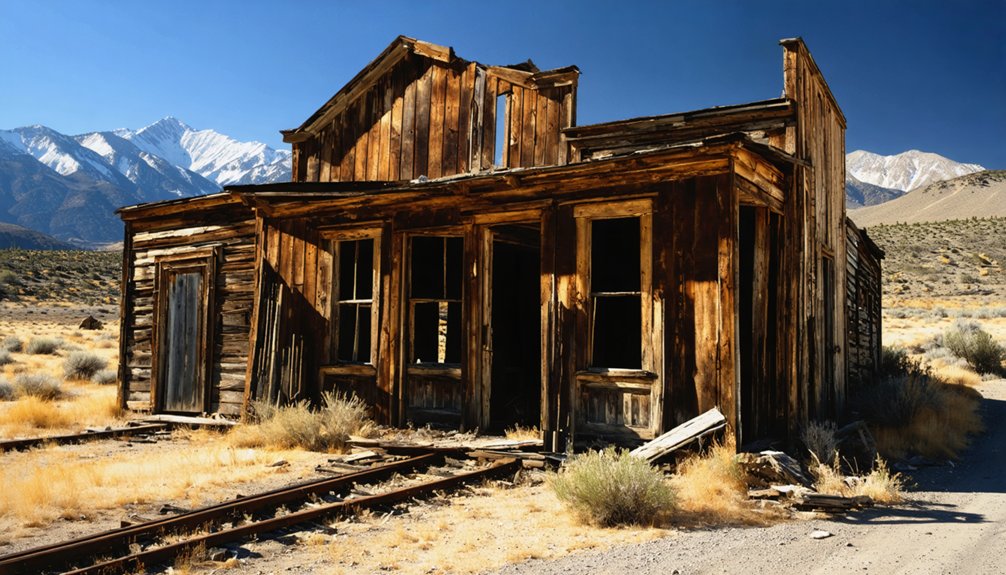
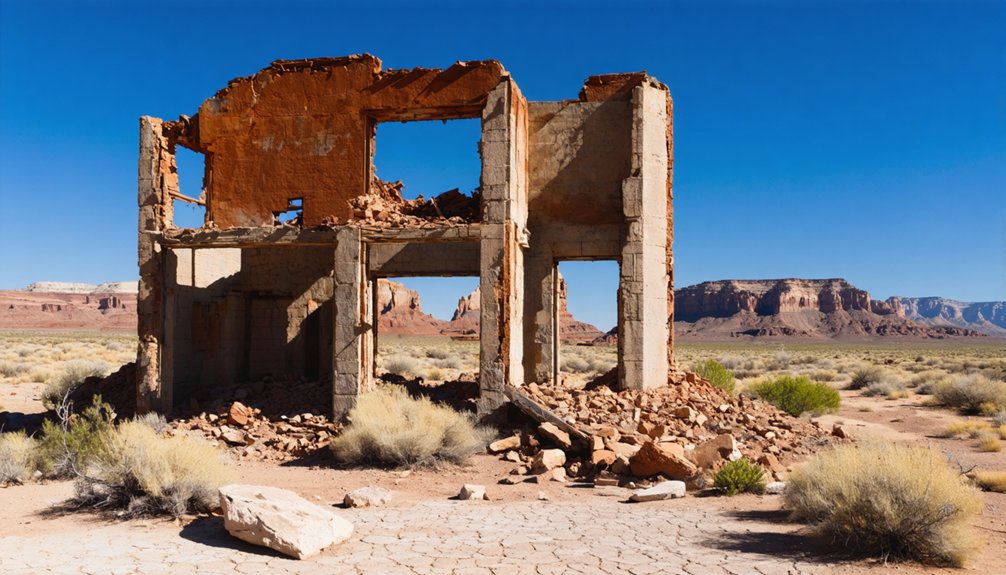
What remains today are foundations, crumbling mine structures, and two weathered cemeteries—silent proof that Silver Reef burned brilliantly before the economy extinguished it completely.
What Survived: The Ruins and Historic Buildings Still Standing at Silver Reef
Few ghost towns offer as much to see as Silver Reef, where the bones of a once-thriving frontier community still poke through the desert landscape.
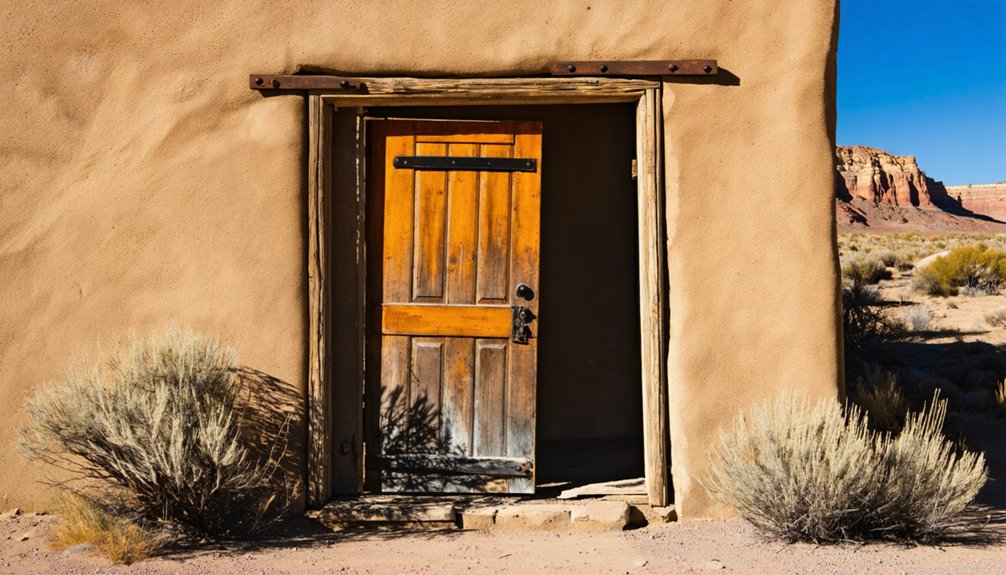
Your ruins exploration begins at the 1877 Wells Fargo building—remarkably preserved and now housing the local museum and art gallery. Beyond it, you’ll find scattered foundations, crumbling walls, and collapsed mine structures tucked into the gully behind the town site.
Two cemeteries remain standing, their Catholic and Protestant sections quietly marking lives lived during Silver Reef’s frantic peak. Historical preservation efforts have kept enough intact that you can genuinely feel the town’s former energy.
Wander thoughtfully, read the remnants carefully, and you’ll reconstruct a surprisingly vivid picture of 2,000 people who once called this desert stretch home.
How to Visit the Silver Reef Museum and Wells Fargo Building
Once you’ve wandered the ruins, the 1877 Wells Fargo building pulls you back like an anchor—it’s the one structure that survived intact, and it’s where Silver Reef’s story gets told most clearly.
The Museum Exhibits inside capture the town’s remarkable Historical Significance, including its rare sandstone silver deposits and frontier-era life.
The museum’s open Monday, Thursday, Friday, and Saturday from 10 a.m. to 3 p.m. Admission runs $4 per person or $13 for a family of five.
If you want to see the mine exhibit, call ahead at 435-879-2254 to reserve your spot.
The building also functions as an art gallery, listed on the National Register of Historic Places—proof that some stories deserve walls sturdy enough to hold them.
Hours, Admission Costs, and What to Bring to Silver Reef
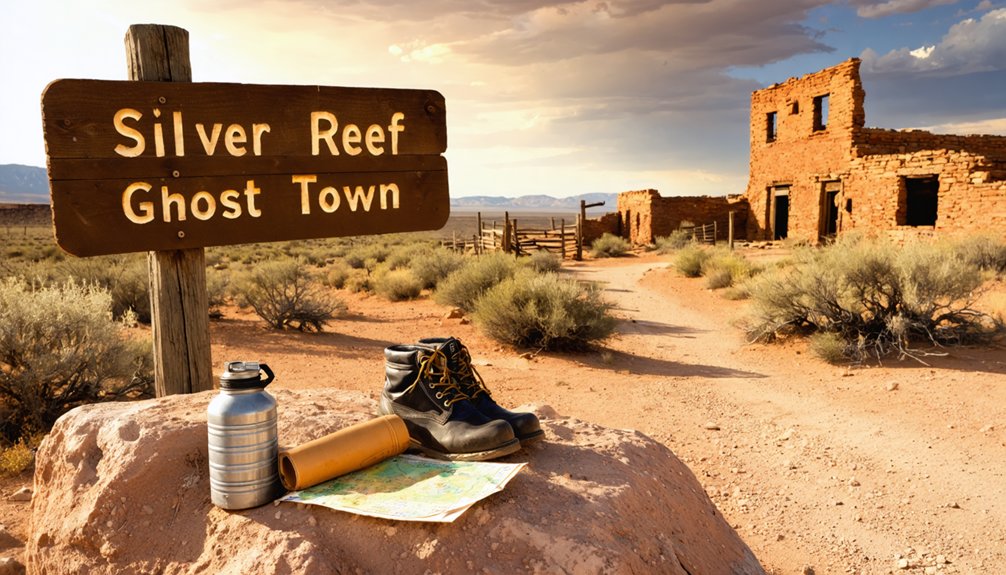
Planning your visit around the museum’s schedule makes the difference between standing outside a locked door and stepping into Silver Reef’s layered past.
The Silver Reef Museum opens Monday, Thursday, Friday, and Saturday from 10 a.m. to 3 p.m. Admission details are straightforward: $4 per person or $13 for a family of two adults and three children.
Want mine exhibit access? Call 435-879-2254 to reserve your spot in advance.
For visitor tips, dress in comfortable walking shoes—you’ll wander foundations, ruins, and uneven terrain. Bring water, especially in summer’s relentless desert heat. A camera captures what words can’t. Cash simplifies admission.
Arrive early; the afternoon light transforms these sandstone remnants into something almost ghostly. You didn’t drive this far to rush.
How to Get to Silver Reef From St. George or Cedar City?
Whether you’re rolling out of St. George or Cedar City, Silver Reef sits conveniently between both cities, making it an effortless detour worth every mile.
From St. George, you’ll travel approximately 18 miles northeast through Washington County’s striking red-rock landscape—some of the most rewarding scenic routes in southwestern Utah. Cedar City travelers face a slightly longer 37-mile journey southwest along the same main highway corridor connecting Las Vegas and Salt Lake City.
From St. George, 18 miles northeast. From Cedar City, 37 miles southwest. Both routes reward every mile.
A few travel tips before you go: Silver Reef sits near Leeds, Utah, so watch for that exit.
You’re not heading deep into wilderness—this ghost town hugs a well-traveled route. The drive itself sets the mood perfectly, easing you from modern highways into terrain where silver once drew thousands of restless souls chasing fortune.
The Geology That Makes Silver Reef Unlike Any Other Mining Town in the U.S
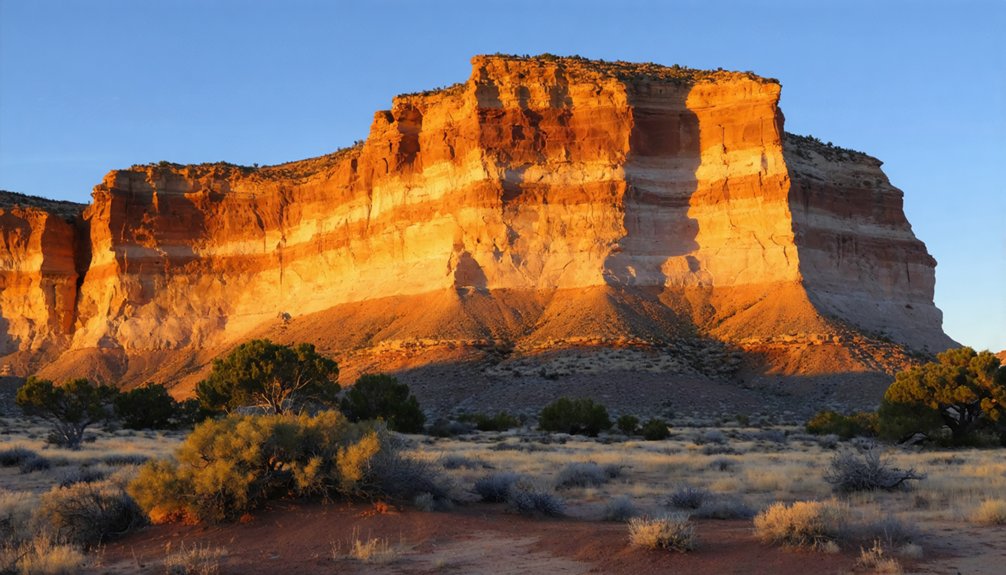
What makes Silver Reef genuinely remarkable isn’t just its ghost town status—it’s the geology beneath your feet.
You’re standing on one of the only places in the United States where silver was pulled from sandstone formations, a quirk that baffled mining experts of the era and made the White Reef sandstone famous.
And if that weren’t enough, those same rock strata gave up uranium ore in the mid-1950s, making this quiet Utah hollow doubly significant in American mining history.
Sandstone Silver Discovery
The silver wasn’t hiding in granite or quartz—it was locked inside sandstone, a geological contradiction that left experienced miners scratching their heads and geologists rewriting their assumptions.
Silver Reef’s historical significance stems from this impossibility becoming reality inside Utah’s White Reef formation.
What made this silver mining operation genuinely extraordinary:
- Sandstone-hosted silver deposits remain exceedingly rare across the entire United States.
- The White Reef formation contained veins rich enough to sustain a thriving frontier economy.
- Geological rules suggested this shouldn’t exist—nature disagreed.
- Decades later, uranium emerged from those same rock layers, doubling the site’s scientific intrigue.
You’re not just visiting a ghost town. You’re standing where conventional wisdom collapsed beneath a prospector’s pickaxe.
Uranium Mining Later
Silver Reef’s story didn’t end when the silver ran dry—in the mid-1950s, miners returned to those same White Reef sandstone layers and pulled out uranium, transforming a ghost town footnote into something geologically unprecedented.
No other site in America shares this uranium history: two entirely separate boom cycles harvested from identical rock strata, decades apart.
You’re standing on ground that fundamentally rewrote geological textbooks twice over.
Standard mining techniques couldn’t have anticipated this—sandstone wasn’t supposed to yield silver, let alone uranium.
Yet Silver Reef delivered both. That double legacy makes exploring these ruins feel less like nostalgia and more like witnessing something genuinely rare—a landscape that kept surprising everyone who showed up with the freedom to dig deeper.
Frequently Asked Questions
Can Visitors Make Phone Reservations to View the Mine Exhibits?
With $25 million in ore once extracted here, you can reserve mine tours by calling 435-879-2254, ensuring your visitor experience connects you to Silver Reef’s legendary underground world of forgotten riches and hard-won freedom.
Is Silver Reef Located Within a Private Residential Community?
Yes, a private residential community surrounds Silver Reef’s historic district, limiting your access to certain areas. You’ll still discover ghost town preservation treasures and absorb the historical significance of this hauntingly beautiful, freedom-calling frontier landscape.
Did Chinese Laborers and Merchants Establish a Chinatown Section There?
Yes, Chinese laborers and merchants did establish a Chinatown section there, and you’ll find their Chinese contributions woven into Silver Reef’s cultural heritage—a nostalgic reminder of the diverse, freedom-seeking souls who once shaped this remarkable frontier community.
Were Uranium Deposits Later Mined From the Same Rock Strata?
Like history repeating itself, yes! The mid-1950s brought uranium mining from the same geological formations that once yielded silver. You’d marvel at how these ancient rock strata delivered two remarkable chapters of treasure to Silver Reef.
Do Both Catholic and Protestant Cemeteries Still Remain at Silver Reef?
Yes, you’ll find both cemeteries still standing, whispering cemetery history across weathered ground. Their cultural significance endures—Catholic and Protestant burial grounds side by side, reminding you that Silver Reef’s diverse frontier souls deserve your reverent, wandering attention.
References
- https://www.legendsofamerica.com/ut-silverreef/
- https://www.youtube.com/watch?v=5Orh1N307Lk
- https://www.visitutah.com/things-to-do/history-culture/ghost-towns
- https://www.youtube.com/watch?v=v0cCSyDHMG8
- https://www.youtube.com/watch?v=OYcbwbeMf-Y
- https://www.cedarcityutah.com/news/archive/2024/03/15/agl-discover-the-desert-explore-southern-utahs-past-on-a-ghost-town-adventure/
- https://www.youtube.com/watch?v=hCu0zbig4t0
- https://www.youtube.com/watch?v=n2VpUpR-Ngg
- https://www.youtube.com/watch?v=Lkoj-kQTg_k
- https://jacobbarlow.com/2017/03/06/silver-reef-utah/