There’s no verified ghost town called Sunset, Arizona waiting for you on any map. What you’ll actually find are real abandoned settlements far more compelling than any legend. Within 90 minutes of the Phoenix-Tucson corridor, you’ve got Fairbank’s crumbling adobe ruins, Gleeson’s jail museum, and Ruby’s intact mining camp deep in Coronado National Forest. If you’re serious about planning this road trip, there’s much more you’ll want to know before you go.
Key Takeaways
- Sunset, Arizona, as a ghost town, is likely a myth with no verified historical records confirming its existence.
- Nearby authentic ghost towns include Fairbank, Gleeson, Ruby, and Chloride, all within 90 minutes of the Phoenix-Tucson corridor.
- Ruby requires a high-clearance vehicle, while Fairbank and Gleeson are accessible via standard vehicles on unpaved roads.
- The best time to visit is between October and April, avoiding summer heat at lower desert elevations.
- Always check weather conditions, carry extra water, and prepare for limited cell service in remote areas.
Is Sunset, Arizona a Real Ghost Town?
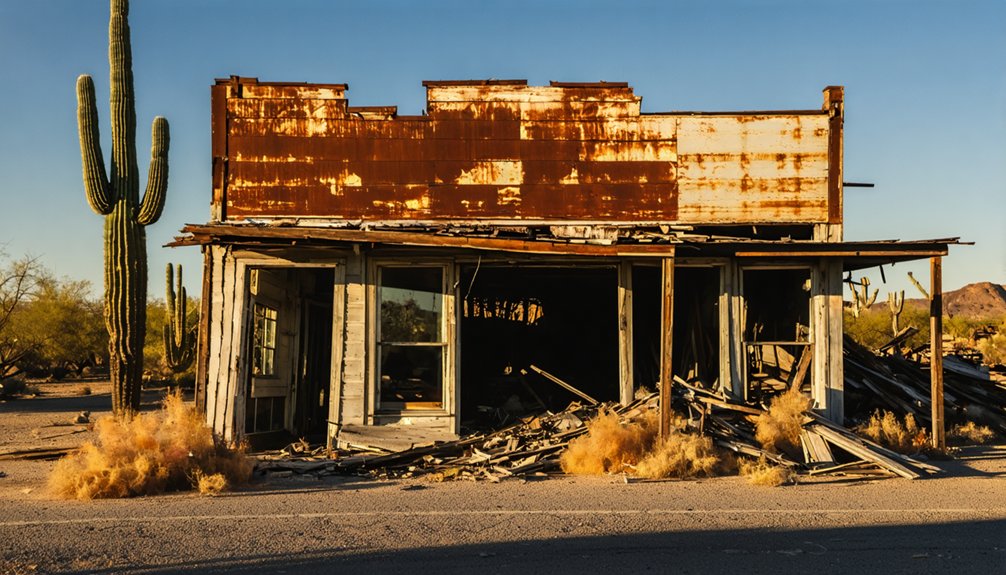
Where exactly is Sunset, Arizona on the map? Honestly, that’s where things get interesting. Despite circulating Sunset myths online, no verified ghost town by that name exists in Arizona’s historical records. You won’t find coordinates, abandoned structures, or documented settlers tied to a place called Sunset.
Ghost town legends have a way of blurring fact and fiction, and Sunset is no exception. The closest reference is Sunset Crater near Flagstaff, an active volcanic landmark, not an abandoned settlement.
Some confusion also stems from Sundad, a mysterious desert site along Agua Caliente Road.
Don’t let that discourage your road trip ambitions. Arizona’s real ghost towns deliver everything you’re chasing: raw history, crumbling ruins, and open desert freedom, without the myths getting in the way.
Five Arizona Ghost Towns Within 90 Minutes of the Phoenix-Tucson Corridor
If you’re already cruising the Phoenix-Tucson corridor, you’re sitting within striking distance of five genuinely fascinating ghost towns that make Sunset’s absence sting a little less.
From Fairbank’s adobe ruins along the San Pedro River to Ruby’s preserved mining camp near the Mexican border, each site rewards you with a distinct slice of Arizona’s rough-and-tumble past.
Pack a high-clearance vehicle for some routes, check weather conditions before you go, and plan your stops around the Ghost-Town Loop to squeeze the most history out of every mile.
Corridor Ghost Town Highlights
Scattered within 90 minutes of the Phoenix-Tucson corridor, five ghost towns let you step straight into Arizona’s mining past without burning a full day on the road.
Sundad hides along Agua Caliente Road, shrouded in ghost town legends that reward curious explorers willing to leave pavement behind.
Fairbank delivers adobe ruins, a schoolhouse, and hotel remnants along the San Pedro River on BLM land.
Gleeson opens its restored jail museum on the first Saturday monthly, with turquoise mine history and crumbling general store walls perfect for desert photography.
Ruby preserves the Southwest’s largest mining camp near the Mexican border, demanding a high-clearance vehicle.
Chloride, the oldest continuously inhabited mining town, adds cliff murals and Cyanide Springs to round out your route with living history.
Route Planning Essentials
Knowing where these ghost towns stand is one thing; getting to them without a blown tire or a wrong turn is another. Each abandoned settlement demands different preparation.
Fairbank sits off Highway 82 on a short dirt road—most vehicles handle it fine. Gleeson’s unpaved stretches stay manageable in dry weather. Ruby’s final miles through rugged desert landscapes require high-clearance vehicles; don’t underestimate that road.
Gold King, 29 miles west of Sedona, welcomes standard vehicles easily.
Check weather before leaving. Desert conditions shift fast, turning manageable roads into muddy traps. Carry water, a physical map, and extra fuel—cell service disappears once you push past the corridor.
Freedom tastes best when you’ve planned well enough to actually enjoy it.
Top Sites Worth Visiting
Five ghost towns cluster within striking distance of the Phoenix-Tucson corridor, each one distinct enough to justify the drive.
Fairbank delivers adobe ruins and a weathered schoolhouse along the San Pedro River, roughly an hour from Tucson.
Gleeson pulls you deeper into ghost town legends with its restored jail museum and turquoise mining history tied to Tiffany & Co.
Ruby rewards serious desert exploration with preserved mining camp structures near the Mexican border, though you’ll need a high-clearance vehicle.
Sundad keeps things mysterious along Agua Caliente Road, offering more questions than answers.
Chloride, Arizona’s oldest continuously inhabited mining town, still hosts 350 residents alongside cliff murals and Cyanide Springs.
Each site tells a different story—pick one or chain them together.
How Far Apart Are These Ghost Towns, Really?
How far you’ll actually drive between these ghost towns depends on which cluster you’re chasing. Ghost town distances vary greatly across Arizona’s landscape, so smart journey planning saves you time and fuel.
In the southeast cluster, Tombstone to Gleeson runs roughly 16 miles along SR 80 and Gleeson Road. Fairbank sits about an hour from Tucson, making it an easy anchor point. These towns pair naturally into a single day’s loop.
Western sites spread out more dramatically. Ruby Road demands 24 miles of rough terrain from I-19, while Gold King Mine sits 29 miles west of Sedona.
You’re not just covering distance — you’re traversing terrain.
Build your route around clusters, not individual stops, and you’ll move efficiently without burning your adventure before it starts.
Fairbank: Adobe Ruins, a Sealed Schoolhouse, and Free Admission
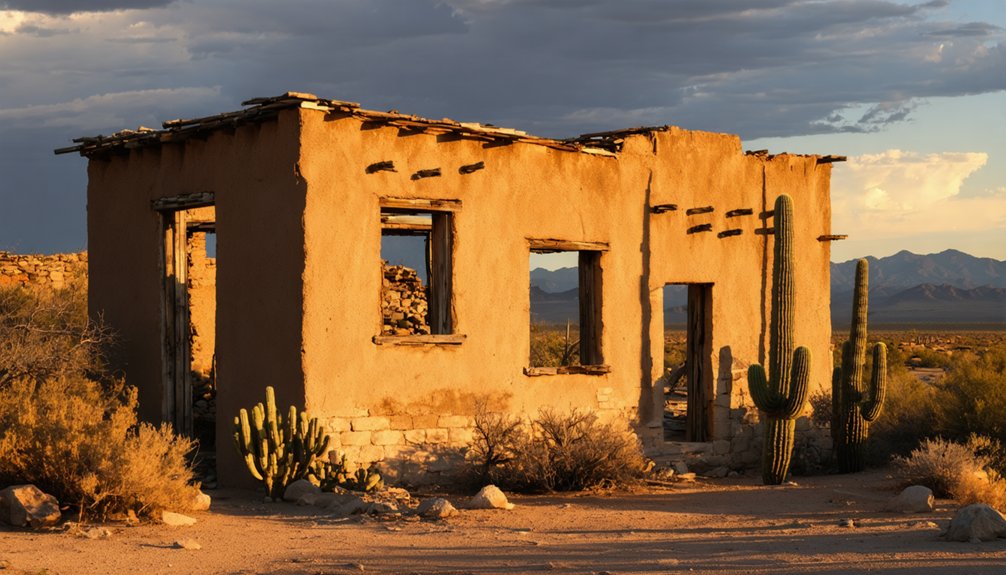
Fairbank delivers something rare among Arizona ghost towns: free admission onto federal land where adobe ruins still stand in raw, unpolished silence.
You’ll walk through ghost town architecture that hasn’t been sanitized for comfort—crumbling walls, a sealed schoolhouse, and hotel remains that communicate Fairbank history better than any museum placard could.
BLM manages the site, so you’re free to explore without a gate, a guide, or a ticket booth slowing you down.
No gates. No guides. No ticket booths. Just open federal land managed by the BLM, ready when you are.
A short dirt road off Highway 82 gets you there, roughly an hour from Tucson. The San Pedro River runs nearby, adding unexpected life to an otherwise abandoned landscape.
Bring water, wear sturdy shoes, and arrive ready to move through history at your own pace, on your own terms.
Gleeson’s Jail Museum and Tiffany-Era Turquoise Mine History
Gleeson sits about 15.5 miles off SR 80 southeast of Tombstone, and once you arrive, you’ll find a ghost town that earned its place in history long before anyone started calling it abandoned.
Tiffany & Co. pulled turquoise from these hills during the 1880s, making Gleeson’s turquoise mining legacy one of the most prestigious in the Southwest. That history didn’t disappear when the mines dried up.
The restored Gleeson Jail still stands, opening its doors to visitors on the first Saturday of each month as a functioning museum. General store ruins and remnants of private ranches scatter across the landscape, giving you a raw, unfiltered look at life after boom.
Most roads into Gleeson handle average vehicles well during dry weather, so planning ahead keeps your visit smooth.
How to Reach Ruby, Arizona’s Most Remote Ghost Town
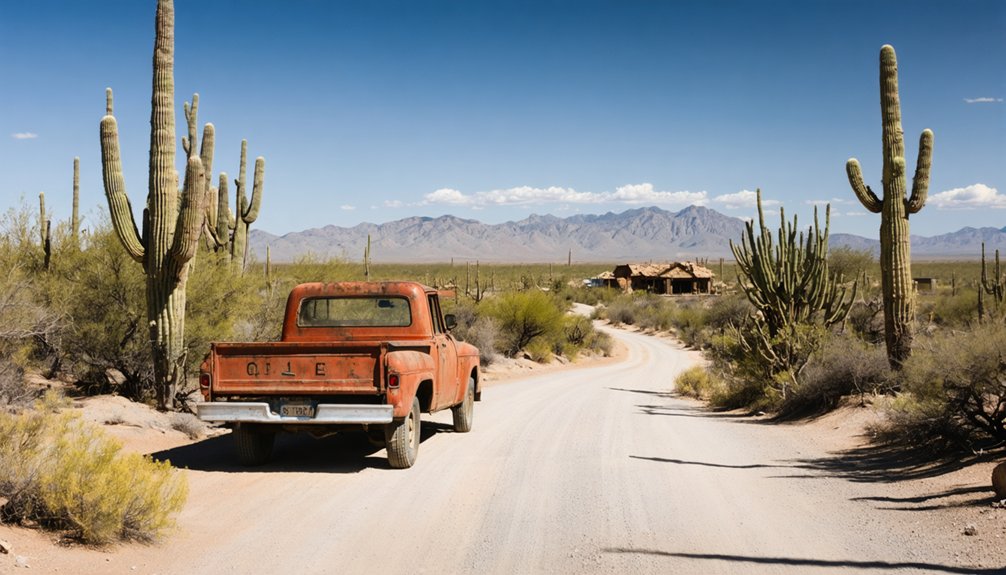
Ruby makes Gleeson look like a quick errand run. This ghost town sits deep in Coronado National Forest near the Mexican border, and Ruby access demands serious preparation.
From I-19 north of Nogales, head west on Ruby Road for 24.2 miles. You’ll need a high-clearance vehicle — the final stretches aren’t forgiving.
Ruby ranks among the most preserved ghost towns in the southwest, with roots stretching back to a quartz discovery in the 1870s that fueled the Montana Mine.
Pack water, check your spare tire, and verify weather conditions before you leave. Flash floods can close Ruby Road fast.
The reward for your effort? A remarkably intact mining camp where you’ll feel genuinely off the grid — exactly the kind of freedom most ghost towns only promise.
The Sundad Mystery Along Agua Caliente Road
Not every ghost town announces itself with a historic marker or a parking lot — Sundad barely announces itself at all.
Not every ghost town wants to be found — Sundad is proof that the best ones rarely do.
That’s precisely what makes the Sundad Enigma so compelling for independent travelers who prefer discovery over convenience.
You’ll find this mysterious site along Agua Caliente Road, accessible from Arlington through open desert terrain.
The Agua Caliente Exploration rewards patient visitors willing to navigate unpaved stretches with little signage and even fewer answers.
Sundad raises more questions than it resolves — who lived here, why they left, and what remains hidden beneath decades of desert dust.
Pack water, fuel up beforehand, and keep your expectations flexible.
This isn’t a curated experience; it’s raw, unscripted exploration.
For road trippers chasing authentic Arizona history, Sundad delivers exactly that kind of freedom.
Gold King Mine: A Paid Attraction, Not a True Ghost Town
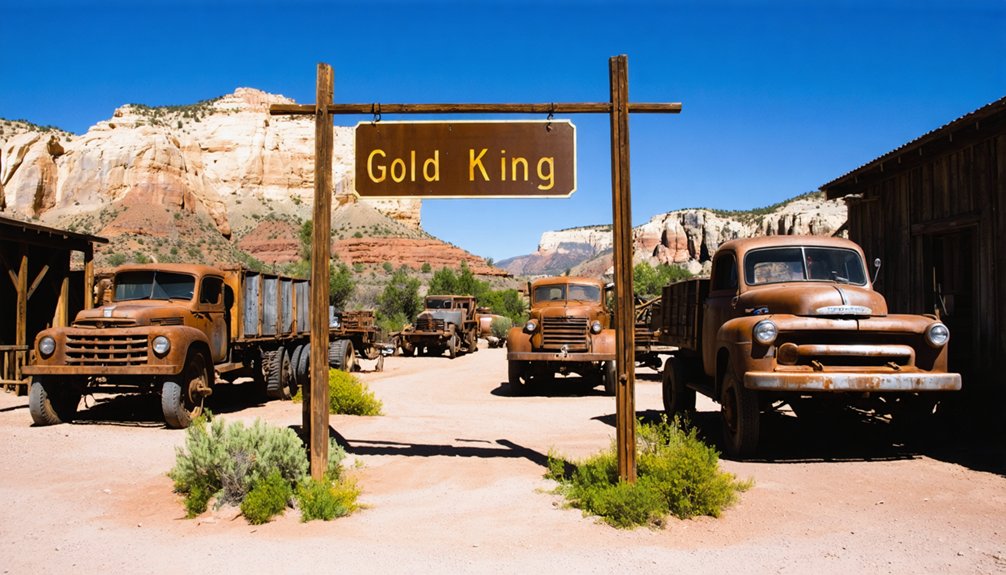
If you’re willing to pay $5 for admission, Gold King Mine near Haynes delivers a curated slice of Arizona’s mining past, complete with a 1914 sawmill, a mineshaft, blacksmith demonstrations, and gold panning for the kids.
Unlike the raw, untouched ruins you’d find at Fairbank or Ruby, this site offers a polished, guided experience that trades authenticity for accessibility.
You’re not stumbling onto a forgotten settlement here — you’re visiting a living museum, carefully maintained and staged for visitors seeking history without the dirt roads.
Paid Admission Entry Fee
While most Arizona ghost towns let you wander freely through crumbling ruins without spending a dime, Gold King Mine near Sedona charges a $5 admission fee — and that distinction matters when you’re planning a true ghost town road trip.
Authentic ghost town experiences thrive on open access — no gates, no tickets, no schedules. Gold King’s admission pricing reflects its curated, commercial nature, complete with blacksmith demonstrations and guided gold panning. It’s entertaining, but it’s not raw history.
If you’re chasing genuine abandonment and unfiltered atmosphere, you’ll find more soul wandering Fairbank’s adobe ruins or Gleeson’s crumbling jail for free.
Save Gold King for families needing structured fun, but don’t let it replace the untamed, no-cost sites that define real Arizona ghost town exploration.
Curated Historic Experience
That $5 admission fee at Gold King Mine isn’t just a minor detail — it signals something deeper about what the place actually is. You’re not stumbling onto forgotten history; you’re buying a ticket to a packaged version of it.
Staff schedule blacksmith demonstrations, vintage equipment gets arranged for desert photography, and self-guided tour paths keep you moving in predictable directions. Ghost town legends thrive on spontaneity and raw discovery — neither of which Gold King delivers.
It’s a living museum built around nostalgia, not an abandoned settlement reclaimed by silence. If you crave genuine freedom to explore on your own terms, this curated experience may feel more like a theme park than a true relic.
Real ghost towns don’t charge you to feel their weight.
Can Your Car Handle Arizona Ghost Town Roads?
Before you load up the cooler and point your GPS toward Arizona’s abandoned past, you’ll want to honestly assess whether your vehicle can handle what these roads throw at it.
Ghost town accessibility varies dramatically across the state. Fairbank welcomes standard sedans via a short dirt road off Highway 82, while Ruby demands a high-clearance vehicle for its final rugged stretches. Gleeson sits somewhere in between, manageable for most cars during dry weather.
Road trip safety means checking tire condition, carrying extra water, and monitoring weather forecasts before heading out. Many sites sit on BLM or federal land where cell service disappears fast.
Know your vehicle’s limits, pack accordingly, and you’ll reach these forgotten places on your own terms.
When Should You Actually Go?
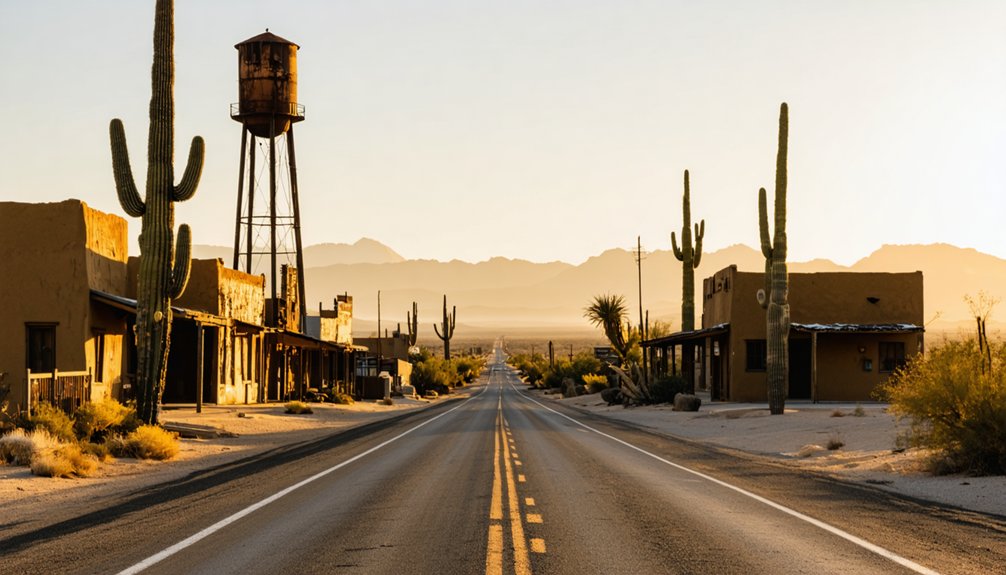
Timing your Arizona ghost town road trip can mean the difference between a memorable adventure and a miserable slog through triple-digit heat. The best seasons are fall and spring, when temperatures stay manageable and desert landscapes turn stunning.
October through April gives you comfortable exploring conditions without the brutal summer sun baking you alive on unpaved roads.
Skip summer visits — October through April keeps desert heat bearable and unpaved ghost town roads actually drivable.
Winter weekdays offer solitude — you’ll have ruins practically to yourself. Avoid summer unless you’re heading to higher-elevation sites like Chloride or Gold King near Sedona.
Check local events before finalizing dates. Gleeson’s jail museum opens its doors the first Saturday monthly, so plan around that if it’s on your list.
Tombstone runs year-round festivals that can either energize your trip or crowd nearby roads unexpectedly.
Frequently Asked Questions
Are There Guided Ghost Town Tours Available Along the Phoenix-Tucson Corridor?
You’ll find guided tours along the Phoenix-Tucson corridor that bring local history alive! Explore forgotten settlements, adobe ruins, and mining camps with knowledgeable guides who’ll fuel your spirit of freedom and adventure.
What Photography Permits Are Required at Blm-Managed Ghost Town Sites?
Want to capture Arizona’s haunting ruins freely? For personal photography, you don’t need permits at BLM ghost towns. However, commercial permits and specific photography guidelines apply if you’re selling images professionally — contact your local BLM office first.
Are Arizona Ghost Towns Accessible and Safe for Elderly or Disabled Visitors?
You’ll find Chloride and Fairbank offer the best wheelchair access and senior amenities, with relatively flat terrain. Always check conditions beforehand, as many sites involve unpaved paths that might challenge mobility — choose your adventure wisely!
Can You Camp Overnight Near Fairbank, Gleeson, or Ruby Ghost Towns?
You can camp near these sites, but ghost town amenities are minimal. Fairbank’s BLM land offers open camping; Ruby requires high-clearance access. Always check camping regulations beforehand — you’ll trade comfort for unforgettable freedom under Arizona’s vast, starlit desert sky.
Are There Entrance Fees or Annual Passes That Cover Multiple Ghost Town Sites?
You’ll love knowing that entrance requirements vary by site! An America the Beautiful annual pass options cover Fairbank and other BLM lands, saving you money while you freely explore multiple ghost towns across Arizona.
References
- https://www.youtube.com/watch?v=eKMSVZZ2ZQ0
- https://www.islands.com/1873526/road-trip-tucson-arizona-saguaro-giant-hidden-ghost-town-desert-sunsets/
- https://keystoaz.com/fairbank-ghost-town-arizona/
- https://www.visitarizona.com/like-a-local/arizonas-ghost-town-getaways
- https://www.visittucson.org/blog/post/8-ghost-towns-of-southern-arizona/
- https://www.arizonahighways.com/article/arizona-ghost-towns
- https://myfamilytravels.com/the-arizona-desert-road-trip-where-you-can-visit-three-ghost-towns-in-a-day
- https://www.tripadvisor.com/Attractions-g28924-Activities-c47-t14-Arizona.html
- https://sunset.com/travel/road-trips/texas-road-trip