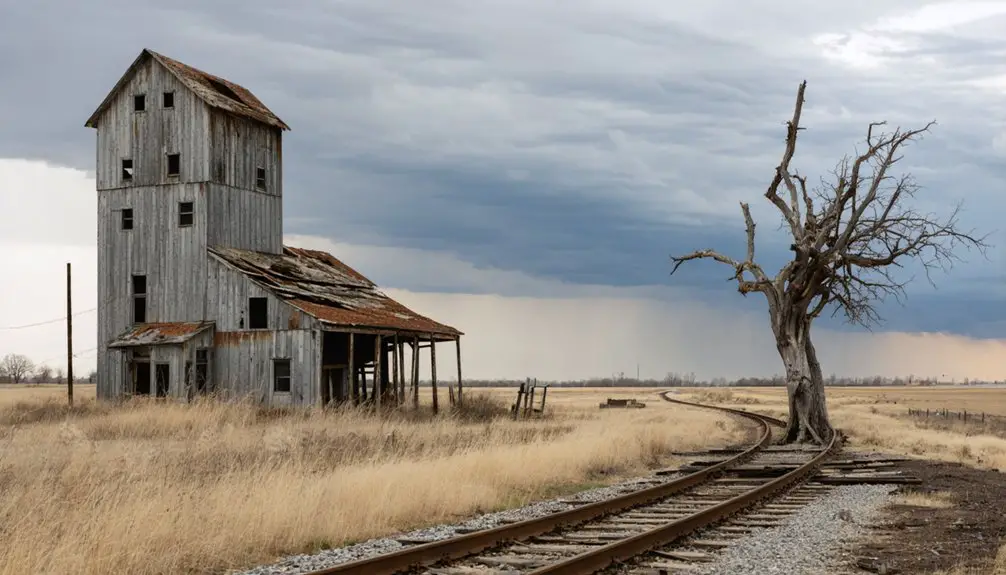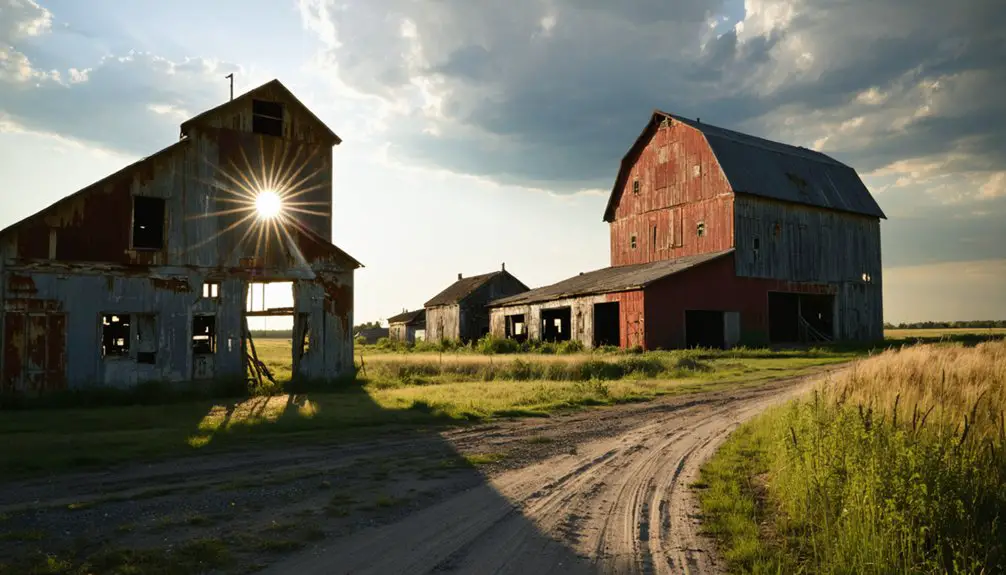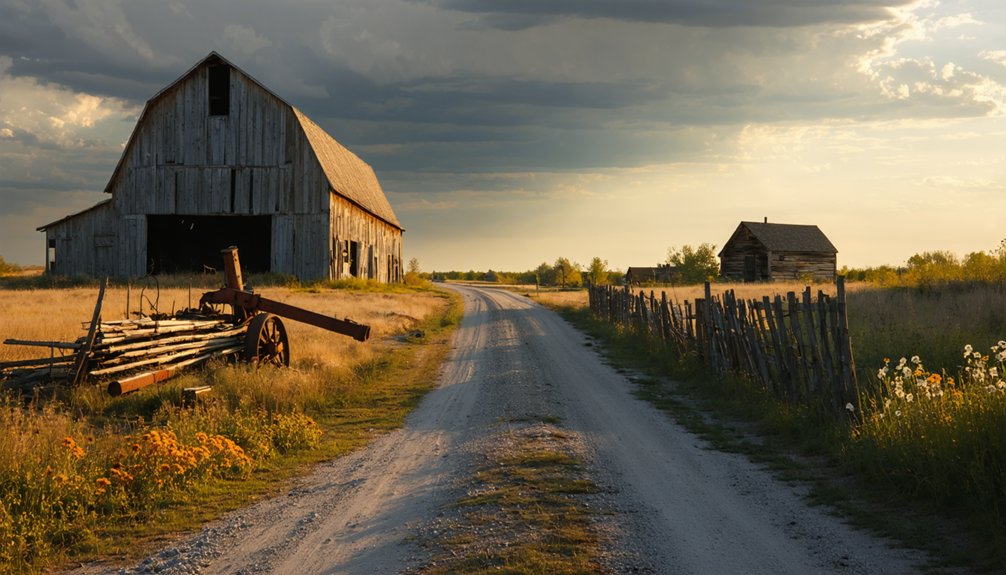
Homedahl, Minnesota is a forgotten Scandinavian ghost town tucked into Faribault County, where Norwegian immigrants built a proud community that thrived from 1877 to 1904 before fading into open prairie. You’ll find crumbling foundations and quiet fields where a village once stood. Visit during spring, summer, or fall, bring a 4WD vehicle, and pack essential supplies since there are no services nearby. There’s far more to this haunting place than meets the eye.
Key Takeaways
- Homedahl, established by Norwegian immigrants in Faribault County during the late 1800s, flourished from 1877 to 1904 before its post office closed.
- Visit during spring, summer, or fall for safe, accessible travel; winter brings dangerous cold and hazardous road conditions.
- A 4WD vehicle is essential for navigating grid roads; carry fuel, water, food, offline maps, and a first-aid kit.
- Combine Homedahl with nearby ghost towns like Clayton to explore up to 15 forgotten Faribault County townsites in one trip.
- Crumbling foundations and empty fields are all that remain, offering a haunting glimpse into Homedahl’s Scandinavian immigrant heritage.
The Norwegian Immigrants Who Built Homedahl From the Ground Up
When Norwegian immigrants arrived in Faribault County in the late 1800s, they didn’t just settle the land — they built an entire community from scratch.
Facing immigrant challenges like harsh winters, unfamiliar terrain, and isolation, these determined settlers carved out a thriving Scandinavian village in the Minnesota wilderness.
At the heart of it all was the Osul Haaland family. Rasmus O. Haaland, the town’s first postmaster, named the settlement after a place back in Norway, anchoring Norwegian traditions firmly into this new American soil.
Rasmus O. Haaland didn’t just name a town — he planted Norway’s roots deep into Minnesota soil.
That gesture wasn’t just sentimental — it was a declaration of identity.
For nearly three decades, Homedahl flourished, its post office operating from 1877 to 1904.
These immigrants didn’t follow a path; they forged one, building something meaningful in the middle of nowhere.
Once the Haaland family planted roots in Faribault County, others followed, and Homedahl began taking shape as a genuine community. Norwegian settlers brought more than ambition — they carried cultural traditions, craftsmanship, and a fierce independence that defined Homedahl architecture and daily life.
You’d have recognized their influence immediately in the sturdy structures and organized layout reflecting Scandinavian sensibilities.
Community traditions flourished here, binding neighbors through shared language, faith, and heritage. Festivals, cooperative farming, and church gatherings created a rhythm that made Homedahl feel permanent.
Settlers built not just homes but a functioning village with purpose and identity.
For nearly three decades, this remote Minnesota corner buzzed with real life. Homedahl wasn’t just surviving — it was thriving, a proud Scandinavian outpost carved from the Minnesota prairie.
How Homedahl Went From Thriving Village to Empty Fields
Once a thriving Scandinavian community built on Norwegian immigrant roots, Homedahl couldn’t hold onto its momentum forever.
You can trace the town’s unraveling to a single defining moment: the post office closure in 1904, which effectively cut Homedahl off from the outside world after 27 years of operation.
Without that essential connection, residents drifted away one by one until nothing remained but empty fields and fading memories.
Homedahl’s Thriving Scandinavian Roots
Nestled in the quiet farmland of Faribault County, Homedahl wasn’t always the empty stretch of fields you’d find today.
Norwegian immigrants, including the Osul Haaland family, carved out a life here, building a community rich with Scandinavian traditions that stretched back to their homeland.
Rasmus O. Haaland, the town’s first postmaster, even named the settlement after a place in Norway, cementing that Homedahl heritage into the Minnesota prairie soil.
Post Office Closure Signals End
When the post office shuttered in 1904, Homedahl’s fate was sealed. You can’t overstate the post office significance in 19th-century rural communities — it wasn’t just mail delivery. It was commerce, communication, and community identity wrapped into one building.
Once Bricelyn absorbed the surrounding trade, community decline became inevitable.
Residents didn’t leave overnight. They drifted away gradually, following railroads, jobs, and opportunity elsewhere. Families who’d carved out lives from Minnesota prairie soil simply packed up and moved on.
The Norwegian immigrants who’d built something meaningful here couldn’t fight shifting economic realities.
Today, you’ll find no buildings standing, no residents remaining — just foundations whispering stories beneath the grass. Those concrete remnants mark where ambitions once ran high before practical necessity scattered everyone to more promising places.
What Survives at Homedahl: Foundations, Ghosts, and Open Prairie
Today, Homedahl is little more than open prairie and silence. When you arrive, you won’t find buildings, businesses, or residents — just foundational remnants pressing through the soil like memories refusing to disappear.
The Norwegian settlers who built this community are long gone, but their ghostly whispers linger across the windswept landscape.
Stand quietly and you’ll sense what once thrived here — a Scandinavian village full of ambition and community. Now the open prairie stretches endlessly around you, reclaiming every inch those settlers once carved out.
You’re free to roam, explore, and imagine. No fences, no crowds, no admission fees. Just you, the wind, and the bones of a forgotten town waiting for someone curious enough to notice they were ever there.
The Best Time of Year to Visit Homedahl
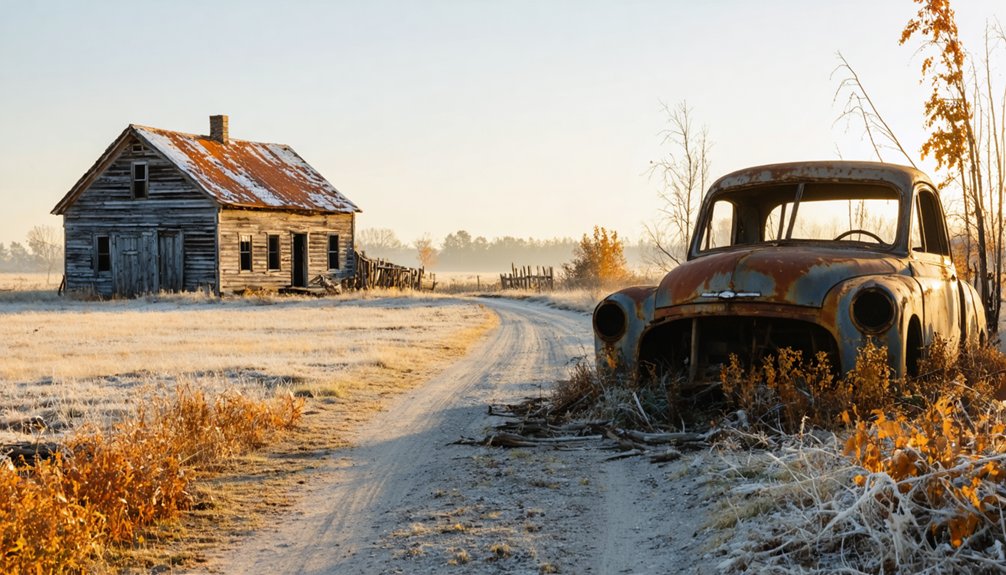
Homedahl rewards visitors most generously during spring, summer, and fall, when the roads are passable and the landscape comes alive around those silent foundations.
Seasonal changes transform the prairie dramatically, shifting from wildflower blooms in spring to golden grasses in autumn, each season revealing different textures of the abandoned townsite.
Winter, however, is brutal here — Minnesota’s Antarctic-level cold turns those rural 4WD roads into genuine hazards, cutting off access entirely.
Local lore also carries a specific warning: avoid visiting on dark, rainy nights.
Something about Homedahl after dark unsettles even seasoned explorers. You’ll want clear skies and daylight to navigate grid 6 roads safely and fully appreciate what remains.
Plan your visit between May and October, and you’ll experience Homedahl at its most hauntingly accessible.
How to Get to Homedahl Without Getting Stranded
Getting to Homedahl without getting stranded starts with one non-negotiable: you’ll need a 4WD vehicle. The grid 6 roads leading to this abandoned townsite, five miles southwest of Bricelyn, demand serious traction and ground clearance.
Road safety isn’t optional here — it’s survival. Before traversing trails into rural Faribault County, check weather conditions carefully. Minnesota’s brutal winters make these back roads genuinely dangerous, so stick to spring, summer, or fall visits.
Tell someone your exact route before you leave. Carry extra fuel, water, and a basic emergency kit, because no services exist anywhere near the site.
Download offline maps since cell service gets unreliable fast out here.
Respect these roads, plan deliberately, and Homedahl rewards your effort with an unforgettable glimpse into forgotten Scandinavian history.
What to Bring for a Safe Homedahl Road Trip?

Since no services or facilities exist anywhere near Homedahl, you’ll need to pack everything before you leave civilization behind. Load your 4WD with extra fuel, water, food, a first-aid kit, and recovery gear like tow straps and a shovel.
For ghost town photography, bring a quality camera, extra batteries, and a wide-angle lens to capture crumbling foundations against Minnesota’s open skies. A portable charger keeps your devices alive when you’re chasing Homedahl legends through overgrown fields.
Navigation tools matter here — download offline maps since cell service is unreliable in rural Faribault County. Dress in layers to handle unpredictable weather, wear sturdy boots, and carry a flashlight.
Preparation transforms this remote adventure from risky to unforgettable.
Nearby Faribault County Ghost Towns to Combine With Your Homedahl Trip
While you’re already traversing Faribault County’s back roads to reach Homedahl, you might as well make the most of your trip by adding Clayton, another eerily abandoned ghost town nearby, to your route.
Faribault County alone harbors up to 15 forgotten townsites, each with its own story of boom and quiet collapse, giving you plenty of multi-stop options to fill a full day of exploration.
Mapping out a connected route through these abandoned communities lets you trace the broader pattern of how shifting industries and railroads slowly erased once-thriving settlements from the landscape.
Clayton Ghost Town Nearby
Once you’ve explored the eerie remnants of Homedahl, Clayton offers another ghost town adventure just a short drive away in Faribault County.
Clayton history mirrors Homedahl’s fate—thriving briefly before industries and railroads shifted, leaving only Clayton remains behind.
Here’s what makes Clayton worth adding to your road trip:
- Abandoned foundations whisper stories of a community that once had grand visions.
- Rural isolation gives you that raw, untamed freedom you’re chasing.
- A possible cemetery connects you directly to the people who lived and died there.
- 4WD roads keep the adventure genuine and filter out the faint-hearted.
Combining both towns in one trip maximizes your exploration of Faribault County’s forgotten past without wasting miles or time.
Faribault County Abandoned Sites
Faribault County holds up to 15 ghost towns, so you can easily build a full day—or weekend—around exploring its abandoned landscape beyond Homedahl and Clayton.
Each site carries its own story of industries that collapsed, railroads that shifted, and communities that simply vanished. You’ll encounter abandoned structures ranging from crumbling foundations to forgotten remnants that local folklore has transformed into something almost mythic over generations.
The county’s rural roads connect these scattered sites, letting you move between forgotten settlements at your own pace. Pack supplies since none of these locations offer services, and bring a 4WD vehicle because the terrain demands it.
Spring, summer, and fall offer the best conditions for traversing roads that freeze into brutal inaccessibility during Minnesota’s punishing winters.
Multi-Stop Ghost Town Routes
Since Faribault County hides up to 15 ghost towns within its rural grid, combining Homedahl with nearby Clayton and other abandoned sites turns a single-stop visit into a rewarding multi-town expedition.
Map your route strategically and you’ll maximize both ghost town photography opportunities and exposure to rich local folklore.
Here’s how to build your ideal multi-stop circuit:
- Start at Homedahl — explore foundations and Scandinavian history first
- Head toward Clayton — another abandoned Faribault County site worth documenting
- Scout additional grid roads — hidden sites reward curious, independent explorers
- Visit during spring or fall — prime lighting conditions elevate ghost town photography dramatically
Each stop layers another chapter of forgotten Minnesota history onto your journey, making the entire county feel like one vast, open-air museum.
Though it’s little more than a memory buried beneath rural Minnesota soil, Homedahl tells a powerful story about the waves of Scandinavian immigrants who once carved thriving communities out of the American frontier.
Norwegian settlers like the Haaland family didn’t just survive here — they built a genuine village, naming it after their homeland and establishing institutions that sustained real lives.
Walking these grounds, you’ll connect with a Scandinavian heritage that shaped Minnesota’s cultural identity far beyond what history books acknowledge.
Homedahl’s community legacy reminds you that towns rise and fall not through failure, but through forces beyond anyone’s control — shifting railroads, changing economies, neighboring growth.
What remains isn’t failure; it’s evidence of courage. You’re standing where determined immigrants once dreamed freely on an open frontier.
Frequently Asked Questions
Is There an Entrance Fee or Permit Required to Visit Homedahl?
With 27 years of postal history, Homedahl’s entrance requirements are delightfully simple — there’s no fee! Visiting policies don’t restrict you, so you’re free to explore this abandoned Scandinavian townsite whenever adventure calls you.
Are There Any Guided Tours Available for Visiting Homedahl?
You won’t find formal guided tour options or local tour guides at Homedahl. It’s a raw, off-the-beaten-path adventure you’ll navigate solo, exploring crumbling foundations and echoes of Scandinavian history entirely on your own terms.
Can I Camp Overnight at or Near the Homedahl Townsite?
There’s no official camping at Homedahl, but you’ll find nearby campgrounds worth exploring! Always check local camping regulations before pitching your tent, and embrace the freedom of sleeping beneath Minnesota’s vast, star-filled skies near this haunting ghost town.
Is Metal Detecting or Artifact Collecting Allowed at Homedahl?
Before you “borrow from history,” know that metal detecting regulations and artifact preservation guidelines apply here. You’ll want to check Minnesota state laws, as collecting artifacts from abandoned sites can carry serious legal consequences.
Are There Any Local Historians or Contacts Knowledgeable About Homedahl?
You’ll want to connect with Faribault County historical societies, who preserve Homedahl’s historical significance and local legends. They’re your best contacts for uncovering Norwegian immigrant stories, old records, and insider knowledge about this fascinating, forgotten Scandinavian community.
References
- https://kids.kiddle.co/Homedahl
- https://www.faribaultcountyregister.com/opinions/editorials/2010/03/14/some-places-in-faribault-county-to-avoid-on-a-dark-rainy-night/
- https://minnesotasnewcountry.com/this-story-of-a-central-minnesota-ghost-town-is-pretty-incredible/
- http://www.actionsquad.org/ghosttowns.html
- https://www.youtube.com/watch?v=5bCG6B2rzZY
- https://quickcountry.com/explore-minnesota-forgotten-ghost-towns/
- https://www.ghosttowns.com/states/mn/homedahl.html
- https://en.wikipedia.org/wiki/Homedahl