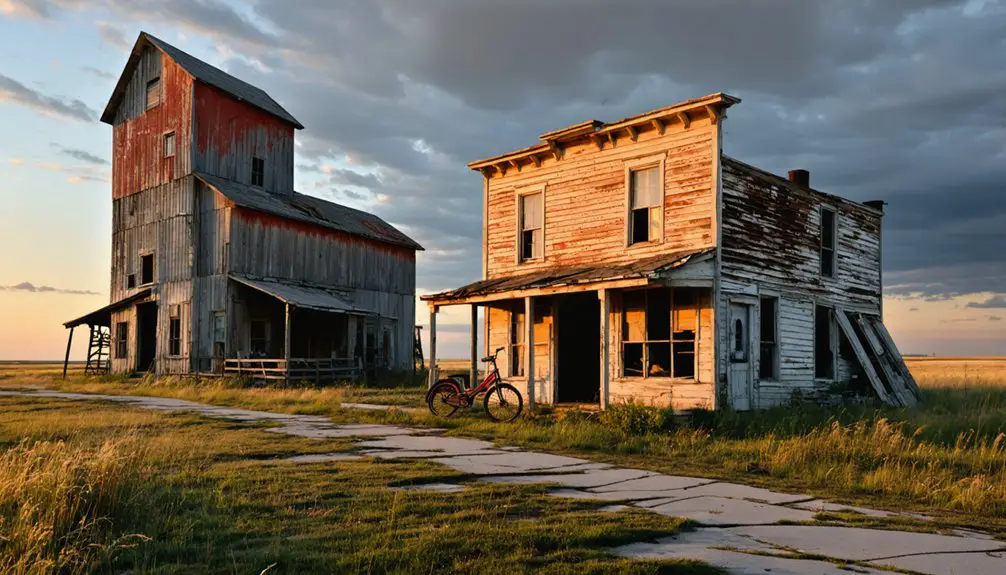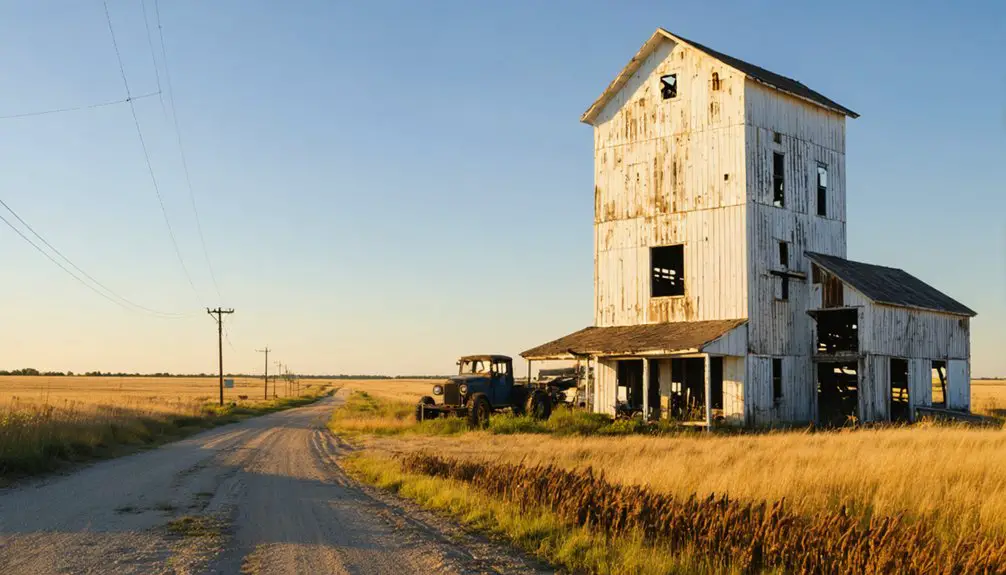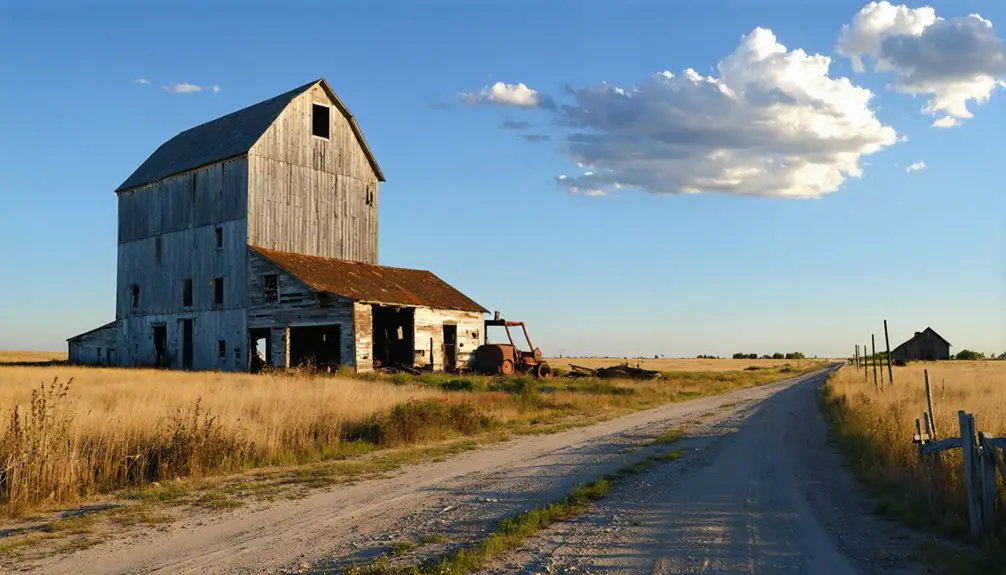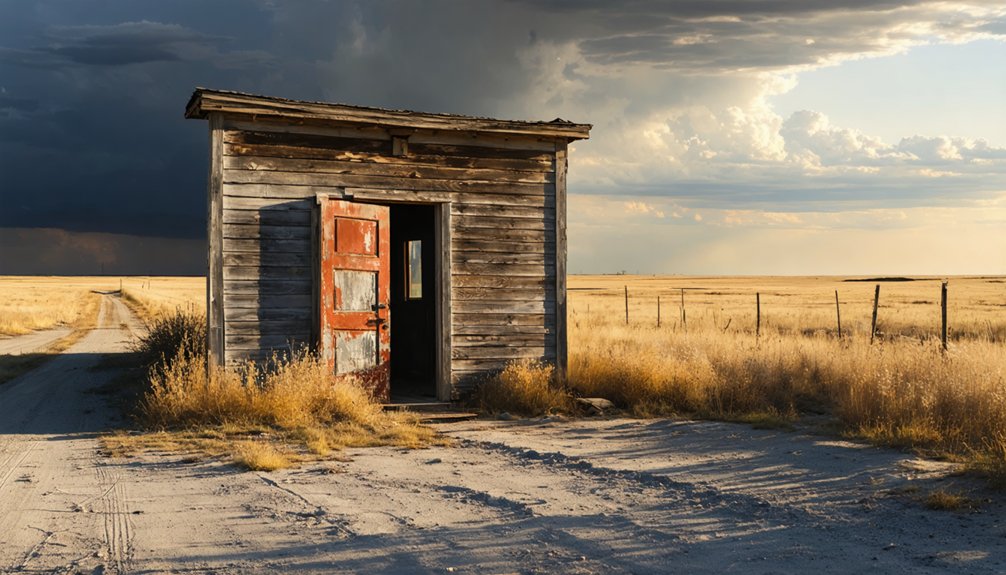
Planning a ghost town road trip to Temple, North Dakota means heading into big sky country where history faded quietly into the grass. Temple lost its county seat status, its commerce dried up, and its residents moved on — leaving the prairie to reclaim what ambition once built. You’ll want snacks, a full tank, bug spray, and closed-toe shoes before you go. There’s more to this journey than one forgotten town.
Key Takeaways
- Temple, North Dakota, once a county seat, lost its status due to no railroad access, causing economic decline and eventual abandonment.
- Begin your route west on State Highway 200, stopping at Charbonneau, Grassy Butte, Fort Buford, and Fort Union along the way.
- Pack snacks, lunch, and a full gas tank before departing, as restaurants and gas stations are scarce throughout the journey.
- Wear closed-toe shoes, apply bug spray, and tuck pants into socks to prevent tick exposure in Temple’s tall grass.
- Respect posted signs, avoid damaging structures, and pack out all litter to preserve Temple as a historical landmark.
Why Temple, North Dakota Became a Ghost Town Worth Finding
Temple, North Dakota didn’t fade quietly — it collapsed under the weight of everything it lacked. Once a county seat with real administrative power, Temple lost that designation to business interests that saw no future in a town without a railroad or navigable river.
Without those lifelines, economic decline was inevitable. Commerce dried up, residents left, and the town surrendered to the prairie.
When commerce dies, people follow — and eventually, the land reclaims what ambition once dared to build.
But that historical significance is exactly what makes Temple worth finding. You’re not visiting a sanitized museum — you’re standing where ambition met hard geography and lost.
The flat open landscape, vacant homes, and silent streets tell a story no exhibit can replicate. If you crave unfiltered history and wide-open freedom, Temple delivers something most destinations simply can’t — raw, unscripted authenticity.
Your Route Through Williams County’s Forgotten Towns
Once you’ve committed to finding Temple, you might as well make the whole drive count by building a route through Williams County’s other forgotten places.
Head west on State Highway 200, then drift south to uncover road trip hidden gems that most travelers completely miss. Charbonneau sits west of Watford City and deserves a stop before you push further into the open prairie.
While you’re covering ground, swing toward Grassy Butte to see its historic sod post office — a surprisingly charming relic.
Fort Buford and Fort Union add historical weight to the journey without pulling you far off course.
String these stops together and you’ve transformed a single ghost town visit into a full day of discovery through genuinely forgotten country.
What to Pack for a Day on the North Dakota Prairie
Packing smart makes the difference between a memorable road trip and a miserable one. Before you head out to Temple, load up on snacks and a packed lunch since you won’t find restaurants dotting the countryside.
Fill your tank before leaving town — gas stations disappear fast once you’re deep in Williams County.
Prairie safety demands you carry bug spray. Tall grass hides ticks, and they’ll find you before you find them. Check yourself thoroughly after any hiking.
Ditch the sandals and wear closed-toe shoes that can handle uneven terrain and overgrown paths.
Your phone signal will get spotty, so plug in a car charger before you lose juice entirely.
These packing essentials aren’t optional — they’re what keep your freedom on the road from turning into a headache.
What Ticks, Tall Grass, and Open Terrain Mean for Your Visit to Temple
The open prairie around Temple isn’t just scenic — it’s alive with hazards that’ll catch you off guard if you’re not ready.
Tall grass lines every country path, making tick prevention essential before you even step out of the car. Grass hazards here aren’t exaggerated — ticks thrive in exactly this kind of terrain.
Follow these four steps to protect yourself:
- Apply bug spray before walking through any grassy areas
- Wear closed-toe shoes and tuck pants into socks
- Check your entire body for ticks after every hike
- Inspect your gear and clothing before getting back in the vehicle
The single-truss bridge over Spring Creek and the surrounding flatlands reward bold explorers — just make sure you’re protected before claiming that freedom.
How to Respect Temple and the Ghost Towns Around It
Visiting a ghost town like Temple means stepping into a piece of history that can’t be rebuilt once it’s gone. Good ghost town etiquette starts with respecting posted signs and staying off private property.
Don’t damage structures, even ones that look completely abandoned — they’re fragile remnants worth preserving. Pack out everything you bring in, leaving no litter behind. Responsible preservation practices mean future visitors get the same experience you did.
Even the most weathered structures deserve protection — preserve what remains so the story can keep being told.
Photography is welcome, but keep it respectful by avoiding anything that disturbs the site. Remember, some areas near these ghost towns may still have residents living nearby, so move through thoughtfully.
Temple survived decades of decline — your visit shouldn’t accelerate its disappearance. Treat it like the irreplaceable historical landmark it truly is.
Frequently Asked Questions
What Are the Exact GPS Coordinates for Temple, North Dakota?
You’ll find Temple, North Dakota’s GPS Navigation coordinates at 48°23’20″N 103°03’22″W. Plug these into your device and you’re headed toward a site of remarkable Historical Significance, sitting at 2,349 feet elevation.
What Is the Elevation of the Temple, North Dakota Ghost Town Site?
You’ll find Temple’s ghost town history sits at an elevation of 2,349 feet above sea level. This elevation significance shapes the open prairie landscape, giving you sweeping, dramatic views that echo the town’s forgotten, adventurous past.
Is Temple, North Dakota Located Near Any National Grasslands or Parks?
Sure, because every abandoned ghost town history deserves prime real estate! You’ll find Temple, North Dakota nestled near the Little Missouri National Grasslands, where nature’s reclaimed what commerce couldn’t keep — perfect freedom-seeking exploration awaits you there.
Are There Any Residents Currently Living in Temple, North Dakota Today?
You’ll find no residents living in Temple today — it’s a true ghost town! While exploring its ghost town history, you might uncover local folklore whispered by the empty structures and vast, freedom-filled prairie surrounding you.
What Region of the United States Is Temple, North Dakota Situated In?
Like a forgotten frontier sentinel, Temple, North Dakota sits in the northwestern region of the United States. Its North Dakota geography and historical significance remind you that freedom once thrived here before time swept it away.
References
- https://www.youtube.com/watch?v=8GO57Im_dss
- https://us1033.com/a-look-at-some-real-life-north-dakota-ghost-towns/
- https://www.onlyinyourstate.com/experiences/north-dakota/ghost-towns-nd
- https://www.amyallender.com/north-dakota-ghost-towns/
- https://ghostsofnorthdakota892857007.wordpress.com/2015/10/30/true-ghost-towns-population-zero/
- https://ghostsofnorthdakota892857007.wordpress.com/2004/10/04/temple-nd/
- https://ghostsofnorthdakota892857007.wordpress.com/2017/11/08/roadtrip-ghosts-towns-vanishing-places-along-state-highway-200/
- https://www.onlyinyourstate.com/trip-ideas/north-dakota/spooky-road-trip-nd
- https://www.onlyinyourstate.com/trip-ideas/north-dakota/nd-terrifying-road-trip
- https://en.wikipedia.org/wiki/Temple