Tiverton Station’s crumbling platform and rusted rails are frozen in time, waiting quietly along Rhode Island’s forgotten rail corridor. You’ll follow Route 77 south through farmland and coastal views, then step onto weathered railbeds that once carried the pulse of an entire community. Download your offline maps, lace up sturdy boots, and prepare for an atmosphere that’s raw, unhurried, and hauntingly beautiful. Everything you need to plan your visit is just ahead.
Key Takeaways
- Tiverton Station features weathered railbeds, decaying structures, and rusted rails offering a raw, unpolished glimpse into forgotten railroad history.
- Take Route 77 south, wear sturdy footwear, download offline maps, and verify legal access before arriving at the remote site.
- Pack water, snacks, sun protection, and a first aid kit, and avoid structurally unstable areas during exploration.
- Removing artifacts is prohibited by state law, and altering or destroying structures carries serious legal consequences.
- Combine your visit with nearby sites like Homelands Estate, Four Corners District, and Freetown State Forest for a full day.
What’s Left of Tiverton Station Today?
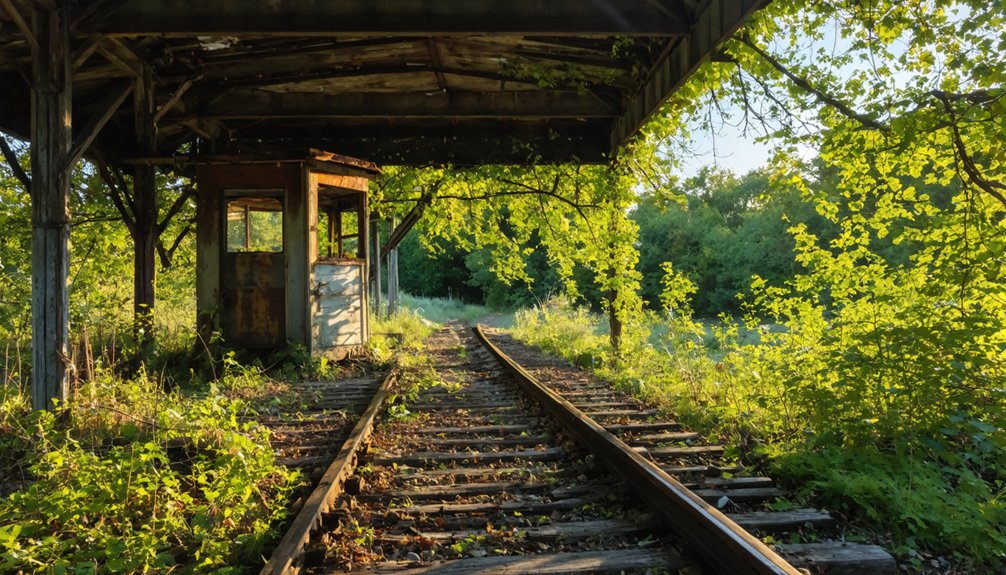
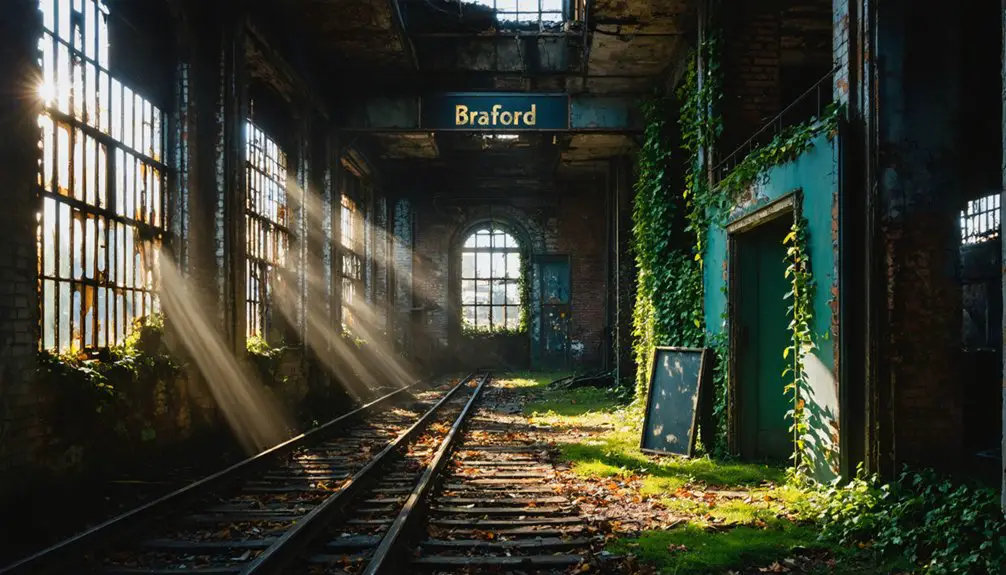
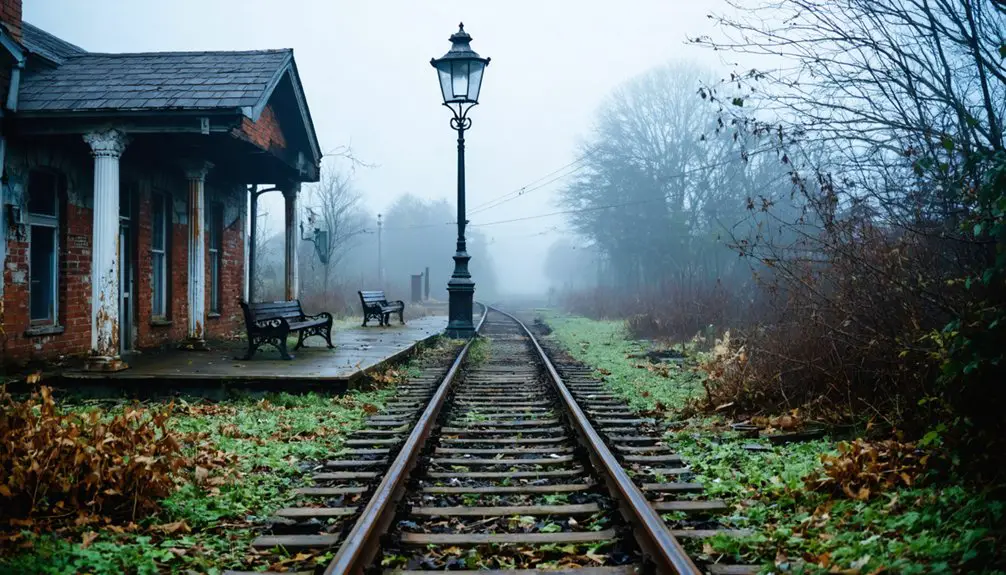
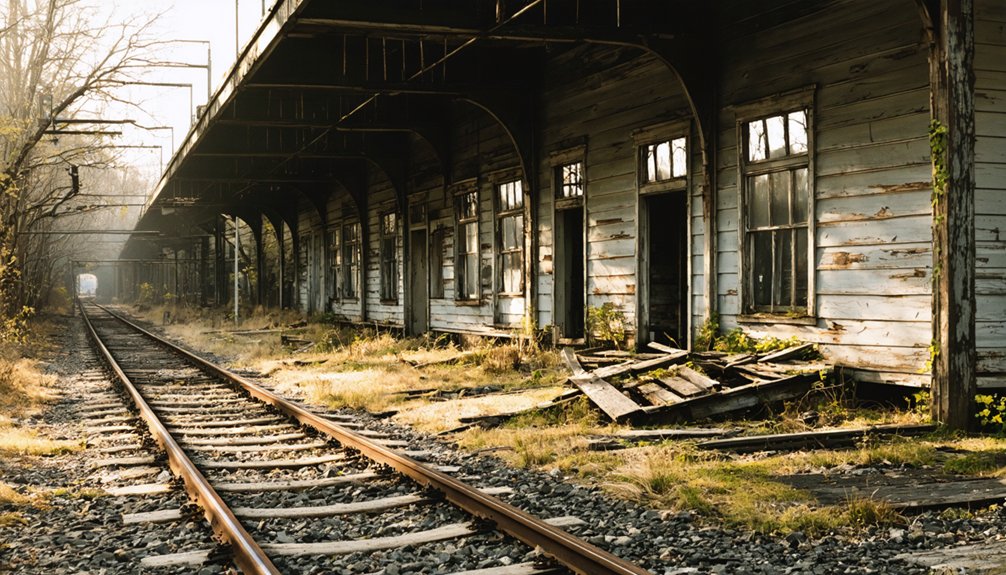
The old Tiverton Station still stands, but barely — its bones showing through decades of decay like a structure that’s given up waiting to be saved.
Tiverton Station still stands, barely — bones exposed, a structure that long ago stopped waiting to be saved.
You’ll notice the weathered railbeds stretching outward, silent reminders of a time when this stop carried both people and agricultural goods through Rhode Island’s landscape.
Its historical significance runs deeper than the rust and rot suggest. This station once connected ordinary lives to a broader world, and you can feel that weight standing there.
The architectural features — what remains of them — hint at a utilitarian elegance common to working railroad infrastructure.
Nobody’s restored it yet, so what you’re seeing is raw and unfiltered.
You’re walking through time exactly as it left things, untouched and unpolished.
How to Get to Tiverton Station, Rhode Island
Getting to Tiverton Station feels like retracing steps someone else started long ago. Head toward Tiverton, Rhode Island, following Route 77 south, where farmland and coastal glimpses frame the drive. You’ll feel the weight of Tiverton history settling around you before you even arrive.
The station sits quietly off the main road, tucked where railroad significance once shaped daily life — connecting farmers, families, and commerce across the region.
Download an offline map before leaving; cell service gets unreliable near remote stretches. Wear sturdy footwear because the surrounding terrain is uneven and overgrown.
Park responsibly and respect any posted access rules. You’re not just visiting a forgotten stop — you’re stepping into a corridor where movement once meant everything, and stillness now speaks louder than any locomotive ever did.
Why Tiverton Station Is Worth the Drive?
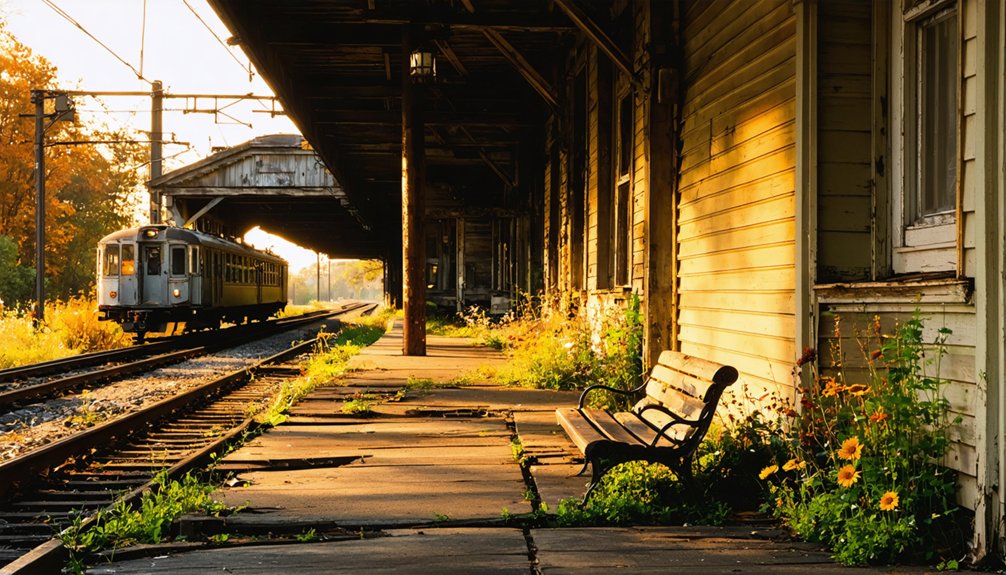
Abandoned decades ago, Tiverton Station carries the kind of quiet that only forgotten infrastructure can hold — rusted rails disappearing into overgrowth, a decaying station building frozen mid-collapse, and a railbed that still traces the ghost of agricultural commerce that once kept the region moving.
Its historical significance runs deeper than decay. This station connected ordinary people to markets, families to futures, and communities to the wider world beyond Tiverton’s quiet roads.
Now, local legends whisper around its crumbling edges — stories that give the silence a pulse. You’ll feel it standing there alone, reading the landscape like a document nobody bothered to archive.
No guided tours, no crowds, no ropes cordoning off experience. Just you, an open road behind you, and a place history quietly left behind.
What to Bring to Tiverton Station: The Essential Packing List
Showing up to a place like Tiverton Station underprepared is how a good road trip turns into a bad afternoon. Abandoned railways don’t wait for you to be ready, and neither does the terrain surrounding them.
Pack smart, and you’ll actually enjoy the Tiverton history unfolding around you.
- Water and snacks – Remote sites offer no conveniences, so bring enough to last the full visit.
- Sturdy footwear – Uneven railbeds and crumbling surfaces demand solid ankle support.
- First aid kit – Rough terrain means real risk, so don’t skip this one.
Download offline maps before you leave home. Cell service near the station is unreliable.
Sun protection matters too, especially during open-field stretches between the tree lines.
Is Tiverton Station Safe to Explore?
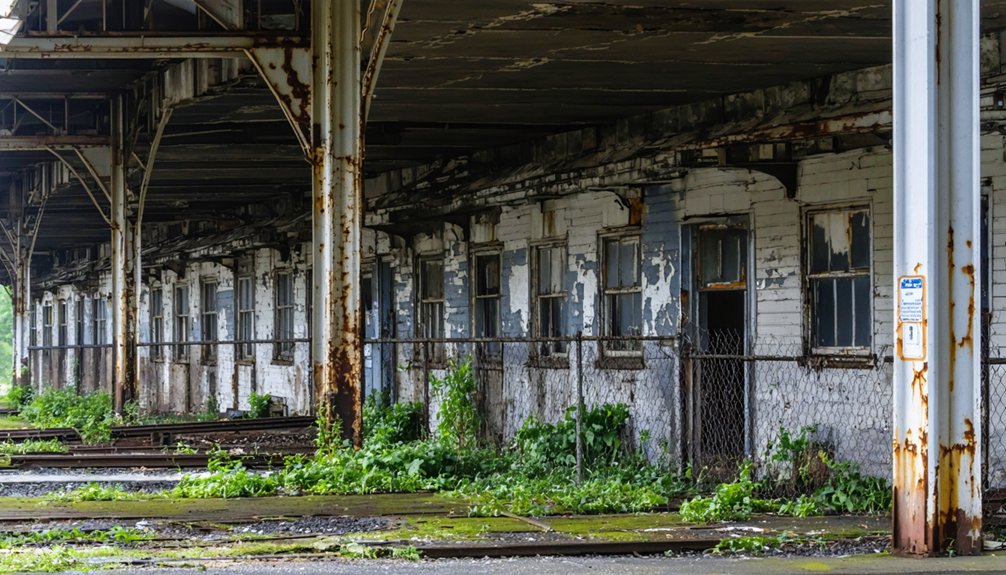
Before you step inside Tiverton Station’s weathered walls, you’ll want to respect the structural instability that decades of decay have left behind.
You’ll also need sound protection gear in case wildlife has claimed the surrounding remote terrain as its own.
Finally, verify whether you’re legally permitted access, since many abandoned sites like this one fall under private property restrictions that carry real consequences.
Structural Instability Risks
Decades of neglect have left Tiverton Station in a fragile, unpredictable state, and you’ll want to keep that in mind before stepping anywhere near its weathered remains.
The structural integrity of its aging walls and rotting floorboards can’t be trusted, so take these visitor precautions seriously:
- Never enter rooms where ceilings sag or floors visibly bow — they can collapse without warning.
- Watch every step around the railbed; broken ties and rusted spikes hide beneath overgrowth.
- Keep your distance from exterior walls that lean or show deep mortar cracks.
This station once buzzed with arriving passengers and loaded freight cars.
Now, it asks for your respect instead. Explore boldly, but explore smartly — your freedom depends on coming home.
Wildlife And Safety Gear
Once the trains stopped running, nature quietly reclaimed Tiverton Station — and she didn’t come alone. Wildlife encounters here aren’t rare; birds nest in the decaying eaves, and smaller animals have made the overgrown railbed their corridor.
You’re moving through their territory now. Respecting that reality means taking safety precautions seriously. Carry sound protection gear if you’re venturing into dense brush — sudden wildlife movement can startle both you and the animal.
Wear sturdy, ankle-supporting footwear because the terrain is uneven and unpredictable. Pack water, snacks, and sun protection, especially during warmer months when shade is sparse.
Freedom to explore a place like this comes with personal responsibility. The station won’t protect you — that job’s entirely yours.
Legal Access Verification
Safety gear gets you ready for the terrain — but knowing whether you’re legally allowed to be there’s a different kind of preparation entirely.
Before you wander those weathered railbeds, verify your legal property access. Many abandoned sites carry private ownership histories that aren’t obvious at first glance.
Check these three things before arrival:
- Confirm whether Tiverton Station sits on public or private land.
- Review historical preservation laws that protect structural ruins from disturbance.
- Contact local authorities or preservation groups for current access permissions.
True freedom means exploring without consequence. You don’t want a trespassing charge interrupting your road trip.
Respect the boundaries that protect these forgotten places — because the same laws keeping others out are quietly keeping the history intact for you.
What You Can and Can’t Do at Tiverton Station?
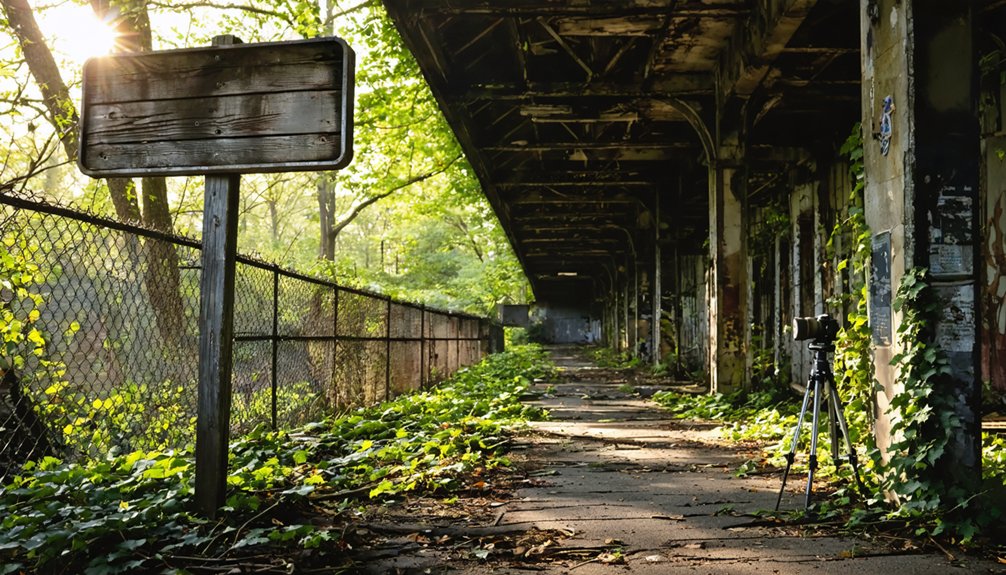
When you step onto the weathered grounds of Tiverton Station, you’re free to photograph every rusted rail and crumbling beam to your heart’s content.
What you can’t do, however, is pocket even the smallest artifact—state law strictly prohibits removing bottles, debris, or any remnant from historic sites like this one.
You’re a witness to history here, not a collector, so leave every piece exactly where time has placed it.
Permitted Activities At Station
Though Tiverton Station carries the quiet weight of a forgotten era, there are clear boundaries to how you can engage with the site. You’re free to explore its fading character respectfully, honoring both station history and local legends that still echo through the decaying timbers.
Here’s what you *can* do:
- Photograph the weathered structure, rusty railbeds, and surrounding landscape freely.
- Research the site’s past by observing visible remnants without disturbing them.
- Walk designated paths around the station grounds, staying alert to uneven terrain.
You’re stepping into living history here — fragile, irreplaceable, and worth protecting. Treat every crumbling beam and overgrown track as a document.
Your presence should leave nothing behind except careful footsteps and genuine curiosity.
Legal Restrictions And Prohibitions
Stepping into Tiverton Station means stepping into a space protected by real legal weight. You can photograph every rusted rail, every weathered beam, every crack in the decaying walls — but you can’t pocket a single artifact. State law prohibits removing bottles, debris, or any remnant from the site, and legal consequences are real and enforceable.
Preservation ethics aren’t bureaucratic formality here; they’re the reason anything remains standing. You’re free to explore, observe, and document, but altering or destroying structures — even unintentionally — violates historical preservation laws. Leave no waste behind.
Think of it this way: future visitors deserve the same raw, unfiltered experience you’re having right now. Respecting these boundaries isn’t restriction — it’s your contribution to keeping this forgotten place alive.
Haunted and Historic Sites to Pair With Tiverton Station
If you’re already making the trek to Tiverton Station, it’d be a shame to leave without exploring the haunted and historic layers that surround it. Tiverton’s haunted legends and historical significance run deeper than most expect.
Pair your visit with these nearby sites:
- Homelands Estate – A reportedly haunted historic building where shadowy figures and a recurring female apparition have unsettled visitors for years.
- Tiverton’s Four Corners District – A creatively charged neighborhood carrying a unique colonial vibe worth wandering slowly.
- Freetown State Forest – Just across the border near Fall River, locals whisper about paranormal activity throughout its dense, trail-laced interior.
Each location adds a distinct thread to your road trip, connecting forgotten history with the kind of freedom only open exploration delivers.
Tiverton Station and the Four Corners: Making a Full Day of It
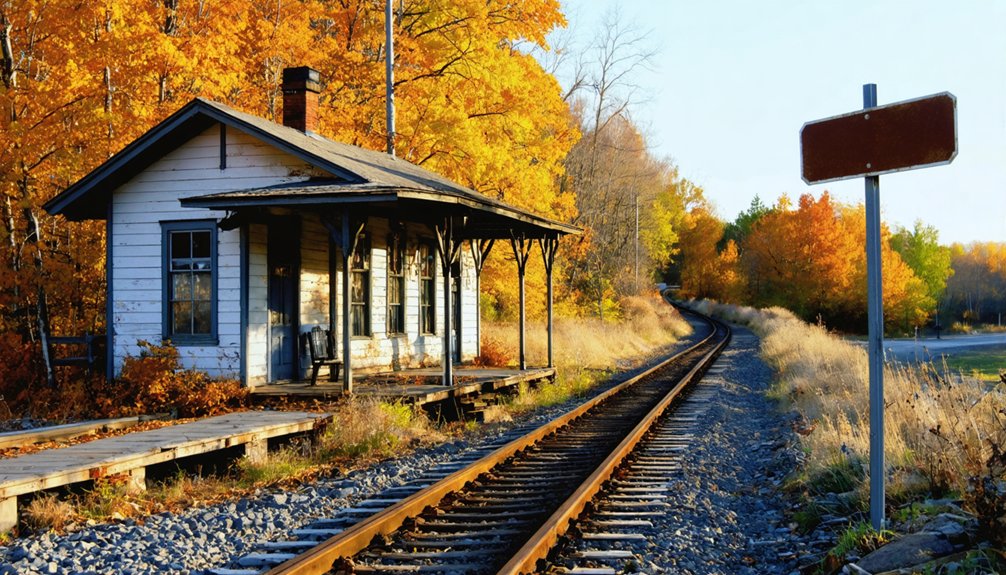
Once you’ve soaked in the haunted edges of Tiverton’s past, the station and Four Corners together make a natural full-day loop that rewards slow, unhurried attention.
Walk the old railbed first, when morning light softens the decay and Tiverton history feels genuinely close. You’ll notice how the abandoned infrastructure once shaped daily rhythms here — agricultural loads, quiet commutes, lives built around scheduled arrivals.
Afterward, drift toward Four Corners, where the creative district holds its own quiet energy. Stop somewhere local for a meal; the local cuisine reflects the same unhurried character the town has always carried.
Frequently Asked Questions
Was Tiverton Station Ever Featured in Any Films or Documentaries?
The available records don’t confirm Tiverton Station’s film locations history, but its haunting decay and historical significance make you feel like you’re walking through a forgotten cinematic world, where rusted tracks whisper stories waiting to be captured.
Are Guided Tours of Tiverton Station Available for Booking in Advance?
No confirmed guided tour options or booking details exist for Tiverton Station. You’ll wander freely through its weathered, forgotten railbeds on your own terms, embracing that raw, unscripted sense of discovery the abandoned station quietly offers.
What Railroad Company Originally Operated the Tiverton Station Route?
Like fog over forgotten rails, the specific railroad company’s identity isn’t captured in available records. You’ll want to dig deeper into Tiverton heritage and railroad history archives to uncover which operator originally ran this evocative route.
Is Tiverton Station Accessible for Visitors With Mobility Challenges?
Wheelchair accessibility at Tiverton Station remains limited, as decades of decay have left uneven terrain challenging to navigate. You’ll want to explore transportation options carefully before visiting, ensuring you’re equipped with sturdy footwear to roam freely through history’s evocative, weathered remnants.
Has Tiverton Station Been Officially Recognized as a Historic Landmark?
You won’t find official landmark recognition for Tiverton Station yet — preservation efforts haven’t secured that status. Still, its landmark significance echoes through Tiverton history, and you can freely explore its evocative, decaying beauty before restoration ever claims it.
References
- http://freepages.rootsweb.com/~gtusa/history/usa/ri.htm
- https://en.wikipedia.org/wiki/List_of_ghost_towns_in_Rhode_Island
- https://www.youtube.com/watch?v=CWGW-p1qeAo
- https://ghostmap.org/haunted-places/homelands-estate/
- https://www.reddit.com/r/RhodeIsland/comments/1efi92l/any_paranormal_exploration_areas_on_the_tiverton/
- https://www.tripadvisor.com/Attraction_Review-g54117-d560067-Reviews-Tiverton_Four_Corners-Tiverton_Rhode_Island.html
- https://www.worldatlas.com/cities/6-of-the-quirkiest-towns-in-rhode-island.html
- https://ghost-towns.close-to-me.com/states/rhode-island/
- https://www.tiverton.ri.gov/242/History
- https://en.wikipedia.org/wiki/Tiverton