Planning a ghost town road trip to Seneca, California means committing to six miles of dirt and gravel roads, a high-clearance 4WD vehicle, and zero cell service once you arrive. Tucked deep in Plumas County’s Feather River Canyon, this former Gold Rush settlement dates back to 1851 and now sits nearly forgotten, rated 9.2 out of 10 for map difficulty. Late spring through early fall offers the best access, and everything you need to know before you go is covered ahead.
Key Takeaways
- Seneca, California, is a remote ghost town in Plumas County’s Feather River Canyon, established in 1851 during the Gold Rush.
- Access requires a high-clearance 4WD vehicle, two full-size spare tires, and navigation via six miles of dirt road from Greenville.
- Bring paper maps and offline navigation, as GPS often fails and the nearest paved road is seven miles away.
- Visit between late May and September for optimal road conditions, wildflowers, wildlife, and accessibility before winter snow blocks entry.
- Pack water, non-perishable food, a first aid kit, recovery gear, and a full gas tank, as no services exist nearby.
What Makes Seneca, California a True Ghost Town?
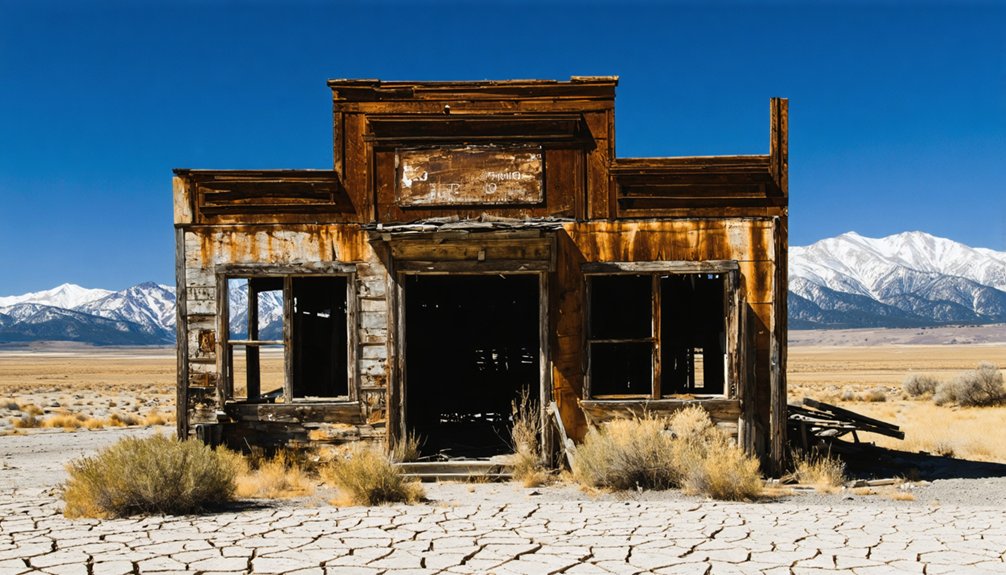
Tucked in Plumas County’s Feather River Canyon, Seneca, California checks every box of a true ghost town — it’s nearly impossible to find, barely standing, and frozen in a past most people have forgotten.
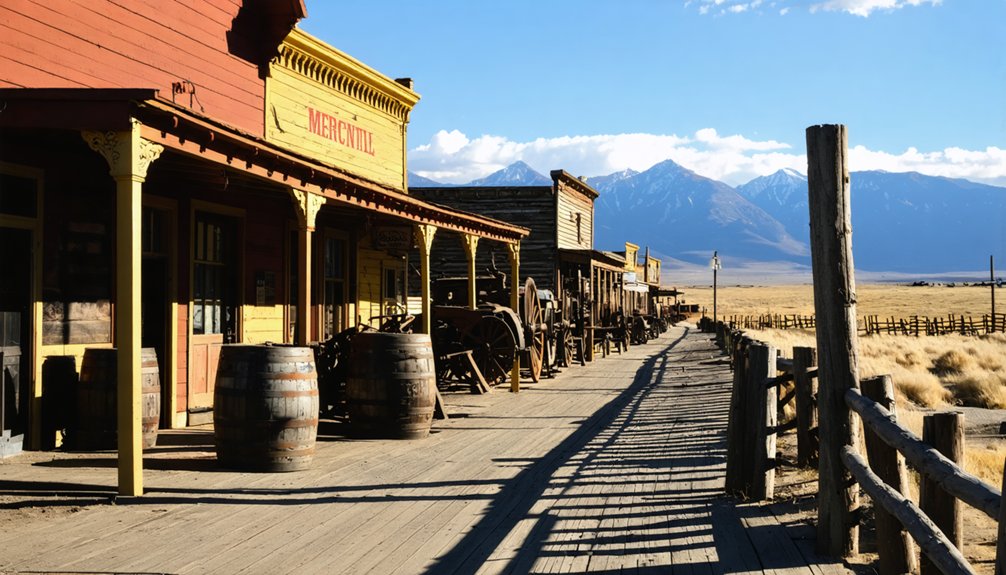
Gold brought thousands here in 1851, fueling a wild mining community complete with a dance hall, blacksmith, livery, and post office.
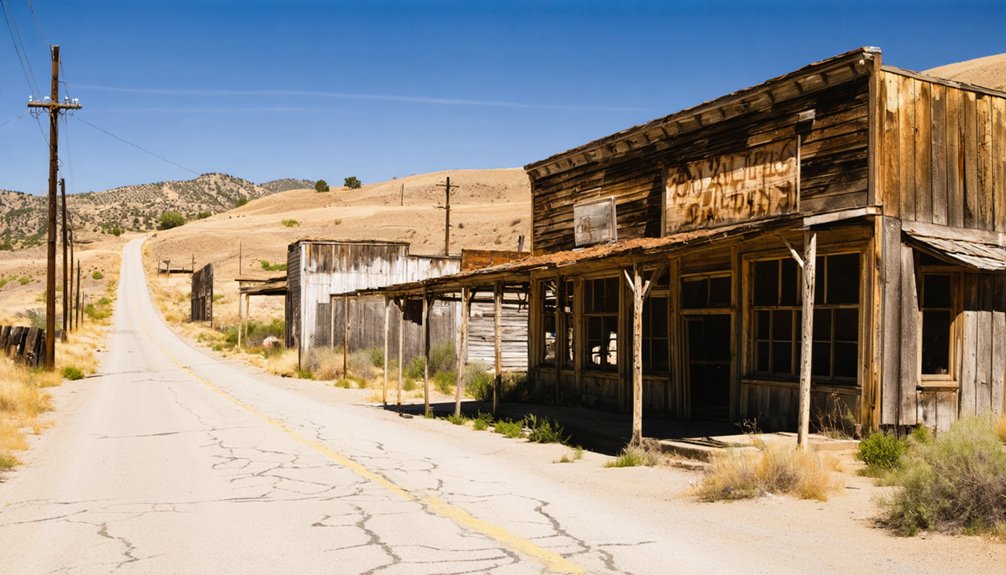
Today, those Ghost Town Legends have given way to weathered reality. You’ll find just three rundown cabins, scattered sheds, and a handful of Abandoned Structures slowly surrendering to time.
The nearest paved road sits seven miles out, and locating it on a map earns a difficulty rating of 9.2 out of 10.
Seneca doesn’t perform for visitors — it simply exists, raw and unapologetic, exactly as history left it.
How Seneca Went From Gold Rush Boomtown to Ghost Town
When gold fever struck in 1851, Seneca erupted into a full-blown mining town practically overnight. The Gold Rush drew prospectors chasing dreams through mines like Sunnyside, Lucky Chance, and Last Chance.
Supporting them was a bustling settlement complete with a dance hall, blacksmith, livery, post office, and hotel with solar-heated showers.
But gold rushes don’t last forever. Once the ore dried up, so did the population. The Mining History that once defined Seneca faded, leaving behind Abandoned Structures weathered by decades of harsh Sierra winters.
Today, only a handful of cabins, sheds, and the iconic Gin Mill remain standing.
Despite its quiet decay, Seneca carries real Historical Significance. Walking its grounds, you’re stepping directly into California’s raw, untamed past.
How to Get to Seneca Without Getting Lost
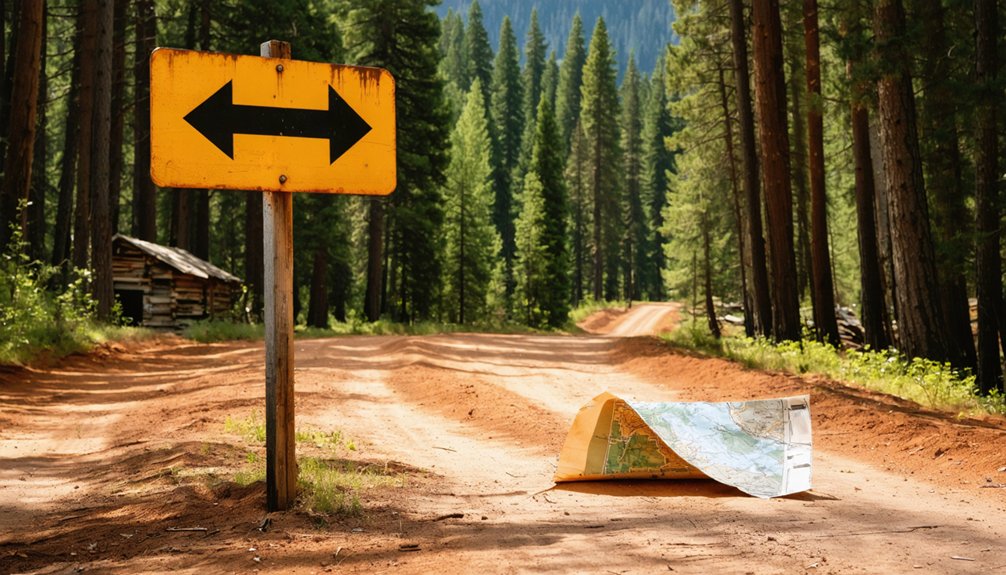
Getting to Seneca requires commitment — this isn’t a place you stumble upon accidentally.
Seneca doesn’t welcome the casual passerby — reaching it takes resolve, preparation, and a willingness to earn the journey.
Start your route planning by targeting Greenville, California, as your reference point on any map. From there, follow Seneca Road, a six-mile stretch of dirt and gravel that demands a capable vehicle and steady nerve.
Your navigation tips start with this warning: the nearest paved road sits seven miles out, and the town rates a 9.2 out of 10 for map difficulty.
The route winds along a ridge towering several hundred feet above the North Fork of the Feather River — breathtaking but unforgiving if you’re unprepared.
Download offline maps before you leave, keep your gas tank full, and treat Reno, just 128 miles away, as your last reliable resupply stop.
The Cabins, Sheds, and Ruins Still Standing in Seneca
Once you’ve navigated that ridge road and pulled into Seneca, the landscape tells you immediately that time stopped here long ago.
You’ll find three weather-beaten cabins standing against the elements, each carrying layers of cabins history worth investigating. The structures are rough, leaning, and honest about their age.
Beyond the cabins, shed exploration rewards the curious traveler. Several outbuildings scatter across the 12-acre property, hiding remnants of daily mining life — old tools, forgotten equipment, fragments of a working community that once included a blacksmith, livery, and feed store.
Nothing here is polished or preserved. You’re walking through authentic decay, not a curated exhibit.
If you’re someone who values raw, unfiltered history over sanitized tourism, Seneca delivers exactly that kind of freedom.
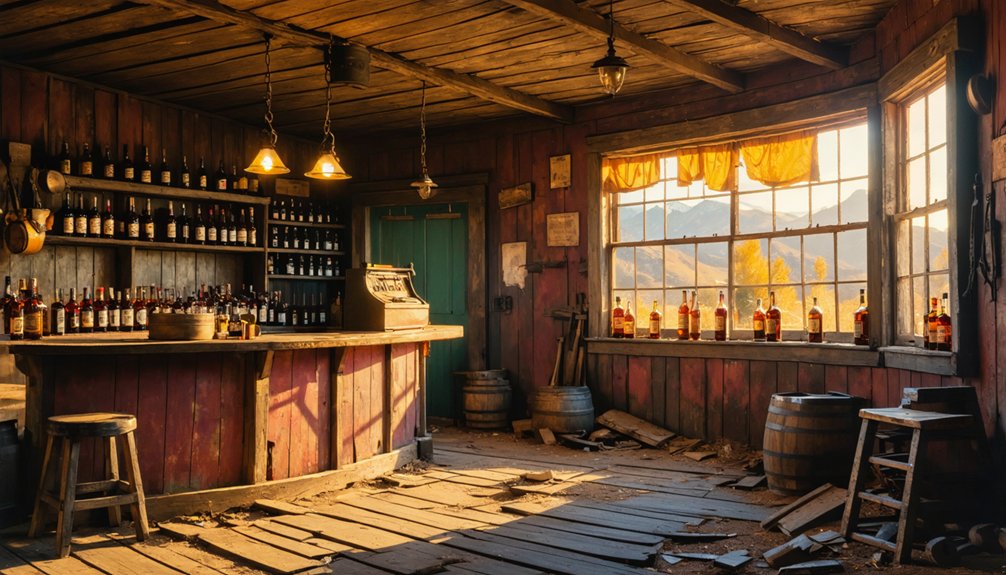
The Gin Mill: Seneca’s Last Standing Bar
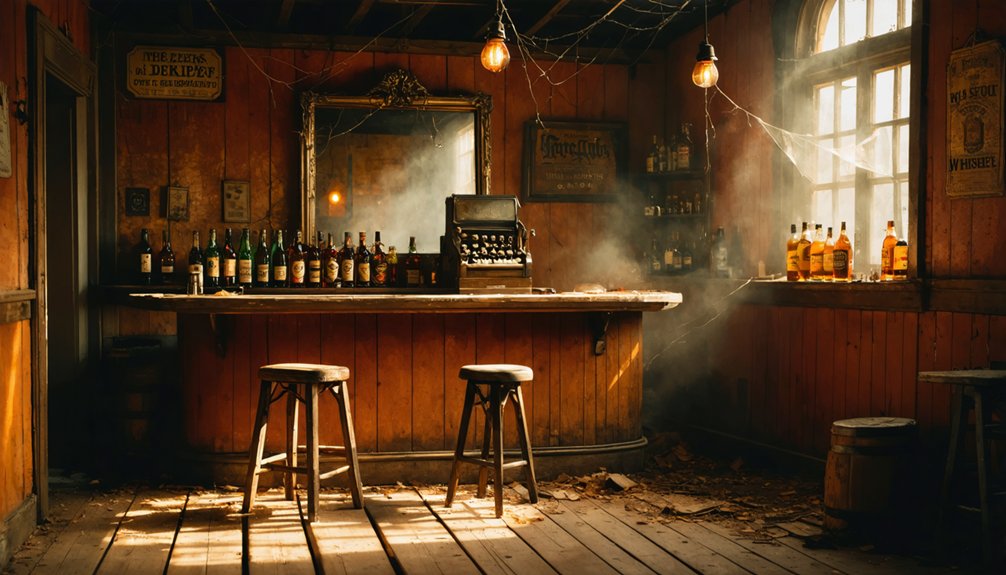
Standing at the edge of Seneca’s quiet decay, the Gin Mill pulls your attention like the last ember in a cold fire.
The Gin Mill’s history stretches nearly sixty years, surviving when everything else crumbled. Marie Sabin’s legacy defines this place — she ran it solo for decades, serving cold beers from a propane-powered fridge to hunters, wanderers, and road-trippers like you.
- The Gin Mill holds an active liquor license spanning nearly six decades
- Marie Sabin operated it alone for years
- A propane-powered fridge kept drinks cold off the grid
- It’s the town’s last structure with documented operating history
- The bar remains the strongest reason to make the drive
You won’t find another bar like it anywhere along this canyon road.
Day Trips and Stops Near Seneca, California
Seneca sits deep in Plumas County, but the surrounding region rewards explorers who treat the ghost town as a base rather than a destination.
Greenville, California, sits nearby and offers a grounded stop along your road trip, connecting you to local history and practical supplies.
Greenville rewards a detour, grounding road-weary travelers with local history and the practical supplies needed to push deeper into Plumas County.
The Feather River Canyon itself deserves your attention, with its dramatic ridgelines towering hundreds of feet above the rushing North Fork below.
You’ll find historical landmarks scattered throughout Plumas County that echo Seneca’s Gold Rush origins, stretching back to 1851.
Reno, Nevada, sits 128 miles away and makes a natural endpoint if you’re pushing east.
Whether you’re chasing canyon views, mining history, or open roads, the territory surrounding Seneca gives you genuine freedom to build a trip worth remembering.
The Best Time of Year to Visit Seneca
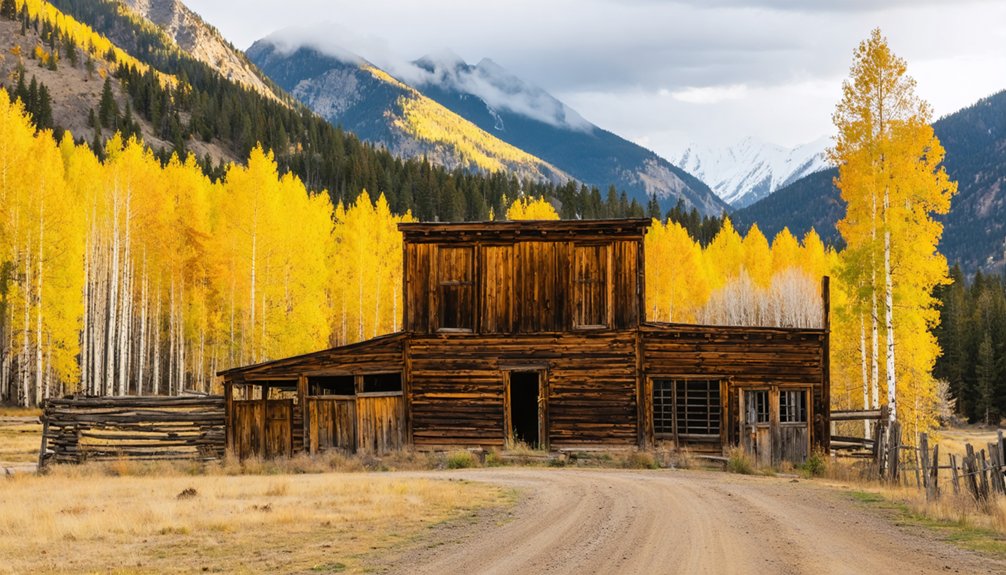
Timing your visit to Seneca matters more than it does for most destinations.
Winter snow closes that six-mile dirt road entirely, cutting off access for months. Late spring through early fall gives you the best window for exploring freely.
- Late May–June: Wildflowers bloom, the Feather River runs strong, and crowds stay thin.
- July–August: Warm, dry conditions make seasonal activities like hiking and fishing ideal.
- September: Cooler temperatures arrive, wildlife viewing peaks as animals prepare for winter.
- October: Fall colors transform the canyon, but early snow becomes a real risk.
- Winter: Road closures make Seneca completely inaccessible without specialized equipment.
Plan for September if you want the richest experience — comfortable weather, stunning scenery, and the canyon practically to yourself.
What to Pack for Seneca’s Dirt Roads and Off-Grid Conditions
Before you head down Seneca Road’s six miles of dirt and gravel, you’ll want your vehicle stocked with recovery gear like a tow strap, shovel, and traction boards in case you get stuck on the rutted trail.
Pack off-grid essentials including extra water, non-perishable food, a first-aid kit, and a portable power source, since there’s no infrastructure waiting for you at the end of that road.
Keep a paper map or downloaded offline GPS route on hand, because cell service disappears long before the pavement does.
Essential Vehicle Recovery Gear
Maneuvering six miles of dirt and gravel to reach Seneca isn’t a casual Sunday drive, so you’ll want your vehicle stocked with the right recovery gear before you turn onto Seneca Road.
Proper vehicle maintenance beforehand reduces your risk, but knowing recovery techniques keeps you moving when things go sideways on remote terrain.
Pack these essentials:
- Hi-lift jack for lifting a stuck or tilted vehicle off uneven ground
- Tow straps or kinetic recovery rope to pull yourself or another vehicle free
- Tire repair kit and portable air compressor for punctures on gravel roads
- Collapsible shovel to dig out from soft soil or snow
- Recovery boards for traction when tires lose grip on loose surfaces
Off-Grid Survival Supplies
Once you’ve loaded your recovery gear, shift your attention to the supplies that’ll keep you self-sufficient once you’re out there—because Seneca offers no stores, no gas stations, and no cell service to bail you out.
Your off grid essentials should include enough water for the full trip, since the Feather River Canyon’s remote terrain gives you zero resupply options. Pack non-perishable food, a first aid kit, a paper map, and a reliable compass.
Winter months bring snow to this elevation, so carry extra layers and an emergency blanket. Your survival gear should also include a portable power bank, fire-starting tools, and a quality flashlight.
Reno sits 128 miles away—your nearest real resupply point—so pack like you won’t be turning back early.
Navigating Unpaved Road Conditions
Surviving off-grid starts with having the right supplies, but getting to Seneca in the first place demands a vehicle and a kit built for six miles of unforgiving dirt and gravel.
These unpaved trails punish unprepared drivers, so stack your odds before you leave pavement behind.
Essential driving tips and gear for Seneca’s rough access roads:
- High-clearance 4WD vehicle — standard sedans won’t survive the terrain
- Two full-size spare tires — gravel shreds sidewalls without warning
- Portable air compressor — adjust tire pressure for changing trail conditions
- Detailed paper maps — GPS signals drop in the canyon
- Tow straps and a shovel — mud and soft shoulders claim unprepared rigs fast
Respect the road, and Seneca rewards you with a rare slice of California history.
Is Seneca Worth the Drive?
Whether Seneca is worth the six-mile dirt road slog depends on what you’re chasing. If you’re drawn to raw history and wide-open solitude, Seneca’s attractions deliver something most tourist spots can’t manufacture.
You’re walking ground where gold miners hustled in 1851, where dance halls and blacksmiths once defined daily life. The historical significance hits differently when you’re standing inside the Gin Mill, knowing Marie Sabin poured cold beers from a propane fridge for decades in near-total isolation.
No crowds, no gift shops, no curated experience — just weathered wood and honest history. If you crave comfort, skip it.
But if freedom means discovering forgotten places before the world catches up, Seneca rewards the detour with something genuinely rare.
Frequently Asked Questions
Can You Legally Camp Overnight on the Seneca Ghost Town Property?
The knowledge doesn’t confirm you can “rest your boots” there overnight. Respect ghost town etiquette and check current camping regulations with Plumas County authorities before you claim your slice of wild freedom at Seneca’s 12-acre property.
Is the Gin Mill Still Open to Visitors Today?
The Gin Mill’s current status isn’t confirmed, but you’ll find its ghost town history intriguing. It’s operated for nearly sixty years, so visit and discover whether visitor experiences still await you inside this legendary bar.
Was Seneca Ever Considered for Historical Preservation or Landmark Status?
Like a fading ember, Seneca’s historical significance caught attention when a historic plaque confirmed its 1851 founding. You’ll find no formal preservation efforts documented, but that rugged freedom it offers remains beautifully untamed and authentically yours.
Did Marie Sabin Ever Sell or Transfer Ownership of the Gin Mill?
The records don’t confirm whether Marie Sabin ever sold or transferred ownership of the Gin Mill. What you do know is she dedicated decades to keeping this legendary ghost town bar alive and pouring cold ones.
Has the Craigslist Listing for Seneca Resulted in a Completed Sale?
The records don’t confirm a completed sale, but you’ll find Seneca history and property valuation fascinating—it’s listed at $225,000, and that viral Craigslist ad transformed this forgotten 12-acre ghost town into a worldwide sensation worth exploring.
References
- https://roadtrippers.com/magazine/gin-mill-seneca-california/
- http://www.youtube.com/watch?v=b6WZHVofNcc
- https://www.seattletimes.com/life/travel/visiting-and-buying-a-california-ghost-town/
- https://www.visitcalifornia.com/now/california-ghost-towns-road-trip/
- https://www.ghosttowns.com/states/ca/seneca.html
- https://www.visitcalifornia.com/road-trips/ghost-towns/
- https://www.youtube.com/watch?v=FEiWdlOSoiw
- https://www.outyourbackdoor.com/articles/adventure_a/easy-cowboy-the-big-uncle-tim-california-adventure-2162/
- https://www.youtube.com/watch?v=b3qS6EIp6zQ
- https://www.hertz.com/p/american-road-trip-planner/west-coast/ghost-towns-of-the-west