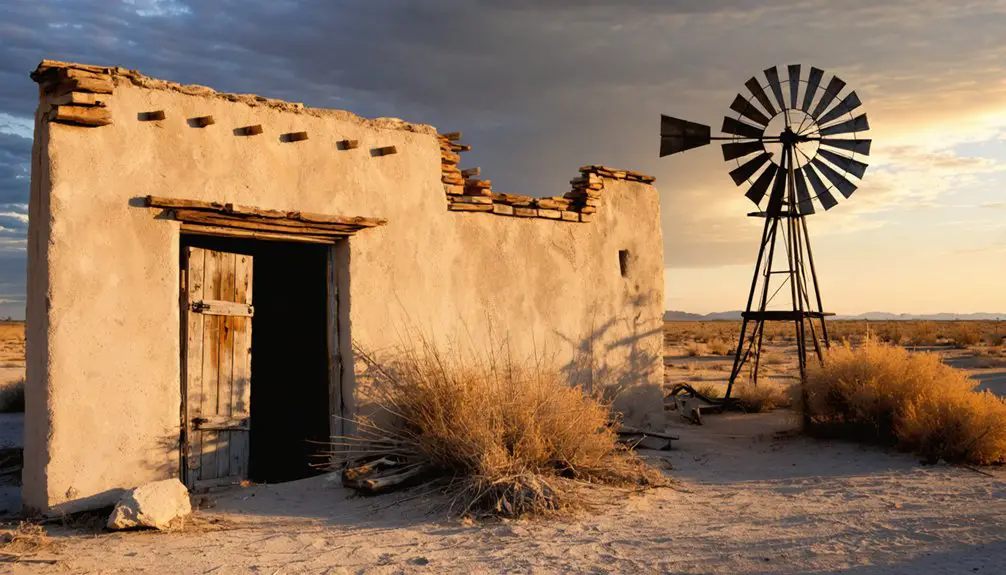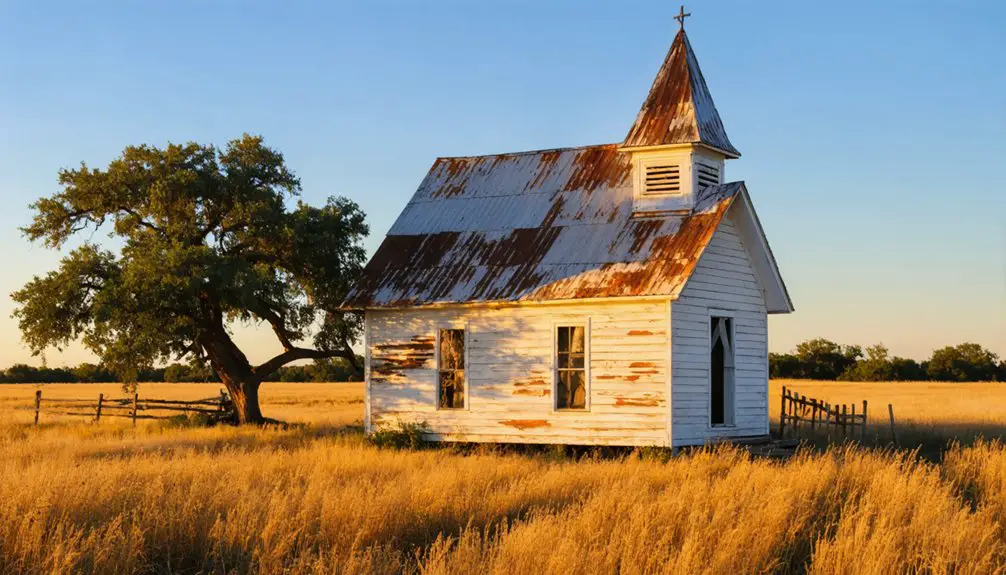
Planning a road trip to Eagle Creek, Texas means heading southeast of San Antonio into Wilson County’s open plains and brush country. You won’t find highway signs or tourist markers here. Stock up on fuel, water, and snacks before leaving the city, and download offline maps since cell signals get unreliable fast. What awaits you are crumbling foundations, rusted machinery, and untamed South Texas terrain. Keep going, and you’ll uncover everything you need to explore this forgotten corner of Texas.
Key Takeaways
- Eagle Creek is located in Wilson County, southeast of San Antonio, which serves as the nearest major city for supplies before departure.
- No interstate access exists, so travel via Farm-to-Market roads requires a reliable vehicle, offline maps, and a full gas tank.
- Pack water, snacks, and a camera, as no services are available near Eagle Creek and cell signals are unreliable.
- Expect crumbling foundations, rusted machinery, collapsed wooden structures, and overgrown fence lines marking forgotten property boundaries throughout the site.
- Wilson County’s 31 ghost towns, including Calaveras, Boldtville, and Graytown, make excellent additions to an extended road trip itinerary.
Why Did Eagle Creek Become a Ghost Town?
Though Eagle Creek once thrived as part of Wilson County’s bustling network of small communities, it eventually joined the ranks of Texas’s 511 ghost towns—a fate shaped by forces that swept through countless settlements across the state.
You’ll find that economic decline played a central role. When railroads bypassed certain towns or agricultural demand shifted, residents packed up and moved toward better opportunities.
Community shifts followed naturally—families relocated, businesses closed, and the population simply evaporated.
When families leave and businesses shutter, a town doesn’t die all at once—it simply disappears.
Eagle Creek’s story mirrors patterns seen across Wilson County, which holds 31 ghost towns alone.
Whether drought, market changes, or infrastructure decisions drove the exodus, the result was the same: a once-living community reduced to silence.
Understanding this history deepens your appreciation when you finally explore what remains.
Where Is Eagle Creek in Wilson County?
You’ll find Eagle Creek tucked into Wilson County, southeast of San Antonio, in a region that tops all Texas counties with 31 ghost towns.
To reach it, you’ll navigate from San Antonio via local highways that feed into the county’s network of rural FM roads, so don’t expect interstate convenience.
Pack a reliable map or GPS, since these back roads can be unforgiving, especially after rain.
Wilson County’s Geographic Location
Wilson County sits southeast of San Antonio, placing Eagle Creek within a quietly rural stretch of Texas that most travelers pass without a second glance. Its geographic features lean heavily toward open plains, scattered brush, and the kind of wide-open terrain that once drew settlers looking for fresh starts.
Wilson County carries genuine historical significance as home to 31 ghost towns, more than any other county in Texas. That density tells you something about how fiercely people once built here and how completely circumstances changed.
Eagle Creek is one piece of that larger story, embedded in a landscape that rewards the curious traveler willing to leave the highway behind. Knowing where Wilson County falls on the map helps you plan your route and understand what shaped this forgotten corner of Texas.
Nearest Major City Access
San Antonio serves as your natural launching point for reaching Eagle Creek, sitting just northwest of Wilson County and offering the last real stretch of urban convenience before the roads thin out and the landscape opens up.
Stock up on fuel, water, and snacks before heading southeast, because ghost town access means trading city infrastructure for quiet FM roads and wide-open Texas terrain.
That urban contrast hits differently once you’re rolling past cattle ranches and scrub brush, leaving behind highways and headed toward communities time forgot.
No interstates connect you directly to Eagle Creek, so embrace the rural routes and give yourself room to explore.
Wilson County’s back roads reward the patient traveler willing to navigate without a tourist center in sight.
Rural Roads And Routes
Pinning down Eagle Creek on a map takes some patience, since this ghost town sits quietly in Wilson County without the benefit of highway signs or tourist markers pointing the way.
You’ll navigate Farm-to-Market roads that cut through open ranchland southeast of San Antonio, where rural exploration becomes part of the adventure itself.
These narrow, unmarked routes demand a reliable vehicle, a downloaded offline map, and a willingness to slow down.
Wilson County’s roads aren’t built for casual cruising — they’re working country roads threading through private land.
That reality only deepens the historical significance of every forgotten settlement you pass.
Cross-reference Texas Escapes listings and TSHAonline before you leave, so you’re driving with purpose rather than wandering aimlessly through beautiful but unforgiving terrain.
How to Reach Eagle Creek Ghost Town From San Antonio
Reaching Eagle Creek from San Antonio takes you on a scenic drive southeast through Wilson County, where rural FM roads replace city highways and the landscape opens into quiet Texas hill country.
Head southeast on US-181 from San Antonio, then shift onto local FM roads cutting through Wilson County’s open terrain.
No Interstate brings you directly here — that’s the point. You’re trading convenience for discovery.
This route carries real historical significance, threading past communities that once thrived and now exist only as local legends whispered through faded records and crumbling foundations.
Keep your tank full, download offline maps, and expect minimal signage.
The freedom of this drive is exactly that — unscripted, unhurried, and genuinely rewarding for anyone willing to explore Texas beyond its well-worn tourist trails.
What You’ll Actually Find at Eagle Creek Today?
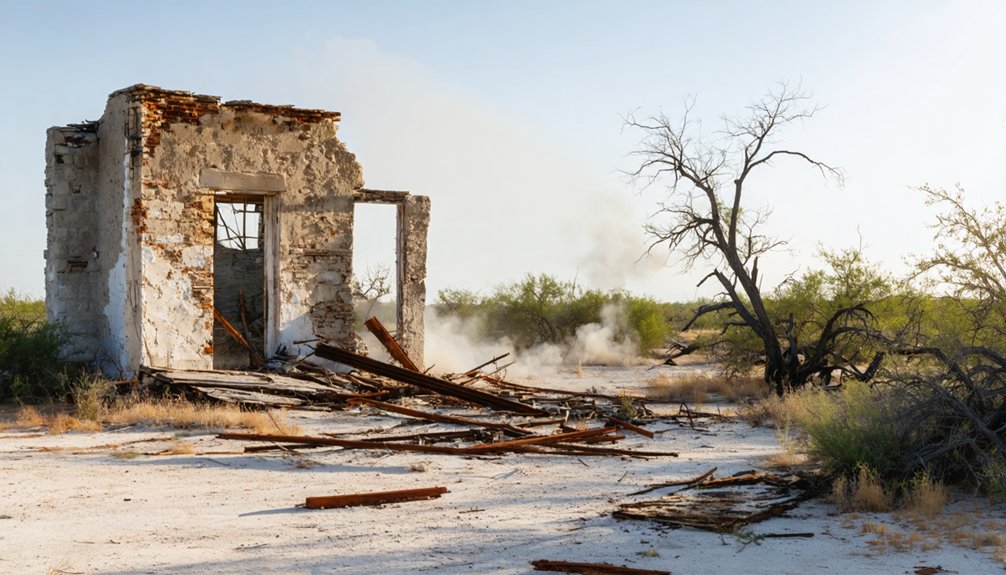
When you arrive at Eagle Creek today, you’ll likely encounter crumbling remnants of abandoned structures slowly surrendering to decades of neglect.
Overgrown brush and wild vegetation have reclaimed much of the landscape, giving the site an eerie, time-capsule quality that rewards patient exploration.
If you search carefully, you might uncover historical artifacts scattered across the grounds, offering tangible connections to the community that once thrived here.
Remnants Of Abandoned Structures
Though Eagle Creek has faded from maps and memory alike, you’ll likely find the quiet remnants that ghost towns so often leave behind — weathered timber frames, crumbling foundations, and rusted relics half-swallowed by South Texas brush.
These historical remnants and abandoned buildings tell a story no history book fully captures.
Watch for these defining features:
- Collapsed timber frames — skeletal structures reclaimed by vegetation
- Stone or concrete foundations — outlines of homes and businesses once bustling with life
- Rusted farm equipment — machinery frozen in time beneath decades of rust
- Overgrown pathways — former roads now barely distinguishable from surrounding brush
- Scattered household artifacts — broken pottery, glass, and metal fragments revealing everyday frontier life
Every crumbling wall is a page worth reading.
Overgrown Rural Landscapes
Beyond the crumbling foundations and rusted relics, the land itself becomes the most striking artifact at Eagle Creek — a sprawling canvas of untamed South Texas brush that’s quietly erased nearly every trace of the community that once stood here.
Mesquite trees, prickly pear, and dense cedar have reclaimed what settlers once cleared, swallowing overgrown paths that once connected neighbors and businesses. You’ll navigate terrain that pushes back, demanding patience and curiosity in equal measure.
Rural exploration here isn’t passive — it’s physical, immersive, and raw. The landscape doesn’t perform for visitors; it simply exists, indifferent and wild.
That authenticity is precisely what draws freedom-seekers away from manicured tourist spots. Eagle Creek’s overgrown silence speaks louder than any historical marker ever could.
Historical Artifacts Discovered
Scattered across Eagle Creek’s reclaimed brush, you’ll find the quiet evidence of lives once lived — fragments that survived decades of neglect, weather, and encroaching vegetation.
These historical discoveries remind you that freedom-seekers once built something real here. Artifact preservation isn’t guaranteed, so document everything carefully and disturb nothing.
What you might uncover:
- Broken foundation stones half-buried beneath root systems and soil
- Rusted metal fragments from tools, hardware, or household equipment
- Ceramic shards from everyday dishware and storage vessels
- Collapsed wooden structures slowly surrendering to Wilson County’s climate
- Overgrown fence lines marking property boundaries long forgotten by maps
Each find tells a story no history book captured.
Bring a camera, respect the land, and let Eagle Creek speak on its own terms.
Other Wilson County Ghost Towns Nearby
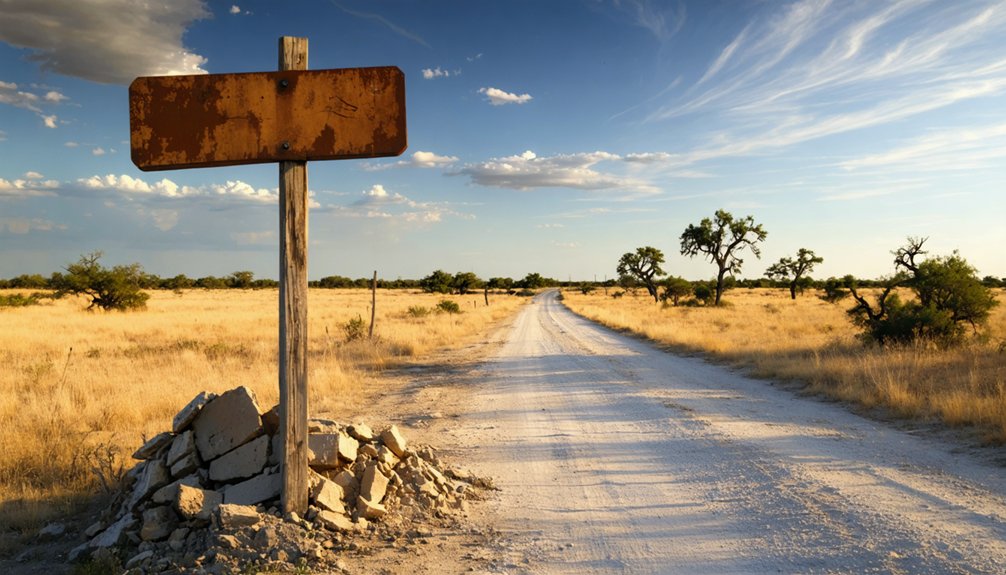
Wilson County doesn’t just offer Eagle Creek — it’s home to 31 ghost towns in total, making it the most ghost-town-dense county in all of Texas. That means you can chain together an entire day of exploration without driving far.
Dig into Calaveras history to uncover the layered story of a community that once thrived and quietly faded. Then scout out Boldtville remnants, where weathered structures still whisper about the settlers who built their lives there.
You’ve also got Graytown, Dewees, and Denhawken within reach, each carrying its own forgotten chapter. This county rewards the curious traveler who craves open roads, raw history, and zero crowds.
Pack your map, fuel up in San Antonio, and let Wilson County’s ghost towns guide your route.
What to Bring for a Rural Wilson County Ghost Town Drive
Heading into Wilson County’s rural back roads means you’re trading convenience for adventure, so you’ll want to pack smart before you leave San Antonio.
These ghost town essentials and rural exploration tips keep your trip safe and rewarding:
- Water and snacks – No services exist near Eagle Creek or surrounding sites
- Printed or offline maps – Cell signals drop fast on FM roads
- Full gas tank – Refuel in San Antonio before heading southeast
- Camera or smartphone – Abandoned structures reward prepared photographers
- Property research notes – Know which land is private before stepping off the road
Dry seasons offer the best road conditions, so plan accordingly.
Wilson County rewards the self-sufficient explorer who respects both the land and its forgotten history.
Frequently Asked Questions
Is Eagle Creek Ghost Town Accessible Year-Round for Visitors?
While weather’s a concern, you can visit Eagle Creek’s ghost town history year-round, but dry seasons offer safer rural road access. Prioritize visitor safety by packing essentials, verifying property permissions, and embracing your adventurous freedom responsibly.
Are There Guided Ghost Town Tours Available in Wilson County?
You won’t find official guided tours, but you can explore Wilson County’s rich ghost town history independently, uncovering local legends yourself. Use Texas Escapes resources to navigate abandoned sites and craft your own unforgettable, freedom-filled adventure.
Can Children Safely Visit Eagle Creek and Nearby Ghost Towns?
You can bring kids to Eagle Creek, but prioritize family safety by verifying property access first. Pack essentials, supervise closely, and turn exploration into child-friendly activities that’ll spark their curiosity about Texas history!
Is Camping Permitted Near Eagle Creek or Wilson County Ghost Towns?
You’ll find no confirmed camping regulations for Eagle Creek specifically, so verify land ownership first. Explore nearby attractions like Graytown while you’re there, and pack essentials for a free-spirited, off-grid Wilson County adventure!
What Is the Best Time of Day to Photograph Ghost Towns?
Like Ansel Adams chasing light across Yosemite, you’ll capture ghost towns best during golden hour—dawn or dusk bathes weathered wood and crumbling facades in warm tones, revealing architectural details that midday’s harsh sun completely erases.
References
- https://www.ksat.com/holidays/2018/10/30/texas-has-more-ghost-towns-than-any-other-state/
- https://www.facebook.com/groups/7709388775855695/posts/26578017765232845/
- https://en.wikipedia.org/wiki/List_of_ghost_towns_in_Texas
- https://www.tshaonline.org/handbook/entries/eagle-springs-tx
- https://www.texasescapes.com/TOWNS/Texas-Ghost-Towns-2-Central-Texas.htm
- https://www.texasescapes.com/Texas-Ghost-Towns-A-to-Z.htm
- https://dfwurbanwildlife.com/2011/05/29/chris-jacksons-dfw-urban-wildlife/march-28-2005-ghost-towns-in-north-texas/
- https://en.wikipedia.org/wiki/Category:Ghost_towns_in_North_Texas