Planning a ghost town road trip to Halifax, Vermont starts with anchoring your itinerary in Windham County, where back roads lead past cellar holes, crumbling mill sites, and stone walls that once marked thriving farm boundaries. You’ll want sturdy boots, a paper map, and a full tank before heading out. From Halifax, the route naturally extends toward the wild Glastenbury corridor. Stick around, and you’ll uncover exactly what each stop reveals.
Key Takeaways
- Halifax, Vermont, near the Massachusetts border, features cellar holes, stone walls, and mill remnants marking its gradual depopulation over generations.
- After exploring Halifax, continue toward Glastenbury via Wilmington and Route 9; hiking is required to access its disorganized wilderness.
- Backroad conditions can become impassable after rain, and private property boundaries must be respected throughout your exploration.
- Pack sturdy boots, weather layers, water, snacks, and a paper map before departing on this remote road trip.
- Schedule all remote stops during daylight hours, download offline maps, and keep your fuel tank full throughout the journey.
Halifax, Vermont’s Ghost Town Back Roads: What the History Actually Shows
Halifax doesn’t appear on most Vermont road-trip itineraries, but that’s exactly what makes it worth the detour. Tucked into Windham County near the Massachusetts border, Halifax history reveals a community that thrived, then quietly withdrew from the modern world.
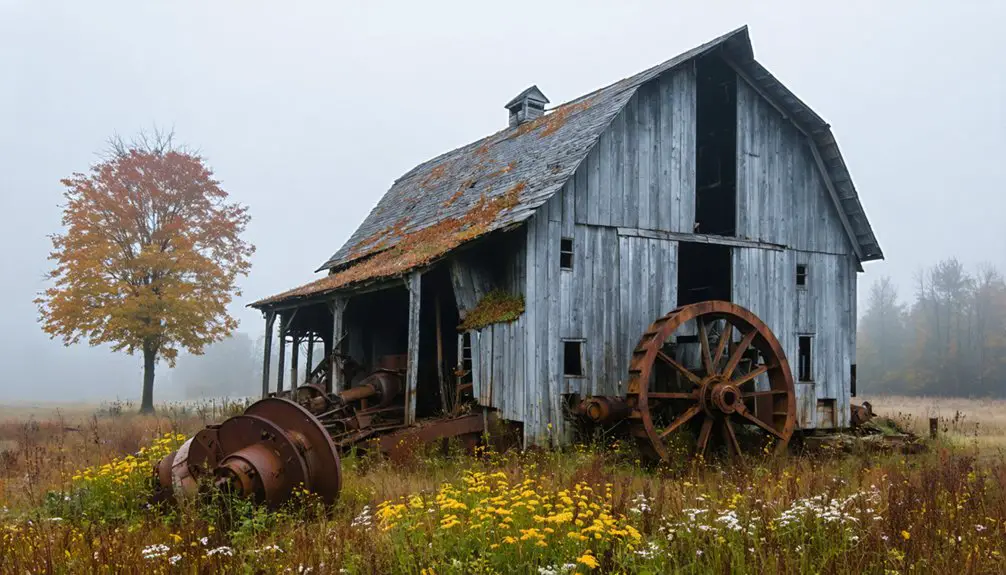
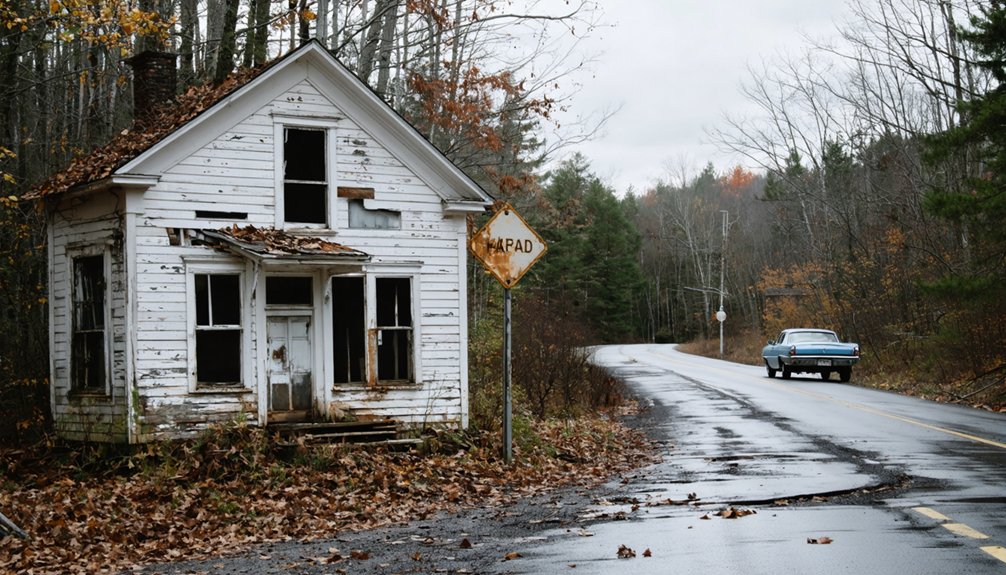
You won’t find a dramatic ghost town collapse here — no single disaster erased the settlement. Instead, you’ll trace rural landscapes shaped by gradual depopulation, economic shifts, and forest reclamation. Cellar holes and old hill roads mark where farms once stood.
Local folklore adds texture to the experience, connecting Halifax to broader southern Vermont lore about lost places and forgotten communities. When you drive these backroads, you’re reading the landscape like a document — one that rewards curiosity over speed.
Lost Settlements Along Halifax Roads: Cellar Holes, Mill Sites, and Forgotten Farms
Driving Halifax’s back roads puts you directly in contact with what the history actually left behind — not monuments or museums, but the quiet physical evidence of lives built and eventually abandoned.
Halifax’s back roads don’t offer monuments — they offer the quieter, more honest evidence of lives actually lived.
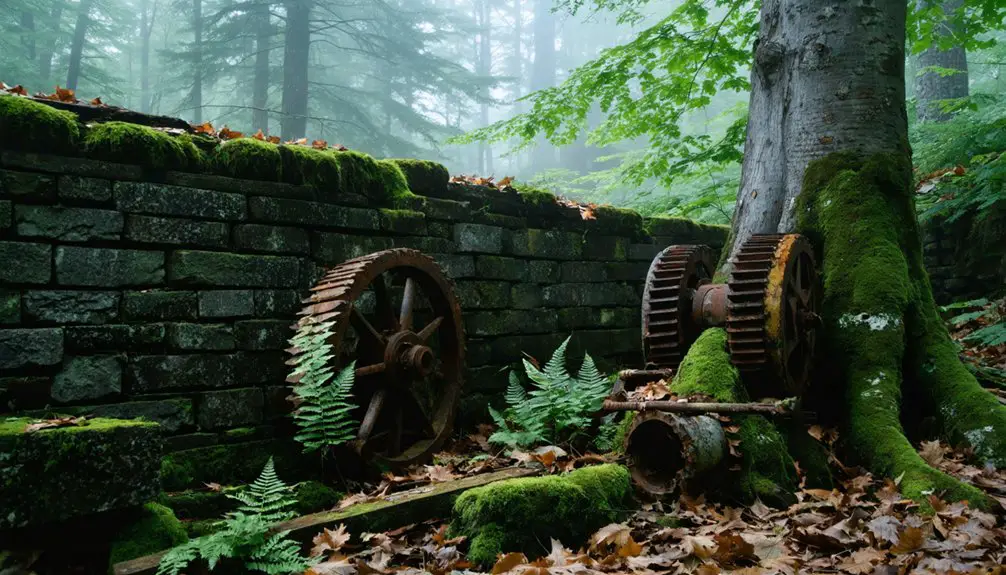
You’ll find lost farms reclaimed by forest, stone walls threading through second-growth trees, and mill remnants marking where water once powered entire communities.
Look for:
- Cellar holes half-hidden beneath leaf cover and root systems
- Mill remnants along stream banks where water-powered industry once operated
- Dry-laid stone walls marking former property boundaries and pasture lines
- Foundation clusters indicating lost farms that housed multiple generations
Each site rewards slow travel and sharp eyes.
Stop often, walk the edges of old lanes, and let the landscape tell you what the maps no longer show.
The Route From Halifax Through the Glastenbury Corridor
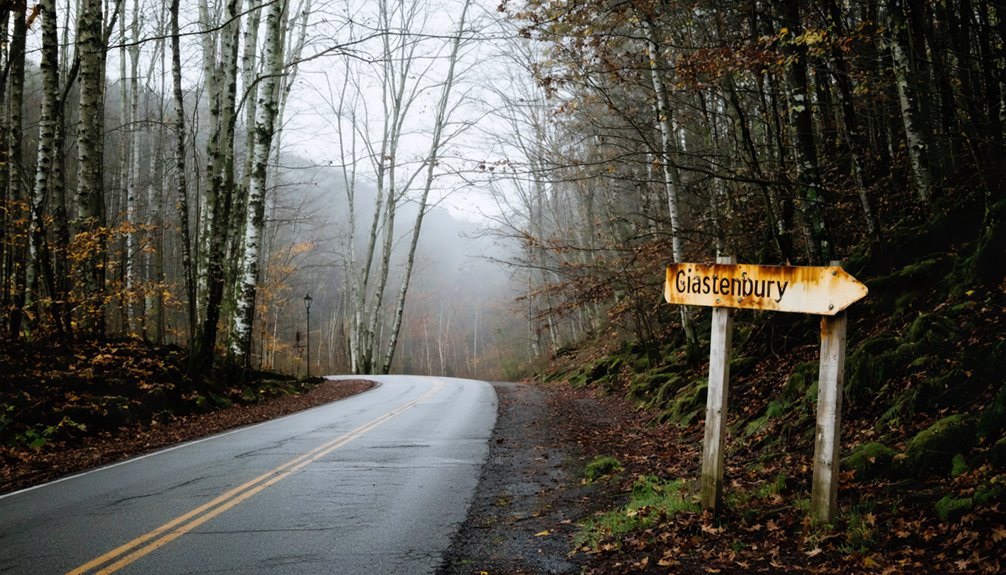
Once you’ve absorbed what Halifax’s back roads have to offer, the logical next move pushes you west into Bennington County and the ghost-town corridor anchored by Glastenbury.
This former township was officially disorganized in 1937, leaving behind forested wilderness, cellar holes, and decades of Vermont folklore connecting the area to unexplained disappearances.
Head northwest from Halifax through Wilmington, then pick up Route 9 toward Bennington. From there, backroads lead toward the Glastenbury Mountain trailhead, your primary access point into Glastenbury history.
You won’t drive into a recognizable town — you’ll hike into what the forest has reclaimed. That distinction matters.
Bring a trail map, start early, and treat this leg as a serious outdoor excursion rather than a casual roadside stop.
Private Land, Rough Roads, and Daylight: The Access Reality at Each Site
Planning the Glastenbury leg the same way you planned Halifax will get you into trouble fast. Conditions shift dramatically between sites, and ignoring the details costs you access entirely.
Before you leave, confirm these four realities:
- Private property boundaries exist at multiple sites — trespassing isn’t exploration, it’s a legal risk.
- Road conditions on backroads into Glastenbury territory can turn impassable after rain or in early spring.
- Trail-only access applies inside protected forest lands — your vehicle stays at the trailhead.
- Daylight windows matter — forested sites lose light fast, and signage is minimal.
You’re chasing history, not headlines. Respecting access rules keeps these places open for every traveler who follows your route.
What to Bring and How to Plan a Southern Vermont Ghost Town Loop
A well-packed bag and a solid route plan are the difference between a rewarding day trip and a frustrating dead end. Start with packing essentials: sturdy boots, layers for shifting weather, water, snacks, a paper map, and a portable charger. Cell service disappears fast on southern Vermont backroads.
For itinerary tips, anchor your loop in Halifax and move west toward Glastenbury territory, spacing stops realistically. These sites require walking, not just driving. Budget extra time for each location, and schedule the farthest or most remote stop mid-day when you have the most daylight.
Leave early, keep your tank full, and download offline maps before you go. The freedom to explore these forgotten places depends entirely on how well you’ve prepared.
Frequently Asked Questions
Is Halifax, Vermont Considered an Official Ghost Town by Historians?
Halifax isn’t officially labeled a ghost town by historians, but you’ll find its historical significance undeniable. Its town characteristics—abandoned settlements, cellar holes, and rural isolation—make it a compelling lost-community destination worth exploring.
Are There Guided Ghost Town Tours Available Near Halifax or Glastenbury?
You won’t find formal guided tours focused on ghost town history near Halifax or Glastenbury, but you can explore independently, join local historical society walks, or hire Vermont backroad guides who’ll lead you through these fascinating forgotten landscapes.
What Time of Year Is Best for Visiting Southern Vermont Ghost Town Sites?
Strike while the iron’s hot — visit in fall for stunning fall colors or summer for easier summer activities. You’ll find clearer trails, better visibility, and more daylight for exploring southern Vermont’s hauntingly beautiful ghost town sites.
Can Children Safely Participate in a Halifax Ghost Town Road Trip?
Yes, children can join you! Prioritize family safety by sticking to marked trails and daylight hours. You’ll find engaging activities like spotting cellar holes and foundations that spark kids’ curiosity about Vermont’s fascinating lost settlements.
Are There Any Overnight Camping Options Near the Halifax or Glastenbury Areas?
You’ll find camping amenities at nearby Woodford State Park, where you can embrace the wilderness while spotting local wildlife. It’s your perfect basecamp for exploring Halifax and Glastenbury’s haunting ghost town trails freely.
References
- https://en.wikipedia.org/wiki/List_of_ghost_towns_in_Vermont
- https://www.burlingtonfreepress.com/story/news/2018/10/29/history-space-tale-two-vt-ghost-towns/38202243/
- https://www.youtube.com/watch?v=ScW-H7A8yL8
- https://myfamilytravels.com/supposedly-boring-vermont-towns-hiding-some-truly-strange-landmarks/
- https://www.youtube.com/watch?v=2fvPo9iQC-w
- https://thebridgevt.org/2022/10/ghost-towns-of-new-england/
- https://vermontcountry.com/2022/09/18/ghost-town/
- https://urbanpostmortem.wordpress.com/tag/ghost-town/
- https://www.facebook.com/groups/BenningtonBlotter/posts/8154360644595719/
- https://www.reddit.com/r/halifax/comments/nrmg2b/looking_for_ghost_towns_to_explore/