Plan your Allamoore ghost town road trip by heading to Hudspeth County off Interstate 10, where 1880s mining ruins and a crumbling old church sit untouched by crowds. You’ll want sturdy boots, a gallon of water per person, and a camera ready for dramatic desert light. Spring and fall offer the most comfortable exploring conditions, though every season reveals something different. Stick around — there’s far more to this forgotten West Texas relic than first meets the eye.
Key Takeaways
- Allamoore, located along Interstate 10 in Hudspeth County, Texas, features crumbling ruins, an old church, and mining artifacts from the 1880s.
- Spring and fall offer the best visiting conditions, with mild temperatures and golden light ideal for hiking and photography.
- Pack essentials including sturdy boots, sunscreen, a gallon of water per person, layered clothing, and camera gear with extra batteries.
- Exit Interstate 10 onto accessible 2WD roads, parking near the ruins to explore freely without barriers or crowds.
- Van Horn, TX (40 miles west) provides reliable lodging and dining, while Fort Stockton, TX offers fuller accommodation options to the east.
The Ruins, History, and Isolation That Define Allamoore
Tucked along Interstate 10 in the sun-scorched expanse of Hudspeth County, Allamoore stands as one of West Texas’s most quietly haunting ghost towns, where crumbling ruins and desert silence tell a story stretching back to the 1880s.
It started as a mining and stock camp, earned its first post office in 1884, and got its distinctive name in 1888 when postmistress Mrs. All R. Moore took charge.
You’ll find scattered remnants of homes, an old church, and mining artifacts frozen in time.
The isolation here isn’t a drawback — it’s the draw. For ghost town exploration and desert photography, Allamoore delivers raw, unfiltered atmosphere on your terms.
No crowds, no gates, no schedules — just open road, ancient ruins, and the wide West Texas sky.
The Mining Camp Origins Behind Allamoore, Texas
When you trace Allamoore’s roots back to the 1880s, you’ll find a rugged mining and stock camp where fortune-seekers carved a rough settlement into the West Texas desert.
The camp’s earliest post office opened in 1884, with McGrew serving as postmaster, giving the community its first formal identity.
1880s Camp Beginnings
Long before Allamoore earned its name, a raw mining and stock camp staked its claim in the West Texas desert during the 1880s.
You’re looking at a place where pioneer life meant dust, hard labor, and survival on unforgiving terrain. Miners and ranchers built their camp culture from scratch, hauling supplies across open land with no guarantees and no safety nets.
The settlement grew organically, attracting workers drawn by mineral deposits and grazing land. By 1884, it had earned its first post office, with McGrew serving as postmaster — proof that this rough camp was becoming something more permanent.
When you walk these grounds today, you’re standing where determined people carved out existence in one of America’s most demanding landscapes.
Mining Shaped Allamoore
Mining didn’t just influence Allamoore — it built it. Before the post office, before the name, before the scattered dwellings took shape, miners carved purpose into this West Texas desert.
The 1880s brought prospectors and stockmen chasing opportunity along what would become Interstate 10 territory, and their mining impact transformed raw, open land into a functioning camp.
You’re walking into a ghost town that existed because someone believed the earth here held value. That belief attracted people, created community, and eventually shaped a place worth naming.
When the ore ran thin and the economy shifted, residents drifted away — leaving ruins that still whisper that original ambition.
Allamoore’s mining roots aren’t just history. They’re the reason you’re standing here now, camera in hand, completely free to explore.
How Allamoore Got Its Unusual Name
If you’ve ever wondered how a dusty West Texas mining camp ended up with such a distinctive name, the answer lies with one woman’s quiet legacy.
When the settlement’s second post office opened in 1888, locals renamed the camp Allamoore to honor their postmistress, Mrs. All R. Moore, transforming a rough frontier outpost into something more personal.
Her name, slightly rearranged and compressed, has outlasted the town’s population, its postal service, and nearly every structure that once defined it.
From Mining Camp Origins
Nestled in the rugged desert landscape of Hudspeth County, Allamoore carries a name with a surprisingly personal backstory. Before anyone thought about naming it anything, this remote stretch of West Texas dirt was alive with purpose.
In the 1880s, miners arrived, drawn by the promise of extractable resources, bringing with them the grit and ingenuity of frontier mining techniques. Camp life was raw and unfiltered — scattered dwellings, hard work, and little comfort defined the daily rhythm.
The first post office opened in 1884, with McGrew serving as postmaster, cementing the settlement’s growing permanence. By 1888, a new postmistress, Mrs. All R. Moore, took charge, and the town took her name.
That’s Allamoore — born from labor, shaped by character, and carrying one woman’s identity into history.
Mrs. Moore’s Lasting Legacy
There’s something rare about a town that carries a real person’s name so literally — and Allamoore, Texas, is exactly that.
When the post office reopened in 1888, postmistress Mrs. All R. Moore stepped into a role that would define the settlement’s identity forever. Officials simply combined her name into one word — Allamoore — cementing Moore’s influence into every map, document, and conversation that followed.
That’s not a small thing. Most frontier towns took names from geography or commerce. This one took its name from a woman running the mail in the middle of the West Texas desert.
Her lasting impact echoes through every ruin you’ll explore along Interstate 10. You’re not just visiting a ghost town — you’re walking through someone’s living legacy.
The 1888 Renaming Story
Few frontier towns earned their names the way Allamoore did. When you trace this dusty West Texas settlement’s identity, you’ll discover a postmaster‘s influence that reshaped everything:
- The original camp operated simply as “McGrew” under its first postmaster from 1884–1886.
- Mrs. All R. Moore took over as postmistress in 1888, steering the town’s identity forward.
- Locals blended her name directly into the landscape, creating “Allamoore” — raw, personal, and permanent.
- That renaming cemented Allamoore’s significance as a named, recognized settlement on Texas maps.
You won’t find many ghost towns carrying a woman’s name so literally etched into their identity.
Mrs. Moore didn’t just sort mail — she unknowingly handed this forgotten corner of Hudspeth County its lasting voice.
What Ruins and Landmarks Survive in Allamoore Today?
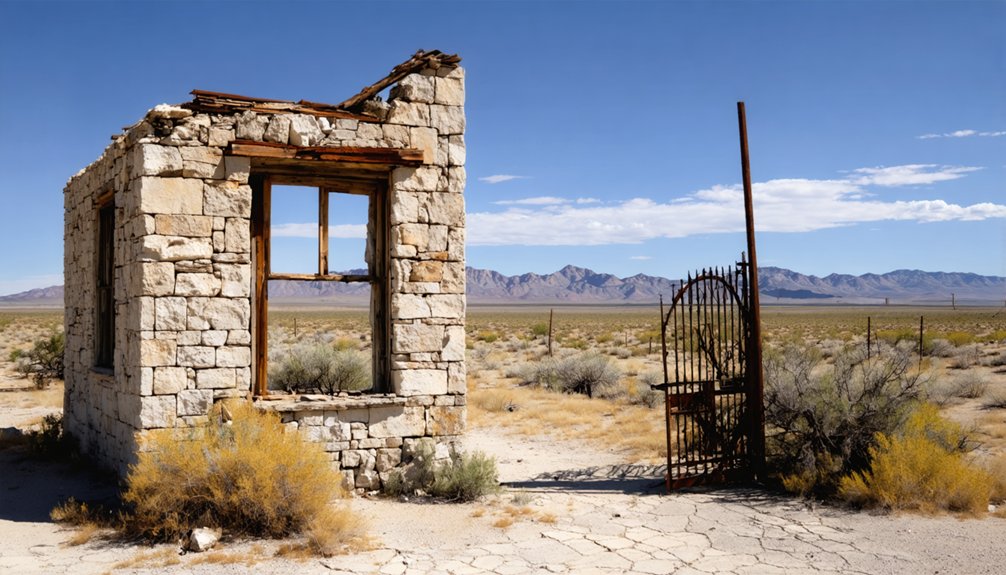
Though time has weathered Allamoore down to its bones, what’s left still tells a compelling story.
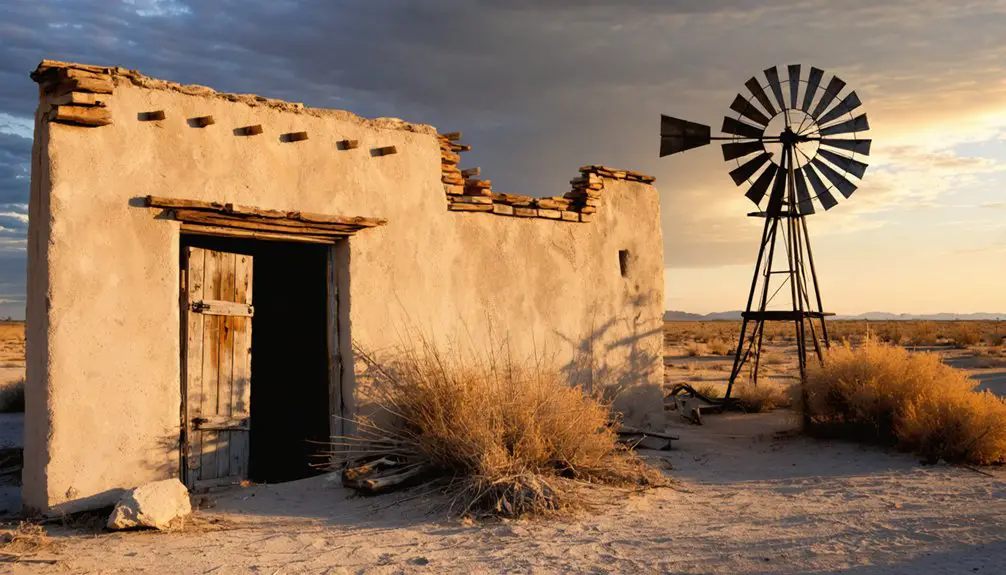
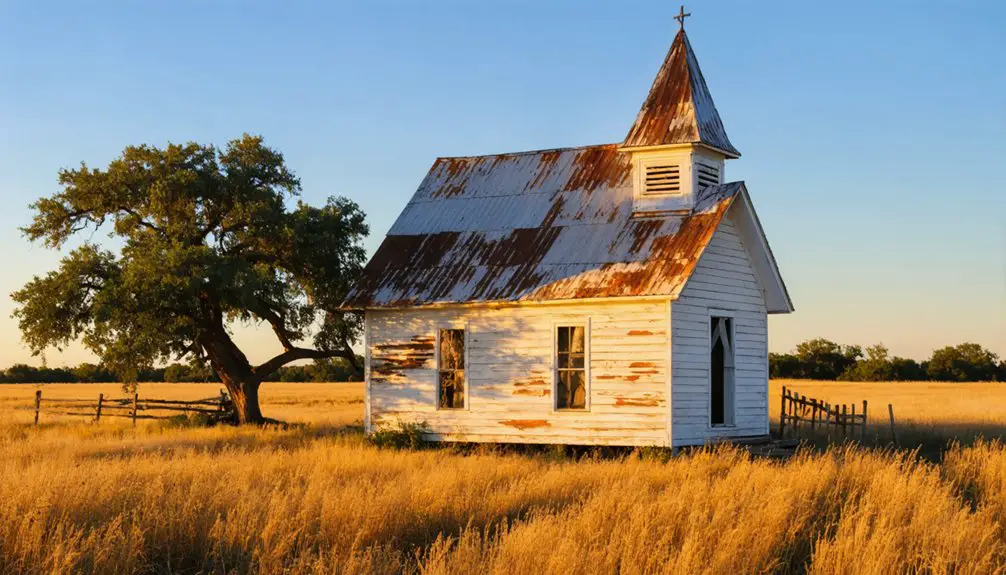
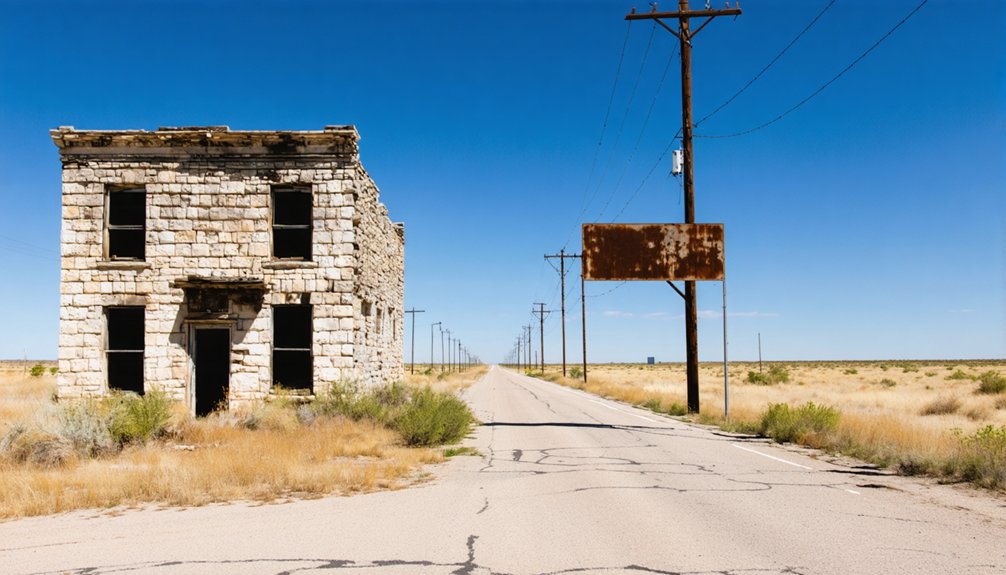
You’ll find scattered ruins of homes, their walls crumbling back into the West Texas desert, offering raw, unfiltered backdrops perfect for ghost town photography. An old church remnant stands as one of the most evocative landmarks, quietly marking where community once gathered.
Mining camp artifacts pepper the landscape, connecting you directly to the settlement’s industrial roots from the 1880s.
Desert exploration here rewards the curious and the patient. You’ll navigate remnants of structures that survived decades of wind, heat, and neglect.
No fences block your path, no crowds dilute the solitude. Allamoore gives you direct, unmediated access to Texas frontier history, written in adobe, stone, and rust.
When to Plan Your Allamoore Road Trip
When should you schedule your Allamore road trip? The good news is you can visit anytime. West Texas’s reliable climate means there’s no bad season to explore these ruins.
Plan your trip around what matters most to you:
- Spring – Mild temperatures make desert hiking through crumbling foundations effortless.
- Fall – Golden light transforms ghost town photography into stunning visual storytelling.
- Summer – Early morning visits beat the heat while maximizing your exploration time.
- Winter – Crisp air and uncrowded roads give you Allamoore almost entirely to yourself.
Pack your camera, lace up your boots, and hit Interstate 10 whenever the open road calls you. Freedom doesn’t follow a calendar, and neither does Allamoore.
What to Pack for Exploring Allamoore’s Desert Ruins
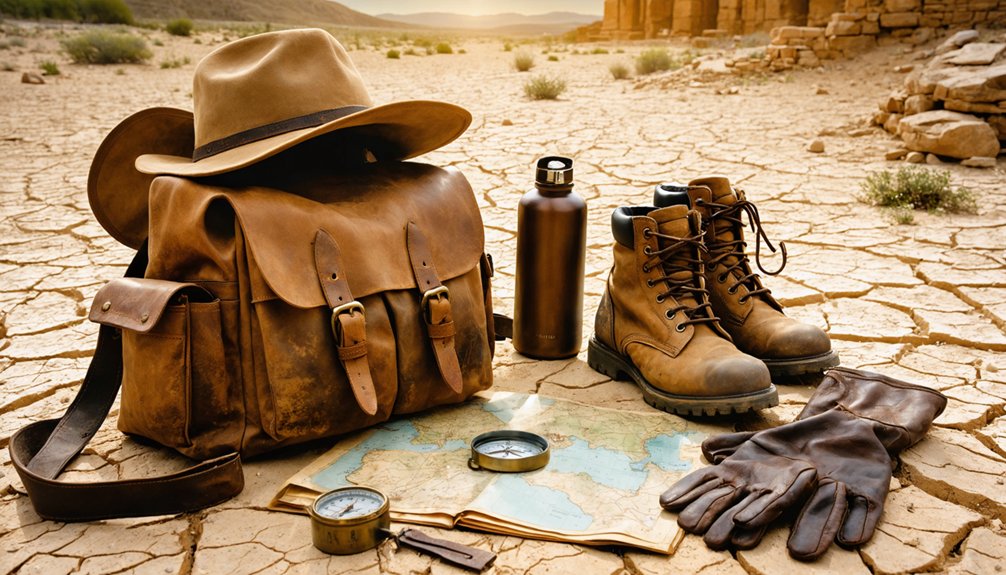
Before you leave the pavement behind and wander into Allamoore’s crumbling remnants, pack smart—because West Texas desert terrain doesn’t forgive careless preparation.
Ghost town exploration demands sturdy boots, sun protection, and plenty of water—at least a gallon per person. The ruins offer no shade, and the sun hits hard against exposed stone and bleached wood.
Sturdy boots, sunscreen, and a full water supply aren’t optional out here—they’re survival basics.
For desert photography, bring a wide-angle lens to capture the sprawling decay and a polarizing filter to cut harsh glare. Pack extra batteries, since cold desert mornings drain power fast.
Wear layered clothing, as temperatures swing dramatically between dawn and midday. Toss in a basic first aid kit, a paper map, and a fully charged phone.
You’re chasing freedom out here—don’t let poor preparation cut that chase short.
How to Reach Allamoore via Interstate 10
Reaching Allamoore is straightforward—Interstate 10 cuts directly through Hudspeth County, placing this semi-abandoned West Texas ghost town within easy reach of anyone driving the southern corridor. Your 2WD vehicle handles the access roads without trouble, so you’re free to roll in unencumbered.
Follow these steps for a smooth arrival:
- Set your GPS coordinates for Hudspeth County along I-10
- Exit onto accessible 2WD roads leading directly into the site
- Park near the ruins, giving yourself room to wander for ghost town photography
- Move quietly—desert wildlife shares this landscape with you
The open road delivers you straight into raw West Texas solitude. No gates, no fees, no crowds. Just crumbling structures, wide sky, and the freedom to explore on your own terms.
Which Hudspeth County Ghost Towns Are Worth Adding to Your Route?
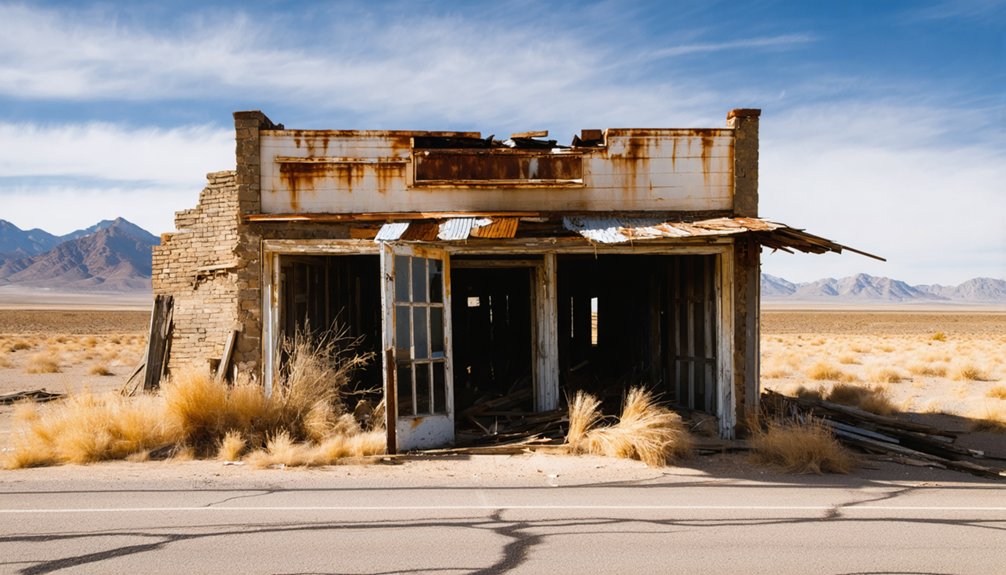
Allamoore makes a natural anchor point for a wider Hudspeth County loop, and once you’ve walked its ruins, you’ll want to keep moving west along I-10 where more ghost towns scatter across the desert floor.
Hudspeth County rewards curious travelers with abandoned settlements tucked between mountain ranges and dry washes, each offering distinct layers of frontier history. You’ll find crumbling adobe walls, forgotten foundations, and open skies perfect for ghost town photography at golden hour.
Desert wildlife moves freely through these sites, so watch for roadrunners, jackrabbits, and hawks patrolling the scrubland.
Texas Escapes and Ghosttowns.com both map nearby sites worth targeting, and YouTube documents several locations including abandoned schoolhouses.
Plan your fuel stops carefully since services thin out fast once you leave the interstate corridor.
Where to Stay and Eat Near Allamoore
Lodging and meals near Allamoore mean committing to a drive, since this stretch of Hudspeth County keeps services sparse by design. That distance is part of the freedom you’re chasing.
Your best accommodation options and local dining cluster around nearby I-10 corridors:
- Van Horn, TX – Reliable motels and diners roughly 40 miles west
- Sierra Blanca, TX – Basic stops closer to Hudspeth County’s heart
- Fort Stockton, TX – Fuller local dining and accommodation options east on I-10
- Texas Escapes resources – Vintage maps and lodging leads tailored to ghost town routes
Pack a cooler, book ahead in Van Horn, and treat the drive itself as part of the experience.
West Texas rewards those who plan lean and travel light.
Before You Go: Safety at Abandoned Sites
Ghost town structures have stood without maintenance for decades. Floors, stairs and roof timbers fail without warning, and a building that looks solid from outside may not hold your weight. Stay out of standing structures unless the site is actively maintained and open to visitors.
Mine workings are the more serious hazard. Vertical shafts can be hundreds of feet deep, are often unfenced, and may be hidden by brush or capped with rotted boards. Never enter an adit, tunnel or shaft: abandoned workings can hold oxygen-poor or toxic air that gives no warning before you lose consciousness.
Enclosed spaces with rodent droppings carry a risk of hantavirus, which is contracted by breathing contaminated dust. Do not sweep or stir up dust inside old cabins and outbuildings.
Cell coverage at these sites is usually poor or absent. Tell someone your route and expected return time, and carry more water than you think you need.
Frequently Asked Questions
Is a Permit Required to Explore Allamoore’s Ruins and Abandoned Structures?
Like a free spirit wandering open plains, you don’t need a permit to explore Allamoore’s ruins. Embrace exploration safety while honoring the historical significance of these weathered remnants that whisper Texas’s forgotten stories directly to you.
Are There Guided Ghost Town Tours Available Specifically for Allamoore, Texas?
No dedicated guided tours exist for Allamoore, but you’re free to explore its ghost town history independently. Wander the ruins, soak in local legends, and let the desert silence tell its own haunting story.
Can Visitors Legally Take Artifacts or Souvenirs From Allamoore’s Mining Sites?
Like reaching for fool’s gold, you shouldn’t take artifacts from Allamoore’s mining sites. Mining regulations protect these treasures, and artifact preservation laws apply here — so explore freely, but leave history exactly where you find it.
Has Allamoore Ever Appeared in Films, Documentaries, or Television Productions?
No confirmed film appearances or documentary features exist for Allamoore, but you’ll find compelling YouTube videos capturing its abandoned schoolhouse and haunting ruins, letting you explore this forgotten West Texas ghost town through vivid, freedom-inspiring digital storytelling.
Are There Any Local Community Events or Gatherings Held Near Allamoore Annually?
You won’t find regular local festivals or community gatherings near Allamoore’s ruins, but that’s the beauty — you’re free to explore this semi-abandoned ghost town on your own terms, anytime you choose.
References
- https://www.youtube.com/watch?v=qFKn5-6mVYs
- https://www.ghosttowns.com/states/tx/allamoore.html
- https://en.wikipedia.org/wiki/List_of_ghost_towns_in_Texas
- https://www.texasescapes.com/WestTexasTowns/AllamooreTexas/AllamooreTexas.htm
- https://www.youtube.com/watch?v=9nhawo_4b10