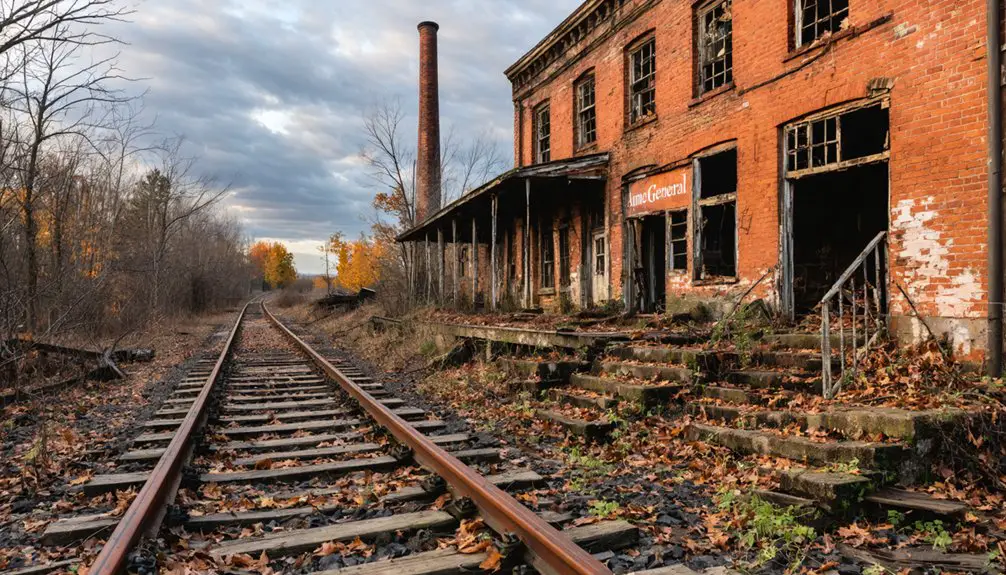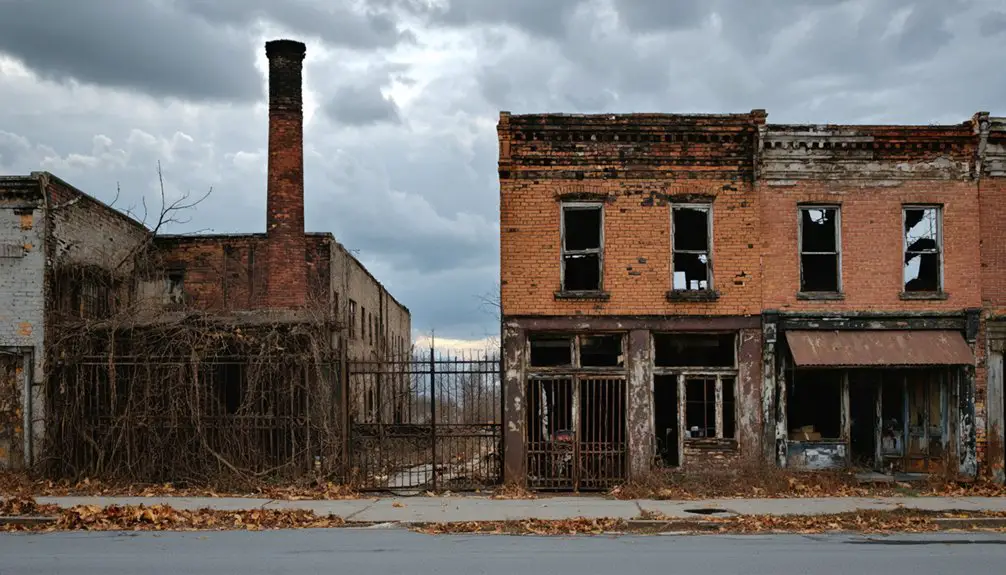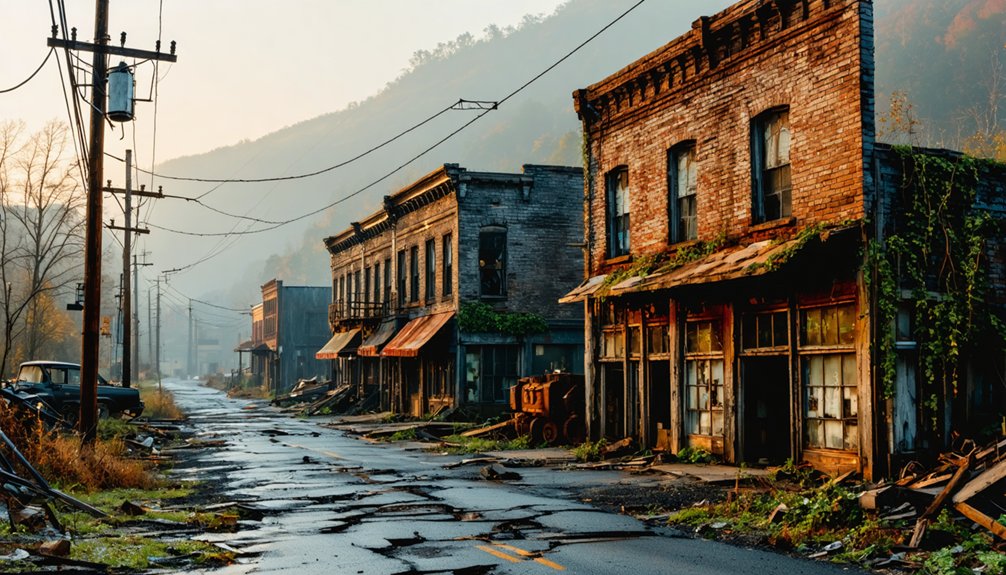
Planning a ghost town road trip to Centralia, Pennsylvania starts with understanding what you’re driving into. An underground coal fire has burned beneath this Appalachian town since 1962, forcing residents out and leaving cracked streets, toxic vents, and eerie silence behind. Start your drive in Ashland or Mt. Carmel, work your way through Centralia’s haunted landscape, and explore nearby coal towns for full context. Stick to public roads, respect restricted zones, and everything else you need to know is just ahead.
Key Takeaways
- Centralia, Pennsylvania, is a famous ghost town where an underground coal fire has burned since 1962, creating an eerie, abandoned landscape.
- From Philadelphia, take I-81 North; from Pittsburgh, head east on I-76, connecting through Bloomsburg, with Route 61 as the main access point.
- Key stops include the cracked Route 61 highway, hillside smoke vents, and a cemetery surrounded by demolished buildings and overgrown streets.
- Nearby towns like Ashland, Mt. Carmel, Aristes, and Wilburton offer additional ghost town exploration and rich anthracite mining history.
- Respect restricted zones, avoid ground vents due to toxic gases, and stay on public roads to prevent fines and ensure safety.
The Underground Fire That Turned Centralia Into a Ghost Town
Few ghost towns carry a story as haunting as Centralia, Pennsylvania, where an underground coal fire has been burning for over 60 years.
In 1962, a landfill fire ignited an exposed coal vein, and nobody stopped it in time. By the 1980s, toxic gases were seeping through the ground, forcing the federal government to spend $43 million relocating residents.
A landfill fire in 1962 sparked an unstoppable underground inferno, ultimately costing the federal government $43 million to evacuate residents.
The town was condemned, buildings were demolished, and streets cracked open from the heat below.
Today, you’ll find smoking vents, charred trees, and fractured pavement reclaiming what was once a thriving community of over 1,000 people.
This underground fire transformed Centralia into an eerie wasteland that inspired the 2006 horror film *Silent Hill*.
It’s a ghost town that literally still smolders.
How to Get to Centralia and Where to Start Your Drive
Visiting Centralia is surprisingly straightforward once you know where you’re headed. From Philadelphia, take I-81 North toward Shamokin. From Pittsburgh, head east on I-76 before connecting through Bloomsburg.
Once you’re close, Route 61 becomes your gateway into ghost town legends and local folklore unlike anything you’ve encountered.
Here’s where to begin your drive:
- Pull onto Route 61 and park near the dirt-covered former highway section to survey the eerie landscape.
- Head toward the cemetery, where smoke vents visibly rise from cracked ground nearby.
- Locate the remaining church and scattered homes, the last standing witnesses to Centralia’s collapse.
You’ll immediately feel the weight of this abandoned place pressing against you — raw, unrestricted, and completely unforgettable.
What You’ll Actually See Driving Through Centralia
What greets you as you roll through Centralia isn’t the bustling coal town it once was — it’s an open wound in the Pennsylvania hillside. Cracked, overgrown streets stretch toward nowhere. Fissures split the earth, venting wisps of toxic gas that carry the weight of Centralia legends — stories of a town swallowed alive by its own industry.
You’ll spot scattered remnants: a church, a few stubborn homes, and a cemetery where the dead outlasted the living. Smoke curls from hillside vents, charred trees frame the skyline, and local folklore whispers through every crack in the pavement.
The eerie silence explains why this place inspired the horror film *Silent Hill*. You’re not just driving through a ghost town — you’re driving through a cautionary tale.
Smoke Vents, Cracked Streets, and What Still Stands
Smoke seeps from the ground like the earth itself is breathing — slow, toxic exhales that remind you the fire beneath Centralia has never stopped burning.
Smoke vent exploration rewards the curious with eerie, cinematic scenes unlike anywhere else. Cracked street photography captures pavement split by decades of underground heat, reclaimed slowly by weeds and silence.
Three things still standing deserve your attention:
- The hilltop cemetery, surprisingly maintained and quietly haunting
- A handful of homes where die-hard residents still live — respect their privacy
- A lone church standing firm against total erasure
You’re walking through a living consequence, not just a photo opportunity.
Every fissure, every plume, every overgrown curb tells the unfiltered story of what happens when warnings go ignored too long.
Rules, Fines, and Restricted Zones You Need to Know First
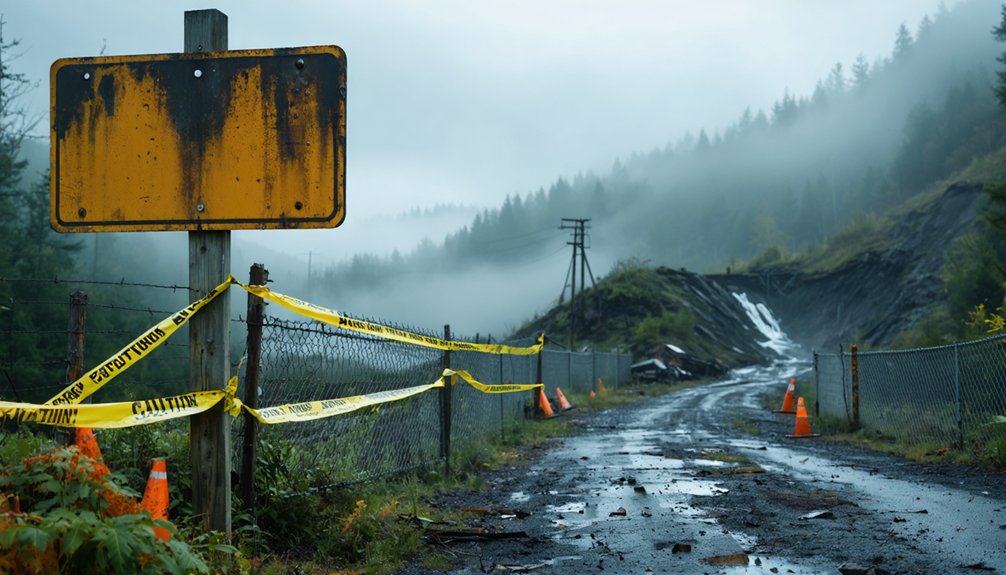
Before you set foot anywhere near Centralia’s eerily cracked streets, you need to understand where the restricted zone boundaries actually begin.
Police actively patrol the area and issue real fines to anyone caught wandering into off-limits spaces like the former Route 61 highway.
If you want to take it all in safely, stick to the main road viewpoints and keep your distance from fenced or posted areas — the view’s haunting enough from there.
Understanding Restricted Zone Boundaries
Centralia’s eerie landscape draws curious visitors, but you’ll need to understand where you can and can’t go before you set foot anywhere near the former highway.
Ghost town regulations here aren’t suggestions—they’re enforced boundaries protecting both you and the remaining holdouts.
Follow these safety precautions to explore freely without consequences:
- Route 61 – The cracked, abandoned stretch is off-limits; police actively patrol and issue fines for trespassing.
- Private Property – Remaining residents’ lawns and structures are strictly protected—stay clear.
- Ground Vents – Toxic gas emissions make close contact with hillside fissures genuinely dangerous.
Stick to public roads and designated viewing areas, and you’ll experience Centralia’s haunting atmosphere without risking fines or your health.
Fines for Trespassing Violations
Although Centralia’s restricted zones look like an open invitation to explore, stepping into the wrong area will cost you—literally. Police actively patrol the area and issue fines to anyone caught trespassing in restricted zones, including the former Route 61 highway.
The trespassing penalties aren’t just minor slaps on the wrist—they carry real legal implications that can follow you home long after your road trip ends.
You might feel the pull of those cracked, overgrown streets, but crossing the boundary means risking a citation that’ll drain your travel budget fast.
Respect the posted signs, stay on public roads, and observe the smoking vents and eerie landscape from safe, legal vantage points. Freedom means knowing exactly where the line is—and choosing not to cross it.
Safe Viewing Areas Nearby
Knowing where you can legally stand makes all the difference between a memorable ghost town experience and an expensive citation. You’ve got real options that respect both your freedom and Centralia’s historical significance.
- Route 61 overlook – Pull over and shoot ghost town photography from the road’s edge, capturing cracked pavement and eerie overgrowth without crossing restricted boundaries.
- The cemetery – Fully accessible and hauntingly beautiful, it offers unobstructed sightlines across the former townsite.
- Visible smoke vents from roadside – You can observe toxic gas plumes rising from hillside fissures safely without venturing onto condemned ground.
Stay within these zones, keep your camera ready, and you’ll capture everything Centralia’s ghostly landscape offers — no citation required.
Ashland, Mt. Carmel, and the Coal Towns Worth a Stop Near Centralia
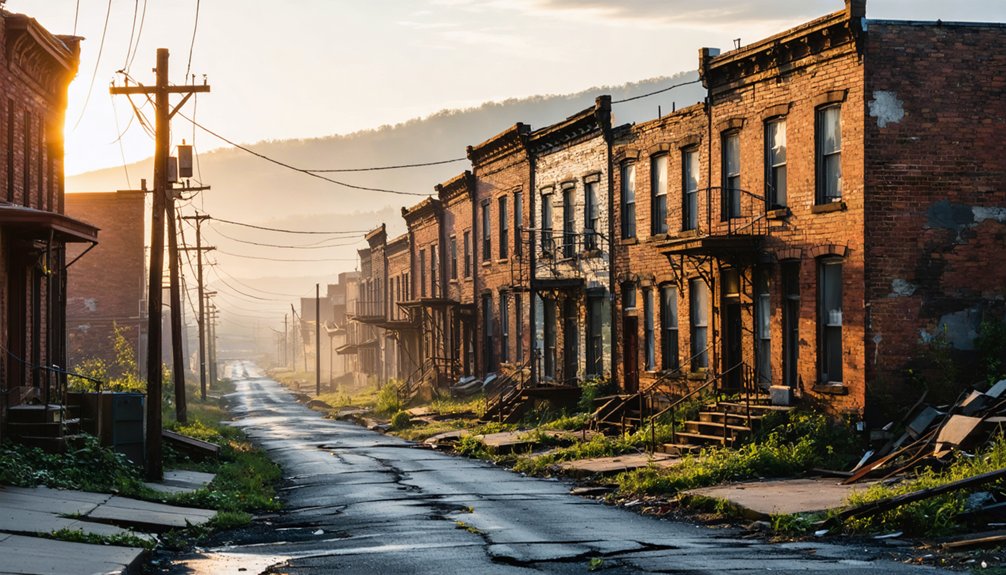
While Centralia steals most of the spotlight, the surrounding Coal Region towns deserve their own moment on your itinerary. Head south to Ashland, where anthracite Mining Heritage shaped an entire community’s identity. You’ll find a striking contrast between its historic character and Centralia’s eerie silence.
Mt. Carmel sits nearby as a dying mining town that hasn’t fully surrendered yet — streets still breathe, but barely.
Mt. Carmel still exhales — faintly, stubbornly — a mining town refusing to become a ghost just yet.
Further out, Aristes and Wilburton stand as near-empty Ghost Towns, stripped down to foundations and memories. If you’re following the Ghost Town Trail west into Appalachia, watch for Frogtown and Claghorn, quiet coal remnants tucked along wooded paths.
Each stop adds texture to your trip, painting a fuller picture of an industry that built — and ultimately broke — this entire region.
How to Plan a Full Centralia Road Trip in One Day
Start your day in Ashland or Mt. Carmel, arriving early to walk the quiet streets before heading north to Centralia by mid-morning.
Once there, you’ll want to map three key stops: the cracked stretch of Route 61, the hillside smoke vents, and the cemetery, spacing each visit roughly 30 to 45 minutes apart.
Keep restricted zones off your itinerary entirely, since police actively fine trespassers, and you’ll finish the loop with daylight to spare.
Mapping Your Route Stops
Planning a full day around Centralia means thinking beyond the town itself, since there’s genuinely not much left standing. Structure your stops strategically to maximize ghost town photography opportunities while honoring each location’s historical significance.
- Start at Centralia – Walk the cracked pavement, photograph smoking vents, and visit the hilltop cemetery before mid-morning crowds arrive.
- Head south to Ashland – Explore the Anthracite Museum for vivid contrast between thriving mining culture and today’s abandonment.
- Push toward Mt. Carmel – This dying coal town offers raw, unfiltered Pennsylvania Coal Region atmosphere worth documenting.
Keep Route 61 on your map as both a connector and a destination. The buried highway’s eerie silence captures everything Centralia represents — a community swallowed by its own underground.
Timing Each Location Visit
Knowing where to stop is only half the equation — knowing *when* to stop makes or breaks a one-day ghost town road trip. Arrive at Centralia by 8 a.m. for ideal ghost town photography — early light hits the cracked pavement and smoking vents dramatically, and crowds haven’t descended yet.
Spend two hours exploring the cemetery, visible smoke vents, and remaining structures before driving Route 61. Reserve midday for Ashland, where its historical significance contrasts sharply against Centralia’s eerie decay.
By early afternoon, push toward Mt. Carmel and Aristes before daylight fades. You’ll want two hours minimum per location to absorb each site meaningfully without rushing.
Plan your exit before dusk — restricted zones carry real fines, and traversing unfamiliar, overgrown terrain after dark isn’t freedom; it’s a liability.
When Is the Best Time to Visit Centralia?
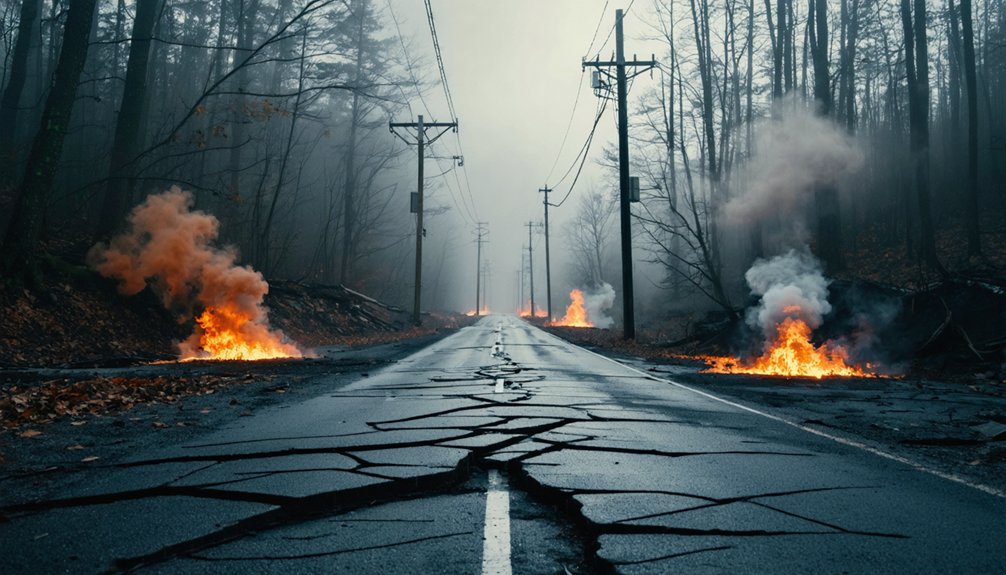
When you visit Centralia matters more than you might think. The best seasons to explore this eerie landscape are spring and fall, when weather considerations work in your favor.
- Spring (April–May): Mild temperatures make hiking the cracked terrain comfortable, and smoke vents appear more dramatic against cool air.
- Fall (September–October): Crisp weather enhances visibility of gas plumes rising from the hillside, creating an unforgettable atmosphere.
- Avoid Winter and Summer: Winter ice makes fissured pavement dangerous, while summer heat intensifies toxic gas exposure near vents.
Arriving on weekdays helps you dodge tourist crowds and reduces conflict with remaining residents. You’ll experience Centralia’s haunting silence more authentically.
Go prepared, stay on public roads, and respect posted boundaries to keep your visit legal and safe.
Frequently Asked Questions
Are Pets Allowed When Visiting Centralia’s Ghost Town Areas?
No official pet-friendly policies exist for Centralia, but you can bring leashed pets to open areas. Practice ghost town etiquette—avoid restricted zones where toxic fumes could endanger your furry companion’s life infinitely more than you’d imagine!
Is There Cell Phone Service Available Throughout Centralia’s Abandoned Streets?
Cell signal isn’t guaranteed as you roam Centralia’s eerie ghost town streets. You’ll find spotty coverage amid cracked pavement and overgrown lots, so download offline maps before exploring this hauntingly abandoned landscape for ultimate freedom.
Can You Legally Photograph the Remaining Residents’ Homes in Centralia?
You can photograph public areas, but respect photography ethics and resident privacy by avoiding private property and lawns. Don’t intrude on the remaining holdouts’ homes — they’ve chosen to stay and deserve your consideration.
Are There Restroom Facilities Available Anywhere Near Centralia’s Ghost Town?
You won’t find restroom locations in Centralia itself, so plan ahead for visitor safety! Stop in nearby Ashland before exploring—it’s your best bet for facilities while you roam this hauntingly desolate, smoke-filled wasteland freely.
Does Centralia Experience Different Toxic Gas Levels Depending on Weather Conditions?
Yes, toxic gas monitoring shows weather impact matters here. On still, humid days, you’ll notice heavier fumes swirling from vents like ghostly tendrils, while wind disperses the gases, making conditions feel slightly less suffocating beneath your feet.
References
- https://www.youtube.com/watch?v=fm3wxSOqlYM
- https://www.youtube.com/watch?v=2KA2U56jXfQ
- https://www.businessinsider.com/centralia-pennsylvania-underground-fire-town-photos
- https://en.wikipedia.org/wiki/List_of_ghost_towns_in_Pennsylvania
- https://www.jeffreydonenfeld.com/blog/2009/12/exploring-the-ghost-town-of-centralia-pennslvania/
- https://www.youtube.com/watch?v=4I9j30fvz8M
- https://gettysburgghosts.com/centralia-pennsylvania-the-town-that-inspired-silent-hill/