Planning a road trip to Baldy Town means heading 12 miles northeast of Eagle Nest, New Mexico, into Colfax County’s high country, where remnants of a gold rush settlement wait at 10,000 feet. You’ll need permission from Philmont Scout Ranch before you arrive—unannounced visitors aren’t allowed. Spring, summer, and fall offer the best access, but heavy snow makes winter treacherous. Acclimatize, pack layers, and carry plenty of water. Everything you need to prepare is just ahead.
Key Takeaways
- Baldy Town sits at 10,000 feet, located 12 miles northeast of Eagle Nest, New Mexico, accessible via 2WD roads with scenic high-country views.
- Permission from Philmont Scout Ranch is mandatory before visiting; unannounced visitors are not permitted on the property.
- Best visiting seasons are spring for wildflowers, summer for clear trails, and fall for golden aspens; winter access is dangerous.
- Visible remnants include building foundations, tailings piles, and sealed mine portals from the town’s gold and copper mining era.
- Prepare by acclimatizing to high elevation, carrying ample water, packing layers, and studying maps before arriving at the site.
Baldy Town, New Mexico: A Ghost Town Frozen at 10,000 Feet
Perched at 10,000 feet near the barren summit of Baldy Mountain in Colfax County, New Mexico, Baldy Town is a ghost town that once hummed with the ambitions of gold and copper miners. Established in 1868, it grew into a self-sufficient settlement of 200 residents, complete with saloons, a school, a Methodist church, and a post office.
You’ll find its ghost town lore compelling — a community that boomed, busted, and ultimately surrendered to silence by 1967. Its mining heritage runs deep, shaped by twelve producing mines, four stamp mills, and a legendary tunnel project that took 36 years and never struck the mother lode.
Today, only foundations and tailings remain, quietly holding the weight of broken promises and relentless ambition.
From Mining Boom to Ghost Town: Baldy Town’s Rise and Fall
Baldy Town didn’t arrive fully formed — it clawed its way into existence. Placer gold drew prospectors up brutal transportation routes to 10,000 feet, where mining techniques evolved from simple panning to twelve producing mines and four stamp mills.
By 1897, community life had taken genuine shape — a school, church, saloons, telephone line, post office. You’d have recognized a real town fighting to survive.
By 1897, Baldy Town had earned its name — school, church, saloons, post office. A real town, stubbornly alive.
But economic challenges proved relentless. Unprofitable lodes triggered repeated boom-bust cycles, and the failed McIntyre tunnel finally broke the town’s spirit.
The environmental impact lingered — mercury and cyanide poisoned waters below Aztec Mill. Today, Baldy Town‘s historical significance and cultural heritage survive in scattered foundations and sealed mine portals, reminding you that ambition alone never guarantees permanence.
The Aztec Mine and What the Gold Rush Left Behind
On the east side of Baldy Mountain, the Aztec Mine stood as the district’s most consequential operation — the kind of claim that kept prospectors dreaming long after the easy placer gold ran out.
The Aztec Legacy shaped everything around it, from the mill’s footprint to the town’s shifting core in 1886.
Mining Techniques here weren’t primitive. Operators ran twelve producing mines and four stamp mills by 1897, processing ore with mercury and cyanide.
That efficiency came at a cost — contaminated water below the Aztec Mill still tells the story.
The W.P. McIntyre tunnel, drilled for 36 years chasing a mother lode that never surfaced, marks the district’s defining failure.
You can still read that ambition in the sealed portals and scattered tailings waiting for you today.
What’s Still Standing at Baldy Town Today
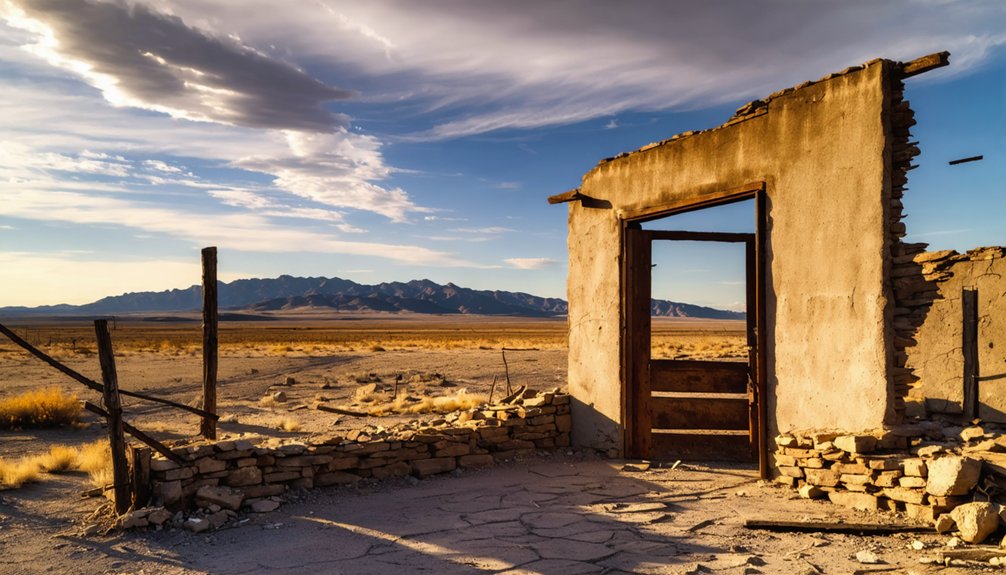
When you walk through Baldy Town today, you’re tracing the outlines of a community that once held 200 souls — foundations at or below ground level are all that remain of the saloons, boarding houses, and general store that defined this high-altitude settlement.
Philmont’s leadership transformed the industrial wreckage into functional camp infrastructure, so you’ll find restored buildings housing a commissary, trading post, and showers where miners once hauled ore.
Scattered mine tailings still pepper the landscape, quiet evidence of the twelve producing mines that once carved deep into Baldy Mountain’s flanks.
Visible Foundations Remain
Walking through Baldy Town today, you’ll find the past pressed into the earth rather than rising above it—foundations sunk at or below ground level are nearly all that remain of a settlement that once housed 200 residents, a post office, a Methodist church, and enough saloons to keep the miners busy between shifts.
The historical significance of what lies beneath your boots is real: these stone outlines once anchored a town built on gold fever and brutal mining techniques, from placer panning to mercury and cyanide ore processing.
You can trace the footprints of vanished structures, read the landscape like a map, and piece together where lives unfolded. It’s raw, unpolished history—exactly the kind that doesn’t need a roof to hit hard.
Restored Functional Buildings
While the foundations tell you what Baldy Town lost, the restored buildings tell you what Philmont Boy Scout Ranch chose to keep—and why. A few structures survived demolition through deliberate restoration efforts, repurposed to serve scouts moving through the backcountry at 10,000 feet.
Today, what once housed miners and merchants now operates as a staffed camp complete with a commissary, trading post, and showers.
It’s a practical transformation, but the historical significance isn’t lost. Standing inside these walls, you’re occupying the same space where prospectors once traded gold dust for supplies.
Philmont leadership didn’t preserve these buildings as museums—they preserved them as living infrastructure. For you, that means access to real amenities inside an authentic ghost town footprint.
Few road trips offer that kind of layered experience.
Mine Tailings Remnants
The tailings piles scattered across Baldy Town’s slope are among the few unambiguous traces of industrial mining still visible here.
These mounds of processed rock tell a direct story — ore was pulled from twelve producing mines, crushed by stamp mills, and stripped of gold using mercury and cyanide. What remained got dumped outside, and it’s still sitting there.
For anyone drawn to mine exploration, the tailings carry real historical significance. They mark where serious industrial ambition collided with an unforgiving mountain.
You’re standing on the physical residue of that collision. No interpretive sign fully captures what these gray mounds represent — decades of labor, environmental cost, and ultimately, failure to find the mother lode that men spent thirty-six years tunneling toward.
Do You Need Permission to Visit Baldy Town?
Yes, you’ll need permission to visit Baldy Town, since the site now falls within the boundaries of Philmont Scout Ranch.
If you’re not part of an organized Philmont trek, you’ll need to contact ranch leadership directly to request authorized access before setting foot on the property.
Plan ahead, because Philmont manages the land carefully, and unannounced visitors simply won’t be welcome at this storied, high-altitude remnant of New Mexico’s gold rush era.
Philmont Scout Ranch Access
Since Baldy Town now falls within the boundaries of Philmont Scout Ranch, you can’t simply drive up and wander the old townsite on your own — you’ll need special permission to access it.
Philmont history runs deep here, and Scout programs actively shape how visitors experience this land.
To plan your visit, keep these access points in mind:
- Contact Philmont Scout Ranch directly to request visitor permission
- Join an organized trek — the most reliable path onto the property
- Respect posted boundaries; trespassing disrupts active Scout programs
- Check seasonal availability, as summer months bring the heaviest trail traffic
Baldy Town rewards those willing to navigate the process — its windswept foundations and sealed mine portals deliver a raw, unfiltered glimpse into New Mexico’s gold rush past.
Special Permission Requirements
Visiting Baldy Town isn’t as simple as pulling off a highway and lacing up your boots — Philmont Scout Ranch controls the land, and that means you’ll need to work through their channels before you ever set foot on the old townsite.
Access restrictions are firm here. Philmont manages the property primarily for scouting programs, so independent travelers must contact ranch leadership directly to request entry. Don’t assume public land rules apply — they don’t.
Once you’ve secured approval, follow all visitor guidelines carefully, staying on designated paths and respecting remaining foundations and mine remnants. The ranch has worked hard to preserve and clean up this historic ground.
Earn your access, respect the boundaries, and Baldy Town will reward you with a genuinely raw slice of frontier history.
Planning Your Authorized Visit
Planning a trip to Baldy Town means accepting one non-negotiable reality upfront: you’ll need permission before you go. Philmont Boy Scout Ranch controls this land, and accessing its ghost town history requires coordination with their staff. Don’t let that discourage you — the reward justifies the process.
Before you contact Philmont, prepare yourself:
- Research the mining techniques used here — mercury processing, cyanide extraction, stamp mills — so you’ll recognize what remnants you’re seeing.
- Confirm your visit window falls within spring, summer, or fall.
- Arrange your trek route through official Philmont channels.
- Identify specific sites like the Aztec Mine and mill foundations beforehand.
Walking this ground informed transforms a casual hike into genuine discovery. You’re not just visiting ruins — you’re decoding a mountain’s working past.
How to Get to Baldy Town in Colfax County
Reaching Baldy Town means crossing into the boundaries of Philmont Boy Scout Ranch, so you’ll need to secure special permission before making the trip.
Once you’ve cleared that hurdle, head to Colfax County and position yourself roughly 12 miles northeast of Eagle Nest, New Mexico. The roads are 2WD accessible, meaning you don’t need a specialized vehicle to pursue your ghost town exploration.
Colfax County, roughly 12 miles northeast of Eagle Nest — no specialized vehicle required, just curiosity and a standard road.
You’ll climb toward Baldy Mountain’s barren crown, sitting near 10,000 feet elevation. The drive itself rewards you with dramatic high-country scenery.
Once you arrive, you’re standing where miners chased gold and copper through a dozen working shafts — rich mining history beneath your boots.
Pack for variable conditions; winters bring snow, but spring through fall offers the clearest, most rewarding access to this remarkable site.
The Best Time of Year to Visit Baldy Town
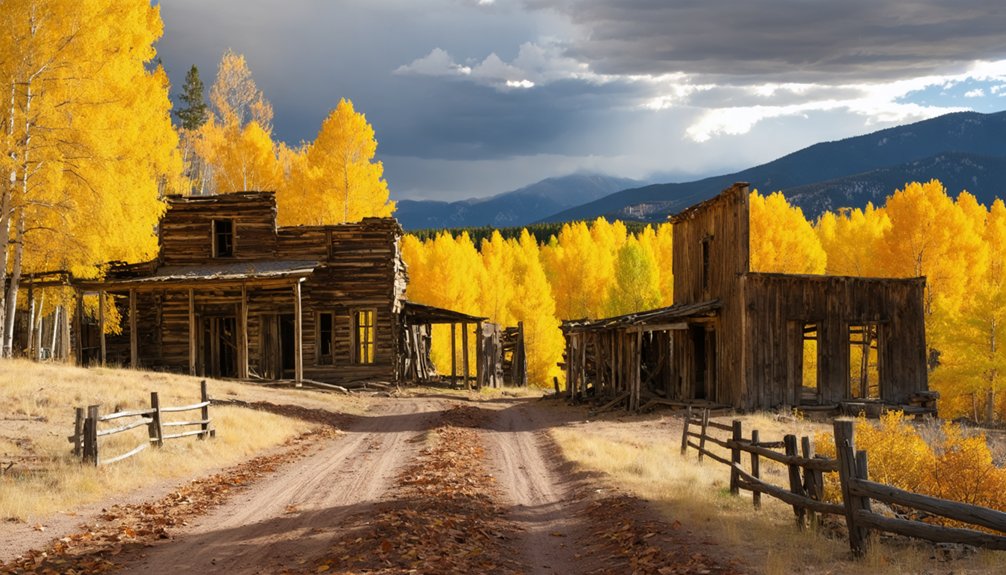
Once you’ve sorted the logistics of getting there, timing your visit can make or break the experience at Baldy Town.
Spring, summer, and fall offer the best conditions for exploring this 10,000-foot ghost town. Winter brings heavy snow, making access treacherous.
Your seasonal activities and encounters with local wildlife vary dramatically depending on when you arrive:
- Spring: Wildflowers reclaim old mine tailings; elk emerge from lower elevations
- Summer: Clear trails reveal stone foundations; afternoons bring brief mountain storms
- Fall: Aspen groves blaze gold against Baldy Mountain’s rocky slopes; crisp air sharpens visibility
- Winter: Roads close; the site rests buried under snow, inaccessible without serious preparation
You’ll often find yourself literally above the clouds, watching weather systems roll across northeastern New Mexico below you.
Permits, Elevation, and Road Conditions: What to Know Before You Go
Before you set a single boot on Baldy Town‘s high-altitude ground, you’ll need to secure permission from Philmont Boy Scout Ranch, which now owns and manages the entire site. The permits process is straightforward but mandatory — contact Philmont directly before planning your route.
Once you’re cleared, respect the elevation challenges that await. Sitting at 10,000 feet, Baldy Town demands physical preparation. Altitude sickness strikes fast, so acclimatize beforehand and carry plenty of water.
At 10,000 feet, Baldy Town doesn’t forgive the unprepared. Acclimatize, hydrate, and respect the altitude before you arrive.
Roads into the site are 2WD accessible, though conditions shift seasonally. Snow lingers into spring at this elevation, and afternoon storms roll through summer without warning.
Pack layers, study your maps, and arrive ready. This mountain doesn’t negotiate — but for those who prepare, it rewards generously.
Frequently Asked Questions
Can Children Safely Visit Baldy Town at High Elevation?
Like seasoned explorers, your children can safely visit! Prioritize elevation acclimatization at 10,000 feet for child safety. You’ll enjoy staffed camps, commissaries, and showers while Philmont’s trails welcome young adventurers seeking freedom.
Are Pets Allowed on Philmont Boy Scout Ranch Trails?
Pets aren’t permitted on Philmont’s trails. You’ll want to leave your dog at home to guarantee dog safety and proper trail etiquette while you freely explore this historically rich, rugged landscape where miners once roamed.
What Should I Pack for a Baldy Town Ghost Town Visit?
Pack your ghost town essentials: sturdy hiking gear, layers for Baldy’s unpredictable 10,000-foot weather, water, snacks, and a camera. You’ll wander among miners’ foundations, breathing history where bold souls once chased gold.
Are There Guided Tours Specifically Focused on Baldy Town’s Mining History?
Dedicated ghost town tours focused on mining heritage aren’t officially offered, but you’ll uncover Baldy Town’s rugged past independently. Explore sealed mine portals, ancient tailings, and weathered foundations while trekking freely through Philmont’s historically rich, untamed wilderness landscape.
Can Visitors Camp Overnight Near the Baldy Town Site?
Coincidentally, you *can* camp overnight near Baldy Town — it’s within Philmont Boy Scout Ranch! Follow their camping regulations, heed safety tips at 10,000 feet, and you’ll sleep where gold-hungry miners once dreamed of striking it rich.
References
- https://www.ghosttowns.com/states/nm/baldy.html
- https://www.youtube.com/watch?v=j1G1uu67vZE
- https://en.wikipedia.org/wiki/Baldy_Town
- https://newmexicotravelguy.com/new-mexico-ghost-towns/
- https://www.newmexicoghosttowns.net/ghosttowns
- https://philmont.fandom.com/wiki/Baldy_Town