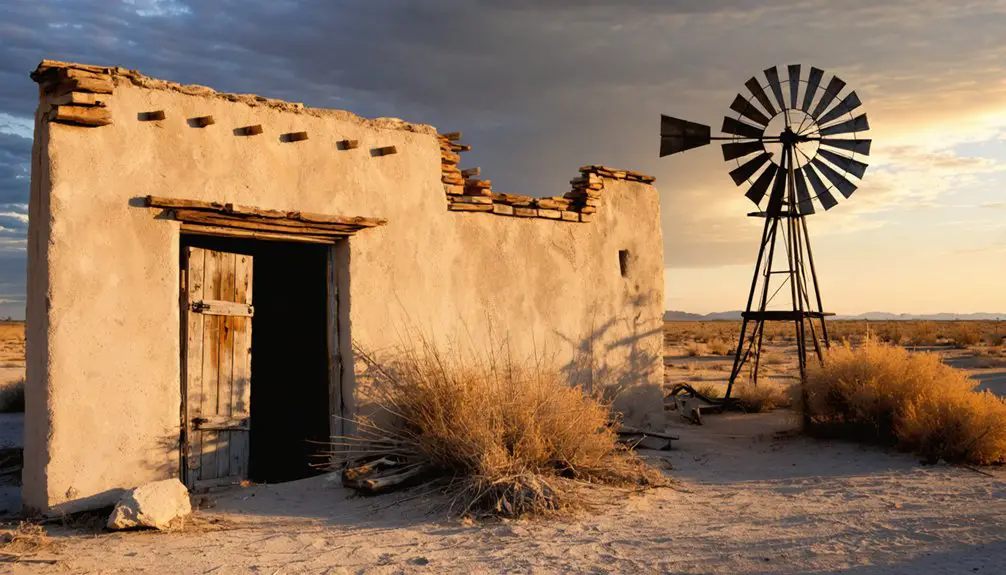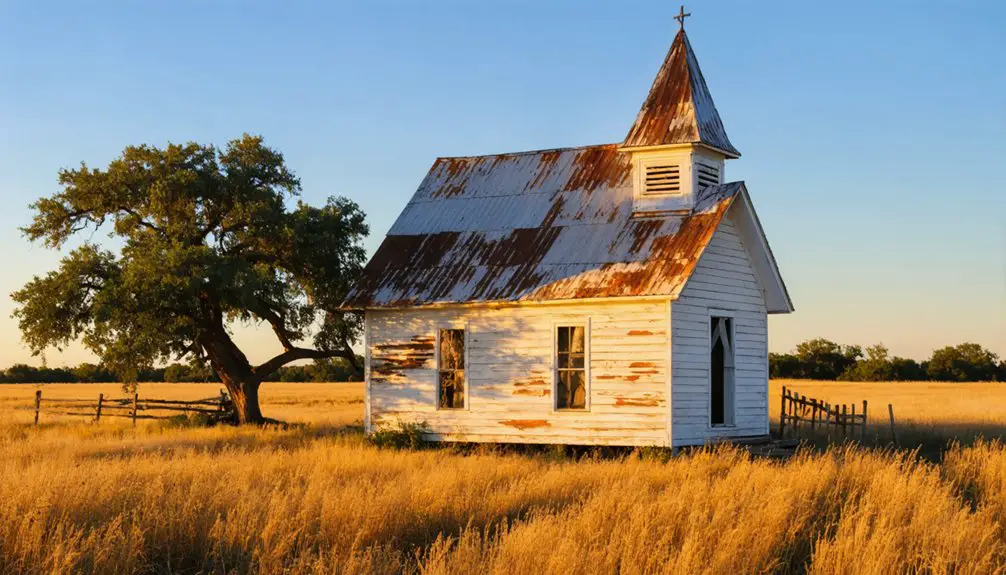
Planning a ghost town road trip to Salona, Texas starts with anchoring your route in nearby Bowie, just two miles away. You’ll find a weathered schoolhouse and cemetery markers that reveal the town’s cotton-farming past and its quiet death after the 1881 railroad bypassed it. Visit in spring or fall for the best access and lighting, pack water and sturdy boots, and bring your camera. Keep going to uncover everything this forgotten frontier has to offer.
Key Takeaways
- Visit Salona during spring or fall for mild weather, ideal photography conditions, and safer road access to this remote site.
- Bring water, snacks, sturdy footwear, a camera, and navigation tools, as the area lacks nearby businesses and clear signage.
- Explore Salona’s weathered school building and cemetery, where headstones reveal personal histories of the town’s former residents.
- Use Bowie, located two miles away, as your base, and extend your trip along the historic Chisholm Trail corridor.
- A four-wheel-drive vehicle is recommended year-round due to unpaved, seasonally challenging roads leading to the ghost town.
What Was Salona, Texas Before It Became a Ghost Town?
Before the railroad reshaped North Texas, Salona thrived as a legitimate frontier settlement with a post office dating back to 1840.
Salona history tells a story of self-sufficient pioneers who built a real community around agriculture and trade.
Salona’s pioneers didn’t just survive the frontier — they built something lasting through grit, agriculture, and community.
The cotton economy drove everything here. Farmers cultivated fields, merchants moved goods, and families planted roots in this stretch of Texas soil.
Salona wasn’t a temporary camp — it was a functioning town with purpose and momentum.
You’re looking at a place where ordinary Texans carved out independence on the frontier, relying on cotton profits and community ties to sustain their lives.
That freedom-driven spirit defined Salona long before economic forces intervened and ultimately pushed its residents toward a future they never originally planned.
How the Railroad Killed Salona in 1881
Everything changed for Salona the moment railroad surveyors planted their stakes two miles away from town in 1881. That single decision triggered rapid economic decline nobody could reverse.
Businesses followed the tracks, residents packed their wagons, and a new town called Bowie absorbed everything Salona had built since 1840.
Railroad impact on frontier settlements was brutal and swift. The line didn’t need Salona, so Salona ceased to matter. Cotton farmers needed shipping access, merchants needed customers, and both required proximity to that iron corridor cutting across the Texas landscape.
You’re visiting a place that commerce simply abandoned. The school and cemetery stayed behind while ambition marched two miles north.
Walking those grounds today connects you directly to one of Texas frontier history‘s most honest stories.
What’s Left to See at the Salona Townsite Today?
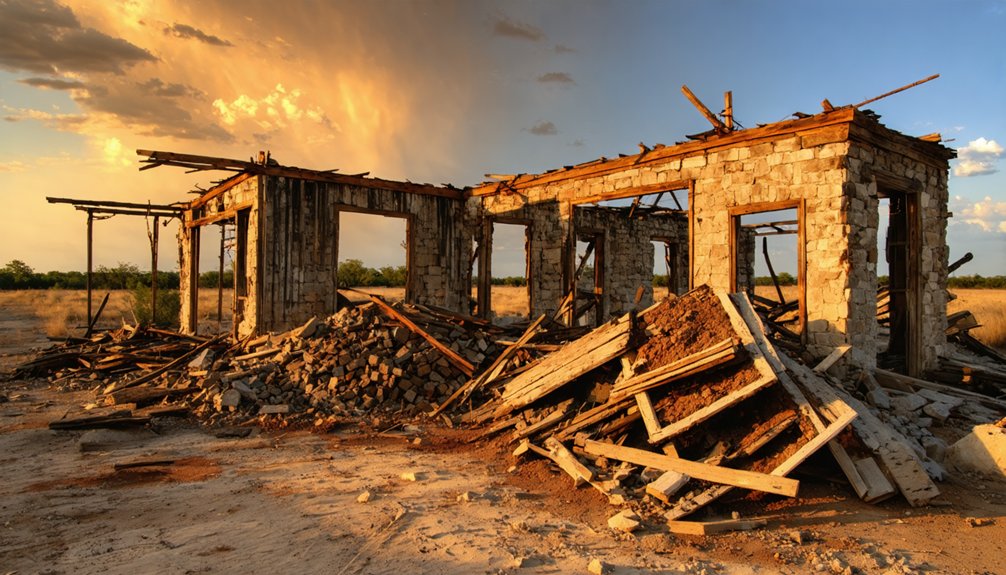
After the residents marched two miles north to Bowie, Salona left behind two quiet survivors: a weathered school building and a cemetery that still marks the ground where a cotton-era community once took root.
These Salona ruins carry genuine historical significance, connecting you directly to a Texas frontier pattern that played out across dozens of railroad-bypassed settlements.
The Salona ruins connect you directly to a Texas frontier pattern repeated across dozens of railroad-bypassed settlements.
You won’t find paved walkways or interpretive signs here. This ghost town demands that you navigate secondary roads, read the landscape, and piece together the story yourself.
The cemetery’s markers tell personal histories that no museum can replicate. Researchers also recognize strong archaeological potential beneath the surface, where everyday frontier life remains largely undisturbed.
Bring your camera, respect the grounds, and give yourself time to absorb what this forgotten community left behind.
Who Will Get the Most Out of Visiting Salona, Texas?
Salona rewards specific kinds of wanderers who crave raw, unfiltered history over polished tourist stops.
You’ll get the most from this site if you’re:
- Ghost town enthusiasts who appreciate abandoned townscapes without modern interference
- Historical preservation advocates keen to document surviving structures before further decay
- Photography-driven explorers hunting honest, weathered backdrops far from curated attractions
- Off-road adventurers comfortable traversing unpaved secondary roads through rural Texas terrain
If you want gift shops and paved walkways, Salona isn’t your destination.
But if you crave the freedom of standing inside forgotten Texas history with nothing but open land around you, Salona delivers exactly that.
When Is the Best Time of Year to Visit Salona?
You’ll want to time your visit to Salona during the mild spring or fall months, when temperatures stay comfortable and the unpaved rural roads remain passable without the risks of summer heat or winter mud.
Autumn’s golden light casts dramatic shadows across the old cemetery markers and crumbling structures, making it the prime season for capturing striking photographs of the ghost town’s remains.
Avoid summer’s brutal Texas heat and winter’s soggy secondary roads, both of which can turn an adventurous day trip into a frustrating ordeal.
Ideal Weather For Visiting
Since Salona sits in rural North Texas, timing your visit around the weather makes a real difference in what you’ll experience. Ideal weather for visiting Salona means dry, mild conditions that keep unpaved roads passable and comfortable for outdoor exploration.
- Spring (March–May): Mild temperatures and wildflowers create stunning photography backdrops near the cemetery and school ruins.
- Fall (September–November): Cooler air and golden light make wandering the abandoned townsite genuinely pleasant.
- Summer (June–August): Brutal heat and afternoon storms can turn rural roads muddy and your visit miserable.
- Winter (December–February): Occasional ice makes secondary roads hazardous, limiting safe access to the site.
Plan around spring or fall, pack water, and check road conditions before heading out.
Seasonal Road Conditions
Reaching Salona depends heavily on what the land’s doing beneath your tires. Seasonal access shifts dramatically across Texas’s rural calendar.
Spring rains turn unpaved routes into muddy traps, so you’ll want to hold off until the ground firms up.
Summer bakes those same roads into cracked, passable paths — your best window for exploration.
Fall offers cooler temperatures and stable conditions, making it another strong choice for the drive out.
Winter’s the wildcard; freezing rain creates dangerous, icy surfaces on roads that see little road maintenance. Nobody’s rushing out to grade these forgotten paths after a storm.
Four-wheel drive helps regardless of season, but dry months between late June and October give you the clearest shot at reaching Salona’s school ruins and cemetery without getting stranded.
Best Photography Lighting Seasons
Beyond the question of road conditions, light itself becomes your most valuable tool when photographing Salona’s ruins. Time your visit strategically, and you’ll capture something genuinely haunting.
- Spring (March–May): Golden hour stretches longer, casting warm tones across the old cemetery’s weathered stones and creating dramatic shadow play between remaining structures.
- Summer (June–August): Harsh midday sun flattens detail—arrive at sunrise or stay through sunset to reclaim that golden hour magic.
- Fall (September–November): Cooler temperatures and low-angle light intensify shadow play, making architectural remnants appear more textured and atmospheric.
- Winter (December–February): Bare trees reveal hidden structural details, and crisp golden hour light cuts sharply across Salona’s abandoned schoolhouse and graves.
Choose your season intentionally—your photographs will reflect that decision completely.
How to Get to Salona From Bowie, Texas
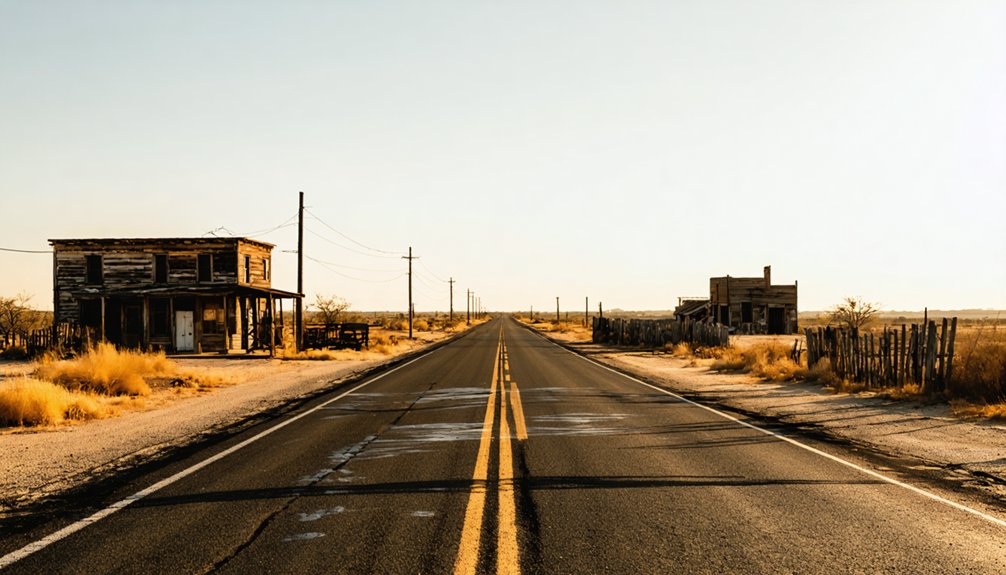
Getting to Salona from Bowie takes only a few minutes, as the ghost town sits roughly 2 miles from its modern successor. Head out from Bowie along secondary roads leading northwest toward the old townsite, where ghost town history quietly waits beneath open Texas skies.
You’ll likely navigate unpaved stretches, so bring a reliable vehicle and check conditions before departing, especially after rain.
Watch for minimal signage — Salona doesn’t advertise itself. That’s part of the adventure.
Once you’ve arrived, you’re standing on ground rich with Texas archaeology potential, where cotton-era foundations and a surviving cemetery tell stories no highway marker ever could.
Keep your bearings using Bowie as your anchor point, and you’ll find Salona’s forgotten landscape surprisingly accessible for such a deeply buried piece of frontier history.
What to Pack Before Driving Out to Salona, Texas
Once you’ve got your route sorted, packing smart makes the difference between a rewarding ghost town visit and a frustrating one.
These road trip tips and packing essentials keep you prepared for Salona’s rural, unpaved terrain:
- Water and snacks – No businesses operate nearby, so bring enough supplies for your entire visit.
- Sturdy footwear – Uneven ground around the cemetery and school ruins demands solid ankle support.
- Camera or smartphone – Photography opportunities at crumbling structures reward anyone who comes prepared.
- Navigation tools – Limited signage means offline maps or a downloaded GPS route are non-negotiable.
Salona’s remote setting strips away modern conveniences, but that raw freedom is exactly what makes exploring this cotton-era ghost town so unforgettable.
Pack light, pack smart, and hit the road.
How to Photograph Salona’s Cemetery and Schoolhouse Ruins
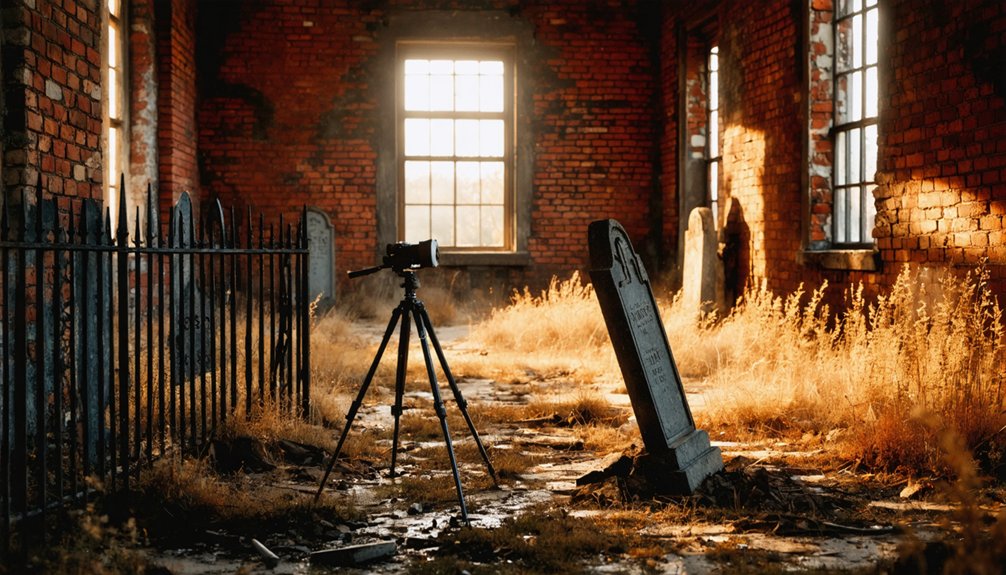
When you arrive at Salona’s cemetery and schoolhouse ruins, you’ll want to shoot during golden hour—early morning or late afternoon light casts long shadows that dramatically highlight weathered stone and aged wood.
Frame your shots low and close, using crumbling walls or leaning headstones as foreground elements to give depth and context to the abandoned structures behind them.
Pack a wide-angle lens for sweeping ruin compositions, a 50mm prime for detail work on inscriptions and textures, and a sturdy tripod to handle the low-light conditions you’ll inevitably face.
Best Lighting Conditions
The golden hour just after sunrise gives Salona’s weathered cemetery and schoolhouse ruins their most dramatic character, casting long shadows across crumbling headstones and bathing aged timber in warm amber light.
You’ll capture textures that midday sun completely flattens. Master these lighting techniques by timing your visit strategically:
- Sunrise (6–7 AM) – Natural shadows stretch dramatically, revealing carved stone details on aged markers.
- Overcast mornings – Diffused light eliminates harsh contrast, ideal for even schoolhouse ruin exposures.
- Late afternoon (4–6 PM) – Warm directional light creates depth across deteriorating wooden structures.
- Avoid midday (10 AM–2 PM) – Harsh overhead light destroys shadow definition and washes out historical details.
Position yourself low, letting natural shadows guide your composition toward Salona’s forgotten stories.
Framing Historic Ruins
Framing Salona’s ruins well means learning to work with what’s left rather than what you wish were there. Position yourself low near the cemetery’s oldest markers, letting weathered stone fill your foreground while open Texas sky anchors your background. That contrast captures both decay and endurance — the essence of ghost town photography.
At the schoolhouse ruins, use remaining structural edges as natural leading lines drawing viewers deeper into the frame. Don’t center everything; offset your subject to create tension and depth.
Salona’s historical significance lives inside these fragments, so let your compositions honor that. Shoot tight on crumbling details — carved dates, worn surfaces, collapsed walls.
Every deliberate frame you capture tells the story that no road sign ever will.
Essential Camera Gear
Knowing how to frame a shot only gets you so far — you also need the right gear to execute it in Salona’s demanding environment. Dust, uneven terrain, and unpredictable light will test your setup fast.
- Wide-angle lens (16–35mm): Captures crumbling schoolhouse walls against open Texas sky — ideal lens preferences for expansive rural scenes.
- 50mm prime lens: Delivers sharp cemetery headstone detail with beautiful background separation.
- Polarizing filter: Cuts harsh midday glare off weathered stone and bleached wood.
- Manual camera settings toolkit: Shoot RAW, dial in f/8–f/11 for maximum sharpness, and adjust ISO freely as clouds shift overhead.
Pack a sturdy bag, bring extra batteries, and keep your gear protected — Salona rewards the prepared explorer.
What Else Is Worth Seeing Near Salona on a North Texas Road Trip?
Once you’ve poked around Salona’s old cemetery and schoolhouse ruins, North Texas opens up a surprisingly rich stretch of road trip stops worth adding to your itinerary. Bowie itself sits just two miles from where Salona once thrived, making it your natural base for refueling and discovering hidden gems tucked along forgotten farm roads.
Head south toward the Chisholm Trail corridor, where cattle drives shaped the entire region’s identity. You’ll find historical markers, open rangelands, and authentic local cuisine at small-town diners that haven’t changed their recipes in decades.
If you’ve got extra miles in you, Salado sits over a hundred miles south, offering preserved frontier architecture and a working historic district. It’s a stark but fascinating contrast to Salona’s quiet, crumbling solitude.
Frequently Asked Questions
Is There an Entrance Fee to Access the Salona Townsite?
You won’t pay an entrance fee to explore Salona’s ghost town history! Roam freely through its legendary ruins, uncover Salona legends, and let your adventurous spirit guide you across this hauntingly open, untamed Texas frontier landscape.
Are Pets Allowed When Visiting Salona’s Cemetery and Ruins?
No official pet policies exist for millions of ghost town explorers, but you’ll want to prioritize pet safety and cemetery etiquette—keep your furry companion leashed, respecting Salona’s sacred, crumbling remnants during your adventurous visit.
Can You Legally Remove Artifacts or Items Found at Salona?
You shouldn’t remove anything you find at Salona. Taking artifacts carries serious legal implications under Texas law. Respect artifact preservation by leaving items untouched, letting future explorers experience the same thrilling, raw connection to this frontier ghost town’s untamed history.
Is Camping Permitted Overnight Near the Salona Ghost Town Area?
Camping regulations don’t officially permit overnight stays at Salona itself, but you’ll find nearby campgrounds around Bowie that welcome free spirits chasing history. Explore the ruins by day, then set up camp and rest under Texas stars!
You’ll likely find Salona’s ghost town history creates real navigation challenges, as it rarely appears on GPS apps. Bring printed maps, note landmarks near Bowie, and embrace the adventure of discovering this forgotten Texas treasure yourself!
References
- https://www.ghosttowns.com/states/tx/salona.html
- https://www.tripadvisor.com/Attraction_Review-g56604-d8698196-Reviews-Historic_Salado_Ghostwalk-Salado_Texas.html
- https://www.legendsofamerica.com/tx-salado/
- https://texashighways.com/travel/the-quest-to-resurrect-a-ghost-town/
- https://www.visitsaladotexas.com/historical-sites-tour/
- https://www.youtube.com/watch?v=LLUV5GU61fI
- https://www.texasescapes.com/SplashAcrossTexas/Salado/SaladoTexas.htm