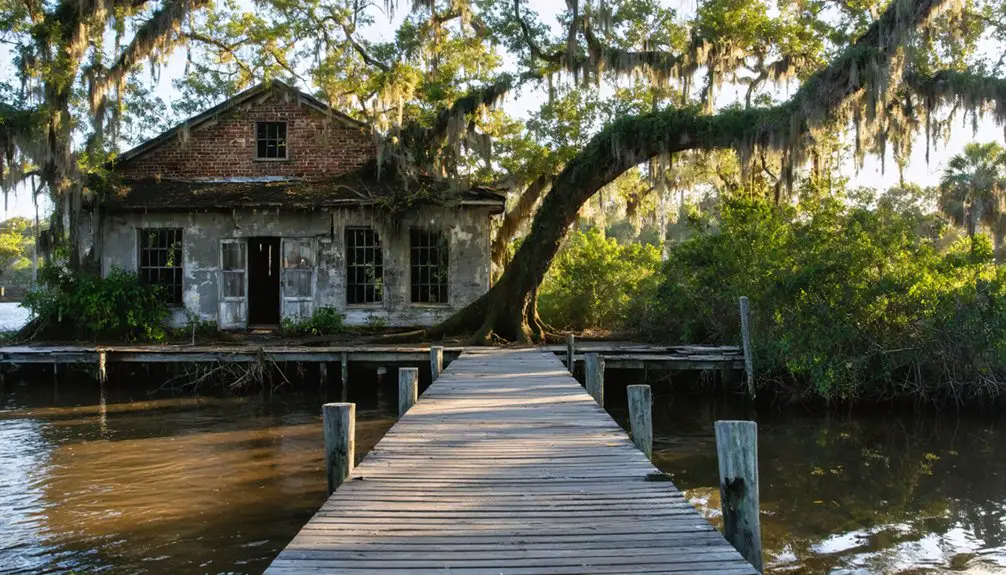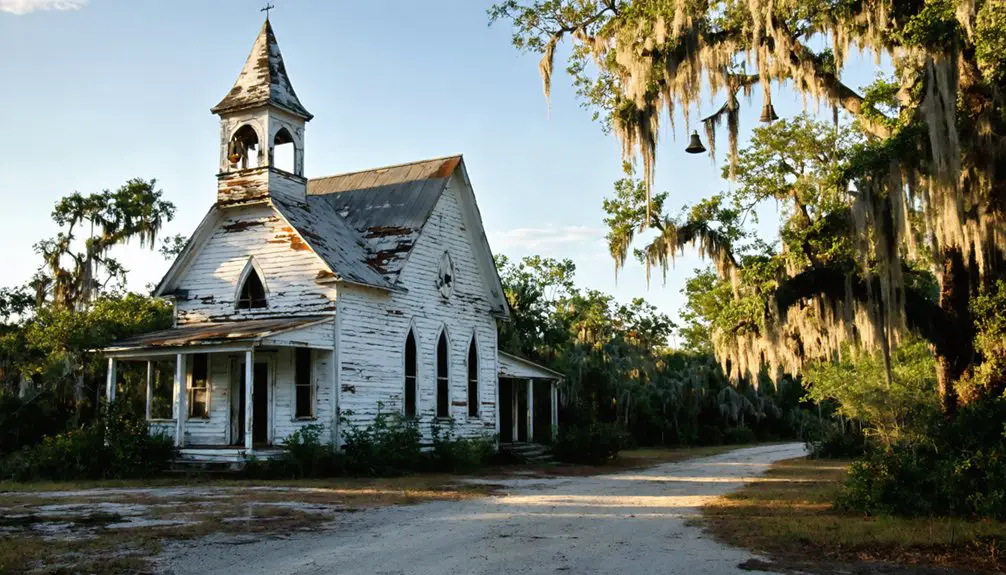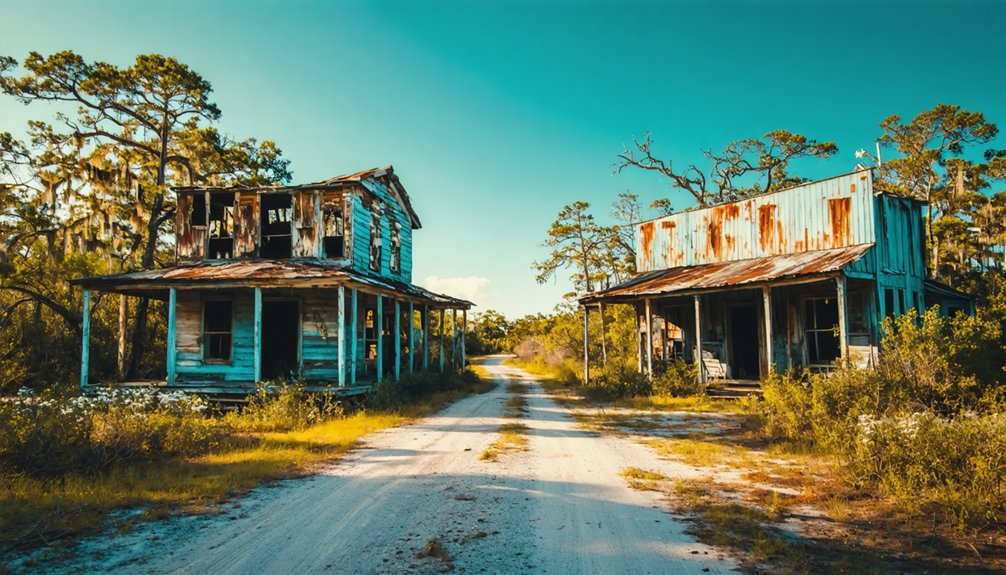
Planning a ghost town road trip to Stage Pond starts at the cemetery off Route 491, deep inside Citrus County’s Withlacoochee State Forest. You’ll wander pine forests where a once-thriving stagecoach waystation housed nearly 250 residents before the catastrophic freezes of 1894-95 erased everything. Scattered bricks, weathered graves, and the ghost-quiet Old Stage Coach Road are all that remain. Pair it with Mannfield for a full day of forgotten Florida history, and there’s so much more to uncover.
Key Takeaways
- Stage Pond Cemetery off Route 491 is your starting point, housing graves of early settler families like Sparkmans, Sadlers, and Casons.
- Explore the woods surrounding Stage Pond for scattered remnants, including wood piles, old bricks, burn marks, and traces of the Old Stage Coach Road.
- Combine Stage Pond with Mannfield for a comprehensive ghost town road trip highlighting the devastating impact of the 1894-95 freezes.
- Pack essentials including water, insect repellent, sturdy footwear, sun protection, and a first aid kit before venturing into the pine forests.
- Download offline trail maps, charge your phone for navigation, and inform someone of your planned route before exploring.
What Is Stage Pond, Florida’s Most Forgotten Ghost Town?
Deep in the pine forests of Citrus County, Florida, Stage Pond sits silent — a ghost town so thoroughly swallowed by wilderness that you’d barely know a thriving community once stood here.
Once an essential stagecoach waystation connecting Jacksonville to Homosassa, it buzzed with a tavern, general store, inn, post office, and two churches. Settler stories trace its roots to the early 1800s, when pioneers claimed fertile land around a natural pond.
By 1885, nearly 250 residents called it home. Then the catastrophic freezes of 1894-95 shattered the citrus economy, and Stage Pond’s ghost town legends began. People left. Buildings crumbled. The forest reclaimed everything.
Today, only a weathered cemetery and scattered remnants remain, waiting for curious travelers willing to step off the beaten path.
How to Get to Stage Pond in Citrus County’s Withlacoochee Forest
Finding Stage Pond takes a little patience, but the journey itself rewards you with some of Florida’s most untouched wilderness.
Getting directions starts with heading to Citrus County Route 491 near Lecanto, where the historic Old Stage Coach Road branches into the surrounding pine forest.
From there, you’ll enter the Withlacoochee State Forest Citrus Tract, a sprawling landscape that demands respect and a solid sense of adventure.
Trail recommendations include following the forest trails on foot or by off-road vehicle, since paved roads don’t reach this far.
Your clearest landmark is Stage Pond Cemetery, tucked behind the tree line and accessible through the woods.
Once you locate the cemetery, push deeper into the clearings beyond it to uncover what little remains of this forgotten Florida settlement.
How the Great Freeze of 1894 Wiped Out Stage Pond’s Economy
When you walk through Stage Pond’s overgrown clearings today, it’s hard to imagine that thriving citrus groves once defined this community’s identity and livelihood.
The brutal freezes of 1894 and 1895 wiped out those groves entirely, gutting the local economy and leaving settlers with nothing to sustain their way of life.
Without agriculture to anchor them, residents abandoned Stage Pond one by one, and the town that had thrived for decades quietly slipped into silence.
Citrus Groves Completely Destroyed
Though Stage Pond had weathered decades of frontier hardship, nothing could’ve prepared its settlers for the catastrophic back-to-back freezes of 1894 and 1895. This dual blow was so devastating it effectively erased the town’s economic foundation overnight.
Florida’s citrus history shifted permanently after those brutal winters, leaving once-thriving groves as blackened, lifeless ruins.
The agricultural impact hit Stage Pond mercilessly:
- Every citrus grove froze solid, destroying years of painstaking cultivation and eliminating the town’s primary income source.
- Farmers lost everything — land value collapsed alongside the crops, forcing families to abandon their homesteads entirely.
- No recovery was possible — two consecutive freezes left the soil economically unworkable, severing Stage Pond’s lifeline before anyone could rebuild.
Freedom-seeking pioneers had carved something remarkable here. The freeze simply swallowed it whole.
Economic Collapse Follows Freeze
The freeze didn’t just kill the crops — it killed the economy that breathed around them. Every business in Stage Pond depended on citrus revenue. When the groves collapsed, so did the tavern, the general store, the inn, and the post office.
You’re looking at a textbook case of ghost town dynamics — one economic blow cascades into total community collapse.
The economic impacts hit fast and without mercy. Families who’d built lives around farming suddenly had nothing to harvest and no reason to stay.
By the 1920s, the population had already gutted itself. People simply left, seeking survival elsewhere.
What remained behind wasn’t a town anymore — it was a clearing, a cemetery, and the quiet memory of something that once thrived and breathed freely.
Population Abandons Stage Pond
After the freeze tore through Stage Pond’s citrus groves in 1894 and 1895, families didn’t linger — they left. Population decline hit fast, and by 1920, ghost town dynamics had fully consumed what was once a thriving waystation community.
Here’s what disappeared as residents walked away:
- The post office — closed, leaving no civic anchor
- The general store, tavern, and inn — shuttered without customers to serve
- The school and two churches — abandoned as children and congregations vanished
You’re now walking through land where 250 people once built real lives. The stagecoach routes faded, transportation shifted, and Stage Pond simply emptied.
Nature reclaimed the rest, swallowing structures whole and leaving only the cemetery behind.
What’s Left to See at Stage Pond Today?
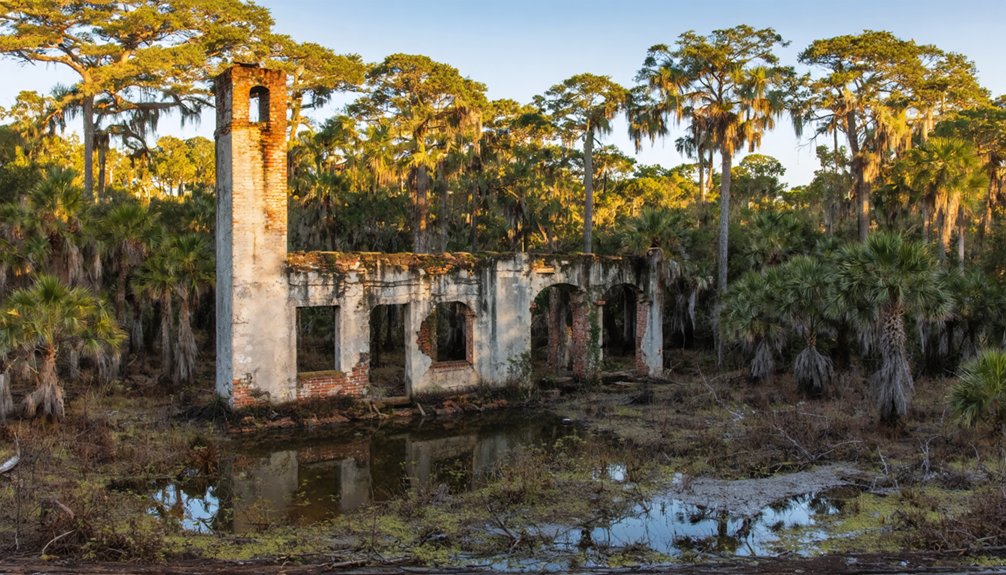
What remains of Stage Pond today is sparse but quietly compelling. You won’t find standing buildings or restored storefronts — just raw, honest ghost town remnants swallowed by pine forest and silence.
The Stage Pond Cemetery stands as the area’s most significant landmark, sheltering graves of early settler families like the Sparkmans, Sadlers, and Casons. It’s one of Citrus County’s oldest burial grounds and worth every step of the trek.
Beyond the cemetery, your historical exploration rewards patience. Scan the clearings for scattered wood piles, old bricks, and possible burn marks where structures once stood.
The faint trace of Old Stage Coach Road still cuts through the landscape. Nature’s reclaimed nearly everything, but that untamed quality is exactly what makes Stage Pond worth finding.
Stage Pond Cemetery and the Settler Families Who Built It
As you walk through Stage Pond Cemetery, you’re stepping into the lives of the pioneer families who carved this community out of the Florida wilderness.
The oldest graves belong to surnames like Sparkman, Sadler, Leggette, Cason, and Rooks — names that echo the earliest settlers who built the town’s tavern, store, churches, and school.
Each weathered headstone tells a story of frontier resilience, marking lives lived during the stagecoach era when Stage Pond thrived as a crucial waystation on the Jacksonville-to-Homosassa coach line.
Cemetery’s Earliest Settler Families
When you step into Stage Pond Cemetery, you’re walking among the roots of Citrus County’s earliest pioneer families — the Sparkmans, Sadlers, Leggettes, Casons, and Rooks, whose weathered headstones stand as the most enduring evidence that a thriving community once existed here.
Their settler legacy speaks louder than any written record.
These pioneer stories deserve your full attention:
- Sparkmans and Sadlers cleared land and built the agricultural foundation that sustained Stage Pond for decades.
- Leggettes and Casons helped establish the civic and religious institutions that defined community life.
- Rooks family roots run deep, with descendants still living nearby today.
Run your hand across a moss-covered stone, and you’re touching the raw, unfiltered history of Florida’s frontier past.
Graves Reflecting Pioneer History
Each grave you encounter in Stage Pond Cemetery tells a story that goes far beyond a name chiseled into aging limestone. These markers represent families who carved lives from unforgiving Florida wilderness, building a thriving waystation community from raw land and determination.
You’ll notice surnames like Sparkmans, Sadlers, Leggettes, Casons, and Rooks embedded throughout the grounds. These weren’t simply residents — they were builders, farmers, and traders who shaped early Citrus County life along the Jacksonville-to-Homosassa stagecoach corridor.
Walking among these stones connects you directly to pioneer heritage that Florida’s modern landscape rarely reveals anymore. Cemetery preservation efforts here guarantee their contributions aren’t forgotten beneath encroaching pine forests.
Take your time reading each marker — you’re standing inside one of Citrus County’s oldest living historical records.
How to Combine Stage Pond With Mannfield for a Full Ghost Town Drive
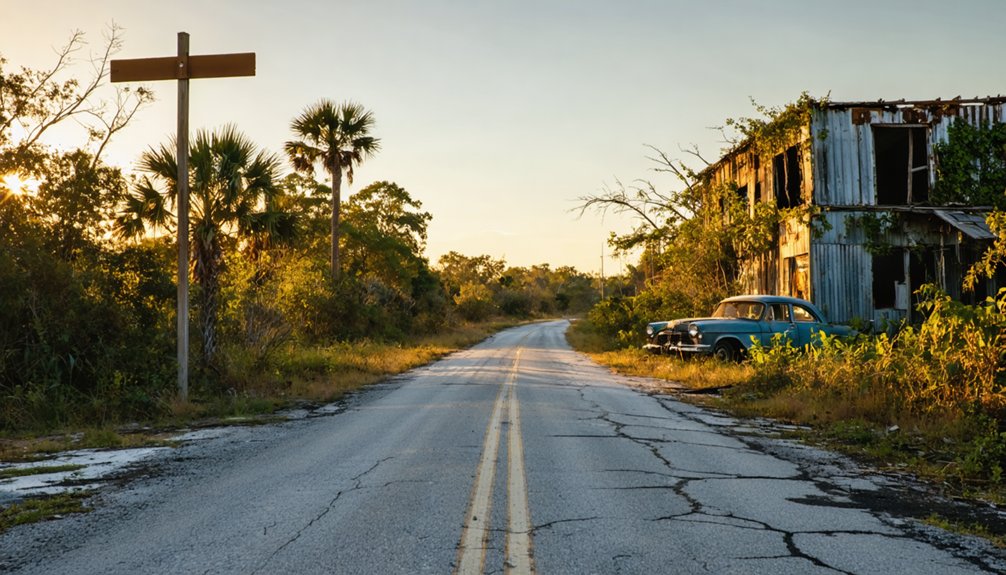
Two forgotten Florida communities make for one compelling road trip when you pair Stage Pond with the nearby ghost town of Mannfield.
Both sites sit within Citrus County, making ghost town exploration surprisingly efficient. The Mannfield connection deepens your understanding of how the 1894-95 freezes devastated entire communities across the region.
Both sites share Citrus County roots, making the dual ghost town experience a surprisingly efficient and historically rich adventure.
Plan your drive strategically:
- Start at Stage Pond Cemetery off Route 491, exploring the woods behind it for remnants like brick piles and clearings.
- Follow the Old Stage Coach Road traces connecting the wilderness corridor between both sites.
- End at Mannfield to complete the historical picture of post-freeze abandonment across Citrus County.
You’ll cover two ghost towns, one shared history, and miles of untamed Florida wilderness in a single unforgettable drive.
What to Pack Before Hiking Into Stage Pond’s Pine Forest
Before you lace up your boots and follow those ghost town traces into the pine forest, packing smart makes the difference between a rewarding exploration and a miserable retreat.
Stage Pond’s wilderness doesn’t coddle visitors, so treat your hiking essentials seriously. Carry enough water for the full trek, since no services exist out here. Pack insect repellent — Florida’s pine forests bite back hard.
Bring a basic first aid kit, sturdy footwear, and sun protection for open clearing stretches. For forest safety, download offline trail maps before you lose signal, and tell someone your planned route.
A charged phone, a small flashlight, and snacks round out your kit. Pack light enough to move freely, but prepared enough to stay out there longer.
Frequently Asked Questions
Is Stage Pond Cemetery Open to Public Visitors Year-Round?
Yes, you can visit Stage Pond Cemetery year-round, as there aren’t strict cemetery hours restricting access. Follow basic visitor guidelines: respect the grounds, honor early settlers’ graves, and embrace the peaceful, wilderness-surrounded freedom this historic site offers.
Are Permits Required to Explore Withlacoochee State Forest Citrus Tract?
You don’t need a permit application for general exploration! Over 157,000 acres of wild freedom await you in the Citrus Tract. Simply follow forest regulations, respect the land, and roam Stage Pond’s pine-draped wilderness freely.
Can Off-Road Vehicles Legally Access Stage Pond Through Forest Trails?
You can navigate Stage Pond’s rugged pine forests using off-road vehicles, but you’ll want to verify current off road regulations with forest authorities first. Trail accessibility varies, so confirm permitted routes before you venture deep into the wilderness.
Which Families From Stage Pond Still Have Descendants Living Nearby?
“Roots run deep.” You’ll find Stage Pond ancestry alive through the Sparkmans, Sadlers, Leggettes, Casons, and Rooks families. Their local family histories echo through the cemetery, with descendants still living nearby, honoring forgotten homesteads.
Does the Citrus County Historical Museum Display Stage Pond Artifacts?
The Citrus County Historical Museum’s records link you to Stage Pond’s cultural significance, but confirmed artifact displays aren’t documented. You’ll uncover local legends and ghostly echoes by visiting directly, where freedom-seekers trace history’s pulse firsthand.
References
- https://www.youtube.com/watch?v=k2azpLDt9C0
- https://www.youtube.com/watch?v=n_iukHtN3-Y
- https://www.youtube.com/watch?v=He4t4piG5Ac
- https://travelmadepersonal.com/stage-pond-ghost-town/
- http://www.gribblenation.org/2018/06/ghost-town-tuesday-mannfield-fl-and.html
- https://www.ghosttowns.com/states/fl/stagepond.html
- https://www.youtube.com/watch?v=lRze8Ip7dHI
- https://cccourthouse.org/wp-content/uploads/2023/12/Ghost-towns-and-Cemeteries-of-Citrus-County.pdf