Start your road trip at Black Wolf, Kansas, six miles west of Ellsworth, where you’ll find crumbling foundations, an active Co-op Grain Elevator, and Union Pacific tracks still cutting through what was once a thriving town of 100 residents. Fill your gas tank, download offline maps, and bring water before you go—cell service gets spotty fast. Pair Black Wolf with nearby ghost towns like Wilson and Hitshmann, and there’s far more to this forgotten stretch of Kansas than first meets the eye.
Key Takeaways
- Black Wolf, located 6 miles west of Ellsworth, Kansas, is accessible via roads along the Smoky Hill River’s north bank.
- Fill your gas tank, bring water, and download offline maps before visiting due to spotty cell service in the area.
- Key sights include the operational Co-op Grain Elevator, active Union Pacific Railroad tracks, and remnants of old foundations.
- Nearby ghost towns like Wilson and Hitshmann make excellent additions to extend your road trip itinerary.
- Bring a camera to document Black Wolf’s abandoned structures, historical markers, and unique landscapes honoring Chief Black Wolf’s legacy.
What’s Left of Black Wolf, Kansas Today
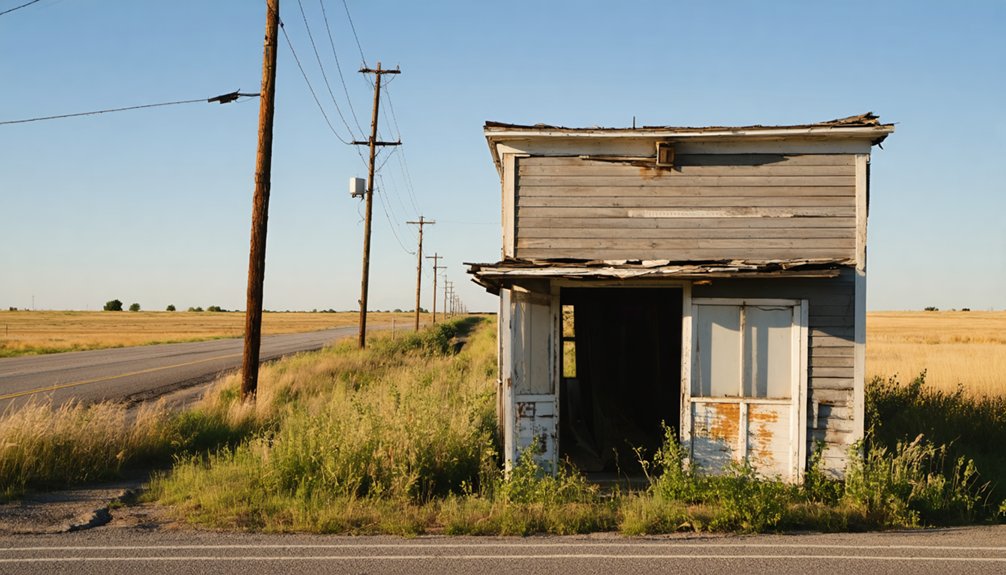
Though Black Wolf once bustled with five saloons, two hotels, and a thriving bank, you’ll find only quiet remnants scattered across the north bank of the Smoky Hill River today.
Five saloons, two hotels, a thriving bank — now only quiet remnants mark Black Wolf’s storied past.
The commercial buildings are gone, but several residential homes still stand alongside old foundations hinting at the town’s historical significance. The co-op grain elevator remains operational, and Union Pacific’s tracks still cut through, reminding you that life once moved briskly here.
Local legends breathe life into these empty lots — stories of a 1920s bank robbery, catastrophic 1938 floods cresting 12 feet above the river bridge, and Saturday night dances held in a machinery barn.
Walk the grounds carefully; you’re reading a story written in concrete foundations, weathered soil, and railroad steel.
How to Get to Black Wolf From Ellsworth or Wilson
Once you’ve soaked in what’s left of Black Wolf, getting there in the first place is straightforward — the town sits roughly 6 miles west of Ellsworth, halfway between Ellsworth and Wilson along the Smoky Hill River‘s north bank.
Pull up a directions map before you leave, since rural Kansas roads can surprise you.
From Ellsworth, head west and follow roads hugging the river’s north bank. From Wilson, simply reverse the route eastward.
Either way, you’ll spot the active Union Pacific Railroad tracks and the Co-op Grain Elevator as reliable landmarks confirming you’ve arrived.
A few travel tips worth noting: fill your gas tank beforehand, bring water, and plan visits during daylight hours.
Cell service can be spotty, so download your map offline before hitting the road.
Why Black Wolf Is Named After an Indian Chief
Few Kansas ghost towns carry a name with as much historical weight as Black Wolf — the town’s identity traces directly back to a Native American chief whose tribe once camped along nearby Cow Creek.
This name origin connects you to a living history most travelers overlook.
Here’s what makes the Indian Chief connection worth knowing:
- Chief Black Wolf led a tribe that regularly camped along Cow Creek, just south of present-day Black Wolf.
- Railroad officials honored his legacy by naming the Union Pacific station after him in the late 1870s.
- The creek encampments made this land sacred ground long before settlers arrived.
- Historical markers near the site still reference the chief’s lasting influence on the region.
How Black Wolf Grew From a Railroad Stop to 100 Residents
What started as a single railroad stop in the late 1870s eventually grew into a thriving community of 100 residents by 1910. Railroad influence drove early development, attracting merchants, settlers, and entrepreneurs enthusiastic to build something lasting on the Kansas plains.
Albert Jung established a trading post, and as his family’s land holdings expanded, community growth accelerated. You’d have found two hotels, a general store, a bank, three grain elevators, two lumberyards, a blacksmith, a creamery, and a stockyard all operating within this small town.
A school opened in 1880, and five saloons kept residents entertained. A nearby coal mine supplied locals with fuel. Black Wolf transformed from a simple rail junction into a self-sufficient settlement where independent-minded people carved out real livelihoods on their own terms.
What the 1938 Flood and Bank Robbery Did to Black Wolf
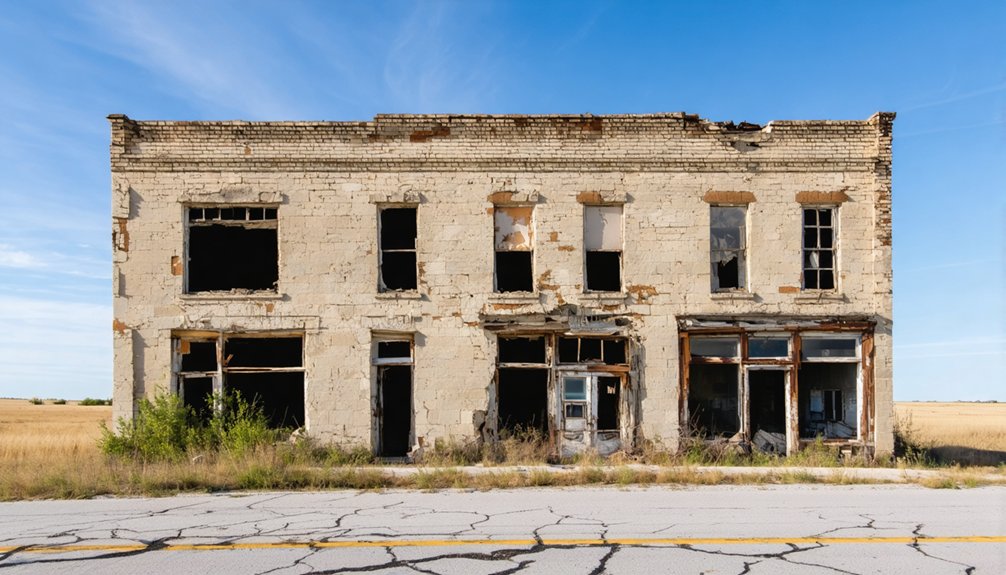
When you look into Black Wolf’s decline, you can’t ignore the twin blows that shook the community to its core.
In 1938, a catastrophic flood sent the Smoky Hill River crashing 12 feet above the bridge, devastating the town’s infrastructure and spirit.
Then, masked robbers struck the local bank, making off with $500 and leaving residents with one more reason to question the town’s future.
The 1938 Flood’s Destruction
Black Wolf weathered plenty of hardships over the decades, but two events hit the town especially hard: a brazen bank robbery in the 1920s and a catastrophic flood in 1938.
The 1938 flood delivered a devastating blow, cresting 12 feet above the river bridge and overwhelming everything in its path. The flood aftermath tested community resilience like nothing before it.
Here’s what that disaster meant for Black Wolf:
- Floodwaters rose 12 feet above the Smoky Hill River bridge
- Buildings, farmland, and infrastructure sustained severe damage
- Residents faced massive cleanup and rebuilding efforts
- The town’s economic foundation weakened considerably
You can still sense the weight of that disaster when you walk the north bank today, where the river quietly flows past the remaining foundations.
Masked Bank Robbers Strike
The flood wasn’t the only catastrophe that shook Black Wolf to its core. In the 1920s, masked bandits stormed the town’s bank, making off with $500 in a brazen heist that rattled this tight-knit community.
The heist aftermath left residents questioning their safety in a place they’d built from nothing. You can almost feel the tension walking these quiet streets today, imagining how that single act of lawlessness rippled through a town already fighting to survive.
Combined with the devastating 1938 flood, Black Wolf faced blow after blow. These weren’t just isolated incidents — they were chapters in a slow unraveling.
When you visit, you’re not just seeing a ghost town; you’re standing inside a story of resilience tested beyond its limits.
Community Decline Follows
After the 1938 flood crested 12 feet above the river bridge and masked robbers gutted the bank of $500, Black Wolf’s already-fragile foundation began cracking beyond repair.
Despite its community resilience, the town couldn’t outrun destiny.
You’ll notice the historical significance in each milestone of collapse:
- 1952 — Union Pacific Depot shuttered, severing Black Wolf’s commercial lifeline
- 1953 — The post office closed permanently, ending decades of civic connection
- Mid-1950s — Remaining businesses abandoned, leaving only residential homes standing
- Post-1950s — Ghost town status officially claimed what floods and crime started
Walking these grounds today, you’re standing where determined people refused to quit — until they’d no choice.
That tension makes Black Wolf unforgettable.
How Black Wolf Went From 100 Residents to a Ghost Town
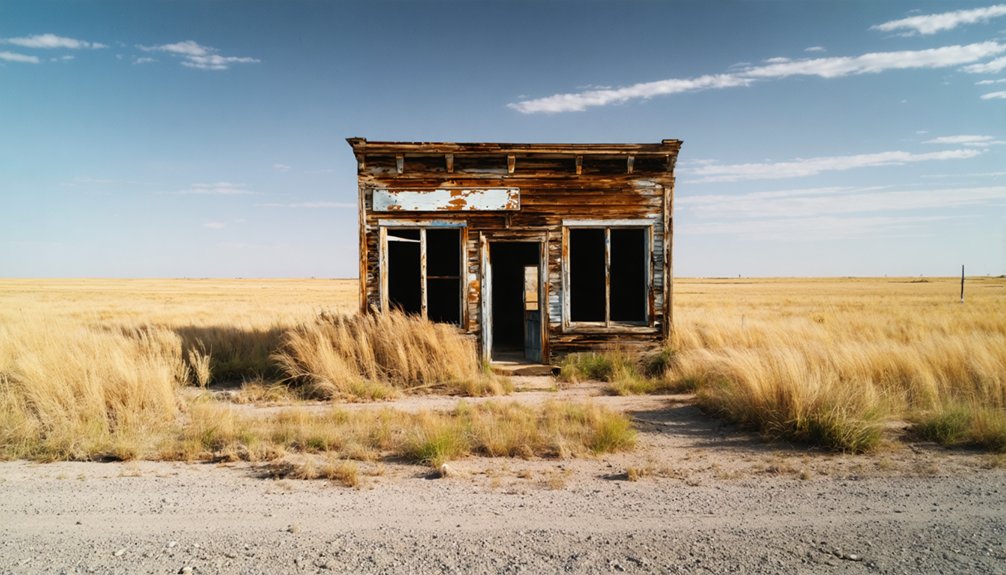
Once thriving with 100 residents, five saloons, two hotels, and a bustling bank, Black Wolf’s decline came swiftly after the 1950s.
Population shifts drained the town as residents sought opportunities elsewhere, leaving businesses without customers. Economic changes reshaped rural Kansas, making small railroad stops like Black Wolf obsolete.
As residents left for better opportunities, Black Wolf’s businesses collapsed, its purpose as a rural railroad stop erased by economic change.
When the Union Pacific Depot closed in 1952, the town lost its commercial lifeline. The post office followed in 1953, severing Black Wolf’s last institutional thread.
Repeated flooding, including the devastating 1938 flood with its 12-foot river crest, made rebuilding feel pointless for many families.
Today, you’ll find no remaining business buildings, only scattered residential homes, old foundations, and an operational Co-op Grain Elevator standing as quiet testimony to what this determined little community once was.
What to See at the Black Wolf Townsite Today
Visiting Black Wolf today means piecing together a ghost town’s story from what little remains. The ghost town remnants won’t overwhelm you, but each one carries real historical significance worth your time.
Here’s what you’ll find on-site:
- Co-op Grain Elevator – Still operational, it anchors the townsite and connects past agricultural life to the present.
- Active Union Pacific Railroad Tracks – The same line that built Black Wolf still runs through it.
- Old Foundations – Scattered remnants outline where businesses and homes once stood.
- Residential Homes – A few occupied houses confirm that life, however quietly, continues here.
Walk the north bank of the Smoky Hill River, take your photos, and let the silence tell the rest of Black Wolf’s story.
Nearby Kansas Ghost Towns Worth Adding to Your Route
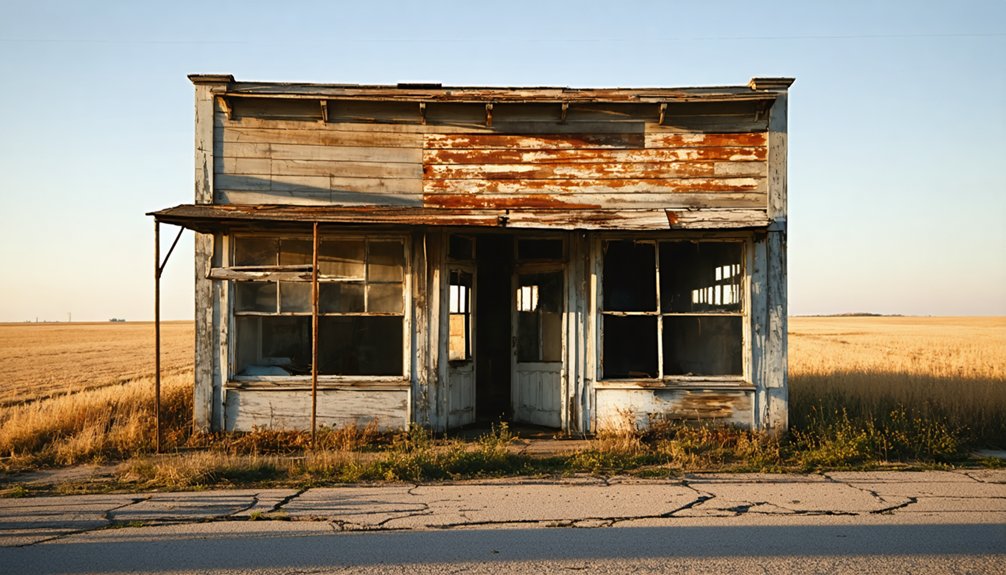
Why stop at Black Wolf when the surrounding Kansas plains hide even more forgotten stories? Extend your route and push deeper into Ellsworth County’s forgotten past.
Hitshmann sits nearby, offering abandoned structures that whisper of lives once fully lived on the open prairie. Wilson, just a short drive east, blends ghost town atmosphere with enough life to fuel your tank and your curiosity.
These towns carry their own local legends — stories of settlers, hardship, and resilience that rival Black Wolf’s colorful history. Traveling between them feels like flipping through a history book nobody finished writing.
Pack a camera, keep your map loose, and let the Kansas wind guide you from one forgotten crossroads to the next. Freedom tastes best when the road stays open.
Turning Black Wolf Into a Full Kansas Ghost Town Road Trip
Black Wolf sets the perfect anchor for a full day loop through Ellsworth County’s forgotten landscape. Its ghost town exploration pairs naturally with the surrounding region’s rich historical significance.
Build your route and reclaim a piece of Kansas history:
- Start at Black Wolf – Walk the Smoky Hill River’s north bank, photograph the Co-op Grain Elevator, and study the old foundations.
- Head west to Wilson – Explore this Czech-heritage town with preserved architecture and local stories.
- Swing toward Hitshmann – Another faded settlement worth documenting before it disappears entirely.
- Loop back through Ellsworth – Check historical markers connecting coal mines, frontier commerce, and railroad expansion.
You’re not just driving roads — you’re threading through layers of Kansas that most people never bother to find.
Frequently Asked Questions
Is Black Wolf, Kansas an Officially Recognized Ghost Town by the State?
Once home to 100 residents, Black Wolf’s official ghost town status isn’t confirmed by Kansas state records, but its historical significance and local legends of bank robberies and floods make it a must-visit destination for you.
Are There Any Guided Tours Available at the Black Wolf Townsite?
No official guided tours exist, but you’ll love exploring Black Wolf’s historical significance on your own terms! Embrace guided exploration at your pace, discovering old foundations, active railroad tracks, and the grain elevator freely.
Can Visitors Legally Access the Old Foundations Visible Around Black Wolf?
Like a treasure waiting to be discovered, you can explore Black Wolf’s old foundations, but always respect ghost town regulations and private property. Historic site accessibility isn’t guaranteed, so check local land ownership before wandering freely.
Is the Co-Op Grain Elevator in Black Wolf Open to the Public?
The Co-op Grain Elevator’s elevator operations aren’t designed for public access, but you can still admire it from nearby roads. It’s an active facility, so you’ll want to respect boundaries while soaking in its historic presence.
What Is the Best Time of Year to Visit Black Wolf, Kansas?
Spring and fall offer the best seasonal attractions, giving you mild weather considerations for exploring Black Wolf’s remnants. You’ll avoid summer’s scorching heat and winter’s harsh cold, making your ghost town adventure truly unforgettable.
References
- https://legendsofkansas.com/black-wolf-kansas/
- http://kansasghosttowns.blogspot.com/2011/02/black-wolf-kansas-ellsworth-county.html
- https://www.hppr.org/hppr-people-communities/2015-06-24/a-remembrance-of-black-wolf-a-forgotten-kansas-town
- https://en.wikipedia.org/wiki/Black_Wolf
- https://farmerdays.com/2015/08/04/wilson-hitshmann-and-black-wolf-ks/