Planning a ghost town road trip to Twilight, South Dakota means heading deep into Butte County’s rural backroads, where cell service disappears and pavement gives way to rough terrain. You’ll want a 4WD vehicle, offline maps, and Newell as your supply stop before pushing toward coordinates 44.9°N, 103.3°W. Visit between late spring and early fall for the best access. If you’re serious about exploring South Dakota’s forgotten West, there’s plenty more to uncover ahead.
Key Takeaways
- Twilight, South Dakota, is a forgotten ghost town in Butte County, originally called Oens Ranch, with a post office established in 1914.
- A 4WD vehicle or high-clearance SUV is strongly recommended, as rural roads in Butte County can be rough and unpaved.
- Use Newell as your primary supply landmark and download offline maps, since cell service in the area is unreliable.
- Visit between late spring and early fall for dry road conditions and optimal golden-hour photography of weathered prairie structures.
- Combine Twilight with nearby ghost towns like Scenic, Ardmore, and Spokane for a comprehensive South Dakota ghost town road trip.
What Is Twilight, South Dakota?
Tucked away in Butte County, South Dakota, Twilight is one of the state’s many forgotten ghost towns — a quiet relic of early 20th-century rural ranching life that once buzzed with enough activity to warrant its own post office.
Its Twilight history begins as Oens Ranch, where a post office was established in 1914. By 1917, the post office department had renamed it “Twilight,” selecting the name from a list of suggestions submitted by local patrons, beating out options like Sage Brush and Trail Creek.
Today, ghost town exploration here means wandering through a largely abandoned landscape where scattered remnants hint at the community that once existed.
It’s raw, unfiltered history sitting quietly on the open prairie, waiting for curious travelers to discover it.
How Twilight, South Dakota Got Its Name
Before it earned its evocative name, this quiet South Dakota settlement went simply by Oens Ranch, serving as a rural post office established in 1914.
When the post office department decided to rename it in 1917, patrons submitted a list of candidates — including Sage Brush and Trail Creek — but Twilight, the last name on the list, caught the department’s attention.
You might find it fitting that a place now frozen in time carries a name chosen almost by chance, selected simply because it appeared last on a list of suggestions.
Origins Of Oens Ranch
What’s in a name? For Twilight, South Dakota, it all starts with Oens Ranch history. Before the post office department stepped in with its 1917 renaming, this rugged Butte County settlement carried the straightforward identity of the ranch that anchored it.
Early settlement here meant real ranching life — livestock, open prairie, and the kind of self-reliant existence that defined rural South Dakota in the early 20th century.
When you visit today, you’re walking ground that hardworking ranchers once claimed as their own. The Oens family didn’t just work the land; they gave this community its first identity.
That foundation shaped everything that came after, including the name suggestions locals eventually submitted to the post office department — a small act of community pride in a vast, unforgiving landscape.
Choosing The Name Twilight
The name “Twilight” didn’t arrive by accident — it emerged from a surprisingly democratic process that small rural communities often used to shape their postal identity. When patrons submitted name suggestions, the list included options like Sage Brush and Trail Creek — both fitting choices for this rugged South Dakota landscape.
The post office department ultimately selected the last name on that submitted list: Twilight. Understanding this historical context adds real weight to your visit. The name significance runs deeper than simple aesthetics — it reflects a moment when ordinary ranching families exercised genuine agency over their community’s identity.
In 1917, Oens Ranch officially became Twilight, carrying a poetic title that now perfectly captures the faded, haunting atmosphere you’ll experience when you explore its abandoned remains today.
How To Get To The Twilight Ghost Town Site
To reach the Twilight ghost town site, you’ll need to navigate Butte County’s sparse rural road network in northern South Dakota, where GPS signals can be unreliable and signage is minimal.
You’ll want a 4WD vehicle to handle the potentially rough terrain, since no major highways cut directly through the area.
Your best strategy is to use nearby Newell as your launching point, stocking up on fuel and supplies before heading out toward the approximate coordinates of 44.9°N, 103.3°W.
Navigating Rural South Dakota
Getting to Twilight, South Dakota requires a few key preparations before you hit the road. Rural navigation here means embracing unpaved paths and wide-open prairie stretches near Butte County.
For successful ghost town exploration, keep these essentials in mind:
- Drive a 4WD vehicle — rough terrain makes standard cars unreliable on remote rural roads.
- Navigate toward Newell — use this nearby town as your primary landmark before heading into backcountry routes.
- Target coordinates 44.9°N, 103.3°W — GPS helps, but download offline maps since cell service disappears fast.
- Avoid major highway expectations — no significant routes cut directly through the site, so flexibility matters.
You’re trading convenience for raw, unfiltered freedom once you leave pavement behind.
Recommended Vehicle Types
Choosing the right vehicle makes or breaks your trip to Twilight’s remote prairie site. South Dakota’s Butte County delivers unpredictable terrain considerations, including rutted dirt roads, eroded creek crossings, and loose gravel stretches that’ll challenge underpowered cars.
Your best vehicle recommendations center on 4WD trucks or high-clearance SUVs that handle shifting conditions confidently. If you’re driving a standard sedan, you’re risking a costly breakdown miles from help.
All-terrain tires give you extra grip across muddy patches after rainfall, which hits this region hard in spring.
Pack a basic recovery kit — tow strap, shovel, and jumper cables — because cell service disappears fast out here. Choosing a capable rig means you’re free to explore without worrying about getting stranded on the prairie.
Nearby Town Access Points
Several small towns serve as your launching pad for reaching Twilight, with Newell standing out as the most practical base camp in Butte County.
Stock up on supplies there before tackling rural traversal toward the site near coordinates 44.9°N, 103.3°W.
Here are four ghost town access essentials:
- Start in Newell – Your closest resupply point before hitting unpaved roads
- Download offline maps – Cell service disappears fast in remote Butte County
- Follow county road signage – No major highways cut directly through Twilight’s location
- Plan your return route – Daylight hours matter when traversing unmarked rural terrain
You’re venturing into genuinely open country here, so treat this like the frontier exploration it truly is.
What Survives At The Twilight Townsite Today
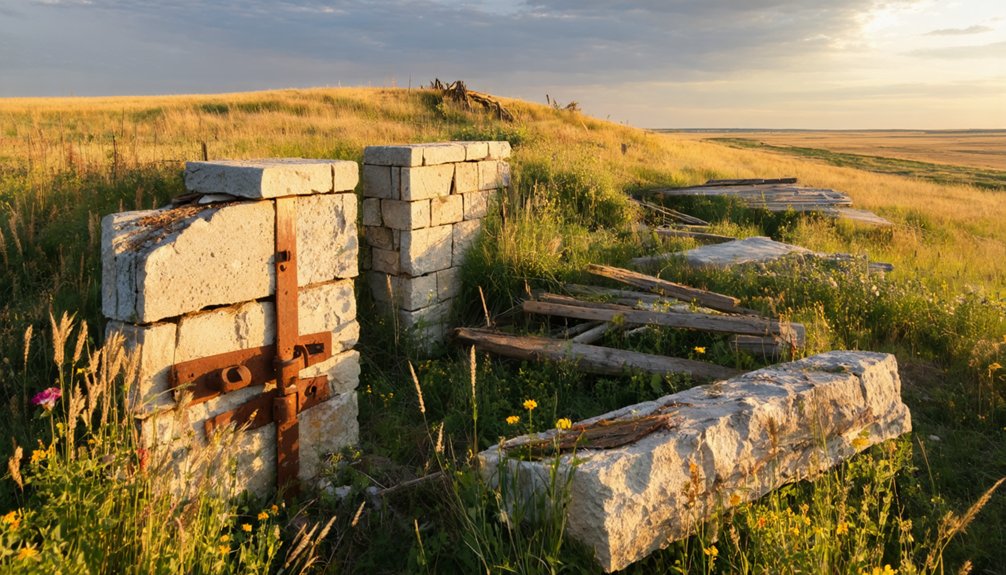
Although little remains standing at Twilight’s former townsite, what you’ll find there still tells a quiet story of early 20th-century prairie life. The ghost town remnants include decayed structural fragments from the original post office and ranch buildings that date back to 1917.
You’ll notice the barren prairie landscape surrounding these weathered ruins, giving the site its undeniable historical significance as a once-functioning rural community.
Don’t expect polished tourist attractions here. Instead, you’ll explore freely on your own terms, reading the land itself as your guide.
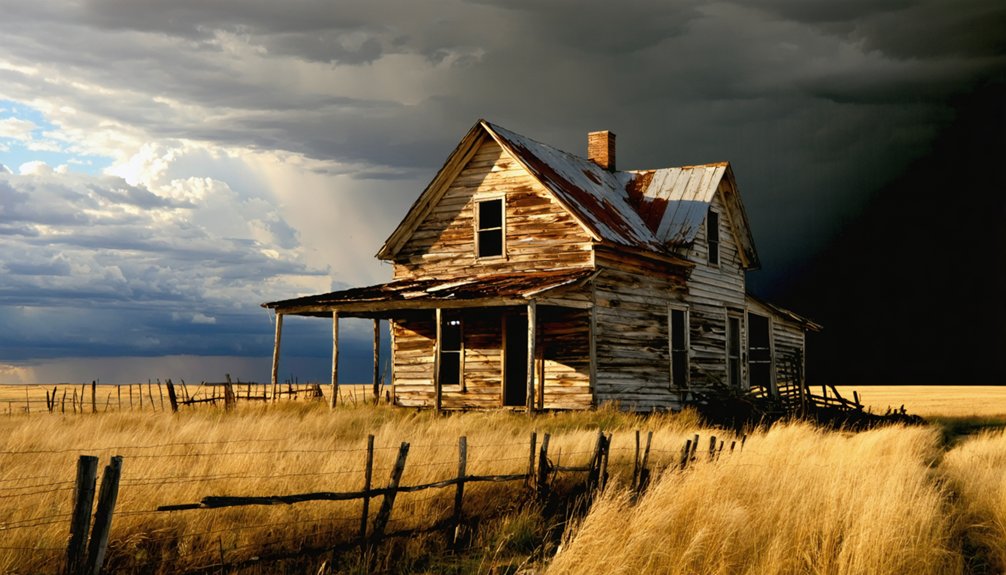
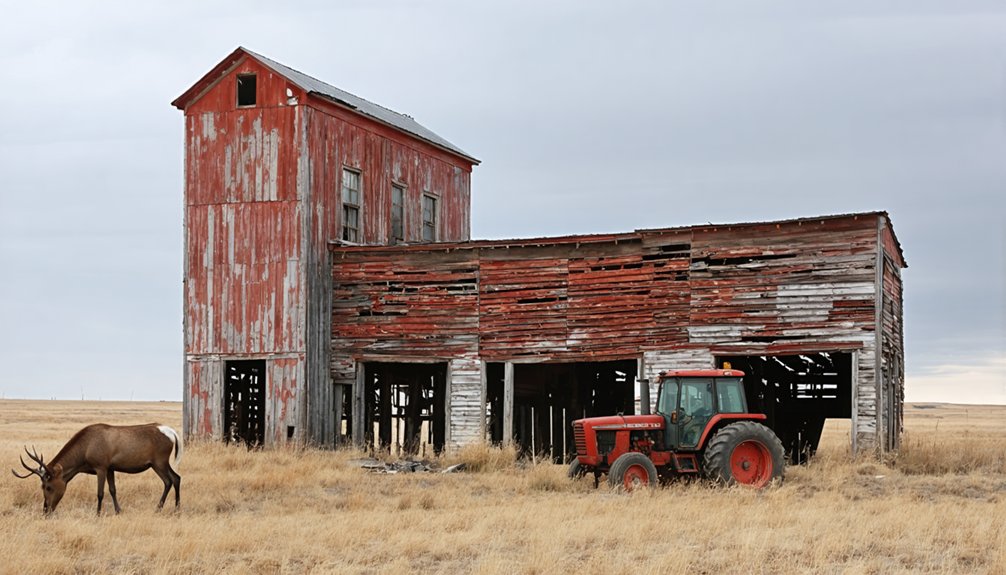
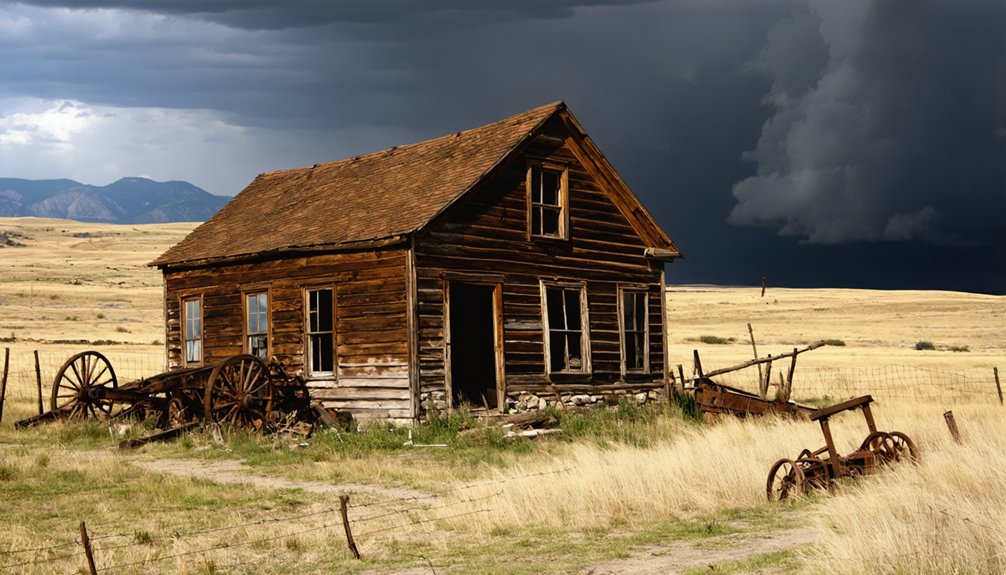
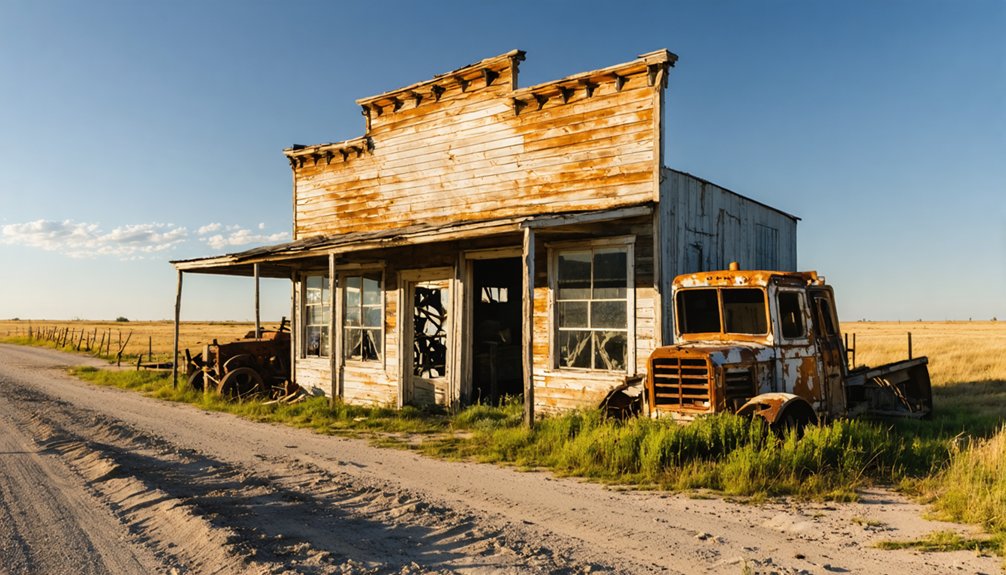
Crumbling foundations and scattered debris mark where ranching families once gathered their mail and built their livelihoods. Bring your camera, because the photogenic decay and wide-open grasslands create compelling images that capture the raw, unfiltered spirit of South Dakota’s forgotten past.
Best Activities At And Around The Twilight Ghost Town
Exploring Twilight rewards you with more than just a look at crumbling ruins—you can wander the former townsite’s footprint on short, flat hikes through open grassland, scan the skies for prairie raptors, and photograph the weathered structures in the golden light of early morning or dusk.
Ghost town exploration here feels genuinely unfiltered, with no crowds or entry fees limiting your experience. Historical photography thrives in this raw, open setting.
Top activities to plan around Twilight:
- Hike the former townsite perimeter to grasp its original scale
- Photograph decayed ranch structures during golden hour for dramatic contrast
- Birdwatch across open prairie for hawks, meadowlarks, and owls
- Build a Butte County ghost town circuit by combining Twilight with nearby abandoned sites
When To Visit Twilight And What The Drive Looks Like
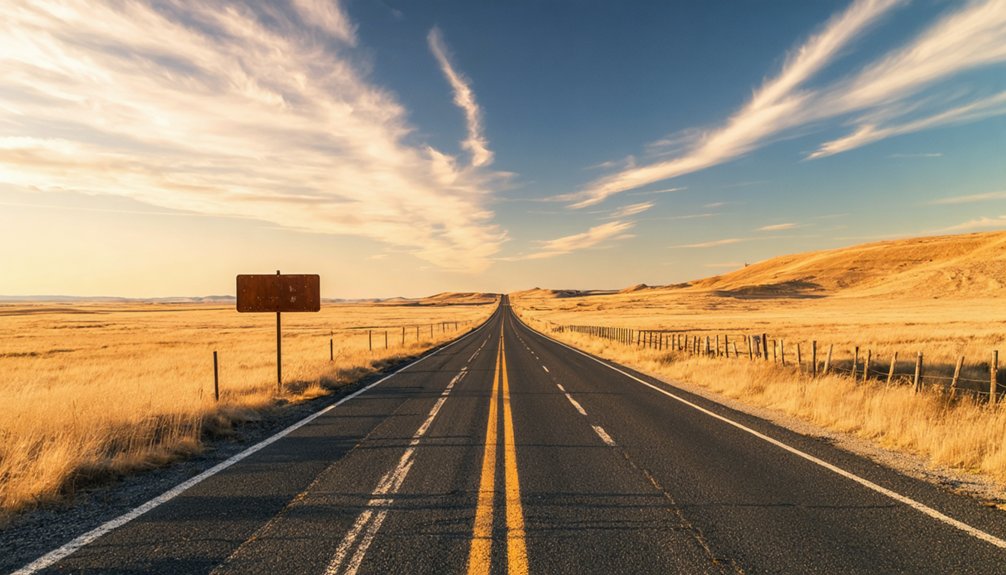
Late spring through early fall offers the most rewarding window to visit Twilight, when dry roads make the rural Butte County approach far more forgiving and the prairie landscape holds a quiet, golden character that photographs beautifully.
Winter closes off access entirely, so don’t gamble on an off-season drive.
You’ll approach via rural roads from nearby Newell, and you’ll want a 4WD vehicle since the terrain gets rough quickly.
No major highways cut through the site, so plan your route before you leave cell service behind.
That isolation, though, is exactly what makes rural exploration here feel authentic.
You’re not following a tour group — you’re steering toward genuine ghost town history on your own terms, which is half the reward.
Other Ghost Towns Near Twilight Worth Adding To Your Route
Once you’ve made the drive out to Twilight, it makes sense to stretch the trip into a full ghost town circuit through the surrounding region, because South Dakota’s abandoned settlements cluster in patterns that reward a little route planning.
Each stop delivers unique historical significance, abandoned structures, and photography opportunities across open country.
- Scenic Ghost Town – Features a rare combined church-jail building worth documenting.
- Ardmore – Near the Nebraska border on Route 71, perfect for rural exploration along a defined highway.
- Spokane – Founded 1890 near Custer in the Black Hills, layered with mining-era history.
- Cottonwood – Southeast of Rapid City, technically still inhabited with a population of eleven, offering an eerie living-ghost-town contrast.
Map these stops consecutively and you’ll maximize every mile.
The Best Ghost Towns In South Dakota Beyond Butte County
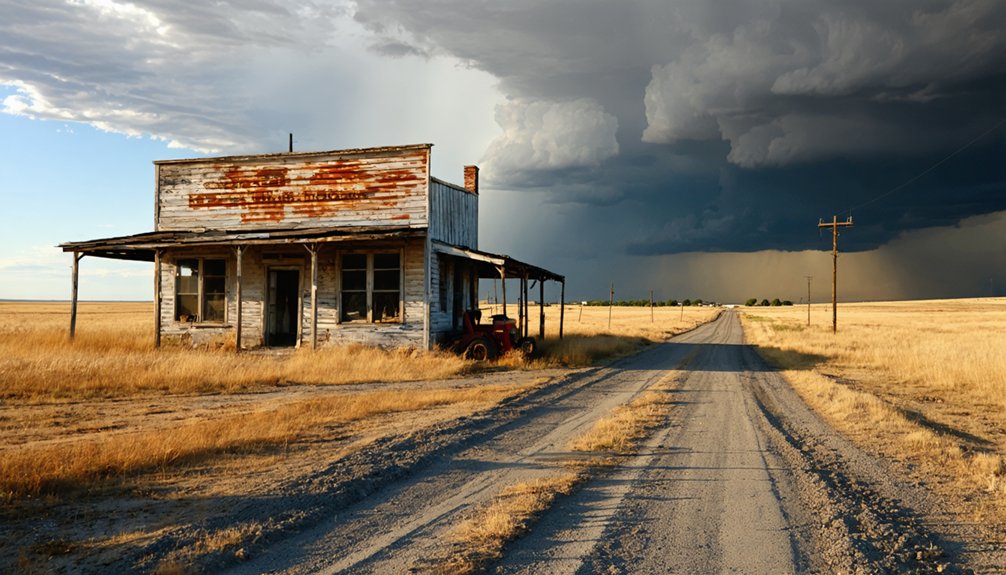
South Dakota’s ghost town landscape stretches well beyond Butte County, and if you’re already committed to this kind of road trip, you’d be shortchanging yourself by stopping at the county line.
Scenic offers a striking church-jail combination that’s pure gold for ghost town photography.
Ardmore sits quietly near the Nebraska border along Route 71, delivering that raw, forgotten-outpost atmosphere serious explorers crave.
Head toward the Black Hills and you’ll find Spokane, founded in 1890 near Custer, where history runs deep beneath open skies.
Between stops, keep your eyes open — prairie wildlife appears constantly across these empty corridors, turning drives into unexpected wildlife encounters.
String these locations together, and you’ve built a route worthy of the freedom that drew you out here in the first place.
Before You Go: Safety at Abandoned Sites
Ghost town structures have stood without maintenance for decades. Floors, stairs and roof timbers fail without warning, and a building that looks solid from outside may not hold your weight. Stay out of standing structures unless the site is actively maintained and open to visitors.
Mine workings are the more serious hazard. Vertical shafts can be hundreds of feet deep, are often unfenced, and may be hidden by brush or capped with rotted boards. Never enter an adit, tunnel or shaft: abandoned workings can hold oxygen-poor or toxic air that gives no warning before you lose consciousness.
Enclosed spaces with rodent droppings carry a risk of hantavirus, which is contracted by breathing contaminated dust. Do not sweep or stir up dust inside old cabins and outbuildings.
Cell coverage at these sites is usually poor or absent. Tell someone your route and expected return time, and carry more water than you think you need.
Frequently Asked Questions
Was Twilight Ever Incorporated as an Official South Dakota Municipality?
Twilight’s Municipal status never reached the stars! Twilight history shows it’s never been incorporated as an official South Dakota municipality — you’ll find it existed solely as a rural post office serving ranching communities.
How Many Residents Lived at Twilight During Its Most Populated Period?
You won’t find exact population figures for Twilight’s peak period, but its historical significance lies in its population growth as a small rural ranching community that never exceeded a handful of dedicated settlers and postal patrons.
Are There Any Descendants of the Oens Ranch Family Still Living Nearby?
Like roots buried deep in prairie soil, the Oens family history remains unclear. You won’t find confirmed descendants nearby, but local legends may hold whispers—ask longtime Butte County residents who might’ve inherited those stories.
Is Camping Permitted Overnight at or Near the Twilight Ghost Town Site?
The knowledge base doesn’t confirm ghost town camping permissions at Twilight’s site. You’ll want to contact Butte County authorities directly before setting up camp, as twilight history suggests this private ranchland may restrict overnight stays.
Has Twilight Ever Appeared in Any Films, Books, or Documentaries?
You won’t find confirmed Twilight myths or Twilight legends documented in films, books, or documentaries. However, its haunting prairie ruins and mysterious renaming story invite you to create your own compelling narrative worth sharing.
References
- https://myxoadventures.com/the-ghost-town-of-spokane-south-dakota/
- https://www.tripadvisor.com/Attraction_Review-g54799-d22999414-Reviews-Scenic_Ghost_Town-Scenic_South_Dakota.html
- https://www.youtube.com/watch?v=_0WNYsFLSLA
- https://en.wikipedia.org/wiki/List_of_ghost_towns_in_South_Dakota
- https://www.travelsouthdakota.com/trip-ideas/abandoned-beauty-ghost-towns-structures-south-dakota
- https://takemytrip.com/2016/08/ardmore-south-dakota-ghost-town-and-route-71/
- https://kxrb.com/one-eastern-south-dakota-town-was-in-the-twilight-zone/