To plan your ghost town road trip to Broken Hills, Nevada, head 66 miles from Fallon down a washboard dirt road into the high desert. You’ll find a silver mining camp frozen in time—headframes, open mine shafts, and tailings piles left exactly as the last residents abandoned them by the 1940s. Pack water, choose spring or fall, and bring a capable vehicle. There’s far more to this forgotten town than first meets the eye.
Key Takeaways
- Broken Hills is located 66 miles from Fallon, Nevada, accessible via a washboard dirt road requiring a vehicle with decent clearance.
- Visit during spring (March–May) or fall (September–November) to avoid dangerous summer heat exceeding 100°F or impassable winter roads.
- Pack ample water, camping gear, and sun protection, accounting for elevation at 5,371 feet causing significant temperature fluctuations.
- The site features standing headframes, mine shafts, tailings piles, and small outbuildings preserved from early 20th-century silver mining operations.
- From Highway 50E, take SR361 past Gabbs Valley, then turn onto the dirt road after 1.7 miles to reach the site.
Why Broken Hills, Nevada Rewards the Drive Out
Though it sits nearly 66 miles from Fallon and demands a stretch of washboard dirt road, Broken Hills delivers something most ghost towns can’t — an almost untouched snapshot of early 20th-century desert mining.
66 miles out, washboard road and all — Broken Hills still delivers what most ghost towns simply can’t.
You’ll find headframes still standing, mine shafts cutting into the earth, and tailings scattered like forgotten punctuation across the high desert floor.
This place doesn’t perform for tourists. It simply exists, raw and honest, the way desert exploration should feel.
Founded in 1913 after a silver-lead discovery, Broken Hills lived a short but telling life before fading into silence by the 1950s.
Its mining legacy isn’t dressed up — it’s weathered, crumbling, and completely real.
If you crave open land and unfiltered history, this drive earns every mile.
How Broken Hills Went From Silver Rush to Ghost Town
What you’re looking at when you walk Broken Hills isn’t just decay — it’s the aftermath of a story that started with real promise.
Two English miners struck silver in 1913, and for five years, the silver mining operation pulled roughly $68,000 in ore from the ground.
Then reality hit hard:
- Limited claims kept the boom from ever fully igniting
- Scarce water made sustained operations nearly impossible
- A brief revival in 1926 faded as quickly as it came
- Peak production between 1935 and 1940 still couldn’t save it
- By 1940, only 12 people remained
Town decline wasn’t dramatic — it was gradual, quiet, and inevitable.
Today, headframes and mine shafts stand as honest markers of what desert ambition looks like when the odds finally win.
How to Reach Broken Hills From Fallon
Getting to Broken Hills from Fallon means covering roughly 65.8 miles of Nevada desert that shifts from paved highway to dusty dirt road — and that change tells you everything about where you’re headed.
Take Highway 50E west toward Middlegate, a scenic route cutting through open basin country where the sky dominates everything.
Turn south onto SR361, passing local attractions like Gabbs Valley’s stark geological formations.
Watch the landscape grow quieter and more unforgiving.
When you spot your turn, go left onto the dirt road and follow it 1.7 miles to the site.
Your vehicle needs decent clearance — this isn’t maintained pavement.
The remoteness isn’t a flaw; it’s the point.
Few places reward the effort of simply showing up quite like a forgotten mining camp swallowed by the high desert.
What You’ll Actually See at Broken Hills?
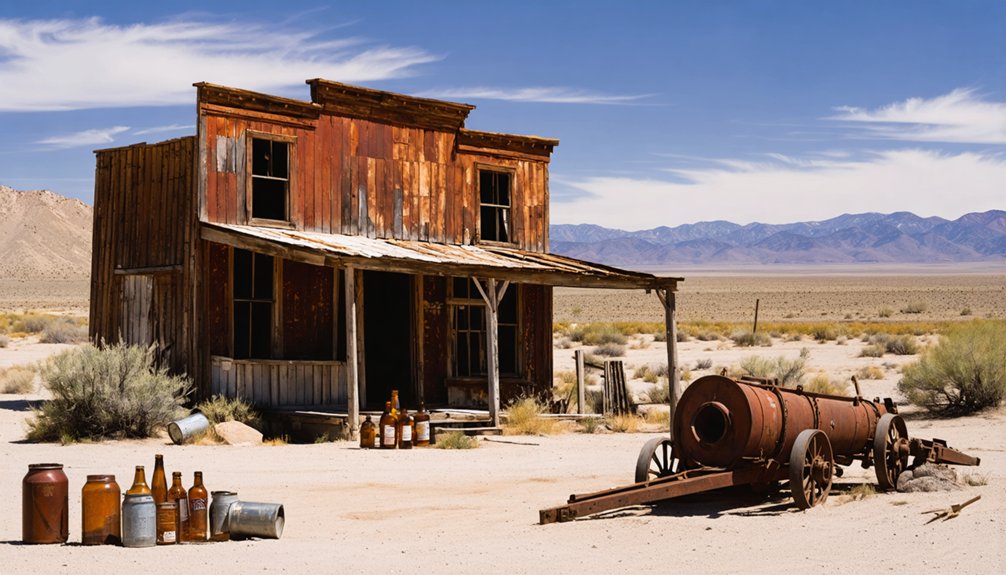
Arriving at Broken Hills, you’ll find the desert hasn’t erased history so much as absorbed it. These ghost town remnants speak plainly about the hard realities of silver and lead mining history in Nevada’s unforgiving high desert.
The desert hasn’t erased Broken Hills. It has simply absorbed it, history and all.
Wander the site and you’ll encounter:
- Mine shafts dropping into earth where Joseph Arthur and James Stratford once staked their claims
- Headframes standing skeletal against the sky, still marking where ore once surfaced
- Tailings piles spreading across the ground like scattered evidence of extraction
- Small outbuildings weathered but stubbornly upright near the main mining area
- Scattered debris telling the story of a town that peaked between 1935 and 1940
Nobody’s coming to clean this up. That’s exactly what makes it worth seeing.
Best Time of Year to Visit Broken Hills
Spring and fall are your best windows for exploring Broken Hills, when temperatures in this high desert sit comfortably between 50°F and 75°F.
You’ll want to avoid summer’s punishing heat, which can push past 100°F and turn an adventurous trek through the ruins into a dangerous ordeal.
Winter brings freezing temperatures and can render those dirt roads off SR361 completely impassable, so time your visit wisely.
Ideal Visiting Seasons
When you roll into Broken Hills, timing matters as much as the route you take. The high desert rewards those who plan smart. Ideal weather hits during spring and fall, keeping the dust manageable and the temperatures survivable.
- Spring (March–May): Cool mornings, wildflowers, firm dirt roads
- Fall (September–November): Crisp air, golden light, fewer crowds
- Summer: Brutal heat exceeds 100°F — avoid unless prepared
- Winter: Snow can block dirt roads entirely
- Seasonal events: Local ghost town tours occasionally run in October near the broader Mineral County region
Skip summer’s punishing sun and winter’s unpredictable freeze. Spring gives you the clearest skies and the most passable roads into this remote stretch of Nevada freedom.
Fall delivers dramatic light across those scattered headframes and tailings.
Weather Conditions Matter
Broken Hills doesn’t forgive careless timing. The high desert environment swings hard between extremes, and weather patterns here can shift from brutal summer heat to bitter winter cold with little warning.
You’ll want to plan around seasonal changes carefully. Spring and fall offer the most forgiving windows — mild temperatures, manageable road conditions, and enough daylight to explore the scattered ruins without rushing.
Summer bakes the valley floor past 100°F, turning dirt roads into dust traps and your vehicle into an oven.
Winter closes access entirely after significant snowfall. Come late April through early June, or September through October, and you’ll experience Broken Hills as it rewards the prepared traveler — raw, remote, and utterly unfiltered.
Respect the desert’s terms, and it’ll let you in.
Avoiding Extreme Temperatures
Timing your visit to Broken Hills separates a memorable desert expedition from a miserable one. Smart seasonal planning keeps you exploring instead of retreating. Nevada’s high desert swings hard between brutal summer heat and freezing winter nights.
Your best temperature management windows:
- Spring (April–May): Mild days, wildflowers emerging, ideal hiking conditions
- Early Fall (September–October): Cooling temps, stable dirt roads, golden light
- Avoid July–August: Triple-digit heat turns this ghost town into a survival test
- Winter warnings: Snow can isolate those remote dirt roads completely
- Shoulder months win: You’ll share the ruins with nobody but the desert wind
The miners who worked Broken Hills battled this unforgiving climate daily. Respect that history by arriving prepared and choosing your timing wisely.
What to Pack for the Broken Hills Trip?
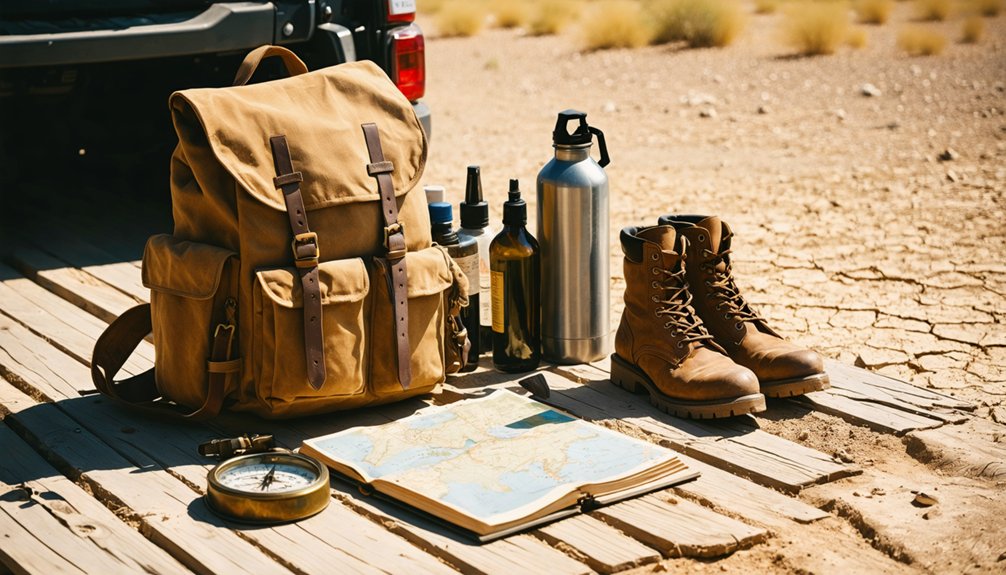
Packing smart for Broken Hills means respecting both the desert and the ghost town’s remote reality.
You’re heading 65.8 miles from Fallon into high desert silence, so bring more water than you think you’ll need. The nearest source sits 10 miles away in Lodi Valley.
Your camping gear should include a reliable shelter, layers for cold desert nights, and sun protection for brutal afternoons.
Don’t underestimate the elevation at 5,371 feet.
For photography tips, pack a wide-angle lens to capture the sprawling headframes and tailings against the open sky.
Golden hour transforms these ruins dramatically. Bring extra batteries since you’ll find no outlets among scattered mine shafts.
Pack a paper map, first aid kit, and enough fuel.
Freedom out here demands preparation.
Frequently Asked Questions
Who Eventually Bought the Broken Hills Mining Claims From the Founders?
George Graham Rice bought the claims from the founders, shaping Broken Hills’ mining heritage. You’d appreciate how his bold investment reflected the era’s adventurous economic impact, chasing silver-lead fortunes across Nevada’s untamed desert frontier.
What Nationalities Were the Original Discoverers of Broken Hills?
Like trailblazers chasing horizons, you’ll find both original discoverers were English nationals—European settlers who brought their mining techniques to Broken Hills in 1913, forever etching Joseph Arthur’s and James Stratford’s bold, freedom-driven legacy into Nevada’s rugged desert history.
How Much Ore Value Did the Original Five-Year Operation Produce?
You’d marvel at Broken Hills’ historical significance — that original five-year operation produced roughly $68,000 in ore value! Those early mining techniques extracted silver and lead, fueling adventurous spirits who dared chase fortune across Nevada’s untamed, liberating desert frontier.
How Far Is the Nearest Water Source From the Broken Hills Site?
You’ll find the nearest water source a full 10 miles away in Lodi Valley — a stark reminder that water conservation was critical here. Embrace the challenge; it’s part of Broken Hills’ rugged ghost town attractions.
What Specific Year Did Broken Hills Experience Its Mining Revival?
Like a phoenix rising from ash, Broken Hills roared back to life in 1926. You’ll feel ghost town history pulse through you as revived mining techniques echoed freedom’s relentless pursuit across Nevada’s unforgiving, adventure-soaked desert landscape.
References
- https://en.wikipedia.org/wiki/Broken_Hills
- https://www.destination4x4.com/broken-hills-mineral-county-nevada/
- https://www.youtube.com/watch?v=f-76pqtcafw
- https://pt.wikipedia.org/wiki/Broken_Hills
- https://www.nevadaghosttownsandmininghistory.com/portfolio-2/broken-hills
- http://www.ghosttowngallery.com/htme/brokenhills.htm
- https://forgottennevada.org/sites/brokenh.html
- https://en.wikipedia.org/wiki/List_of_ghost_towns_in_Nevada
- https://cs.abcdef.wiki/wiki/Broken_Hills
- https://nvtami.com/2022/06/29/gabbs-ghost-town-trip/