
Pine Valley, Oklahoma is a ghost town buried deep in the Winding Stair Mountains of LeFlore County, and it’s worth every mile of the journey. Founded in 1926 as a lumber camp, it boomed for just 16 years before the forests gave out and the town vanished. You’ll need an off-road vehicle, solid gear, and a full day to explore it properly. The full story makes the adventure even richer.
Key Takeaways
- Pine Valley, a ghost town in LeFlore County’s Winding Stair Mountains, was founded in 1926 as a lumber camp and abandoned by 1942.
- Reaching Pine Valley requires a 17-mile off-road journey from Muse, Oklahoma, with no paved roads, visitor facilities, or signage available.
- Pack water, snacks, topographic maps, sturdy boots, a first-aid kit, and a flashlight, as cell service is unreliable throughout the area.
- Spring and early fall offer the best visiting conditions, with mild temperatures and scenic landscapes ideal for exploration.
- Nearby attractions include the Winding Stair Mountain National Recreation Area and Talimena National Scenic Byway, enriching the overall road trip experience.
What Is Pine Valley, Oklahoma?

Pine Valley, Oklahoma, is a ghost town tucked into the Winding Stair Mountains of LeFlore County — a forgotten lumber camp that boomed, busted, and vanished all within 16 years.
A lumber company founded it in 1926, building housing, businesses, and a 17-mile railroad connecting it to Page just to haul timber out of these dense forests.
Pine Valley’s history is brief but telling — it’s a classic story of the logging industry burning bright, exhausting every resource, then walking away.
By 1942, the forests were depleted, the railroad went silent, and workers scattered permanently.
Today, vegetation has swallowed whatever remains. No markers, no tours, no preservation efforts exist.
The forest has fully reclaimed Pine Valley — no signs, no tours, no one left to remember it.
You’re fundamentally chasing a memory through the trees — and that’s exactly what makes it worth finding.
Where Is Pine Valley Located?
You’ll find Pine Valley nestled deep in the mountainous terrain of LeFlore County, Oklahoma, surrounded by the rugged Winding Stair Mountain Range.
The ghost town sits in a forested valley where dense pine and oak trees have long since reclaimed what was once a thriving lumber community.
If you’re plotting your route, use Muse, Oklahoma, as your compass point — it’s the nearest surviving community, located about 17 miles to the southeast on Highway 63.
Pine Valley’s Geographic Setting
Tucked within the mountainous terrain of LeFlore County, Oklahoma, Pine Valley sits near the Winding Stair Mountain Range, surrounded by dense mixed forests of pine and oak.
The valley’s temperate climate and rolling hills create a landscape that’s both rugged and inviting. Pine Valley’s ecology thrives here, with rich biodiversity reclaiming what was once a bustling logging town.
You’ll notice how nature has swallowed the remnants of historical landmarks, leaving only fragments of foundations beneath thick vegetation.
The terrain varies across the region, with gentle slopes giving way to steeper mountain ridges. Water sources wind through the valleys, feeding the forests that define this remote corner of Oklahoma.
It’s wild, untamed, and waiting for you to explore it.
Nearest Community Reference Point
Seventeen miles northwest of Muse, Oklahoma, lies the forgotten ghost town of Pine Valley, making this small unincorporated community your best navigational anchor when planning your visit.
You’ll find Muse situated along Oklahoma Highway 63 in LeFlore County, near the Kiamichi Mountain Range, giving you a reliable landmark before venturing into rugged terrain.
From Muse, head northwest and prepare for off-road travel since no paved roads lead directly to the site.
Pine Valley’s Legacy runs deep in this landscape, where the timber industry once transformed these forested mountains into a thriving company town.
Exploring Timber Industry Insights here means understanding how completely a single resource could build and then erase an entire community.
Muse remains your starting point for uncovering that story firsthand.
Why Pine Valley Is Worth the Road Trip

Despite its remote location and rugged terrain, Pine Valley rewards the adventurous traveler with a rare glimpse into Oklahoma’s logging past. You’ll walk through a place frozen in time, where abandoned structures slowly surrender to encroaching forest, telling stories of hardworkers who built a community from nothing.
The historical significance here runs deep. Pine Valley represents a complete economic cycle — birth, boom, and collapse — all contained within a forested mountain valley.
You won’t find tourist crowds, paved walkways, or sanitized interpretive signs. What you’ll find is raw, unfiltered history reclaimed by nature.
For travelers craving genuine exploration over manufactured experiences, Pine Valley delivers. It’s a place that demands effort to reach but rewards that effort with authenticity you simply can’t find anywhere else.
How Pine Valley Went From Boom Town to Ghost Town
Pine Valley’s story didn’t begin with decay — it began with ambition. In 1926, a lumber company carved this town out of LeFlore County’s wilderness, building homes, businesses, and a 17-mile railroad connecting it to Page.
The logging legacy ran deep here — timber was everything.
For roughly 16 years, workers harvested the surrounding forests, fueling an economy entirely dependent on one resource. That economic impact stretched across the region, supporting livelihoods and keeping the railroad humming.
But once the forests were exhausted, the entire operation collapsed almost overnight.
How the Railroad Built Pine Valley: and Disappeared Along With It
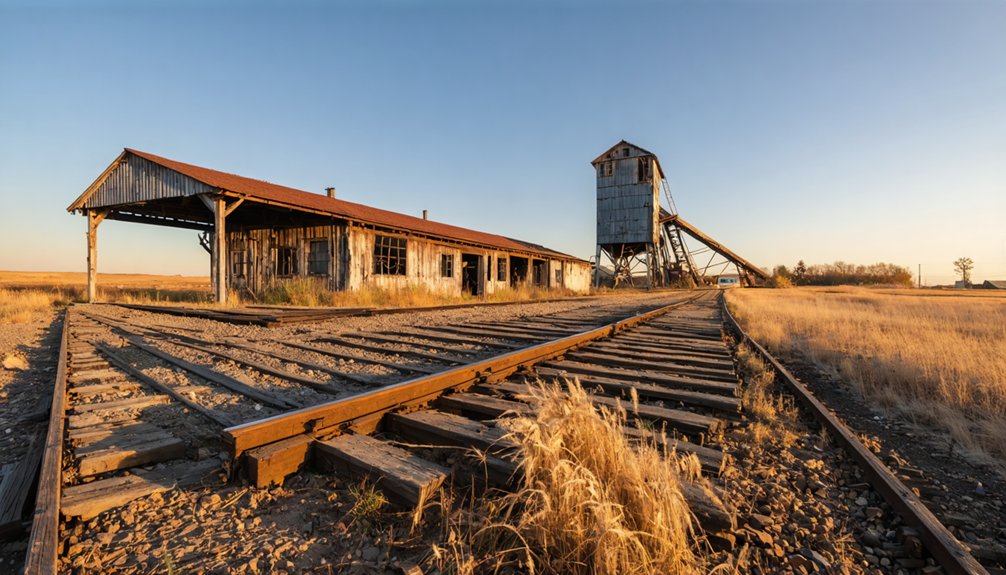
You can’t fully grasp Pine Valley’s rise without understanding the Oklahoma & Rich Mountain Railroad, the 17-mile lifeline that stretched between Page and Pine Valley, hauling timber out of the mountains from 1926 onward.
Without those tracks, the lumber company couldn’t have moved its product to regional markets, and the town simply wouldn’t have existed.
When logging ceased in 1942, the railroad had no purpose left, and both the tracks and the town vanished together.
Railroad’s Role in Logging
When the lumber company established Pine Valley in 1926, it didn’t just build a town—it laid 17 miles of railroad track to keep it alive.
The Oklahoma & Rich Mountain Railroad connected Pine Valley to Page, hauling freshly cut timber straight from the forest to regional markets. Without it, the logging techniques powering this operation would’ve meant nothing—you can’t sustain an economy on timber you can’t move.
The economic impact was immediate and total: the railroad fed the town, employed its workers, and kept money flowing.
But that dependency cut both ways. When the forests gave out in 1942, the trains stopped running, and Pine Valley vanished just as fast as it had appeared.
The tracks disappeared. The town followed.
Railroad’s Eventual Abandonment
By 1942, the forests were gone—and the Oklahoma & Rich Mountain Railroad had nothing left to haul. The timber that once fueled Pine Valley’s entire railroad history had been stripped clean, and without it, the 17-mile line between Page and Pine Valley became useless iron.
Workers packed up, trains stopped running, and the tracks were abandoned just as quickly as they’d been laid. The economic impact was total—no railroad meant no jobs, no commerce, no reason to stay.
Nature moved in fast, reclaiming both the town and the corridor the trains once traveled. Today, you won’t find a single rail or station marker.
That erasure is part of what makes exploring this forgotten valley so compelling—you’re tracing a story the land has nearly swallowed whole.
How to Get to Pine Valley From Muse, Oklahoma
Getting to Pine Valley from Muse, Oklahoma is a 17-mile journey northwest through rugged, heavily forested terrain that’ll test your sense of adventure. You won’t find paved roads leading to this forgotten site, so bring an off-road capable vehicle and a reliable map.
Seventeen miles of untamed wilderness separates Muse from Pine Valley — bring an off-road vehicle and your sense of adventure.
The surrounding pine and oak forests are a living reminder of the logging history that once defined this region, where timber’s economic impact shaped entire communities overnight.
Start on Oklahoma Highway 63 in Muse, then navigate northwest through the Winding Stair Mountain terrain. Expect dense vegetation, uneven slopes, and no signage marking your destination.
There are no visitor facilities waiting for you, just raw wilderness reclaiming what industry left behind. Go prepared, go confident, and embrace the freedom of discovering history on your own terms.
What’s Actually Left at Pine Valley Today

Arriving at Pine Valley today, you’ll find nature has thoroughly reclaimed what the lumber industry left behind. Dense pine and oak growth covers the valley floor, swallowing whatever abandoned structures once defined this company town.
You won’t find standing buildings or cleared lots — just subtle depressions, scattered debris, and overgrown foundations hinting at the community that thrived here from 1926 to 1942.
Despite its historical significance as a rare example of Oklahoma’s early timber industry, no markers or preservation efforts exist to guide you. You’re fundamentally reading the land itself.
Look for unnatural clearings, rusted remnants, and irregular terrain patterns that betray human activity beneath the vegetation. It’s raw, unfiltered history — exactly the kind of discovery that makes ghost town exploration genuinely rewarding.
What to Pack Before You Go
Since Pine Valley offers no visitor facilities, paved roads, or signage, you’ll need to come fully self-sufficient. Your packing essentials should include plenty of water, high-energy snacks, a detailed topographic map, and a compass since cell service is unreliable in the Winding Stair Mountains.
Wear sturdy hiking boots and bring layers, as temperatures shift across the terrain.
For safety tips, always tell someone your exact route before heading out. Pack a first-aid kit, a charged portable battery, and a flashlight with extra batteries. The dense pine and oak forest makes navigation tricky, and the rugged off-road terrain demands respect.
Carry a camera to document whatever remnants you discover. This forgotten corner of LeFlore County rewards the prepared explorer with raw, unfiltered history.
The Best Time of Year to Visit Pine Valley

Once you’ve packed your gear, timing your visit can make or break the experience. The best season to explore Pine Valley is spring or early fall.
Spring brings mild temperatures, wildflower blooms, and manageable trail conditions through the Winding Stair Mountains. You’ll navigate the overgrown terrain far easier before summer’s thick humidity sets in.
Fall rewards you with cooler air and stunning foliage across the mixed pine and oak forests, making the abandoned landscape feel almost cinematic.
Avoid summer if you can — heat and dense vegetation make off-road travel genuinely brutal.
Visit timing also matters for daylight. Shorter winter days limit your exploration window, and snow, though rare, can make unpaved access routes treacherous.
Plan for a full day regardless of season.
Ghost Towns and Scenic Stops Worth Combining With Your Pine Valley Trip
While you’re out exploring Pine Valley, you’d be missing out if you didn’t extend your road trip to take in the broader region’s ghost towns, rugged mountain scenery, and heritage sites scattered across LeFlore County.
The Winding Stair and Kiamichi Mountain ranges offer stunning scenic stops that break up the drive and reward you with sweeping views of the same landscape that once fueled Oklahoma’s timber boom.
Use Muse as your base on Highway 63, and you’ll find yourself well-positioned to string together a full day of historical discovery and backcountry adventure.
Nearby Ghost Towns Worth Visiting
If you’re making the trek out to Pine Valley, you’d be doing yourself a disservice by not exploring the surrounding region’s other abandoned settlements and scenic stops.
LeFlore County harbors several forgotten communities that share Pine Valley’s boom-and-bust logging history, each offering its own collection of abandoned structures slowly being reclaimed by Oklahoma’s dense forests.
The Winding Stair Mountain area rewards explorers who push beyond the obvious routes, revealing crumbling foundations and overgrown roads that tell stories of workers who once built lives in these isolated valleys.
Use Muse on Highway 63 as your base reference point, then branch outward.
The region’s rugged terrain makes every stop feel genuinely discovered rather than curated, giving you the raw, unfiltered ghost town experience serious road trippers chase.
Scenic Stops Along The Way
Beyond the ghost towns themselves, the roads connecting this remote corner of LeFlore County deliver scenery worth slowing down for. You’ll wind through the Winding Stair Mountain Range, where overlooks reveal layered ridgelines disappearing into the distance.
The dense mix of pine and oak creates a canopy that shifts dramatically with the seasons, offering spectacular scenic views no matter when you visit.
Keep your eyes open for local wildlife — white-tailed deer, wild turkey, and red-tailed hawks move freely through these forests.
Highway 63 near Muse cuts through particularly striking terrain, making every mile feel deliberate rather than transitory.
Pull over, breathe the mountain air, and let the landscape remind you why places like this still exist beyond the reach of crowded tourist trails.
Regional Heritage Sites Nearby
Pine Valley doesn’t have to be your only destination — LeFlore County rewards explorers who treat the region as a full itinerary rather than a single stop.
The surrounding area carries deep regional history worth discovering before or after you visit the ghost town site.
Pair your trip with these nearby experiences that honor heritage preservation and broaden your understanding of the land:
- Winding Stair Mountain National Recreation Area — hike trails through the same forests that once fed Pine Valley’s logging economy
- Talimena National Scenic Byway — a ridge-top drive offering sweeping views across Oklahoma and Arkansas
- Muse, Oklahoma — the closest surviving community, situated on Highway 63, providing historical context for Pine Valley’s isolated location
Together, these stops transform a single ghost town visit into a genuinely immersive regional journey.
Frequently Asked Questions
Are There Any Legal Restrictions on Visiting the Pine Valley Ghost Town Site?
There’s no formal ghost town regulations or historical preservation laws protecting Pine Valley, so you’re free to explore! Just respect the land, navigate the rugged terrain carefully, and embrace your adventurous spirit at this forgotten Oklahoma wilderness.
Was Pine Valley Ever Considered for Official Ghost Town Status in Oklahoma?
Ever wonder about Ghost town legends? Pine Valley’s origins as a 1926 logging hub never earned it official ghost town status in Oklahoma, but you’ll still discover its abandoned, untamed spirit waiting to be explored.
Did Any Notable Historical Figures Ever Live or Work in Pine Valley?
You won’t find records of notable figures among Pine Valley residents — the town’s historical significance lies in its working-class loggers and laborers who carved a community from wilderness, then vanished when the timber ran out.
Are There Any Known Photographs or Documents Preserving Pine Valley’s History?
Sadly, no preservation efforts exist — because who needs historic landmarks anyway? You won’t find known photographs or documents capturing Pine Valley’s story. The forests reclaimed everything, leaving you only imagination and adventure to reconstruct its forgotten past.
Have Any Local Schools or Organizations Conducted Research on Pine Valley?
You won’t find records of local schools or organizations diving into Pine Valley’s local history. Community involvement’s been scarce, leaving this ghost town’s story largely untold — it’s your adventure to uncover its forgotten secrets!
References
- https://www.youtube.com/watch?v=WNvGt0BtbH4
- https://oktttp.genealogyvillage.com/ghost_towns/ghost_towns.htm
- https://en.wikipedia.org/wiki/Oklahoma_&_Rich_Mountain_Railroad
- http://www.pvlodge.com/the_area/history/
- https://www.facebook.com/groups/igrewupinoklahomastate/posts/785013270261204/
- https://www.okhistory.org/publications/enc/entry?entry=GH002
- https://www.frrandp.com/2020/07/pine-valley-and-oklahoma-rich-mountain.html
- https://okgenweb.net/~okleflor/towns.htm
- https://www.ghosttowns.com/states/ok/ok.html
- https://okielegacy.net/journal/tabloid/?vol=6&iss=33