Ross City, Texas, is a place oil built and silence buried. You’ll find this Howard County ghost town off Farm Road 821, where a lone dance hall still stands against the vast Texas sky. It peaked at 600 residents in 1936, then collapsed just as fast. Visit between October and April for the best conditions. Pack water, bring a camera, and tell someone your route. Everything you need to get there and make it count is just ahead.
Key Takeaways
- Ross City, located on Farm Road 821 about 22 miles from the nearest hub, requires a reliable vehicle and caution on basic roads.
- Visit between October and April for the best weather, with fall light, mild winters, and spring wildflowers enhancing the experience.
- The old dance hall is the town’s main attraction, symbolizing its oil-boom rise and eventual abandonment by the 1950s.
- Pack water, sunscreen, a camera, and a printed map or offline GPS, as cell service is unreliable near the county border.
- Arrive during daylight, tell someone your route, and move leisurely to safely absorb the ghost town’s stark, silent atmosphere.
Ross City’s Oil Boom and Ghost Town Origins
When oil was struck in Howard County in 1926, Ross City erupted from the Texas earth almost overnight. William Rossman purchased the townsite, divided the land into lots, and named his creation after himself.
Oil exploration drew workers and dreamers alike, transforming raw Texas scrubland into a living, breathing community.
Oil called, and they came — roughnecks and romantics, turning dust and scrubland into something that felt like home.
Town development moved fast during those electric early years. By 1936, 600 residents called Ross City home, chasing opportunity and wide-open possibility.
Then the boom faded, as booms always do. By 1947, only 250 remained. By 1956, just eighty souls lingered.
The oil that built Ross City ultimately abandoned it, leaving behind silence, dust, and one stubborn dance hall standing against the Texas sky — a ghost town born from ambition and swallowed by time.
The Rise and Fall of Ross City, Texas
When William Rossman struck opportunity in the 1926 oil boom, he carved Ross City out of the Howard County landscape, and settlers flooded in chasing black gold.
By 1936, you’d have found a thriving community of 600 residents, but the boom faded fast, gutting the population to 250 by 1947 and a mere 80 by 1956.
Today, you’re left tracing the outline of a town that burned bright and collapsed just as quickly, its story written in abandoned lots and a lone surviving dance hall.
Oil Boom Origins
Before the dust settled on Howard County’s southeastern plains, oil changed everything. In 1926, William Rossman recognized opportunity where others saw barren land. He purchased the townsite shortly after the oil discovery, divided it into lots, and named it Ross City after himself.
Settlement expansion followed fast. Workers flooded in, chasing wages and fresh starts. Basic infrastructure rose from the earth to accommodate the surge — roads, shelters, and the bones of a working community.
By 1936, Ross City held 600 residents, a number that reflected the raw ambition of the oil boom era.
You can almost feel that momentum standing there today. The land remembers what progress looked like when it moved fast, burned bright, and asked no permission from anyone.
Population Peak And Decline
Six hundred people called Ross City home at its 1936 peak — a number that sounds modest until you stand on that quiet southeastern plain and try to imagine the noise, the movement, the sheer human weight of it all.
Then the oil dried up, and so did the town. Population dynamics shifted fast and hard. By 1947, only 250 residents remained, with just two businesses still running.
Nine years later, that number collapsed to eighty. The historical significance of that freefall hits differently when you’re standing where those streets once buzzed with life.
What’s left today tells the whole story in silence. Ross City didn’t fade — it emptied.
And that emptiness is exactly what pulls road-trippers like you toward it.
Economic Collapse Aftermath
Once the oil stopped flowing, Ross City’s economic foundation didn’t just crack — it crumbled entirely. What once hummed with roughnecks and ambition fell eerily silent.
By 1956, only eighty souls remained — a stark contrast to the 600 who’d called it home two decades earlier.
Picture what you’d find walking through the aftermath:
- Two lonely businesses clinging to survival where dozens once thrived
- Empty lots where families built dreams during the 1926 oil boom
- A weathered dance hall standing as the last act of ghost town preservation
There’s no economic resilience story here — just honest collapse.
Yet that raw authenticity is exactly what draws freedom-seekers like you to roads less traveled, where history whispers through crumbling silence.
How to Get to Ross City on Farm Road 821
Few roads in West Texas carry you as far back in time as Farm Road 821, the dusty ribbon of asphalt that leads straight into the forgotten heart of Ross City.
You’ll find it tucked into Howard County’s southeastern corner, roughly twenty-two miles from the nearest county hub. Road conditions remain basic, so drive a reliable vehicle and keep your speed measured.
The route itself rewards patience — open skies stretch endlessly above you, and the landscape shifts quietly from scrubland to history. Nearby attractions are minimal, which is honestly the point.
You’re not chasing crowds here; you’re chasing silence. Once you arrive, the old dance hall rises against the horizon like a stubborn memory, refusing to disappear.
Follow 821, and let Ross City find you.
The Best Time of Year to Visit Ross City
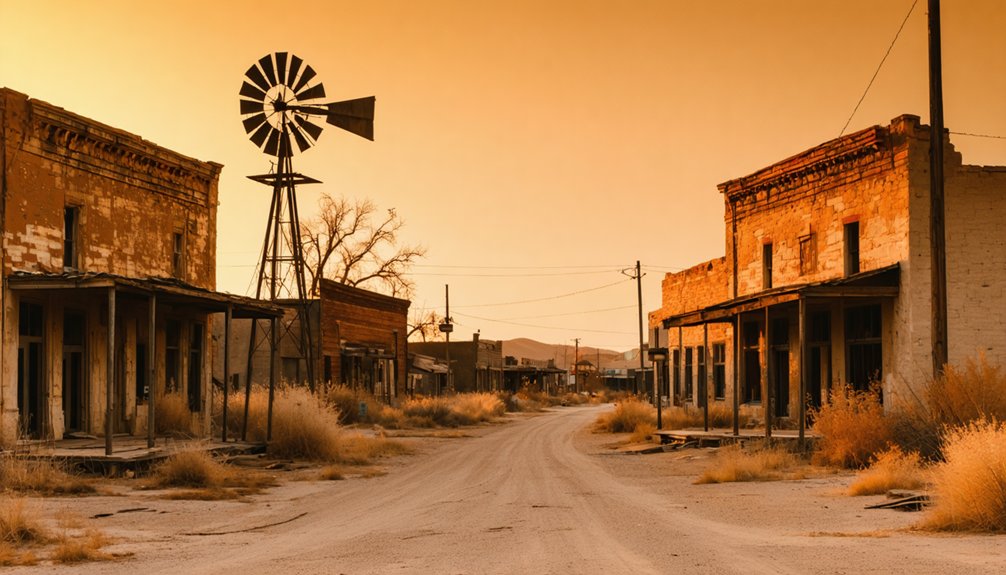
The best visiting season runs October through April, when the land breathes easier and the ghosts feel closer. Plan around these conditions:
- Fall (October–November): Crisp air settles over the old dance hall, golden light washing the ruins in something almost sacred.
- Winter (December–February): Mild temperatures hover comfortably above freezing, giving you the site nearly to yourself.
- Spring (March–April): Wildflowers push through cracked earth, contrasting beautifully against weathered wood.
Avoid summer entirely — temperatures regularly exceed 95°F, turning your freedom-seeking adventure into an endurance test beneath a merciless Texas sun.
What You’ll Actually See When You Arrive
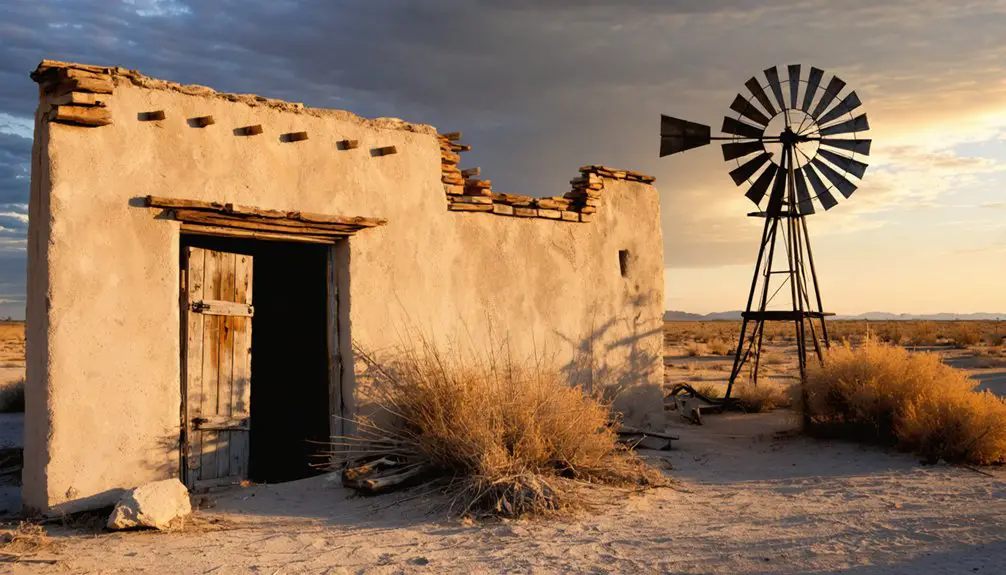
When you pull up to Ross City along Farm Road 821, the old dance hall is the first thing that’ll catch your eye — a weathered survivor standing against an open Texas sky.
You’ll find no bustling streets or storefronts, just sparse scrubland stretching in every direction, whispering of a boomtown that once held 600 souls.
It’s a humbling sight, where the silence does more storytelling than any roadside marker ever could.
The Old Dance Hall
Standing at the edge of what was once a bustling oil boomtown, you’ll find Ross City’s old dance hall holding its ground against decades of abandonment.
This weathered structure carries dance hall history that echoes louder than silence — local legends suggest oil workers packed these floors on weekends, celebrating fortunes that wouldn’t last.
Let your imagination reconstruct the scene:
- Boots scuffing wooden floors beneath flickering lantern light
- Roughnecks trading stories after long shifts on the derricks
- A community alive with music before the oil dried up
Now the hall stands alone, stubbornly refusing to disappear.
It’s raw, unpolished history — exactly what free-spirited road trippers come searching for. No museum glass separates you from the real thing here.
Sparse Surrounding Landscape
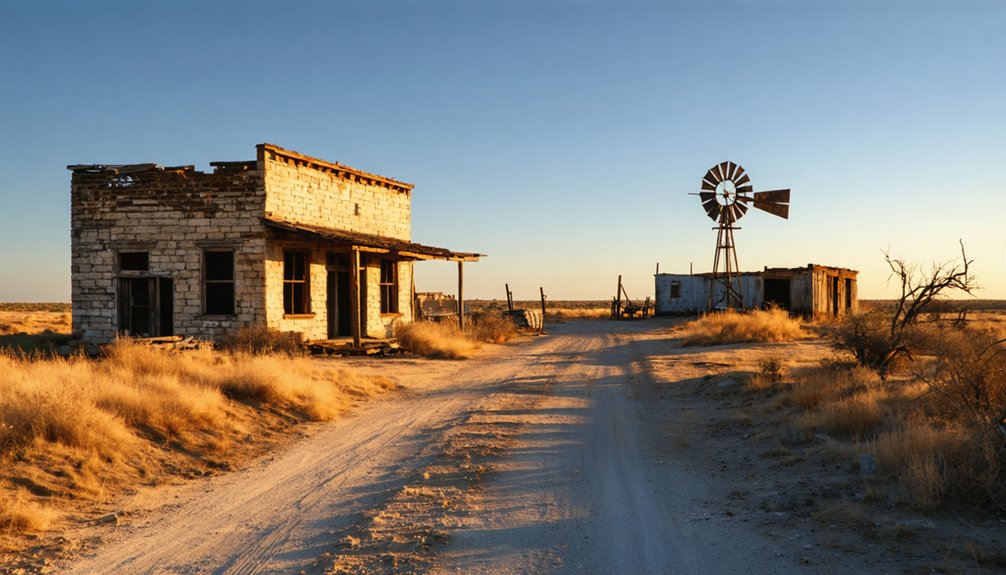
Driving down Farm Road 821, you’ll notice the land doesn’t ease you into Ross City — it simply opens up, flat and unapologetic, stretching toward a horizon that once hummed with derricks and ambition.
Sparse vegetation clings to the cracked earth, scrubby grasses and mesquite pushing through soil that once absorbed the footsteps of 600 souls.
The surrounding wildlife — hawks circling overhead, jackrabbits cutting across the road — now outnumber any human presence.
You won’t find manicured paths or interpretive signs guiding your experience. What you’ll find is raw, unfiltered Texas landscape reclaiming what industry briefly borrowed.
The silence hits differently here. It’s not emptiness — it’s weight.
Every acre speaks to a boom that burned bright, spent itself completely, and never looked back.
How to Get the Best Shots at Ross City
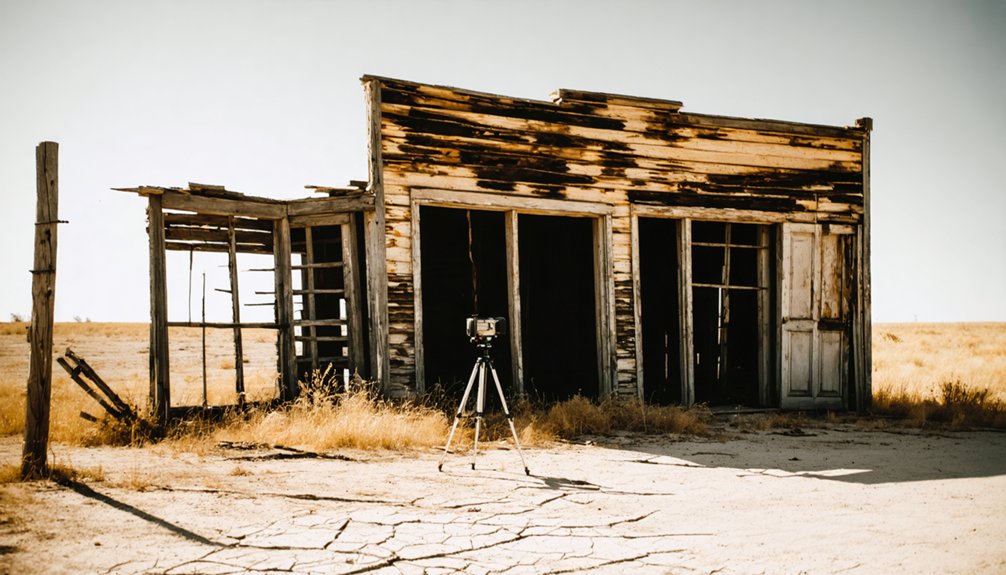
Capturing Ross City on camera rewards those who arrive prepared. The crumbling dance hall and windswept lots demand respect for lighting conditions and timing.
Apply these photography tips to bring the ghost town’s soul to life:
- Arrive at golden hour — early morning light casts long shadows across the old dance hall, transforming weathered wood into something sacred and time-worn.
- Shoot low angles — crouching near ground level against Farm Road 821’s flat horizon amplifies the town’s isolation and quiet defiance.
- Frame decay against open sky — Ross City’s structural remnants silhouetted against Texas’s enormous blue expanse communicate decades of abandonment powerfully.
You’re documenting a place that peaked in 1936 and never looked back. Let that weight show in every frame you take.
Howard County Sites Worth Pairing With Ross City
Once you’ve packed away your camera and left Ross City’s dance hall behind, Howard County still has more ghost-town energy to offer. The region carries layers of oil-boom history etched into its landscape, and local legends whisper through nearly every forgotten crossroads you’ll encounter.
Push deeper into the county and you’ll find historic landmarks that echo the same rise-and-fall narrative Ross City embodies so vividly. Big Spring, the county seat, anchors your route with museums documenting the petroleum era that built and ultimately abandoned towns like Ross City.
Pair that with rural drives along forgotten farm roads where remnants of early settlements still surface. Howard County rewards the curious traveler willing to wander off the obvious path and chase what history left behind.
What to Pack for the Ross City Drive
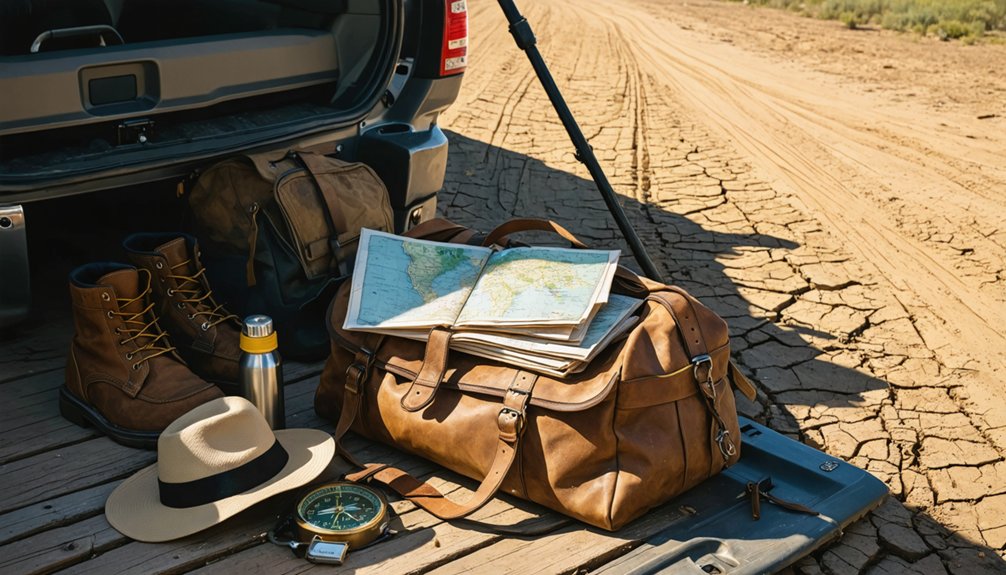
A few essentials can mean the difference between a memorable Ross City excursion and a frustrating one. These road trip tips keep you grounded when Farm Road 821 stretches endlessly ahead and the Texas heat climbs past 95°F.
The right essentials separate a memorable Ross City adventure from a forgettable, frustrating crawl down Farm Road 821.
Pack these packing essentials before you roll out:
- Water and sunscreen — the southeastern Howard County terrain offers little shade, and summer sun punishes the unprepared.
- A camera or sketchbook — the weathered dance hall deserves documentation; you’ll want to capture what time hasn’t fully erased.
- A printed map or offline GPS — cell signals thin out near the county border, and you don’t want uncertainty swallowing your freedom.
Arrive during daylight, move at your own pace, and let the silence of Ross City speak.
What to Know Before Visiting Ross City
Before you turn onto Farm Road 821, understand that Ross City rewards the curious but forgives nothing unprepared. This ghost town carries genuine historical significance — born from a 1926 oil boom, it swelled to 600 souls by 1936, then quietly collapsed into silence within two decades.
No fuel stops, no convenience stores, and no cell towers pamper you here. You’ll find an old dance hall standing as the town’s last honest witness, surrounded by open Texas sky and the weight of abandoned ambition.
Come during daylight. Tell someone your route. Carry water, because summer temperatures push past 95°F without apology.
Ross City doesn’t perform for visitors — it simply exists. That rawness is exactly what makes it worth every mile you’ll drive to reach it.
Frequently Asked Questions
Is There an Entrance Fee to Visit the Ross City Townsite?
You won’t pay an entrance fee to explore Ross City’s ghost town history! Simply drive Farm Road 821, embrace your wanderlust, and let these travel tips guide your free-spirited journey through Texas’s fascinating, forgotten past.
Are Pets Allowed When Exploring the Ross City Ghost Town Area?
The knowledge base doesn’t spells out pet policies, but you’re free to roam! Follow ghost town etiquette, keep pets leashed, and seek pet friendly accommodations nearby before exploring Ross City’s hauntingly beautiful, history-soaked remnants.
Can Visitors Legally Enter or Walk Inside the Remaining Dance Hall?
No clear records confirm you can enter the dance hall. Respect its fragile dance hall history, take safety precautions, and let your wanderlust soul absorb its weathered walls from outside before time claims what’s left.
Is There Any Cell Phone Signal Available at the Ross City Site?
No documented signal availability exists for Ross City’s remote site. You’ll wander freely among local attractions like the old dance hall, embracing true disconnection from modern life as history’s quiet whispers guide your adventurous spirit.
Are Restroom Facilities Available Anywhere Near the Ross City Townsite?
Don’t let nature catch you off guard on this wild frontier! Restroom locations and visitor amenities are virtually nonexistent at Ross City’s sparse townsite, so you’ll want to prepare before your journey into history’s forgotten embrace.
References
- https://en.wikipedia.org/wiki/List_of_ghost_towns_in_Texas
- https://www.ghosttowns.com/states/tx/rosscity.html
- https://www.tshaonline.org/handbook/entries/ross-city-tx
- https://texashistory.unt.edu/ark:/67531/metapth61101/m1/171/
- https://texashistory.unt.edu/ark:/67531/metapth61101/m1/170/
- https://texashistory.unt.edu/ark:/67531/metapth61101/m1/167/
- https://www.texasmonthly.com/being-texan/texas-primer-the-ghost-town/
- https://www.youtube.com/watch?v=Ch35VhkdgAs
- https://hank.sanmarcostx.gov/SMHC/DOCUMENTS/Extinct Cities.pdf
- https://texashistory.unt.edu/ark:/67531/metapth637963/m1/32/