Bumble Bee, Arizona, is a genuine ghost town tucked into the Bradshaw Mountains, about an hour north of Phoenix off I-17 Exit 248. You’ll find four occupied homes, a padlocked mercantile, and crumbling remnants of a 1970s movie set slowly surrendering to the desert. The town sits on private property, so you’ll explore mostly from the road. Visit between December and April for the best weather and wildflower blooms — and there’s plenty more to discover about making the most of this trip.
Key Takeaways
- Bumble Bee, Arizona, sits 55 miles north of Phoenix in Yavapai County, reachable via I-17 North, Exit 248, about one hour away.
- Visit during December–February for cooler temperatures or March–April to catch blooming desert wildflowers along the scenic Sonoran Desert drive.
- The townsite is private property, so limit exploration to roadside views and photography of the standing structures and padlocked mercantile.
- Bumble Bee Ranch and Trading Post is the only commercial stop, so plan accordingly and bring necessary supplies for your visit.
- Enrich your return trip with stops at Arcosanti, Cordes Junction, and Black Canyon City for additional history and scenic desert landscapes.
What Is Bumble Bee, Arizona, and Why Should You Visit?
Tucked away in the Bradshaw Mountains of Yavapai County, Bumble Bee, Arizona, is a fascinating relic of the American West that’s equal parts history, mystery, and desert charm.
Sitting 55 miles north of Phoenix at 2,579 feet elevation, this former stagecoach stop carries a rich Bumble Bee history dating back to 1864. You’ll find remnants of a town that once bustled with miners, travelers, and traders before time quietly reclaimed it.
Beyond the weathered structures, Bumble Bee wildlife surprises visitors with saguaro cacti, prickly pear, agave, and yes, actual bumble bees roaming even in January.
The drive alone rewards you with stunning desert scenery and cooler temperatures. If you crave open roads, raw history, and untamed landscapes, Bumble Bee deserves a spot on your road trip map.
What’s Actually Left of the Bumble Bee Ghost Town Today?
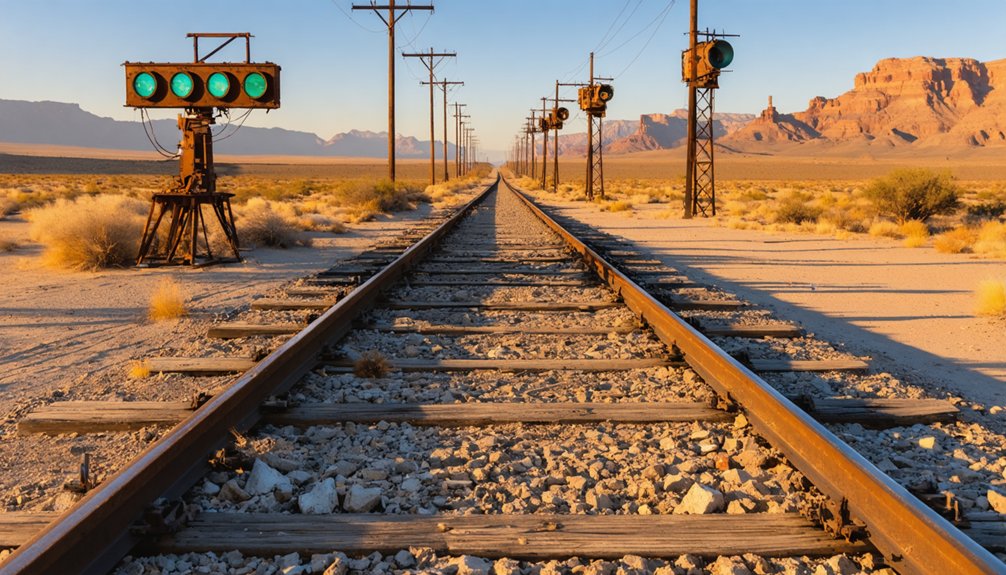
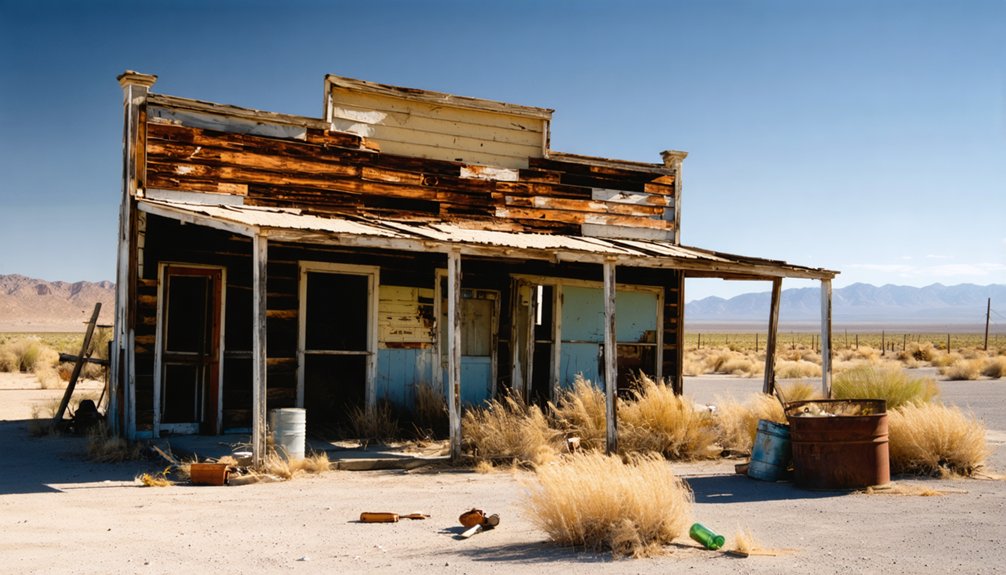
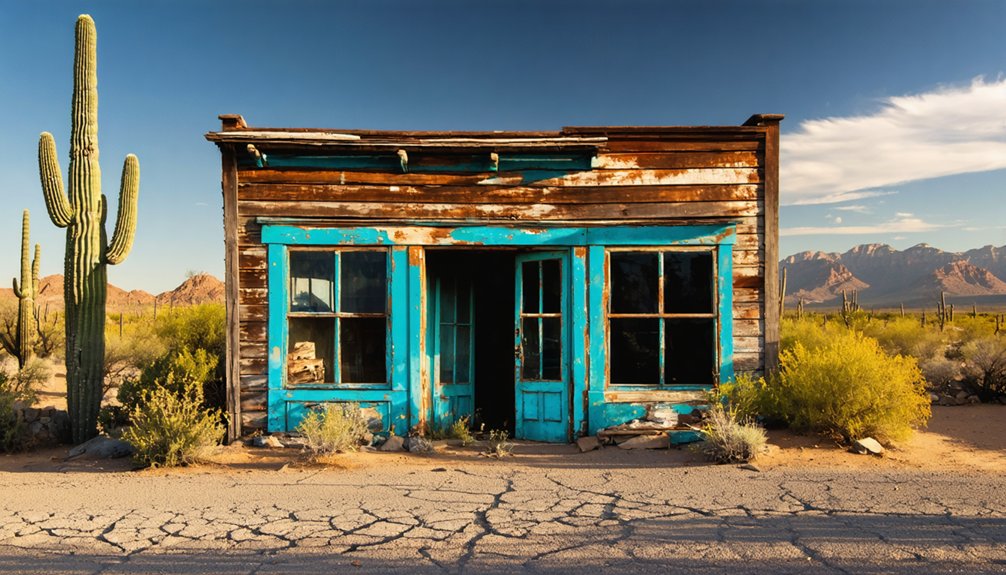
When you arrive at Bumble Bee, you’ll find a handful of structures still standing — four houses, a padlocked former mercantile, and crumbling remnants of a fake movie set built in the 1970s to lure tourists.
The town sits on private property, so you’ll need to respect those boundaries and limit your exploration to what you can see from the road.
Don’t expect a true ghost town experience; the tourist trap was dismantled in the early 2000s after years of theft and structural collapse, leaving behind little more than weathered shells.
Remaining Structures Today
What’s left of Bumble Bee today is less ghost town and more scattered remnants of a place that never quite held together.
The remaining structures reflect current conditions that are raw and unpolished — exactly what you’d expect from a site that history repeatedly abandoned.
Here’s what you’ll actually find:
- Four standing houses, occupied and private — not open for exploration
- A padlocked former mercantile, weathered but still recognizable against the desert landscape
- Crumbling fake structures, remnants of a 1970s movie set that theft and collapse slowly consumed
You’re free to photograph everything from the road, but the land is privately owned.
Respect that boundary. The drive through the desert scenery alone makes the stop worthwhile.
Private Property Restrictions
Although Bumble Bee sits just off I-17, you can’t simply walk in and explore — the entire site is private property, and that boundary matters. Trespassing laws apply here, and violating property access rules means real legal consequences.
You can photograph the weathered buildings, padlocked mercantile, and crumbling fake facades from the road — that’s your best move. The ranch and trading post remain the only legitimate stops where you’re actually welcome.
Respect goes a long way in places like this. The current residents aren’t obstacles; they’re caretakers of something fragile and historically significant.
Keep your feet on public ground, your camera ready, and your curiosity pointed in the right direction. The scenic drive alone rewards the effort without crossing any lines.
How Bumble Bee Went From Stagecoach Stop to Ghost Town
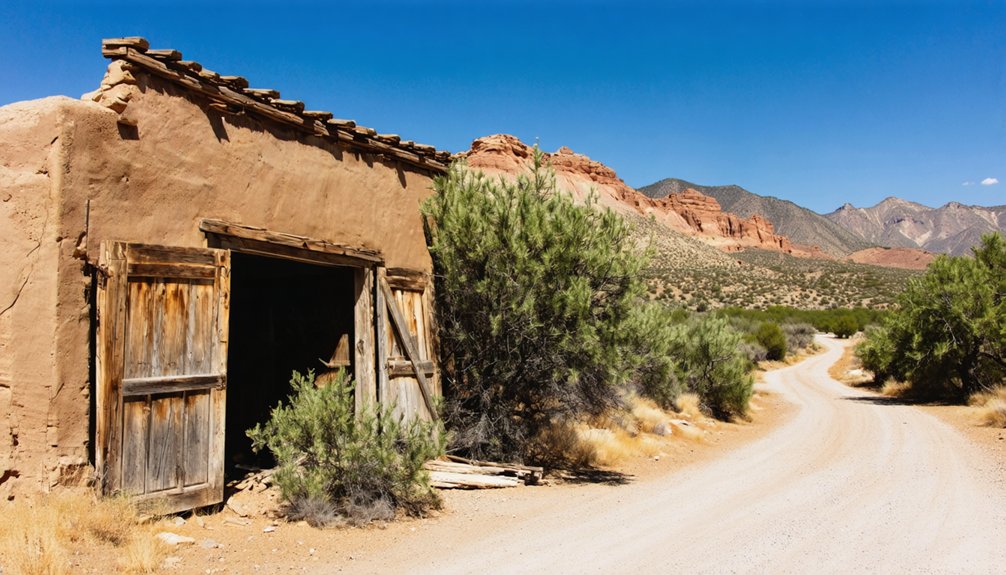
Once a critical stop on the Prescott-Phoenix stagecoach line, Bumble Bee thrived as travelers and miners pushed through the Bradshaw Mountains in the 1860s.
You can trace the town’s decline to two forces working in tandem: the westward railroad push dried up stagecoach traffic while the richest ores played out, leaving little reason for anyone to stay.
When the railroad advanced and the mines went quiet, businesses shuttered, residents scattered, and the desert slowly reclaimed what ambition had built.
Stagecoach Routes And Decline
Bumble Bee’s rise and fall tracks almost perfectly with the fate of the American stagecoach. Its stagecoach significance stems from sitting squarely on historical routes connecting Prescott to Phoenix, serving as a crucial lifeline for travelers, miners, and supplies moving freely across Arizona’s rugged terrain.
When railroads pushed westward and rich ores depleted, that freedom of movement shifted permanently away from Bumble Bee.
Consider what drove its decline:
- Railroad expansion made stagecoach travel obsolete, stripping the town of its primary purpose.
- Ore depletion eliminated the mining economy that sustained local businesses.
- New road construction repeatedly bypassed the townsite, cutting off commercial traffic.
You’re fundamentally witnessing the story of progress leaving a community behind, one abandoned building at a time.
Mining Boom Then Bust
While the railroad killed the stagecoach era, mining had already been quietly pulling Bumble Bee in two directions at once. Rich ore discoveries in the early 1860s sparked a short-lived mining boom, drawing prospectors hungry for fortune and freedom into the Bradshaw Mountains.
That mining history briefly transformed Bumble Bee into something more than a dusty waypoint — it became a place worth fighting to reach.
But the economic impact cut both ways. As the railroad pushed westward, hauling ore became cheaper elsewhere, and Bumble Bee’s deposits couldn’t compete. Yields dropped, miners left, and businesses followed.
The town that ore built, ore also abandoned. What remained was a skeleton of structures slowly surrendering to desert heat, wind, and time — a pattern you’ll recognize the moment you arrive.
The Best Time of Year to Road Trip to Bumble Bee
The ideal time to road trip to Bumble Bee, Arizona, is during the cooler winter months, when temperatures run about 5 degrees lower than Phoenix. The desert landscape comes alive with crisp, clear skies perfect for photography.
Among the best seasons to visit, winter and spring offer the most rewarding scenic landscapes, letting you explore freely without brutal summer heat.
- Winter (December–February): Mild temperatures make walking the property comfortable; you’ll even spot bumble bees buzzing despite the season.
- Spring (March–April): Desert wildflowers and blooming saguaros create stunning photography opportunities along the unpaved road.
- Avoid Summer: Intense Arizona heat makes outdoor exploration miserable and potentially dangerous.
Pack water, respect private property boundaries, and bring your camera — Bumble Bee rewards prepared travelers.
How to Get to Bumble Bee From Phoenix
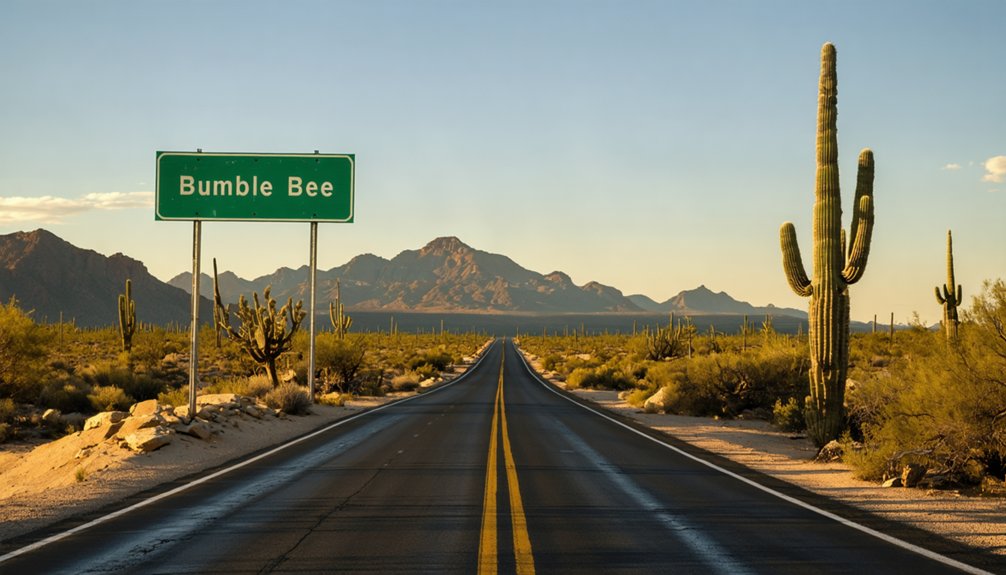
Once you’ve picked your season, getting to Bumble Bee from Phoenix is a straightforward drive that takes roughly an hour. Your route options are simple: head north on I-17 and exit at Exit 248.
From there, an unpaved road winds through rolling hills and open desert, delivering you straight into the site.
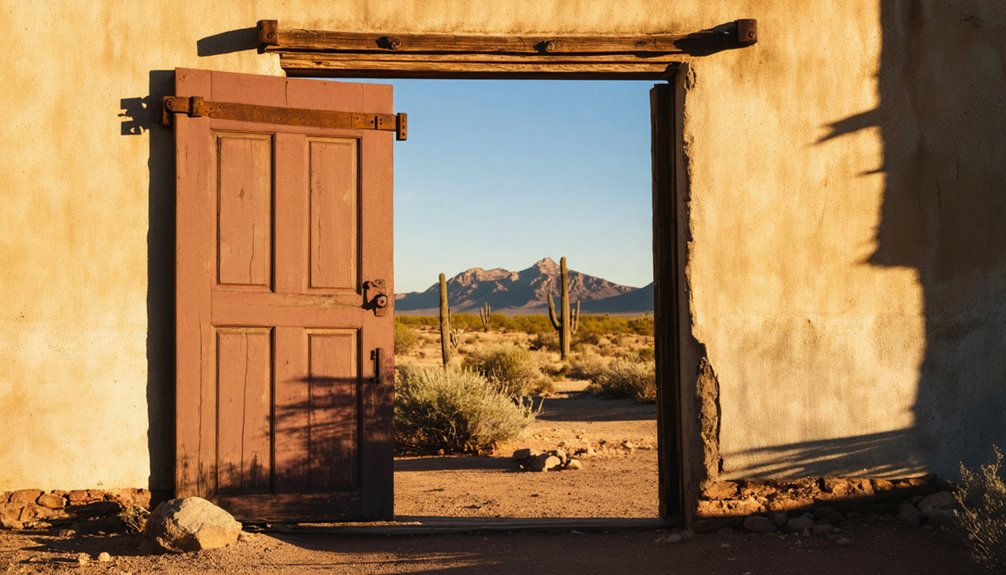
The scenic highlights along the way make the journey worthwhile on their own. You’ll pass towering saguaros, sprawling prickly pear cacti, agave, and Palo Verde trees — classic Sonoran Desert scenery that gradually shifts as you gain elevation.
Bumble Bee sits at roughly 2,500 feet, so expect temperatures about five degrees cooler than Phoenix. The drive is uncomplicated, the landscape is stunning, and the freedom of the open road sets the perfect tone before you arrive.
What Should You Expect on the Drive Down Exit 248?
Turning off I-17 at Exit 248, you’ll drop onto an unpaved road that immediately trades highway noise for open desert quiet.
Rolling hills frame scenic views stretching across Yavapai County, while local wildlife occasionally crosses your path. The landscape feels untouched, raw, and completely yours.
Rolling hills and open desert stretch endlessly ahead, wild and unhurried, as if the land exists for you alone.
Watch for these desert highlights along the drive:
- Saguaro cacti and prickly pear standing like natural sentinels across the hillsides
- Palo Verde trees and agave adding unexpected color to the rocky terrain
- Bumble bees buzzing year-round, even during January visits
The elevation sits around 2,500 feet, keeping temperatures roughly 5 degrees cooler than Phoenix.
That small difference feels significant on a warm afternoon.
Respect private property boundaries, stay on accessible paths, and let the desert set the pace.
What Do You Need to Know Before Driving Out to Bumble Bee?
Before you load up the car and head north on I-17, a few practical realities about Bumble Bee will save you from disappointment.
The townsite sits on private property, so you’ll need to respect those boundaries and shoot your photos from the road.
Don’t expect dramatic historical markers or a preserved ghost town — the tourist replica was dismantled years ago. What remains includes four houses, a padlocked mercantile, and weathered structures slowly surrendering to the elements.
Local wildlife thrives here, including actual bumble bees year-round, so stay alert.
The Bumble Bee Ranch and Trading Post offer your only real commercial stop.
Come with realistic expectations, an adventurous spirit, and genuine appreciation for the raw, unpolished history this scrappy little desert settlement still quietly carries.
What Else Is Worth Seeing on the Drive Back From Bumble Bee?
The drive back down I-17 toward Phoenix rewards you with more than just open road.
The road back doesn’t just return you to Phoenix — it gives you something to carry home.
The Bradshaw Mountains frame your rearview mirror while desert landscapes unfold ahead. You’re moving through living history, passing scenic views that don’t demand a parking fee or a tour guide.
Watch for these worthwhile stops:
- Cordes Junction – A crossroads with deep Historic Landmarks roots, connecting old territorial routes still visible off the highway.
- Arcosanti – An experimental city carved into the desert plateau, visible from the road and open for self-guided exploration.
- Black Canyon City – A quiet stretch offering scenic views of desert washes, saguaro forests, and rugged canyon walls worth a short detour.
You’ve earned the open road. Use every mile of it.
Frequently Asked Questions
Was Bumble Bee, Arizona Ever Featured in Any Notable Films?
Like a flash in the pan, Bumble Bee’s cinematic history shines briefly — you’ll find it starred in a B-western, with its fake movie set serving as one of the Old West’s quirkiest film locations.
Are There Any Annual Events or Festivals Held Near Bumble Bee?
The knowledge doesn’t highlight annual festivals near Bumble Bee, but you’ll find nearby Prescott celebrating Local History through various Ghost Towns events. Explore Sharlot Hall Museum’s vibrant programs — they’re perfect for freedom-loving history enthusiasts craving authentic Arizona adventures!
Can You Legally Purchase Property or Land in Bumble Bee?
Bumble Bee’s land is privately owned, yet property ownership here isn’t impossible. You’ll need to navigate strict land regulations, but that rugged freedom of owning a piece of Arizona’s forgotten history could genuinely be yours.
What Native American Tribes Historically Inhabited the Bumble Bee Area?
The knowledge base doesn’t specify which tribes inhabited Bumble Bee, but you’ll feel the area’s Native heritage and historical significance — soldiers once described Indians there “as thick as bees,” hinting at a rich, untamed past.
Are There Any Guided Tours Available Specifically for Bumble Bee Visitors?
You won’t find guided tours here — just you, the desert silence, and fading history. Explore Bumble Bee’s local attractions independently, respecting private property boundaries. Your freedom-filled adventure awaits down that unpaved road!
References
- https://www.legendsofamerica.com/az-bumblebee/
- https://kids.kiddle.co/Bumble_Bee
- https://www.bumblebeeranch.com/history-of-bumble-bee
- https://www.deseret.com/2002/2/10/19636534/don-t-blink-or-you-ll-miss-arizona-ghost-town/
- https://janmackellcollins.wordpress.com/2021/04/19/the-ups-and-downs-of-bumblebee-arizona/
- https://www.youtube.com/watch?v=UPILvSBxW4c