Dillon, Wyoming is a crumbling copper boomtown frozen since the early 1900s, deep in the Sierra Madre mountains. You’ll need a four-wheel-drive vehicle, emergency supplies, and a willingness to ford shallow river crossings to reach it. Visit between late spring and early fall when routes are open and the landscape rewards your effort. There’s far more to this ghost town road trip than just Dillon itself, and the full story is worth uncovering.
Key Takeaways
- Dillon, Wyoming, founded in 1897, is a copper mining ghost town in the Sierra Madre mountains featuring deteriorating log cabins and raw historical authenticity.
- A four-wheel-drive, high-clearance vehicle is essential, as access requires navigating rugged mountain roads, shallow river crossings, and unpredictable Sierra Madre weather.
- The best visiting periods are late spring through early fall, with July–August offering peak road conditions and September–October providing fall colors with fewer crowds.
- Nearby ghost towns like South Pass City, Battle, and Benton, plus the Grand Encampment Museum, enrich the overall Wyoming mining heritage road trip experience.
- Pack emergency supplies, extra fuel, topographic maps, layered clothing, and communication gear, as remote conditions and lack of cell service demand thorough preparation.
What Made Dillon, Wyoming a Ghost Town Worth Visiting
When copper fever swept through Wyoming’s Sierra Madre mountains in 1897, Dillon sprang to life just a mile from the Ferris-Haggarty mine, serving as an essential sister town to Rudefeha and Battle.
Dillon’s history runs deep through the valley’s mining legacy, where log cabins once sheltered determined workers fueling one of the region’s most ambitious copper operations.
What makes Dillon worth your time today isn’t grandeur — it’s raw authenticity. Unlike polished tourist destinations, Dillon offers you deteriorating structures that tell an unfiltered story of boom-and-bust frontier life.
The nearby 16-mile aerial tramway, once the world’s longest, carried ore down to Grand Encampment’s smelter, connecting these mountain outposts to commercial civilization.
Walking through Dillon means stepping into a moment history didn’t bother cleaning up.
The Copper Boom That Built and Abandoned Dillon
The copper discovery in Wyoming’s Sierra Madre in 1897 didn’t just spark a mining rush — it ignited an entire economy. The Ferris-Haggarty mine‘s development transformed these remote mountains overnight, giving birth to sister towns like Rudefeha, Battle, and Dillon.
Town history tells you Dillon rose just a mile from the mine, its log cabins housing the workers who kept copper mining operations alive. Engineers even built a 16-mile aerial tramway — once the world’s longest — to carry ore down to a smelter in Grand Encampment.
But when the copper ran out, so did the people. Today, Dillon’s deteriorating structures stand as silent proof of boom-and-bust cycles that shaped the American West. You’re not just visiting ruins — you’re standing inside a cautionary tale.
What’s Still Standing in Dillon Today?
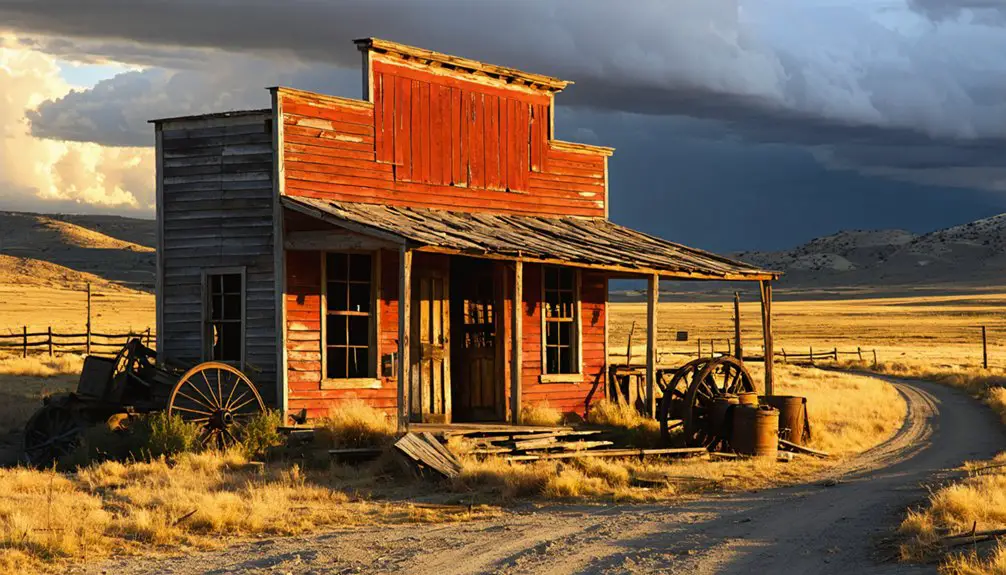
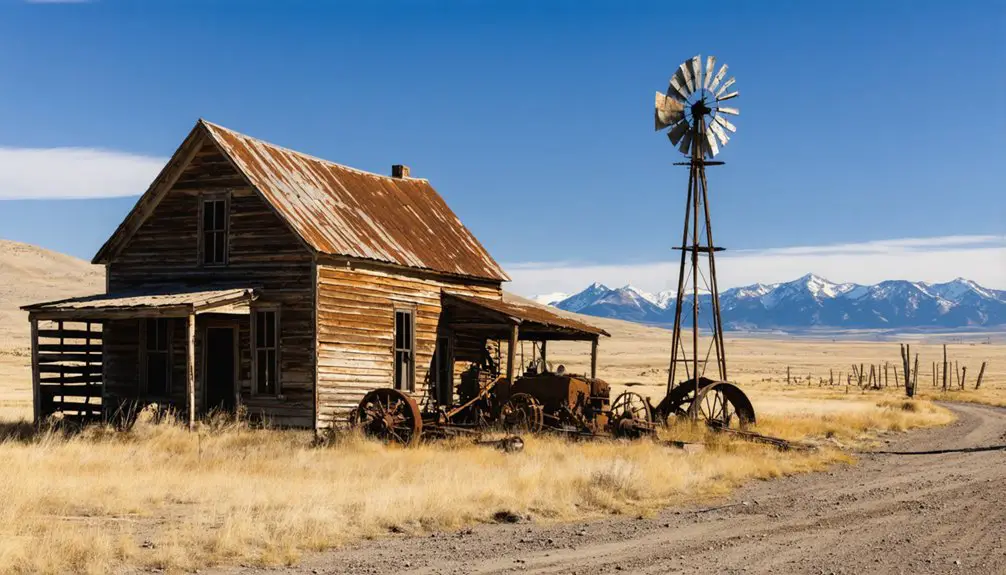
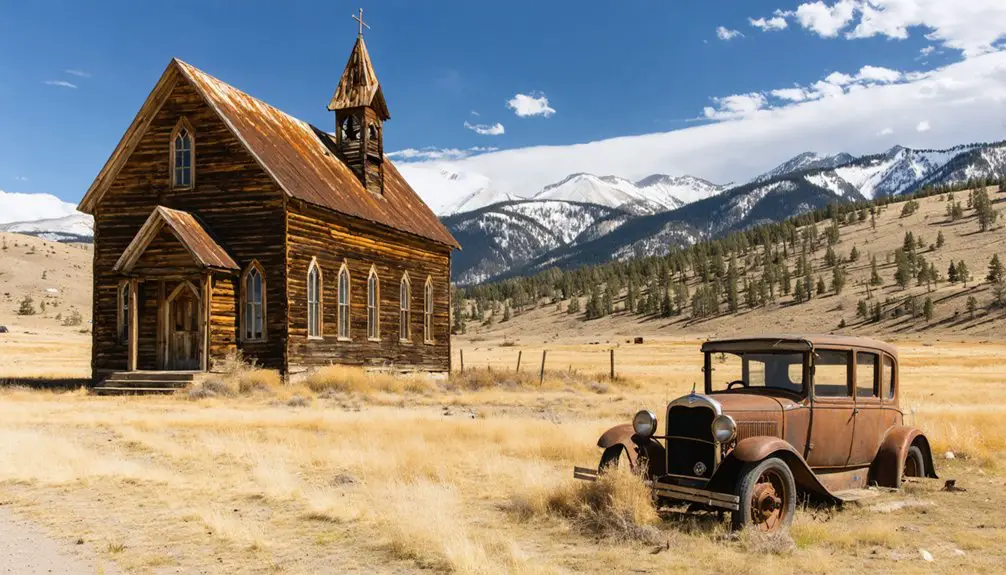
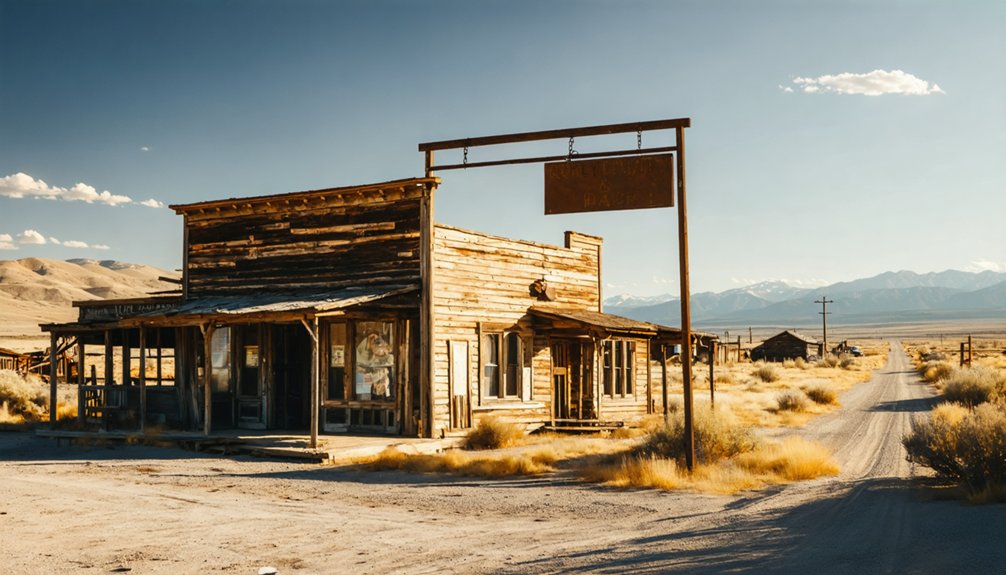
Walking through what’s left of Dillon feels less like sightseeing and more like reading a sentence that was never finished. The log cabins that once housed miners chasing copper dreams have largely collapsed, surrendering to decades of mountain weather.
Yet some deteriorating structures still stand, leaning against time like stubborn witnesses to Dillon’s history.
You won’t find a curated museum here. What you’ll find is raw, unfiltered mining legacy — weathered timber, sagging rooflines, and silence where a working town once breathed. That authenticity is exactly what makes Dillon worth the trek.
Bring a camera and a four-wheel-drive vehicle. The landscape rewards the adventurous, and those crumbling remnants tell a story no exhibit can replicate — one of ambition, copper, and a boomtown that burned out fast.
How the 16-Mile Aerial Tramway Connected Dillon to the World
Stretching 16 miles through the Sierra Madre, the aerial tramway that once linked Dillon’s copper mines to the smelter in Grand Encampment was an engineering marvel for its time — the longest in the world.
Built in 1897, it carried ore continuously across rugged, otherwise impassable terrain, making Dillon’s mining legacy possible on an industrial scale.
You’re looking at a system that defied geography before modern roads even existed here. Buckets moved endlessly overhead, connecting isolated mountain settlements to commerce below.
That tramway wasn’t just infrastructure — it was the lifeblood keeping Dillon and the broader copper district alive.
Today, aerial tramway history enthusiasts can still trace portions of its route, imagining the hum of machinery echoing through these silent, timber-lined ridges you’re now free to explore.
Ghost Towns Within a Day’s Drive of Dillon
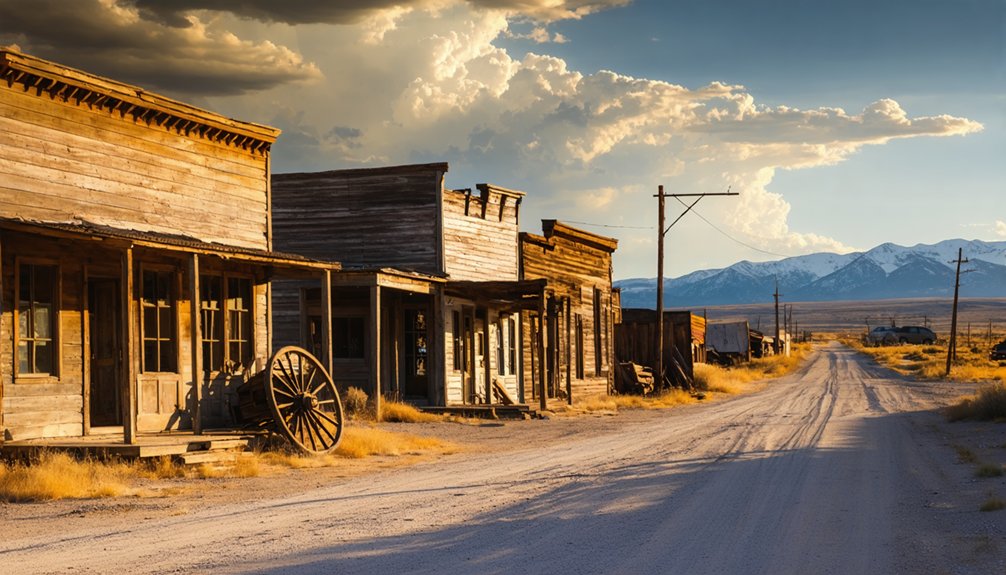
Once you’ve wandered Dillon’s crumbling log cabins, you’ll find that the surrounding region rewards further exploration — ghost towns within a day’s drive offer dramatically different stories of boom, bust, and abandonment.
Each destination deepens your understanding of mining heritage and ghost town legends unique to Wyoming’s wild past.
Each stop adds another layer to Wyoming’s raw mining legacy — ghost town stories etched deep into the frontier past.
- South Pass City — a gold rush survivor frozen in the 1860s, remarkably preserved
- Battle — perched atop the Continental Divide, its relocated buildings haunt the skyline
- Benton — Wyoming’s first ghost town, abandoned after just three rowdy months in 1898
- Grand Encampment — explore the museum’s recreated townscape and tramway history
Pack your four-wheel-drive, plan your route along the Battle Pass Scenic Byway, and let Wyoming’s forgotten settlements tell their unfiltered stories.
How to Get to Dillon Without Getting Stuck
Before you chase Dillon’s crumbling log cabins through the Sierra Madre, you’ll need a four-wheel-drive vehicle with high clearance—shallow river crossings and rugged mountain roads will swallow anything less.
Plan your trip for late spring through early fall, when the routes are passable and the Continental Divide’s brutal winters have loosened their grip.
Watch those stream crossings carefully; what looks like a gentle trickle can hide a chassis-dragging trap beneath the surface.
Essential Vehicle Requirements
Reaching Dillon’s crumbling log cabins requires more than curiosity and a full tank of gas. Ghost town exploration demands proper vehicle safety preparation before you hit these unforgiving mountain routes.
Pack these essentials before departing:
- Four-wheel-drive vehicle with high ground clearance
- Recovery gear for multiple shallow river crossings
- Emergency supplies for remote mountain conditions
- Detailed topographic maps of the Sierra Madre terrain
The roads threading through Medicine Bow forest don’t forgive unprepared travelers. You’ll navigate stream crossings, rutted paths, and elevation changes that’ll strand a standard sedan before you spot your first deteriorating structure.
Visit during late spring through early fall when conditions are most passable. Dillon’s weathered remnants have survived over a century — make sure your rig can survive the journey to reach them.
Best Seasonal Travel Times
Timing your visit to Dillon separates a successful ghost town expedition from a miserable extraction operation.
Late spring through early fall opens these high Sierra Madre roads, giving you genuine access to deteriorating log cabins and copper-era ruins. Summer brings bonus wildlife encounters — elk and mule deer roam freely through abandoned townsite clearings.
Early fall delivers spectacular color without summer crowds, letting you explore undisturbed.
Winter arrives brutally here, dropping temperatures far below zero and sealing mountain roads entirely. You’ll find yourself stranded rather than adventuring.
Regional seasonal festivals in nearby Encampment occasionally coincide with summer visits, connecting you to living history alongside the ghost town experience.
Plan between June and September, and Dillon rewards your timing generously.
Navigating River Crossings
Several shallow river crossings stand between you and Dillon’s crumbling log cabins, and they’ll humble even confident drivers who underestimate mountain waterways.
River safety isn’t optional here—it’s survival intelligence. Follow these crossing tips before your wheels hit the water:
- Engage four-wheel drive with high clearance before approaching any crossing.
- Walk the crossing first, testing depth and current strength.
- Cross slowly and steadily, avoiding sudden acceleration mid-stream.
- Never cross during or after heavy rainfall when currents surge unpredictably.
These crossings connect you to landscapes photographers and backpackers have chased for generations.
The Medicine Bow forest surrounding Dillon rewards those prepared enough to reach it—and turns back everyone else.
The Best Time of Year to Visit Dillon Ghost Town
You’ll want to time your visit carefully, as late spring, summer, and early fall offer the most accessible roads and rewarding conditions for exploring Dillon’s deteriorating log cabins.
Winter temperatures can plunge far below zero, making the already rugged terrain genuinely treacherous for even well-equipped vehicles.
Plan your trip during peak exploration periods and you’ll find the surrounding Medicine Bow forest and Battle Pass Scenic Byway equally worth your time.
Ideal Visiting Seasons
When you venture out to Dillon, the season you choose can make or break your experience. The deteriorating log cabins and remnants of mining history demand ideal conditions for exploration and ghost town photography.
Plan your visit around these seasonal realities:
- Late Spring – Snowmelt clears mountain roads, revealing fresh views of crumbling structures.
- Summer – Peak visibility and dry trails make photography and exploration most rewarding.
- Early Fall – Crisp air and golden foliage create dramatic backdrops for capturing mining history.
- Winter – Temperatures plunge far below zero, making access dangerous and potentially impossible.
Your best window runs from late spring through early fall. Outside those months, the Sierra Madre’s unforgiving climate turns this adventure into a serious survival risk.
Weather and Road Conditions
The Sierra Madre don’t forgive the unprepared. Weather patterns here shift fast, and winter temperatures plunge well below zero, making Dillon’s already rugged terrain genuinely dangerous.
You’ll want to plan your visit between late spring and early fall when the roads thaw and daylight stretches long enough to explore properly.
Road safety isn’t optional in this country — it’s survival. A four-wheel-drive vehicle with high clearance isn’t a suggestion; it’s your ticket in.
Multiple stream crossings and rough mountain tracks will stop a standard vehicle cold. The Battle Pass Scenic Byway opens your route beautifully during warmer months, rewarding cautious, well-equipped travelers with sweeping landscapes and hard-won history.
Come ready, come capable, and Dillon’s deteriorating cabins will tell you everything the mountains remember.
Peak Exploration Periods
Late spring through early fall hands you the best window for reaching Dillon’s scattered remnants without the Sierra Madre fighting back.
For serious ghost town exploration, timing isn’t optional—it’s survival strategy.
Here’s when you’ll want to roll in:
- May–June: Snowmelt opens high-elevation routes; wildflowers frame deteriorating log cabins beautifully.
- July–August: Peak tourism season delivers ideal road conditions along the Battle Pass Scenic Byway.
- September–October: Crowds thin dramatically while trails remain accessible and fall color rewards photographers.
- November–April: Winter temperatures plunge far below zero, sealing most routes entirely.
Dillon rewards those who respect its remoteness.
You’re not visiting a curated museum—you’re reading a collapsed landscape.
Choose your window wisely, and the Sierra Madre opens up.
Gear and Supplies You’ll Actually Need for This Route
Reaching Dillon and its surrounding ghost towns demands serious preparation, because these remote Sierra Madre routes don’t forgive casual visitors. Your gear essentials start with a four-wheel-drive vehicle featuring high clearance — shallow river crossings and deteriorating mountain roads will punish anything less capable.
Build your supply checklist around self-sufficiency: carry extra fuel, detailed topographic maps, a first-aid kit, and emergency communication gear. Cell service disappears fast out here.
Self-sufficiency isn’t optional out here — extra fuel, maps, and emergency gear aren’t luxuries; they’re survival essentials.
Pack enough water and food for unexpected delays, because the same isolation that preserved these copper-era ruins will strand you without warning.
Dress in layers — winter temperatures drop brutally below zero, even when you’re visiting during summer’s shoulder months.
The miners who built Dillon survived this wilderness through preparation. Follow their example.
Museums Near Dillon Worth Adding to Your Route
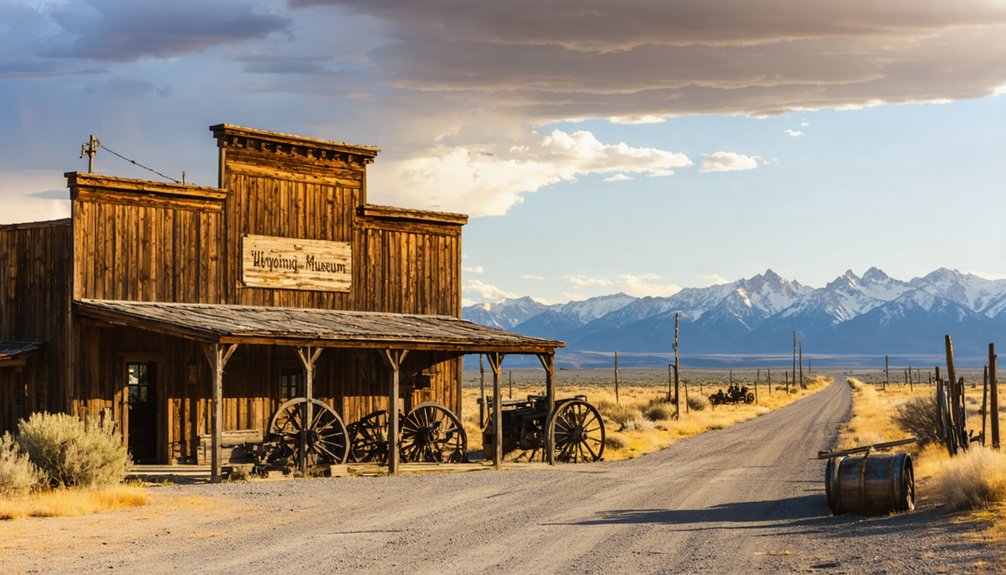
If you’re chasing the full story behind Dillon and the Grand Encampment Copper District, you won’t want to skip the Grand Encampment Museum, where the Battle Miner newspaper office and a recreated historic town bring the mining era to life.
The museum’s collection of relocated structures from throughout the valley lets you walk through history that would otherwise exist only in photographs and records.
Use it as a living reference point—its visitor resources will sharpen your understanding of every deteriorating cabin and collapsed headframe you’ve already seen on the road.
Grand Encampment Museum Highlights
Before leaving the Dillon area, swing by the Grand Encampment Museum to round out your ghost town experience.
It’s a living repository of the copper boom era, showcasing Grand Encampment artifacts and historic mining techniques that shaped this wild frontier.
Here’s what you won’t want to miss:
- The recreated Battle Miner newspaper office, preserving the voice of a boomtown era
- Historic structures relocated from throughout the valley, each telling its own survival story
- Grand Encampment artifacts revealing the brutal realities of copper extraction
- Exhibits detailing historic mining techniques, including the legendary 16-mile aerial tramway
Walking through this museum connects you directly to the ambitions and hardships of miners who carved civilization from Wyoming’s rugged wilderness.
It’s history you can actually touch.
Historic Structures On Display
Beyond the Grand Encampment Museum, several other historic structures near Dillon deserve a spot on your route.
South Pass City stands as one of the West’s finest examples of historic preservation, where you’ll walk a main street lined with original shops, public buildings, and residences frozen in gold rush time. The old dance hall doubles as a visitor center, launching you into a self-guided tour through authentic frontier life.
At Bannack State Park, a numbered guide leads you through 60 surviving structures, where mining artifacts tell stories of ambition and hardship.
You’ll cross shallow streams and navigate rugged terrain to reach these sites, so bring a capable vehicle. Each structure rewards the effort with unfiltered, tangible history that no museum replica can replicate.
Visitor Resources And Tours
Several museums near Dillon transform raw history into living context, and they’re worth folding into your itinerary.
These stops deepen your visitor experiences beyond what crumbling walls can tell you alone.
- Grand Encampment Museum – Explore a recreated valley town featuring the authentic Battle Miner newspaper office.
- South Pass City – Start guided tours inside the old dance hall, then walk a curated main street frozen in gold rush time.
- Meeteetse Museums Complex – Catch periodic free guided tours to Kirwin and the Double Dee ranch.
- Bannack State Park – Use a numbered guide to navigate 60 standing structures, accessible year-round.
Each resource hands you a sharper lens for reading the landscape you’re already driving through.
A Full Weekend Itinerary Around Dillon and Grand Encampment
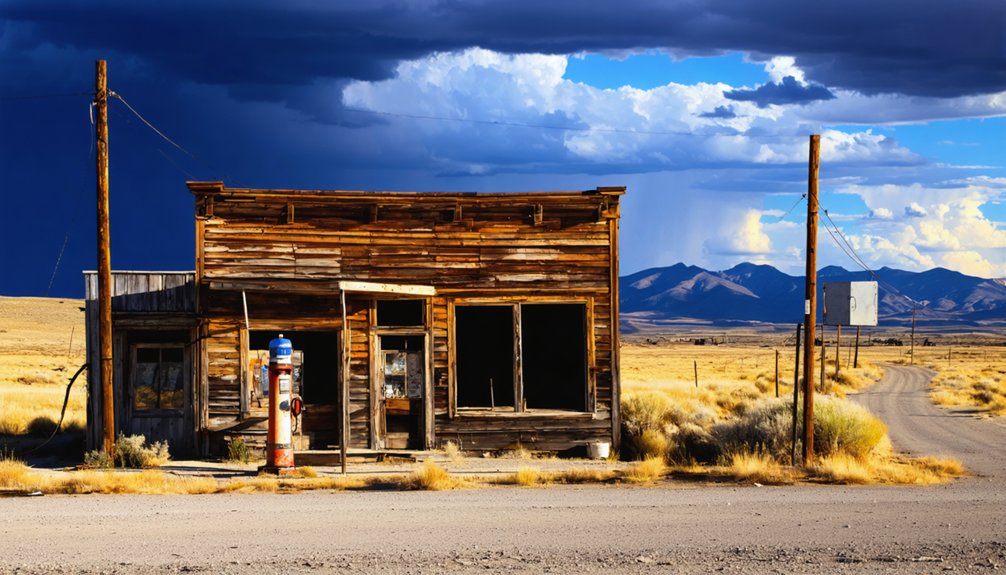
If you’ve got a full weekend to spare, the ghost towns clustered around Dillon and Grand Encampment reward every hour you invest.
Arrive Friday evening and camp near the Sierra Madre, waking Saturday ready for serious ghost town exploration. Drive the Battle Pass Scenic Byway, stopping at Battle atop the Continental Divide before dropping down to Dillon’s deteriorating log cabins.
Saturday evening, walk the Grand Encampment Museum‘s recreated streets and absorb the region’s copper mining history firsthand.
Sunday morning, trace the route of the world’s longest aerial tramway, imagining ore buckets crossing 16 miles of mountain terrain.
Pack a four-wheel-drive vehicle, high clearance, and enough supplies to roam freely. These mountains don’t wait for the unprepared, but they generously reward the bold.
Frequently Asked Questions
Is Camping Allowed Near the Dillon Ghost Town Site Overnight?
The knowledge doesn’t confirm camping regulations near Dillon’s ghost town site. You’ll want to check with Medicine Bow forest authorities about overnight stays, as ghost town amenities there are minimal—just weathered log cabins reclaiming their wild, adventurous past.
Are Guided Tours Specifically Available for the Dillon Ghost Town Area?
While dedicated guided tours aren’t specifically offered, don’t let that stop you! You’ll uncover Dillon’s ghost town history and local legends freely by exploring the Grand Encampment Museum, where knowledgeable staff actively illuminate this copper mining area’s adventurous past.
Can Children Safely Explore the Deteriorating Structures Remaining at Dillon?
You’ll want to keep children away from Dillon’s deteriorating log cabins, as they’re unsafe. Instead, embrace the educational opportunities nearby — safety precautions guarantee everyone can freely explore this historically-rich copper mining landscape with adventurous, informed curiosity.
Is There Cell Phone Service Along the Route to Dillon?
Like a fading echo, cell service coverage vanishes on remote routes to Dillon. Don’t count on reliable connectivity options in these rugged Sierra Madre corridors. You’ll want to download maps offline and embrace the untethered freedom awaiting you.
Are Pets Allowed When Visiting the Dillon Ghost Town Area?
The knowledge base doesn’t specify pet-friendly policies for Dillon’s ghost town area. You’ll want to check local regulations before heading out. Practicing good ghost town etiquette means respecting these historic grounds, whether you’re bringing furry trail companions or not.
References
- https://travelwyoming.com/blog/stories/post/5-wyoming-ghost-towns-you-need-to-explore/
- https://www.roadsideamerica.com/story/45417
- https://www.youtube.com/watch?v=sTcy-xq_EWc
- https://www.wyomingcarboncounty.com/things-to-do/?id=123:5-ghost-towns-to-explore
- https://athomeonhudson.com/bannack-state-park-ghost-town-montana/
- https://www.rv.com/archive/wyomings-spook-route/
- https://www.ghosttowns.com/states/wy/dillon.html
- https://www.roadsideamerica.com/story/23721