Planning a road trip to Carney, Pennsylvania means stepping into a hauntingly preserved coal-era ghost town nestled near Blacklick Creek in western Pennsylvania. You’ll navigate unpaved rural roads using GPS coordinates 40.5°N, 78.9°W, so bring a truck or SUV. Weathered wooden structures, mining slag heaps, and interpretive signs reveal a community that collapsed when its coal seams ran dry. Pack your safety gear, respect private property boundaries, and keep exploring to uncover everything this forgotten town has to offer.
Key Takeaways
- Carney, Pennsylvania, is a rural ghost town near Blacklick Creek, roughly 45 miles from Ebensburg, best navigated using GPS coordinates 40.5°N, 78.9°W.
- No major highways lead to Carney, so expect narrow, unpaved roads and bring a truck or SUV for safe access.
- Pack essential safety gear, including sturdy boots, a flashlight, and a first-aid kit, and inform someone of your plans beforehand.
- Visitors can explore weathered structures, mining slag heaps, railroad ties, and interpretive signs reflecting Carney’s 19th-century coal mining history.
- Respect private property boundaries, stick to designated paths, and wear blaze orange during hunting season to ensure a safe visit.
Where Is Carney, Pennsylvania?
Tucked away in western Pennsylvania near Blacklick Creek, Carney sits roughly 45 miles from Ebensburg at GPS coordinates 40.5°N, 78.9°W. This Carney location puts you deep in the rural heart of western Pennsylvania, where narrow, unpaved access roads lead you toward what was once a thriving coal village.
Getting there requires some preparation. You’ll navigate tight back roads, and private property boundaries restrict entry to certain zones, so you’ll want to research access points before heading out.
But that’s part of the adventure — reaching a ghost town that time has largely forgotten. Carney doesn’t advertise itself with highway billboards or crowded parking lots. It rewards the curious traveler willing to seek it out, map in hand, ready to explore on their own terms.
How Do You Get to Carney Ghost Town?
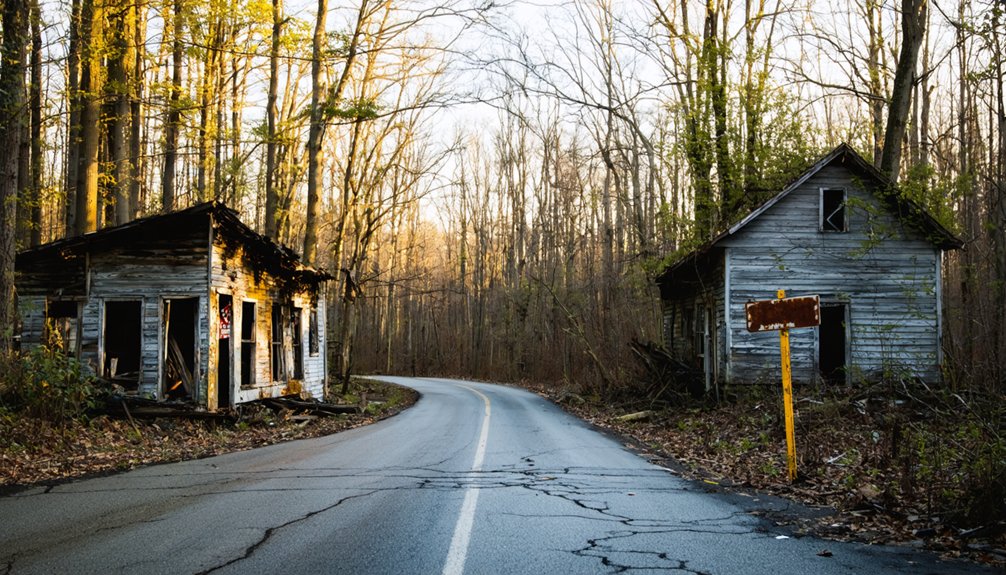
Getting to Carney means embracing the journey itself — you won’t find it along a major highway or marked by roadside signage. Your travel routes will carry you through western Pennsylvania, roughly 45 miles from Ebensburg, near the winding corridor of Blacklick Creek.
Plug GPS coordinates 40.5°N, 78.9°W into your navigation app before you leave civilization behind. Among the most important directions tips: expect unpaved, narrow access roads that demand a vehicle with decent clearance. A truck or SUV handles these conditions far better than a standard sedan.
Plug in coordinates 40.5°N, 78.9°W and bring a truck — these roads don’t forgive low clearance.
Watch for private property boundaries along your approach — some zones restrict entry, so stay alert to posted signage.
Freedom here comes with responsibility. Respect the land, know your route, and you’ll arrive ready to explore Carney on your own terms.
What Safety Rules Apply When Exploring Carney?
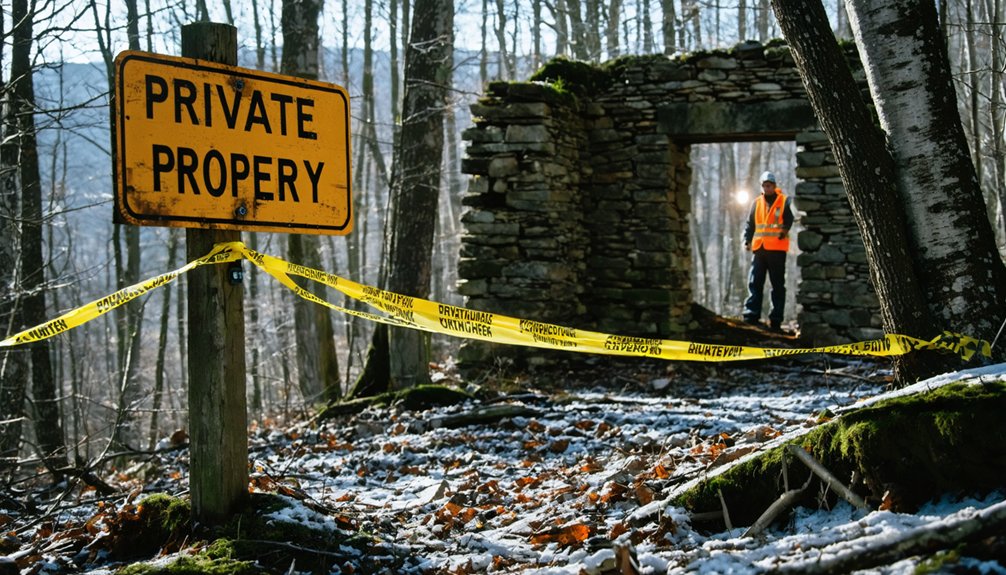
Exploring Carney rewards the prepared visitor — but safety rules here aren’t optional. You’re walking through a former mining site where unstable ground and weathered structures demand respect.
Always carry proper safety gear, including sturdy boots, a flashlight, and a first-aid kit.
During hunting season, you must wear blaze orange — no exceptions. Private property boundaries exist throughout the area, so check current visitor guidelines before you wander beyond marked zones. Ignoring these boundaries isn’t just risky; it’s illegal.
Stick to designated paths near the interpretive signs, where the terrain is better maintained.
Tell someone your plans before heading out, since cell service is unreliable this deep into western Pennsylvania. Smart preparation keeps your ghost town adventure memorable for the right reasons.
What’s Left to See at Carney Today?
What remains at Carney today tells a quiet but powerful story of industrial labor and eventual abandonment.
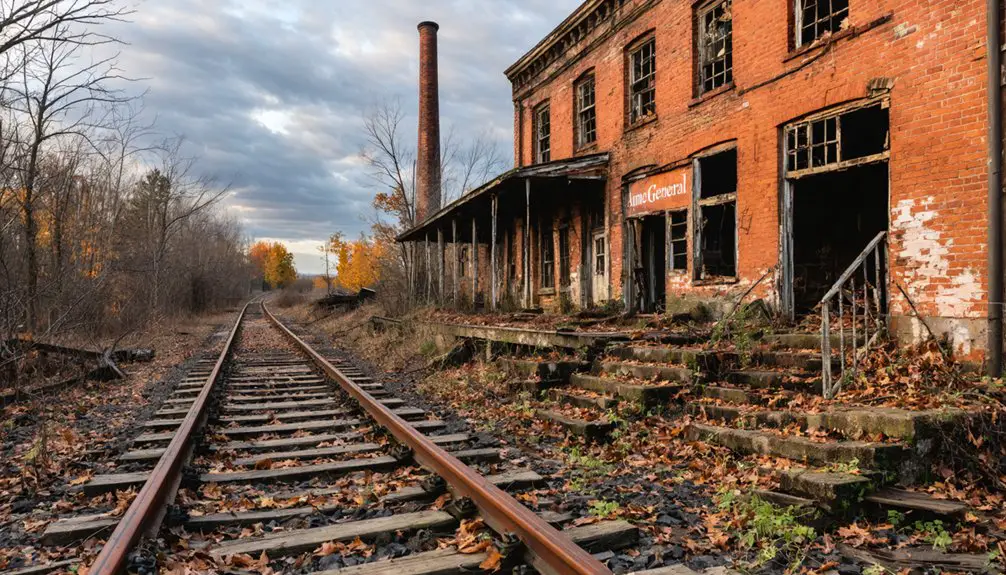
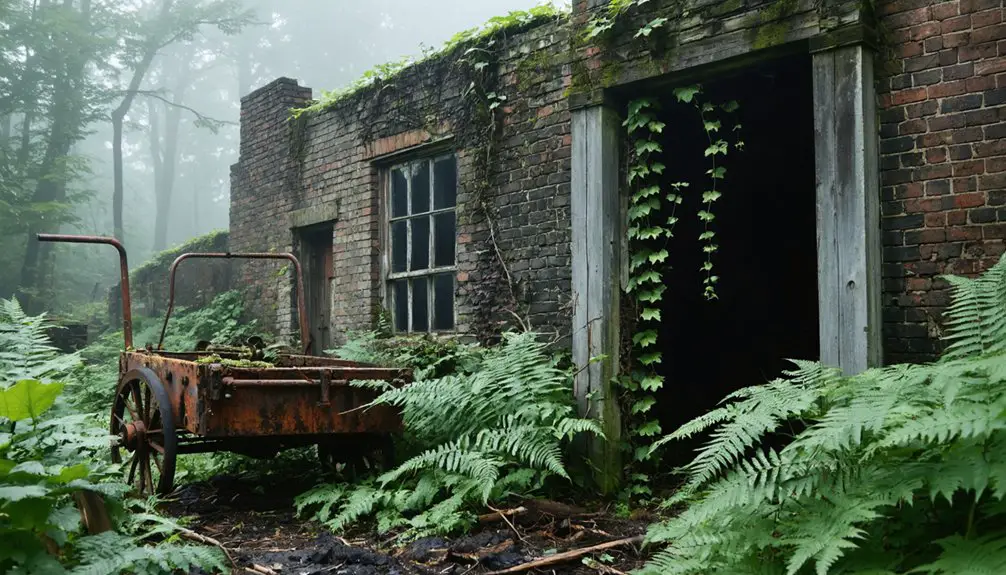
You’ll find ghostly remnants of wooden structures weathered down to their bones, scattered across a landscape that nature’s slowly reclaiming. Coal house ruins still stand in various states of decay, giving you a tangible sense of how miners once lived and worked here.
Wooden bones and crumbling coal houses — nature quietly reclaiming what miners once called home.
As you explore, you’ll encounter historical artifacts including mining slag heaps and old railroad ties half-buried in the earth.
Interpretive signs placed throughout the site help you piece together Carney’s 19th-century story without needing a guide. It’s raw, unpolished history you can actually walk through.
For anyone craving authentic exploration away from crowded tourist traps, Carney delivers a genuinely moving experience on your own terms.
How Carney Grew and Collapsed as a Coal Town
When you stand among Carney’s crumbling ruins, it’s hard to imagine that this quiet hollow once hummed with the energy of a thriving coal operation.
In the 1800s, miners sank multiple underground shafts here, fueling regional coal production and building a small but essential community around the work.
Yet the same industry that built Carney ultimately doomed it, as depleted seams and shifting economic forces drained the town of its workforce and purpose.
Coal Mining Origins
Carney’s story begins underground, where early 19th-century miners carved out coal shafts that would define the town’s entire existence.
You’re looking at a place built entirely on raw ambition and coal mining techniques that demanded everything from the workers who practiced them. These men drilled, blasted, and hauled coal through narrow underground passages, relying on historical labor practices that were grueling and unforgiving.
There were no safety nets, no modern machinery — just muscle, determination, and the constant risk of collapse. The coal they pulled out fueled regional industry and put Carney on the map.
You can still feel that energy when you walk the site, sensing the weight of what those early miners sacrificed to build something out of nothing.
Town’s Economic Decline
The same coal that built Carney ultimately buried it. Once the seams thinned and cheaper coal sources emerged elsewhere, the economic factors sustaining this tight-knit village simply vanished. Mining decline hit fast and hard — operators shuttered the shafts, equipment sat idle, and workers packed up and moved toward steadier wages in larger towns.
You can still feel that abandonment when you walk the grounds today. The weathered ruins aren’t just crumbling wood and rusted iron; they’re physical proof of how quickly a single-industry town collapses when that industry disappears.
Carney had no fallback, no diversified economy to cushion the blow. When the coal stopped paying, everything stopped.
What’s left is a raw, honest snapshot of boom-and-bust Americana you won’t find in any textbook.
What to Bring When You Visit Carney?
Since Carney’s unpaved access roads and rugged mining ruins demand some preparation, you’ll want to pack smart before heading out. These ghost town essentials guarantee you’ll explore freely and safely while respecting the historical artifacts scattered across the site.
Carney’s rugged terrain and mining ruins demand preparation — pack smart and explore freely, safely, and respectfully.
- Sturdy hiking boots – Uneven terrain and coal slag make ankle support non-negotiable.
- Blaze orange clothing – Required during hunting season per site safety guidelines.
- GPS device or downloaded maps – Cell service near 40.5°N, 78.9°W is unreliable.
- Camera and notebook – Document weathered ruins and mining remnants without disturbing them.
You’ll also want water, snacks, and a printed overview of private property boundaries.
Respecting access restrictions keeps Carney open for every explorer who follows.
Frequently Asked Questions
Are Guided Tours Available for Visiting Carney Ghost Town?
Yes, you can join guided exploration tours at Carney! With over 100 years of historical significance packed into weathered ruins, you’ll uncover coal mining secrets that shaped an entire region’s identity and freedom.
When Did Coal Mining Operations Peak in Carney, Pennsylvania?
You’ll discover that Carney’s mining history peaked during the late 19th century, when coal operations drove significant economic impact across the region, fueling your ancestors’ pursuit of independence and shaping western Pennsylvania’s industrial landscape forever.
Is Carney Ghost Town Recognized in Official Pennsylvania State Archives?
Over 100 ghost towns dot Pennsylvania’s landscape, and you’ll find Carney history officially documented in state archives. Yes, it’s recognized! Explore ghost town legends tied to this abandoned coal village’s remarkable 19th-century mining past.
Can Visitors Legally Explore the Abandoned Ruins at Carney?
You can legally plunge into ghost town exploration at Carney’s haunting urban decay! You’ll wander weathered coal ruins, discover mining artifacts, and follow guided tours while respecting private property boundaries and safety guidelines throughout your adventure.
What GPS Coordinates Help Locate the Carney Ghost Town Site?
Located at 40.5°N, 78.9°W, you’ll find Carney’s ghost town waiting to reveal its historical significance. Roughly 45 miles from Ebensburg, these coordinates drop you into Pennsylvania’s forgotten coal country, where freedom-seekers uncover raw, untouched history.
References
- https://www.youtube.com/watch?v=_u5MUuwynhw
- https://www.youtube.com/watch?v=AxFvQa1_els
- https://www.youtube.com/watch?v=dy1wAk6ooLw
- https://www.cambriaconservationrecreation.com/ghost-town-trail/
- https://www.traillink.com/trail/ghost-town-trail/
- https://pabucketlist.com/road-tripping-to-the-best-abandoned-places-in-pennsylvania/
- https://indianacountyparks.org/our-trails/ghost-town-trail/
- https://www.onlyinyourstate.com/trip-ideas/pennsylvania/road-trip-abandoned-pa
- https://www.thetravel.com/what-to-know-about-hiking-the-ghost-town-trail-in-pennsylvania/
- https://www.visitindianacountypa.org/members/ghost-town-trail/