You’re only 90 miles southeast of Salt Lake City from one of Utah’s most haunting ghost towns. Take I-15 south, then follow US-6 through Price Canyon’s dramatic sandstone walls straight into history. Castle Gate once roared with coal miners, railroad crews, and outlaws like Butch Cassidy. Then a single March morning in 1924 silenced 172 men forever. Visit in September for the best light and fewest crowds. There’s far more to this canyon’s story than you’d expect.
Key Takeaways
- Castle Gate, Utah, is located 90 miles southeast of Salt Lake City, accessible via I-15 south and US-6 through Price Canyon.
- Visit between late spring and early fall for optimal weather, with September offering ideal low-angle sunlight and fewer crowds.
- No buildings remain at the original townsite, dismantled in 1974; only the dramatic sandstone landscape and canyon formations survive.
- The site holds significant historical weight, including Butch Cassidy’s 1897 payroll robbery and the deadly 1924 mine explosion killing 172 miners.
- Stops in Helper and Price along the route offer local dining and additional context for the region’s mining heritage.
What Was Castle Gate, Utah?
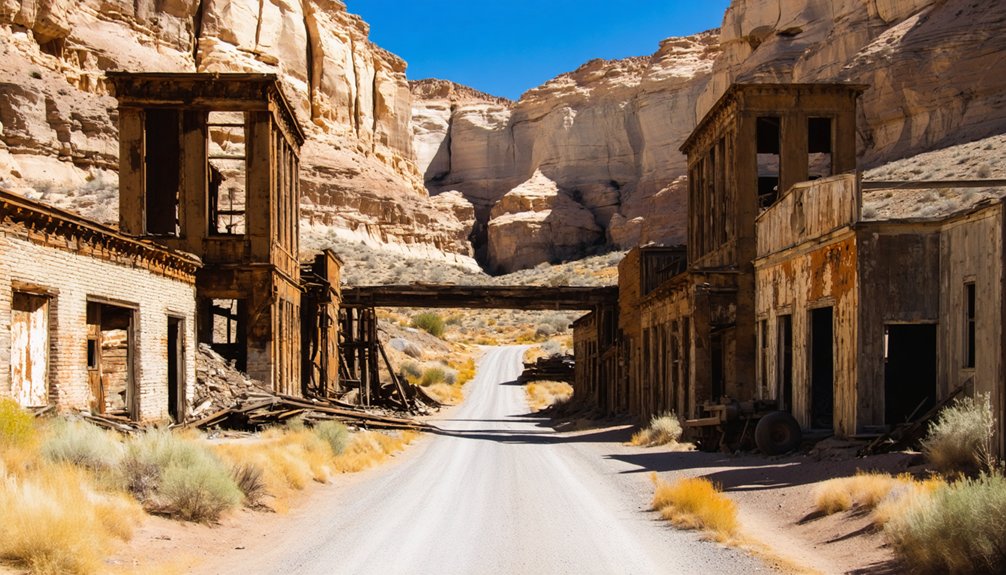
Once a thriving coal-mining and railroad town in Carbon County, eastern Utah, Castle Gate earned its name from two towering sandstone walls near the mouth of Price Canyon that resembled a castle’s gate — a dramatic natural entrance to a town built entirely around extraction and industry.
The Denver and Rio Grande Western Railroad shaped its bones, while coal companies controlled nearly every aspect of daily life.
You’ll find no ghost town preservation effort here, no museums or restored storefronts. Castle Gate existed to serve industry, and industry eventually erased it.
What remains lives in local folklore — Butch Cassidy’s legendary 1897 robbery, a catastrophic 1924 mine explosion, and the layered stories of immigrant miners who built something meaningful in a place that no longer stands.
How to Get to Castle Gate From Salt Lake City
Sitting about 90 miles southeast of Salt Lake City, Castle Gate is an easy half-day drive through terrain that tells its own geological story before you even arrive. Take I-15 south, then head east on US-6 through Price Canyon, where sandstone walls close in around you like history tightening its grip.
- Pull over at scenic viewpoints along Price Canyon — the rock formations earned this place its name.
- Stop in Helper or Price for local cuisine that reflects Carbon County’s working-class, multicultural mining roots.
- Let the landscape slow you down; you’re retracing railroad corridors that once carried coal and outlaws alike.
You’re not just driving to a ghost town. You’re following the same route that built and buried Castle Gate.
Best Time of Year to Visit Castle Gate
Castle Gate doesn’t have a bad season, but it has a right one. Late spring through early fall gives you the clearest views of Price Canyon’s dramatic walls and the sandstone formation that named the town. You’ll read the landscape the way early railroad surveyors did — wide open, unobstructed, and sharp.
Avoid January and February if you want mobility. Snow narrows canyon roads and limits your ability to move freely around the site.
September hits differently. The light angles low across the canyon, and the silence feels earned. You’re standing where mining technology once shook the earth and railroad history carved a corridor through the Wasatch Plateau. That kind of weight deserves good weather, clear skies, and enough daylight to let it settle.
The 1924 Mine Disaster That Shaped Castle Gate
On March 8, 1924, Castle Gate Mine No. 2 exploded with a force that killed 172 miners in one of the deadliest coal disasters in U.S. history.
You’ll find that the victims represented a striking cross-section of the world — Greeks, Italians, Japanese, Scots, Belgians, and Americans all lost their lives beneath the same canyon walls.
That single catastrophic morning reshaped the town’s identity forever, casting a shadow that ultimately outlasted Castle Gate itself.
The Explosion’s Deadly Toll
What began as an ordinary morning shift on March 8, 1924, turned Castle Gate Mine No. 2 into a mass grave within seconds. The explosion erased lives that railroad development and mining innovations had drawn from across the world — men who’d traded their homelands for steady wages in Carbon County’s coal seams.
When you stand at this site today, remember what vanished here:
- 172 to 173 miners died, making this one of America’s deadliest coal disasters
- Greeks, Italians, Japanese, Scots, Belgians, and Americans — entire communities lost fathers and sons simultaneously
- No warning reached them — the blast came without mercy, without time
This wasn’t just an industrial accident. It was a community-wide wound that Castle Gate never fully survived.
Nationalities Lost Underground
When the dust settled on March 8, 1924, Carbon County’s grief crossed languages and oceans. Greeks, Italians, Japanese, Scots, Belgians, Austrians, and Americans all perished together inside Castle Gate Mine No. 2. These men had traveled far, chasing opportunity in Utah’s coal corridor, and the mountain took them equally.
You can’t walk this site today without feeling that weight. Cultural preservation efforts have kept their stories alive, even after the town itself vanished. Their nationalities remind you that Castle Gate wasn’t simply an American story — it was a global one compressed into a canyon.
The environmental impact of that explosion reshaped the surrounding community permanently. Understanding who died here transforms this ghost town stop from a curiosity into something genuinely worth your time.
Disaster’s Lasting Legacy
The explosion that tore through Castle Gate Mine No. 2 on March 8, 1924 didn’t just kill 172 miners — it effectively killed the town’s future. The disaster reshaped how the world viewed the brutal cost of mining history and railroad development built on human sacrifice.
When you stand at that site today, let these truths anchor you:
- 172 men never returned home — fathers, brothers, sons from a dozen nations
- The railroad kept running, carrying coal while families buried their dead
- No ruins mark the spot — the town was dismantled, erasing visible grief
Castle Gate’s legacy isn’t in what survived. It’s in what vanished — lives, community, and memory swallowed by industry’s relentless hunger. You owe it that reckoning.
What’s Left at the Castle Gate Site Today?
If you make the drive to Castle Gate today, you won’t find much to anchor the eye. The original townsite was dismantled in 1974, its residents relocated and its buildings erased. No historical artifacts mark where miners once lived, and no modern remnants hint at the community that thrived here for nearly a century.
Coal-loading facilities replaced the homes, and the railroad infrastructure that once fueled the town now serves purely industrial ends.
What remains is the landscape itself — Price Canyon’s sandstone walls still frame the corridor exactly as they did when Butch Cassidy rode through. The rock formation that gave Castle Gate its name endures.
Come with your eyes open and your expectations grounded in history, not preserved ruins. The story lives in the terrain.
Butch Cassidy’s Bold Castle Gate Train Robbery
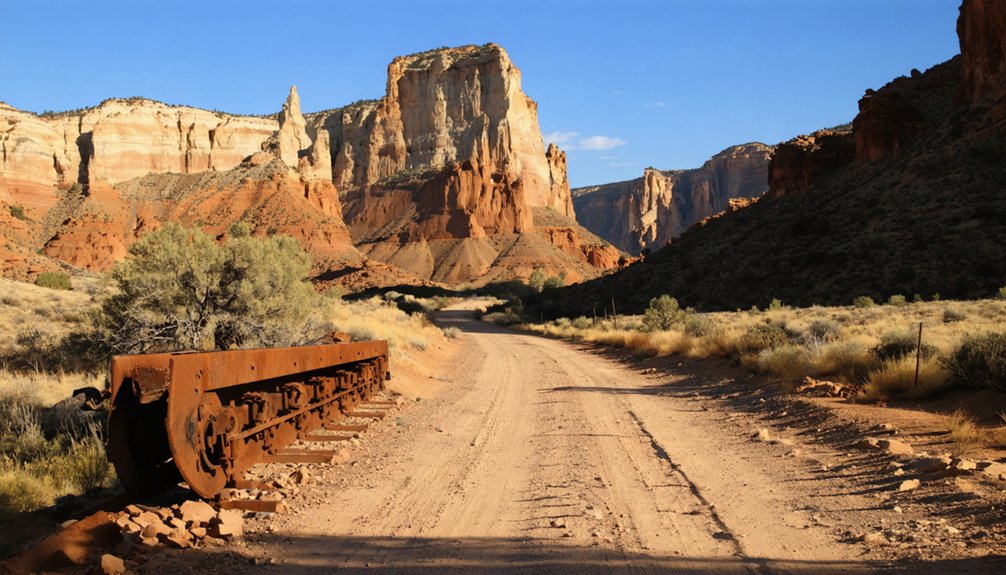
On April 21, 1897, Butch Cassidy and his partner Elzy Lay pulled off one of the boldest daylight robberies in the American West, hitting a Pleasant Valley Coal Company payroll carrier right at the Castle Gate railroad station. They walked away with $7,000 in gold — miners’ wages earned through brutal mining techniques underground.
Local folklore keeps this moment alive, reminding you that Castle Gate’s story runs far deeper than coal dust.
Standing at this site stirs something real:
- The audacity of two men outrunning an entire system built to control workers and profits
- Gold meant for men risking their lives daily underground
- A reminder that freedom, however brief, was worth chasing here
You can almost feel the urgency still hanging in Price Canyon’s air.
Ghost Towns and Mining Sites Worth Visiting Near Castle Gate
Castle Gate isn’t the only ghost haunting Carbon County‘s canyon corridors. Neighboring Spring Canyon shelters several crumbling settlements where you can walk streets that once buzzed with miners and rail workers. Standardville and Rains sit close enough for a single afternoon loop, offering raw glimpses of ghost town preservation without polished interpretive signs getting in your way.
Head into Helper for the Western Mining and Railroad Museum, where restored mining technology — headframes, drilling rigs, lamp cages — tells the mechanical story behind the region’s coal empire. Then push south toward Price, your practical base for fuel, food, and maps.
Carbon County rewards the curious traveler willing to read a landscape rather than a placard. Every canyon here holds another buried chapter worth uncovering.
A One-Day Castle Gate Road Trip Itinerary From Salt Lake City
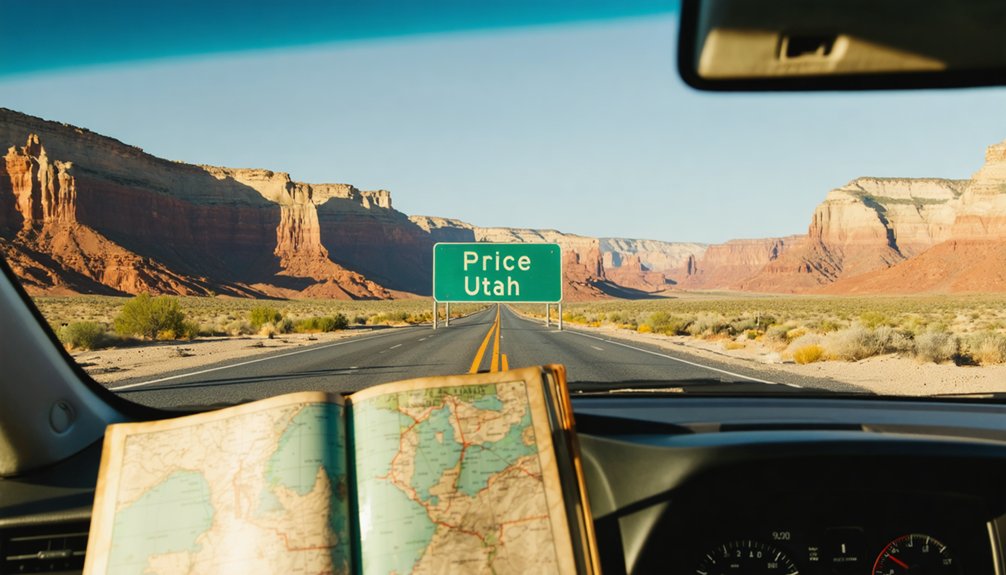
Start your morning early and head southeast out of Salt Lake City, covering roughly 90 miles through the Wasatch foothills before Price Canyon narrows dramatically around you.
Once you reach the Castle Gate site, you won’t find standing buildings, but you’ll stand where 172 miners died in 1924 and where Butch Cassidy made off with $7,000 in gold in 1897. That weight of history is worth the stop.
Morning Departure From Salt Lake
Since Castle Gate sits roughly 90 miles southeast of Salt Lake City, you can leave downtown by 7 or 8 a.m. and reach the site well before noon. Take I-15 south, then cut east on US-6 through Price Canyon, where the road narrows between ancient sandstone walls.
Stop along the way for:
- Local cuisine in Helper or Price — grab fuel and a hot meal before the canyon swallows the open road
- Wildlife observation through Price Canyon’s early morning light, when deer and hawks move freely along the ridgelines
- A quiet arrival at the Castle Gate site, where the silence hits harder once you know 172 miners never walked out
The drive itself sets the tone — raw, industrial, and unforgettable.
Exploring The Castle Gate Site
When you pull off US-6 near the mouth of Price Canyon, you’re standing where a full coal town once operated — mines, rail yards, company housing, and all. Nothing marks the spot dramatically. Coal-loading facilities replaced the homes, and the original townsite vanished by the 1970s.
But the canyon walls still frame the scene exactly as they did when early mining technology carved wealth from these seams beginning in 1886.
Walk the area with purpose. Local legends cluster here — Butch Cassidy robbed a coal company payroll at this very railroad station in 1897, escaping with $7,000 in gold. The 1924 mine explosion killed 172 men. Both stories echo through the silence.
Bring the history with you, because the landscape won’t hand it to you.
Heading Back To Salt Lake
The drive back to Salt Lake City covers roughly 90 miles northwest on US-6, retracing the same railroad corridor that once hauled Castle Gate’s coal to market. You’re following the same route that shaped Utah’s mining history and railroad heritage — a landscape still marked by canyon walls and coal dust memory.
Let the road remind you what you’ve witnessed:
- 172 miners never walked out of Castle Gate Mine No. 2 on March 8, 1924
- A town that once thrived under company control vanished completely by 1974, leaving nothing behind
- Butch Cassidy rode these same corridors and escaped into open country — just like you’re doing now
That freedom you feel on the highway? Castle Gate’s people never quite had it.
Frequently Asked Questions
Was Castle Gate Ever Featured in Movies or Television Productions?
The knowledge base doesn’t confirm Castle Gate’s filming history, but its historical significance is undeniable. You’ll find a vanished town rich with outlaw raids and mining tragedy, making it worthy of any adventurous explorer’s journey.
Are There Any Guided Tours Available at the Castle Gate Site?
You won’t find formal tour packages or local guides waiting at Castle Gate—the site’s virtually vanished! You’ll need to explore independently, armed with historical knowledge, letting Carbon County’s haunted coal-mining legacy fuel your adventurous, freedom-driven spirit.
Did Castle Gate Have Its Own School or Church Buildings?
Castle Gate’s local community likely supported schools and churches, reflecting its historical significance as a company town. Sadly, you won’t find those structures today—they’ve vanished, leaving only the wild canyon air and echoing memories behind.
Is There Parking Available Near the Castle Gate Historic Site?
With 172 miners lost here in 1924, Castle Gate carries heavy history. Parking options along Highway 6 let you stop freely, though visitor facilities are minimal — you’re exploring raw, untamed industrial heritage on your own adventurous terms.
Were Any Miners Rescued Alive After the 1924 Castle Gate Explosion?
The records don’t confirm any survivors rescued alive. The 1924 explosion overwhelmed all rescue operations instantly, claiming 172 miners. You’d find no mining safety measures proved adequate against that catastrophic blast deep within Castle Gate Mine No. 2.
References
- https://en.wikipedia.org/wiki/Castle_Gate
- https://www.intermountainhistories.org/items/show/480
- https://www.utahlifemag.com/blog/post/castle-gate
- https://exhibits.usu.edu/exhibits/show/utahpostcard/castle-gate–ut
- https://en.wikipedia.org/wiki/List_of_ghost_towns_in_Utah
- https://www.facebook.com/GhostTownsOftheAmericanWest/posts/castle-gate-utah-once-a-busy-coal-mining-town-in-carbon-county-took-its-name-fro/1028300506003958/
- https://www.youtube.com/watch?v=6hQYqwjpMDo
- https://kids.kiddle.co/Castle_Gate
- https://www.familysearch.org/en/wiki/Coal_City
- http://troytaylorbooks.blogspot.com/2013/03/the-utah-horror.html