West Tocoi sits quietly along the St. Johns River in Clay County, Florida, where a Timucua village once thrived and 19th-century travelers once rushed toward Saint Augustine. You’ll find weathered remnants of ferry landings and rail terminus artifacts reclaimed by nature. Visit between November and March for mild weather and atmospheric river mists. Pack sturdy boots, a camera, and your sense of adventure — there’s far more to this forgotten place than first meets the eye.
Key Takeaways
- West Tocoi sits along the St. Johns River in Clay County, Florida, accessible via U.S. Highway 17 heading south from Green Cove Springs.
- Visit between November and March for mild temperatures, reduced insects, and atmospheric morning river mists enhancing the ghost town experience.
- Pack waterproof boots, paper maps, a GPS device, and a camera, as terrain is uneven and cell service is unreliable.
- Nature has reclaimed most structures, leaving scattered ferry landing remnants, rail terminus artifacts, and weathered historical markers to discover.
- Northeast Florida hosts over 240 abandoned settlements, making West Tocoi an ideal starting point for a broader ghost town road trip.
What (and Where) Is West Tocoi, Florida?
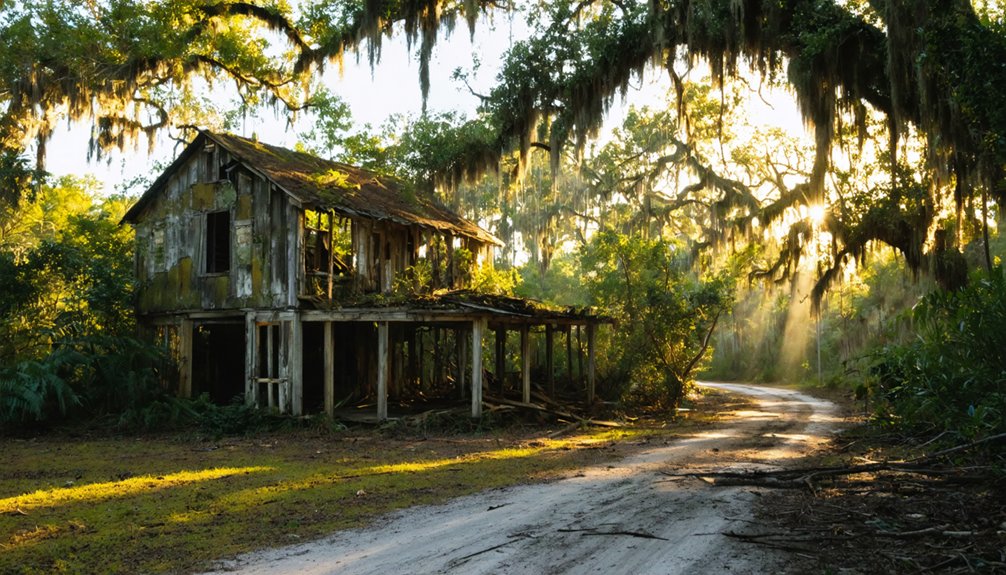
Tucked along the west bank of the St. Johns River in Clay County, Florida, West Tocoi sits just south of present-day Green Cove Springs at coordinates 29°51.0’N, 81°37.4’W.
You won’t find it on modern maps, but its West Tocoi history runs deep. The name traces back to a Timucua village called Tocoi, positioned on the river’s eastern shore, where the word itself meant “shallow crossing.”
That crossing would later define the town’s entire purpose. Homesteaders arrived in the mid-1800s, following Civil War’s end, and built a community around rail, ferry, and river commerce.
For nearly three decades, West Tocoi thrived as a legitimate transportation hub before progress quietly erased it from the landscape.
Today, it’s a ghost town worth finding.
How Flagler’s Railroad Turned West Tocoi Into a Ghost Town
West Tocoi’s rise and fall are almost inseparable, because the same railroad ambition that built it eventually buried it. For nearly three decades, this small river town thrived as an essential transfer point, funneling travelers from rail to ferry and onward to Saint Augustine.
It gave freedom-seekers an escape from dangerous ocean voyages and opened Florida’s interior to adventurers and naturalists alike.
Then came Flagler’s impact.
Henry Flagler’s expanding railroad network made West Tocoi’s ferry crossings and terminal operations completely unnecessary.
Transportation evolution doesn’t wait for small towns to catch up, and West Tocoi couldn’t adapt. Once passengers had faster, more direct routes south, the boarding houses emptied, the ferries stopped running, and the town quietly disappeared into the Florida wilderness.
What’s Left to See at West Tocoi Today?
When you visit West Tocoi today, you’ll find nature has quietly swallowed most of what once made this town hum with commerce and travelers.
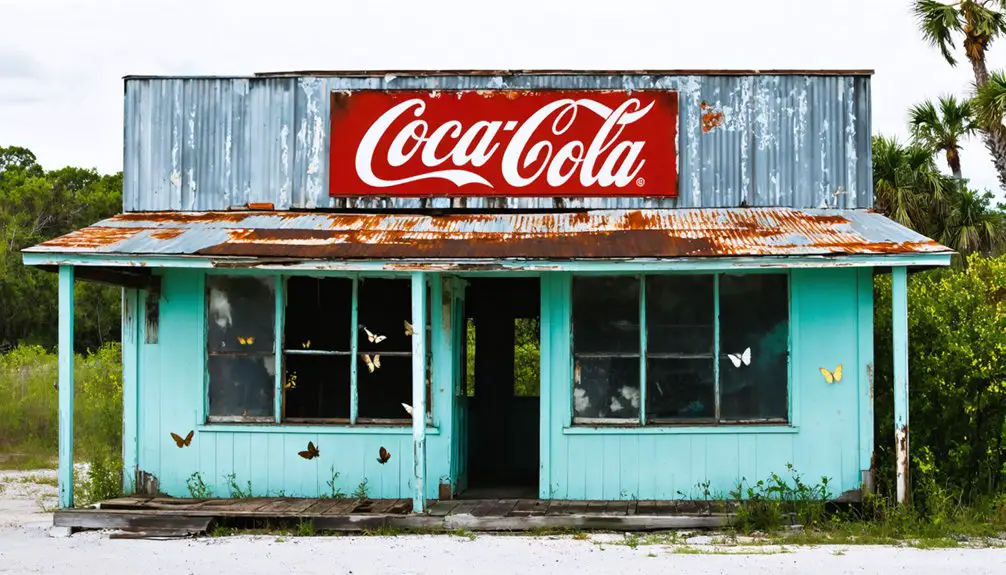
Along the riverbank, scattered remnants hint at the old ferry landings and rail terminus that once connected Florida’s early tourists to Saint Augustine’s promised shores.
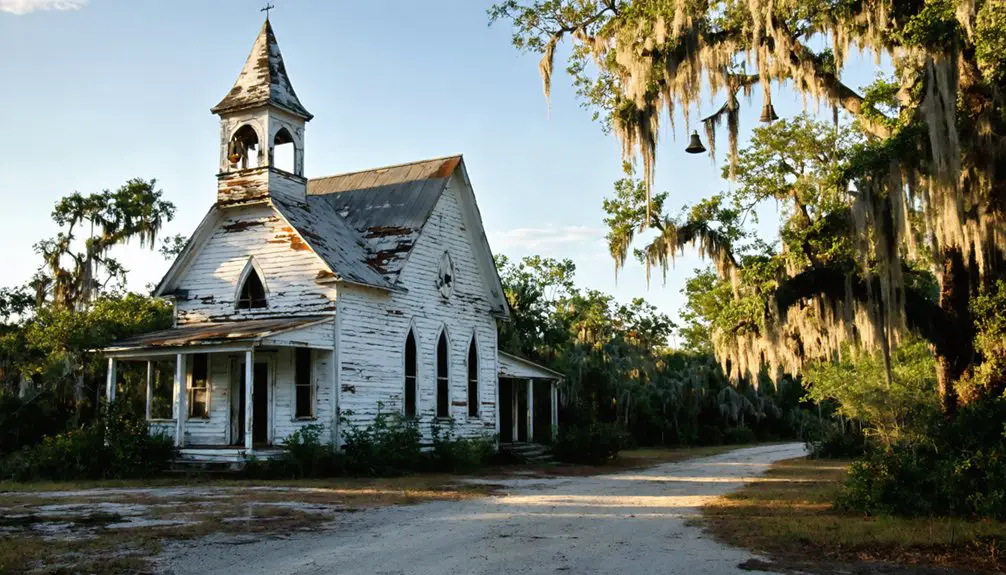
Historical markers stand as modest sentinels against the encroaching palmetto and pine, reminding you that this overgrown landscape once pulsed with the ambitions of a 19th-century boomtown.
Remnants Along the Riverbank
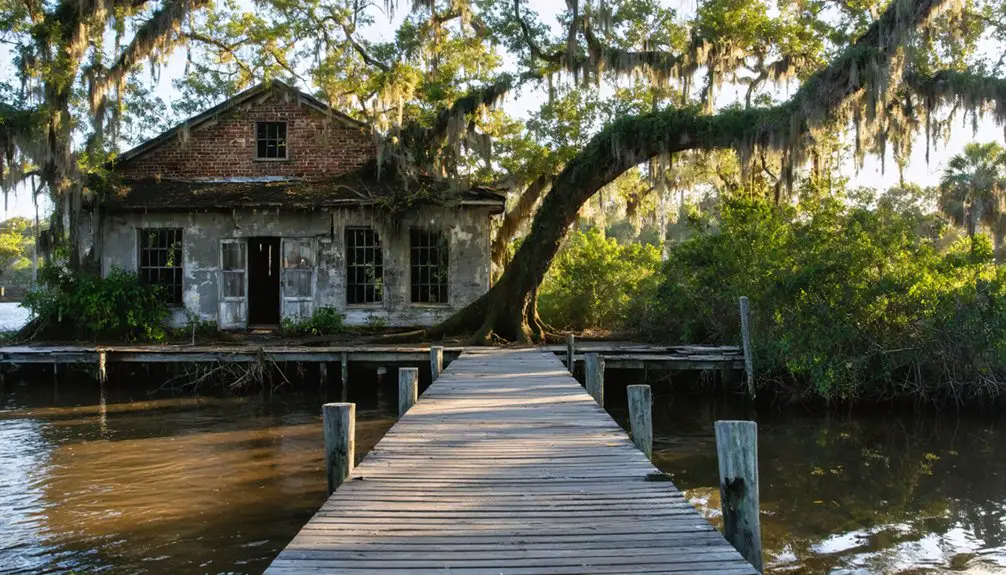
Though little remains of West Tocoi’s once-bustling terminal, the St. Johns River still whispers its history to those willing to listen.
Walk the riverbank and you’ll find scattered riverbank artifacts — weathered timber fragments, crumbling foundations, and subtle earthwork depressions marking where rail lines and ferry docks once defined daily life.
These remnants carry genuine historical significance, connecting you to a vanished world where steamboats crossed the river and locomotives hauled passengers toward Saint Augustine.
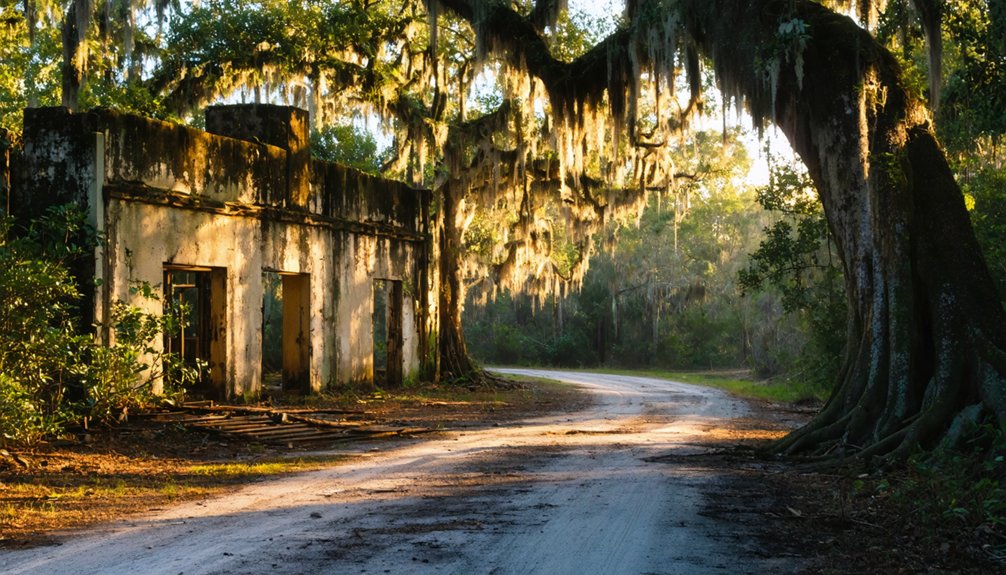
The Spanish moss-draped trees that shade these grounds stood witness to the town’s rise and fall.
You won’t find interpretive signs or manicured paths here.
What you’ll discover instead is raw, unfiltered history — the kind that rewards curious travelers who seek places forgotten by modern maps but remembered by the land itself.
Historical Markers and Monuments
Few formal markers acknowledge West Tocoi’s outsized role in Florida’s transportation history, but what survives tells a quiet, compelling story.
You won’t find grand monuments here — ghost town markers rarely come with fanfare. Instead, you’ll discover subtle evidence of historical significance embedded in the landscape itself.
Look for weathered signage along nearby county roads referencing the old rail corridor and river crossing. Regional historical societies have documented the site, and some interpretive materials reference West Tocoi within broader St. Johns River heritage contexts.
Clay County’s historical records preserve what the land no longer shows clearly.
Bring your curiosity and a willingness to read between the lines. The most powerful monuments here aren’t cast in bronze — they’re written in overgrown terrain, forgotten coordinates, and a name that still echoes a Timucua word meaning “shallow crossing.”
Nature Reclaims the Settlement
Beyond the weathered signage and county records, the land itself becomes your most honest guide to what West Tocoi once was — and what it’s quietly becoming again.
Nature’s reclamation here is total and unhurried. Scrub oak and palmetto push through what were once packed-earth roads, and the forgotten pathways that carried railroad passengers toward Saint Augustine now disappear beneath thick Florida undergrowth.
You’ll notice the St. Johns River still moves patiently along the western tree line, indifferent to the commerce it once supported. Spanish moss drapes everything, softening the silence.
Walk carefully and you’ll sense the bones of the settlement beneath your feet — old grades, subtle depressions, the ghost of a terminal that once connected a continent.
The wilderness doesn’t mourn West Tocoi. It simply continues.
How to Get to West Tocoi

Getting to West Tocoi requires just two turns off U.S. Highway 17. Head south from Green Cove Springs, then turn east toward the St. Johns River.
You’ll find yourself tracing the same corridor that once carried railroad passengers and frontier adventurers toward Saint Augustine’s shores.
The coordinates 29°51.0’N, 81°37.4’W will guide your GPS, but the real navigation happens when you feel the landscape shift.
Clay County’s quiet backroads carry the historical significance of a forgotten transportation empire, where local legends of ferry crossings and fire-breathing locomotives still echo through the tree line.
Park where the pavement thins. Walk toward the river.
You’re not just visiting a ghost town — you’re reclaiming a piece of American history that modern highways deliberately forgot.
The Best Time of Year to Visit West Tocoi
You’ll find West Tocoi most rewarding between November and March, when Florida’s mild winters echo the same tourist season that once drew adventurers south by rail to escape harsher northern climates.
Summer’s brutal heat and humidity make exploring an overgrown ghost town punishing, so cooler months give you the clearest skies and most comfortable conditions for poking around a forgotten landscape.
Spring and fall offer a middle ground, though Florida’s unpredictable afternoon storms can turn a quiet road trip into a muddy scramble fast.
Ideal Visiting Seasons
Florida’s mild winters make the cooler months from November through March the sweet spot for exploring West Tocoi’s overgrown remnants.
Temperatures stay comfortable, the humidity drops, and the vegetation thins enough to reveal traces of the town’s historical significance hidden beneath decades of Florida growth.
You’ll avoid the brutal summer heat and the thick mosquito clouds that make ghost town exploration nearly unbearable from June through September.
Spring and fall offer decent shoulder-season windows, though afternoon storms can roll in unpredictably.
November holds a special poetic weight here.
West Tocoi was perfectly positioned as a tourist terminal by November 1884, its brief moment of glory tied directly to that season.
Visiting then connects you to the town’s living memory in a way no other month quite matches.
Weather Considerations For Explorers
Humidity, heat, and biting insects define the wrong season here just as surely as cool breezes and thinning brush define the right one. Florida’s weather patterns punish summer explorers with suffocating heat, relentless mosquitoes, and afternoon thunderstorms that arrive without negotiation.
You’ll want to plan around seasonal variations that make Northeast Florida genuinely hospitable.
November through March delivers everything you’re after — mild temperatures, reduced insect activity, and vegetation that’s thinned enough to reveal what summer conceals. The same tourist season that once drew 19th-century adventurers to West Tocoi’s boarding houses still holds true today.
Cool mornings reward early arrivals. Pack layers, sturdy boots, and insect repellent regardless of season. The river and the silence belong to those who plan wisely.
Peak Tourist Season Timing
November has always held a certain magic in Northeast Florida, and West Tocoi is no exception. Historically, November marked the official start of tourist season, when travelers escaped brutal northern winters and arrived seeking adventure among the region’s tourist attractions and local legends.
Plan your visit around these three peak advantages:
- November through February delivers mild temperatures, ideal for exploring overgrown settlement remnants without oppressive humidity.
- Early morning arrivals reveal atmospheric river mists along the St. Johns, evoking the steamboat era.
- Weekday visits guarantee solitude, letting you absorb the ghost town’s silence authentically.
You’ll feel history breathing through the landscape when crowds stay thin and the river moves quietly beside forgotten ground.
Other Florida Ghost Towns Near West Tocoi Worth the Detour
While you’re already making the drive out to West Tocoi, Clay County’s surrounding stretch of Northeast Florida rewards curious travelers with several ghost towns that echo the same boom-and-bust story of railroad ambition and forgotten commerce.
Florida claims more ghost towns east of the Mississippi than any other state — upwards of 240 abandoned settlements scattered across the peninsula. That number means your ghost town exploration doesn’t have to end at West Tocoi’s overgrown riverbank.
Florida holds more ghost towns east of the Mississippi than any other state — over 240 abandoned settlements waiting to be found.
Northeast Florida’s backroads connect you to communities that share West Tocoi’s historical significance, each shaped by the same forces: Henry Flagler’s railroad ambitions, shifting trade routes, and sudden economic collapse.
Pack a paper map, fuel up before leaving Green Cove Springs, and let the forgotten settlements guide your route south.
What to Bring When Visiting West Tocoi’s Abandoned Site
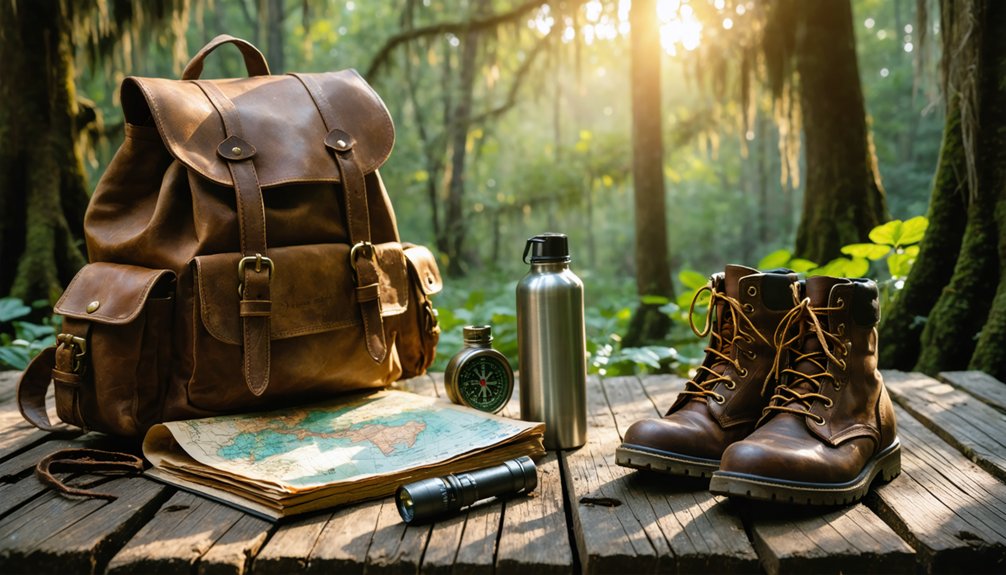
Visiting an overgrown riverbank settlement like West Tocoi demands more preparation than most day trips.
Ghost town exploration here means traversing dense Florida vegetation, uneven terrain, and unpredictable weather along the St. Johns River.
You’re walking ground where 19th-century commerce once roared — treat it accordingly.
Pack these three essentials before you leave:
- Sturdy waterproof boots — marshland edges get deceptively soft near the riverbank
- Paper maps and GPS — cell service disappears where modern infrastructure never reached
- Camera and notebook — historical preservation starts with documenting what you witness
You’re not just sightseeing.
You’re connecting with something real that progress erased.
Come equipped, stay respectful, and leave nothing but footprints behind.
Frequently Asked Questions
Is West Tocoi on Private Property or Open to the Public?
The knowledge doesn’t confirm ghost town access details, so you’ll want to verify private property boundaries before visiting. Research local Clay County records to guarantee you’re exploring West Tocoi’s forgotten history legally and respectfully.
Are There Any Guided Ghost Town Tours Available Near West Tocoi?
No dedicated ghost town tours exist for West Tocoi, but you’ll find nearby St. Augustine and Green Cove Springs offer historical significance through guided heritage tours that’ll awaken your spirit of discovery and feed your freedom-loving soul.
What Native American Tribe Originally Inhabited the West Tocoi Area?
Straight from the horse’s mouth — you’ll discover the Timucua tribe called this land home, leaving behind rich Timucua Heritage and Cultural Artifacts that echo freedom’s whispers across West Tocoi’s ancient, untamed grounds.
Can You Camp Overnight Near the West Tocoi Ghost Town Site?
The knowledge doesn’t confirm overnight camping at West Tocoi’s ghost town site. You’ll want to check local camping regulations beforehand. Nearby state parks offer camping amenities, letting you relive Florida’s untamed, adventurous past under starlit skies.
Are There Any Local Historians or Groups Preserving West Tocoi’s History?
Like scrolling through forgotten timelines, you’ll find Clay County’s historical preservation societies and local folklore enthusiasts actively keeping West Tocoi’s spirit alive—connect with Green Cove Springs’ historical groups to uncover their passionate storytelling efforts.
References
- https://gerrysmarina.net/abandoned-towns-along-florida-waterways/
- https://www.claytodayonline.com/stories/flaglers-railroad-killed-clay-countys-west-tocoi
- https://www.metrojacksonville.com/forum/index.php?topic=12685.0
- https://www.ghosttowns.com/states/fl/westtocoi.html
- https://en.wikipedia.org/wiki/List_of_ghost_towns_in_Florida