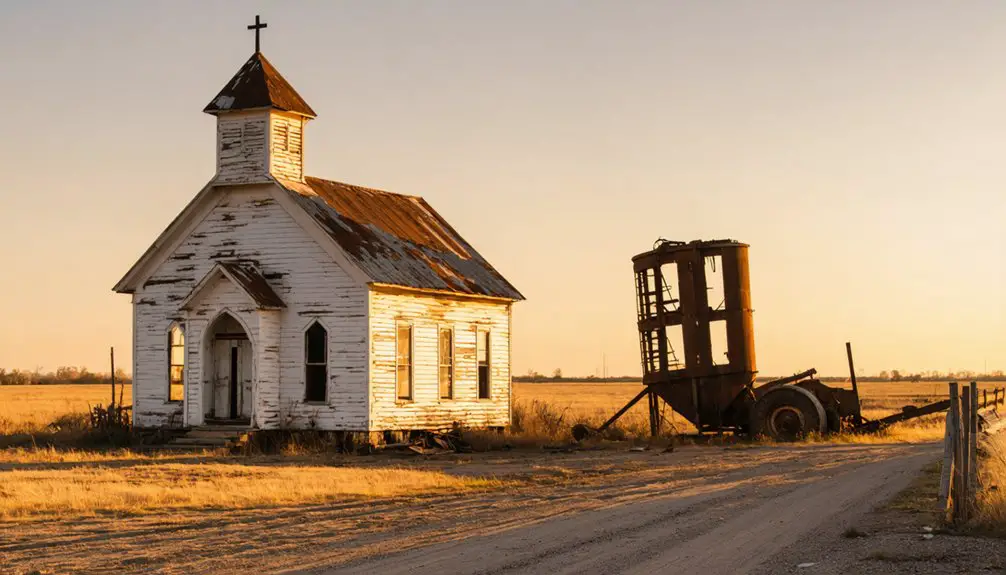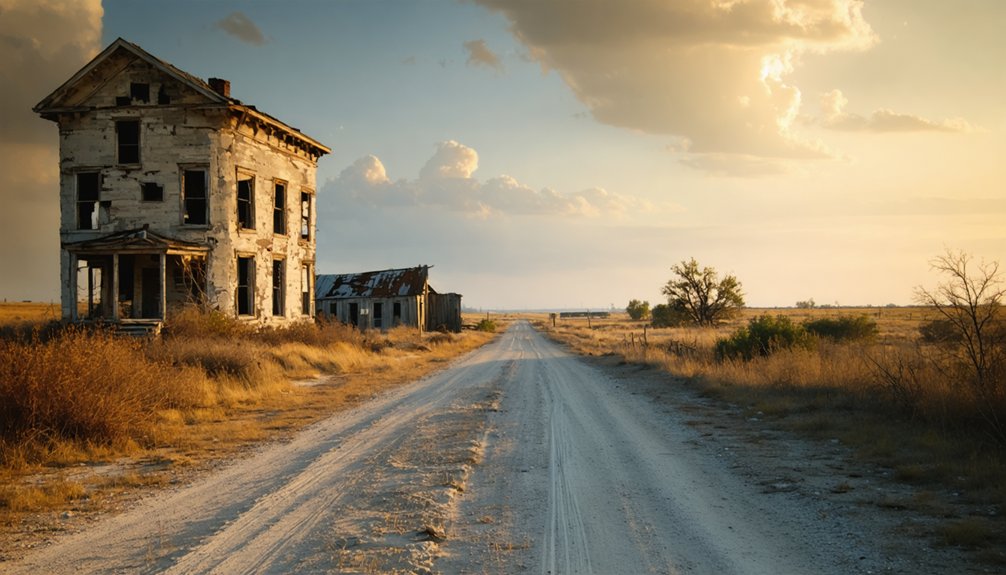
Planning a ghost town road trip to Chahta Tamaha, Oklahoma means tracing the legacy of a Choctaw Nation capital that once stood proudly in Bryan County. You won’t find crumbling buildings or eerie streets here — just open land, a preserved cemetery, and the quiet weight of history beneath your feet. Start at Oklahoma City’s Oklahoma History Center for essential context before heading to the site. There’s much more to uncover about this remarkable place.
Key Takeaways
- Chahta Tamaha, meaning “Choctaw Town,” served as the Choctaw Nation’s capital from 1863 to 1883 in Bryan County, Oklahoma.
- No standing structures remain; visitors will find only open land, foundations, and a cemetery at this archaeological preservation site.
- Begin your trip at Oklahoma History Center in Oklahoma City, where the “Chahte Tamaha” historical marker provides essential background context.
- Nearby ghost towns Doaksville, Tuskahoma, and Tamaha make excellent additions, offering broader insight into Choctaw Nation’s shifting political geography.
- Use historical maps, satellite imagery, OKGenWeb, and Oklahoma Historical Society records to navigate and locate the unmarked site accurately.
What Was Chahta Tamaha, Oklahoma?
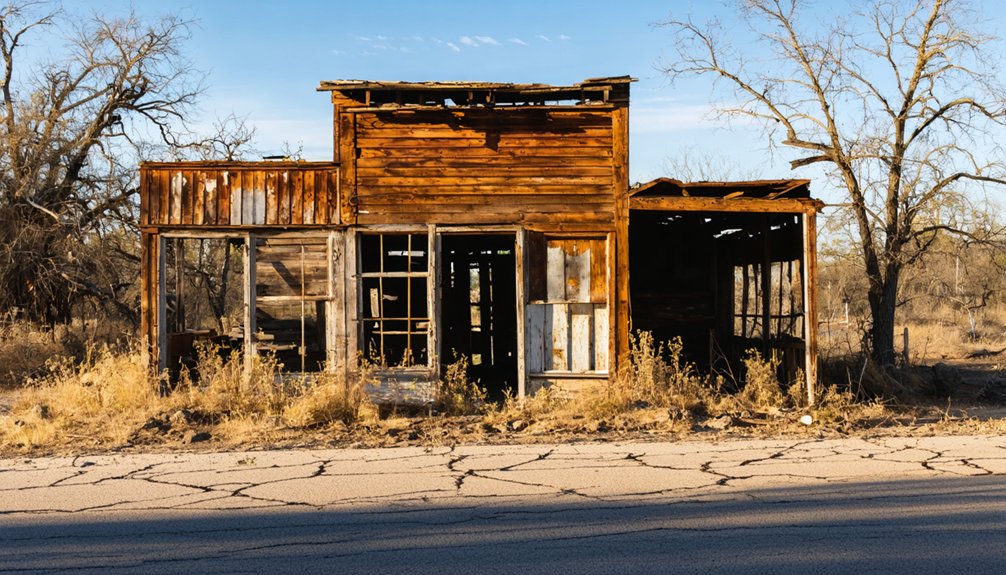
Nestled in what’s now Bryan County, Oklahoma, Chahta Tamaha — meaning “Choctaw Town” — once served as the capital of the Choctaw Nation from 1863 to 1883, making it a cornerstone of Choctaw governance during the Nation’s final decades before Oklahoma statehood.
The town grew around the Armstrong Academy, a Protestant missionary school that educated Choctaw boys from 1844 to 1861.
When you visit today, you’ll find no buildings, no streets, and no population — just open land and the quiet weight of history. Ghost town preservation efforts document what once stood here, keeping Choctaw culture alive through archaeological records and historical markers.
Though the capital transferred to Tuskahoma in 1882, Chahta Tamaha remains a powerful symbol of the Choctaw Nation’s resilience and self-governance.
Where Exactly Is the Chahta Tamaha Ghost Town Site?
If you’re planning a road trip to the Chahta Tamaha ghost town site, you’ll find it in Bryan County, Oklahoma, though nothing remains of the original town or Armstrong Academy.
The actual historical marker commemorating the site sits at the Oklahoma History Center, 800 Nazih Zuhdi Drive, Oklahoma City, at coordinates 35° 29.62′ N, 97° 29.843′ W.
You can visit the marker along the Red Red Red Journey pathway on the History Center grounds, making it your most accessible entry point into this forgotten chapter of Choctaw history.
Bryan County, Oklahoma Location
Three things define the Chahta Tamaha ghost town site today: its location in Bryan County, Oklahoma, its complete absence of standing structures, and its status as a purely archaeological preservation site.
You won’t find buildings, streets, or recognizable landmarks when you visit. What you’ll find instead is open land carrying centuries of Choctaw heritage beneath its surface.
Bryan County history runs deep here. This was once the political heart of the Choctaw Nation, serving as its capital from 1863 to 1883.
The Armstrong Academy once stood on these grounds, educating Choctaw boys before closing in 1861. Today, only foundations and a cemetery remain.
If you’re drawn to places where history lives quietly underground rather than loudly above it, this site delivers exactly that experience.
Geographic Coordinates Explained
Knowing the land holds the history is one thing—knowing exactly where that land sits is another. The historical marker for Chahta Tamaha rests at 35° 29.62′ N, 97° 29.843′ W, placing it within the Oklahoma History Center grounds at 800 Nazih Zuhdi Drive, Oklahoma City.
Coordinates interpretation matters here—these aren’t the ghost town’s original Bryan County coordinates, but rather the marker’s location. Understanding that distinction carries real geographic significance for your road trip planning.
You’ll visit the marker in Oklahoma City first, absorbing the documented history, then drive south into Bryan County to walk the actual land where the Choctaw capital once stood.
Let the coordinates guide you deliberately—you’re steering through two separate but equally meaningful pieces of the same story.
Accessing The Historical Marker
The historical marker for Chahta Tamaha sits inside the Oklahoma History Center at 800 Nazih Zuhdi Drive, Oklahoma City—a straightforward stop before you head south toward Bryan County, where the actual ghost town site lies.
You’ll find the marker along the Red Journey pathway on the History Center grounds. It’s titled “Chahte Tamaha” and documents the town’s historical significance as the Choctaw Nation’s capital from 1863 to 1883.
Once you’ve absorbed the context here, point your vehicle toward Bryan County, where the ghost town’s archaeological site awaits.
No buildings stand there—just open land, foundations, and a cemetery. Visiting the marker first gives you essential background, making your time at the actual site far more meaningful and grounded in real Choctaw history.
What’s Left to See at Chahta Tamaha Today?
When you visit the Chahta Tamaha site today, you won’t find standing buildings or bustling streets — only an archaeological preservation area where foundations and a cemetery quietly mark what once stood.
If you want a tangible connection to the town’s history, you’ll need to swing by the Oklahoma History Center in Oklahoma City, where a historical marker on the Red Red Red Journey pathway documents the site’s significance.
While you’re planning your route, consider extending your road trip to nearby Choctaw ghost towns like Doaksville and Tuskahoma, which together tell the broader story of the Choctaw Nation’s shifting capitals before Oklahoma statehood.
Archaeological Preservation Site Remains
Although Chahta Tamaha once bustled as the political heart of the Choctaw Nation, you won’t find much standing when you visit the site today.
What remains is an archaeological preservation site where ongoing preservation efforts protect what lies beneath the surface. Archaeological findings have revealed foundations and remnants that tell the story of a once-thriving capital and its connection to the Armstrong Academy.
The academy’s cemetery still exists, offering a quiet, sobering reminder of those who lived and learned here. No buildings, roads, or infrastructure survive above ground, so you’ll need to engage your imagination.
The Armstrong Academy Site’s listing on the National Register of Historic Places guarantees the land receives the protection it deserves, keeping this piece of Choctaw history accessible for future explorers like you.
Historical Marker Location
One tangible remnant of Chahta Tamaha’s story sits not at the ghost town site itself but at the Oklahoma History Center in Oklahoma City, where a historical marker titled “Chahte Tamaha” stands along the Red Red Red Journey pathway on the center’s grounds.
You’ll find it at 800 Nazih Zuhdi Drive, Oklahoma City, OK 73105. The marker captures the town’s historical significance as a former Choctaw Nation capital and documents the deeper layers of Choctaw culture tied to this forgotten place.
If you’re planning your road trip, consider building in a stop here first. Reading the marker before visiting Bryan County gives you essential context, transforming what might feel like an empty field into a powerful, meaningful landscape worth your time and attention.
Related Ghost Towns Nearby
Visiting Chahta Tamaha today means accepting that the town itself has vanished entirely — no buildings, no streets, no ruins rising from the earth to reward your curiosity.
Yet the Choctaw legacy doesn’t end here. Nearby ghost towns extend your road trip and deepen your ghost town insights considerably.
Doaksville, once a thriving Choctaw settlement in Choctaw County, offers another vanished chapter worth exploring.
Tuskahoma, which received the capital designation from Chahta Tamaha in 1882, still exists as an unincorporated community and carries its own historical weight.
Tamaha, now situated in Haskell County, rounds out the picture beautifully.
Together, these sites map the shifting political geography of the Choctaw Nation before Oklahoma statehood claimed everything.
Travel them in sequence, and the full story emerges.
Which Nearby Choctaw Ghost Towns Are Worth Visiting?
If you’re drawn to the rich history of Chahta Tamaha, several nearby Choctaw ghost towns deserve a spot on your road trip itinerary. Each site deepens your understanding of Choctaw heritage and the nation’s resilience before Oklahoma statehood.
Start with Doaksville in Choctaw County, once a thriving trade hub and now a quiet archaeological site.
Doaksville in Choctaw County once buzzed with trade — today, it endures as a hauntingly still archaeological site.
Then head to Tuskahoma, which inherited the capital role from Chahta Tamaha in 1882 and still stands as an unincorporated community worth exploring.
Finally, visit Tamaha in Haskell County, another former Choctaw settlement with a compelling past.
These ghost towns collectively trace the migration of political power across the Choctaw Nation, giving you a fuller, more rewarding picture of this remarkable chapter in Oklahoma history.
How Do You Get to the Chahta Tamaha Site in Bryan County?
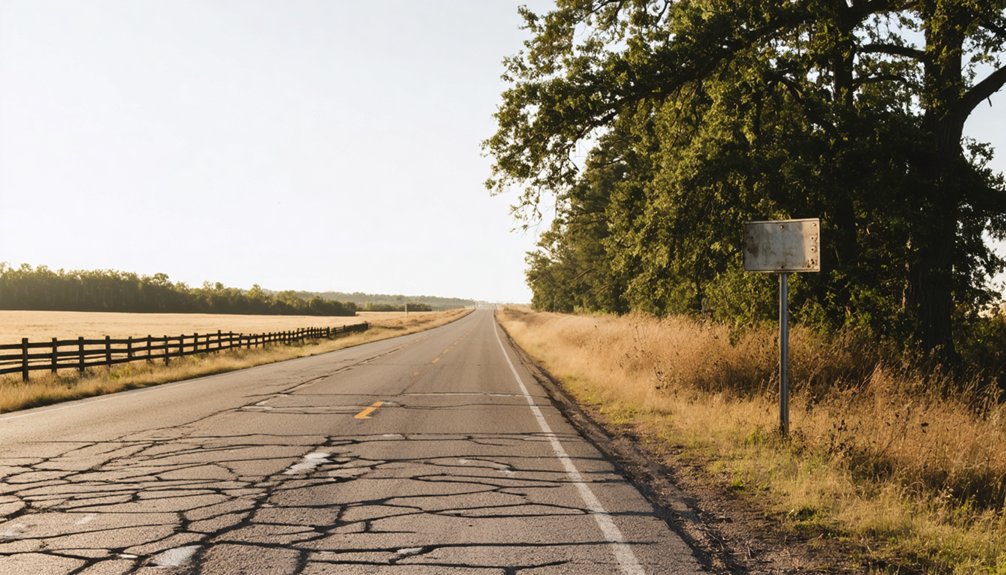
After plotting those nearby Choctaw ghost towns on your map, you’ll want to pin down Chahta Tamaha itself, which sits in Bryan County in southeastern Oklahoma.
No standing structures remain, so smart road trip planning keeps your ghost town exploration on track.
Use these navigation tips before heading out:
- Target Bryan County, Oklahoma as your regional destination
- Cross-reference historical maps with current satellite imagery to locate the archaeological site
- Visit the Oklahoma History Center at 800 Nazih Zuhdi Drive, Oklahoma City, OK 73105 to study the “Chahte Tamaha” marker first
- Consult the Oklahoma Historical Society’s ghost town records for precise site guidance
- Check OKGenWeb and RootsWeb databases for additional location documentation
Arriving informed makes the difference between a frustrating detour and a genuinely rewarding historical discovery.
Can You Actually Visit the Chahta Tamaha Site?
Whether you can actually visit Chahta Tamaha depends on what you expect to find when you get there.
If you’re chasing ghost town experiences with crumbling buildings and eerie streetscapes, you’ll leave disappointed. Nothing stands here — no structures, no roads, no visible remnants of the former Choctaw capital.
What you do get is open land carrying enormous historical significance. The site functions as an archaeological preservation area, meaning the ground itself holds the story. You’re free to visit, but treat it with respect — this isn’t a tourist attraction, it’s a protected cultural landscape.
For a more tangible connection, head to the Oklahoma History Center in Oklahoma City, where the “Chahte Tamaha” historical marker documents the town’s legacy clearly and accessibly.
Frequently Asked Questions
Why Did Chahta Tamaha Lose Its Capital Status to Tuskahoma?
Chahta Tamaha lost its capital status when an 1882 Act transferred power to Tuskahoma, ending its historical significance. You’ll discover that town development shifted as Choctaw leaders sought a more strategically suitable governing seat.
What Protestant Missionaries Operated the Armstrong Academy From 1844 to 1861?
The knowledge doesn’t specify which Protestant missionaries ran Armstrong Academy, but you’ll find their Missionary Influence shaped profound Educational Impact for Choctaw boys from 1844 to 1861, giving them tools to pursue their own freedom and self-determination.
Is the Armstrong Academy Site Listed on the National Register of Historic Places?
Want to explore a site with real Historic Significance? Yes, the Armstrong Academy is listed on the National Register of Historic Places, so you’ll discover a preserved piece of Choctaw history waiting for your adventure!
What Was Chahta Tamaha Commonly Called by Local Residents Historically?
You’ll find that locals historically called it “Choctaw Town” — a name woven into Chahta Tamaha history and local legends. It’s a straightforward identity that reflects the community’s deep Choctaw roots and cultural pride.
Which Databases Document Chahta Tamaha as an Official Oklahoma Ghost Town?
You’ll find Chahta Tamaha’s historical significance documented in both RootsWeb and OKGenWeb databases, where they’ve preserved its cultural heritage by officially listing it among Oklahoma’s recognized ghost towns for history enthusiasts like you to explore.
References
- https://en.wikipedia.org/wiki/Chahta_Tamaha
- https://en.wikipedia.org/wiki/List_of_ghost_towns_in_Oklahoma
- https://en.wikipedia.org/wiki/Category:Ghost_towns_in_Oklahoma
- https://en.wikipedia.org/wiki/Doaksville
- https://mike-boucher.com/wordpress/?page_id=244
- https://www.okhistory.org/publications/enc/entry?entry=DO002
- http://files.usgwarchives.net/ok/bryan/history/historic.txt
- https://oklahomainthecivilwar.blogspot.com/2009/12/battle-sites-and-ghost-towns.html
- http://sites.rootsweb.com/~oktttp/ghost_towns/ghost_towns.htm
- https://okgenweb.net/books/other/ghost.htm