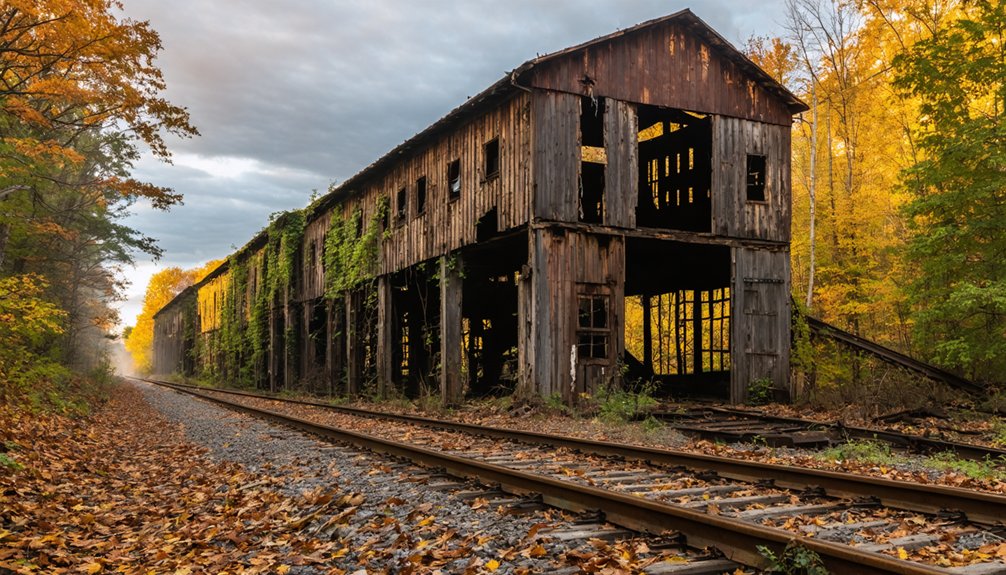
You’ll find Chesapeake’s haunting remnants in Warren County, accessible via State Roads 26, 28, or 63 from major Indiana routes. George Rapp’s 1814 utopian settlement has vanished into windswept fields, leaving only a cemetery and scattered foundations as silent witnesses. Book your tour through tours@travelhag.com, wear sturdy boots for uneven terrain, and prepare for absolute solitude among the cornfields. Combine your visit with Crawfordsville’s Rotary Jail Museum or Warren’s restored railroad depot to create an all-encompassing journey through Indiana’s forgotten communities and the stories that shaped them.
Key Takeaways
- Access Chesapeake via State Road 26, U.S. Route 41, or State Road 28 through Warren County’s scenic agricultural heartland.
- Book tours in advance at tours@travelhag.com with mandatory prepayment; tours operate rain or shine with limited cancellations.
- Wear appropriate footwear for uneven terrain and dress in weather-appropriate layers for outdoor exploration.
- Visit the cemetery northeast of town as the primary remaining landmark amid windswept fields and complete solitude.
- Extend your trip to nearby Rotary Jail Museum, Salamonie Depot, or Clay Township Museum for more historical sites.
Discovering the History of Chesapeake’s Pioneer Settlement
In 1814, George Rapp’s vision of a perfect society brought 800 German Lutheran separatists down the Ohio River on flatboats, their belongings packed tight and their dreams even tighter. The Rapps’ motivations for settling Indiana centered on religious freedom and communal living away from persecution.
They carved Harmonie from wilderness along the Wabash River, transforming marshland into productive farmland. The original Harmonie community’s farming techniques were revolutionary—followers drained swamps, planted orchards, raised sheep, and built mills that powered their self-sufficient economy. Within a decade, they’d constructed brick buildings, a church, and infrastructure that would outlast their stay.
When Rapp departed in 1825, he left behind a blueprint for utopian living that still whispers through Indiana’s backroads today.
Getting There: Routes and Directions to Warren County
Reaching Warren County requires traversing a network of state highways that slice through Indiana’s western agricultural heartland, where cornfields stretch to the horizon and small towns mark the miles. You’ll find multiple scenic driving opportunities depending on your starting point.
Three Primary Routes:
- State Road 26 – Cuts east from Illinois through Pine Village, offering notable landmarks along route including historic grain elevators and century-old farmsteads
- U.S. Route 41 – Runs north-south through county center, crossing the Wabash River with panoramic valley views
- State Road 28 – Connects West Lebanon to Williamsport across northern Warren County
State Road 63 provides your fastest connection to Terre Haute, sixty miles south. The four-lane divided highway bypasses river towns, though State Road 263’s business route delivers authentic small-town character worth exploring.
What Remains: Exploring the Abandoned Town Site
When you arrive at Brisco’s former location, you’ll find little more than windswept fields and the persistent whisper of what once was.
Windswept fields and fading whispers mark the spot where Brisco once thrived, now reclaimed by prairie silence.
The cemetery northeast of the original site stands as the primary keeper of untold stories of Chesapeake’s fate, its weathered stones nestled among trees at County Road 850 North and 600 West. You’ll discover remnants of the town’s economic decline scattered across this low hill—foundations buried beneath prairie grass, perhaps a forgotten roadbed.
The landscape offers absolute solitude; no structures interrupt the horizon. It’s a place where imagination fills the gaps, where you’re free to wander without barriers or tourist crowds.
This emptiness tells its own story—one of communities that faded when commerce moved elsewhere, leaving only silence and memory.
Essential Gear and Preparation for Your Visit
Exploring an abandoned settlement requires more thoughtfulness than you’d bring to a typical tourist attraction, though Chesapeake’s guided ghost walks handle much of the logistics for you. Booking tour reservations starts at tours@travelhag.com, where you’ll secure one of 25 spots ($25 adults, $20 children). Prepayment’s mandatory—no cash transactions on-site.
Your preparation checklist:
- Footwear for uneven terrain – You’ll cover 1.5 miles through historic districts and graveyards over 90 minutes
- Weather-appropriate layers – Nighttime Eastern Shore conditions demand bundling up, with rain gear for typical precipitation
- Childcare vigilance – You’re responsible for supervising kids throughout the walk
Packing suitable attire means comfortable clothing for standing the entire duration. Tours proceed rain or shine, canceling only for dangerous ice, snow, or thunderstorms. You’ll remain outside all properties, experiencing ghost lore through storytelling rather than paranormal investigations.
Warren County Museums and Historic Landmarks Worth Exploring
Beyond Chesapeake’s ghostly tales, Warren County’s surrounding region preserves Indiana’s frontier past through distinctive museums that’ll transport you from Victorian elegance to bizarre incarceration methods.
The Rotary Jail Museum in nearby Crawfordsville showcases the only operational rotating jail left worldwide. Built in 1882, this two-story marvel’s architectural features of rotary jail include cells that revolve around a central tower—you’ll experience the mechanism firsthand during guided tours.
Meanwhile, preservation efforts for Salamonie Depot continue at Warren’s restored train station, where railroad artifacts reveal the Salamonie Valley’s transportation heritage through free exhibits.
Venture further to Richmond’s Gaar Mansion, where you’ll discover a 3,000-year-old Egyptian mummy alongside racing memorabilia. The Clay Township Museum rounds out your historical exploration with Underground Railroad connections that remind you freedom’s always been worth fighting for.
Building a Multi-Stop Indiana Ghost Town Itinerary
Your exploration of Warren County’s historic treasures sets the perfect foundation for a broader adventure across Indiana’s vanished settlements. You’ll find approximately 41 ghost towns scattered across the Hoosier State, each revealing abandoned infrastructure and former community structures that tell forgotten stories.
As you delve deeper into these eerie remnants, keep an eye out for the captivating ghost stories of Upper Squabble that locals have cherished for generations. Each tale adds a layer of intrigue, connecting you to the souls who once inhabited these spaces. Prepare yourself for surprising revelations as you uncover the mysteries behind the lives and legends of the past.
Southern Indiana offers your best route for clustered exploration:
- Follow the 35-minute Adventures with Roger video mapping 13 visitable ghost towns from Marengo’s cave system to pitch-black 1,731-foot tunnels
- Prioritize English, Youngs Creek, and Greenville where Masonic lodges and pioneer cemeteries stand among deteriorating buildings
- Use ArcGIS StoryMaps and historical society resources to locate hauntingly beautiful ruins ranging from recent abandonment to decades-old decay
Northern sites like Brisco’s one-room schoolhouse and Chatterton’s single remaining mailbox require separate excursions due to their dispersed locations.
Best Practices for Exploring Private and Overgrown Areas
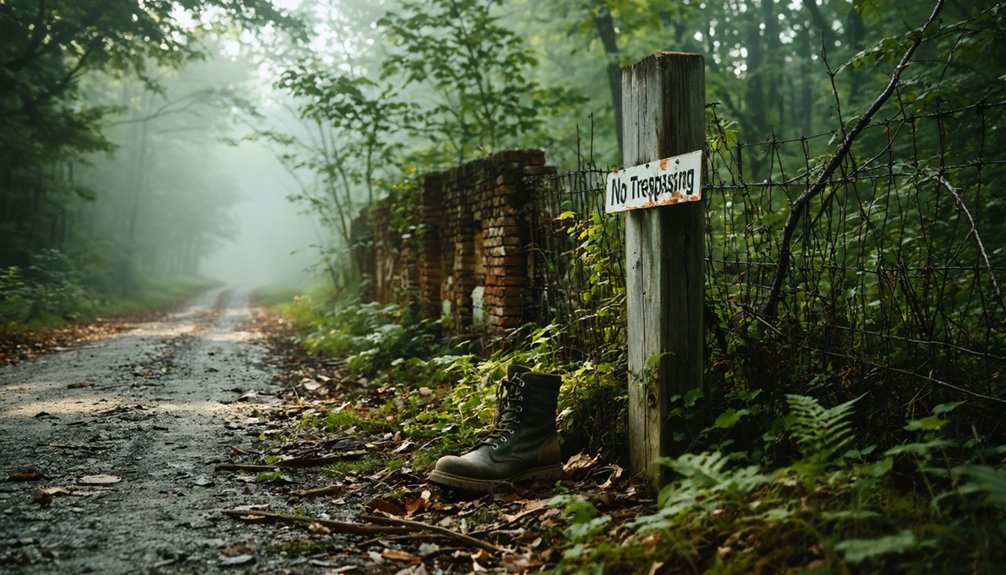
You’ll find that many of Indiana’s ghost towns exist on private land or lie hidden beneath decades of invasive growth, making permission and preparation non-negotiable parts of your journey. I’ve learned through experience that property owners often welcome respectful visitors who ask first—a simple conversation can transform a locked gate into an invitation to explore history firsthand.
Before you push through waist-high weeds or duck under fallen timbers in Chesapeake, remember that these forgotten places survived this long because explorers treated them as time capsules worth preserving, not obstacles to conquer.
Respect Property Boundaries Always
When wandering through abandoned sites like Chesapeake, it’s tempting to duck under a sagging fence or push through overgrown brush to get closer to a crumbling foundation—but that impulse can land you in serious legal trouble. Indiana takes trespassing seriously, with legal consequences ranging from Class A misdemeanors to felony charges depending on the property type.
Watch for these boundary markers:
- Purple paint marks on trees (8-inch horizontal lines, 3-5 feet high) or posts—they’re legally equivalent to “No Trespassing” signs
- Posted signage at property edges, which fulfill owner obligations to warn visitors
- Fencing or natural boundaries that clearly delineate private land
Respecting these boundaries protects both your freedom and the property owner’s rights. You’ll avoid fines up to $5,000 while still experiencing Chesapeake’s haunting atmosphere from public areas.
The thick brambles and waist-high weeds surrounding Chesapeake’s skeletal structures aren’t just inconvenient—they’re concealing hazards that’ve tripped up more than one ardent explorer. Stick to existing paths rather than forging new routes through the undergrowth—you’ll minimize ecological impact while avoiding hidden debris. I learned this the hard way when my boot caught a submerged steel beam concealed beneath tangled vines.
Prepare for wildlife encounters by moving deliberately and listening for rustling sounds that signal movement ahead. Evaluate environmental hazards before stepping: test each footfall on wooden surfaces compromised by moisture, and bypass any area where vegetation obscures the ground completely. Your compass and marked path guarantee you’ll find your way back when the forest closes in around these forgotten remnants of Indiana’s past.
Document Without Disturbing Sites
Capturing Chesapeake’s decaying grandeur requires more than just a camera—it demands respect for the fragile boundary between preservation and exploitation. When you’re capturing timeless scenes among weathered storefronts and collapsing homesteads, your footsteps matter as much as your lens settings. Maintaining photographic integrity means documenting authenticity without becoming part of the site’s deterioration.
Your documentation strategy:
- Shoot from stable positions using tripods on hard surfaces—avoid leaning against crumbling walls or disturbing artifacts like rusted tools and century-old bottles for better angles.
- Embrace natural light during golden hour rather than using flash that reveals your presence and potentially damages light-sensitive materials inside structures.
- Photograph everything in place—no rearranging furniture, clearing cobwebs, or pocketing souvenirs that tell Chesapeake’s story.
Your restraint preserves discovery for future explorers.
Frequently Asked Questions
Are There Any Guided Tours Available for Chesapeake Ghost Town?
No formal guided tours exist for Chesapeake’s abandoned remains. You’ll need to create your own adventure through self-guided walking tours. Check nearby visitor information centers for historical context and maps before exploring this forgotten Indiana settlement independently.
What Caused Chesapeake to Become Abandoned in the First Place?
Economic decline and population migration gradually emptied Chesapeake as farming opportunities dried up. You’ll find that residents simply drifted away when better prospects emerged elsewhere, leaving behind whispers of Indiana’s forgotten frontier dreams and abandoned homesteads.
Can I Camp Overnight Near the Chesapeake Site?
You’ll find limited camping options directly at Chesapeake’s site due to local regulations enforcement. Your best bet’s exploring nearby state parks or private campgrounds where you can pitch your tent freely without hassle from authorities patrolling abandoned areas.
Are There Any Documented Ghost Sightings or Paranormal Activity Reported?
The paranormal veil lifts thin around Chesapeake Bay’s haunted locations, where you’ll discover supernatural encounters like Point Lookout’s mysterious lights and Confederate soldier sightings. Grace Sherwood’s witchcraft legacy and Cellar House’s six-fingered handprints await your investigation.
What Permits or Permissions Are Needed to Photograph the Remnants?
You’ll need Indiana DNR’s commercial photography permit ($100 annually) if shooting professionally. Contact the property manager beforehand since restricted areas exist, and they’ll determine if permitted photography applies based on your intended use and potential impact.