Planning a ghost town road trip from Clayton, Minnesota rewards you with more abandoned history than you’d expect. You’re positioned near Otter Tail County’s forgotten railroad stops and failed settlements, with sites like Cyrus and Blue Hill within easy reach. Time your drive between August and October for the best road conditions and visibility. Pack offline maps, sturdy shoes, and a camera — and everything you need to explore smarter is just ahead.
Key Takeaways
- Clayton serves as a base for exploring Otter Tail County ghost towns, including nearby abandoned railroad stops and failed settlements like Cyrus and Blue Hill.
- Expect a range of remains, from preserved 19th-century buildings to crumbling foundations, and wear sturdy shoes while bringing a camera.
- Map your route before leaving using county historical records, hybrid satellite maps, and backup paper maps for areas with poor cell service.
- The best time to visit is August through October, when roads are dry, daylight is long, and vegetation is less overgrown.
- Pack water, snacks, a first-aid kit, offline maps, and insect repellent, and fill your gas tank before departing Clayton.
Ghost Towns Worth Driving To Near Clayton, Minnesota
Because Clayton sits in Otter Tail County‘s lake-dotted, farm-road landscape, you’re already positioned at the edge of some of Minnesota’s most rewarding ghost-town country.
Former railroad stops, failed farming settlements, and faded mill towns dot the region, making rural exploration here genuinely worthwhile.
Former railroad stops and failed settlements leave their marks here — enough to make every back road worth turning down.
You’ll find abandoned landmarks scattered across county roads that rarely appear on standard travel maps. Some sites offer nothing more than a weathered sign or a crumbling foundation, while others preserve enough structure to reward a longer stop.
Towns like Cyrus and Blue Hill sit within reasonable driving distance, giving your route real shape.
Pack offline navigation, keep your schedule loose, and treat each turn as part of the discovery. This stretch of Minnesota rewards curiosity more than rigid planning.
What Each Ghost Town Actually Looks Like Today
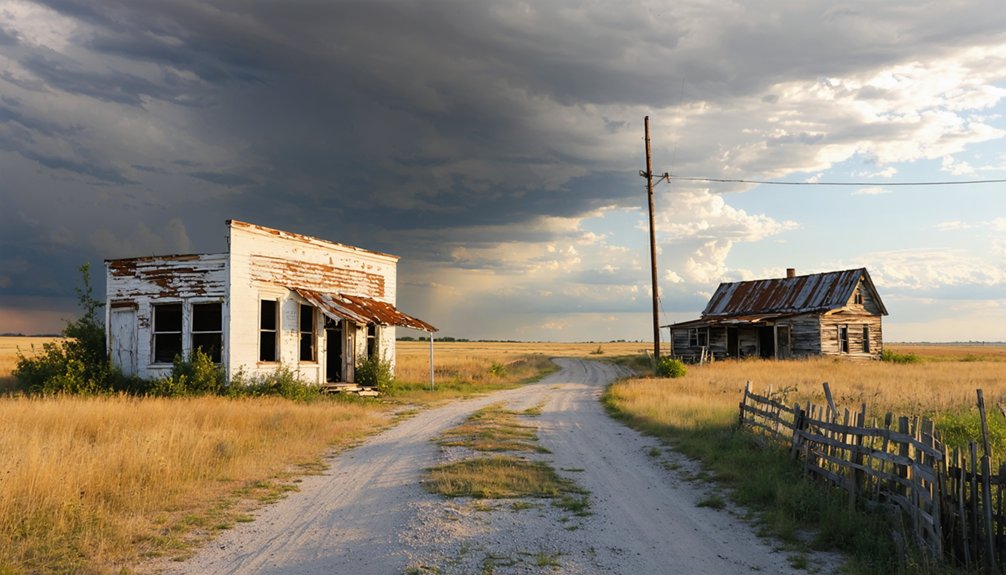
When you pull up to most ghost towns near Clayton, you’ll find a spectrum of what remains — from crumbling stone foundations and weathered timber frames to little more than a rusted sign at a county road intersection.
Some sites, like Forestville, reward your drive with preserved buildings that let you walk through a nearly intact 19th-century townscape, while others leave you squinting at a historical marker half-hidden in roadside grass.
Knowing what to expect at each stop helps you plan your time and keeps the disappointment low when a once-thriving settlement turns out to be nothing but a name on a map.
Preserved Buildings And Ruins
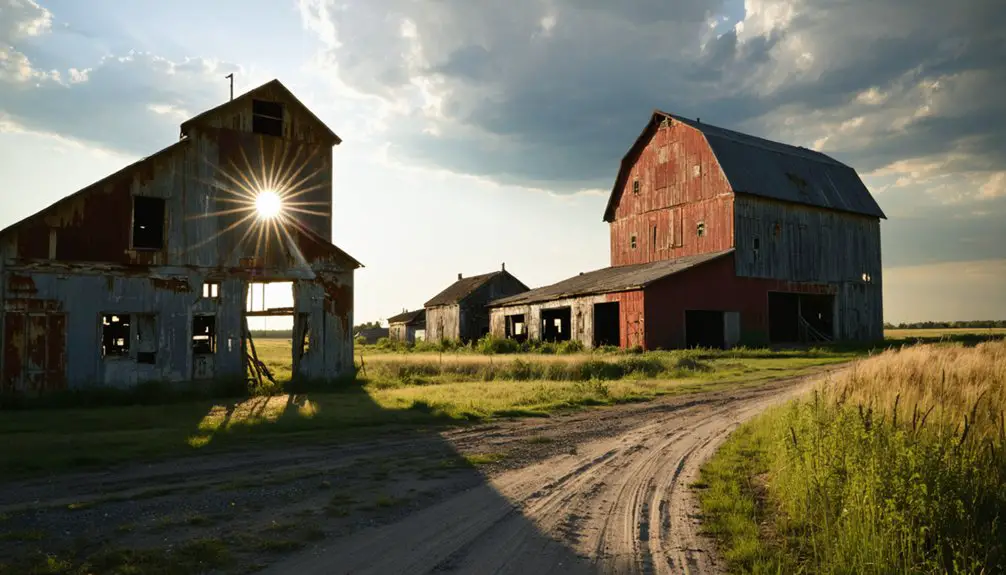
Though no two ghost towns look exactly alike, what you’ll find at each stop along this route ranges from hauntingly preserved storefronts to little more than a weathered foundation swallowed by tall grass.
Forestville stands out with its preserved structures still intact, giving you a rare window into 19th-century rural life. You’ll walk through buildings that carry genuine historical significance, where general store shelves and mill equipment remain largely untouched.
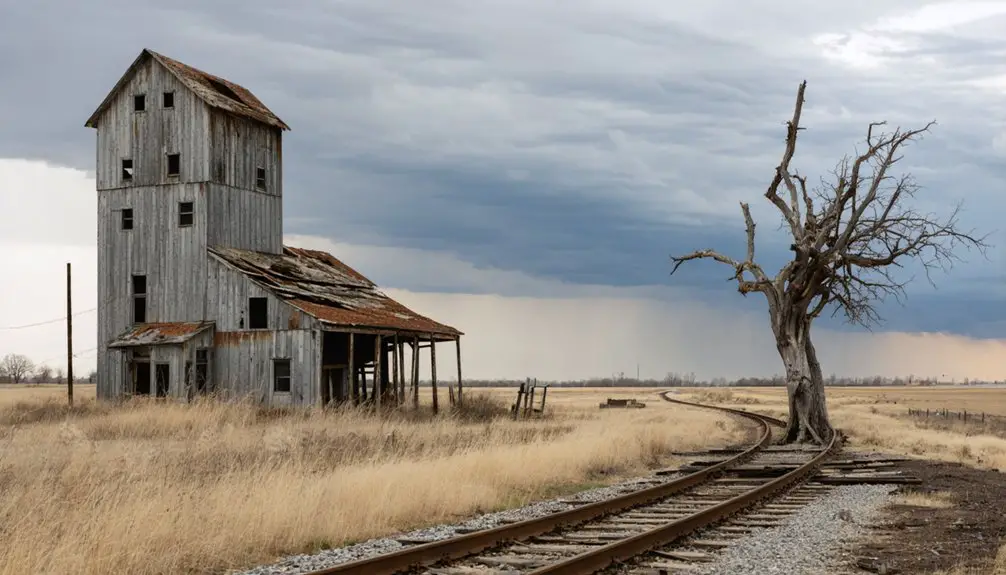
Other stops offer rougher experiences — crumbling stone walls, collapsed rooflines, and cellar holes hidden beneath overgrowth. Some former railroad towns leave only a grain elevator skeleton standing against a flat horizon.
Bring your camera, wear sturdy shoes, and expect uneven terrain. Each site tells a different story, and that contrast is exactly what makes the drive worthwhile.
Signs And Historical Markers
Not every ghost town rewards you with crumbling walls or standing structures. Sometimes, a single road sign or a small historical marker is all that remains.
Don’t underestimate the signage significance — that weathered post planted at a rural intersection tells you a community once thrived there, people built homes, raised families, and eventually left.
Marker meanings run deeper than simple identification. They connect you to forgotten railroad stops, failed settlements, and lives erased by time. You’ll want to slow down, pull over, and actually read them.
Some markers include founding dates, population peaks, or reasons for abandonment. These details transform an otherwise empty stretch of gravel road into something genuinely moving.
Bring a camera, because these quiet remnants disappear faster than most people realize.
How to Build Your Ghost Town Route Before Leaving Clayton
Before you leave Clayton, take time to map your full route so you’re not guessing at intersections when cell service drops.
Research each stop in advance by checking county historical society records, travel blogs, and road-trip forums that flag which sites still have visible ruins versus bare foundations.
Once your route is set, download offline maps for every county you’ll cross, because rural west-central Minnesota roads can go quiet in a hurry.
Map Your Route First
Planning your ghost town route before you leave Clayton saves you from wasting hours backtracking on unmarked gravel roads in Otter Tail County. Pull up a hybrid satellite map and mark each stop using coordinates pulled from Minnesota historical society records or dedicated ghost town legends databases.
You’ll quickly spot which sites cluster together, letting you chain stops efficiently.
Print a backup paper map, because cell service drops without warning during rural exploration across west-central Minnesota’s lake country. Organize your stops geographically rather than alphabetically, cutting unnecessary mileage between foundations, old railroad grades, and historical markers.
Note road surface conditions too — some county roads turn to loose gravel or mud after rain. A mapped route gives you freedom to roam confidently rather than guessing at every unmarked crossroads.
Research Each Stop
Three solid sources will anchor your ghost town research before you pull out of Clayton: the Otter Tail County Historical Society, the Minnesota Historical Society’s online collections, and regional ghost town databases that cross-reference old railroad plat maps with current satellite imagery.
Cross-check each stop across all three sources. One might confirm a foundation still exists; another might flag private land access. Rural history rarely organizes itself neatly, so contradictions between sources signal spots worth calling ahead about.
For serious ghost town exploration, download offline maps before leaving Clayton’s cell coverage zone. Note each site’s road surface, whether paved, gravel, or seasonal dirt.
Build a ranked list of must-see stops versus optional detours, so unexpected road closures don’t derail your entire day.
Download Offline Maps
Once your ranked stop list is ready, the next move is locking that route into your phone before Clayton’s cell signal fades behind you.
Map applications like Google Maps and Maps.me let you download entire regions for offline navigation, meaning gravel backroads and forgotten railroad towns stay visible even when service drops to zero. Open your chosen app, search the region you’re covering, and save the full download before you leave the driveway.
Pin each ghost town stop manually so you’re not fumbling through menus at a rural crossroads. Charge a portable battery pack the night before, because offline navigation drains power faster than normal browsing.
With your route saved and your battery full, you’re free to chase Minnesota’s abandoned history without depending on a single cell tower.
Why Clayton, Minnesota Anchors This Drive Well
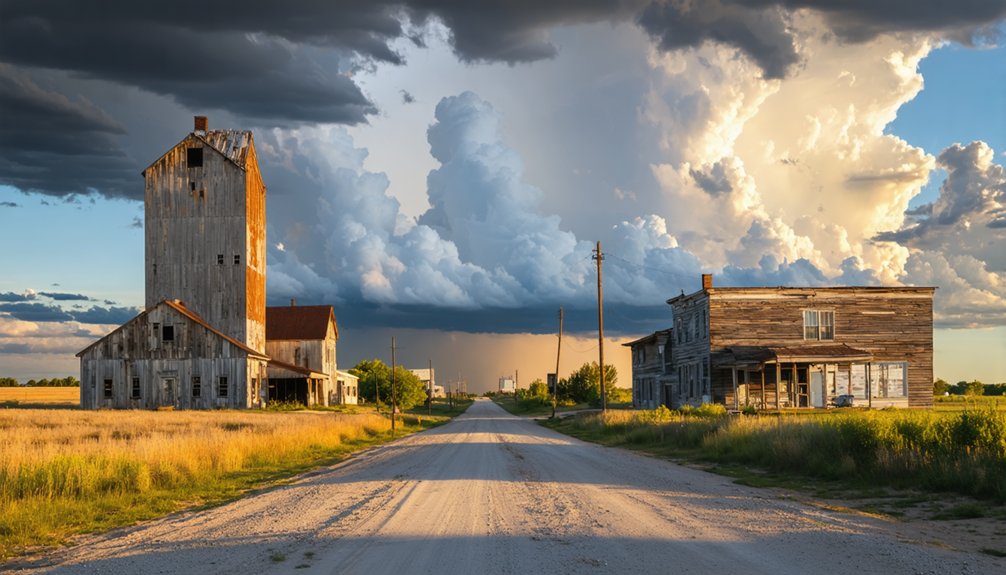
Tucked into the rural landscape of Otter Tail County, Clayton, Minnesota gives you exactly the kind of low-traffic, wide-open starting point that a ghost-town road trip demands.
The Clayton community carries a rural charm that sets your mindset before you even leave town. You’re already surrounded by farmland, lake country, and quiet county roads that evolve naturally into deeper exploration.
Local legends tied to the region’s abandoned railroad stops and failed settlements add historical weight to every mile you cover.
From Clayton, you can access scenic routes that push through central and western Minnesota without fighting congestion or construction delays.
It’s a practical anchor point that rewards travelers who want space, freedom, and a genuine connection to Minnesota’s forgotten past.
Road Conditions to Expect on Rural Minnesota Ghost Town Roads
Rural Minnesota ghost-town roads will test your patience and your vehicle in equal measure. Expect gravel stretches, unmarked dead ends, and narrow county roads that disappear into farmland without warning.
Rural navigation challenges multiply when outdated maps send you toward roads that no longer exist or routes blocked by private property.
Outdated maps are a liability out here — they’ll send you chasing roads that vanished decades ago.
Seasonal road conditions add another layer of uncertainty. Spring thaw turns gravel into soft mud, summer storms wash out low-lying crossings, and early winter freezes can make unpaved surfaces dangerously slick.
You’ll want a high-clearance vehicle, downloaded offline maps, and extra time built into your schedule.
Don’t treat these roads as obstacles. Treat them as part of the experience. The isolation and raw terrain are exactly what make ghost-town hunting feel like genuine exploration.
When to Take This Ghost Town Road Trip for the Best Access
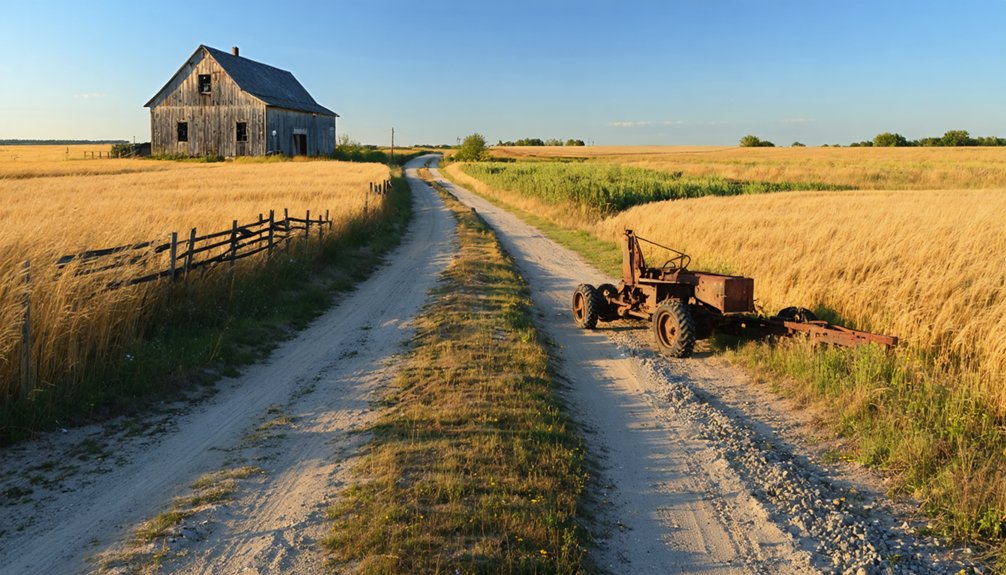
Timing shapes everything on a ghost-town road trip, and late summer through early fall gives you the clearest window for accessing rural Minnesota’s forgotten settlements. Among the best seasons, August through October delivers ideal weather — dry roads, firm gravel, and long daylight hours that stretch your exploring time.
Spring thaw softens county roads badly, turning some into impassable mud traps. Winter closes off many rural routes entirely. Summer heat brings overgrown vegetation that can obscure foundations and historical markers you’d otherwise spot easily. Early fall strips away that growth while keeping temperatures comfortable and skies clear.
You’ll navigate confidently, photograph ruins in warm natural light, and avoid seasonal flooding near river-adjacent sites. Plan your Clayton departure for a weekday morning to avoid weekend traffic near any preserved attractions along the route.
What to Bring for a Full-Day Ghost Town Drive in Minnesota
A full day of ghost-town hunting through central and western Minnesota demands more preparation than a typical road trip, because once you leave the main highways, reliable resources thin out fast. Your ghost town essentials start with downloaded offline maps, since cell service drops across Otter Tail County’s gravel back roads.
Pack a printed county map as a backup. Your packing checklist should include water, snacks, a portable charger, and sturdy walking shoes for uneven foundations and overgrown lots.
Bring a camera, a small notebook for jotting historical details, and insect repellent during warmer months. A first-aid kit earns its space in your trunk.
Fill your gas tank before leaving any town, because rural stations are scarce and distances between stops add up quickly.
Historical Society Sources That Sharpen Your Ghost Town Research

Before you pack the car and pull up an offline map, digging into historical society records can transform a vague list of ghost-town names into a navigable, story-rich itinerary.
Local archives and historical resources fill gaps that online searches simply can’t.
Use these four sources before you leave:
- Otter Tail County Historical Society – Confirms site access and current land status near Clayton.
- Minnesota Historical Society – Offers digitized maps, township plats, and settlement records statewide.
- County courthouse archives – Reveal old property boundaries that locate vanished towns precisely.
- Local library special collections – Hold regional newspapers documenting a town’s rise and abandonment.
Each source sharpens your route, adds authentic context, and keeps you from chasing dead ends on gravel roads.
Frequently Asked Questions
Are Ghost Town Sites in Minnesota Free to Visit or Entrance Fees Apply?
Most ghost town sites are free to visit, though some, like Forestville, may charge entrance fees. You’ll find site accessibility varies, so check ahead to plan your adventure without surprises.
Can Children Safely Explore Minnesota Ghost Town Ruins During a Family Road Trip?
Where history sleeps quietly, child safety matters most. You can bring kids, but supervise closely near aging structures. Follow these exploration tips: stay on marked paths, avoid unstable ruins, and let curiosity guide safe, memorable discoveries together.
Is Photography Permitted at All Ghost Town Locations Near Clayton, Minnesota?
Photography isn’t universally permitted at every ghost town site near Clayton. You’ll want to respect private land boundaries, embrace photography ethics, and always seek permission before capturing urban exploration moments on someone else’s property.
Do Any Ghost Towns Near Clayton Offer Guided Tours or Ranger-Led Programs?
Over 50% of Minnesota’s preserved ghost towns offer guided exploration. Forestville’s ranger-led programs deliver rich historical insights you’ll love. You can join scheduled tours, uncovering stories behind abandoned settlements near Clayton at your own adventurous pace.
Are Pets Allowed When Visiting Ghost Town Sites in Rural Minnesota Counties?
Pet regulations vary by site, so you’ll want to check before heading out. Practice good ghost town etiquette by keeping your dog leashed, respecting private land boundaries, and always cleaning up after them.
References
- https://krforadio.com/found-four-of-six-ghost-towns-on-our-trip/
- https://minnesotasnewcountry.com/minnesota-ghost-towns-within-90-minutes-of-st-cloud/
- https://www.youtube.com/watch?v=Tp1sKG_5yZc
- https://www.youtube.com/watch?v=5bCG6B2rzZY
- https://www.facebook.com/claytonryanmusic/
- https://www.youtube.com/watch?v=vitsZBgyYZk
- https://www.geotab.com/ghost-towns/
- https://www.claytonryan.com
- https://claytonryan.bandcamp.com/album/ghost-town
- https://www.pinterest.com/ideas/minnesota-haunted-road-trip-map/935276283016/