Planning a ghost town road trip to Paso Real, Texas means tracking down one of South Texas’s most historically loaded stagecoach crossings. You’ll find the site near the Arroyo Colorado, accessible from Raymondville or Rio Hondo via standard 2WD roads. General Zachary Taylor once crossed here, and the Beeville-to-Brownsville stage route ran right through it. Today it’s a quiet fishing spot, but the layers of military history, vanished commerce, and relocated landmarks make this stop far richer than it first appears.
Key Takeaways
- Paso Real served as a vital stagecoach crossing where General Zachary Taylor’s troops forded the Arroyo Colorado during the Mexican War.
- The Beeville-to-Brownsville stage route defined Paso Real’s growth until railroad expansion made river crossings obsolete, causing the town’s decline.
- No standing structures remain at Paso Real, but the site offers accessible fishing and a connection to stagecoach-era travel history.
- The relocated Stagecoach Inn, now at Harlingen’s Rio Grande Valley Museum, provides the best physical glimpse into Paso Real’s past.
- Nearby attractions including La Sal del Rey, Hidalgo, and Refugio complement a fuller South Texas ghost town road trip itinerary.
Why Paso Real Is a Rare Surviving Stagecoach Crossing in South Texas
When you trace the old overland routes that once stitched South Texas together, Paso Real stands out as something genuinely rare — a stagecoach crossing point with a documented history stretching back to the Mexican War era.
General Zachary Taylor crossed the Arroyo Colorado here between 1846 and 1848, and the site later anchored the main stage trail running between Beeville and Brownsville.
General Zachary Taylor crossed the Arroyo Colorado at Paso Real, a site that later anchored the Beeville-to-Brownsville stage trail.
Its historic significance goes beyond one famous crossing. Paso Real also served as a ferry point, giving travelers a reliable passage through otherwise difficult terrain.
That combination of road and river access made it a genuine hub before rail lines reshaped the region’s transportation evolution.
Most crossings like this vanished without a trace. Paso Real left behind enough history to make the detour worthwhile.
The Beeville-to-Brownsville Stage Route That Built Paso Real
Before railroads redrew the map of South Texas, the stage route linking Beeville to Brownsville was the region’s economic and social lifeline, and Paso Real sat squarely at its center.
Stagecoach history here isn’t abstract — it’s rooted in the practical reality of moving people, mail, and goods across a wild, unforgiving landscape.
River crossings like Paso Real weren’t simply convenient stops; they were essential bottlenecks that determined where communities grew. The Arroyo Colorado demanded a crossing point, and Paso Real answered that demand.
General Zachary Taylor even moved troops through here during the Mexican War. Without this stage route threading through the brush country, Paso Real never exists.
The road created the town, and when the road became irrelevant, the town followed.
Why Zachary Taylor Crossed the Arroyo Colorado Right Here
The stage route didn’t just move settlers and mail — it moved armies. During the Mexican-American War, General Zachary Taylor crossed the Arroyo Colorado right at this spot. He didn’t choose it randomly.
Paso Real offered the most practical ford along this stretch of water, the same reason stagecoaches stopped here for decades.
Think about what that means for the ground you’re standing on. Before the railroad carved up South Texas, before paved roads connected the valley, this crossing point controlled movement through the region.
Taylor’s troops pushed through here because it was simply the best option available.
That kind of strategic value doesn’t happen by accident. Geography made Paso Real matter, and military necessity confirmed it.
How the Railroad Ended Paso Real’s Reason to Exist
When the railroad pushed into the Rio Grande Valley, it pulled travelers off the old stage roads and made river crossings like Paso Real largely irrelevant.
You can trace the settlement’s decline almost directly to that shift — once passengers and freight moved by rail, the stagecoach route between Beeville and Brownsville lost its traffic, and the inn lost its purpose.
Stage Routes Lost Relevance
Once the railroads pushed into the Rio Grande Valley, Paso Real’s entire reason for existing evaporated almost overnight. The stagecoach significance that once defined this crossing simply couldn’t survive transportation evolution.
Rail lines eliminated four critical functions Paso Real had long provided:
- Ferry crossings became unnecessary when rail bridges replaced river fords.
- Stage lodging lost its demand once travelers rode trains directly through the region.
- General stores and post offices lost their customer base as populations shifted toward rail towns.
- Overland routes between Beeville and Brownsville became obsolete.
You’re looking at a place that thrived purely because it sat between two points travelers had to cross. Once that necessity disappeared, Paso Real had nothing left to anchor its survival.
Rail Access Replaced Travel
Rail expansion into the Rio Grande Valley didn’t just slow Paso Real’s growth — it erased the town’s entire economic foundation in a single generational shift.
Once rail lines connected regional towns directly, travelers stopped depending on overland stage routes entirely. The stagecoach significance that had defined Paso Real for decades simply evaporated.
Nobody needed the river crossing anymore. No ferry, no inn, no general store traffic. The Stagecoach Inn, which had operated since around 1860, closed as passengers chose faster, more direct rail service.
What once felt like a crucial artery through South Texas became an abandoned backroad. You can trace that same collapse across dozens of similar stops — but Paso Real illustrates it sharply, because the railroad didn’t just compete with the town. It made the town unnecessary.
Inn Closure Followed Decline
The Stagecoach Inn didn’t close overnight — it faded the way most frontier infrastructure does, quietly and without ceremony.
Once rails reached the Rio Grande Valley, inn history shifted fast. Travelers no longer needed overnight stops along the old stage route.
What that meant for community life:
- The inn lost its core purpose — sheltering travelers moving between Beeville and Brownsville.
- The general store, school, and post office lost their customer base.
- Population drained as residents followed economic opportunity elsewhere.
- By 1948, only three dwellings remained standing.
You’re looking at a settlement that didn’t burn down or flood out — it simply became unnecessary.
The railroad didn’t destroy Paso Real. It just stopped needing it, and that was enough.
What Happened to the Stagecoach Inn After the Town Died
When the town of Paso Real quietly faded from the map, its Stagecoach Inn didn’t simply vanish with it. Part of the structure collapsed into the Arroyo Colorado River, but the remaining portion survived.
Rather than letting that piece of stagecoach history disappear entirely, preservationists moved and rebuilt it. Today, you can find the relocated inn on the grounds of the Rio Grande Valley Museum in Harlingen, Texas.
Preservationists saved the inn from obscurity, relocating it to the Rio Grande Valley Museum in Harlingen, Texas.
That inn legacy gives you a tangible connection to a world that no longer exists along the riverbank.
If you’re driving through the Valley and want more than just a fishing stop, make time for Harlingen. You’ll walk away with a real sense of what stagecoach-era travel looked and felt like in South Texas.
What’s Left of Paso Real: and Where to Find It
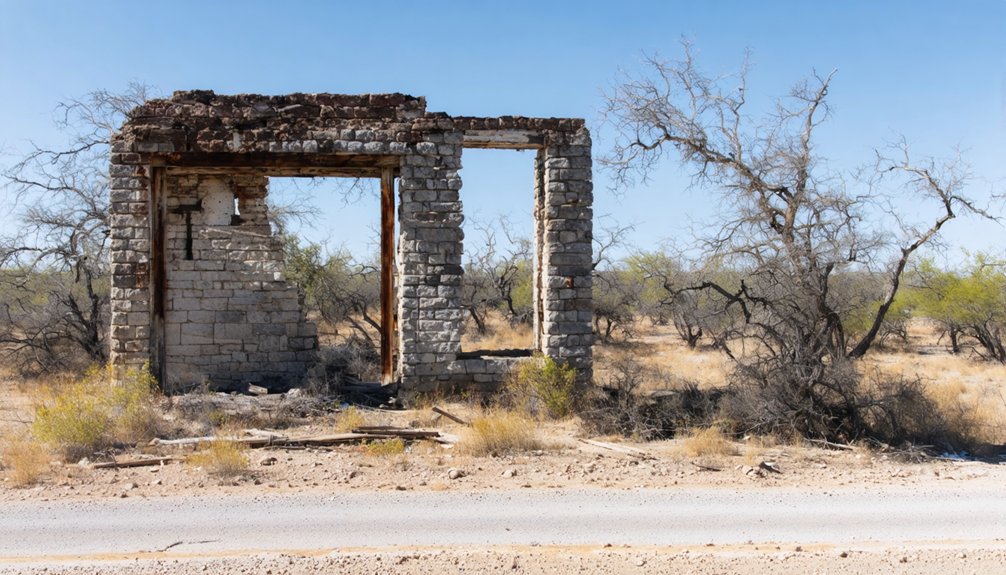
Today, almost nothing marks the original site of Paso Real along the Arroyo Colorado.
You’ll find a quiet fishing point where a thriving stagecoach stop once stood. Still, the story isn’t entirely lost.
Here’s what survived and where you can find it:
- The fishing point – The original Paso Real site remains accessible by 2WD, offering river access and solitude.
- Rebuilt Stagecoach Inn – Salvaged materials were relocated and reconstructed after partial collapse.
- Rio Grande Valley Museum – Visit Harlingen, Texas, to see the rebuilt inn on museum grounds.
- Regional history context – The museum pairs well with broader Rio Grande Valley exploration.
You won’t find crumbling ruins here, but you’ll find a vanished crossing point with a tangible, museum-preserved legacy worth chasing down.
Getting to Paso Real From Raymondville or Rio Hondo
Whether you’re approaching from Raymondville to the northwest or Rio Hondo to the south, you’re already close to Paso Real before most travelers even realize a ghost town exists out here.
Raymondville puts you about 19 miles out, making it the more common starting point for those already traveling U.S. 77 through Willacy County.
If you’re coming up from Rio Hondo, you’ll cross into the Cameron/Willacy county line area quickly, since Paso Real sits just north of town along the Arroyo Colorado corridor.
Approaching From Raymondville
Most travelers approaching Paso Real use Raymondville as their starting point, roughly 19 miles northwest of the site.
Use Raymondville landmarks to orient yourself before heading southeast toward the Arroyo Colorado corridor.
Follow these steps for a straightforward approach:
- Begin in downtown Raymondville and head southeast on the main road toward the county line area.
- Watch for markers indicating the Cameron/Willacy county boundary as you close in on the site.
- Stay on the 2WD-accessible route — no off-road vehicle is necessary.
- Arrive at the river’s edge, where fishing access is fundamentally what remains of the original crossing point.
You’re not pulling into a preserved town.
You’re reaching a vanished ferry crossing where stagecoaches once rolled and history quietly dissolved into the landscape.
Coming From Rio Hondo
Travelers coming from Rio Hondo have a shorter drive, since Paso Real sits just north of town near the Cameron/Willacy county line. You won’t need a four-wheel-drive vehicle, as the site remains accessible by standard 2WD roads.
Don’t expect a developed destination when you arrive — what you’ll find is fundamentally a quiet fishing point along the Arroyo Colorado River.
That simplicity doesn’t diminish Paso Real’s historic significance. This was once a working ferry crossing and stagecoach stop connecting Beeville to Brownsville, where General Zachary Taylor himself passed through during the Mexican War.
Approaching from Rio Hondo gives you a natural sense of the geography — the river corridor that once made this vanished crossing point so crucial to South Texas travel.
What Ghost Town Visitors Actually Find at the Paso Real Site Today
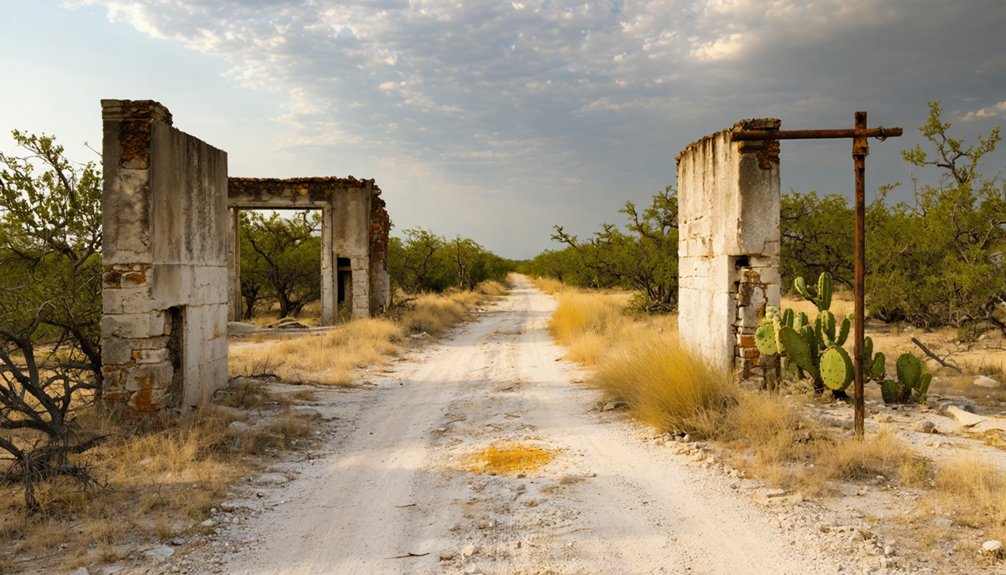
When you pull up to where Paso Real once stood, don’t expect crumbling storefronts or weathered signage—you’ll find a fishing point along the Arroyo Colorado River and little else.
This ghost town left almost no physical footprint behind, but its travel history still resonates if you know what you’re looking for.
Here’s what the site actually offers today:
- A quiet river access point along the Arroyo Colorado
- Open landscape where the old stagecoach crossing once operated
- No standing structures, markers, or preserved ruins on-site
- A sense of geographic context connecting you to the old stage route
The real payoff comes afterward—head to the Rio Grande Valley Museum in Harlingen, where rebuilt remnants of the original Stagecoach Inn give this vanished crossing its tangible story.
Other South Texas Ghost Towns and History Stops Near Paso Real
Once you’ve absorbed what little Paso Real has left to offer, the surrounding Rio Grande Valley opens up a broader loop of transportation history, vanished settlements, and regional heritage worth chasing.
Harlingen’s Rio Grande Valley Museum anchors the route with its relocated Stagecoach Inn materials, giving ghost town folklore a tangible, physical anchor.
From there, you can push deeper into Willacy and Cameron counties, where railroad-era boomtowns rose fast and faded just as quickly.
Each stop layers onto the transportation evolution that killed Paso Real — stagecoach giving way to rail, rail giving way to highways, and communities disappearing in each shift.
This stretch of South Texas rewards curious travelers who prefer connecting historical dots over polished tourist experiences.
South Texas Ghost Towns Worth Combining With a Paso Real Trip
Stretching the Paso Real trip into a full South Texas ghost town loop isn’t hard once you’ve got Harlingen’s Rio Grande Valley Museum checked off your list.
The region holds several stops that deepen the stagecoach history and transportation legacy you’ve already been tracing.
Pair your Paso Real visit with these nearby landmarks:
- Refugio – Colonial-era missions and early Texas settlement history
- La Sal del Rey – A salt lake tied to Indigenous and Spanish trade routes
- Hidalgo – A river crossing town with strong cultural significance along the border
- Edinburg – Historical landmarks connecting ranching heritage to South Texas identity
Each stop adds context to the ghost town trail you’re building, turning a single-site visit into a layered regional story worth every mile.
Frequently Asked Questions
Is Paso Real Accessible by Regular Car Without Four-Wheel Drive?
Yes, you can reach this ghost town in a regular 2WD vehicle, making your road trip hassle-free. You don’t need four-wheel drive to explore this historic, vanished South Texas crossing along the Arroyo Colorado.
What County Is Paso Real Located in Today?
You’ll find Paso Real sitting near the Cameron and Willacy county line, a place rich in historical significance, alive with local legends, and waiting for you to explore its vanished crossroads and storied past.
Can Visitors Fish at the Paso Real Site Currently?
You can fish at Paso Real’s site today! It’s now fundamentally a fishing point along the Arroyo Colorado River. Just check local wildlife guidelines and current fishing regulations before you cast your line into these historic waters.
Is There an Admission Fee at the Rio Grande Valley Museum?
Ironically, the knowledge base doesn’t cover the Rio Grande Valley Museum’s admission fee details. You’ll want to contact them directly before exploring their museum exhibits and local history treasures, including Paso Real’s relocated Stagecoach Inn remnants.
What Is the Best Time of Year to Visit Paso Real?
Spring or fall’s your best bet for exploring Paso Real’s historical significance, as mild South Texas weather makes the journey comfortable. You’ll uncover local legends and vanished stagecoach stories without battling brutal summer heat or unpredictable winter conditions.
References
- https://www.ghosttowns.com/states/tx/pasoreal.html
- https://www.youtube.com/watch?v=–I2R5l0e1E
- https://www.austinchronicle.com/columns/day-trips-11756906/
- http://www.freddarge.com/Chapters/10 Ghost Towns.pdf
- https://texashighways.com/travel-news/four-texas-ghost-towns/
- https://www.ezhomesearch.com/blog/the-ghost-towns-of-texas/
- https://en.wikipedia.org/wiki/List_of_ghost_towns_in_Texas
- https://www.ghostsandgetaways.com/blog-1/27-fascinating-ghost-towns-in-texas
- https://www.valleycentral.com/news/local-news/remembering-the-paso-real-crossing/
- https://www.facebook.com/groups/magicvalleychronicles/posts/974978084006383/