There’s no ghost town called Code, California, but don’t let that stop your adventure. California’s real abandoned mining towns along Highway 395 deliver something far more compelling. You’ll find Bodie’s untouched artifacts, Calico’s silver rush history, and Randsburg’s rugged charm waiting to be explored. Pack water, fuel up often, and start early to catch the best light. Stick around to uncover everything you need to plan the ultimate ghost town road trip.
Key Takeaways
- No ghost town named “Code” exists in California; consider visiting real destinations like Bodie, Calico, or Randsburg instead.
- Highway 395 serves as the main corridor connecting Eastern Sierra ghost towns, including Bodie, Dogtown, and Randsburg.
- Visit Bodie between June and September, while Calico is best explored from October to April to avoid extreme heat.
- Pack at least 1 gallon of water per person daily, a satellite communicator, and offline maps for remote areas.
- Capture stunning ghost town photography during golden hour using a polarizing filter and wide-angle shots framing decaying structures.
The Real Ghost Towns Behind California’s Forgotten Mining Roads
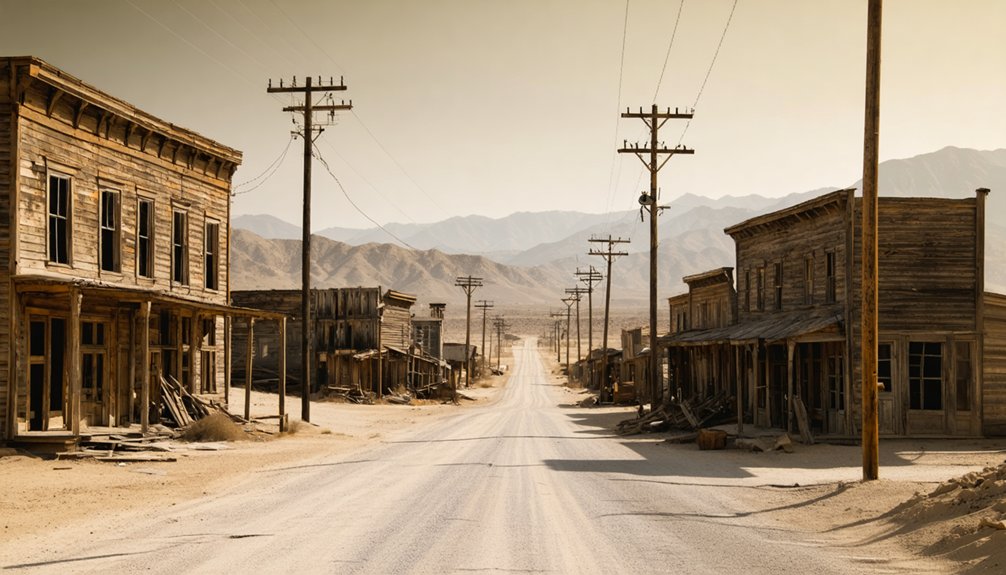
While there’s no ghost town called “Code” on any California map, the state’s forgotten mining roads lead to something far more compelling — real towns frozen in time, where the past feels close enough to touch.
You’ll find ghost town legends etched into dusty streets, abandoned storefronts, and mine shafts that once drove entire economies. California’s mining history runs deep through three standout destinations: Bodie, Calico, and Randsburg.
Each tells a raw, unfiltered story of boom, bust, and survival. You don’t need a fictional destination when the real ones offer furnished homes left mid-meal, silver mines you can walk through, and desert highways that feel like they belong to you alone.
The open road is waiting.
How to Drive the Eastern Sierra Ghost Town Route on Highway 395
When you’re ready to chase California’s most hauntingly beautiful ghost towns, Highway 395 is your spine—a legendary corridor running along the eastern Sierra Nevada that connects forgotten mining districts in striking succession.
You’ll want to anchor your route around three essential stops: Bodie State Historic Park, accessible via Highway 270 just 4 miles east of 395, followed by Randsburg to the south and Calico Ghost Town near Yermo off Interstate 15.
Each stop pulls you deeper into the boom-and-bust legacy of California’s mining era, so pack water, download offline maps, and leave early to maximize daylight on these remote stretches.
Highway 395 Route Overview
Stretching along the jagged eastern spine of the Sierra Nevada, Highway 395 is your gateway to some of California’s most hauntingly beautiful ghost towns.
This legendary corridor delivers non-stop Highway Wonders, threading through volcanic tablelands, ancient lakebeds, and wide-open desert terrain that feels genuinely untamed.
You’ll want to head north from Los Angeles, picking up Highway 395 near Victorville.
From there, the landscape transforms dramatically as you climb in elevation.
Plan your Scenic Stops strategically — Mono Lake deserves at least an hour, and the Bodie turnoff at Highway 270 sits roughly four miles east of the main highway.
Keep your tank full between towns.
Services grow scarce quickly, and that isolation is exactly what makes this drive unforgettable.
Embrace it.
Key Ghost Town Stops
Four ghost towns anchor this stretch of Highway 395, each one earning its place on the itinerary.
Bodie sits 13 miles east of 395 on Highway 270, frozen in arrested decay since its gold rush peak. You’ll walk streets lined with furnished homes exactly as their owners left them — ghost town legends made tangible.
Head south toward Dogtown, visible right from the highway, a wild and short-lived settlement that barely survived its own boom.
Continue to Randsburg via Highway 58, where mining history runs deep through the Mojave Desert landscape.
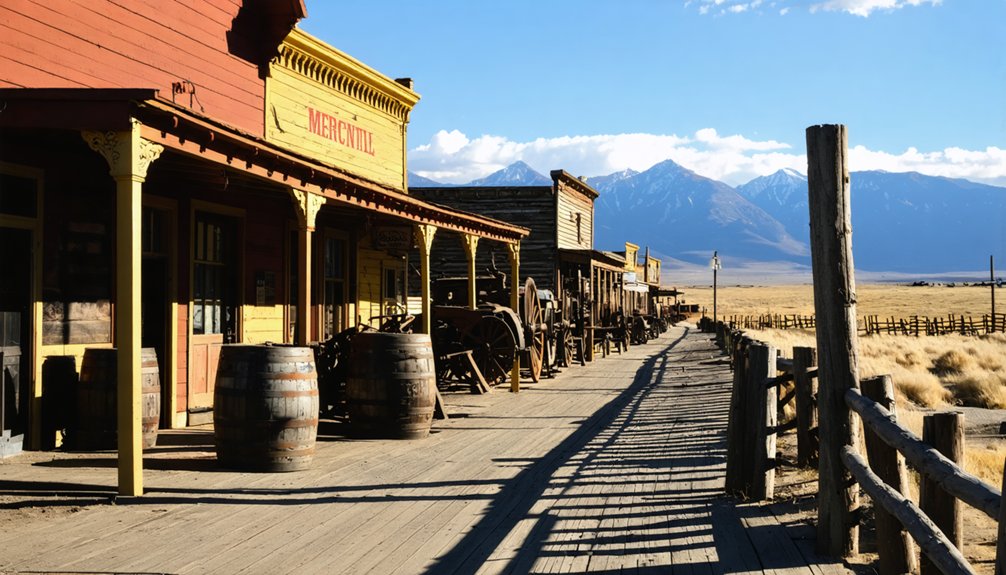
Finally, swing toward Calico near Yermo — California’s official Silver Rush Ghost Town sits just off Interstate 15, offering the most accessible stop on your route.
Each location rewards curiosity differently.
Best Months to Visit Bodie, Calico, and Randsburg
Late spring through early fall offers the sweet spot for visiting all three ghost towns, but each destination has its own quirks you’ll want to plan around. Knowing the best times guarantees you’re catching seasonal activities without battling brutal heat or snow-locked roads.
- Bodie: June–September is ideal; Highway 270 closes in heavy snow.
- Calico: October–April keeps desert heat manageable; summers exceed 100°F.
- Randsburg: Spring wildflowers peak March–May along Highway 58.
- All three: Avoid holiday weekends if you want solitude and open roads.
- Photography: Golden hour hits differently in October when crowds thin and light turns warm amber.
Pack layers regardless of season — desert nights drop fast, and mountain mornings bite hard.
What Survives Inside Bodie State Historic Park’s Arrested Decay
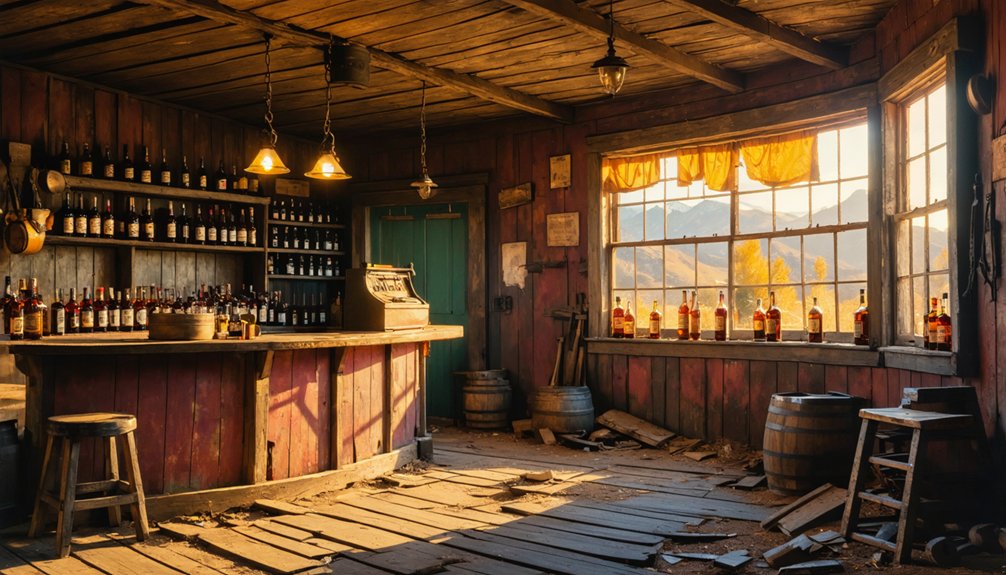
When you step inside Bodie’s abandoned buildings, you’ll find rooms frozen in time, with dishes still stacked on kitchen shelves, clothes draped over chairs, and beds left unmade as if their owners simply walked away.
The policy of “arrested decay” means rangers preserve what remains without restoring it, so you’re seeing genuine artifacts exactly where miners and families left them decades ago.
You’ll wander through a fully stocked general store, a church with hymnals still open on the pews, and homes where children’s toys sit dusty on the floor.
Preserved Rooms Reveal History
Step inside one of Bodie’s weathered buildings, and you’re walking straight into 1882. The preserved artifacts scattered throughout each room carry enormous historical significance — nothing’s been staged, nothing’s been cleaned up for comfort.
You’ll discover rooms frozen mid-moment, telling raw, unfiltered stories of frontier survival:
- A kitchen table still set with dishes, waiting for a meal nobody returned to eat
- Bottles of patent medicine lined across a pharmacy shelf, labels faded but legible
- A child’s toy resting beside a rusted iron bed frame
- Ledgers and handwritten receipts spread across a merchant’s desk
- Curtains hanging exactly where miners’ families left them decades ago
These aren’t museum recreations — they’re real lives left behind.
Walking through Bodie hands you direct, unfiltered access to California’s wildest chapter.
Ghostly Artifacts Left Behind
Scattered across Bodie’s dust-coated floors and sagging shelves, thousands of artifacts sit exactly where residents abandoned them over a century ago — untouched, unrestored, and startlingly intact.
You’ll find medicine bottles still corked, wallpaper peeling in deliberate curls, and cast-iron stoves cold for over a hundred years. Mining relics crowd the mill floors — ore carts, rusted drill bits, and stamp machinery frozen mid-operation.
These ghostly encounters hit differently than museum exhibits because nothing’s staged. A child’s shoe rests beside a bedroom door. Playing cards remain fanned across a saloon table.
Park policy strictly prohibits removing or disturbing anything, preserving this raw authenticity. Walking through Bodie, you’re not observing history behind glass — you’re standing directly inside it, breathing the same dust as those who never came back.
Calico, Randsburg, and the Silver Rush Towns Worth the Detour
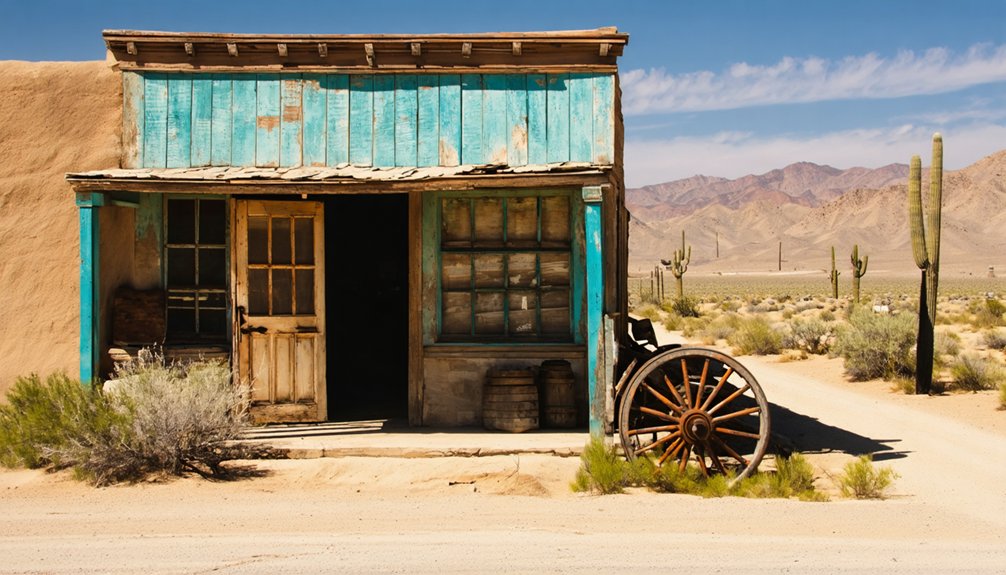
Driving south from Highway 395, you’ll hit two silver-rush survivors that pack just as much history into a single detour: Calico and Randsburg. Both towns carry Mining Mysteries etched into abandoned shafts and sun-bleached storefronts.
Ghostly Legends echo through Calico’s canyon walls, where California’s official Silver Rush Ghost Town still draws curious wanderers.
Ghostly whispers linger in Calico’s sun-baked canyons, where California’s legendary Silver Rush past haunts every crumbling storefront.
- Calico sits off Interstate 15, making it an easy stop between LA and Las Vegas
- Walk into Maggie Mine, the only safe original mine open to visitors
- Camp overnight or rent a rustic cabin sleeping four
- Randsburg via Highway 58 connects to Ballarat and deeper desert mining routes
- Cerro Gordo adds panoramic Owens Valley views to your detour
These towns reward every mile you invest.
Where to Camp and Sleep Near California’s Most Remote Ghost Towns
After a long day of wandering dusty streets and peering into abandoned mines, you’ll need a place to rest your boots.
Near Bodie, dispersed camping on Bureau of Land Management land lets you fall asleep under a sky packed with stars, while Calico Ghost Town offers RV hookups and rustic cabins that sleep four with heat and air conditioning.
Randsburg keeps things simple but charming, with nearby lodging options that put you close enough to explore without sacrificing comfort.
Camping Near Bodie
Few places in California leave you feeling as untethered from modern life as the high desert country surrounding Bodie, and that remoteness makes choosing where to sleep just as important as planning the drive itself.
Pack your camping essentials carefully — elevation here hits 8,375 feet, and temperatures drop sharply after dark.
- Bodie State Historic Park has no on-site camping; plan accordingly
- Bridgeport Reservoir offers dispersed camping minutes from Highway 395
- Twin Lakes Campground sits 13 miles southwest of Bridgeport
- Green Creek Campground provides primitive sites with stunning canyon views
- Bureau of Land Management land near Mono Lake allows free dispersed camping
Practice ghost town etiquette throughout your visit — stay on designated paths, touch nothing, and leave every weathered artifact exactly where you find it.
Calico’s Overnight Accommodations
Swap the high-altitude chill of Bodie’s desert plateau for the Mojave’s dry heat, and you’ll find Calico Ghost Town offers something its northern counterpart can’t — sleeping quarters right on the historic property itself.
These Calico accommodations include ten rustic cabins sleeping four people each, equipped with heating and air conditioning for year-round comfort. You’re not roughing it completely, but you’re close enough to the dusty streets to feel the town’s pulse after day-trippers leave.
Ghost town lodging doesn’t get more atmospheric than waking inside a silver-rush settlement. RV hookups are also available on-site, giving road-trippers flexible options.
Book cabins directly through San Bernardino County Parks, and confirm availability early — these spots fill fast, especially on weekends.
Randsburg Sleeping Options
Sleeping near Randsburg means embracing the rugged, stripped-down spirit of the Mojave Desert, where polished hotel lobbies give way to open skies and roadside solitude.
Randsburg history runs deep through every crumbling wall and dirt street, making even your overnight stay feel like part of the story. Randsburg accommodations are minimal by design—and that’s exactly the point.
- Camp at Red Rock Canyon State Park, just 30 miles west on Highway 14
- Pull over at Bureau of Land Management dispersed sites surrounding the Mojave Desert
- Book a basic motel room in nearby Ridgecrest along Highway 395
- Park your RV at designated desert flats with zero light pollution
- Sleep under a billion stars with nothing but Joshua trees as neighbors
What to Pack for High-Altitude Desert Ghost Town Roads
Packing for high-altitude desert ghost town roads means preparing for two extremes at once — scorching midday sun and surprisingly bitter nights. Your packing essentials should include layers you can strip off by noon and pull back on by sunset.
Altitude adjustments hit harder than most travelers expect, so pack extra water, electrolytes, and ibuprofen for elevation headaches. Sun protection is non-negotiable — SPF 50, polarized sunglasses, and a wide-brimmed hat belong in your bag before anything else.
Altitude hits fast — hydrate hard, block the sun, and never leave without SPF 50 and electrolytes.
Sturdy hiking boots handle the rocky terrain around Bodie and Randsburg far better than sneakers. Toss in a first-aid kit, a paper map, and a portable charger because cell service disappears fast out here.
Pack smart, pack light, and pack ready.
Flash Floods, No Signal, No Water: Staying Safe in the Panamint Valley
Once your bag is zipped and your boots are laced, the Panamint Valley demands a different kind of readiness — one that goes beyond gear and straight into survival awareness.
Flash floods can roar through dry washes without warning, and communication challenges are real — cell service vanishes fast out here.
Stay sharp with these survival essentials:
- Download offline maps before you lose signal on Highway 190
- Carry 1 gallon of water per person per day minimum
- Never camp in dry riverbeds — flash floods strike without rain overhead
- Pack a satellite communicator to bypass dead zones
- Check the National Weather Service forecast for Inyo County before departing
The valley doesn’t forgive carelessness.
Respect it, prepare fiercely, and it’ll reward you with raw, untamed freedom.
How to Photograph Abandoned Structures in Harsh Desert Light
Harsh desert light is both your greatest enemy and most dramatic collaborator when photographing abandoned structures in places like Bodie or Ballarat.
Shoot during golden hour — the first hour after sunrise or before sunset — when warm, raking light carves shadows into weathered wood and crumbling walls, transforming ordinary ruins into cinematic scenes.
Midday desert lighting washes everything flat and bleaches color from your frame, so use that time for scouting angles instead.
For abandoned photography, bring a polarizing filter to cut glare off broken glass and reflective surfaces.
Shoot low, shoot wide, and let decaying doorways frame distant mountains.
Embrace dust in the air — it diffuses light beautifully.
Your camera’s manual mode gives you full creative control over these unpredictable, extraordinary conditions.
The Overlooked Highway 395 Stops Most Road Trippers Never Find
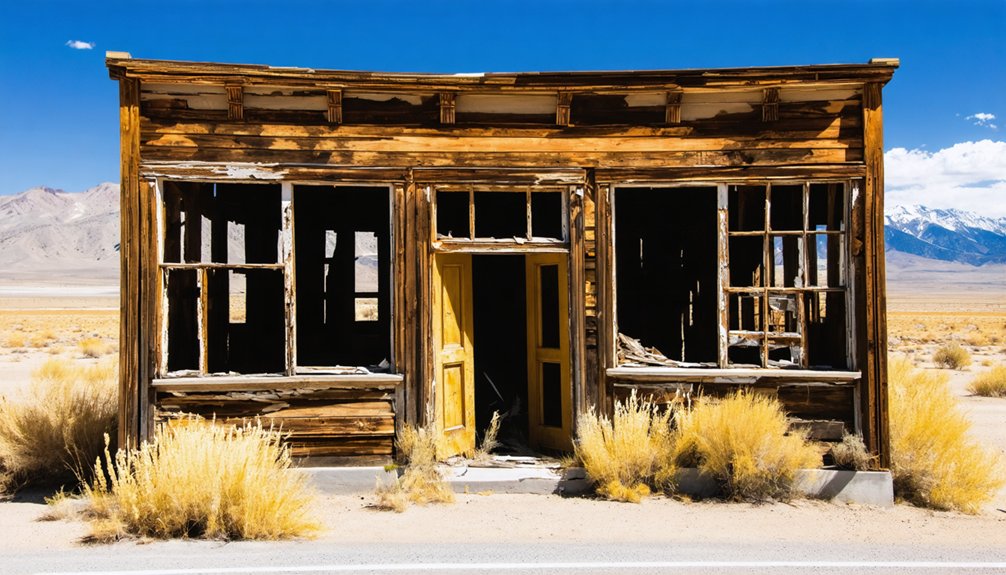
Most road trippers blast down Highway 395 with Bodie on their radar and nothing else, missing a string of raw, under-the-radar stops that reward the curious and the unhurried.
Slow down and you’ll uncover mining heritage and ghost town legends hiding in plain sight.
Slow down long enough and the road gives up its secrets — mining ghosts and forgotten legends, hiding in plain sight.
- Dogtown – a wild, short-lived settlement visible near the Bodie turnoff
- Mono Lake – eerie tufa towers rising from ancient, alkaline water
- Benton Hot Springs – a forgotten crossroads with deep desert solitude
- Laws Railroad Museum – narrow-gauge history sitting quietly off the main road
- Haiwee Reservoir overlook – a breathtaking pull-off most drivers blow past entirely
You don’t need a packed itinerary.
You need curiosity, a full tank, and the willingness to turn off when something catches your eye.
Before You Go: Safety at Abandoned Sites
Ghost town structures have stood without maintenance for decades. Floors, stairs and roof timbers fail without warning, and a building that looks solid from outside may not hold your weight. Stay out of standing structures unless the site is actively maintained and open to visitors.
Mine workings are the more serious hazard. Vertical shafts can be hundreds of feet deep, are often unfenced, and may be hidden by brush or capped with rotted boards. Never enter an adit, tunnel or shaft: abandoned workings can hold oxygen-poor or toxic air that gives no warning before you lose consciousness.
Enclosed spaces with rodent droppings carry a risk of hantavirus, which is contracted by breathing contaminated dust. Do not sweep or stir up dust inside old cabins and outbuildings.
Cell coverage at these sites is usually poor or absent. Tell someone your route and expected return time, and carry more water than you think you need.
Frequently Asked Questions
Is There Really a Ghost Town Called Code in California?
You won’t find a ghost town called Code in California’s history. That name doesn’t exist in Ghost town legends! You’re likely thinking of Bodie, Calico, or Randsburg—three thrillingly real abandoned mining destinations awaiting your exploration.
Are Pets Allowed Inside Bodie State Historic Park’s Preserved Structures?
You can’t bring pets inside Bodie’s preserved structures — pet friendly policies prioritize historic preservation. However, you’re welcome to explore outdoor areas with leashed pets, keeping the adventure alive while protecting this irreplaceable landmark.
Can Visitors Legally Take Artifacts or Souvenirs From California Ghost Towns?
You can’t legally take artifacts from California ghost towns. Strict artifact preservation laws and legal regulations protect these historic sites, so pack your camera instead and capture memories without risking hefty fines on your adventure!
Do Any California Ghost Towns Offer Guided Tours for Children?
Like stepping into a living history book, you’ll find Calico Ghost Town offers guided tours packed with family friendly activities and educational experiences that’ll spark your kids’ curiosity about California’s wild mining past!
Are There Entrance Fees Required at Randsburg and Ballarat Ghost Towns?
You’ll love that neither site charges entrance fees! Randsburg history awaits you freely on its wild streets, and Ballarat accessibility means you can roam this remote Panamint Valley treasure without spending a dime.
References
- https://www.visitcalifornia.com/now/california-ghost-towns-road-trip/
- https://www.visitcalifornia.com/road-trips/ghost-towns/
- https://myfamilytravels.com/explore-californias-forgotten-towns-with-these-eerie-road-adventures/
- https://www.visitcalifornia.com/road-trips/ghost-towns/index.html
- https://www.explore.com/1709921/how-to-visit-best-california-ghost-towns-in-one-trip/
- https://www.visitcalifornia.com/kr/road-trips/goseuteu-taun/
- https://gohlingyong.com/blog/top-14-ghost-town-road-trip-routes-to-try-for-exploring-americas-forgotten-west-this-year
- https://www.hertz.com/p/american-road-trip-planner/west-coast/ghost-towns-of-the-west
- https://travelswithelle.com/california/calico-ghost-town-california/
- https://www.visitcalifornia.com/jp/road-trips/kosutotaun/