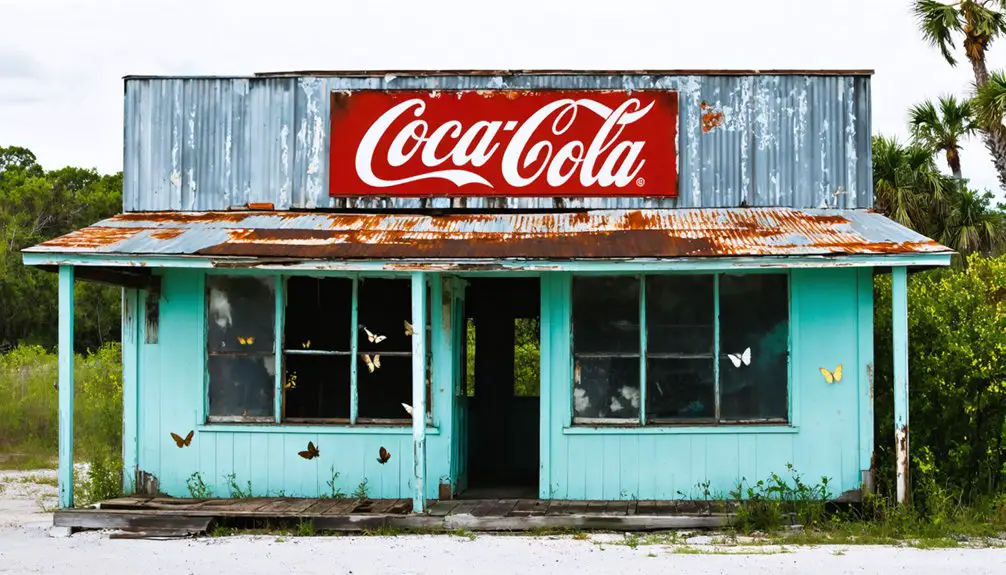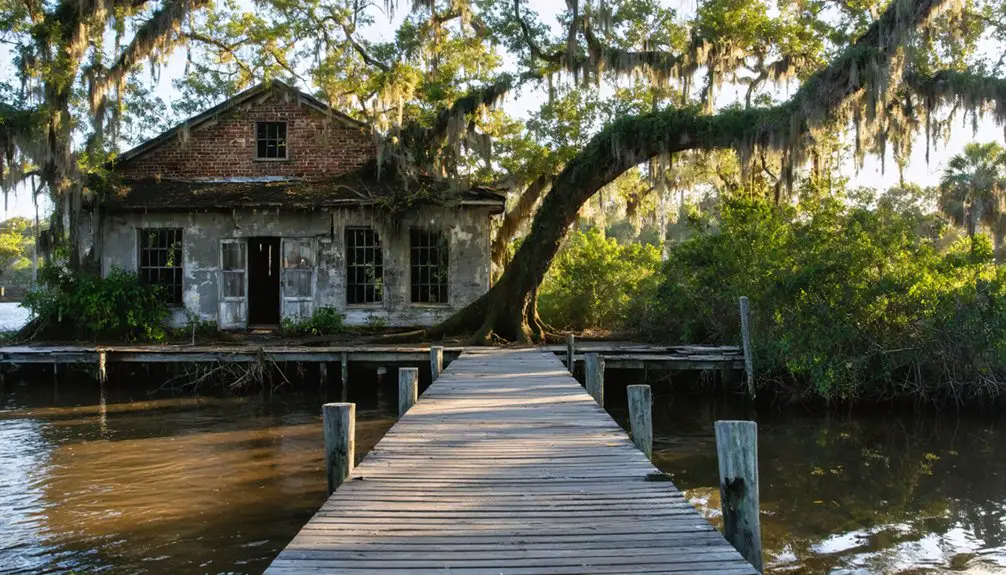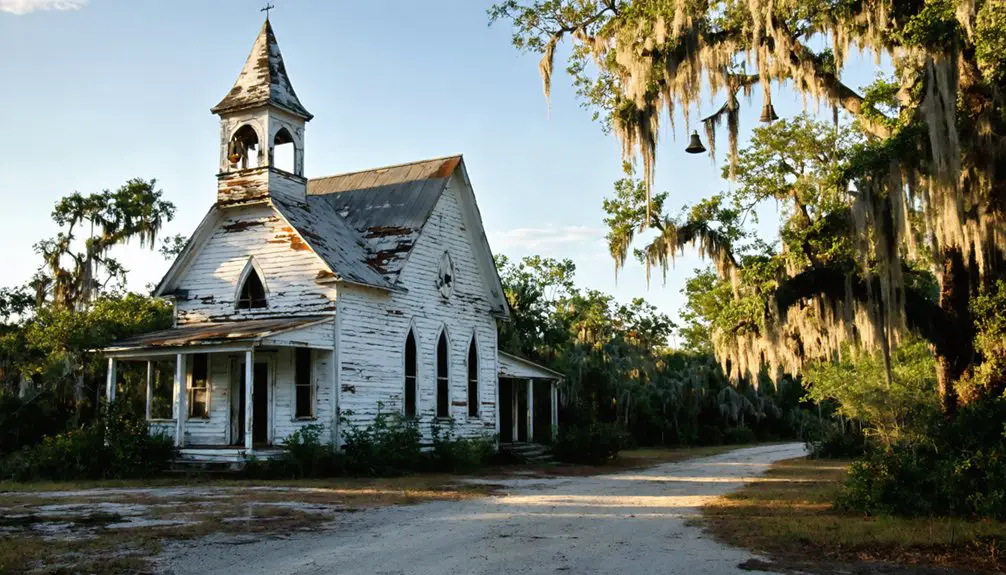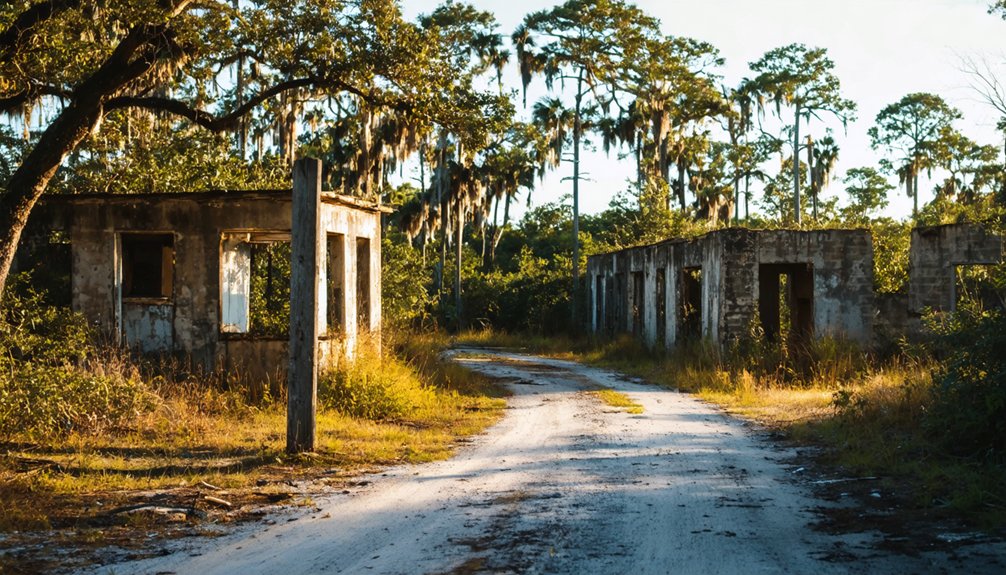
Planning your ghost town road trip to Viking, Florida means heading south from Fort Pierce along U.S. Route 1 toward Saint Lucie. Download offline maps before you go, since cell service gets unreliable fast. Pack sturdy shoes, insect repellent, and plenty of water for the uneven terrain. Viking Cemetery is the last surviving landmark, connecting you to Norwegian settlers who built this forgotten community. There’s far more to this story than you’d expect.
Key Takeaways
- Viking, Florida, located near Saint Lucie at 27°32.5’N 80°21.7’W, is accessible by traveling south from Fort Pierce along U.S. Route 1.
- The Viking Cemetery is the last surviving landmark, offering a quiet connection to Norwegian immigrant and early settler history.
- Pair Viking with nearby ghost towns like Slavia or Fort Dade to maximize your road trip’s historical experience.
- Pack sturdy shoes, insect repellent, sunscreen, water, and a camera, and download offline maps before visiting.
- Explore Viking on foot after parking near the cemetery, embracing its raw, unpolished history without tourist-ready attractions.
What’s Left to See in Viking, Florida Today?
Although Viking, Florida has faded into near-obscurity, the Viking Cemetery stands as the town’s last surviving landmark, and it’s worth the detour. You’ll find early settlers buried here, including Norwegian immigrants who carved lives out of Florida’s wild frontier.
Viking Cemetery is the last surviving landmark of a forgotten town, where Norwegian immigrants once carved lives from Florida’s wild frontier.
It’s a quiet, humbling stop that connects you directly to the people who built this place.
Beyond the cemetery, don’t expect much. The abandoned structures that once housed a post office, school, and farming community are gone, replaced by empty fields and modern pavement.
You’re fundamentally walking through living history without walls.
Bring a camera, wear sturdy shoes, and go with curiosity. Viking rewards travelers who appreciate raw, unpolished history over tourist-ready attractions.
This forgotten corner of Florida tells a story few people bother to seek out.
How to Get to Viking, Florida?
Once you’ve paid your respects at the Viking Cemetery, you’ll need to know how to actually reach this tucked-away ghost town. Viking sits near Saint Lucie at coordinates 27°32.5’N 80°21.7’W, placing it within Florida’s lush Treasure Coast landscape. Its Viking geography makes it surprisingly accessible yet wonderfully off the beaten path.
Head south from Fort Pierce along U.S. Route 1, keeping your eyes open for historical landmarks and quiet rural stretches that hint at the area’s layered past.
The former flag stop on the Florida East Coast Railroad once guided settlers here — now your GPS does the work.
Park near the cemetery, lace up your boots, and let curiosity drive you through what remains of this remarkable Scandinavian ghost town.
What draws you deeper into Viking’s story is the wave of Scandinavian settlers who transformed a simple pineapple plantation into a tight-knit cultural community.
When Norwegian immigrant Jens Helseth arrived in 1895 with his wife Agathe, they brought immigration stories rooted in resilience and ambition. They didn’t just settle — they worked alongside founder Major B. Daniels, applying their agricultural practices to Florida’s tropical soil.
These settlers carried Scandinavian traditions across the Atlantic, embedding them into every homestead and harvest. Their cultural impact shaped Viking’s identity so distinctly that the town earned its name from the very people who built it.
You’re not just visiting a ghost town — you’re standing inside a living chapter of Scandinavian-American history.
Best Ghost Towns to Pair With Viking on a Florida Road Trip
Viking doesn’t have to be your only stop — Florida’s ghost town trail stretches far enough to fill an entire road trip with forgotten history.
Nearby Slavia offers its own layer of Eastern European heritage, while Fort Dade delivers crumbling military ruins on an island accessible only by boat.
Saint Lucie sits close enough to Viking that you can hit both in a single afternoon, connecting the dots between abandoned buildings and weathered historical markers that most travelers never notice.
Each stop rewards curiosity differently — some with overgrown foundations, others with preserved cemeteries or faded signage.
Every ghost town reveals itself differently — through crumbling walls, weathered grave markers, or signage barely clinging to legibility.
String these destinations together on your own terms, move at your own pace, and let Florida’s forgotten corners tell you stories no guidebook fully captures.
What to Pack Before You Visit Viking, Florida
A few simple items can make the difference between a frustrating visit and a genuinely rewarding one. Before heading out, pack your packing essentials: sturdy walking shoes, insect repellent, sunscreen, and plenty of water.
Viking’s terrain is overgrown and uneven, so you’ll want reliable footwear for traversing the grounds around the cemetery.
Bring a camera to document what remains, since historical artifacts and aged markers deserve sharp, careful documentation. A notebook helps you record inscriptions before weather erodes them further.
Download offline maps beforehand, as cell service is unreliable near the site.
Pack light but smart. A small backpack keeps your hands free while you explore.
Respect the land, touch nothing, and carry out everything you bring in. Viking rewards the prepared traveler.
Frequently Asked Questions
Who Originally Founded the Town of Viking, Florida, and When?
You’ll discover that Major B. Daniels founded Viking’s town history in 1892, launching a pineapple plantation that drew founding families of Scandinavian settlers, sparking an adventurous chapter in Florida’s boldly unique colonial past.
What Was the Primary Agricultural Industry That Sustained Viking’s Economy?
Ironically, it wasn’t citrus farming that gave Viking its historical significance — it was pineapples! You’d never guess this bold, tropical crop fueled the town’s entire economy, driving adventurous Scandinavian settlers to homestead and harvest in Florida’s wild frontier.
Are There Any Active Commercial Businesses Currently Operating in Viking Today?
You won’t find any active commercial businesses in Viking today. It’s an empty, quiet zone, but its local attractions and historical significance make it an adventurous destination worth exploring on your ghost town road trip!
What Coordinates or Exact Location Can Visitors Use to Find Viking?
You’ll find Viking’s haunting, overgrown remnants at 27°32.5’N, 80°21.7’W near Saint Lucie, Florida. Chase Viking History and Local Legends as you navigate sun-drenched backroads straight into this forgotten Scandinavian ghost town’s mysterious embrace.
When Did Spanish Explorers First Arrive in the Viking, Florida Region?
You’ll find that Spanish explorers first arrived in the Viking, Florida region during the 1500s. This early Spanish exploration laid Viking history’s colonial foundations, making your adventure through this remarkable ghost town even more thrillingly layered and historically rich!
References
- https://www.youtube.com/watch?v=TxBONhwNi1k
- https://ufndnp.domains.uflib.ufl.edu/more-ghost-towns-of-florida-ufndnp/
- https://en.wikipedia.org/wiki/List_of_ghost_towns_in_Florida
- https://freepages.rootsweb.com/~gtusa/history/usa/fl.htm
- https://floridatrailblazer.com/tag/ghost-towns/
- https://riches.cah.ucf.edu/?tag=viking-cemetery
- https://blackatlantic.uga.edu/what-is-floridas-ghost-town-explore-abandoned-sites
- https://www.florida-backroads-travel.com/florida-ghost-towns.html
- https://www.youtube.com/watch?v=XJ0Gvol5Enc
- https://abandonedfl.com/viking-motel/